

Nasal Drug Delivery Mode Market Size and Share Analysis – 2026 To 2033
The Nasal Drug Delivery Mode Market is anticipated to grow at a CAGR of 5.8% during the forecast period. The market size is estimated at USD 67.6 Bn in 2026 and is projected to reach USD 100.3 Bn by 2033. The primary growth drivers include the increased prevalence of chronic respiratory and neurological illnesses, the increasing preference for non-invasive drug administration routes, and the growing demand for quick-onset medicines that enhance patient compliance. As per an analysis published on nasal drug delivery technologies, by June 2023, 688 nasal formulations have been launched across the world, and out of these, nasal sprays constitute 69.7% of all nasal formulations approved in the market.
Key Takeaways
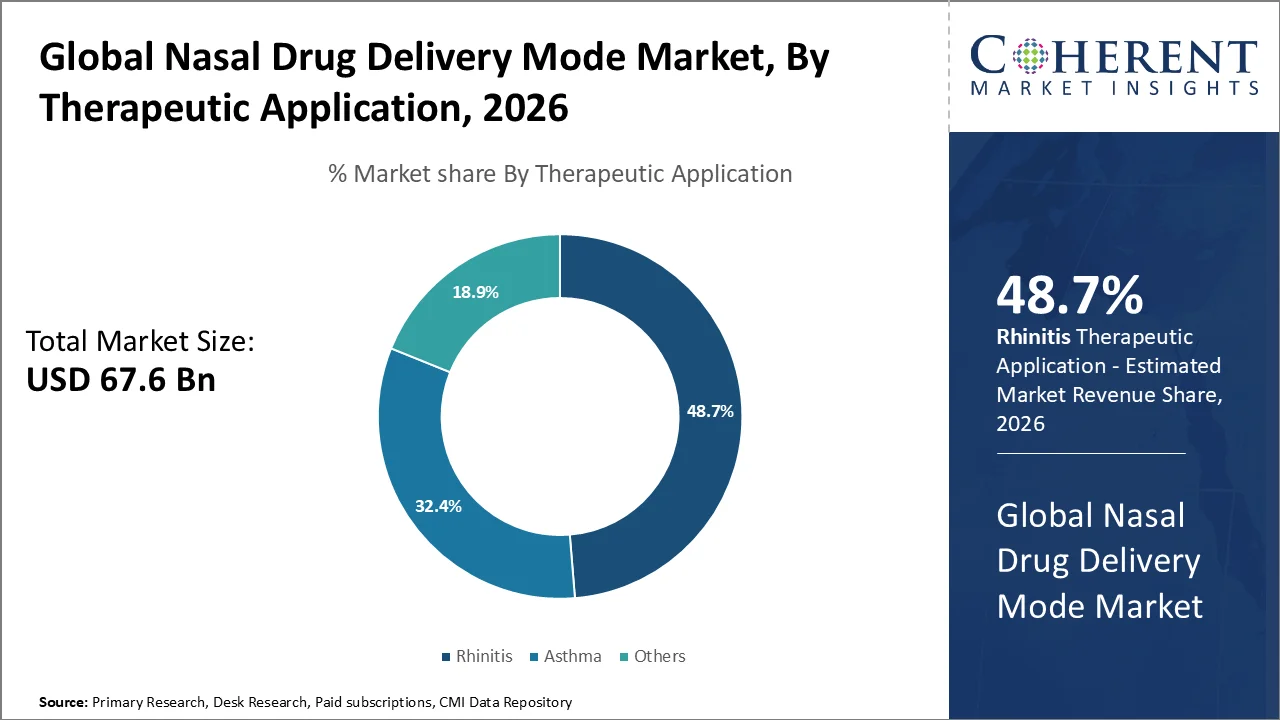
- The rhinitis segment is anticipated to account for the largest share of the market, at 48.7% in 2026. The segment growth is attributed to factors such as increasing global prevalence of allergic and non-allergic rhinitis and extensive utilization of intranasal corticosteroids and antihistamines as first-line treatment choices. The World Allergy Organization has estimated that allergic rhinitis affects 10–30% of the population in the world, which is consistent with ongoing demand for nasal medication delivery systems.
- The spray segment is estimated to dominate the market with 72.4% by 2026. The category is expected to develop owing to convenience of administration, rapid start of action, precise dose and high acceptance by patients. A review published in Drug Delivery and Translational Research reported that metered-dose spray pumps have dominated the nasal drug market for decades because they offer high reproducibility of the emitted dose and ease of use.
- Non-pressurized container segment is predicted to maintain 67.9% dominance in 2026. The sector growth is attributable to its cheaper manufacturing cost, easy to use, compatibility with multi-dose systems and wide usage in conventional nasal spray products targeted for chronic therapy. Aptar Pharma announced that their APF Futurity platform is the first metal-free multidose nasal spray pump in the industry to receive a Class AA recyclability certification from cyclos-HTP in Europe.
- Multi-dose segment is expected to lead with 58.6% in 2026. The expansion of the category is attributed to its convenience, capacity to provide repeated dosages, increased patient adherence, and suitability for long-term treatment of illnesses such as allergic rhinitis and chronic sinus problems. Aptar Pharma says it has more than 75 years of experience in nasal spray pump technologies, and their CPS multidose platform is specifically developed to enable precise, reliable, and targeted, preservative-free nasal drug administration.
- Homecare settings sector is expected to hold the largest share of 61.3% in 2026. The segment is expanding due to increased inclination towards self-administration, rising availability of user-friendly nasal devices and increasing focus on avoiding hospital visits for managing chronic diseases. According to the World Health Organization (WHO), some 3.6 billion people globally, almost half the world’s population, lack access to essential health services, making them more reliant on self-care options and health solutions that can be provided outside of formal healthcare settings.
- The retail pharmacy segment is expected to dominate the market, accounting for 54.8% by 2026. This is attributed to the availability of these establishments across various markets and regions, and the large number of prescription and OTC nasal drugs sold via these outlets. A national survey report released in the Journal of the American Pharmacists Association showed that 88.9% of the U.S. population resides within 5 miles of community pharmacies, indicating the unparalleled accessibility of the network of retail pharmacies.
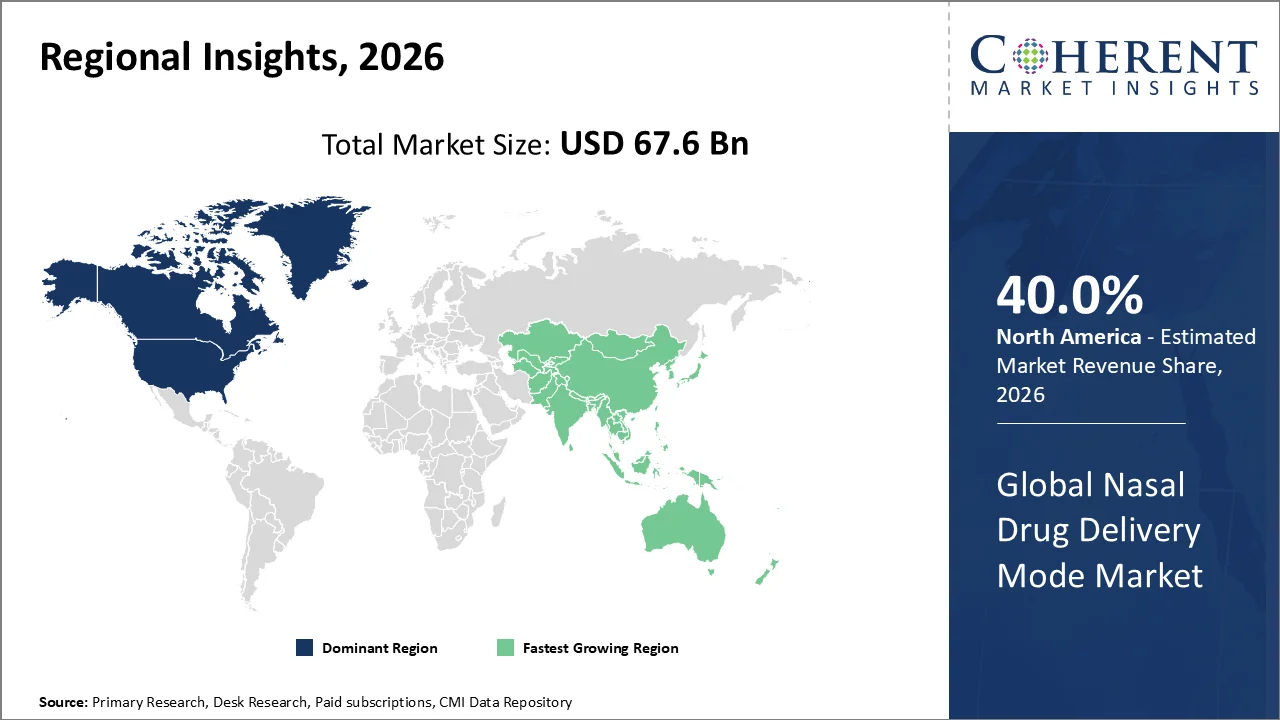
- North America is estimated to hold the largest share of 40.0% of the Nasal Drug Delivery Mode Market in 2026. The expansion of the region can be attributed to the high prevalence of allergic disorders, excellent healthcare infrastructure, strong presence of top pharmaceutical manufacturers and rapid adoption of innovative drug delivery systems. The U.S. is estimated to have over 81 million people annually diagnosed with seasonal allergic rhinitis, as reported by the Asthma and Allergy Foundation of America (AAFA), therefore fueling the market demand in the region.
Segmental Insights
Why is Rhinitis Acquiring the Largest Share?
The rhinitis segment is expected to hold the biggest Nasal Drug Delivery Mode Market share of 48.7% in 2026 based on therapeutic use. The segment growth is attributed to the increasing prevalence of allergic and non-allergic rhinitis and the extensive use of intranasal corticosteroids and antihistamines as first-line treatment modality. The targeted action, rapid symptom alleviation and good safety profile continue to be the chosen therapeutic option for nasal sprays.
According to a meta-analysis in BMJ, based on the results from 2,267 patients from 16 randomized controlled trials, intranasal corticosteroids were far more effective than oral antihistamines in treating allergic rhinitis.
In July 2025, Lupin Limited announced the commercial launch of Ipratropium Bromide Nasal Solution (Nasal Spray), 0.03% and 0.06%, in the United States. The products are bioequivalent to Atrovent Nasal Spray and are indicated for the symptomatic relief of rhinorrhea associated with allergic and non-allergic perennial rhinitis, as well as seasonal allergic rhinitis.
- Current Industry Events of 2026
- Market Size Estimation
- Regional Breakdown
- Competitive Landscape
- Customer Intelligence
- Segmental Analysis
- Pricing Analysis
- Key Market Drivers, Challenges & Future Trends
- Customized Insights Section
Why are Spray Formulations Acquiring the Largest Share?
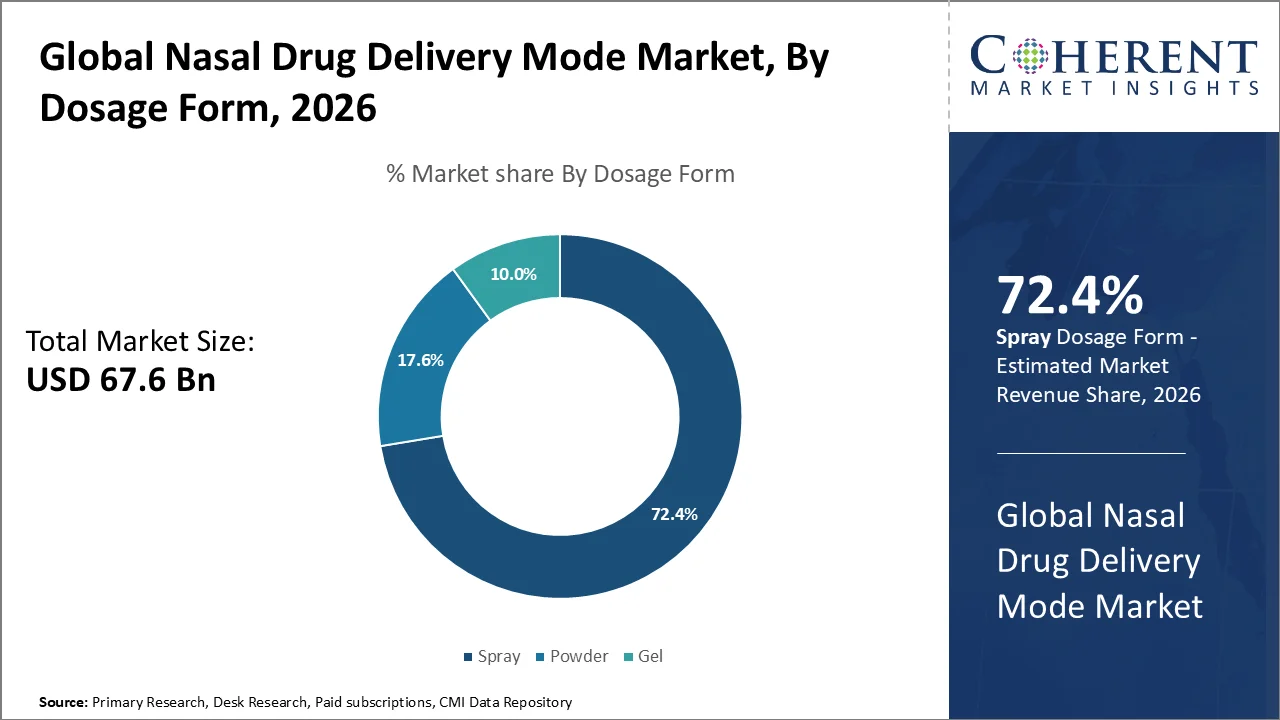
By dosage form, the spray segment is expected to hold the highest proportion of the Nasal Drug Delivery Mode Market, 72.4%, in 2026. The market is anticipated to develop owing to convenience of administration, rapid start of action, accurate dosing and high patient acceptance. Spray formulations also provide increased convenience and reproducible medication administration and can therefore be used for both acute and chronic indications.
According to Aptar Pharma, spray delivery technologies based on pumps are used in more than 70% of the nasal drug products approved worldwide, underlining the pharmaceutical industry’s strong preference for spray formulations thanks to their dosing accuracy, ease of use and compatibility with a wide range of formulations.
In October 2024, Aero Pump GmbH and Resyca B.V. announced the launch of the Ultra Soft Nasal Pump Spray, an innovative spray platform designed to enhance precision and patient comfort in nasal drug delivery.
Non-Pressurized Containers hold the Largest Market Share
Based on container type, the non-pressurized container segment is expected to lead the Nasal Drug Delivery Mode Market by holding the biggest market of 67.9% in 2026. The category is anticipated to rise on account of decreased manufacturing costs, ease of use, compatibility with multi-dose systems, and wide use in conventional nasal spray products for chronic therapy.
In July 2025, Aptar Pharma announced that its Freepod non-pressurized nasal spray pump, used globally with Haleon's Otrivin brand, is now manufactured using 52% bio-based feedstock.
Multi-dose holds the Largest Market Share
By system type, the multi-dose segment is anticipated to account for the highest Nasal Drug Delivery Mode Market share of 58.6% in 2026. The category is expanding because of its convenience, capacity to provide repeated dosages, better patient compliance and appropriateness for long term treatment of ailments such as allergic rhinitis and chronic sinus diseases.
Aptar Pharma’s Advanced Preservative-Free (APF) technology has been used in several significant nasal product launches in highly regulated areas, thereby highlighting the pharmaceutical sector’s dependence on multidose nasal delivery systems.
In March 2026, Aptar Pharma announced that its proprietary multidose intranasal delivery platform is being used in LTR Pharma's Phase II clinical study of SPONTAN, an investigational intranasal therapy.
Which End User segment dominates the market?
By end user, the homecare settings segment is predicted to hold the greatest share of the Nasal Drug Delivery Mode Market with 61.3% in 2026. This category is developing because to the increasing inclination for self-administration, the increased availability of user-friendly nasal devices and the increasing focus on avoiding hospital visits for chronic illness management.
According to the U.S. Food and Drug Administration (FDA), nasal sprays are aimed at self-administration by patients or caregivers and are formulated for ease-of-use outside of healthcare facilities, allowing for therapy at home and reducing hospital visits.
In August 2025, AstraZeneca announced that FluMist, the only influenza vaccine approved in the U.S. for self- or caregiver-administration, became available through the FluMist Home program with direct home delivery.
Why are Retail Pharmacies Acquiring the Largest Share?
Based on distribution channel, the retail pharmacies market segment is expected to hold the highest Nasal Drug Delivery Mode Market share of 54.8% by the year 2026. This is due to the wide availability of retail pharmacies, strong presence in developed and emerging economies, and large number of nasal drugs prescribed through such pharmacies.
The National Association of Chain Drug Stores (NACDS) reports that its member pharmacies operate over 40,000 pharmacy locations and fill more than 3 billion prescriptions annually, emphasizing the vital importance of retail pharmacies as the primary point of access for medicines and self-care products.
In May 2024, Amneal Pharmaceuticals announced that it had begun supplying its over-the-counter (OTC) Naloxone Hydrochloride Nasal Spray, USP, 4 mg to retail pharmacies across the United States.
Rising Burden of Allergic and Respiratory Disorders is Driving Growth in the Nasal Drug Delivery Mode Market
The nasal drug delivery market is primarily driven by the increasing prevalence of allergic rhinitis, sinusitis, asthma and other respiratory illnesses. Nasal drug delivery systems are the favored treatment options for the chronic upper respiratory disorders owing to the rapid beginning of action, targeted local administration, improved patient compliance and fewer systemic side effects.
In November 2024, ARS Pharmaceuticals announced the U.S. commercial launch of neffy, the first FDA-approved needle-free epinephrine nasal spray for the emergency treatment of severe allergic reactions, demonstrating the expanding therapeutic applications and growing acceptance of intranasal drug delivery technologies.
Growing Preference for Self-Administration and Needle-Free Therapies is Supporting Market Expansion
Increasing demand for self-administration and needle-free drug delivery is emerging as a primary driver of the Nasal Drug Delivery Market. User-friendly treatment solutions, which may be provided outside of the clinical settings, are increasingly favored by patients and healthcare professionals due to their ability to improve convenience, adherence and quality of life, while decreasing healthcare use costs.
The WHO anticipates a global shortfall of approximately 10 million healthcare workers by 2030, further accelerating the trend toward patient-managed medicines and non-invasive medication delivery devices.
In August 2024, the U.S. Food and Drug Administration (FDA) approved neffy, the first needle-free epinephrine nasal spray for emergency allergic reactions, representing a major milestone in the adoption of self-administered intranasal therapies.
Current Events and Their Impact on the Nasal Drug Delivery Mode Market
Current Event | Description and its Impact |
Growing Development of Nose-to-Brain Therapies Accelerates Innovation in the Nasal Drug Delivery Mode Market |
|
FDA Approval of Atzumi™ Introduces Intranasal Therapy for Migraine Management |
|
Nasal Drug Delivery Mode Market Trends
- Nasal powder vaccines are emerging as a significant trend in innovation. Orexo signed a collaboration agreement with Abera Bioscience in December 2024 to develop intranasal powder vaccines using Orexo’s AmorphOX technology. The cooperation intends to improve vaccine durability and mucosal immune response using needle-free vaccine delivery.
- Nasal powder devices are gaining popularity because of their greater formulation flexibility and ease of manufacture. In November 2023, Hovione has announced the development of its nasal drug delivery capabilities with a collaboration with IDC to speed the commercialisation of two active nasal powder delivery devices, including a single-use and a multidose device.
- Regulatory impetus continues to verify the intranasal delivery potential. Recent FDA approvals highlight the growing utility of nasal administration in emergency medicine, preventative healthcare and chronic disease management, bolstering confidence in the commercialization of next-generation nasal medicines.
Regional Insights
North America Dominates Owing to Strong Product Innovation and Regulatory Approvals
By 2026, North America is estimated to hold the highest share of the Nasal Drug Delivery Mode Market, which is 40.0%. The region’s growth is fueled by the high prevalence of respiratory and allergy disorders, favorable regulatory processes, strong presence of leading pharmaceutical companies and increasing use of innovative intranasal medicines across both prescription and over-the-counter sectors.
According to the Asthma and Allergy Foundation of America (AAFA), over 100 million Americans are affected by different types of allergies every year, and allergies are the sixth leading cause of chronic illness in the United States. This indicates a significant patient pool that needs nasal therapies and supports regional market demand.
In March 2025, Scienture Holdings announced the commercial launch of REZENOPY (naloxone HCl) Nasal Spray 10 mg in the United States.
Asia Pacific Nasal Drug Delivery Mode Market Trends
Asia Pacific is expected to witness the fastest growth in the Nasal Drug Delivery Mode Market in the coming years. The key factors behind the growth witnessed in this region include increased healthcare spending, increased healthcare availability, higher incidences of respiratory diseases, growing awareness about non-invasive drug delivery methods, and increased investments by regional pharmaceutical companies.
According to the World Health Organization (WHO), the South-East Asia Region has nearly 246 million people suffering from chronic respiratory diseases, providing a large patient pool for inhalation and intranasal therapies, and adding to the long-term growth potential of nasal drug delivery products.
In November 2025, Glenmark Pharmaceuticals announced that China's National Medical Products Administration (NMPA) approved Ryaltris Nasal Spray for the treatment of allergic rhinitis in adults and pediatric patients.
Strong Regulatory Innovation and High Disease Burden are Accelerating the Market in the United States
The U.S. Nasal Drug Delivery Mode Market is witnessing significant growth due to the presence of a conducive regulatory framework, the high prevalence of respiratory and neurological diseases, strong commercialization capabilities, and the rising adoption of non-invasive treatments. It continues to be an important center for innovation and introduction of novel intranasal drugs in several therapeutic areas.
According to the CDC’s National Center for Health Statistics (NCHS), about one-quarter (25.2%) of U.S. adults had a confirmed seasonal allergy in 2024. Additionally, 7.7% of adults had eczema and 6.7% had food allergies, suggesting a large patient group that may benefit from allergy related therapies including nasal therapy.
In December 2025, the U.S. Food and Drug Administration (FDA) approved Cardamyst (etripamil) nasal spray for the treatment of episodes of paroxysmal supraventricular tachycardia (PSVT), a condition characterized by an abnormally fast heart rhythm.
China Nasal Drug Delivery Mode Market Trends
The China Nasal Drug Delivery Mode Market is developing at a significant rate due to the increasing healthcare spending, rising prevalence of allergy illnesses, increased awareness regarding non-invasive therapies and speeding approvals of innovative nasal products. The increasing pharmaceutical industry and better access to healthcare in the country are also driving the market expansion.
According to clinical research published in peer-reviewed epidemiological studies estimates the prevalence of allergic rhinitis in China at 17.6% of the population, and this continues to increase with urbanization and air pollution exposure, creating a significant patient base for intranasal therapy.
In February 2026, Shanghai Shiling Pharmaceutical announced advancement of a semaglutide-based nasal spray program targeting global clinical trials completion by 2028.
Who are the Major Companies in Nasal Drug Delivery Mode Industry
Some of the major key players in Nasal Drug Delivery Mode are Merck & Co., Inc., AstraZeneca, GlaxoSmithKline Plc, Mystic Pharmaceuticals, Johnson & Johnson Services Inc., PendoPharm Inc., Bausch Health Companies Inc., 3M, Cadila Pharmaceuticals Ltd., OptiNose, Dr. Reddy Laboratories, ENT Technologies Pty Ltd., Neurelis Inc., Aptar Group, and Becton, Dickinson and Company, among others.
Key News
- In March 2025, OptiNose continued commercialization efforts for XHANCE, strengthening adoption of exhalation delivery system-based nasal therapies for chronic rhinosinusitis.
- In April 2024, Amneal announced FDA approval and launch of the first generic OTC naloxone hydrochloride nasal spray, expanding access to opioid overdose rescue treatment.
Market Report Scope
Nasal Drug Delivery Mode Market Report Coverage
| Report Coverage | Details | ||
|---|---|---|---|
| Base Year: | 2025 | Market Size in 2026: | USD 67.6 Bn |
| Historical Data for: | 2020 To 2024 | Forecast Period: | 2026 To 2033 |
| Forecast Period 2026 to 2033 CAGR: | 5.8% | 2033 Value Projection: | USD 100.3 Bn |
| Geographies covered: |
| ||
| Segments covered: |
| ||
| Companies covered: | Merck & Co., Inc., AstraZeneca, GlaxoSmithKline plc (GSK), Mystic Pharmaceuticals, Johnson & Johnson Services Inc., PendoPharm Inc., Bausch Health Companies Inc., 3M Company, Cadila Pharmaceuticals Ltd., OptiNose Inc., Dr. Reddy’s Laboratories Ltd., ENT Technologies Pty Ltd., Neurelis Inc., AptarGroup, Inc., and Becton, Dickinson and Company | ||
| Growth Drivers: |
| ||
| Restraints & Challenges: |
| ||
Analyst Opinion
- The Nasal Drug Delivery Mode Market is propelled by the increasing move toward fast-acting, non-invasive and patient-centric medicines, particularly in allergy, CNS and emergency care segments. The National Institute on Drug Abuse (NIDA) states that more than 2.7 million persons in the U.S. had opioid use disorder in 2024, providing important support for demand for intranasal rescue therapy such naloxone nasal sprays.
- Innovation in emergency nasal treatments and regulatory clearances are driving adoption. The FDA’s clearance of a needle-free epinephrine nasal spray for anaphylaxis (2024) represents a significant move toward expanding nasal delivery into acute cardiovascular and emergency indications, enhancing physician trust and market penetration.
- The industry is also benefiting from higher investment in nose-to-brain drug delivery research, especially for neurological illnesses. According to the Alzheimer’s Association, there are more than 6.9 million Americans aged 65+ living with Alzheimer’s in 2024. Research and development into intranasal CNS treatments that circumvent the blood–brain barrier for rapid therapeutic action is increasing.
Speak to the analyst
Want personalized insights?
Take the findings above to one of our principal consultants, or have the report rebuilt around the segments, geographies and competitors you actually track.
Market Segmentation
- By Therapeutic Application (Revenue, USD Bn, 2021-2033)
- Asthma
- Rhinitis
- Others
- By Dosage Form (Revenue, USD Bn, 2021-2033)
- Powder
- Spray
- Gel
- By Container Type (Revenue, USD Bn, 2021-2033)
- Pressurized Container
- Non Pressurized
- Container
- By System Type (Revenue, USD Bn, 2021-2033)
- Multi- Dose
- Bi-Dose
- Unit Dose
- By End Users (Revenue, USD Bn, 2021-2033)
- Hospitals
- Homecare Settings
- By Distribution Channel (Revenue, USD Bn, 2021-2033)
- Hospital Pharmacies
- Retail Pharmacies
- Online Pharmacies
- By Region (Revenue, USD Bn, 2021-2033)
- North America
- U.S.
- Canada
- Latin America
- Brazil
- Mexico
- Argentina
- Rest of Latin America
- Europe
- Germany
- U.K.
- France
- Italy
- Spain
- Russia
- Rest of Europe
- Asia Pacific
- China
- India
- Japan
- Australia
- South Korea
- ASEAN
- Rest of Asia Pacific
- Middle East
- GCC
- Israel
- Rest of Middle East
- Africa
- South Africa
- Central Africa
- North Africa
- North America
Sources
Primary Research Interviews
- Pharmaceutical & Biotech Companies (Nasal Drug Delivery Developers)
- Drug Delivery Device Manufacturers (Spray, Pump, and Inhaler Systems)
- Contract Development & Manufacturing Organizations (CDMOs)
- Clinical Research Organizations (CROs)
- Regulatory Affairs Specialists (FDA, EMA, NMPA aligned consultants)
- Hospital Pharmacists & Clinical Practitioners
- ENT & Respiratory Specialists
- Neurology & Emergency Medicine Experts
- Others
Databases
- IQVIA (Drug sales & prescription analytics)
- Evaluate Pharma
- GlobalData Healthcare
- Clarivate Cortellis
- S&P Global Market Intelligence
- Bloomberg Terminal
- Pharmaprojects Database
- D&B Hoover
- Others
Magazines
- Pharmaceutical Technology
- Drug Delivery & Translational Research
- Fierce Pharma
- BioPharma Dive
- MedTech Dive
- Pharmaceutical Executive
- Drug Development & Delivery
- Others
Journals
- International Journal of Pharmaceutics
- Journal of Controlled Release
- Advanced Drug Delivery Reviews
- European Journal of Pharmaceutics and Biopharmaceutics
- Drug Delivery
- Pharmaceutics (MDPI)
- Journal of Aerosol Medicine and Pulmonary Drug Delivery
- Others
Newspapers / News Portals
- Reuters
- Bloomberg News
- Financial Times
- The Wall Street Journal
- The Economic Times
- Business Standard
- Nikkei Asia
- Others
Associations
- U.S. Food and Drug Administration (FDA)
- European Medicines Agency (EMA)
- National Medical Products Administration (NMPA – China)
- World Health Organization (WHO)
- American Academy of Allergy, Asthma & Immunology (AAAAI)
- Asthma and Allergy Foundation of America (AAFA)
- Respiratory Drug Delivery (RDD) Association
- Others
Public Domain Sources
- U.S. Centers for Disease Control and Prevention (CDC)
- National Institutes of Health (NIH)
- PubMed Central (PMC)
- World Bank Health Data
- OECD Health Statistics
- ClinicalTrials.gov
- WHO Global Health Observatory
- Others
Proprietary Elements
- CMI Market Intelligence Database
- Company Internal Pharmaceutical & Drug Delivery Repository (8+ years historical data)
- Proprietary Forecasting & Market Modeling Tools
- CMI Analytics Framework for Drug Delivery Systems
Get access to 250+ pages report
Every segment, forecast, competitor profile and data table behind the analysis above — available for instant download.
- ESOMAR Member
- ISO 9001:2015 Certified
- D-U-N-S Registered
- GDPR & CCPA Compliant
Missing comfort of reading report in your local language? Find your preferred language:
Transform your Strategy with Exclusive Trending Reports
Frequently Asked Questions
The Nasal Drug Delivery Mode Market is expected to reach USD 100.3 Bn in 2033, growing from USD 67.60 Bn in 2026.
Major players include Merck & Co., Inc., AstraZeneca, GlaxoSmithKline plc (GSK), Mystic Pharmaceuticals, Johnson & Johnson Services Inc., PendoPharm Inc., Bausch Health, 3M Company, Cadila Pharmaceuticals Ltd., OptiNose Inc., Dr. Reddy’s Laboratories Ltd., ENT Technologies Pty Ltd., Neurelis Inc., AptarGroup, and Becton, Dickinson and Company (BD), among others.
The key challenges include limited nasal absorption capacity, mucociliary clearance reducing drug efficacy, formulation stability issues for biologics, and patient variability in nasal anatomy affecting dose consistency.
The market is driven by rising prevalence of respiratory and allergic diseases, increasing demand for non-invasive and needle-free therapies, growing adoption of self-administration, and expanding use in emergency care and CNS drug delivery applications.
The market is projected to grow at a CAGR of 5.8% during 2026–2033.
North America is expected to hold the largest market share due to high disease burden, strong pharmaceutical presence, and advanced healthcare infrastructure.
They are adopted due to rapid onset of action, ease of use, improved patient compliance, needle-free administration, and suitability for both chronic and emergency treatments.