

Hyperbaric Oxygen Therapy (HBOT) Devices Market Size and Trends
The Global Hyperbaric Oxygen Therapy (HBOT) Devices Market share is estimated to be valued at USD 4.01 Bn in 2026 and is expected to reach USD 5.83 Bn by 2033, exhibiting a compound annual growth rate (CAGR) of 5.5% from 2026 to 2033.
Key Takeaways
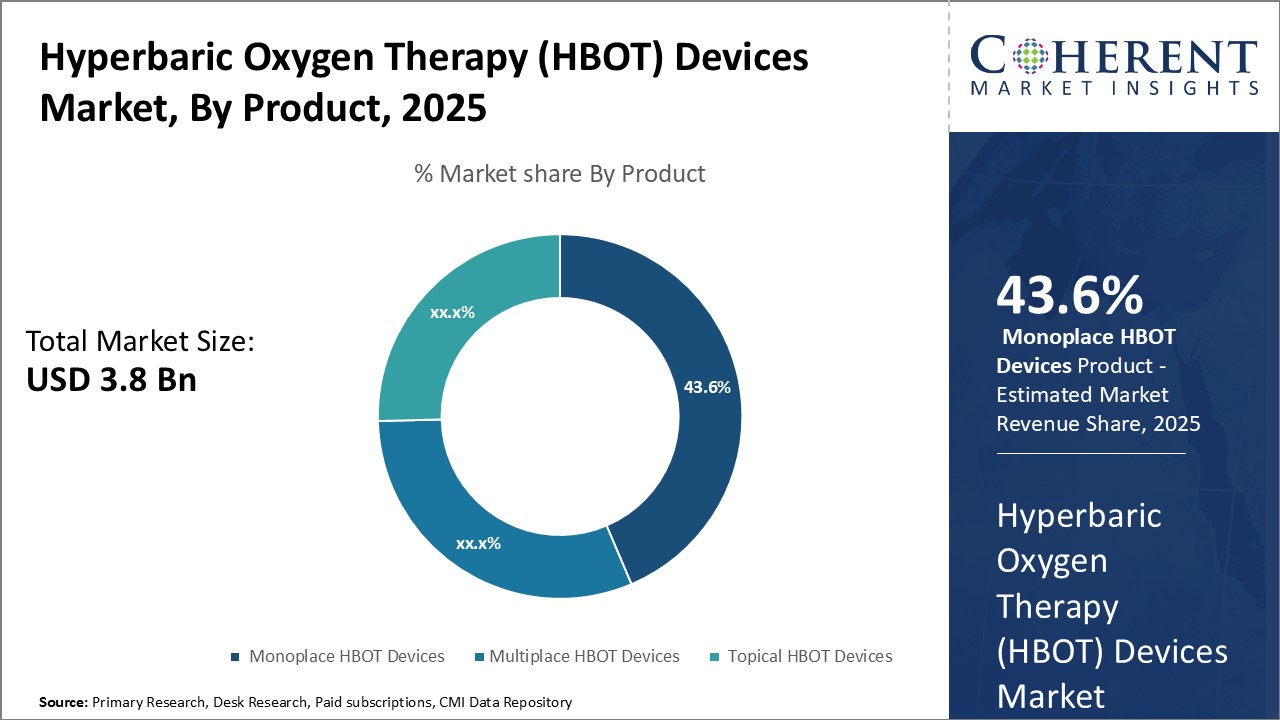
- Based on Product, the Monoplace HBOT Devices segment is estimated to contribute the highest share of the market with 44.6%in 2026 owing to their convenience and portability.
- Based on Application, the Wound Healing segment is expected to contribute the highest share of the market with 38.6% in 2026 owing to the growing prevalence of non-healing wounds and increased recognition of HBOT as an effective treatment option.
- Based on end User, the Hospitals segment is expected to contribute the highest share of the market with 42.7% in 2026, as they serve as the primary centers for delivering hyperbaric oxygen therapy.
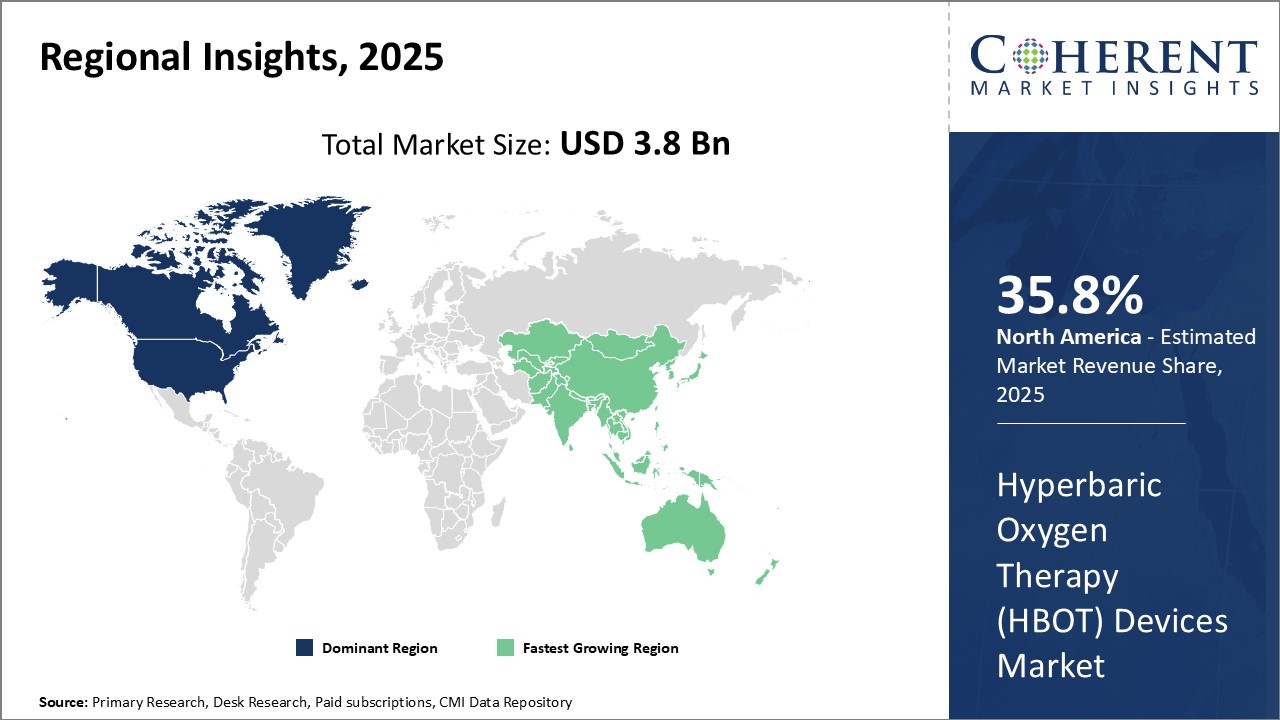
- Based on Region, North America is expected to top the global market with 35.8% share, followed by Asia Pacific with 28.2% share in 2026.
Market Overview
The growing adoption of Hyperbaric Oxygen Therapy (HBOT) devices for various disease indications such as soft tissue injuries, air or gas embolism, and healing chronic wounds is expected to drive the market growth during the forecast period. The global Hyperbaric Oxygen Therapy (HBOT) devices market is expected to witness a steady growth owing to the rising prevalence of chronic wounds, increasing incidence of conditions such as diabetic wounds and infections where HBOT proves to be an effective therapeutic solution. Furthermore, rising awareness about the therapeutic benefits of HBOT and growth in healthcare expenditure are also contributing to the growth of global hyperbaric oxygen therapy (HBOT) devices market demand.
Current Events and their Impact on the Hyperbaric Oxygen Therapy (HBOT) Devices Market
Current Event | Description and its Impact |
Regulatory Changes & Reimbursement Policies |
|
Clinical Research Breakthroughs |
|
End User Feedback And Unmet Needs
End User Feedback on HBOT Devices
- Patient Comfort: Many patients experience claustrophobia, anxiety, noise discomfort, and temperature issues during treatment. Long sessions and limited mobility inside chambers also affect comfort.
- Usability for Clinicians: Operators find some devices complex and requiring extensive training. Maintenance needs and lack of real-time safety monitoring cause operational challenges.
- Clinical Limitations: Current devices offer limited customization of treatment protocols and poor integration with medical records and monitoring tools.
Unmet Needs in HBOT Devices
- Enhanced Patient Comfort: Larger, transparent chambers, noise reduction, temperature control, and more comfortable, flexible treatment options.
- Advanced Safety & Monitoring: Real-time patient and chamber monitoring, automated safety features, and remote monitoring capabilities.
- Simplified Operation: User-friendly interfaces, minimal training requirements, and predictive maintenance systems.
- Treatment Personalization & Data Integration: Adaptive protocols based on patient response and seamless EMR integration for better outcome tracking.
- Accessibility & Cost: Portable, affordable devices for broader use including home therapy, with lower operational costs.
- Current Industry Events of 2026
- Market Size Estimation
- Regional Breakdown
- Competitive Landscape
- Customer Intelligence
- Segmental Analysis
- Pricing Analysis
- Key Market Drivers, Challenges & Future Trends
- Customized Insights Section
Segmental Insights
Hyperbaric Oxygen Therapy (HBOT) Devices Market Insights, By Product
Monoplace HBOT Devices Dominate due to Enhanced Convenience Offered
In terms of product, the Monoplace HBOT devices segment is estimated to contribute the highest share of the market with 44.6% in 2026 owing to their convenience and portability. Monoplace devices only accommodate one patient at a time but offer high flexibility as they can be easily transported and installed wherever needed. This has boosted their popularity for use in homecare settings, rural clinics, and ambulances where space and infrastructure are major constraints. Their compact size allows for point-of-care treatment with minimal setup requirements. Additionally, the self-contained design of monoplace chambers simplifies logistics and increases affordability compared to complex multiplace units. This has accelerated their adoption across emerging markets with limited healthcare budgets. Monoplace chambers are also favored for their individualized approach that offers complete isolation and hyperbaric conditions tailored to a single patient's therapy needs.
A study published June 20, 2024, in Medical Devices: Evidence and Research details a mechanical enhancement in monoplace hyperbaric chambers designed to improve safety and comfort. Researchers from Yonsei University modified the oxygen supply to aim directly at patients and added a cooling mechanism. Tests at 2.0 and 3.0 ATA showed improved gas readings lower CO₂ levels, stabilized humidity, and temperature control measurable through a 3-way repeated measures ANOVA.
-devices-market-by-application.webp "Hyperbaric Oxygen Therapy (HBOT) Devices Market, By Material")
Hyperbaric Oxygen Therapy (HBOT) Devices Market Insights, By Application
Wound Healing Dominates owing to HBOT’s Application in Wound Management
In terms of application, the wound healing segment is expected to contribute the highest share of the market with 38.6% in 2026 owing to the growing prevalence of non-healing wounds and increased recognition of HBOT as an effective treatment option. Hyperbaric oxygen therapy (HBOT) devices work by stimulating angiogenesis or formation of new blood vessels to improve blood supply and oxygen delivery at the wound site, which is essential for natural wound healing. It is particularly effective for chronic wounds such as diabetic foot ulcers, pressure sores, and wounds resulting from radiation therapy or transplants. With more people suffering from diabetes, vascular diseases and mobility issues, the incidences of hard-to-heal wounds have risen tremendously creating high demand for hyperbaric oxygen therapy. Studies show HBOT supports antibiotic effectiveness and promotes vascular growth, making it especially effective for diabetic foot ulcers. This method offers hope in reducing amputations and improving patient outcomes. Additionally, recent clinical research has demonstrated HBOT's benefits in accelerating healing of wounds including burns and injuries, further promoting its usage for various traumatic and post-surgical indications.
In December 2024, Bridgeport Hospital reports that diabetic patients with stubborn foot wounds are benefiting from hyperbaric oxygen therapy (HBOT) at its Wound Healing & Hyperbaric Medicine Center. At the hospital patients breathe pure oxygen in a pressurized chamber, increasing tissue oxygenation, fighting infection, and enhancing the healing of chronic ulcers unresponsive to standard care.
Hyperbaric Oxygen Therapy (HBOT Regulatory Changes & Reimbursement Policies) Devices Market Insights, By End User
Hospitals Offer Concentrated Service Delivery
In terms of end user, the hospitals segment is expected to contribute the highest share of the market with 42.7% in 2026 as they serve as the primary centers for delivering hyperbaric oxygen therapy. Hospitals have necessary infrastructure for safely operating complex hyperbaric equipment along with round-the-clock availability of trained medical professionals for monitoring patients undergoing pressurized oxygen treatment. This makes them suitable for management of severe and complicated cases typically seen in hospital set ups. Additionally, co-location of HBOT facilities within hospitals provides convenience to in-patients and ensures streamlined administration for multi-therapeutic procedures. The concentration of specialized staff and resources in hospitals also favors centralized service delivery and economies of scale. This has led to higher procurement of HBOT devices by hospitals compared to other end users to effectively meet increasing in-patient and out-patient therapy needs.
In October 2024, Hospital da Luz Lisboa launched its new hyperbaric chamber, enhancing regional access to advanced wound healing and recovery treatments. The sophisticated monoplace unit delivers pressurized oxygen therapy above atmospheric levels—facilitating cellular regeneration and accelerated recovery from chronic wounds, infections, sports injuries, and post-surgical conditions.
Regional Insights
North America Hyperbaric Oxygen Therapy (HBOT) Devices Market Trends
North America’s dominance in the hyperbaric oxygen therapy (HBOT) devices market with a share of 35.8% in 2026 can be attributed to factors such as the strong presence of leading manufacturers, favorable reimbursement policies, rising incidence of chronic wounds, and cardiovascular diseases. Additionally, the growing healthcare expenditure and awareness among physicians and patients have significantly boosted adoption. Key players like Hyperbaric SAC and Sechrist Industries continue to introduce innovative products and expand access to therapy across the region. Clinical studies have demonstrated significant improvements in cognitive function, stroke recovery, traumatic brain injury, and even erectile dysfunction, with some trials showing up to 30% improvement in memory and attention among post-stroke patients. The International Hyperbarics Association (IHA) has featured many of these findings and continues to promote both pure and mild HBOT.
In December 2024, USF Health introduced its state-funded Hyperbaric Oxygen Therapy (HBOT) clinical trial, welcoming its first patient to the new center. Florida House Speaker Paul Renner visited the facility to mark the occasion and highlight the initiative's importance in treating veterans and first responders suffering from traumatic brain injuries (TBI). The trial aims to assess the effectiveness of HBOT in improving cognitive and neurological outcomes.
Asia Pacific Hyperbaric Oxygen Therapy (HBOT) Devices Market Trends
Asia Pacific exhibits the fastest growth with a share of 28.2% in 2026, led by countries such as China, India, and Japan. This can be explained by the rising geriatric population, improving access to healthcare facilities, increasing healthcare expenditures, and supportive government initiatives to promote indigenous manufacturing. Notable domestic brands such as Yangzhou Jiahe Hyperbaric Oxygen Therapy Chamber Equipment Co. Ltd. are well-positioned to tap opportunities in the high potential yet untapped markets. In January 2026, Fiji unveiled a new hyperbaric oxygen therapy (HBOT) chamber at Pacific Specialist Healthcare (PSH) in Nadi. The chamber aims to support the growing diving tourism sector, especially shark-diving by providing essential treatment for decompression sickness and arterial gas embolism
Hyperbaric Oxygen Therapy (HBOT) Devices Market Outlook for Key Countries
U.S. Hyperbaric Oxygen Therapy (HBOT) Devices Market Trends
The U.S. accounted the prominent share in the hyperbaric oxygen therapy (HBOT) devices market, driven by the demand for wound healing treatments, including hyperbaric oxygen therapy (HBOT). Increased disposable income has encouraged consumers to seek advanced medical therapies. In February 2023, Maui Memorial Medical Center in the U.S. launched a wound care clinic offering comprehensive treatment with HBOT for non-healing wounds. This is further adding to the hyperbaric therapy devices market share.
India Hyperbaric Oxygen Therapy (HBOT) Devices Market Trends
India hyperbaric oxygen therapy (HBOT) devices market witnesses’ significant growth due to factors like a large population with increasing healthcare needs, a thriving medical tourism industry, and growing awareness of HBOT’s benefits. Government support, affordable healthcare options, and advancements in medical technologies also contribute. Notably, India’s rapidly aging population is creating a profound shift in the country’s healthcare and housing landscape. With over 300 million Indians projected to be aged 60+ by 2050, the demand for specialized senior care is rising sharply. One critical area seeing momentum is the adoption of Hyperbaric Oxygen Therapy (HBOT) for managing chronic diabetic wounds, a common complication among the elderly, further boosting the market.
Germany Hyperbaric Oxygen Therapy (HBOT) Devices Market Trends
Germany hyperbaric oxygen therapy (HBOT) devices market is supported by government initiatives promoting advanced medical treatments. In January 2023, the German Federal Ministry of Health announced funding for innovative healthcare technologies, which is expected to boost the adoption of HBOT devices in clinical settings. Additionally, Germany is exhibiting latest innovations in oxygen therapy and hyperbaric solutions and showcasing underscored growing global demand for accessible respiratory devices. For instance, in November 2026, Shenyang-based Canta Medical made a strong impression at the MEDICA 2024 exhibition in Germany. The company featured a broad portfolio ranging from portable and stationary oxygen concentrators to both soft and hard hyperbaric chambers. Emphasizing its leadership, Canta Medical engaged international attendees across hospitals, home-care, sports, and beauty segments.
U.K. Hyperbaric Oxygen Therapy (HBOT) Devices Market Trends
The U.K. hyperbaric oxygen therapy (HBOT) devices market is characterized by a growing emphasis on non-invasive treatment options. In February 2023, the National Health Service (NHS) launched a new initiative to integrate HBOT into standard care practices for chronic wounds, promoting wider use of these devices.
Market Players, Key Development, and Competitive Intelligence
Key Developments
- In January 2025, HCG Manavata Cancer Centre (HCG MCC) inaugurated a cutting-edge Hyperbaric Oxygen Therapy (HBOT) department capable of treating up to four patients simultaneously—upgrading from traditional monoplace chambers. This facility delivers 100% oxygen in a pressurized environment, HBOT accelerates healing for chronic wounds—such as diabetic foot ulcers—and aids recovery from brain injuries by reducing inflammation and improving tissue oxygenation.
- In February 2025, The ROS Medical Fitness Center in Jubilee Hills launched Hyderabad’s first Make‑in‑India hyperbaric oxygen therapy (HBOT) chamber, offering residents a cutting-edge wellness option. This non-invasive treatment has already benefited 20 patients, who breathe 100% oxygen in a pressurized environment to accelerate healing, reduce inflammation, and boost immunity.
- In February 2025, Altru Clinic at 1300 South Columbia Road launched medical-grade hyperbaric oxygen therapy (HBO), offering patients locally accessible wound and tissue healing treatments. Under this therapy, patients breathe 100% oxygen in a pressurized chamber, boosting circulation and promoting tissue recovery.
- In February 2023, Western University of Health Sciences (WesternU) partnered with NexGen Hyperbaric, a Physiotherapy Center to advance research on hyperbaric oxygen therapy for addressing physical and mental health conditions. The collaboration emphasizes cellular studies and clinical trials focused on traumatic brain injury (TBI) and post-traumatic stress disorder (PTSD).
- In January 2023, ADK Hospital, aprivate tertiary care hospital in Maldives, became the first medical facility in the Maldives to launch a Hyperbaric Treatment Unit, also known as a decompression chamber.
Market Report Scope
Hyperbaric Oxygen Therapy (HBOT) Devices Market Report Coverage
| Report Coverage | Details | ||
|---|---|---|---|
| Base Year: | 2025 | Market Size in 2026: | USD 4.01 Bn |
| Historical Data for: | 2020 To 2024 | Forecast Period: | 2026 To 2033 |
| Forecast Period 2026 to 2033 CAGR: | 5.5% | 2033 Value Projection: | USD 5.83 Bn |
| Geographies covered: |
| ||
| Segments covered: |
| ||
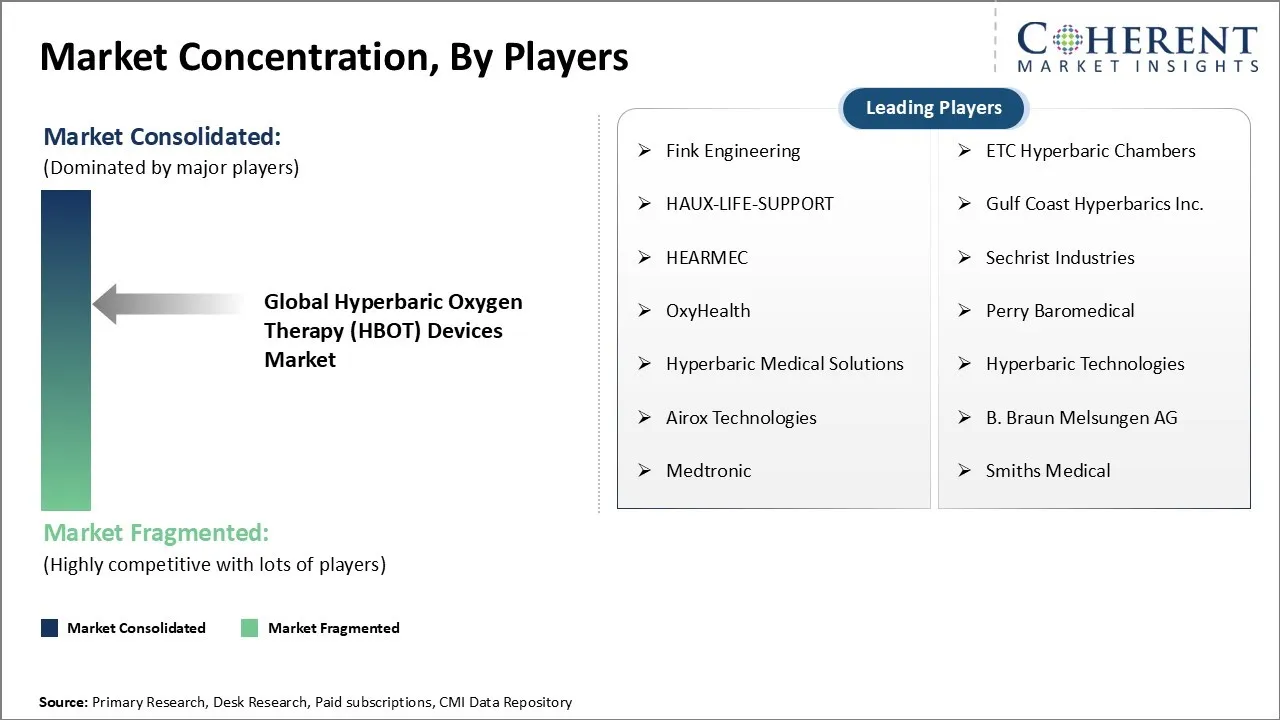
| Companies covered: | Fink Engineering, ETC Hyperbaric Chambers, HAUX-LIFE-SUPPORT, Gulf Coast Hyperbarics Inc., HEARMEC, Sechrist Industries, OxyHealth, Perry Baromedical, Hyperbaric Medical Solutions, Hyperbaric Technologies, Airox Technologies, B. Braun Melsungen AG, Medtronic, and Smiths Medical | ||
| Growth Drivers: |
| ||
| Restraints & Challenges: |
| ||
Market Dynamics
Hyperbaric Oxygen Therapy (HBOT) Devices Market Growth Driver
Increasing prevalence of chronic diseases such as diabetes and non-healing wounds
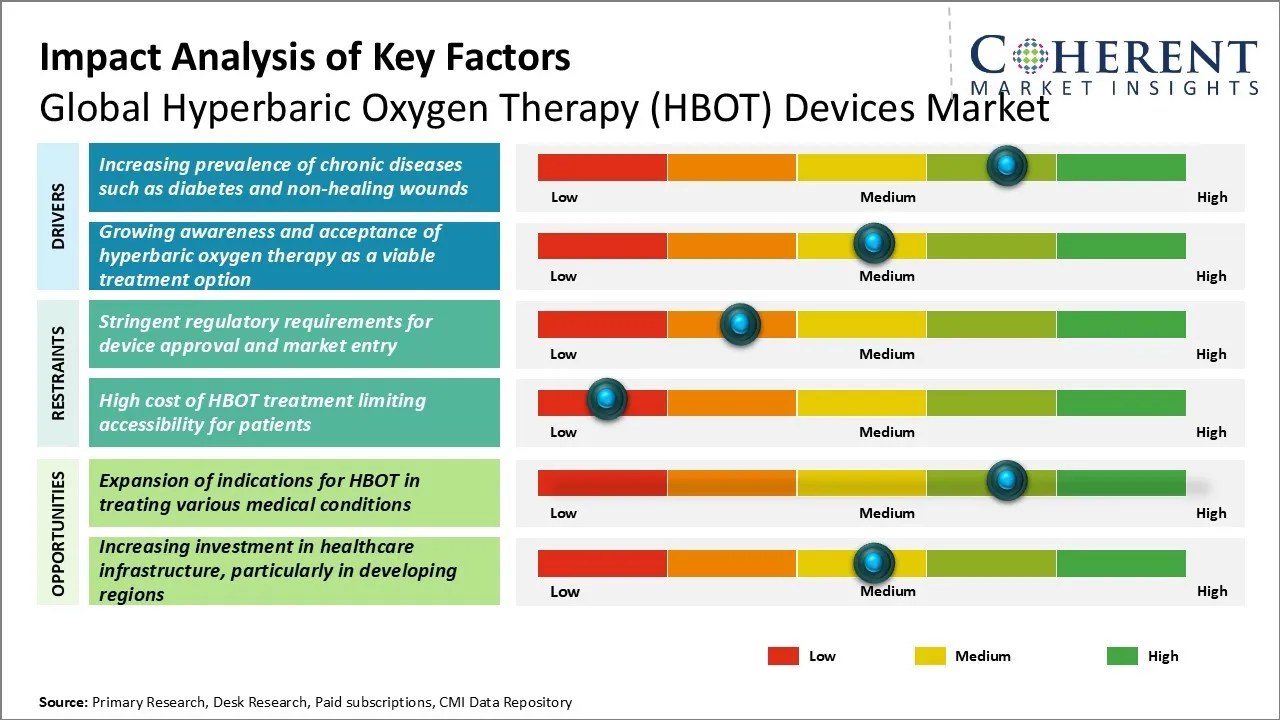
Chronic diseases have emerged as one of the major public health challenges in both developed and developing countries. The number of people suffering from diabetes, in particular, has increased exponentially over the past few decades.. Diabetes severely impacts wound healing and several patients struggle with non-healing wounds for prolonged periods. Hyperbaric oxygen therapy has proven to be an effective treatment option for diabetic wounds and other non-healing chronic wounds that are not responding to conventional treatments.
For instance, according to the Medscape, it is estimated 828 million adults (420 women, 408 men) had diabetes in 2022. Where, India (212 million) and China (148 million) accounted for the largest proportions with diabetes, followed by the United States, Pakistan, Indonesia, and Brazil. In the U.S., over USD 300 billion is spent annually on medical costs and lost workdays due to DM. It is estimated that one in three to one in five DM patients will develop a chronic non-healing wound, such as a diabetic foot ulcer (DFU), with a high recurrence rate (40% within one year and 65% within five years).
Hyperbaric Oxygen Therapy (HBOT) Devices Market Opportunities
Expansion of indications for HBOT in treating various medical conditions
One of the major opportunities in the global hyperbaric oxygen therapy (HBOT) devices market forecast is the expansion of approved indications for treating various medical conditions using HBOT. Historically, HBOT was primarily used for decompression sickness and carbon monoxide poisoning. However, ongoing research has proven its efficacy for a wider range of soft tissue infections, diabetes, multiple sclerosis, and stroke, among others. Key players are actively collaborating with research institutions and hospitals to conduct large clinical trials to gather clinical evidence for expanding usage of HBOT. With growing acceptance of HBOT as an adjunct or alternative therapy, more insurance companies are likely to provide coverage which will increase accessibility.
Analyst Opinion (Expert Opinion)
The Hyperbaric Oxygen Therapy (HBOT) devices market value is undergoing a pivotal shift—from being a niche adjunct treatment to becoming a frontline modality in complex wound management, oncology support, and neurorehabilitation. This evolution is not driven by traditional reimbursement pull or hospital-based protocol push, but by a growing body of mechanistic and clinical evidence—and crucially, by deployment innovation across outpatient and portable segments.
We are seeing a demand-side inversion in HBOT adoption. Historically dominated by tertiary hospitals, the momentum is now with standalone wound care centers and private clinics, particularly in North America and East Asia. For example, in the United States alone, over 75% of non-healing diabetic foot ulcers now get evaluated for HBOT eligibility within 60 days of onset, up from 43% in 2019 (Source: American Diabetes Association, 2024 clinical update). This is a direct result of cross-disciplinary recognition of HBOT as not just a salvage therapy, but a proactive adjunct in tissue recovery.
From a device innovation standpoint, the market is clearly bifurcating between monoplace units for outpatient high-frequency use and multiplace chambers increasingly retrofitted for ICU-adjacent applications. The clinical pivot toward neurological indications—such as post-stroke recovery and traumatic brain injury—has created new functional requirements like EEG integration, variable pressurization cycles, and AI-based oxygen exposure optimization. Companies not aligning to these shifts (particularly legacy OEMs still focused solely on limb salvage indications) are falling out of the value chain.
Regulatory openness is also expanding. For instance, China’s National Medical Products Administration (NMPA) approved more than 22 new HBOT clinics in 2024, with local governments in Guangdong and Jiangsu provinces offering subsidies to install hybrid HBOT and physiotherapy setups in secondary hospitals. This signals state-level strategic interest in HBOT infrastructure for chronic illness management.
Speak to the analyst
Want personalized insights?
Take the findings above to one of our principal consultants, or have the report rebuilt around the segments, geographies and competitors you actually track.
Market Segmentation
- By Product Insights (Revenue, USD Bn, 2021 - 2033)
- Monoplace HBOT Devices
- Multiplace HBOT Devices
- Topical HBOT Devices
- By Application Insights (Revenue, USD Bn, 2021 - 2033)
- Wound Healing
- Decompression Sickness
- Infection Treatment
- Gas Embolism
- Others
- By End User Insights (Revenue, USD Bn, 2021 - 2033)
- Hospitals
- Clinics
- Ambulatory Surgery Centers
- Home Care Settings
- Regional Insights (Revenue, USD Bn, 2021 - 2033)
- North America
- U.S.
- Canada
- Latin America
- Brazil
- Argentina
- Mexico
- Rest of Latin America
- Europe
- Germany
- U.K.
- Spain
- France
- Italy
- Russia
- Rest of Europe
- Asia Pacific
- China
- India
- Japan
- Australia
- South Korea
- ASEAN
- Rest of Asia Pacific
- Middle East
- GCC Countries
- Israel
- Rest of Middle East
- Africa
- South Africa
- North Africa
- Central Africa
- North America
- Key Players Insights
- Fink Engineering
- ETC Hyperbaric Chambers
- HAUX-LIFE-SUPPORT
- Gulf Coast Hyperbarics Inc.
- HEARMEC
- Sechrist Industries
- OxyHealth
- Perry Baromedical
- Hyperbaric Medical Solutions
- Hyperbaric Technologies
- Airox Technologies
- B. Braun Melsungen AG
- Medtronic
- Smiths Medical
Sources
Primary Research Interviews from the following stakeholders:
Stakeholders:
- Interviews with medical device manufacturers, hospital procurement teams, critical care specialists, rehabilitation center managers, biomedical engineers, and oxygen therapy equipment distributors across key global healthcare markets.
Specific stakeholders:
- Chief Medical Officers (CMOs) and Pulmonologists at multispecialty hospitals (e.g., Cleveland Clinic, Apollo Hospitals, Mayo Clinic)
- Procurement managers and biomedical engineering heads at leading hospitals and trauma centers
- Directors of hyperbaric oxygen therapy units in military and veterans’ hospitals
- Clinical researchers specializing in wound healing, carbon monoxide poisoning, and chronic infection treatments
- Heads of logistics and supply chain at home healthcare providers and specialty clinics
- Product development leads and regulatory compliance managers at OEMs of HBOT chambers and accessories
Databases:
- U.S. Food and Drug Administration (FDA) – Device Registration and Listing
- European Database on Medical Devices (EUDAMED)
- World Health Organization (WHO) – Global Health Observatory
- UN Comtrade Database – Medical Equipment Trade Data
- China Customs Statistics
- Ministry of Health and Family Welfare, Government of India Japan Ministry of Health, Labour and Welfare (MHLW)
- Central Drugs Standard Control Organization (CDSCO), India
- Canadian Institute for Health Information (CIHI)
Magazines:
- MedTech Dive
- MDDI (Medical Device and Diagnostic Industry)
- Today's Medical Developments
- Medical Device Network
- HealthTech Magazine
- Hospital Management Magazine
- Healthcare Purchasing News
- Technology Networks – Clinical Diagnostics
Journals:
- Journal of Hyperbaric Medicine
- Undersea and Hyperbaric Medical Society (UHMS) Journal
- Journal of Wound Care
- International Journal of Hyperbaric Medicine
- Journal of Clinical Monitoring and Computing
- Journal of Biomedical Science and Engineering
- Annals of Biomedical Engineering
- Respiratory Care Journal
Newspapers:
- The Wall Street Journal – Healthcare & Pharmaceuticals
- The Economic Times – Healthcare Devices & Life Sciences
- The Hindu Business Line – MedTech and Innovation
- Financial Times – Global HealthTech Insights
- Nikkei Asia – Medical Technology Reports
- South China Morning Post – HealthTech Developments
Associations:
- Undersea and Hyperbaric Medical Society (UHMS)
- Association for the Advancement of Medical Instrumentation (AAMI)
- American Medical Device Manufacturers Association
- European Society of Hyperbaric Medicine (ESHM)
- Indian Association of Biomedical Scientists
- National Pressure Injury Advisory Panel (NPIAP)
- Global Clinical Engineering Alliance
- Asia Pacific Medical Technology Association (APACMed)
Public Domain Sources:
- U.S. Centers for Medicare & Medicaid Services (CMS) – Reimbursement Schedules for HBOT
- National Health Service (NHS), UK – HBOT Protocols
- Ministry of Health, Singapore – Approved HBOT Facilities
- Directorate General of Health Services (DGHS), India
- Health Canada – Medical Device Licensing
- Australian Government Department of Health – Hyperbaric Guidelines
- World Bank Health Sector Reports
- NITI Aayog – Indian Healthcare Infrastructure Reports
- European Medicines Agency (EMA) – Device Usage Trends
Proprietary Elements:
- CMI Data Analytics Tool, and Proprietary CMI Existing Repository of information for last 8 years
Get access to 250+ pages report
Every segment, forecast, competitor profile and data table behind the analysis above — available for instant download.
- ESOMAR Member
- ISO 9001:2015 Certified
- D-U-N-S Registered
- GDPR & CCPA Compliant
Missing comfort of reading report in your local language? Find your preferred language:
Transform your Strategy with Exclusive Trending Reports
Frequently Asked Questions
The Hyperbaric Oxygen Therapy (HBOT) Devices Market is estimated to be valued at USD 4.01 Bn in 2026, and is expected to reach USD 5.83 Bn by 2033.
The CAGR of the Hyperbaric Oxygen Therapy (HBOT) Devices Market is projected to be 5.5% from 2026 to 2033.
Increasing prevalence of chronic diseases such as diabetes and non-healing wounds and growing awareness and acceptance of hyperbaric oxygen therapy as a viable treatment option are the major factors driving the growth of the global hyperbaric oxygen therapy (HBOT) devices market.
Stringent regulatory requirements for device approval and market entry and high cost of HBOT treatment limiting accessibility for patients are the major factors hampering the growth of the global hyperbaric oxygen therapy (HBOT) devices market.
In terms of product, the monoplace HBOT devices segment is estimated to dominate the market revenue share in 2026.
Fink Engineering, ETC Hyperbaric Chambers, HAUX-LIFE-SUPPORT, Gulf Coast Hyperbarics Inc., HEARMEC, Sechrist Industries, OxyHealth, Perry Baromedical, Hyperbaric Medical Solutions, Hyperbaric Technologies, Airox Technologies, B. Braun Melsungen AG, Medtronic, and Smiths Medical are the major players.
North America is expected to lead the global hyperbaric oxygen therapy (HBOT) devices market in 2026.