

Interventional Intracranial Aneurysm Devices Market Size and Forecast: 2026-2033
The Interventional Intracranial Aneurysm Devices Market is estimated to be valued at USD 3.6 Bn in 2026 and is expected to reach USD 9.4 Bn by 2033, exhibiting a compound annual growth rate (CAGR) of 7.6% from 2026 to 2033.
Key Takeaways
- By Procedure Type, Aenurysm Coil Embolization hold the largest market share of 37.8% in 2026 owing to its rising prevalence of intracranial aneurysms.
- By Intracranial Aneurysm Type, Fusiform Aneurysm expected to hold largest market share of 36.8% in 2026 owing to the complex morphology driving need for advanced devices.
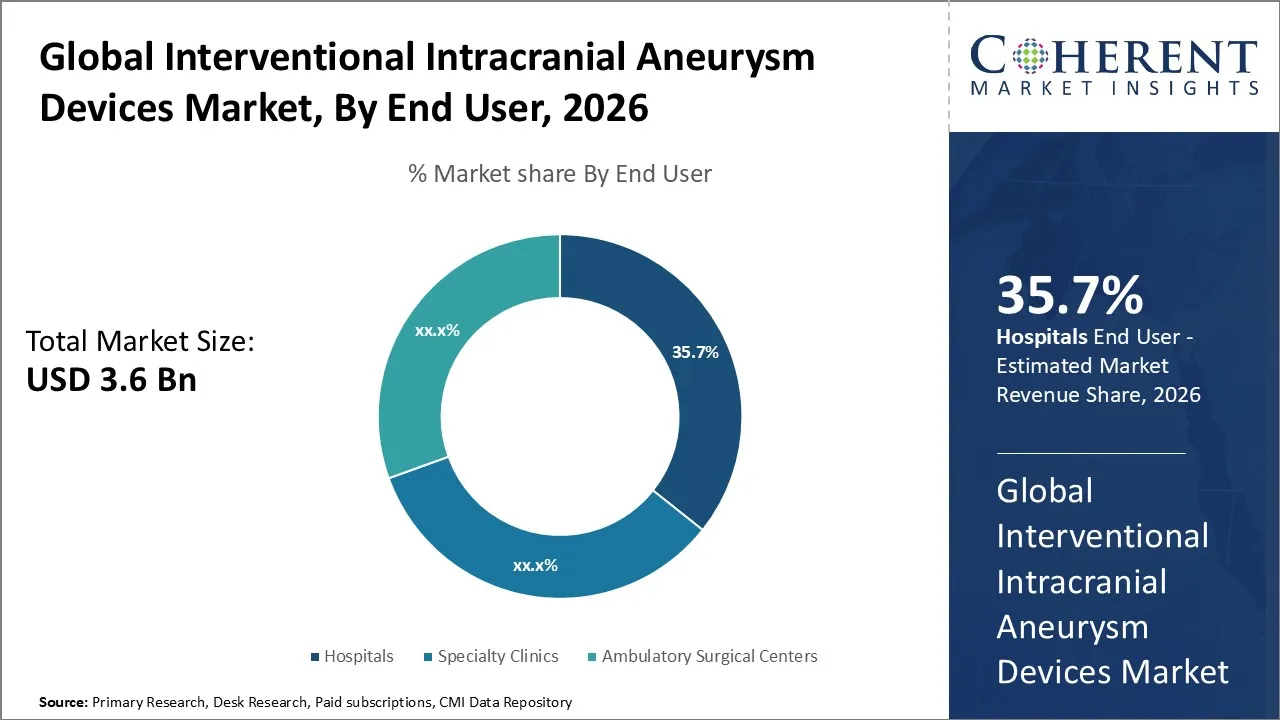
- By End User, Hospitals acquired the prominent market share of 35.7% in 2026 owing to the high complexity of aneurysm procedures.
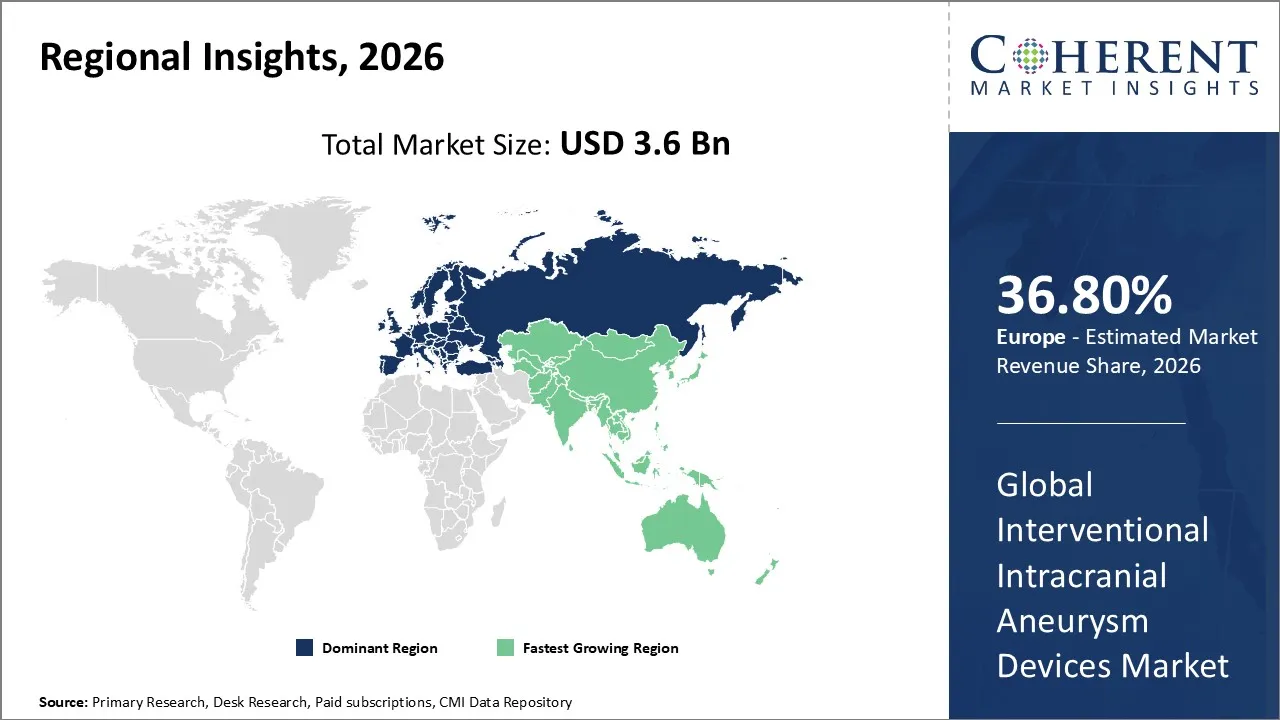
- By Region, Europe dominates the overall market with an estimated share of 36.8% in 2026 owing to the rising burden of stroke & cerebrovascular diseases.
Market Overview
Rising burden of cerebrovascular diseases, increasing awareness, and a strong preference for minimally invasive procedures drive the interventional intracranial aneurysm devices market. Technological advancements in coil embolization, flow diverters, and stent-assisted systems enhance treatment outcomes and accelerate clinical adoption.
Current Events and their Impact on the Interventional Intracranial Aneurysm Devices Market
Current Events | Description and its impact |
Geopolitical and Regulatory Landscape |
|
Technological Advancements and Innovation |
|
Disease Burden and Demographic Trends |
|
Segmental Insights
- Current Industry Events of 2026
- Market Size Estimation
- Regional Breakdown
- Competitive Landscape
- Customer Intelligence
- Segmental Analysis
- Pricing Analysis
- Key Market Drivers, Challenges & Future Trends
- Customized Insights Section
Interventional Intracranial Aneurysm Devices Market Insights, By End Users - Hospitals contribute the highest share of the market owing to its availability of advanced infrastructure
Hospitals acquired the prominent market share of 35.7% in 2026. Advanced infrastructure, specialized neurovascular teams, and the ability to perform complex procedures drive hospitals’ role in the interventional intracranial aneurysm devices market. Hospitals provide primary care for both emergency and elective aneurysm interventions, delivering intensive monitoring and post-operative support. Skilled neurosurgeons and interventional radiologists enable the adoption of advanced devices such as coil systems and flow diverters. Hospitals also conduct clinical trials and adopt new technologies early, further promoting the use and expansion of neurointerventional devices.
Interventional Intracranial Aneurysm Devices Market Insights, By Procedure Type - Aenurysm Coil Embolization contribute the highest share of the market owing to its advancements in coil technology
Aenurysm Coil Embolization hold the largest market share of 37.8% in 2026. The rising prevalence of intracranial aneurysms and the growing preference for minimally invasive treatments drive the aneurysm coil embolization segment. Ongoing advancements in coil technologies, including detachable and bioactive coils, improve procedural safety and effectiveness. Advanced imaging techniques enable early and accurate diagnosis, increasing procedure volumes. Hospitals and specialized centers promote adoption by providing skilled professionals and robust infrastructure. Favorable clinical outcomes and shorter recovery times further encourage physicians and patients to prefer coil embolization over surgical alternatives. For instance, in August 2025, MicroPort NeuroScientific unveiled Numen coil embolization system in Egypt, in partnership with PentaMed. At Neuro Espitalia Hospital in Cairo, Farouk Hassan treated a large anterior communicating artery aneurysm, deploying seven Numen coils with Y-stenting to achieve complete occlusion and positive clinical results.
Interventional Intracranial Aneurysm Devices Market Insights, By Intracranial Aneurysm Type - Fusiform Aneurysm contribute the highest share of the market owing to its strong adoption of flow diverter technology
Fusiform Aneurysm expected to hold largest market share of 36.8% in 2026. The complex morphology of fusiform aneurysms drives demand for advanced treatment options such as flow diverters and stent-based reconstruction devices. The limited effectiveness of traditional coiling techniques pushes clinicians to adopt innovative endovascular solutions. Advanced imaging technologies improve detection of these rare but high-risk aneurysms. Their strong association with serious complications, including stroke and vessel damage, necessitates timely intervention. Continuous technological advancements and growing expertise in neurointerventional procedures further drive market growth. For instance, Codman Neuro has launched the Enterprise 2 Vascular Reconstruction Device, a self-expanding stent system for treating wide-necked intracranial aneurysms and supporting endovascular coils. It is FDA-approved in the U.S. as a Humanitarian Use Device for aneurysms with necks ≥4 mm or dome-to-neck ratios <2.
Regional Insights
Europe Interventional Intracranial Aneurysm Devices Market Trends
Europe dominates the overall market with an estimated share of 36.80% in 2026. Increasing demand for minimally invasive treatments and the growing prevalence of cerebrovascular diseases drive Europe’s interventional intracranial aneurysm devices market. Specialized stroke and neurovascular centers expand access to advanced procedures, while strong healthcare infrastructure and skilled interventional teams promote widespread use of coil systems, flow diverters, and stent-assisted devices. Rising awareness, early diagnosis through advanced imaging, and favorable reimbursement policies in key countries further boost market activity. Ongoing innovation, clinical trials, and integration of new technologies continue to shape regional trends. For instance, in November 2025, Kaneka Corporation began selling its i-ED COIL, a brain aneurysm embolization coil, in Europe. After receiving EC certification under the EU Medical Device Regulation in July, the company will distribute it mainly through Kaneka Medical Europe N.V.
Asia Pacific Interventional Intracranial Aneurysm Devices Market Trends
Improving healthcare infrastructure and expanding access to specialized neurointerventional care are driving the growth of the Asia Pacific interventional intracranial aneurysm devices market. Rising awareness of cerebrovascular diseases and advanced imaging technologies enable earlier detection and treatment. Hospitals and tertiary care centers, equipped with skilled neurovascular teams, actively adopt coil systems, flow diverters, and stent-assisted devices. Government initiatives, increased investment in medical technology, and rising procedure volumes continue to shape and accelerate market trends across the region. For instance, Apollo Hospitals Navi Mumbai, a leading multi-specialty tertiary care hospital in Maharashtra, successfully treated two life-threatening brain aneurysm cases using the advanced ‘Contour Device’ via the endovascular route.
United Kingdom Interventional Intracranial Aneurysm Devices Market Trends
Hospitals and specialized neurovascular centers are expanding access to advanced endovascular treatments, driving the evolution of the United Kingdom interventional intracranial aneurysm devices market. Increased emphasis on early diagnosis through advanced imaging and growing awareness of cerebrovascular conditions boosts demand for coil embolization, flow diverters, and stent-assisted procedures. Government support, structured healthcare programs, and established reimbursement systems promote the adoption of innovative devices. Ongoing clinical research, technology integration, and training of skilled neurointerventional teams continue to shape market trends throughout the UK. For instance, Covidien plc strengthened its neurovascular portfolio by launching its Pipeline Flex embolization device in Europe at the annual Live Interventional Neuroradiology & Neurosurgery Course to treat unruptured brain aneurysms.
Japan Interventional Intracranial Aneurysm Devices Market Trends
Hospitals and specialized neurovascular centers are adopting cutting-edge endovascular technologies, driving growth in Japan’s interventional intracranial aneurysm devices market. Rising awareness of cerebrovascular diseases and widespread use of advanced imaging enable early diagnosis and timely intervention. Skilled neurointerventional teams and well-equipped hospitals actively perform coil embolization, flow diverters, and stent-assisted procedures. Strong government support, robust healthcare infrastructure, and ongoing clinical research promote the adoption of innovative devices, while technology integration and specialized training programs continue to advance market development across Japan
End-user Feedback and Unmet Needs in the Interventional Intracranial Aneurysm Devices Market
- Demand for Enhanced Device Precision: End-users report a need for devices that allow more precise deployment, especially in complex or wide-neck aneurysms. Improved control during procedures can reduce complications, improve occlusion rates, and allow treatment in anatomically challenging cases. Enhanced navigability and repositionable systems are highly sought after by interventional neuroradiologists and neurosurgeons.
- Reduced Procedural Complexity: Clinicians express a desire for devices that simplify endovascular procedures and reduce operative time. Streamlined systems, fewer device exchanges, and integrated delivery mechanisms can lower technical difficulty, improve workflow efficiency, and enhance patient safety, particularly in emergency or high-risk cases where procedural speed is critical.
- Improved Long-Term Outcomes: Physicians emphasize the need for devices that maintain durable aneurysm occlusion and reduce recurrence rates. Innovations that promote endothelial healing, vessel remodeling, and bioactive coil technologies are in demand to ensure stable long-term results, minimizing the need for retreatment and improving patient quality of life.
Interventional Intracranial Aneurysm Devices Market Trend
Shift Toward Minimally Invasive Treatments
The market is increasingly moving from open surgical procedures to minimally invasive endovascular interventions. Physicians prefer coil embolization, flow diverters, and stent-assisted techniques due to reduced patient trauma, shorter hospital stays, and faster recovery. Hospitals and specialized centers are expanding infrastructure to support these procedures, while ongoing device innovations continue to improve procedural safety and precision, enabling treatment of complex aneurysms that were previously considered inoperable.
Technological Innovation Driving Adoption
Manufacturers are introducing next-generation devices, including bioactive coils, flexible stents, and advanced flow diverters. These innovations enhance occlusion rates, improve device navigability, and allow treatment of anatomically complex aneurysms. Integration with imaging software, navigation systems, and real-time monitoring technologies is improving procedural accuracy. As physicians gain confidence in device performance, adoption expands across hospitals and specialized neurointerventional centers globally, positioning technological advancement as a key trend shaping market dynamics.
Interventional Intracranial Aneurysm Devices Market Opportunity
Innovation in Device Technology
There is a strong opportunity to develop next-generation devices, including bioactive coils, flexible stents, and advanced flow diverters, that improve treatment outcomes and reduce complications. Devices that offer better navigability, precise deployment, and compatibility with advanced imaging systems can address unmet clinical needs. Innovation in device design also allows treatment of complex aneurysms, including fusiform and wide-neck types, expanding the addressable patient population and creating differentiation opportunities for manufacturers in a competitive market.
Market Report Scope
Interventional Intracranial Aneurysm Devices Market Report Coverage
| Report Coverage | Details | ||
|---|---|---|---|
| Base Year: | 2025 | Market Size in 2026: | USD 3.6 Bn |
| Historical Data for: | 2020 To 2024 | Forecast Period: | 2026 To 2033 |
| Forecast Period 2026 to 2033 CAGR: | 7.6% | 2033 Value Projection: | USD 9.4 Bn |
| Geographies covered: |
| ||
| Segments covered: |
| ||
| Companies covered: | MicroPort Scientific Corporation, B. Braun SE, Stryker, MicroVention Inc., Johnson & Johnson Private Limited, Terumo Corporation, Penumbra, Inc., KANEKA CORPORATION, Perflow Medical Ltd, phenox GmbH, Evasc, ASAHI INTECC CO., LTD., Acandis GmbH, Imperative Care, Medtronic. | ||
| Growth Drivers: |
| ||
| Restraints & Challenges: |
| ||
Interventional Intracranial Aneurysm Devices Market News
- In November 2025, XCath successfully used its EVR robotic system to treat three complex brain aneurysm patients at Panama Clinic, led by Vitor Pereira and local investigator Anastasio Ameijeiras Sibauste, marking only the second-ever robotic intracranial neurovascular procedure.
Analyst Opinion (Expert Opinion)
- The trajectory of the Interventional Intracranial Aneurysm Devices landscape is increasingly defined by a pronounced clinical and innovation‑led shift rather than by mere incremental growth. Endovascular therapies have unequivocally supplanted open surgical clipping as the standard of care for the majority of aneurysm types, with endovascular coiling alone accounting for the largest share of device utilization in recent procedural volumes — a reflection of its improved safety profile, shorter hospitalization, and broader adoption across both ruptured and unruptured cases. This deep entrenchment of coil‑based therapies is supported by pervasive clinical evidence showing durable occlusion and lower morbidity, factors that have solidified clinician preference in developed neurovascular centers.
- Concomitantly, the surge in flow diversion and intrasaccular implant technologies exemplifies a fundamental repositioning of therapeutic strategies toward devices that promise more complete and durable vessel reconstruction in complex anatomies such as wide‑neck, fusiform, or bifurcation aneurysms. Flow diverters are no longer niche tools; they are rapidly establishing themselves as first‑line options in cases where traditional coiling is predictably insufficient, driven by clinical data demonstrating superior six‑month occlusion rates upwards of 80 % with fourth‑generation systems and substantial reductions in thromboembolic complications through surface engineering innovations.
- This technology pivot also underscores a broader clinical demand for procedural efficiency and resource optimization. Devices that reduce retreatment and adjunctive stenting — effectively lowering total devices per case and streamlining operative time — are gaining preferential formulary positioning among hospital procurement committees for their longer‑term value proposition, particularly as reimbursement systems pivot toward value‑based paradigms. These dynamics, coupled with regulatory fast‑track pathways that compress evidence timelines, have created windows of opportunity where early innovators can achieve rapid adoption prior to incumbents matching indications.
Speak to the analyst
Want personalized insights?
Take the findings above to one of our principal consultants, or have the report rebuilt around the segments, geographies and competitors you actually track.
Market Segmentation
- By Procedure Type
- Aenurysm Coil Embolization
- FD Placement
- Overmolded Stent Carrying Artery Occlusion
- Other Procedures (Surgical Clipping, etc.)
- By Intracranial Aneurysm Type
- Saccular Aneurysm
- Fusiform Aneurysm
- Others (Mycotic aneurysms, etc.)
- By End User
- Hospitals
- Specialty Clinics
- Ambulatory Surgical Centers
- By Regional Insights
- North America
- U.S.
- Canada
- Latin America
- Brazil
- Argentina
- Mexico
- Rest of Latin America
- Europe
- Germany
- U.K.
- Spain
- France
- Italy
- Russia
- Rest of Europe
- Asia Pacific
- China
- India
- Japan
- Australia
- South Korea
- ASEAN
- Rest of Asia Pacific
- Middle East
- GCC Countries
- Israel
- Rest of Middle East
- Africa
- South Africa
- North Africa
- Central Africa
- North America
- Key Players Insights
- MicroPort Scientific Corporation
- Braun SE
- Stryker
- MicroVention Inc.
- Johnson & Johnson Private Limited
- Terumo Corporation
- Penumbra, Inc.
- KANEKA CORPORATION
- Perflow Medical Ltd
- phenox GmbH
- Evasc
- ASAHI INTECC CO., LTD.
- Acandis GmbH
- Imperative Care
- Medtronic
Sources
Primary Research interviews
- Neurosurgeons and interventional neuroradiologists from leading hospitals
- Hospital procurement and supply chain managers
- Medical device regulatory and clinical affairs experts
- Research and development teams of device manufacturers
Databases
- PubMed
- ClinicalTrials.gov
- Scopus
- Embase
Magazines
- MedTech Strategist
- Neurology Today
- Interventional Cardiology Today
Journals
- Journal of Neurosurgery
- Stroke
- Neurosurgical Review
- American Journal of Neuroradiology
Newspapers
- The New York Times
- The Guardian
- The Wall Street Journal
Associations
- American Heart Association
- World Federation of Interventional and Therapeutic Neuroradiology
- European Stroke Organization
- Society of NeuroInterventional Surgery
Public Domain sources
- US FDA device approvals database
- European Medicines Agency (EMA) device registry
- WHO Global Health Observatory
- National health ministry reports and guidelines
Proprietary Elements
- CMI Data Analytics Tool
- Proprietary CMI Existing Repository of information for last 8 years
Get access to 250+ pages report
Every segment, forecast, competitor profile and data table behind the analysis above — available for instant download.
- ESOMAR Member
- ISO 9001:2015 Certified
- D-U-N-S Registered
- GDPR & CCPA Compliant
Missing comfort of reading report in your local language? Find your preferred language:
Transform your Strategy with Exclusive Trending Reports
Frequently Asked Questions
The Interventional Intracranial Aneurysm Devices Market is estimated to be valued at USD 3.6 Bn in 2026 and is expected to reach USD 9.4 Bn by 2033.
The market is estimated to be valued at USD 3.6 Bn in 2026.
MicroPort Scientific Corporation, B. Braun SE, Stryker, MicroVention Inc., Johnson & Johnson Private Limited, Terumo Corporation, Penumbra, Inc., KANEKA CORPORATION, Perflow Medical Ltd, phenox GmbH, Evasc, ASAHI INTECC CO., LTD., Acandis GmbH, Imperative Care, Medtronic are some of the prominent players operating in the market.
The market is expected to be valued at USD 9.4 Bn in 2033.
Europe is the prominent region in the market.
Aenurysm Coil Embolization is the prominent segment among the procedure type segment in the market.