

Global Battery Swapping Market Size and Forecast – 2026-2033
The global battery swapping market is estimated to be valued at USD 1.89 Bn in 2026 and is expected to reach USD 13.74 Bn by 2033, exhibiting a compound annual growth rate (CAGR) of 32.8% from 2026 to 2033.
Key Takeaways of the Battery Swapping Market
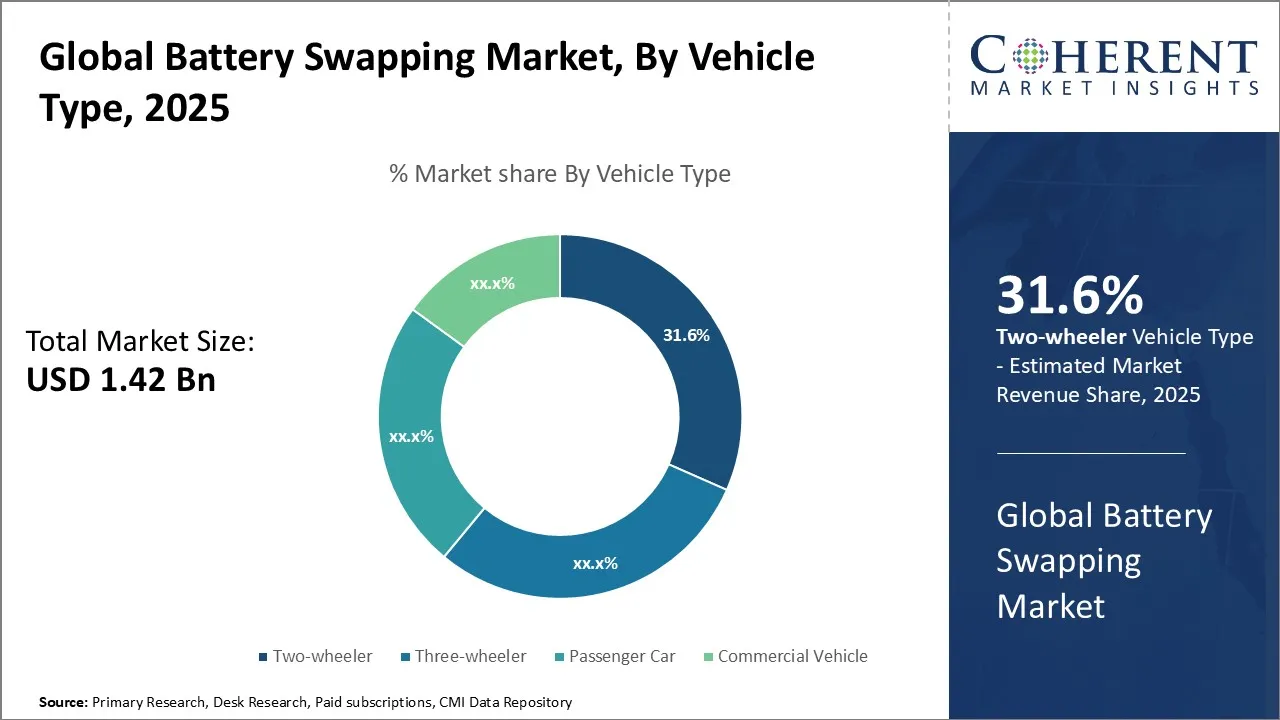
- The two-wheeler segment is projected to accounts for 32.6 % share in 2026.
- The automated segment is expected to captures 64.8 % share in 2026.
- The pay per use is projected to hold 52.7 % share 2026.
- Asia Pacific is projected to dominate the global battery swapping market in 2026 with a 38.5 % share. Europe, holding an estimated share of 23.5% in 2026, and it is expected to be the fastest-growing region.
Market Overview
A key trend shaping the battery swapping market is the push towards sustainable mobility coupled with advancements in battery technology and battery materials. Automakers and energy companies are collaborating to standardize battery swapping systems, enhancing interoperability and reducing costs. Furthermore, urbanization and the growing need for convenience in last-mile delivery services are accelerating the deployment of battery swapping stations, making them a preferred choice over traditional charging methods by minimizing downtime and optimizing operational efficiency for electric vehicle users.
Current Events and Its Impact
Current Events | Description and its impact |
CATL & Sinopec sign national battery-swap alliance in China (Apr 2, 2025) |
|
Madrid launches Europe’s first citywide modular swapping for car-sharing (June–July 2025) |
|
Segmental Insights
- Current Industry Events of 2026
- Market Size Estimation
- Regional Breakdown
- Competitive Landscape
- Customer Intelligence
- Segmental Analysis
- Pricing Analysis
- Key Market Drivers, Challenges & Future Trends
- Customized Insights Section
Battery Swapping Market Insights, by Vehicle Type - Two-Wheeler Segment Dominates the Market Driven by Urban Mobility Needs and Cost Efficiency
The two-wheeler segment is expected to hold 32.6% share in 2026, owing to several compelling factors rooted in the unique mobility demands of emerging and developed economies. The rising adoption of electric two-wheelers is fundamentally transforming urban transportation, particularly in densely populated cities across Asia, where two-wheelers serve as a primary mode of daily commuting for millions. Their affordability, maneuverability, and ease of parking make two-wheelers an attractive alternative to traditional petrol-powered vehicles, especially in traffic-congested environments.
For example, in India, Bounce Infinity and Ola Electric have actively deployed battery swapping networks tailored for electric scooters. Bounce Infinity operates battery-swapping stations across Bengaluru, allowing users to exchange depleted batteries in under two minutes. This initiative has significantly boosted consumer confidence by eliminating long charging downtimes, directly accelerating the adoption of battery-swapping compatible two-wheelers in urban centers.
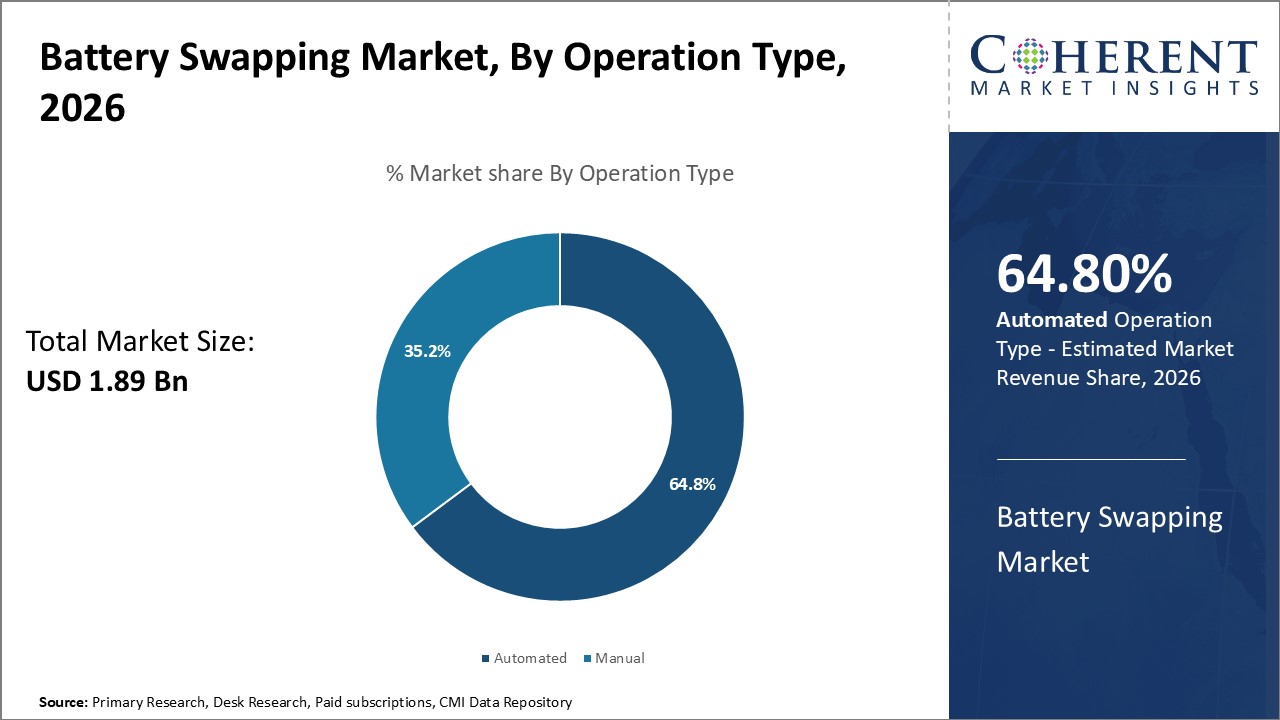
Battery Swapping Market Insights, by Operation Type - Automated Segment Dominates the Market due to Its Enhancing Efficiency and User Experience
The automated segment is projected to account for 64.8% share in 2026, driven by technological advancements and increasing the demand for seamless, efficient energy replenishment solutions. Automated battery swapping systems leverage robotics, artificial intelligence, and sensor technologies to facilitate quick, standardized, and reliable battery exchanges without human intervention, delivering significant value to both users and service providers.
The key factor enabling growth in automated swapping is its ability to drastically reduce the time taken for battery exchange, often completing the process within a few minutes. This speed is critical in environments such as urban centers and commercial fleet operations where downtime directly impacts productivity and customer satisfaction. Automation also ensures safety and consistency by minimizing human error and optimizing battery handling procedures, extending battery life cycles and enhancing overall system reliability.
Battery Swapping Market Insights, by Service Type - Pay Per Use Segment Dominates the Market Due to Accessibility and Flexibility in Battery Swapping Services
The pay per use segment is expected to capture 52.7% share in 2026, propelled by its inherent flexibility and cost-effectiveness for end-users. This model appeals widely to individual consumers and commercial operators who prioritize financial prudence and operational agility in their EV charging solutions.
The pay per use framework eliminates the need for large upfront investments or long-term commitments typically associated with vehicle battery ownership or subscription plans. Users can pay based on actual swapping instances, which aligns well with the usage patterns of casual riders, short-distance commuters, and delivery businesses with fluctuating demand. This affordability and pay-as-you-go convenience lower the entry barriers for adopting electric vehicles, making battery swapping more accessible to a broader demographic, including lower-income user segments and small fleet operators.
Regional Insights
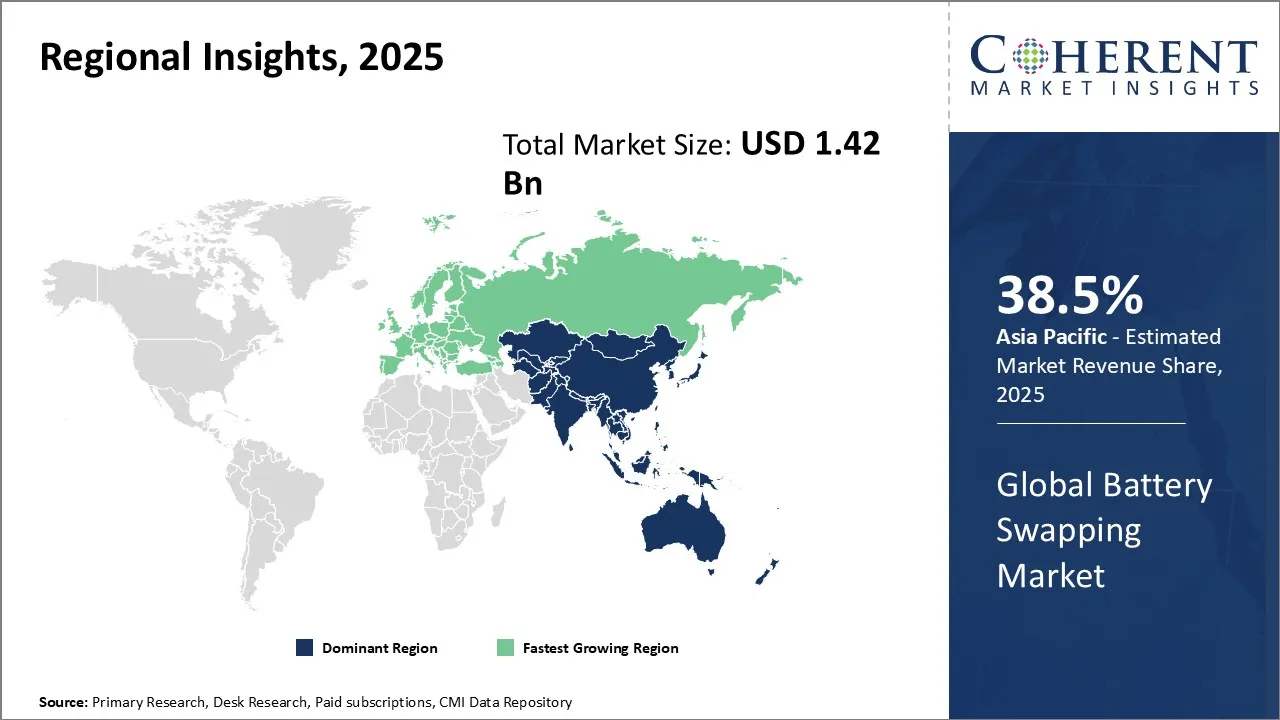
Asia Pacific Battery Swapping Market Analysis and Trends
The Asia Pacific region is projected to lead the market with a 38.5% share in 2026, driven by the region’s robust electric mobility ecosystem and supportive government policies. Countries such as China and India have aggressively promoted electric two-wheelers and three-wheelers, creating vast demand for quick and efficient battery swap solutions. The presence of numerous OEMs investing in battery swapping infrastructure and technology, coupled with policies favoring clean energy adoption and vehicle electrification, heavily contribute to the region’s market leadership.
Additionally, Asia Pacific benefits from a strong manufacturing base, enabling cost-effective production and rapid deployment of battery swapping stations. Key players like NIO, Gogoro, and Sun Mobility have been pivotal in expanding the market, not only through innovative swapping technologies but also by forging partnerships with local governments and energy providers to enhance accessibility and electrification.
Europe Battery Swapping Market Analysis and Trends
The Europe region is expected to exhibit the fastest growth in the market contributing 23.5% share in 2026, spurred by aggressive regulatory mandates toward zero-emission vehicles and extensive investments in sustainable urban mobility. European countries’ commitment to reducing pollution and carbon footprints fuels infrastructure development for battery swapping, particularly in urban hubs where electric two-wheelers and light commercial vehicles are gaining popularity.
The market growth is complemented by strong collaboration among governments, private enterprises, and utility providers to build interoperable swapping networks, enhancing consumer convenience. Companies such as Gogoro, Swobbee, and BATTERY SWAP NETWORK have made significant advances in introducing smart and standardized battery swapping technologies tailored to European regulatory and consumer demands. Furthermore, Europe’s trade dynamics, focusing on green mobility through incentives and subsidies, provide a fertile environment for the rapid market expansion.
Battery Swapping Market Outlook for Key Countries
China Battery Swapping Market Analysis and Trends
China battery swapping market leads the battery swapping trend, driven by its large-scale electric two-wheeler adoption and heavy government backing for battery swapping infrastructure. National policies encourage battery standardization and network expansion, enabling companies like NIO and Aulton to scale swapping stations rapidly across urban and semi-urban regions. Their collaboration with municipal authorities ensures continuous innovation and infrastructure improvements, advancing both passenger and commercial EV segments.
India Battery Swapping Market Analysis and Trends
India battery swapping market is flourishing due to government initiatives promoting electric mobility and addressing the challenges of battery charging in densely populated cities. The National Electric Mobility Mission alongside state policies has led private entities like Sun Mobility and Yulu to develop widespread swapping networks targeting last-mile delivery and shared two-wheeler mobility. These companies focus on modular battery designs and affordable subscription models to increase adoption among cost-sensitive customers.
South Korea Battery Swapping Market Analysis and Trends
South Korea continues to lead in battery swapping technology innovation and infrastructure development by fostering a strong industry-academia-government ecosystem. Companies such as KT Corporation and Samsung SDI contribute by integrating advanced battery management systems and IoT for efficient swapping operations. South Korea’s skilled manufacturing base and policy support for EVs enhance infrastructure deployment, especially for electric scooters and commercial vehicles within metropolitan areas.
Germany Battery Swapping Market Analysis and Trends
Germany battery swapping market is evolving quickly with significant investments in battery swapping infrastructure aligned with the country’s drive toward sustainable urban transport. The government’s environmental targets and stimulus packages for clean energy transport have incentivized companies like Swobbee and NUVVE to innovate in standardized battery pack designs and network interoperability. Germany’s well-established automotive industry facilitates collaboration and integration of battery swapping with traditional EV manufacturers.
France Battery Swapping Market Analysis and Trends
France battery swapping market growth is bolstered by urban mobility projects and government support for electric vehicle adoption. Strategic partnerships between energy companies and start-ups such as Akuo Energy and Vedecom focus on creating scalable swapping station networks compatible with various vehicle types. Additionally, France’s initiatives promoting shared mobility and emission reductions in city centers contribute to expanding the battery swapping market suitable for both personal and commercial EV users.
Macro and Micro Economic Factors Impacting on Battery Swapping Market Growth
Macroeconomic Factors
- EV Penetration & Urbanization: Surging demand for electric vehicles (EVs) in densely populated urban centers drives the need for rapid charging solutions like battery swapping, particularly in Asia-Pacific and Europe.
- Government Incentives & Subsidies: Global policy support—grants, tax breaks, and regulatory mandates—accelerate infrastructure development, reduce upfront EV costs, and enable widespread adoption of battery swapping (e.g., India's and China's active promotion, North American emissions mandates).
- Economic Growth & Commercial Fleet Electrification: High economic activity promotes commercial fleet electrification (delivery, ride-hailing, logistics), necessitating quick turnaround solutions to minimize downtime and operational costs.
- Fuel Prices & Sustainability Trends: Rising fossil fuel costs and the imperative for low-carbon transport options push stakeholders to adopt battery swapping, appealing to budget-conscious and environmentally aware consumer segments.
- Global Partnerships: International collaboration among automakers, battery tech firms, and infrastructure operators fosters larger, scalable swap networks and knowledge transfer, accelerating market maturity.
Microeconomic Factors
- Infrastructure Readiness & Standardization: The absence of universal battery formats is a major bottleneck; successful growth depends on investment in modular architectures and interoperability between stations and vehicle brands.
- Station Deployment, Technology Integration: Real-time diagnostics, AI-driven energy management, IoT-enabled swap stations, and predictive analytics increase operational efficiency and reliability. These innovations support fleet operators and enhance consumer convenience.
- Business Models—Battery-as-a-Service (BaaS): Shifting from battery ownership to BaaS reduces upfront costs for users and generates recurring revenue streams for operators. It enhances flexibility and encourages more companies and consumers to adopt electric mobility.
- Fleet Electrification & Urban Last-Mile Services: Swapping solutions streamline logistics for fleets dependent on frequent recharging (e.g., city logistics, food delivery, ride-hailing)—a crucial micro factor for market expansion in urban markets.
Market Players, Key Development, and Competitive Intelligence
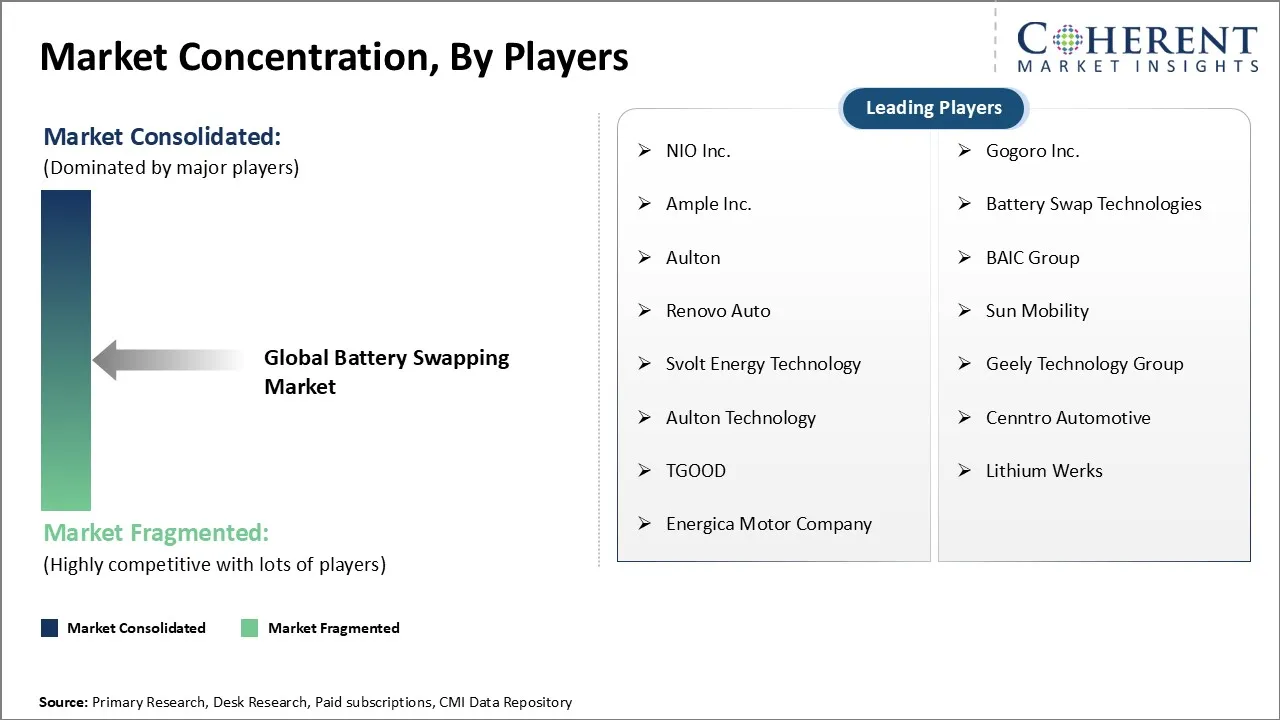
Key Developments
- In November 2024, Ample secured a USD 25 million investment from Mitsubishi Corporation (Japan). Beyond financial backing, this collaboration aims to accelerate Ample’s global expansion in the battery-swapping sector, with Mitsubishi providing strategic support for scaling operations.
- In August 2024, SUN Mobility & Veera Vahana At Prawaas 4.0 in Bengaluru, SUN Mobility and Veera Vahana unveiled India’s first modular battery-swapping solution for heavy commercial vehicles. The partnership introduced the country’s first 10.5-meter battery-swappable intercity, regional, and suburban buses.
- In July 2024, Gogoro obtained certification to introduce its Smartscooters and battery-swapping ecosystem in Singapore, partnering with Cycle & Carriage (C&C). C&C further announced collaboration with Shell Recharge to deploy GoStations at Shell service stations across Singapore.
Top Strategies Followed by Global Battery Swapping Market Players
- Established players in the market leverage their substantial financial and technological resources to maintain a dominant position. These companies invest heavily in research and development (R&D) to drive innovation, focusing on creating high-performance, durable, and efficient battery swapping systems tailored to various Electric Vehicle (EV) segments. To enhance their market presence, they form strategic partnerships and alliances with key stakeholders, including major automotive Original Equipment Manufacturers (OEMs) and infrastructure providers.
- For example, Gogoro, expanded its swapping infrastructure through alliances with Yamaha, Honda, and Hero MotoCorp, targeting the two-wheeler EV segment. These partnerships enable seamless integration of Gogoro’s smart batteries into mainstream scooters, strengthening its global footprint.
- Mid-level players in the battery swapping market adopt a more nuanced approach aimed at balancing quality and affordability. Recognizing the price sensitivity of a significant portion of the market, these companies focus on offering cost-effective battery swapping solutions that appeal to budget-conscious consumers, particularly in developing economies. To enhance their competitive edge, mid-tier firms often engage in collaborative ventures with technology providers and manufacturing partners to boost production efficiencies and accelerate technological improvements.
- For example, SUN Mobility, partnered with bus fleets and auto-rickshaw manufacturers in India, providing modular battery swapping solutions designed for high-volume, cost-conscious urban mobility. Their model ensures affordability for fleet operators while maintaining performance.
- Small-scale players in the battery swapping market typically carve out specialized niches by focusing on innovation and regional adaptability. These companies emphasize developing unique product features that address specific consumer needs or operational challenges, such as quick swapping times, modular battery designs, or compatibility with particular vehicle types. Staying competitive often means adopting cutting-edge technologies and agile business models that larger firms may find less flexible.
- For example, VoltUp develops micro swapping stations tailored for e-rickshaws and two-wheelers in India, ensuring quick turnaround times and regional adaptability. Their localized business model addresses challenges of urban congestion and limited charging access.
Market Report Scope
Battery Swapping Market Report Coverage
| Report Coverage | Details | ||
|---|---|---|---|
| Base Year: | 2025 | Market Size in 2026: | USD 1.89 Bn |
| Historical Data for: | 2020 To 2024 | Forecast Period: | 2026 To 2033 |
| Forecast Period 2026 to 2033 CAGR: | 32.8% | 2033 Value Projection: | USD 13.74 Bn |
| Geographies covered: |
| ||
| Segments covered: |
| ||
| Companies covered: | NIO Inc., Gogoro Inc., Ample Inc., Battery Swap Technologies, Aulton, BAIC Group, Renovo Auto, Sun Mobility, Svolt Energy Technology, Geely Technology Group, Aulton Technology, Cenntro Automotive, TGOOD, Lithium Werks, and Energica Motor Company | ||
| Growth Drivers: |
| ||
| Restraints & Challenges: |
| ||
Battery Swapping Market Dynamics
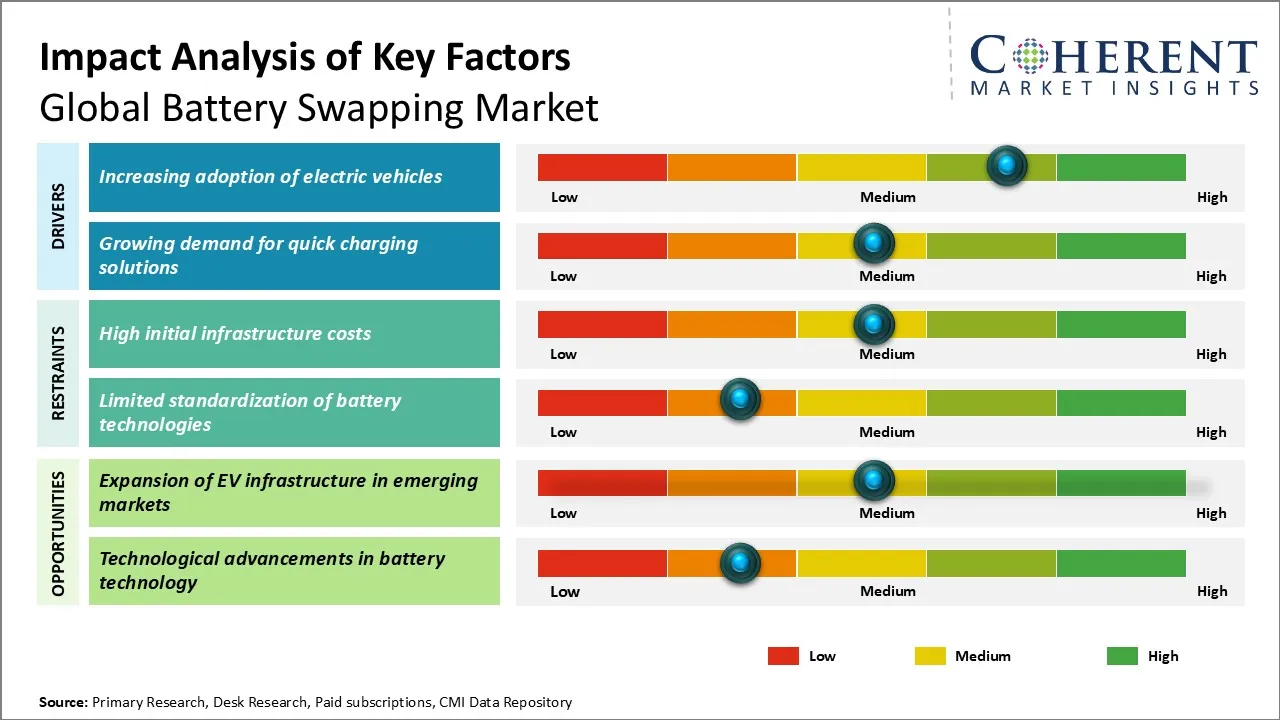
Battery Swapping Market Driver - Increasing Adoption of Electric Vehicles
The accelerating shift toward Electric Vehicles (EVs) across various regions is significantly driving the demand for battery swapping infrastructure. As governments and consumers increasingly prioritize sustainability and lower emissions, EV adoption is expanding beyond early adopters to mainstream markets. However, concerns around the lengthy charging times of onboard batteries remain a critical barrier to widespread acceptance, especially for commercial fleets and urban mobility solutions that require minimal downtime. Battery swapping technologies provide an efficient alternative by enabling rapid replacement of depleted batteries with fully charged ones, thereby enhancing operational efficiency.
For example, Nio in China has built a large network of over 2,400 automated swap stations, completing more than 30 million battery swaps to date, with each swap taking just about 3 minutes—a critical advantage for long-distance drivers and taxi operators.
Battery Swapping Market Opportunity - Expansion of EV Infrastructure in Emerging Markets
The rapid expansion of Electric Vehicle (EV) infrastructure in emerging markets presents a significant growth opportunity for the global battery swapping market. Emerging economies in regions such as Asia Pacific, Latin America, and Africa are witnessing accelerated adoption of EVs driven by urbanization, rising environmental concerns, and supportive government policies aimed at reducing carbon emissions. However, the limited access to efficient charging infrastructure remains a key barrier to widespread EV adoption in these markets. Battery swapping technology addresses this challenge by offering a faster, more convenient alternative to traditional charging methods, significantly reducing vehicle downtime and enhancing user experience. Furthermore, the lower upfront cost of swapping battery systems compared to owning expensive EV batteries makes it an attractive proposition for consumers in price-sensitive emerging markets.
For instance, India, a frontrunner, where companies such as SUN Mobility and Battery Smart are rapidly expanding networks of swappable battery stations. SUN Mobility has already set up over 600 swap points across major Indian cities, serving fleets of e-rickshaws, delivery vehicles, and two-wheelers.
Analyst Opinion (Expert Opinion)
- The global battery swapping market is positioned for rapid growth, driven by the urgent need for efficient solutions in Electric Vehicle (EV) infrastructure. Insights from the EV Battery Technology Conference (2023) and the Global Clean Energy Summit (2022) highlighted groundbreaking advancements, with companies like NIO and Gogoro at the forefront of battery swapping technology.
- NIO’s expansion of its battery swapping stations across China demonstrates a strategic move to enhance user convenience and reduce range anxiety, setting a benchmark for the industry. Discussions at these events emphasized the importance of standardization and interoperability among battery systems to foster widespread adoption. However, challenges such as high setup costs and the need for robust regulatory frameworks were noted as potential hurdles.
- Companies that invest in R&D to improve battery design and charging speed will likely gain a competitive edge. Furthermore, partnerships with municipalities and energy providers can facilitate infrastructure development. Ultimately, the battery swapping market's success will hinge on its ability to innovate while addressing the logistical and economic challenges faced by EV users and manufacturers alike.
Speak to the analyst
Want personalized insights?
Take the findings above to one of our principal consultants, or have the report rebuilt around the segments, geographies and competitors you actually track.
Market Segmentation
- Vehicle Type Insights (Revenue, USD Bn, 2021 - 2033)
- Two-wheeler
- Three-wheeler
- Passenger Car
- Commercial Vehicle
- Operation Type Insights (Revenue, USD Bn, 2021 - 2033)
- Automated
- Manual
- Service Type Insights (Revenue, USD Bn, 2021 - 2033)
- Pay Per Use
- Subscription
- Application Insights (Revenue, USD Bn, 2021 - 2033)
- Passenger
- Commercial
- Regional Insights (Revenue, USD Bn, 2021 - 2033)
- North America
- U.S.
- Canada
- Latin America
- Brazil
- Argentina
- Mexico
- Rest of Latin America
- Europe
- Germany
- U.K.
- Spain
- France
- Italy
- Russia
- Rest of Europe
- Asia Pacific
- China
- India
- Japan
- Australia
- South Korea
- ASEAN
- Rest of Asia Pacific
- Middle East
- GCC Countries
- Israel
- Rest of Middle East
- Africa
- South Africa
- North Africa
- Central Africa
- North America
- Key Players Insights
- NIO Inc.
- Gogoro Inc.
- Ample Inc.
- Battery Swap Technologies
- Aulton
- BAIC Group
- Renovo Auto
- Sun Mobility
- Svolt Energy Technology
- Geely Technology Group
- Aulton Technology
- Cenntro Automotive
- TGOOD
- Lithium Werks
- Energica Motor Company
Sources
Primary Research Interviews
- CTO – Leading Electric Two-Wheeler Manufacturer (India/China)
- Operations Head – Major EV Fleet Operator (Taxis & Delivery Vehicles)
- VP Procurement – Global Automotive OEM exploring EV battery swapping
- Program Manager – Urban Mobility Pilot Project (Smart City initiative)
- Head of Charging Infrastructure – Renewable Energy Utility Company
Stakeholders
- Manufacturers: EV OEMs, battery producers, and swapping station providers
- End Use Sectors:
- Two- & Three-Wheelers (delivery fleets, personal mobility)
- Passenger Cars (taxis, ride-hailing fleets)
- Commercial Vehicles (last-mile logistics, buses, light trucks)
- Regulatory & Certification Bodies: Transport ministries, EV regulatory authorities, safety standards boards
- E-commerce Platforms & Mobility Aggregators: Fleet management, ride-hailing, and logistics platforms
- Technology Integration Players: Battery management system (BMS) providers, IoT/AI-based monitoring solutions
Databases
- UN Comtrade Database – EV batteries, charging equipment trade flows
- International Energy Agency (IEA) EV Data Portal – EV adoption, infrastructure statistics
- China Automotive Battery Innovation Alliance (CABIA) – Battery swapping statistics in China
- India Import Export (EXIM) Database – Battery and EV infrastructure imports/exports
- Global EV Outlook (IEA/IRENA) – EV charging infrastructure trends
Magazines
- Electrek Magazine – EV charging & swapping innovations
- PV Magazine – Renewable energy integration with EV infrastructure
- EV Technology Magazine – Battery swapping technology and market trends
- Autocar Professional – EV adoption and infrastructure in Asia & Europe
- Fleet Europe Journal – Commercial fleet electrification with swapping
Journals
- Journal of Energy Storage – Battery performance & lifecycle studies
- Renewable and Sustainable Energy Reviews – Battery swapping and charging infrastructure comparisons
- IEEE Transactions on Transportation Electrification – Swapping technology & interoperability studies
- International Journal of Electric and Hybrid Vehicles – Business models for EV battery swapping
Newspapers
- The Financial Times – Global EV infrastructure investments
- The Economic Times (India) – EV policy and swapping pilots
- China Daily – Battery swapping adoption in China
- The Japan Times – EV policy updates & infrastructure strategies
- The New York Times – Global EV adoption and alternative charging solutions
Associations
- Society of Automotive Engineers (SAE International) – Battery swapping standards
- China Electric Vehicle Charging Infrastructure Promotion Alliance (EVCIPA)
- European Association for Electromobility (AVERE)
- International Council on Clean Transportation (ICCT)
- Society of Manufacturers of Electric Vehicles (SMEV, India)
Public Domain Sources
- International Energy Agency (IEA) – EV infrastructure reports
- International Renewable Energy Agency (IRENA) – Energy transition & EV storage integration
- European Commission – Mobility and Transport – EV & charging regulations
- Ministry of Industry and Information Technology (MIIT, China) – Battery swapping policies
Proprietary Elements
- CMI Data Analytics Tool, Proprietary CMI Existing Repository of information for last 8 years.
Get access to 250+ pages report
Every segment, forecast, competitor profile and data table behind the analysis above — available for instant download.
- ESOMAR Member
- ISO 9001:2015 Certified
- D-U-N-S Registered
- GDPR & CCPA Compliant
Missing comfort of reading report in your local language? Find your preferred language:
Transform your Strategy with Exclusive Trending Reports
Frequently Asked Questions
The global battery swapping market is estimated to be valued at USD 1.89 Bn in 2026 and is expected to reach USD 13.74 Bn by 2033.
The CAGR of the global battery swapping market is projected to be 32.8% from 2026 to 2033.
Increasing adoption of electric vehicles and growing demand for quick charging solutions are the major factors driving the growth of the global battery swapping market.
High initial infrastructure costs and limited standardization of battery technologies are the major factors hampering the growth of the global battery swapping market.
In terms of vehicle type, the two-wheeler segment is estimated to dominate the market revenue share in 2026.
NIO Inc., Gogoro Inc., Ample Inc., Battery Swap Technologies, Aulton, BAIC Group, Renovo Auto, Sun Mobility, Svolt Energy Technology, Geely Technology Group, Aulton Technology, Cenntro Automotive, TGOOD, Lithium Werks, and Energica Motor Company are the major players.
Asia Pacific is expected to lead the global battery swapping market in 2026.