

Beauty Supply Stores Market Size and Forecast – 2026-2033
The Global Beauty Supply Stores Market is estimated to be valued at USD 538.90 Bn in 2026 and is expected to reach USD 789.14 Bn by 2033, exhibiting a compound annual growth rate (CAGR) of 5.6% from 2026 to 2033.
Key Takeaways of the Global Beauty Supply Stores Market:
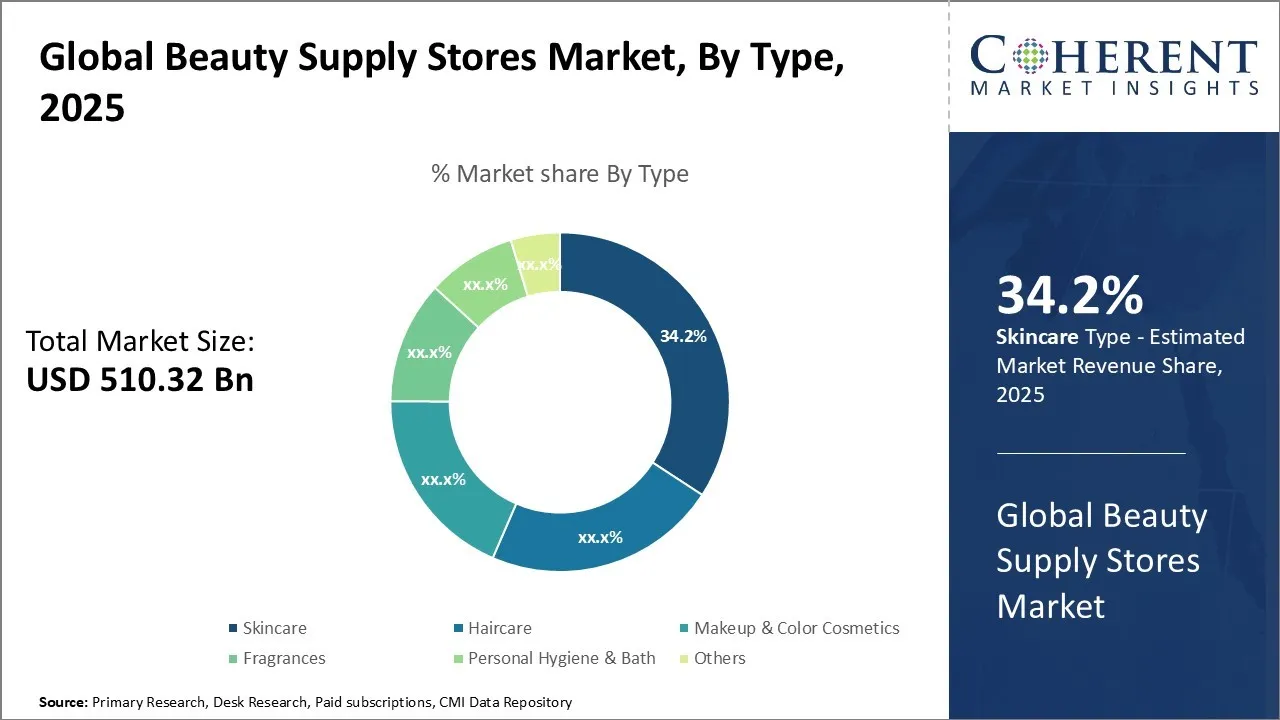
- The skincare segment is expected to lead the market holding a share of 35.2% in 2026.
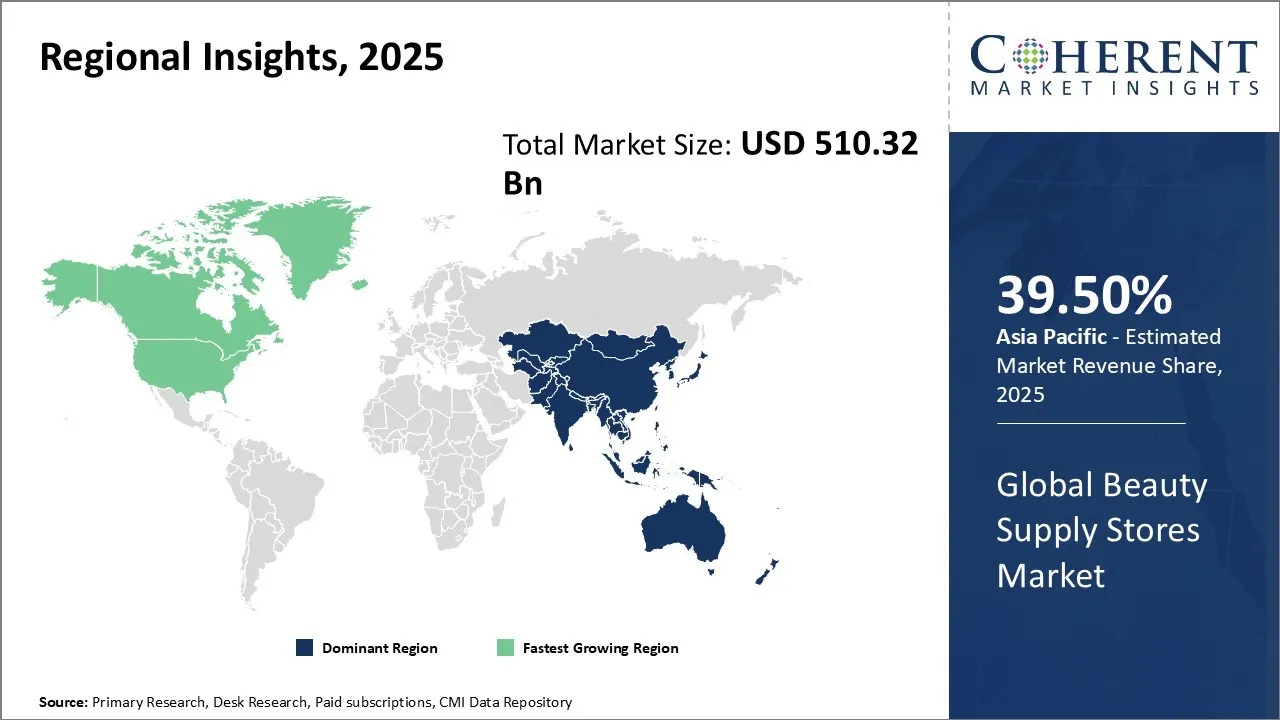
- Asia Pacific is estimated to lead the market with a share of 39.5% in 2026.
- North America, holding a share of 24.8% in 2026, is projected to be the fastest growing region.
Market Overview:
The beauty supply stores market is seeing a shift towards online sales, with consumers increasingly choosing the convenience and variety offered by e-commerce platforms. To add to that, the market is witnessing a growing trend of personalization, with consumers seeking products tailored to their specific needs and preferences. Sustainability and clean beauty are also gaining traction, as consumers become more conscious of the environmental and health impacts of their beauty choices.
Current Events and Their Impact
Current Events | Description and its impact |
Major Industry Events and Expos Driving Innovation |
|
Regulatory Shifts Reshaping Compliance Requirements |
|
Segmental Analysis
- Current Industry Events of 2026
- Market Size Estimation
- Regional Breakdown
- Competitive Landscape
- Customer Intelligence
- Segmental Analysis
- Pricing Analysis
- Key Market Drivers, Challenges & Future Trends
- Customized Insights Section
Global Beauty Supply Stores Market Insights, by Type - Rising Consumer Awareness Driving Skincare Segment Growth
In terms of type, the skincare segment is expected to contribute the highest share of 35.2% in the market in 2026 owing to the increasing consumer awareness about the importance of maintaining healthy skin. The growing emphasis on personal grooming and the desire to maintain a youthful appearance have led to a surge in demand for skincare products across all age groups and genders.
One of the key factors driving the growth of the skincare segment is the rising concern about the harmful effects of sun exposure, pollution, and other environmental stressors on the skin. Consumers are becoming more aware about skincare, looking for products that offer protection against UV radiation, free radicals, and other damaging agents. This has led to increased popularity of skincare products with natural and active ingredients, such as antioxidants, retinoids, and peptides, to address specific skin concerns.
Role of Artificial Intelligence (AI) in the Beauty Supply Stores Market
Artificial Intelligence (AI) is reshaping the beauty supply stores market by personalizing shopping experiences and helping manage operations. Beauty retailers like Sephora and Ulta Beauty have integrated AI-driven virtual try-on tools that allow customers to test makeup shades in real time using their smartphone cameras.
Behind the scenes, AI also supports automated chatbots and virtual assistants, which handle everything from product inquiries to appointment scheduling at in-store salons. In April 2025, Ulta Beauty announced a partnership with Google Cloud to integrate generative AI into its customer service and personalization systems such as an AI-powered beauty assistant.
Regional Insights
Asia Pacific Beauty Supply Stores Market Analysis and Trends
Asia Pacific, holding a share of 39.5% in 2026, is expected to dominate the global beauty supply stores market. The region's rapid economic development, rising middle-class population, and increasing disposable incomes have fueled the demand for beauty products. Countries like China, Japan, and South Korea have emerged as major markets, driven by a strong emphasis on personal appearance and a growing interest in international beauty trends.
To add to this, the presence of numerous local and international beauty brands, such as Shiseido and Kao, innovative product launches, and targeted marketing strategies, is adding to the competition in the region.
North America Beauty Supply Stores Market Analysis and Trends
The North America, holding a share of 24.8% in 2026, is expected to exhibit the fastest growth in the global beauty supply stores market. The region boasts a mature and well-established market ecosystem, with a strong presence of leading beauty retailers and a wide range of product offerings. The U.S., in particular, has a robust distribution network and a highly competitive landscape, with major players like Ulta Beauty, Sephora, and Sally Beauty Supply holding significant market shares. Additionally, the region's high disposable income, coupled with a growing emphasis on personal grooming and beauty, has fueled the demand for premium and specialty beauty products.
Global Beauty Supply Stores Market Outlook for Key Countries
U.S. Beauty Supply Stores Market Analysis and Trends
The U.S. beauty supply stores market is characterized by a highly competitive and diverse landscape, with a mix of established beauty retailers and emerging niche players. Major companies like Ulta Beauty and Sephora have expanded their footprint across the country, offering a wide range of beauty products and in-store experiences. The market is driven by strong consumer demand for premium and luxury beauty brands, as well as a growing interest in natural and organic products. Retail e-commerce has also played a significant role, with online platforms like Amazon and brand-owned websites gaining popularity among consumers.
China Beauty Supply Stores Market Analysis and Trends
China has seen remarkable growth in recent years, fueled by rising disposable incomes, changing beauty preferences, and a growing middle class. It has a thriving domestic beauty industry, with local brands competing with international players. E-commerce platforms like Tmall and JD.com have become key distribution channels, enabling brands to reach a broader consumer base.
Japan Beauty Supply Stores Market Analysis and Trends
Japan continues to be a leading market in the Asia Pacific region, known for its innovative beauty products and advanced skincare technologies. Major domestic players like Shiseido, Kao, and Kosé have a strong presence in the market, alongside international brands. The market is also characterized by a growing interest in natural and organic beauty products, as well as a focus on anti-aging and wellness-oriented offerings.
South Korea Beauty Supply Stores Market Analysis and Trends
South Korea beauty supply stores market has gained global recognition for its innovative and trendsetting beauty products, particularly in the skincare segment. The country's beauty industry is highly competitive, with a mix of domestic and international brands vying for market share. Korean beauty (K-beauty) has become a global phenomenon, with products known for their unique ingredients, packaging, and multi-step routines. The market is driven by a strong emphasis on appearance and skincare, with consumers willing to invest in high-quality products. E-commerce and social media have also played a crucial role in the market's growth, with platforms like Naver and KakaoTalk facilitating product discovery and online purchases.
Market Players, Key Development, and Competitive Intelligence
Key Developments:
- In April 2025, Cécred, a hair care brand founded by Ms. Beyoncé Knowles-Carter, rolled out to 1,400+ Ulta Beauty (a beauty retail brand) stores nationwide and online.
- In February 2025, Prada Beauty, a luxury beauty brand officially entered the India with the launch of its first-ever store at Nexus Select CITYWALK, Delhi.
- In January 2025, Glamzy, a beauty omnichannel platform, launched operations in South India, targeting tier 2 and 3 cities. Combining online and offline shopping, it aims to improve access to quality beauty products in non-metro areas.
- In October 2024, Trent, an India-based retail brand, introduced a new retail format called ‘Zudio Beauty’, making its debut in the mass-market beauty segment.
Top Strategies Followed by Global Beauty Supply Stores Market Players
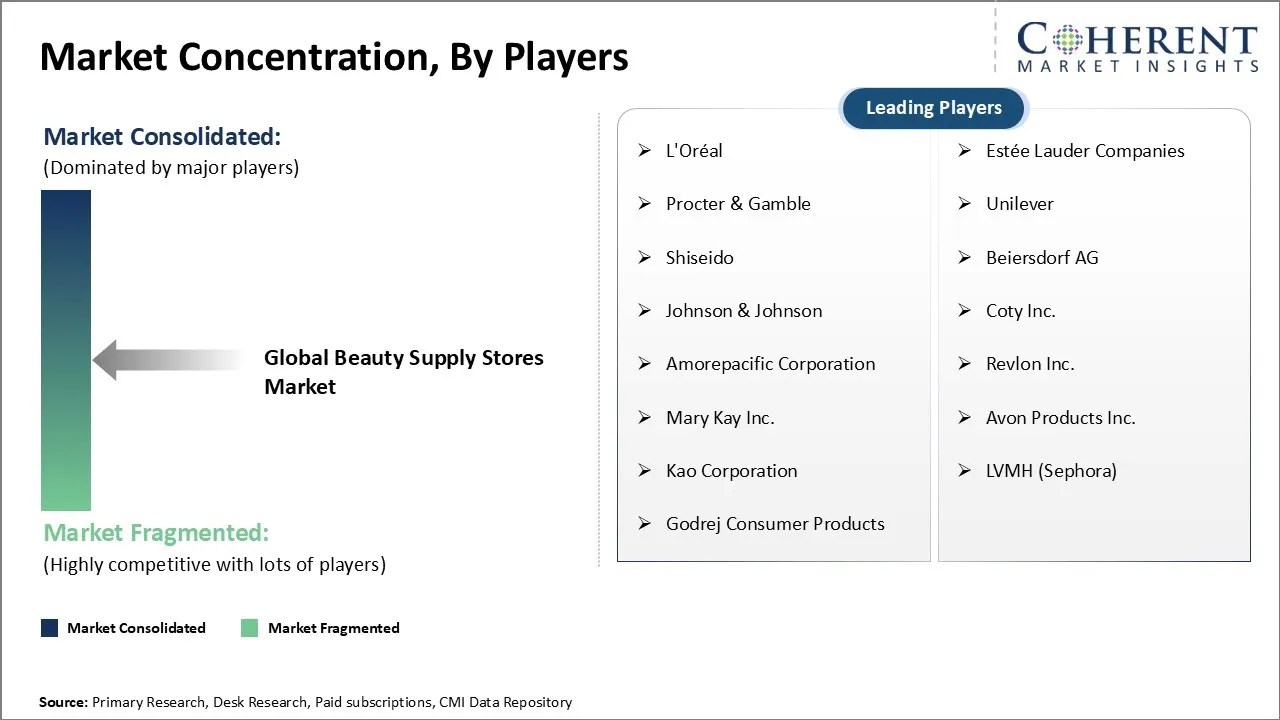
- Established Players: Leading companies such as L’Oréal, Estée Lauder, and Unilever are investing heavily in R&D to innovate high-performance beauty products that align with shifting consumer preferences toward clean beauty, multifunctional skincare, and inclusive makeup.
- Example: L’Oréal has invested in AI-driven skincare diagnostics and biotech-based ingredients, launching products like the Lancôme Génifique serum with microbiome science at its core.
- Mid-level Players: Mid-tier brands like e.l.f. Cosmetics, Milani, and The Ordinary (by DECIEM) focus on cost-effective, high-quality solutions, often targeting Gen Z and Millennial consumers who value transparency and affordability.
- l.f. Cosmetics has gained massive popularity through TikTok-driven marketing and $3-$6 viral products, like its Poreless Putty Primer.
- Small-scale Players: Smaller brands, such as Tower 28 Beauty, Live Tinted, and Beauty Bakerie, adopt niche positioning strategies to stand out in the saturated market.
- Tower 28 is known for its eczema-safe, sensitive-skin friendly products, catering to underrepresented consumer needs in mainstream beauty. Live Tinted focuses on multi-ethnic skin tones, offering inclusive shade ranges and color-correcting products that celebrate skin diversity.
Market Report Scope
Beauty Supply Stores Market Report Coverage
| Report Coverage | Details | ||
|---|---|---|---|
| Base Year: | 2025 | Market Size in 2026: | USD 538.90 Bn |
| Historical Data for: | 2020 To 2024 | Forecast Period: | 2026 To 2033 |
| Forecast Period 2026 to 2033 CAGR: | 5.6% | 2033 Value Projection: | USD 789.14 Bn |
| Geographies covered: |
| ||
| Segments covered: |
| ||
| Companies covered: | L'Oréal, Estée Lauder Companies, Procter & Gamble, Unilever, Shiseido, Beiersdorf AG, Johnson & Johnson, Coty Inc., Amorepacific Corporation, Revlon Inc., Mary Kay Inc., Avon Products Inc., Kao Corporation, LVMH (Sephora), and Godrej Consumer Products | ||
| Growth Drivers: |
| ||
| Restraints & Challenges: |
| ||
Global Beauty Supply Stores Market Driver - Rising Demand for Natural and Organic Products
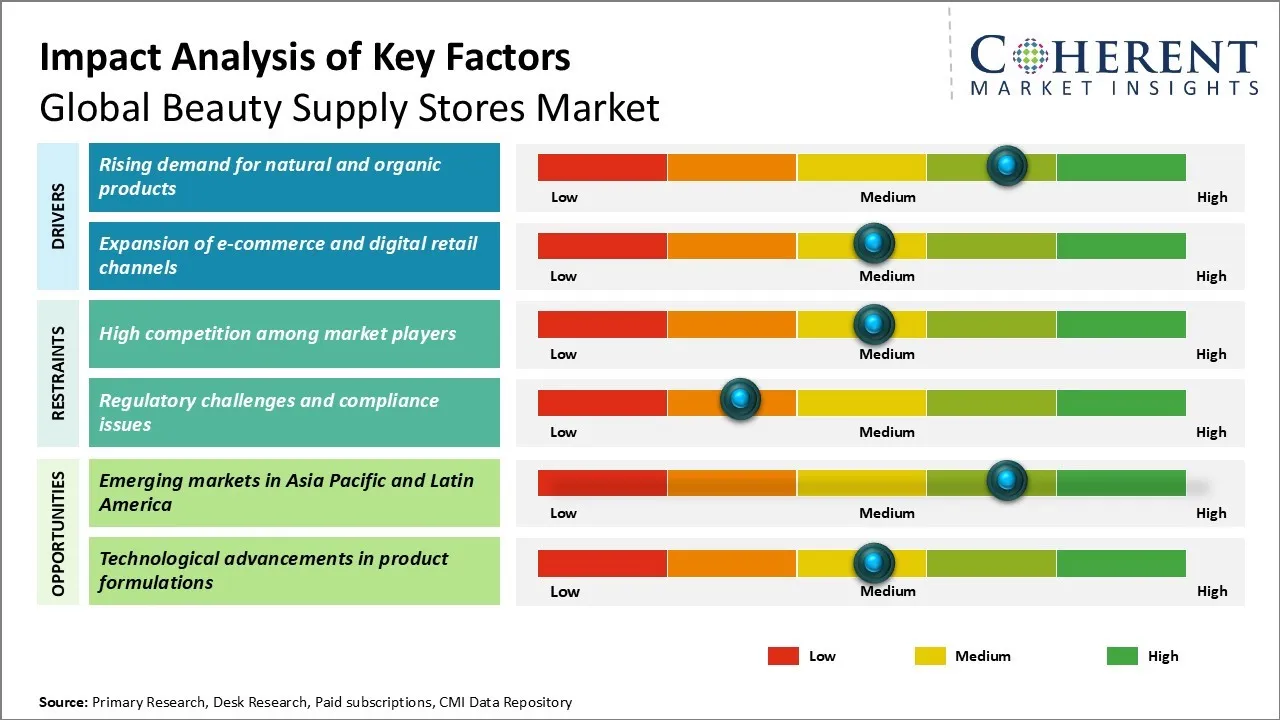
The global beauty supply stores market is witnessing a significant shift in consumer preferences towards natural and organic products. As consumers become increasingly conscious about the ingredients in their beauty and personal care products, the demand for products made with natural and organic ingredients is on the rise. This trend is driven by growing awareness about the potential harmful effects of synthetic chemicals and a desire for healthier, eco-friendly alternatives.
Consumers are actively seeking out products that are free from parabens, sulfates, and other harsh chemicals, and instead opting for products that contain natural and organic ingredients such as plant-based extracts, essential oils, and botanical actives. Beauty supply stores are responding to this demand by expanding their offerings of natural and organic products, partnering with brands that specialize in this category, and promoting the benefits of these products to their customers.
In 2024, Target expanded its "Clean at Target" section across 1,500+ stores in the U.S., partnering with brands like Alba Botanica, Cocokind, and Native, which offer sulfate-free, cruelty-free, and organic personal care products.
Global Beauty Supply Stores Market Opportunity - Emerging Markets in Asia Pacific and Latin America
The global beauty supply stores market has a promising opportunity for growth and expansion in the emerging markets of Asia Pacific and Latin America. These regions have witnessed a surge in economic development, rising disposable incomes, and a growing middle class population. As a result, there is an increasing demand for high-quality beauty products and services in these markets. Consumers in these regions are becoming more beauty-conscious and are willing to invest in premium products that cater to their specific needs and preferences.
The untapped potential in these emerging markets presents a significant opportunity for beauty supply stores to establish their presence, adapt their product offerings to local preferences, and capture a substantial market share. By leveraging the rising purchasing power and the desire for international brands, companies can tap into these markets and experience substantial growth. However, to succeed in these regions, beauty supply stores must develop a deep understanding of the local culture, consumer behavior, and market dynamics. Tailoring their marketing strategies, distribution channels, and product assortment to suit the unique characteristics of each market will be crucial in capitalizing on this opportunity and achieving long-term success in these emerging markets.
In 2023, Nykaa (India) expanded into physical beauty stores in tier-2 cities such as Indore and Jaipur, recognizing growing demand outside metropolitan areas.
Analyst Opinion (Expert Opinion):
- The global beauty supply market is undergoing a transformative phase, driven by innovative promotion and marketing strategies that blend digital agility with consumer-centric values. For example, Brands are leveraging TikTok Shop’s immersive "discovery-to-purchase" features, such as live-streamed product demonstrations and influencer collaborations.
- Similarly, brands, such as L’Oréal and The Body Shop are emphasizing "free-from" labels (e.g., parabens, sulfates) and eco-friendly packaging, highlighting recyclable materials and carbon-neutral pledges.
- Another major trend gaining traction is apps offering skin diagnostics and regimen customization. For example, L’Oréal’s ModiFace AI tool (2024) allows users to virtually test products, increasing sales.
Speak to the analyst
Want personalized insights?
Take the findings above to one of our principal consultants, or have the report rebuilt around the segments, geographies and competitors you actually track.
Market Segmentation
- Type Insights (Revenue, USD Bn, 2021 - 2033)
- Skincare
- Haircare
- Makeup & Color Cosmetics
- Fragrances
- Personal Hygiene & Bath
- Others
- Regional Insights (Revenue, USD Bn, 2021 - 2033)
- North America
- U.S.
- Canada
- Latin America
- Brazil
- Argentina
- Mexico
- Rest of Latin America
- Europe
- Germany
- U.K.
- Spain
- France
- Italy
- Russia
- Rest of Europe
- Asia Pacific
- China
- India
- Japan
- Australia
- South Korea
- ASEAN
- Rest of Asia Pacific
- Middle East
- GCC Countries
- Israel
- Rest of Middle East
- Africa
- South Africa
- North Africa
- Central Africa
- North America
- Key Players Insights
- L'Oréal
- Estée Lauder Companies
- Procter & Gamble
- Unilever
- Shiseido
- Beiersdorf AG
- Johnson & Johnson
- Coty Inc.
- Amorepacific Corporation
- Revlon Inc.
- Mary Kay Inc.
- Avon Products Inc.
- Kao Corporation
- LVMH (Sephora)
- Godrej Consumer Products
Sources
Primary Research Interviews
Stakeholders:
- Beauty Retail Chain Managers and Merchandisers (e.g., Ulta Beauty, Sephora, Sally Beauty)
- Product Development Managers at Cosmetic Companies
- Beauty Brand Founders and CEOs (Natural & Organic, Indie Labels)
- Franchise Owners of Beauty Supply Stores
- Beauty Store Consultants and Retail Interior Designers
- Dermatologists and Skincare Professionals
Databases:
- Global Retail Insights Database (GRID)
- World Beauty and Wellness Database (WBWD)
- Retail Innovation Observatory
- U.S. Small Business Industry Statistics Bureau
- Asia-Pacific Beauty Consumer Trends Portal
Magazines:
- Beauty Retail Today
- The Cosmetic Business Review
- Global Wellness & Lifestyle Magazine
- Indie Beauty Digest
- Retail Innovation Weekly
Journals:
- Journal of Cosmetic Science and Marketing
- Retail Management & Consumer Studies Journal
- Beauty & Wellness Consumer Insights
- International Journal of Organic Product Research
- Journal of Global Retail Strategy
Newspapers:
- Retail Gazette (U.K.)
- Beauty Business Times (U.S.)
- The Aesthetic Review (Global)
- El Comercio – Beauty & Fashion Edition (Latin America)
- Asia Times – Lifestyle & Trends
Associations:
- International Association of Beauty Retailers (IABR)
- Global Skincare & Cosmetics Council (GSCC)
- Clean Beauty Trade Federation (CBTF)
- Asian Beauty Supply Chain Association (ABSCA)
- Latin American Cosmetics Industry Alliance (LACIA)
Public Domain Sources:
- U.S. Census Bureau
- EUROSTAT
- World Bank Open Data
- United Nations Development Programme (UNDP)
Proprietary Elements:
- CMI Data Analytics Tool
- Proprietary CMI Existing Repository of information for last 8 years
Get access to 250+ pages report
Every segment, forecast, competitor profile and data table behind the analysis above — available for instant download.
- ESOMAR Member
- ISO 9001:2015 Certified
- D-U-N-S Registered
- GDPR & CCPA Compliant
Missing comfort of reading report in your local language? Find your preferred language:
Transform your Strategy with Exclusive Trending Reports
Frequently Asked Questions
The global beauty supply stores market is estimated to be valued at USD 510.32 billion in 2025 and is expected to reach USD 737.44 billion by 2032.
The CAGR of the global beauty supply stores market is projected to be 5.4% from 2025 to 2032.
Rising demand for natural and organic products and expansion of e-commerce and digital retail channels are the major factors driving the growth of the global beauty supply stores market.
High competition among market players and regulatory challenges and compliance issues are the major factors hampering the growth of the global beauty supply stores market.
In terms of type, the skincare segment is estimated to dominate the market revenue share in 2025.
L'Oréal, Estée Lauder Companies, Procter & Gamble, Unilever, Shiseido, Beiersdorf AG, Johnson & Johnson, Coty Inc., Amorepacific Corporation, Revlon Inc., Mary Kay Inc., Avon Products Inc., Kao Corporation, LVMH (Sephora), and Godrej Consumer Products are the major players.
Asia Pacific is expected to lead the global beauty supply stores market in 2025, holding a share of 39.5%.