

Global Biocatalysis Market Size and Forecast – 2026 To 2033
The Global Biocatalysis Market is estimated to be valued at USD 896.4 Mn in 2026 and is expected to reach USD 1,681.2 Mn by 2033, exhibiting a compound annual growth rate (CAGR) of 9.4% from 2026 to 2033. This growth reflects increasing adoption of biocatalysis across pharmaceuticals, food and beverages, specialty chemicals, detergents, and bio-based industrial production. Market expansion is supported by advancements in enzyme engineering, immobilized biocatalysts, and process optimization technologies that help manufacturers improve selectivity, reduce energy use, and lower waste generation.
Commercial adoption is also being strengthened by industries shifting toward greener and more cost-efficient manufacturing routes. In May 2025, SpinChem announced the upcoming launch of its MiniRBR system at Biotrans 2025, a compact rotating bed reactor designed for rapid screening of heterogeneous biocatalytic reactions in milliliter volumes, supporting faster laboratory-scale process development and scale-up studies.
Key Takeaways of the Global Biocatalysis Market
- The enzyme based biocatalysts segment is expected to dominate the global biocatalysis market with 54.6 % share in 2026, supported by broad use in fine chemicals, oleochemicals, food ingredients, and cleaner industrial synthesis. In February 2025, thyssenkrupp Uhde and Novonesis launched enzymatic esterification technology using bespoke enzymes to replace conventional chemical catalysts.
- The hydrolases segment is projected to hold 31.4 % of the market share in 2026, owing to their strong fit in hydrolysis, ester bond cleavage, fat splitting, and selective transformations across industrial and pharmaceutical routes. In February 2025, Baker Lab reported AI-designed serine hydrolases capable of cleaving ester compounds after computational modeling and lab validation.
- The pharmaceuticals and APIs segment is expected to hold the largest market share of 34.8 % in 2026, as biocatalysis improves stereoselectivity, reduces purification burden, and supports scalable synthesis of complex molecules. In May 2026, Piramal Pharma Solutions highlighted biocatalysis as a scalable API synthesis tool enabling selective transformations under mild, greener process conditions.
- North America is expected to remain the dominant region with 31.6 % of the market share in 2026, supported by strong pharmaceutical manufacturing, enzyme engineering capabilities, CDMO participation, and advanced therapeutic development. In May 2025, Codexis presented ECO Synthesis data at TIDES USA in San Diego, showing enzymatic siRNA manufacturing benefits and CDMO transferability.
- Europe is expected to be the fastest-growing region with 30.6 % of the market share in 2026, supported by green chemistry funding, industrial biotechnology adoption, and sustainability-led process innovation. In November 2025, the EU-backed NET4FLOW project began work on next-generation enzymatic and chemocatalytic tools for continuous-flow green chemical production.
- Shift Toward Greener Process Chemistry: Biocatalysis is moving from a niche reaction tool to a strategic manufacturing platform, helping companies reduce hazardous solvents, lower process complexity, and improve route efficiency. This trend strengthens its role in sustainability-driven procurement, especially where manufacturers are under pressure to replace metal catalysts and improve lifecycle performance.
- Enzyme Engineering and Process Customization: The market is increasingly shifting toward tailored enzymes, immobilized systems, and hybrid chemoenzymatic routes that can be adapted to specific substrates and production conditions. This is improving catalyst stability, reusability, and commercial feasibility, allowing biocatalysis providers to move higher in the value chain from enzyme supply to process development partnerships.
Segmental Insights
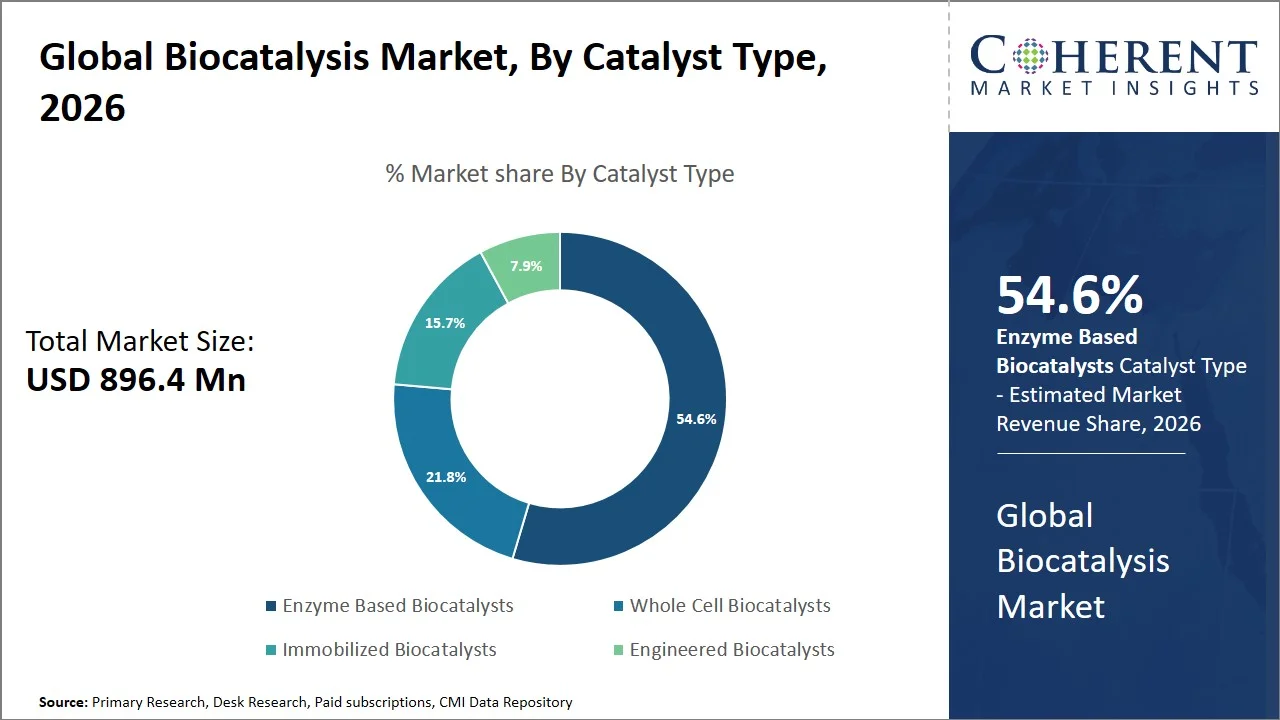
Why Does the Enzyme Based Biocatalysts Segment Dominate the Global Biocatalysis Market?
Enzyme based biocatalysts are expected to dominate the global biocatalysis market with 54.6% share in 2026, as they offer high reaction specificity, mild processing conditions, and better route control compared to conventional chemical catalysts. Demand is strongest where manufacturers need selective conversion, lower by-product formation, and cleaner downstream purification, particularly in pharmaceuticals, food ingredients, specialty chemicals, and bio-based materials. On the supply side, advancements in enzyme discovery, bioinformatics, and production strain optimization are making enzyme solutions more scalable and application-specific. Their dominance is also supported by broader availability of customized enzyme libraries and industrial fermentation capacity. In August 2024, BRAIN Biotech launched MetXtra, an AI- and bioinformatics-enabled platform to identify and develop novel enzyme solutions for industrial biocatalysis.
- Current Industry Events of 2026
- Market Size Estimation
- Regional Breakdown
- Competitive Landscape
- Customer Intelligence
- Segmental Analysis
- Pricing Analysis
- Key Market Drivers, Challenges & Future Trends
- Customized Insights Section
Why Does the Hydrolases Segment Represent the Largest Enzyme Type in the Global Biocatalysis Market?
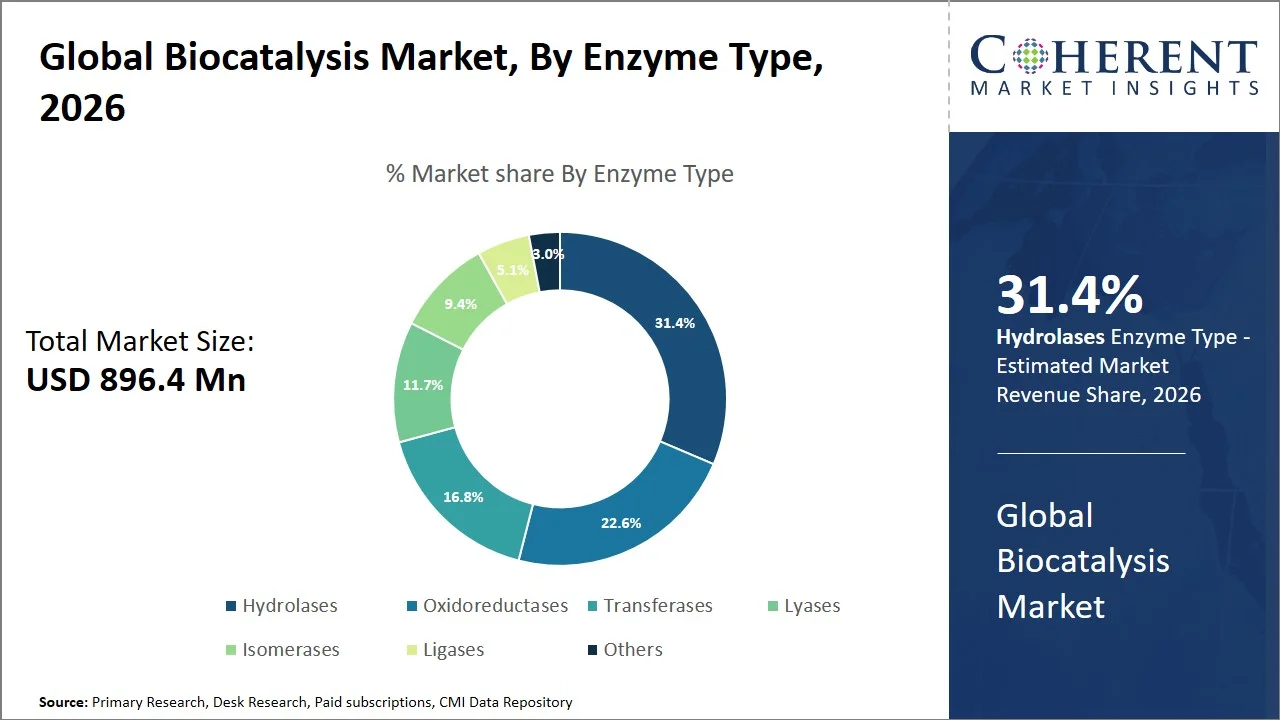
Hydrolases are projected to represent the largest enzyme type segment in the global biocatalysis market with 31.4% share in 2026, owing to their strong role in commercially important hydrolysis reactions involving esters, amides, lipids, proteins, and carbohydrates. Their leadership is supported by broad use in food processing, detergents, pharmaceuticals, animal nutrition, leather processing, and biomass conversion, where controlled substrate breakdown improves yield, texture, digestibility, cleaning performance, or intermediate quality. Demand is also supported by manufacturers seeking enzyme systems that reduce harsh chemical inputs and simplify downstream processing. From a supply perspective, hydrolases such as lipases, proteases, and carbohydrases are mature, scalable, and widely formulated for industrial use. In September 2024, Biocatalysts Ltd launched Lipomod 70MDP, a lipase designed specifically for efficient hydrolysis of plant-derived oils across food processing and industrial manufacturing applications.
Why Does the Pharmaceuticals and APIs Segment Dominate the Global Biocatalysis Market?
Pharmaceuticals and APIs are expected to dominate the global biocatalysis market with 34.8% share in 2026, as drug manufacturers increasingly need precise, scalable, and lower-impurity synthesis routes for complex molecules. Biocatalysis is strongly adopted in chiral intermediate production, small-molecule APIs, peptide-related synthesis, and late-stage functionalization where stereoselectivity directly affects quality and regulatory acceptability. Demand is reinforced by pharmaceutical companies and CDMOs seeking route intensification, fewer protection-deprotection steps, reduced solvent burden, and improved process economics. On the supply side, enzyme screening platforms, biocatalyst libraries, and CDMO integration are improving commercial deployment from early development to scale-up. In March 2026, SK pharmteco and Prozomix formed a strategic collaboration to integrate over 6,000 biocatalysts into small-molecule API development and manufacturing services.
Global Biocatalysis Market Dynamics
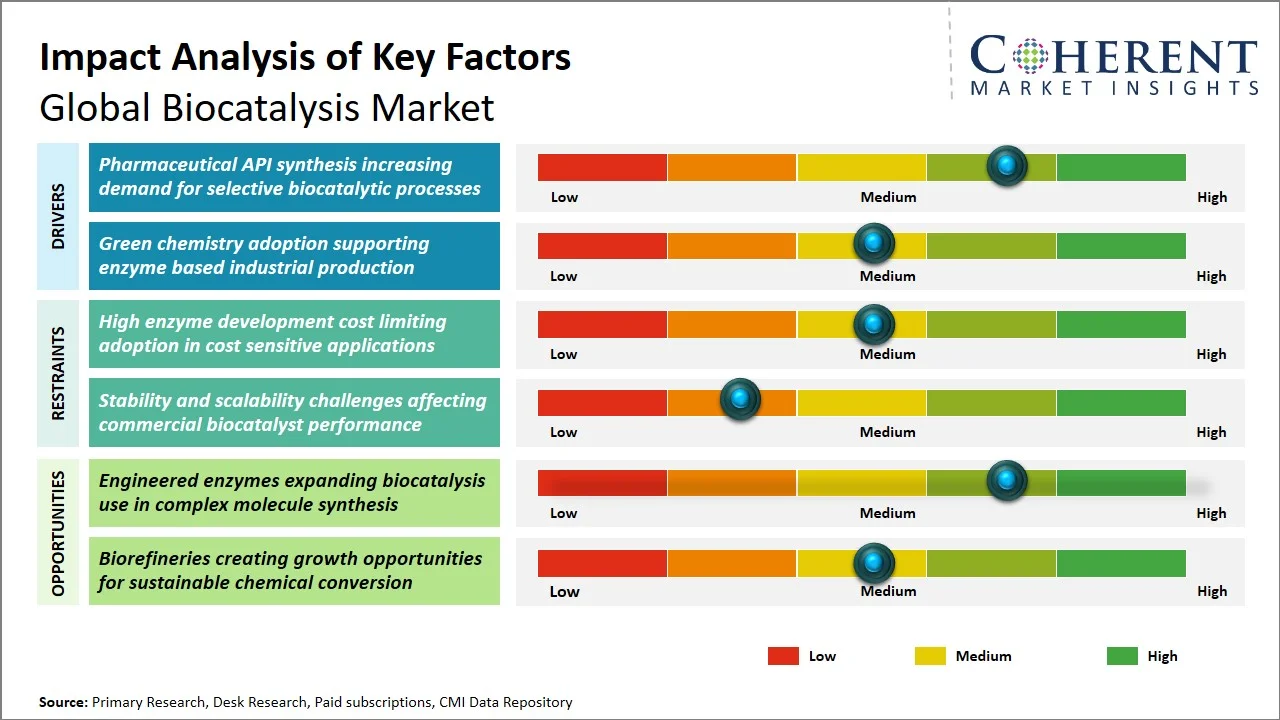
Key Market Drivers
- Pharmaceutical API Synthesis Increasing Demand for Selective Biocatalytic Processes: With the synthesis of complex molecules, pharmaceutical API manufacturers are turning to biocatalysis in order to obtain high selectivity, better stereochemical control and fewer purification problems. For commercially valuable chiral amines, small-molecule APIs, specialty intermediates, or advanced drug development programs, where traditional chemical synthesis could lead to loss of yield, increased impurity burdens, or extra reaction steps, this is important. Biocatalysis also enables quicker route screening and process optimization, benefitting pharma enterprises and CDMOs in streamlining their development timelines while enhancing their sustainability performance. Twist Bioscience and bitBiome announced the introduction of a Transaminase Enzyme Screening Kit in August 2024 that includes 48 different enzymes for biocatalysis, particularly for laboratory and pharmaceutical companies to use for API synthesis.
- Green Chemistry Adoption Supporting Enzyme Based Industrial Production: Green chemistry adoption is strengthening the commercial case for enzyme-based biocatalysts across specialty chemicals, food ingredients, fragrances, textiles, and pharmaceutical intermediates. Industrial producers are under pressure to reduce hazardous reagents, improve process energy efficiency, and move away from metal-heavy or solvent-intensive synthesis routes. Biocatalysis fits this transition by enabling milder reaction conditions, lower waste generation, improved selectivity, and better alignment with sustainability-driven procurement. This driver is especially relevant for manufacturers that need to combine regulatory compliance, cost control, and environmental performance without compromising product quality. In January 2026, Quantumzyme signed an MoU with Predictive Research to explore AI-enabled applications in green chemistry and biocatalysis, including enzyme engineering and sustainable biotransformation concepts for pharmaceutical and industrial processes.
Emerging Market Trends
- Movement Toward Multi-Enzyme and Cascade Biocatalysis: The global biocatalysis market is shifting from single enzyme reactions to multi-enzyme and cascade biocatalysis, which are characterized by the use of multiple enzymes in one-pot or sequentially to shorten synthesis routes. The significance of this trend is that cascade may allow greater intermediate isolation, less solvent use and better overall process efficiency. This offers pharmaceutical and specialty chemical companies a chance to rework complicated routes involving fewer unit operations and greater selectivity. It also enables the construction of differentiated process IP that will enable the enzyme supplier and the CDMOs to compete on the basis of an IP other than the enzyme. With the development of enzyme libraries, screening and reaction engineering, cascade biocatalysis is likely to become a more robust commercial pathway for high value molecules.
- Growing Integration of Biocatalysis with Continuous Processing: Biocatalysis is now more and more integrated with continuous processing to enhance reaction consistency, productivity and scalability. Immobilized enzymes, flow reactors and modular bioprocess systems are all cases where catalyst reuse and controlled reaction systems can enhance the economics of the process and are relevant to this trend. Compared to traditional batch processes, the residence time, temperature, substrate concentration and separation downstream can be controlled more effectively in continuous biocatalysis. The advantage for end users is not only sustainability, but improved process reproducibility and manufacturing reliability. As a result, enzyme formats, carrier materials, process analytics and reactor engineering skills are becoming more important, and biocatalysis suppliers are more closely moving towards complete process-development partnerships.
Current Events and their Impact
Current Events | Description and its Impact |
June 2026 – U.S. FDA selected participants for the PreCheck Pilot Program |
|
December 2025 – European Commission proposed the EU Biotech Act |
|
May 2026 – EFSA updated food enzyme application procedure guidance |
|
Regional Insights
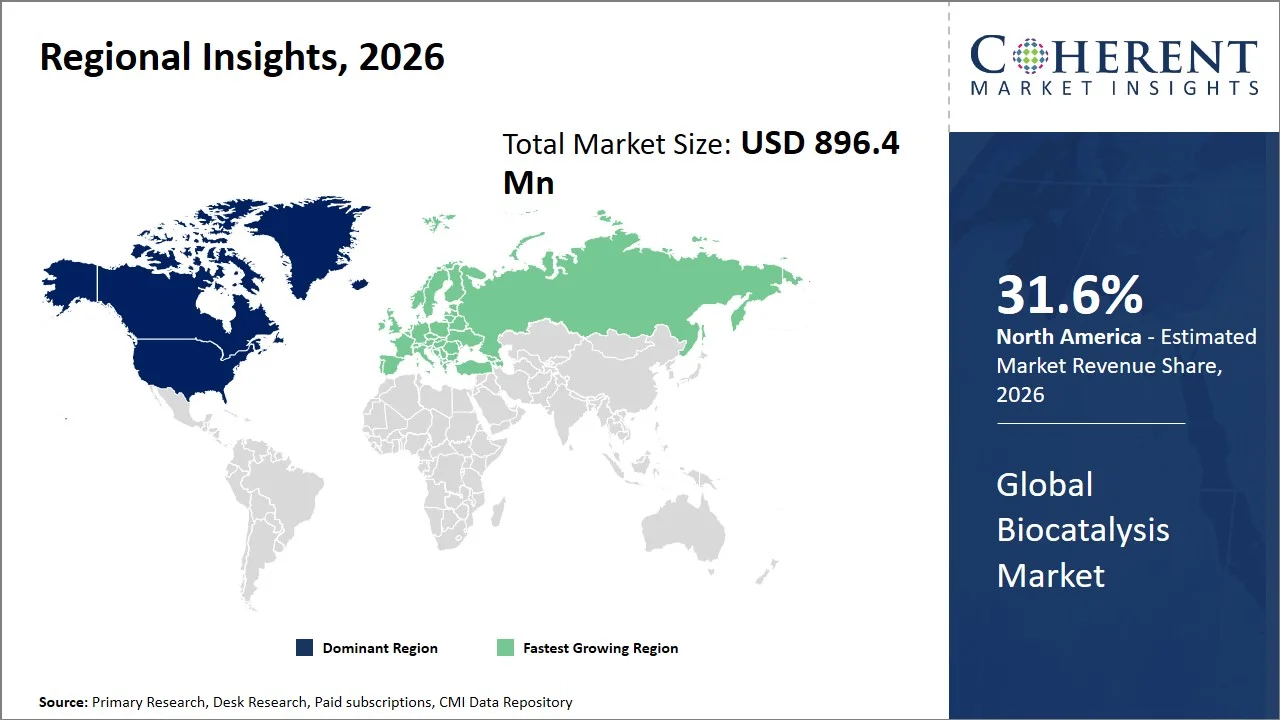
Why Does North America Dominate the Global Biocatalysis Market?
North America is expected to dominate the global biocatalysis market with 31.6% share in 2026, supported by a strong base of pharmaceutical innovators, enzyme-engineering start-ups, industrial biotechnology companies, and advanced contract development infrastructure. The region benefits from high adoption of biocatalysis in API synthesis, specialty chemicals, food ingredients, and sustainable manufacturing routes where process efficiency and cleaner chemistry are strategic priorities. Strong venture funding, university spinouts, and federal support for biomanufacturing also improve commercialization readiness. In September 2025, Cascade Bio, a University of Colorado Boulder spinout enabling enzyme-based processes, secured USD 6 million to scale breakthrough biocatalysts, including USD 3.2 million in non-dilutive funding from the U.S. National Science Foundation.
Why is Europe Emerging as the Fastest-Growing Region in the Global Biocatalysis Market?
Europe is expected to emerge as the fastest-growing region with 30.6% share in 2026, owing to its strong policy alignment with green chemistry, circular bioeconomy, low-emission manufacturing, and replacement of harsh chemical processes. The region’s biocatalysis adoption is strengthened by demand from detergents, textiles, nutraceuticals, cosmetics, pharmaceuticals, and specialty chemicals, where sustainability compliance and high process selectivity are increasingly important. Europe also benefits from collaborative R&D models involving universities, research institutes, enzyme developers, and industrial end users. In May 2025, the EU-funded OXIPRO project concluded after developing an oxidoreductase foundry approach for greener detergents, textiles, cosmetics, and nutraceutical applications. (Source: European Commission)
Global Biocatalysis Market Outlook for Key Countries
Why is the U.S. a Key Market for the Global Biocatalysis Market?
The U.S. is a key market for biocatalysis due to its advanced pharmaceutical R&D ecosystem, strong synthetic biology capabilities, established CDMO network, and growing investment in AI-enabled protein design. Biocatalysis is gaining importance among U.S. manufacturers seeking shorter synthesis routes, lower waste generation, and improved selectivity in high-value molecules. The country also has strong academic-industry collaboration, which supports faster translation of enzyme discovery into pilot and commercial-scale applications. In August 2025, the U.S. National Science Foundation announced nearly USD 32 million for five teams working on AI-driven protein design to strengthen the U.S. bioeconomy and accelerate market-ready protein-design solutions.
Why is India Important in the Global Biocatalysis Market?
India is important in the global biocatalysis market due to its expanding pharmaceutical manufacturing base, cost-competitive biotechnology talent pool, and growing focus on indigenous enzyme development. Biocatalysis is strategically relevant for India because API producers, specialty chemical firms, and bio-based product developers increasingly need scalable, cleaner, and more selective manufacturing routes. The country’s opportunity lies in reducing dependence on advanced enzyme imports while building domestic capabilities in enzyme discovery, fermentation, strain engineering, and process scale-up. In May 2025, DBT and BIRAC invited proposals on biomanufacturing of enzymes under the BioE3 Policy, including enzyme platforms for APIs, specialty chemicals, biofuels, and industrial biomanufacturing.
Why Does China Support Growth in the Global Biocatalysis Market?
China supports growth in the global biocatalysis market through its large pharmaceutical manufacturing base, integrated CDMO ecosystem, strong fermentation infrastructure, and high-volume chemical production capabilities. The country is positioned to scale biocatalytic processes because it combines enzyme screening, fermentation, API manufacturing, and process optimization within large industrial clusters. Demand is particularly strong in pharmaceutical intermediates, complex small molecules, and greener manufacturing routes where cost efficiency and scale matter. In July 2025, WuXi STA disclosed its end-to-end biocatalysis platform, including a library of more than 3,000 enzymes, 200,000 optimized variants, and a Changshu enzyme fermentation plant with over 22,000 L total capacity.
Why is Germany a Strategic Country in the Global Biocatalysis Market?
Germany is a strategic country in the global biocatalysis market due to its strong chemical manufacturing base, high-quality engineering ecosystem, advanced biotechnology research, and leadership in sustainable industrial processes. German companies and research institutions are well positioned to adopt enzyme-based routes in fine chemicals, pharmaceuticals, polymer intermediates, and circular bioeconomy applications. The country’s strength lies in combining process engineering, applied catalysis, automation, and industrial scale-up capabilities. In June 2026, the European Society of Applied Biocatalysis announced that biocat2026 would take place in Hamburg, covering AI-supported enzyme engineering, metagenomics, whole-cell catalysis, modular bioprocess engineering, and biocatalysis for circular bioeconomy applications.
Why is Japan an Important Growth Market for the Global Biocatalysis Market?
Japan is an important growth market for biocatalysis because of its strong enzyme technology heritage, advanced chemical manufacturing base, and rising focus on biomass utilization, biofuels, and sustainable materials. Japanese companies are applying enzyme systems not only in detergents and food processing but also in bioethanol, sustainable aviation fuel feedstock conversion, and industrial bioproduct platforms. The country’s strength is its ability to combine precision manufacturing, process reliability, and long-term R&D investment. In February 2026, Kao’s proposal was selected for NEDO’s biomanufacturing technology project to establish a saccharification enzyme supply platform supporting bioethanol and sustainable aviation fuel production from unused biomass resources.
Technology Adoption Landscape in the Global Biocatalysis Market
Technology | Adoption Level | Key Application Area | Business Impact |
Directed Enzyme Evolution | High | API synthesis, specialty chemicals, chiral intermediates | Improves enzyme activity, selectivity, and process fit for commercial-scale reactions |
Enzyme Immobilization | High | Continuous processing, food processing, biofuels, industrial chemicals | Enables catalyst reuse, improves stability, and reduces operating cost |
AI-Based Enzyme Design | Medium | Enzyme discovery, activity prediction, substrate expansion | Shortens development cycles and improves hit identification for novel reactions |
Whole-Cell Biocatalysis | Medium | Complex redox reactions, cofactors, fermentation-linked synthesis | Reduces need for isolated enzymes and supports difficult transformations |
Flow Biocatalysis | Medium | Pharmaceutical intermediates, fine chemicals, process intensification | Enhances reaction control, scalability, safety, and productivity |
Metagenomic Enzyme Mining | Medium | Novel enzyme discovery across food, pharma, chemicals, and detergents | Expands enzyme diversity and supports differentiated product development |
Technology | Adoption Level | Key Application Area | Business Impact |
How are Engineered Enzymes and Sustainable Process Redesign Creating New Growth Opportunities in the Global Biocatalysis Market?
Engineered enzymes and sustainable process redesign are creating strong growth opportunities by shifting biocatalysis from a supporting R&D tool to a commercial manufacturing strategy. Companies can use engineered biocatalysts to access reactions that are difficult, inefficient, or costly through conventional chemistry, especially in chiral synthesis, selective oxidation-reduction, esterification, hydrolysis, and complex intermediate production. This creates opportunities for premium enzyme solutions, process-development services, and integrated biocatalysis platforms. The opportunity is commercially attractive because end users are not only seeking greener processes but also better yields, lower impurity profiles, reduced purification costs, and improved scalability. As sustainability targets become linked to procurement and customer qualification, suppliers that offer validated enzyme systems, immobilized formats, and process-transfer support can capture higher-value contracts. Growth will be strongest where biocatalysis delivers both environmental and economic benefits, rather than being adopted only as a compliance measure.
Market Players, Key Development, and Competitive Landscape
Key Developments
- In January 2026, Enginzyme and AGC presented a scalable process for producing N1-methylpseudouridine-5'-triphosphate, a key mRNA vaccine and therapy ingredient. The process combines selective chemical methylation with a multi-enzyme phosphorylation cascade and is designed for animal-free, cGMP-compliant manufacturing in Europe.
- In October 2025, PI Health Sciences introduced integrated biocatalysis solutions covering gene discovery, enzyme engineering, strain development, fermentation scale-up, and downstream processing. The platform supports pharma and specialty chemical customers needing selective, scalable, and sustainability-oriented bioconversion routes from discovery through production.
- In October 2025, c-LEcta, a Kerry company, launched CellTrypase, a recombinant trypsin-like enzyme developed for GMP-compliant biopharmaceutical manufacturing. The enzyme supports cell dissociation workflows used in viral vector production, vaccine manufacturing, stem cell processing, tissue engineering, and cell banking.
Competitive Landscape
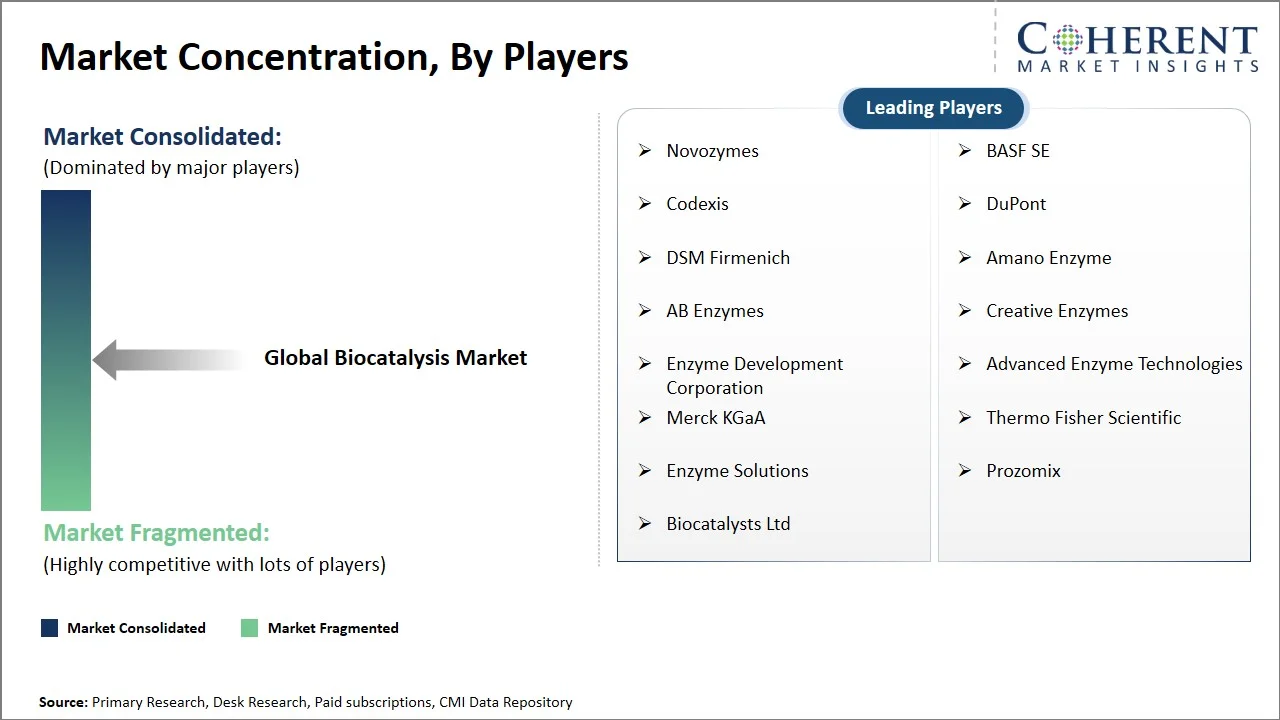
The global biocatalysis market is moderately fragmented, with competition involving industrial enzyme manufacturers, biotechnology companies, CDMOs, specialty chemical producers, academic spinouts, and platform-based enzyme engineering firms. Companies compete on enzyme performance, process scalability, application specificity, and ability to support customers from discovery to commercial deployment.
Key focus areas include
- Product quality, enzyme activity, stability, and batch-to-batch consistency
- Differentiation through proprietary enzyme libraries and engineered variants
- Technology adoption in AI screening, directed evolution, and immobilization
- Cost competitiveness through fermentation efficiency and scalable production
- Compliance readiness for food, pharma, and industrial applications
- Customer support in reaction optimization, scale-up, and technology transfer
- Application-specific grades for APIs, food processing, detergents, and specialty chemicals
- Strategic partnerships with CDMOs, chemical producers, and industrial end users
Market Report Scope
Biocatalysis Market Report Coverage
| Report Coverage | Details | ||
|---|---|---|---|
| Base Year: | 2025 | Market Size in 2026: | USD 896.4 Mn |
| Historical Data for: | 2020 To 2024 | Forecast Period: | 2026 To 2033 |
| Forecast Period 2026 to 2033 CAGR: | 9.4% | 2033 Value Projection: | USD 1,681.2 Mn |
| Geographies covered: |
| ||
| Segments covered: |
| ||
| Companies covered: | Novozymes, BASF SE, Codexis, DuPont, DSM Firmenich, Amano Enzyme, AB Enzymes, Creative Enzymes, Enzyme Development Corporation, Advanced Enzyme Technologies, Merck KGaA, Thermo Fisher Scientific, Enzyme Solutions, Prozomix, and Biocatalysts Ltd | ||
| Growth Drivers: |
| ||
| Restraints & Challenges: |
| ||
Analyst Opinion (Expert Opinion)
- The market outlook remains positive as biocatalysis is becoming a core route-design and process-intensification tool rather than a niche sustainability option. The most transformative trend will be the combination of enzyme engineering, AI-assisted screening, and continuous processing, which can make biocatalytic routes more predictable and commercially scalable.
- Strongest growth pockets are expected in pharmaceuticals and APIs, specialty chemicals, bio-based ingredients, and industrial applications where selectivity, lower waste, and process economics matter together. Enzyme based biocatalysts and hydrolases will remain important, but engineered and immobilized biocatalysts should gain strategic value as customers demand reusable, robust, and process-ready catalyst systems.
- Key barriers include enzyme stability under industrial conditions, high development cost for customized catalysts, regulatory documentation needs, and slower adoption among conservative chemical manufacturers. Market players should focus on validated enzyme libraries, co-development models, process-transfer support, and application-specific performance data to build competitive advantage and reduce customer adoption risk.
Speak to the analyst
Want personalized insights?
Take the findings above to one of our principal consultants, or have the report rebuilt around the segments, geographies and competitors you actually track.
Market Segmentation
- Catalyst Type Insights (Revenue, USD Mn, 2021 - 2033)
- Enzyme Based Biocatalysts
- Whole Cell Biocatalysts
- Immobilized Biocatalysts
- Engineered Biocatalysts
- Enzyme Type Insights (Revenue, USD Mn, 2021 - 2033)
- Hydrolases
- Oxidoreductases
- Transferases
- Lyases
- Isomerases
- Ligases
- Others
- Application Insights (Revenue, USD Mn, 2021 - 2033)
- Pharmaceuticals and APIs
- Food and Beverages
- Specialty Chemicals
- Biofuels and Biorefineries
- Agrochemicals
- Detergents and Cleaning Products
- Others
- End-use Industry Insights (Revenue, USD Mn, 2021 - 2033)
- Pharmaceutical and Biotechnology
- Food Processing
- Chemical Manufacturing
- Energy and Biofuels
- Agriculture
- Others
- Regional Insights (Revenue, USD Mn, 2021 - 2033)
- North America
- U.S.
- Canada
- Latin America
- Brazil
- Argentina
- Mexico
- Rest of Latin America
- Europe
- Germany
- U.K.
- Spain
- France
- Italy
- Russia
- Rest of Europe
- Asia Pacific
- China
- India
- Japan
- Australia
- South Korea
- ASEAN
- Rest of Asia Pacific
- Middle East
- GCC Countries
- Israel
- Rest of Middle East
- Africa
- South Africa
- North Africa
- Central Africa
- North America
- Key Players Insights
- Novozymes
- BASF SE
- Codexis
- DuPont
- DSM Firmenich
- Amano Enzyme
- AB Enzymes
- Creative Enzymes
- Enzyme Development Corporation
- Advanced Enzyme Technologies
- Merck KGaA
- Thermo Fisher Scientific
- Enzyme Solutions
- Prozomix
- Biocatalysts Ltd
Source
Primary Research Interviews
- Biocatalyst and enzyme manufacturers producing enzyme based, whole cell, immobilized, and engineered biocatalysts
- Industrial enzyme suppliers covering hydrolases, oxidoreductases, transferases, lyases, isomerases, and ligases
- Pharmaceutical API manufacturers, CDMOs, food processors, specialty chemical, detergent, agrochemical, and biofuel producers
- Enzyme engineering, fermentation, immobilization, downstream processing, and bioprocess equipment suppliers
- Regulatory, GMP, food safety, sustainability, and green chemistry consultants
Stakeholders
- Key companies: Novonesis, BASF SE, Codexis, DSM-Firmenich, IFF, Amano Enzyme, AB Enzymes, Creative Enzymes, Advanced Enzyme Technologies, Enzyme Development Corporation, Prozomix, Biocatalysts Ltd
- Pharma and life science players: Merck KGaA, Thermo Fisher Scientific, Lonza, Almac Group, SK pharmteco, WuXi STA, Piramal Pharma Solutions
- Technology and bioprocess firms: Arzeda, EnginZyme, eXoZymes, c-LEcta, BRAIN Biotech, SpinChem, Imperagen
- End users: pharmaceutical companies, CDMOs, food and beverage manufacturers, detergent producers, specialty chemical firms, biofuel companies, and industrial biotechnology users
Databases
- FDA, EMA, EFSA, PMDA, CDSCO
- OECD, World Bank, UNIDO, WHO
- UN Comtrade, ITC Trade Map, Eurostat, USITC DataWeb
- Company annual reports, investor presentations, sustainability reports, press releases, technical datasheets, and product brochures
Industry Publications and Journals
- Nature Catalysis, ACS Catalysis, Green Chemistry, Organic Process Research & Development
- Biotechnology Advances, Enzyme and Microbial Technology, Applied Microbiology and Biotechnology
- Chemical & Engineering News, BioProcess International, Pharma Manufacturing, Journal of Cleaner Production
Associations
- International Union of Biochemistry and Molecular Biology
- International Union of Pure and Applied Chemistry
- American Chemical Society
- Society for Industrial Microbiology and Biotechnology
- Biotechnology Innovation Organization
- EuropaBio
- European Federation of Biotechnology
- International Society for Pharmaceutical Engineering
Public Domain Sources
- U.S. FDA, EMA, EFSA, European Commission
- U.S. Department of Energy, U.S. EPA, National Science Foundation
- India Department of Biotechnology, Japan METI, China MIIT, Germany BMBF
- OECD, World Bank, UN Comtrade
Proprietary Elements
- CMI Data Analytics Tool, Proprietary CMI Existing Repository of information for last 10 years.
Get access to 250+ pages report
Every segment, forecast, competitor profile and data table behind the analysis above — available for instant download.
- ESOMAR Member
- ISO 9001:2015 Certified
- D-U-N-S Registered
- GDPR & CCPA Compliant
Missing comfort of reading report in your local language? Find your preferred language:
Transform your Strategy with Exclusive Trending Reports
Frequently Asked Questions
The CAGR of the global biocatalysis market is projected to be 9.4% from 2026 to 2033.
The global biocatalysis market is estimated to be valued at USD 896.4 million in 2026 and is expected to reach USD 1,681.2 million by 2033.
Pharmaceuticals and APIs is the leading application segment, supported by growing use of biocatalysis in chiral synthesis, selective transformations, and cleaner API manufacturing.
Hydrolases are expected to dominate among enzyme types, owing to their wide use in hydrolysis reactions across food processing, detergents, pharmaceuticals, and industrial bioprocessing.
Biocatalysis is used to improve reaction selectivity, reduce harsh chemical usage, lower waste generation, and support sustainable production in pharmaceuticals, specialty chemicals, food ingredients, biofuels, and detergents.
Pharmaceutical API synthesis increasing demand for selective biocatalytic processes and green chemistry adoption supporting enzyme based industrial production are the major factors driving the growth of the global biocatalysis market.
High enzyme development cost limiting adoption in cost sensitive applications and stability and scalability challenges affecting commercial biocatalyst performance are the major factors hampering the growth of the global biocatalysis market.