

Global Enzyme Engineering Market Size and Forecast – 2026 to 2033
The Global Enzyme Engineering Market is estimated to be valued at USD 9.47 Bn in 2026 and is expected to reach USD 18.10 Bn by 2033, reflecting a compound annual growth rate (CAGR) of 9.7% from 2026 to 2033. This growth is driven by increasing demand across various industries such as pharmaceuticals, food and beverages, and biofuels, where enzyme engineering plays a vital role in enhancing product efficacy and sustainability.
Key Takeaways of the Global Enzyme Engineering Market
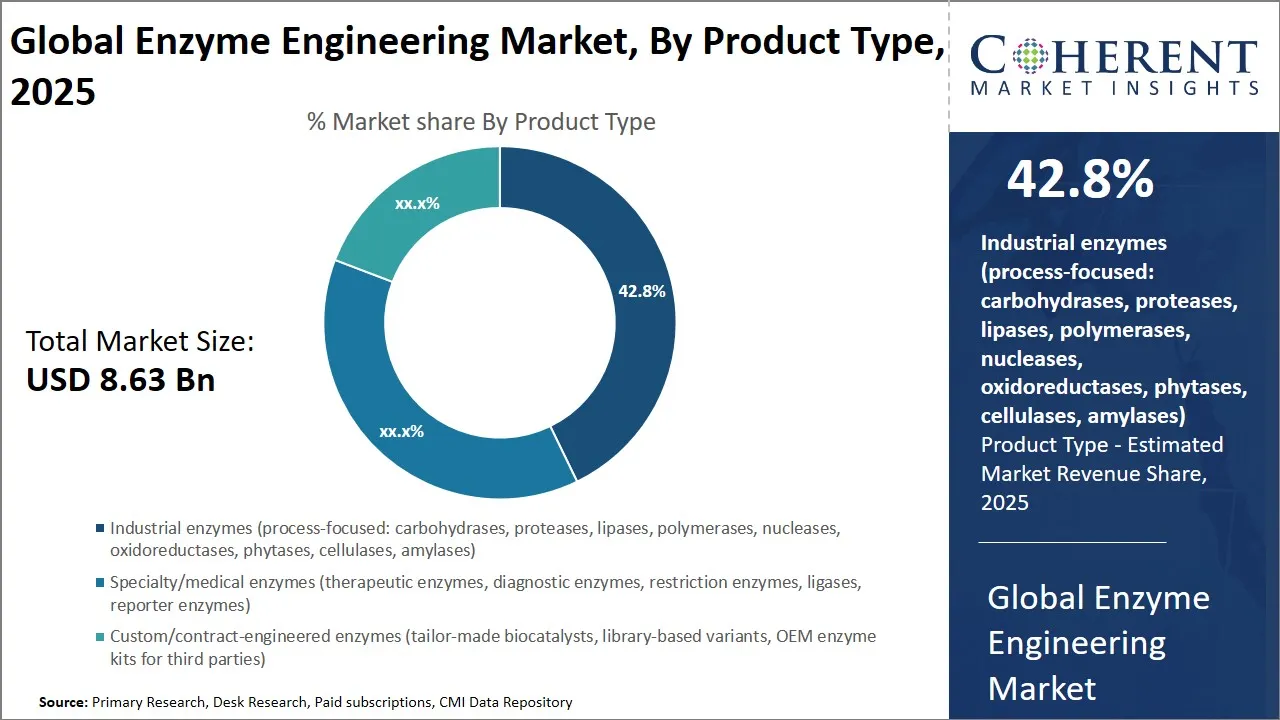
- By product type, industrial enzymes (process-focused: carbohydrases, proteases, lipases, polymerases, nucleases, oxidoreductases, phytases, cellulases, amylases) will hold the largest share at 43.8 % in 2026.
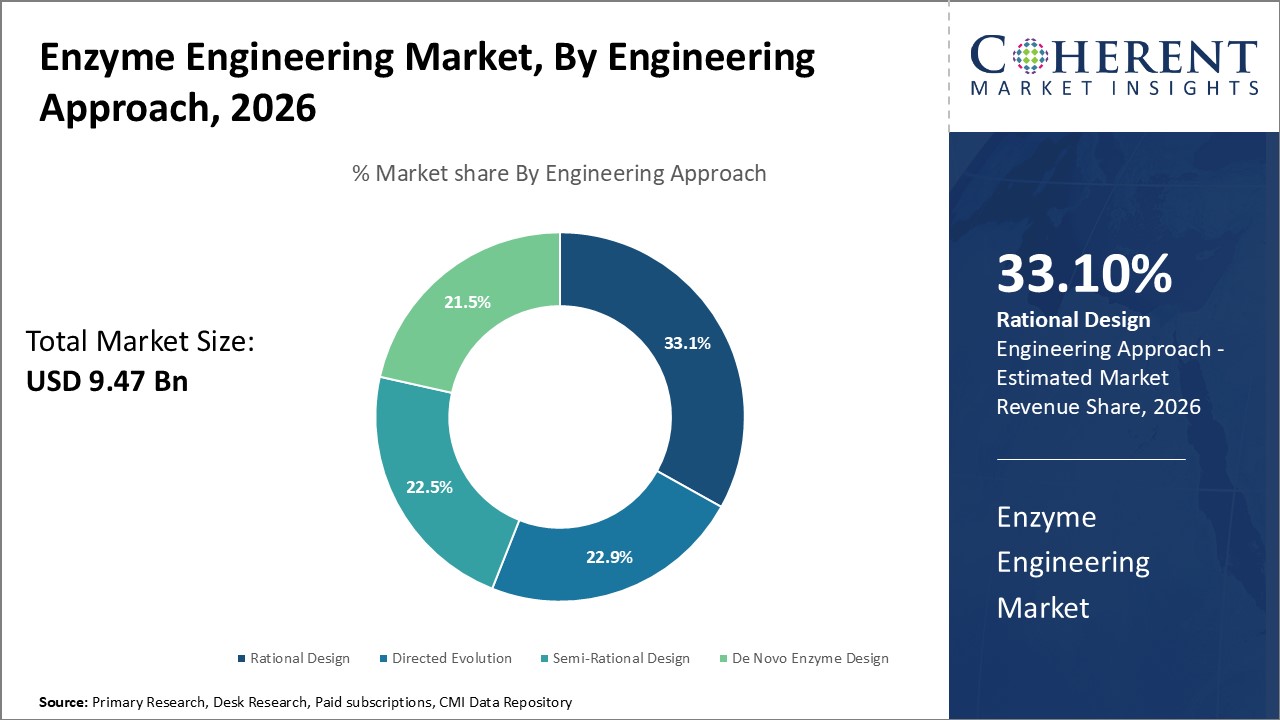
- By engineering approach, rational design is expected to lead the market with a 33.1% share in 2026.
- By source, microbial enzymes are projected to dominate the enzyme engineering market, accounting for 35.5 % share in 2026.
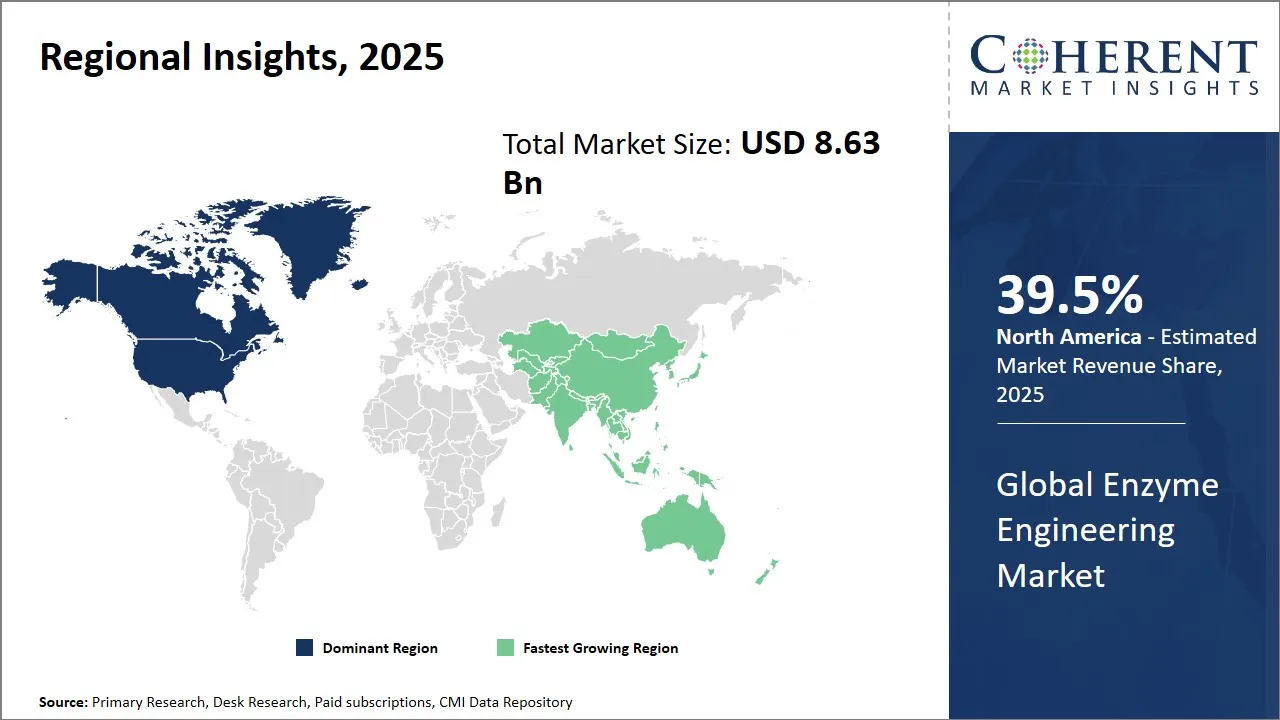
- North America is expected to lead the market, holding a share of 39.5 % in 2026. Asia Pacific is anticipated to be the fastest-growing region, with 24.3% share in 2026.
Market Overview
- A major market trend in enzyme/protein engineering is the rising adoption of advanced biotechnological tools, including CRISPR and protein modeling, to develop highly efficient and tailored enzymes.
- Additionally, companies are increasingly focusing on sustainable and eco-friendly processes, leveraging enzyme engineering to reduce environmental impact.
- The expansion of personalized medicine and industrial biotechnology applications further bolsters market growth, highlighting innovation as a central theme in this rapidly evolving sector.
Current Events and Its Impact
Current Events | Description and its Impact |
AI‑Driven Enzyme Engineering Platforms & Investments |
|
Specialty Enzymes & Biotechnology Integration |
|
Segmental Insights
- Current Industry Events of 2026
- Market Size Estimation
- Regional Breakdown
- Competitive Landscape
- Customer Intelligence
- Segmental Analysis
- Pricing Analysis
- Key Market Drivers, Challenges & Future Trends
- Customized Insights Section
Why Do Industrial Enzymes (process-focused: carbohydrases, proteases, lipases, polymerases, nucleases, oxidoreductases, phytases, cellulases, amylases) Lead Market Share in the Enzyme Engineering Market in 2026?
By product type, industrial enzymes (process-focused: carbohydrases, proteases, lipases, polymerases, nucleases, oxidoreductases, phytases, cellulases, amylases) have the highest market share of the global enzyme engineering market with an estimated 43.8% share in 2026. This is mainly because the range of industries that require these enzymes to boost processes into efficiency, lowering production costs, and viability is immense.
In January 2026, University of Manchester, a leading U.K. research university, reported a major enzyme engineering breakthrough. Researchers engineered a novel enzyme called SNAr1.3 for drug and chemical manufacturing. The enzyme enables nucleophilic aromatic substitution reactions under mild, water-based conditions. This replaces harsh chemical processes used in pharmaceuticals and agrochemicals.
Why Does Rational Design Dominate the Enzyme Engineering Market in 2026?
In terms of engineering approach, rational design is expected to hold the largest market share of 33.1% in 2026. The dominance of this approach is based on its scientific rigor and accuracy, as it allows engineers to predict alteration of enzyme active sites and enhance catalytic activity through the use of detailed information concerning enzyme structure and reaction pathway.
In contrast to trial-and-error approaches, Rational Design employs computational modeling, bioinformatics and structural biology, which makes possible specific modifications that can increase enzyme specificity, stability and activity.
Microbial Enzymes Dominate the Enzyme Engineering Market
By source segmentation, microbial enzymes will dominate the enzyme engineering market with 35.5% share in 2026. This dominance is due to a number of inherent benefits associated with microbial cells, such as bacteria, fungi, and yeasts, which can be used as an effective production of enzymes.
A wide range of enzymes are naturally produced by microbes as they catalyze a wide range of biochemical reactions and are therefore a rich source of enzymes in any enzyme engineering project. Their high growth rates, ability to grow under controlled growth conditions and the large capacity to produce enzyme makes the production of enzymes to be scaled and economical to carry out.
Impact of Cost Reduction and Process Efficiency on the Enzyme Engineering Market
- Cost reduction in the enzyme engineering market can significantly enhance profitability by lowering production expenses while maintaining product quality. Through innovations in enzyme design and optimization, companies can streamline manufacturing processes, reduce raw material consumption, and improve enzyme stability, leading to more cost-effective solutions for industries like pharmaceuticals, biofuels, and food processing. Automation and advanced computational methods also play a crucial role in cutting labor costs and improving production scalability.
- Process efficiency improvements further boost market competitiveness by accelerating production timelines and minimizing waste. Techniques such as enzyme immobilization and reaction optimization reduce energy consumption and increase throughput. These advancements not only contribute to lower operational costs but also align with sustainability goals, as more efficient processes tend to generate less environmental impact, which is a growing concern across industries. Enhanced process efficiency supports long-term market growth by enabling companies to offer more competitive pricing and attract a broader customer base.
Regional Insights
North America Enzyme Engineering Market Analysis and Trends
North America will hold a leading position in the global enzyme engineering market with an estimated 39.5% share in 2026, supported by a mature biotechnology ecosystem. This dominance is further reinforced by heavy investment in research and development and the strong presence of major biotech companies and research institutions. Wel-developed infrastructure of the region supports enzyme engineering in the pharmaceuticals, food processing and biofuels.
Additionally, Novozymes, Codexis, and Genentech are other major players in the industry in North America that makes significant contributions in the form of creation of new enzymes that are specifically used in industries. Industry and academia cooperation enhance the pace at which the enzyme engineering innovation is transformed to business. The strong dynamics of trade and the availability of the world markets serve to solidify the leadership of North America in this sphere even more.
Asia Pacific Enzyme Engineering Market Analysis and Trends
Asia Pacific is projected to record the fastest growth in the enzyme engineering market, reaching a 24.3% share in 2026. This growth is driven by rapid industrialization, increasing investment in biotechnology research, and expanding applications across pharmaceutical, agricultural, and bio-energy sectors. Growth is also driven by the rising need to use enzyme-based green technologies to enhance sustainability and environmental footprint. In China and Japan, there are local companies that are currently developing enzyme products to serve regional and international markets such as Donghua Co., Ltd. in China and Ajinomoto Co., Inc. in Japan. Moreover, the growing activities of Asia Pacific with international biotech companies make it easier to transfer the technologies and enhance the market penetration.
In September 2024, the Government of India, through its biotechnology and renewable energy initiatives, outlined plans to accelerate second-generation ethanol production by establishing domestic enzyme-manufacturing facilities to reduce import dependence. The first proposed enzyme plant is expected in Haryana, India supporting 2G bio-ethanol facilities in Mathura, Bhatinda, and Panipat. Under the BioE3 policy, the government also aims to set up bio-foundries focused on producing biotechnology-enabled feedstock and catalytic enzymes.
Global Enzyme Engineering Market Outlook for Key Countries
Why the U.S. Continues to Lead Enzyme Engineering Innovation?
The enzyme engineering market in the U.S. is still a formidable force. The presence of major enzyme engineering firms like Codexis and Genentech constantly set the pace in the further optimization of enzymes to be manufactured into biopharmaceutical products or to industrial products. The strategic investment systems and the excellent patent insurance, combined with the comprehensive system of research universities, offer a good breeding ground to innovation. Also, the U.S. companies are leaders in applying enzyme engineering to synthetic biology, which allows next-generation biocatalysts to improve production efficiency and sustainability.
Why China Is Rapidly Scaling Up Enzyme Engineering Capabilities?
The dynamics of enzyme engineering market in China are characterized by massive government strategies that encourage use of biotechnology as a strategic sector and such strategies include; Made in China 2026 plan which focuses on bio-industrial upgrades. Chinese corporations like Sunshine Biotech are putting an emphasis on enzyme versions to be used in large scale industrial applications, like biofuels and food processing. Enzyme research and production industrial parks lead to faster commercialization of the technology. Another advantage of China is that there is a large home manufacturing base that allows cost-efficient enzyme engineering and manufacturing
Germany Enzyme Engineering Market Trends
The enzyme engineering market of Germany, has a strong industrial biotechnology sector, which is largely supported by Fraunhofer Institutes and individual companies like European operations by Novozymes. The environmental laws in the country are very strict, thus promoting the use of enzyme-based sustainable processes in the production of chemicals and waste management. Academia-industry collaboration develops custom-made enzyme solutions, which is why Germany is a major innovation location in Europe. German enzyme innovations are export-oriented and trade-related, and it is through trade ties that innovations reach the global markets.
India Enzyme Engineering Market Trends
India is fast becoming an important supplier thanks to increasing demand on the part of the pharmaceutical as well as agro-industries, as well as government encouragement with such bodies as the Biotechnology Industry Research Assistance Council (BIRAC). Local firms like Biocon and Advanced Enzyme Technologies are using the field of enzyme engineering to improve the efficacy and affordability of products. These factors coupled with the presence of skilled labor force, cost benefits and the growing R and D partnerships with foreign organizations would drive the growing presence of India in the market. The regulatory reforms, which include simplifying approvals also contribute to growth in the sector.
Manufacturing Capacity and CMO Readiness in the Enzyme Engineering Market
- Manufacturing capacity in the enzyme engineering market is essential for meeting growing demand across industries like pharmaceuticals and biofuels. Scaling production efficiently with advanced bioreactors, optimized fermentation, and automation technologies allows companies to meet market fluctuations and accommodate both large and niche demands.
- CMOs are critical in supporting enzyme production by providing specialized expertise and scalability. Partnering with experienced CMOs helps enzyme companies expand without large capital investments, ensuring reliable, high-quality production. These partnerships enable faster, cost-effective manufacturing while managing capacity constraints and reducing lead times.
Market Players, Key Developments, and Competitive Intelligence
Key Developments
- In April 2025, eXoZymes, an AI-driven enzyme engineering company focused on sustainable biomanufacturing, launched BioClick. The initiative advances enzyme engineering by accelerating complex chemical reactions for medicines and nutraceuticals. BioClick is partially supported by a 300K NIH SBIR grant. The platform applies artificial evolution to design enzymes for precise group transfer reactions. This enables improved drug performance and access to previously unreachable bio-based molecules.
- In May 2025, Isomerase, a synthetic biology and enzyme engineering company, launched EvoSelect. The machine learning platform accelerates enzyme engineering for industrial and pharmaceutical applications. EvoSelect uses evolutionary data to design high-fitness enzymes under harsh operating conditions. It reduces development time, optimization cost, and intellectual property risks.
- In October 2024, University of California Irvine, a leading public research university, advanced enzyme engineering research. A UC Irvine led team engineered a new enzyme producing synthetic genetic material called TNA. The enzyme enables stable genetic synthesis beyond traditional DNA capabilities. This breakthrough supports development of precise therapies for cancer and complex diseases. The discovery narrows performance gaps between artificial and natural enzyme systems. It highlights enzyme engineering as a platform for next generation therapeutic innovation.
- In December 2022, Ginkgo Bioworks, a cell programming and enzyme engineering platform company, launched Ginkgo Enzyme Services. The offering enables machine learning–guided enzyme engineering across pharmaceuticals, diagnostics, food, and agriculture. It combines ultra-high-throughput screening, computational protein design, and optimized microbial hosts. The service supports enzyme discovery, performance optimization, and large-scale manufacturing.
Top Strategies Followed by Global Enzyme Engineering Market Players
Player Type | Strategic Focus | Examples |
Established Market Leaders | Advanced R&D in high-performance enzymes; OEM partnerships; global expansion with localized formulations | Novozymes (Novonesis) is developing detergent and bioenergy enzymes with FMCG partners; DSM-Firmenich is scaling precision enzymes for nutrition and pharma across Asia Pacific and Latin America |
Mid-Level Players | Cost-efficient production; value-based enzyme solutions; technology collaborations | Amano Enzyme is optimizing fermentation for food enzymes; Advanced Enzyme Technologies is expanding affordable enzyme portfolios in emerging markets |
Small-Scale Players | Niche innovation; rapid adoption of AI, synthetic biology; focus on specialty and green applications | Codexis is using computational design for pharma biocatalysts; EnginZyme is advancing immobilized enzymes for circular chemistry |
Market Report Scope
Enzyme Engineering Market Report Coverage
| Report Coverage | Details | ||
|---|---|---|---|
| Base Year: | 2025 | Market Size in 2026: | USD 9.47 Bn |
| Historical Data for: | 2020 To 2024 | Forecast Period: | 2026 To 2033 |
| Forecast Period 2026 to 2033 CAGR: | 9.7% | 2033 Value Projection: | USD 18.10 Bn |
| Geographies covered: |
| ||
| Segments covered: |
| ||
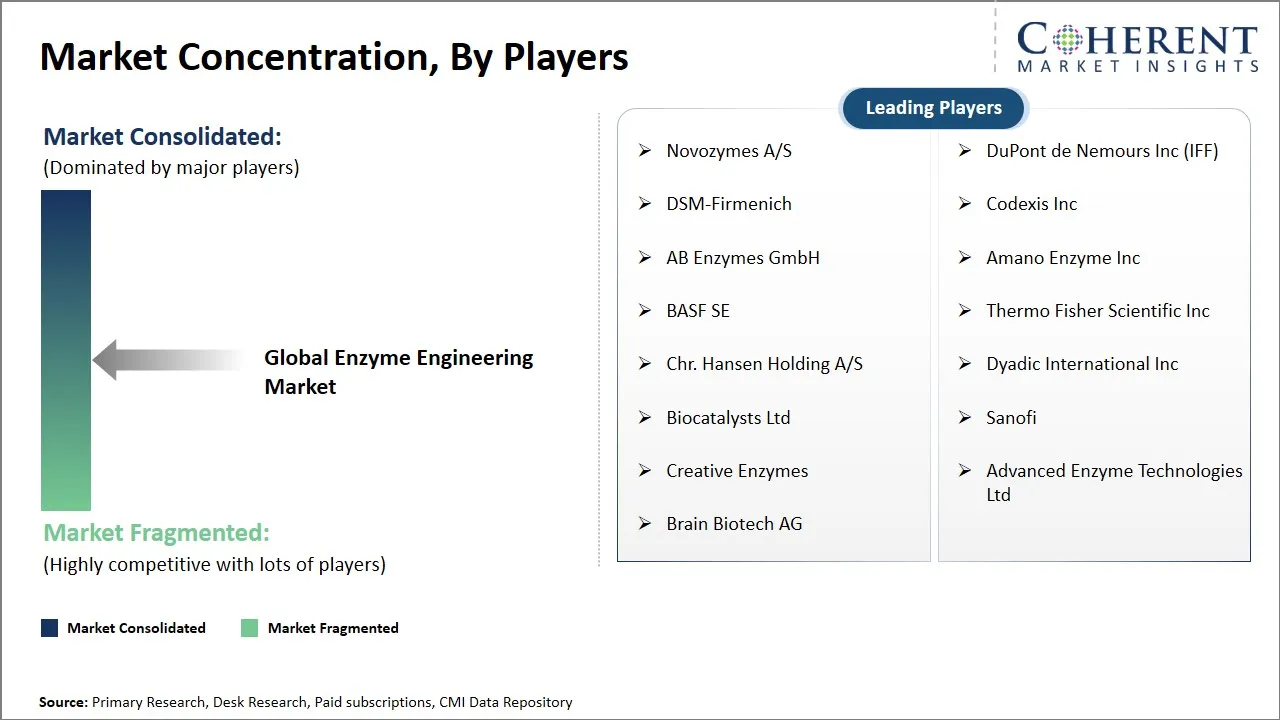
| Companies covered: | Novozymes A/S, DuPont de Nemours Inc (IFF), DSM‑Firmenich, Codexis Inc, AB Enzymes GmbH, Amano Enzyme Inc, BASF SE, Thermo Fisher Scientific Inc, Chr. Hansen Holding A/S, Dyadic International Inc, Biocatalysts Ltd, Sanofi, Creative Enzymes, Advanced Enzyme Technologies Ltd, and Brain Biotech AG | ||
| Growth Drivers: |
| ||
| Restraints & Challenges: |
| ||
Enzyme Engineering Market Dynamics
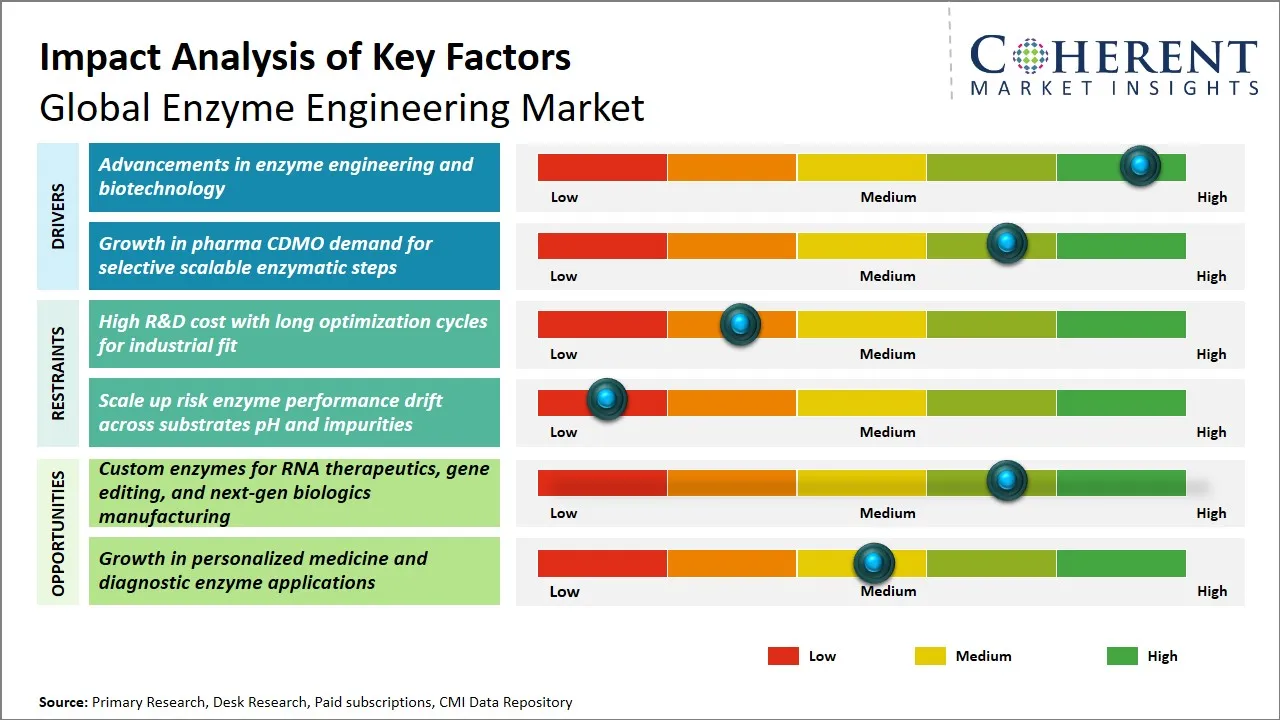
Enzyme Engineering Market Driver - Advancements in Enzyme Engineering and Biotechnology
The recent progress in the field of enzyme engineering and biotechnology is playing an important role in driving the enzyme engineering market throughout the world. Directed evolution, rational design, and computational modeling are some of the innovations that have improved the possibility of generating improved enzymes with specificity, stability, and catalytic efficiency that can be applied in various industries. These technology advancements enable us to come up with enzymes that can work in harsh conditions to increase their application in pharmaceutical, biofuels, food and beverages and in environmental management.
In August 2025, National Science Foundation, a U.S. federal research funding agency, invested nearly USD 32 million. The funding supports AI-driven protein and enzyme engineering to strengthen the U.S. bioeconomy. Arzeda, an industrial protein design company, will develop AI-designed enzymes for bio-based acrylate production. Koliber Biosciences, a synthetic biology firm, will optimize molecular transporters to improve biomanufacturing efficiency.
(Source: https://www.nsf.gov/news/nsf-invests-nearly-32m-accelerate-novel-ai-driven-approaches)
Enzyme Engineering Market Opportunity - Custom Enzymes for RNA Therapeutics, Gene Editing, and Next-Generation Biologics Manufacturing
The global enzyme engineering market has a wide range of opportunities owing to the increasing demand of custom enzymes based on RNA therapeutics, gene editing technologies and next-generation biologics manufacturing. Innovations in RNA-based treatment, such as mRNA vaccines, siRNA drugs, etc. demand extremely specific enzymes to produce, modify, and deliver RNA molecules effectively. More specific applications of engineered enzymes can be used to improve yield, stability, and specificity, overcoming critical challenges in the development of therapeutic applications. Likewise, the increased use of gene editing technologies, such as CRISPR-Cas systems, requires the development of individual enzymes with higher specificity and lower on-target activity to permit the adoption of robust genome editing.
In May 2025, Aldevron, a global manufacturer of DNA, RNA, and proteins, achieved a major milestone. Integrated DNA Technologies, a leading genomics solutions provider, partnered to manufacture the first personalized mRNA-based CRISPR therapy. The enzyme engineering–enabled therapy was developed on demand for an infant with a rare metabolic disorder. The customized CRISPR drug was manufactured within six months, far faster than standard timelines.
(Source:https://www.aldevron.com/about-us/news/world-first-personalized-crispr-gene-editing-drug-product)
Analyst Opinion (Expert Opinion)
- Pharmaceuticals, industrial biotechnology and sustainable manufacturing are all becoming dependent on their enzyme engineering market. The AI-enabled protein design, accelerated directed evolution, and regulatory push towards low-emission and bio-based production processes stimulate growth. High demand of highly selective enzymes by biopharma in RNA therapies, gene editing, and new diagnostics still continue to open up market potential, whereas major challenges include cost of development, scale-up predictability, and intellectual property limitations. Exchange of knowledge via platforms like the Enzyme Engineering Conference, BioProcess International Conference, Synthetic Biology World Congress and ACS biocatalysis forums have assisted in accelerated technology adoption and alignment with the industry.
- Current investments and policy undertakings are strengthening the market confidence in the long-term. The growth in commercial validation is indicated by strategic alliances between enzyme engineering companies and multinational pharmaceutical companies, large-scale investment in diagnostics and biomanufacturing infrastructure. The government-initiated campaigns on biofuels, second-generation ethanol, and manufacturing enzymes domestically are generating a high level of downstream demand, and sustainability programs on circular chemicals and plastic recycling are compelling new growth opportunities in engineered enzymes.
Speak to the analyst
Want personalized insights?
Take the findings above to one of our principal consultants, or have the report rebuilt around the segments, geographies and competitors you actually track.
Market Segmentation
- Product Type Insights (Revenue, USD Bn, 2021 - 2033)
- Industrial enzymes (process-focused: carbohydrases, proteases, lipases, polymerases, nucleases, oxidoreductases, phytases, cellulases, amylases)
- Specialty/medical enzymes (therapeutic enzymes, diagnostic enzymes, restriction enzymes, ligases, reporter enzymes)
- Custom/contract-engineered enzymes (tailor-made biocatalysts, library-based variants, OEM enzyme kits for third parties)
- Engineering Approach Insights (Revenue, USD Bn, 2021 - 2033)
- Rational Design
- Directed Evolution
- Semi-Rational Design
- De Novo Enzyme Design
- Source Insights (Revenue, USD Bn, 2021 - 2033)
- Microbial Enzymes
- Plant-Derived Enzymes
- Animal-Derived Enzymes
- Synthetic/Artificial Enzymes
- Modification Type Insights (Revenue, USD Bn, 2021 - 2033)
- Amino Acid Substitution
- Enzyme Fusion/Chimeric Enzymes
- Immobilized Enzymes
- Glycoengineering
- Stability and Thermotolerance Enhancement
- End User Insights (Revenue, USD Bn, 2021 - 2033)
- Pharmaceutical and Biotechnology Companies
- Academic and Research Institutes
- Industrial Manufacturers
- Diagnostic Laboratories and Centers
- Regional Insights (Revenue, USD Bn, 2021 - 2033)
- North America
- U.S.
- Canada
- Latin America
- Brazil
- Argentina
- Mexico
- Rest of Latin America
- Europe
- Germany
- U.K.
- Spain
- France
- Italy
- Russia
- Rest of Europe
- Asia Pacific
- China
- India
- Japan
- Australia
- South Korea
- ASEAN
- Rest of Asia Pacific
- Middle East
- GCC Countries
- Israel
- Rest of Middle East
- Africa
- South Africa
- North Africa
- Central Africa
- North America
- Key Players Insights
- Novozymes A/S
- DuPont de Nemours Inc (IFF)
- DSM‑Firmenich
- Codexis Inc
- AB Enzymes GmbH
- Amano Enzyme Inc
- BASF SE
- Thermo Fisher Scientific Inc
- Hansen Holding A/S
- Dyadic International Inc
- Biocatalysts Ltd
- Sanofi
- Creative Enzymes
- Advanced Enzyme Technologies Ltd
- Brain Biotech AG
Sources
Primary Research Interviews
- Industry Stakeholders
- Enzyme R&D Directors
- Bioprocess Engineering Heads
- End Users
- Pharmaceutical Manufacturing Leads
- Industrial Biotechnology Operations Managers
Government and International Databases
- World Intellectual Property Organization
- United States Food and Drug Administration
- European Medicines Agency
- OECD Biotechnology Statistics
- European Commission Joint Research Centre
- National Institutes of Health
Trade Publications
- Chemical and Engineering News
- BioProcess International
- Genetic Engineering and Biotechnology News
- Nature Biotechnology News
- Biopharma Dive
- Biofuels Digest
Academic Journals
- Nature Biotechnology
- ACS Catalysis
- Applied and Environmental Microbiology
- Biotechnology Advances
- Trends in Biotechnology
- Journal of Molecular Biology
Reputable Newspapers
- Financial Times
- The Wall Street Journal
- The New York Times
- The Guardian
- The Hindu
- Nikkei Asia
Industry Associations
- Biotechnology Innovation Organization
- European Federation of Biotechnology
- American Chemical Society
- International Society for Industrial Biotechnology
- Asia Pacific Biotech Network
- Federation of Asian Biotech Associations
Public Domain Resources
- ClinicalTrials.gov
- European Patent Office Espacenet
- United States Patent and Trademark Office
- CORDIS EU Research Database
- FAO Biotechnology Portal
Proprietary Elements
- CMI Data Analytics Tool: Proprietary analytics tool to analyze real-time market trends, consumer behavior, and technology adoption in market
- Proprietary CMI Existing Repository of Information for Last 8 Years
Get access to 250+ pages report
Every segment, forecast, competitor profile and data table behind the analysis above — available for instant download.
- ESOMAR Member
- ISO 9001:2015 Certified
- D-U-N-S Registered
- GDPR & CCPA Compliant
Missing comfort of reading report in your local language? Find your preferred language:
Transform your Strategy with Exclusive Trending Reports
Frequently Asked Questions
The global enzyme engineering market is estimated to be valued at USD 9.47 Bn in 2026 and is expected to reach USD 18.10 Bn by 2033.
The CAGR of global enzyme engineering market is projected to be 9.7% from 2026 to 2033.
Advancements in enzyme engineering and biotechnology and growth in pharma CDMO demand for selective scalable enzymatic steps are the major factors driving the growth of the global enzyme engineering market.
High R&D cost with long optimization cycles for industrial fit and scale up risk enzyme performance drift across substrates pH and impurities are the major factor hampering the growth of the global enzyme engineering market.
In terms of product type, industrial enzymes (process-focused: carbohydrases, proteases, lipases, polymerases, nucleases, oxidoreductases, phytases, cellulases, amylases) segment is estimated to dominate the market revenue share in 2026.
CRISPR accelerates precise editing of enzyme genes to enhance functionality.
AI-driven design, synthetic biology, and tailored enzymes for novel therapeutics are key trends.