

Global Birch Allergy Market Size and Forecast – 2026 to 2033
The global birch allergy market is estimated to be valued at USD 1.49 Bn in 2026 and is expected to reach USD 2.89 Bn by 2033, exhibiting a compound annual growth rate (CAGR) of 10.0% from 2026 to 2033. This significant growth reflects increasing awareness and diagnosis of birch allergies globally, along with advancements in treatment options and rising healthcare expenditure. The expanding patient base and higher the demand for allergen-specific immunotherapies are also contributing to the market expansion during the forecast period.
Key Takeaways of the Global Birch Allergy Market
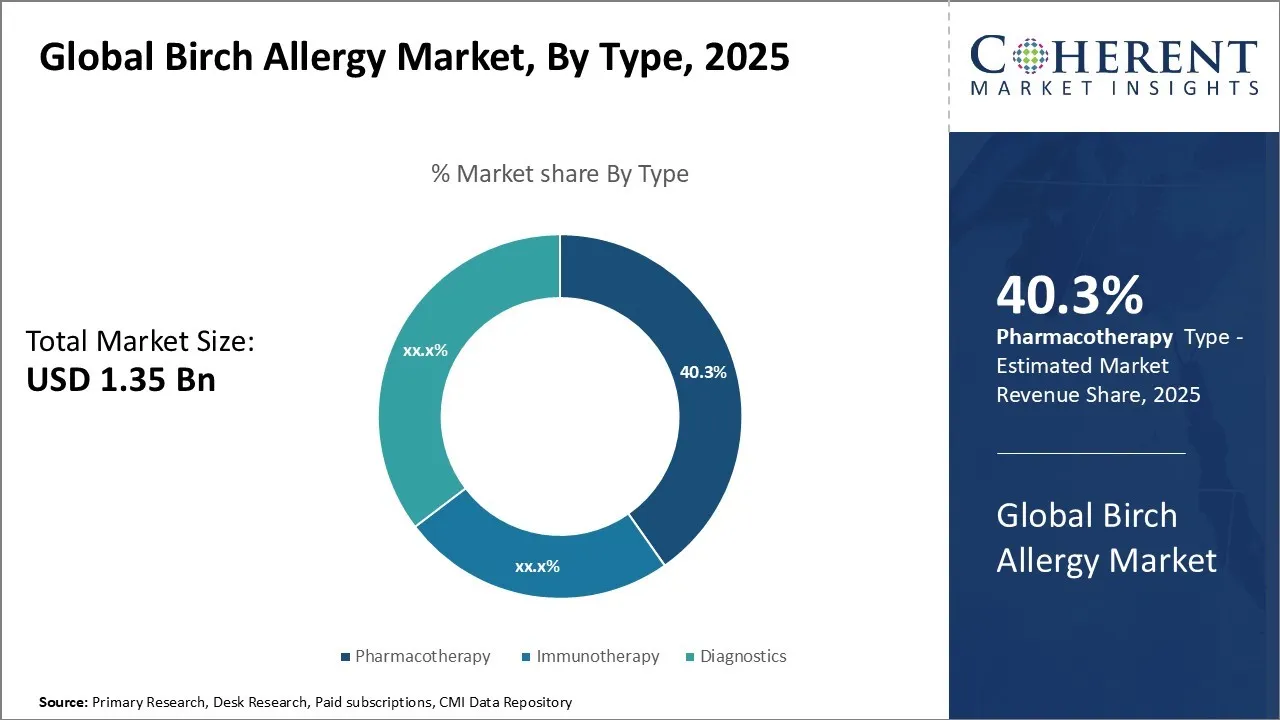
- By type, the pharmacotherapy segment is expected to lead with the share of 41.3% in 2026.
- By age group, the adult segment is projected to account for 35.2% share in 2026.
- By route of administration, the oral segment is expected to dominate the market with a 50.2% share in 2026.
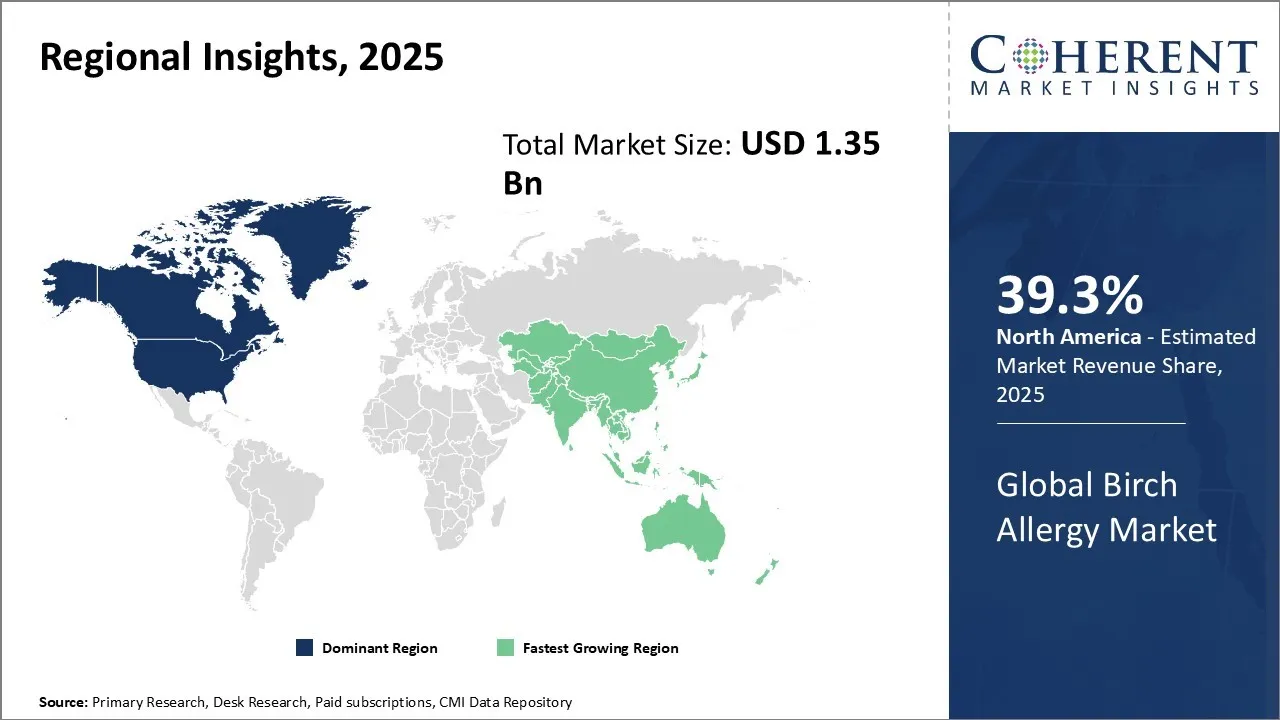
- North America is expected to lead the market, holding a share of 39.3% in 2026. Asia Pacific is anticipated to be the fastest-growing region, with an estimated market share of 24.2% in 2026.
Market Overview
A key market trend in the birch allergy sector is the growing adoption of personalized medicine, which enhances treatment efficacy by tailoring therapies to individual patient profiles. Additionally, innovations in biotechnology and the introduction of novel immunotherapies are transforming disease management, improving patient outcomes. Increasing environmental concerns, such as pollution and climate change, are exacerbating birch pollen seasons, leading to heightened allergy prevalence. Furthermore, rising investments in research and development and enhanced healthcare infrastructure in emerging regions drive sustained market momentum.
Currents Events and their Impact
Current Events | Description and its Impact |
Expansion of Advanced Immunotherapy Options in the U.S., the U.K., and EU |
|
Rising Generic Competition in Antihistamines & Nasal Sprays |
|
Segmental Insights
- Current Industry Events of 2026
- Market Size Estimation
- Regional Breakdown
- Competitive Landscape
- Customer Intelligence
- Segmental Analysis
- Pricing Analysis
- Key Market Drivers, Challenges & Future Trends
- Customized Insights Section
Birch Allergy Market Insights, By Type - Dominance of Pharmacotherapy Segment in the Market is Driven by Efficacy and Accessibility
The pharmacotherapy segment is projected to hold 41.3% share in 2026, driven by its effectiveness and broad accessibility. Pharmacotherapy encompasses a variety of medicinal approaches aimed at managing and alleviating the symptoms associated with birch pollen allergies, including antihistamines, intranasal corticosteroids, and other supportive drugs such as decongestants. The growing preference for pharmacotherapy stems from its immediate symptomatic relief capabilities, making it the first line of defense for many patients diagnosed with birch pollen allergy.
A key factor propelling pharmacotherapy’s dominant position is its ability to address multiple symptoms characteristic of birch allergy ranging from nasal congestion and sneezing to itchy eyes and skin reactions. Antihistamines quickly counteract histamine release, providing rapid relief from itching and watery eyes, while intranasal corticosteroids reduce inflammation and congestion effectively. Moreover, pharmacotherapy offers a well-established safety profile recognized by healthcare providers, increasing patient trust and adherence.
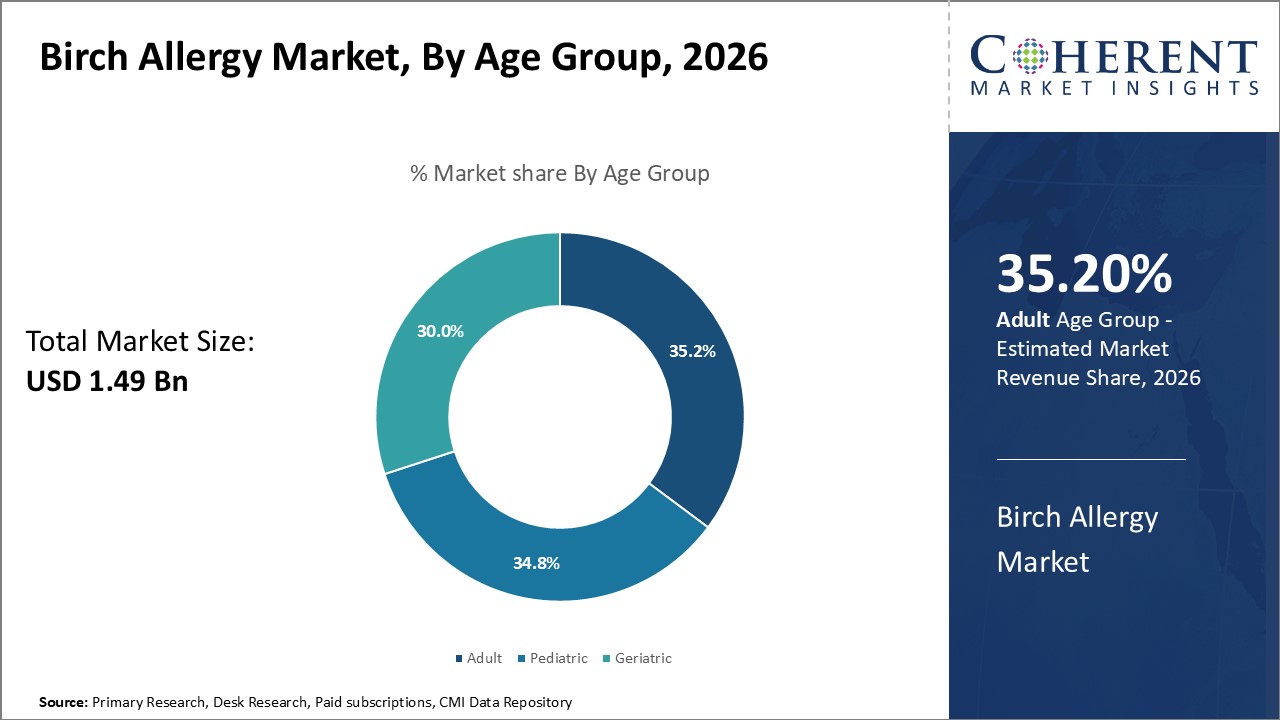
Birch Allergy Market Insights, By Age Group - Predominance of the Adult Segment is Driven by Increasing Allergy Prevalence and Lifestyle Factors
The adult segment is projected to account for 35.2% share in 2026. This predominance is influenced by multiple intertwined factors including the increasing prevalence of allergies in adult populations, lifestyle and occupational exposures, and greater awareness leading to diagnosis in this demographic.
Adults often experience heightened exposure to environmental allergens, including birch pollen, through outdoor activities, workplace environments, and urban living conditions. These sustained exposures increase the likelihood of developing or exacerbating birch pollen allergies. Unlike children, who may have intermittent exposure due to schooling schedules or indoor activities, adults are more regularly in contact with triggering allergens, necessitating more frequent management.
Birch Allergy Market Insights, By Route of Administration - Oral Segment is Leading in the Market Due to Convenience and Patient Compliance
The oral segment is expected to capture 50.2% share in 2026, propelled by patient preference, ease of use, and versatile formulation options. The oral route, encompassing tablets, capsules, and liquid medications, offers a practical and non-invasive method for delivering birch allergy pharmacotherapies, driving its predominant market share compared to parenteral and nasal routes.
The convenience associated with oral administration is a key growth factor. Oral medications can be self-administered without the need for clinical supervision, unlike parenteral injections or immunotherapy treatments often requiring healthcare provider involvement. This autonomy significantly improves adherence rates, especially for chronic management where patients need ongoing symptom control.
Regional Insights
North America Birch Allergy Market Analysis and Trends
The North America region is projected to lead the market with a 39.3% share in 2026, supported by advanced healthcare systems and widespread access to specialized allergy care. The region has a high prevalence of seasonal allergic rhinitis, including birch allergy, which drives consistent demand for diagnostics, pharmacotherapy, and immunotherapy solutions. Government health agencies and organizations such as the U.S. Centers for Disease Control and Prevention (CDC) actively track allergy prevalence, supporting early diagnosis and patient awareness initiatives.
In January 2026, researchers from Philipps-Universität Marburg and collaborators published in Allergy new data showing that single extract birch pollen immunotherapy can protect children as young as five with birch allergy across the wider birch homologous group pollen season, with the Phase III trial of more than 950 children and adolescents in Europe and North America demonstrating significant improvements in symptoms and medication use, strong immunological responses, and generally good safety, highlighting birch extract as an efficient targeted therapy for tree pollen allergy.
Asia Pacific Birch Allergy Market Analysis and Trends
The Asia Pacific region is expected to exhibit the fastest growth in the birch allergy market with 24.2% in 2026, driven by rising urbanization and increasing pollution levels that exacerbate allergic reactions. Expanding healthcare infrastructure and growing government focus on non-communicable diseases including allergies are fostering better diagnosis and treatment adoption. Countries, such as China, Japan, and India, are witnessing enhanced investment in allergy research and pharmaceutical manufacturing, with local companies starting to innovate alongside global players. Trade liberalization and increased cross-border collaborations have improved accessibility to cutting-edge allergy therapies previously concentrated in Western nations.
Birch Allergy Market Outlook for Key Countries
Germany Birch Allergy Market Analysis and Trends
Germany’s birch allergy market is highly advanced with a strong industrial base for pharmaceutical and biotechnology companies focusing on allergy treatments. Key players like ALK-Abelló and Bencard Allergie GmbH invest heavily in research and clinical trials within the country, leveraging Germany’s robust healthcare system and infrastructure. The government supports allergy treatment through public health policies and reimbursement frameworks, which empower widespread patient access to immunotherapy and diagnostic services.
In March 2022, the Copernicus Atmosphere Monitoring Service CAMS, a European program providing atmospheric data and forecasts, warned of rapidly rising birch pollen levels across parts of Europe including France, the Benelux countries, Northern Italy, Switzerland, and Southern Germany, with hot and dry weather driving an early seasonal release of pollen, creating difficult conditions for birch allergy sufferers as high concentrations combined with air pollutants and Saharan dust to worsen symptoms.
U.K. Birch Allergy Market Analysis and Trends
The U.K. birch allergy market is witnessing steady growth as rising pollen exposure, increasing allergy prevalence, and greater awareness of allergy management continue to drive the demand for effective treatments. Strong healthcare infrastructure supports early diagnosis and adoption of immunotherapy, while ongoing clinical research and product innovations are shaping new therapeutic options. Additionally, collaborations between pharmaceutical firms, healthcare providers, and academic institutions are helping to expand treatment accessibility and improve patient outcomes across the country.
In July 2020, U.K.-based Allergy Therapeutics plc announced that its Birch MATA MPL Phase III B301 trial results were invalidated due to technical endpoint issues, in agreement with the Paul Ehrlich Institute. The company confirmed it would conduct a new pivotal Phase III study within the Therapy Allergens Ordinance timeframe while continuing to advance its short-course immunotherapy programs.
U.S. Birch Allergy Market Analysis and Trends
The U.S. maintains a significant footing in the birch allergy market through its sophisticated healthcare delivery system and high patient awareness. Companies like Pfizer, Merck, and Regeneron are pivotal contributors, developing next-generation allergy immunotherapies and biologics. The U.S. FDA’s regulatory policies encourage the introduction and adoption of innovative allergy treatments, while private and public sector investments drive robust R&D activities.
Healthcare providers emphasize preventive care and early diagnosis, supported by strong insurance frameworks that facilitate patient access to treatment. The U.S. also benefits from a diverse patient population enabling broad clinical insights and product development.
China Birch Allergy Market Analysis and Trends
China birch allergy market is rapidly expanding due to increasing urbanization and environmental changes affecting allergy prevalence. Local pharmaceutical companies, for instance, Beijing SL Pharmaceutical and Tasly, are entering the allergy space with both traditional and novel treatments, often in collaboration with multinational corporations. Government initiatives to improve healthcare infrastructure and extend insurance coverage play a vital role in expanding patient reach. Trade reforms have encouraged the import and distribution of advanced allergy diagnostics and immunotherapies, while increasing patient education campaigns enhance public understanding and the demand for treatment.
End User Feedback and Unmet Needs in the Birch Allergy Market
- Feedback from end users in the birch allergy market highlights a mix of satisfaction with treatment outcomes and frustrations with access and adaptability. Many patients and healthcare providers acknowledge that sublingual immunotherapies and advanced pharmacotherapies have brought meaningful improvements, especially in reducing the seasonal severity of symptoms. For instance, a recurring positive theme among patients in Northern and Central Europe is the convenience of daily tablet-based immunotherapy, which eliminates the need for frequent clinic visits and allows them to maintain normal routines during pollen season. Clinicians also note that these therapies improve adherence because they combine effectiveness with user-friendly administration, which is particularly important in busy healthcare systems.
- At the same time, recurring concerns point to clear gaps that remain unmet. Cost and reimbursement challenges are consistently flagged, especially by patients in regions where coverage for newer treatments is limited. Many report difficulty in sustaining long-term use due to affordability issues, despite clinical benefits. Another frequently cited limitation is the lack of personalization—patients with overlapping sensitivities to multiple pollens often feel current solutions are too narrow and fail to address real-world complexities of allergy management. These unmet needs underline opportunities for manufacturers and policymakers to push for broader insurance coverage, develop multi-allergen formulations, and invest in supportive digital tools for monitoring and guidance. Addressing these gaps could not only enhance patient satisfaction and retention but also create new avenues for innovation that set apart companies capable of bridging clinical outcomes with practical, everyday usability.
Market Players, Key Developments, and Competitive Intelligence
Key Developments
- In July 2025, the National Institute for Health and Care Excellence NICE, the U.K. health watchdog responsible for evaluating medicines and treatments, recommended Itulazax, a sublingual immunotherapy tablet developed for birch allergy, as the first under the tongue treatment option for people in England with moderate to severe symptoms, marking a major step forward in long-term allergy care with the therapy set to become available on the NHS within three months.
- In May 2025, Desentum Oy, a clinical-stage biopharmaceutical company developing novel immunotherapies for allergies, reported strong Phase 1 results for its investigational birch allergy vaccine DM-101PX, showing the short-course treatment was safe, well tolerated, and induced a strong sustained IgG4 immune response that effectively blocked IgE-mediated activation, with plans now moving forward to Phase 2 trials.
- In April 2025, ALK, a global biopharmaceutical company focused on allergy immunotherapy, announced that European health authorities in 17 EU countries approved ITULAZAX, a sublingual tablet for birch allergy and other tree pollen allergies, for children and adolescents aged five to 17, with the decision based on positive Phase 3 TT-06 trial results and first market launches expected ahead of the 2025/2026 pollen season.
- In May 2023, Stallergenes Greer, a biopharmaceutical company focused on respiratory allergy diagnosis and treatment, announced the launch of a European Phase III paediatric study called YOBI to evaluate the safety and efficacy of STALORAL Birch in children and adolescents with birch allergy–induced rhino-conjunctivitis, with or without asthma, across around 80 sites in 12 European countries.
Top Strategies Followed by Global Birch Allergy Market Players
- Established players dominate the market through substantial investments in research and development (R&D), aiming to innovate high-performance and highly effective allergy products. These companies prioritize creating advanced formulations and delivery mechanisms that address the unique sensitivities associated with birch pollen allergies. Alongside R&D, strategic partnerships play a crucial role in enhancing their market position. Collaborations with major industry stakeholders and Original Equipment Manufacturers (OEMs) help these players integrate complementary technologies and streamline production processes.
- In February 2023, the Federal Medical and Biological Agency of Russia (FMBA), through its State Research Center Institute of Immunology in collaboration with Vienna Medical University, announced the development of a recombinant hypoallergenic birch allergy vaccine that can provide protection with only three to five injections compared to the 30 typically required with extract-based vaccines, with trials showing strong safety, effectiveness, and cross-protection against related allergens such as apple, peach, peanuts, and soy.
- Mid-level players in the birch allergy market adopt a different approach, chiefly concentrating on cost-effective solutions that merge reasonable quality with affordability. This strategy primarily targets price-sensitive consumers, including patients in developing regions or those without extensive healthcare coverage. By balancing product efficacy with lower manufacturing costs, these companies appeal to a broad consumer base that seeks dependable allergy relief without premium pricing.
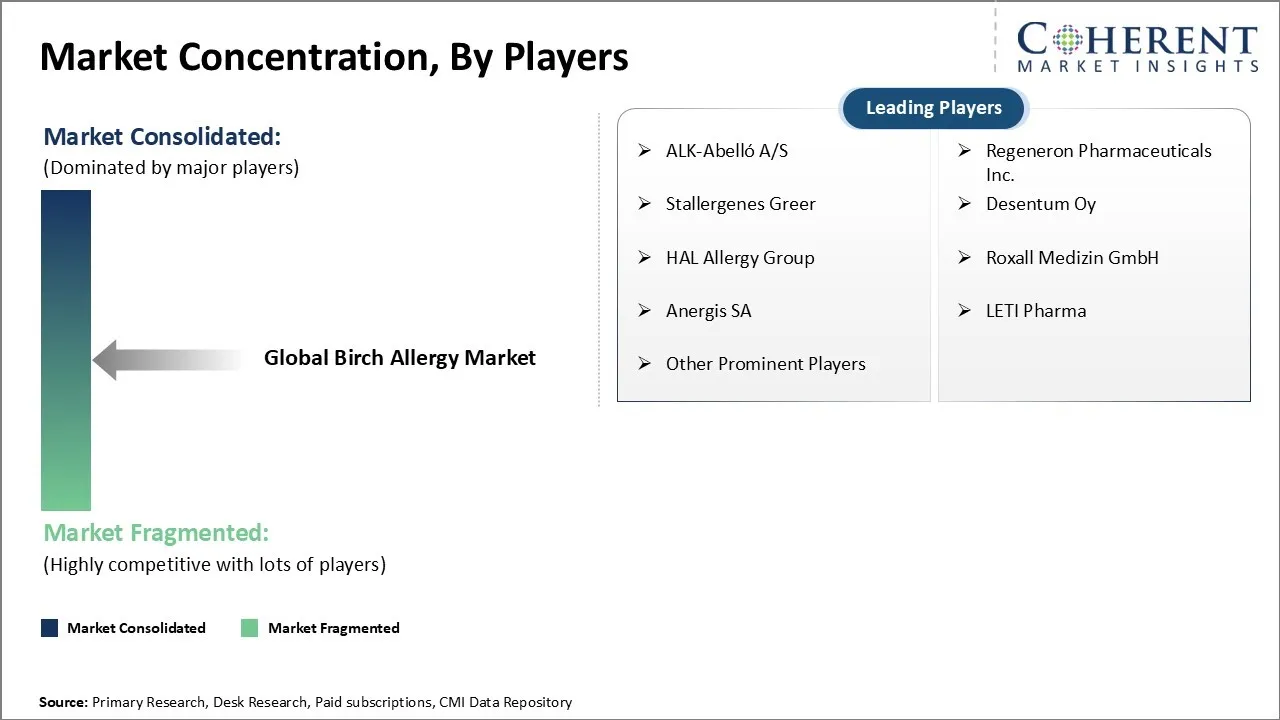
- For example, companies such as HAL Allergy Group, Roxall Medizin GmbH, and LETI Pharma. These firms typically focus on delivering cost-effective immunotherapy and diagnostic solutions that maintain a balance between affordability and efficacy.
- Small-scale players, though limited by resources, demonstrate agility and niche specialization within the birch allergy market. These companies focus on unique or innovative product features—such as organic formulations, allergen-specific immunotherapy advances, or digitally connected allergy management solutions to distinguish themselves from larger competitors. Adoption of cutting-edge technologies, including biotechnology and personalized medicine approaches, enables them to stay competitive while targeting specific patient subsets or underserved regions.
- Small-scale players include innovators like Desentum Oy and Anergis SA, which are known for their specialized R&D in allergen-specific immunotherapy and novel treatment approaches. These companies are more agile, often pushing forward with unique product innovations such as hypoallergenic vaccine formulations, peptide-based therapies, or digitally connected allergy management solutions.
Market Report Scope
Birch Allergy Market Report Coverage
| Report Coverage | Details | ||
|---|---|---|---|
| Base Year: | 2025 | Market Size in 2026: | USD 1.49 Bn |
| Historical Data for: | 2020 To 2024 | Forecast Period: | 2026 To 2033 |
| Forecast Period 2026 to 2033 CAGR: | 10.0% | 2033 Value Projection: | USD 2.89 Bn |
| Geographies covered: |
| ||
| Segments covered: |
| ||
| Companies covered: | ALK-Abelló A/S, Regeneron Pharmaceuticals Inc., Stallergenes Greer, Desentum Oy, HAL Allergy Group, Roxall Medizin GmbH, Anergis SA, LETI Pharma, and Other Prominent Players | ||
| Growth Drivers: |
| ||
| Restraints & Challenges: |
| ||
Birch Allergy Market Dynamics
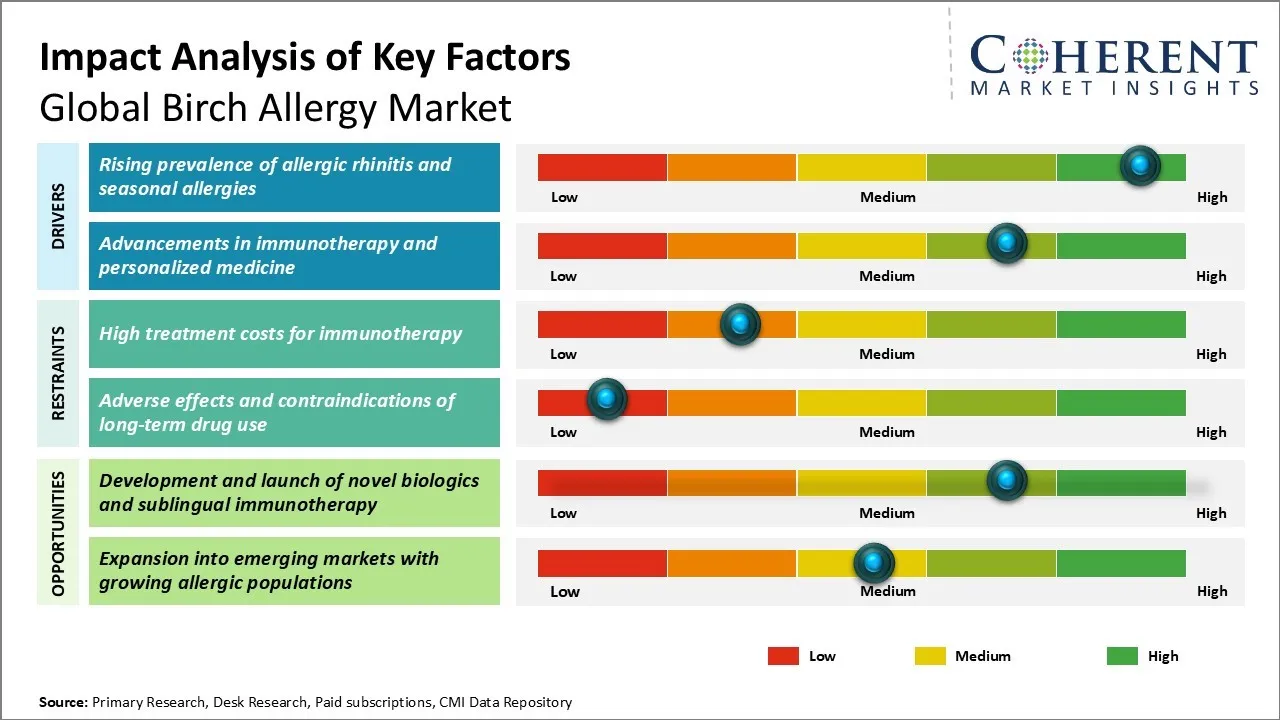
Birch Allergy Market Driver - Rising Prevalence of Allergic Rhinitis and Seasonal Allergies
The increasing incidence of allergic rhinitis and seasonal allergies is a significant driver for the global birch allergy market. Birch pollen is a major allergen responsible for triggering symptoms in susceptible individuals, especially during spring when pollen release peaks. As urbanization accelerates and environmental pollution worsens, the immune system of many individuals becomes more sensitized, leading to a higher prevalence of allergic reactions, including birch pollen-induced rhinitis and conjunctivitis. Additionally, lifestyle changes, such as increased outdoor activities and inadequate exposure to early-life environmental microbes, contribute to the rise in hypersensitive immune responses. This growing burden of allergic rhinitis not only affects quality of life but also drives the demand for effective diagnostics, treatment options, and preventive measures targeting birch pollen allergies.
In January 2023, the U.S. Centers for Disease Control and Prevention, the national public health agency, reported that nearly one in three adults and more than one in four children in the U.S. have at least one allergy, including seasonal conditions such as birch allergy, with data from the National Health Interview Survey showing 25.7% of adults suffer from seasonal allergies, 7.3% from eczema, and 6.2% from food allergies, while among children 18.9% have seasonal allergies, 10.8% eczema, and 5.8% food allergies, highlighting the widespread impact of allergic diseases across age groups and ethnicities.
Birch Allergy Market Opportunity - Development and Launch of Novel Biologics and Sublingual Immunotherapy
The global birch allergy market presents a significant growth opportunity with the development and launch of novel biologics and Sublingual Immunotherapy (SLIT) treatments. Traditional management of birch pollen allergy has largely relied on symptomatic relief through antihistamines and corticosteroids, which often fail to address the underlying immune response. Biologics, particularly monoclonal antibodies targeting specific immune pathways involved in allergic reactions, offer a promising alternative by providing targeted and long-lasting relief with fewer side effects. The introduction of these advanced therapeutics can lead to better patient adherence and improved quality of life. Additionally, sublingual immunotherapy has gained traction as a non-invasive, convenient, and effective approach to desensitize patients to birch pollen allergens by administering allergen extracts under the tongue, thereby stimulating immune tolerance. SLIT circumvents challenges associated with traditional subcutaneous immunotherapy, such as needle phobia and frequent clinic visits, making it an attractive option for broader patient demographics including children and elderly populations.
In December 2024, ALK-Abelló A/S, a global biopharmaceutical company specializing in allergy immunotherapy including treatments for birch allergy, announced positive interim results from its ALLIANCE phase I/II clinical trial for its investigational peanut sublingual immunotherapy tablet, showing the treatment was safe and well tolerated across multiple doses, with phase II now set to begin involving around 125 patients in the U.S. and Canada and expected to complete in 2026.
Analyst Opinion (Expert Opinion)
- The birch allergy market is being shaped by a mix of scientific progress and changing healthcare priorities. Advancements in allergen-specific immunotherapy and the use of biotechnology are making treatment options more precise and effective, while supportive regulatory pathways in Europe and North America are helping accelerate approvals. Rising allergy prevalence, especially in urban populations, is driving consistent demand, but access to affordable therapies remains uneven. This gap is creating space for mid-tier and niche players to introduce cost-effective or specialized solutions. Opportunities are also emerging around digital allergy management tools and personalized medicine, although challenges such as limited awareness in developing regions and high R&D costs continue to weigh on the sector. Conferences such as the European Academy of Allergy and Clinical Immunology (EAACI) Annual Congress, the American Academy of Allergy, Asthma & Immunology (AAAAI) Annual Meeting, and the World Allergy Organization (WAO) Symposium in the last two to three years have been crucial in sharing new trial data, updating treatment guidelines, and showcasing digital health tools relevant to allergy care.
- On the ground, the market has seen notable examples of collaboration and policy support. Companies like ALK-Abelló and Stallergenes Greer have expanded partnerships with healthcare providers to improve access to sublingual immunotherapy across Europe and Asia. At the same time, governments in countries such as Germany and Japan have funded pilot projects that integrate allergy diagnostics into primary care, aiming to improve early detection. Digital health initiatives, including mobile allergy tracking platforms rolled out by startups and hospital groups, are also beginning to influence patient engagement and adherence. Together, these programs, policies, and company strategies reflect a market that is innovating while gradually overcoming barriers, setting the stage for stronger growth in the years ahead.
Speak to the analyst
Want personalized insights?
Take the findings above to one of our principal consultants, or have the report rebuilt around the segments, geographies and competitors you actually track.
Market Segmentation
- Type Insights (Revenue, USD Bn, 2021 - 2033)
- Pharmacotherapy
- Antihistamines
- Intranasal Corticosteroids
- Others (eg., Decongestants, etc.)
- Immunotherapy
- Diagnostics
- Skin Prick Test
- Serum Specific IgE Testing
- Pharmacotherapy
- Age Group Insights (Revenue, USD Bn, 2021 - 2033)
- Adult
- Pediatric
- Geriatric
- Route Of Administration Insights (Revenue, USD Bn, 2021 - 2033)
- Oral
- Parenteral
- Others (Nasal)
- Distribution Channel Insights (Revenue, USD Bn, 2021 - 2033)
- Hospital Pharmacies
- Retail Pharmacies
- Online Pharmacies
- End User Insights (Revenue, USD Bn, 2021 - 2033)
- Hospitals
- Allergy and Immunology Clinics
- Homecare Settings
- Diagnostic Laboratories
- Others (Research and Academic Institutes)
- Regional Insights (Revenue, USD Bn, 2021 - 2033)
- North America
- U.S.
- Canada
- Latin America
- Brazil
- Argentina
- Mexico
- Rest of Latin America
- Europe
- Germany
- U.K.
- Spain
- France
- Italy
- Russia
- Rest of Europe
- Asia Pacific
- China
- India
- Japan
- Australia
- South Korea
- ASEAN
- Rest of Asia Pacific
- Middle East
- GCC Countries
- Israel
- Rest of Middle East
- Africa
- South Africa
- North Africa
- Central Africa
- North America
- Key Players Insights
- ALK-Abelló A/S
- Regeneron Pharmaceuticals Inc.
- Stallergenes Greer
- Desentum Oy
- HAL Allergy Group
- Roxall Medizin GmbH
- Anergis SA
- LETI Pharma
Sources
Primary Research Interviews
- Industry Stakeholders list
- Allergy specialists and immunologists
- Pharmaceutical R&D directors
- End Users list
- Patients with birch pollen-induced rhinitis
- Pediatric allergy patients’ caregivers
Government and International Databases
- World Health Organization (WHO)
- European Medicines Agency (EMA)
- Paul Ehrlich Institute (PEI)
- U.S. Food and Drug Administration (FDA)
- UK National Health Service (NHS) Digital
- Eurostat
Trade Publications
- Allergy Today
- Pharmaceutical Executive
- BioPharma Dive
- Fierce Biotech
- PharmaTimes
- MedTech Insight
Academic Journals
- Journal of Allergy and Clinical Immunology
- Allergy (European Academy of Allergy and Clinical Immunology)
- Clinical and Experimental Allergy
- Pediatric Allergy and Immunology
- International Archives of Allergy and Immunology
- Journal of Asthma and Allergy
Reputable Newspapers
- The Guardian (Health section)
- The Times (UK Health)
- Financial Times (Healthcare & Pharma)
- The Telegraph (Science & Health)
- BBC News Health
- The Independent (Health)
Industry Associations
- European Academy of Allergy and Clinical Immunology (EAACI)
- British Society for Allergy & Clinical Immunology (BSACI)
- American Academy of Allergy, Asthma & Immunology (AAAAI)
- Global Allergy and Asthma European Network (GA²LEN)
- World Allergy Organization (WAO)
- Asthma and Allergy Foundation of America (AAFA)
Public Domain Resources
- U.S. National Library of Medicine
- ClinicalTrials.gov
- GOV.UK Health and Social Care Publications
- OpenAIRE (EU open access research)
- NICE Guidelines (National Institute for Health and Care Excellence)
- ONS (Office for National Statistics, UK)
Proprietary Elements
- CMI Data Analytics Tool: Proprietary analytics tool to analyze real-time market trends, consumer behavior, and technology adoption in market
- Proprietary CMI Existing Repository of Information for Last 8 Years
Get access to 250+ pages report
Every segment, forecast, competitor profile and data table behind the analysis above — available for instant download.
- ESOMAR Member
- ISO 9001:2015 Certified
- D-U-N-S Registered
- GDPR & CCPA Compliant
Missing comfort of reading report in your local language? Find your preferred language:
Transform your Strategy with Exclusive Trending Reports
Frequently Asked Questions
The global birch allergy market is estimated to be valued at USD 1.49 Bn in 2026 and is expected to reach USD 2.89 Bn by 2033.
The CAGR of the global birch allergy market is projected to be 10.0% from 2026 to 2033.
Rising prevalence of allergic rhinitis and seasonal allergies and advancements in immunotherapy and personalized medicine are the major factors driving the growth of the global birch allergy market.
High treatment costs for immunotherapy and adverse effects and contraindications of long-term drug use are the major factors hampering the growth of the global birch allergy market.
In terms of type, the pharmacotherapy segment is estimated to dominate the market revenue share in 2026.
ALK-Abelló A/S, Regeneron Pharmaceuticals Inc., Stallergenes Greer, Desentum Oy, HAL Allergy Group, Roxall Medizin GmbH, Anergis SA, LETI Pharma, and Other Prominent Players are the major players.
North America is expected to lead the global birch allergy market in 2026.