

Global Brain Tumor Treatment Market Size and Forecast – 2026 to 2033
The global brain tumor treatment market is estimated to be valued at USD 2.58 Bn in 2026 and is expected to reach USD 5.05 Bn by 2033, exhibiting a compound annual growth rate (CAGR) of 10.1% from 2026 to 2033. This steady growth is driven by advancements in medical technology, increased prevalence of brain tumors, and rising investments in research and development for innovative treatment options.
Key Takeaways of the Global Brain Tumor Treatment Market
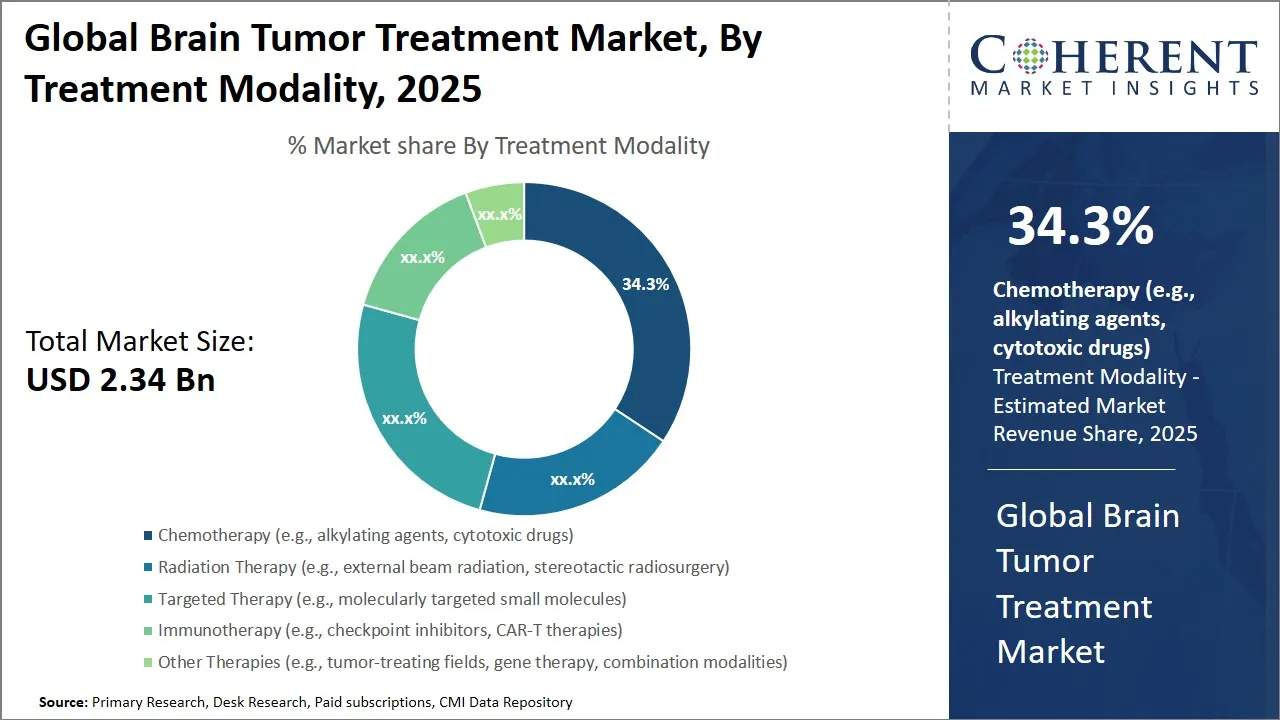
- Chemotherapy (e.g., alkylating agents, cytotoxic drugs) segment is expected to lead the global brain tumor treatment market, accounting for 35.3 % of the market share in 2026.
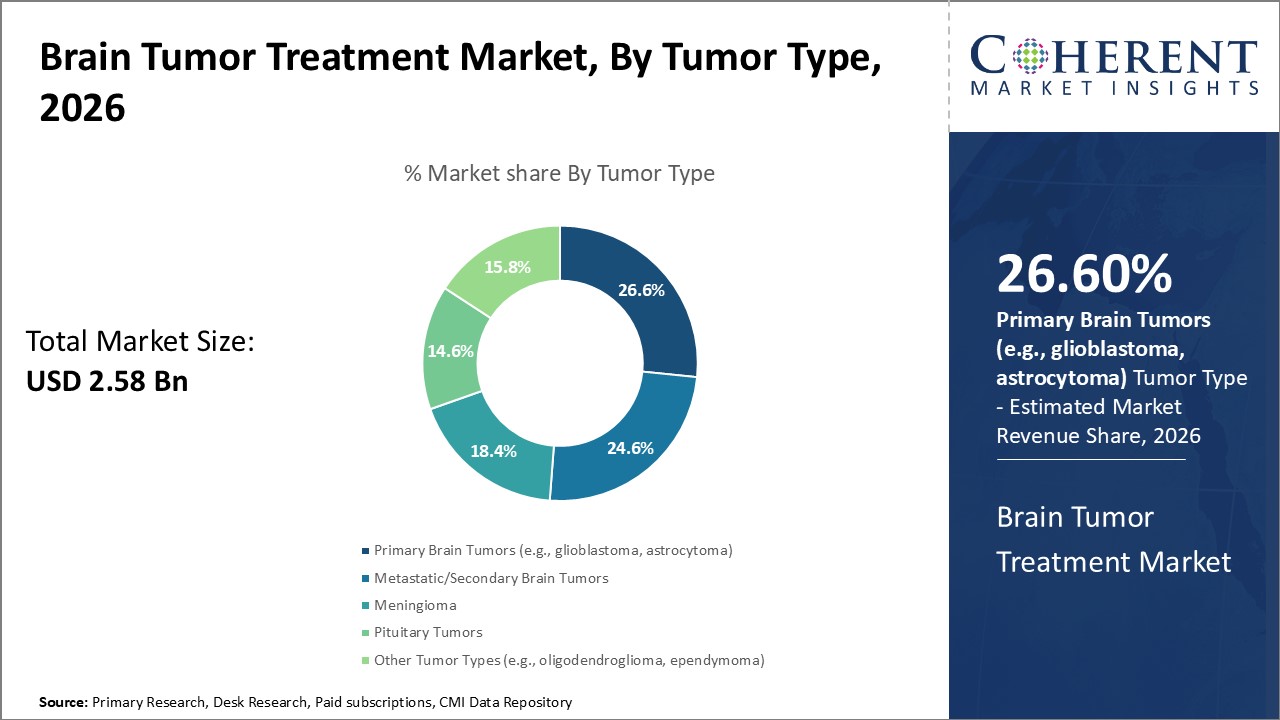
- In terms of tumor type, primary brain tumors (e.g., glioblastoma, astrocytoma) will represent the largest market segment with a share of 26.6 % in 2026.
- The alkylating agents segment is projected to dominate the market, holding a 33.3 % share in 2026.
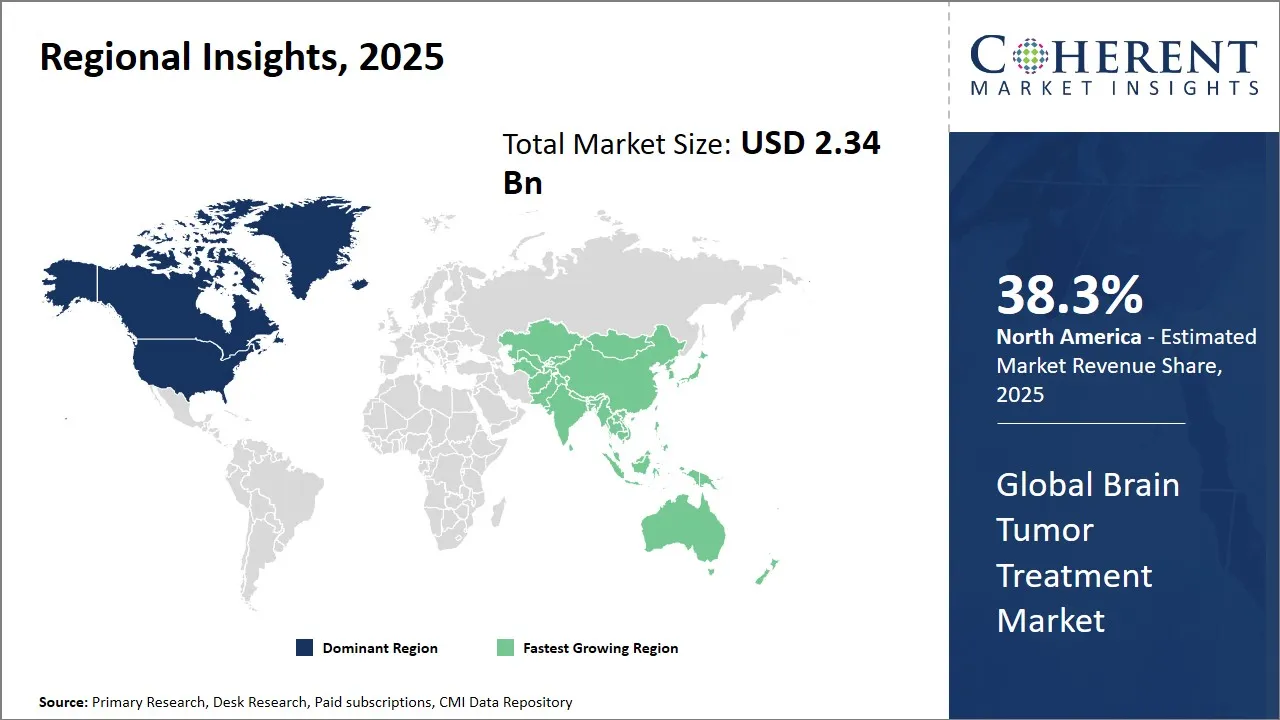
- North America is expected to lead the market, holding a share of 38.3 % in 2026. Asia Pacific is anticipated to be the fastest-growing region, with a market share of 23.5% in 2026.
Market Overview
Current market trends highlight a significant shift towards personalized medicine and minimally invasive treatment techniques in brain tumor management. The adoption of advanced imaging technologies and targeted therapies such as immunotherapy and precision oncology is rapidly increasing. Additionally, growing awareness and early diagnosis initiatives are fueling the demand, while collaborations between biotech companies and research institutions further accelerate the market growth.
Current Events and Its Impact
Current Events | Description and its Impact |
Regulatory approval of a new drug for rare brain tumor (e.g., Modeyso for H3K27M‑mutant diffuse midline glioma) |
|
Growth of Tumor Treating Fields (TTFields) Therapy |
|
Segmental Insights
- Current Industry Events of 2026
- Market Size Estimation
- Regional Breakdown
- Competitive Landscape
- Customer Intelligence
- Segmental Analysis
- Pricing Analysis
- Key Market Drivers, Challenges & Future Trends
- Customized Insights Section
Brain Tumor Treatment Market Insights, By Treatment Modality – Chemotherapy (e.g., Alkylating Agents, Cytotoxic Drugs) Segment Dominate Due to Established Efficacy and Versatility
By treatment modality, the chemotherapy (e.g., alkylating agents, cytotoxic drugs) segment is projected to be the largest contributor to the global brain tumor treatment market in 2026 with a share of 35.3%, given its long-established efficacy and wide application across various tumor types. Chemotherapy continues to be the main treatment option since it attacks rapidly dividing tumor cells by disrupting the DNA replication and repair processes, which is very important for aggressive brain tumors like glioblastomas.
In November 2024, a groundbreaking clinical trial by ECOG-ACRIN Cancer Research Group. revealed that adding temozolomide chemotherapy to radiation therapy significantly improves survival in adult patients with grade 2 gliomas, a slow-growing type of brain tumor. The trial, led by Dr. David Schiff from the University of Virginia's Neuro-Oncology Center, showed that the combination treatment raised the 10-year survival rate to 70%, compared to 47% with radiation alone.
Brain Tumor Treatment Market Insights, By Tumor Type – Primary Brain Tumors (e.g., Glioblastoma, Astrocytoma) Lead Market Share Driven by High Incidence and Treatment Complexity
The primary brain tumors (e.g., glioblastoma, astrocytoma) segment will be the biggest contributor with a market share of 26.6% in 2026. This is mainly because of their aggressive nature, high incidence, and the complicated treatment they pose. Glioblastoma which is the most advanced stage of brain cancer having the fastest progression and the poorest prognosis, constantly calls for the development of new therapeutic strategies thus enhancing the demand for effective treatment options.
Their invasion into surrounding healthy tissues makes it very difficult to remove them completely, thus, requiring a combination of treatments such as chemotherapy, radiation, and new therapies, which in turn drives market growth.
Brain Tumor Treatment Market Insights, By Drug Class – Alkylating Agents Lead Due to Potent Mechanisms and Expanding Applications
Based on drug class, alkylating agents are projected to hold the major share of 33.3% of the global brain tumor treatment market share in 2026, due to their powerful cytotoxic mechanisms and wide therapeutic applicability. These agents achieve this by forming covalent bonds with the DNA strands, leading to cross-linking and breaks that not only render the tumor cells incapable of dividing but also cause their death through apoptosis.
These systems are particularly productive against high-grade tumors, such as glioblastomas, which are known to have a very fast proliferation rate of their cells. The effectiveness of the alkylating agents, particularly temozolomide, has made them to be a standard option in the treatment of primary malignant brain tumors and has therefore greatly contributed to the market domination.
Brain Tumor Treatment Modalities: Features, Strengths, and Challenges
Treatment Modality | Key Features & Usage in Brain Tumors | Strengths | Limitations/Market Challenges |
Surgery | Often first‑line for resectable primary brain tumors; includes craniotomy, neuroendoscopy, laser ablation. | Rapid tumor‑mass reduction; symptom relief; diagnostic tissue | Many tumors are in inoperable locations; residual disease still common |
Radiotherapy (RT) | External beam RT, stereotactic radiosurgery (SRS), proton therapy used alone or post‑surgery. | Non‑invasive alternative; can target residual/inoperable lesions | Radiation damage to healthy brain; limitations due to blood‑brain barrier (BBB) |
Chemotherapy | Traditional systemic treatment (alkylating agents, etc.); often paired with surgery + RT. Also Systemic or local (e.g., wafer implants) therapy to kill dividing tumor cells; used in combination | Can treat microscopic residual disease; complements surgery + RT | BBB penetration issues; many brain tumors are chemo‑resistant |
Immunotherapy | Emerging in brain tumor field: checkpoint inhibitors, CAR‑T, vaccines; focus on brain metastases and primary gliomas. | Potential for durable responses; novel mechanism of action | Blood‑brain barrier, immunosuppressive tumor micro‑environment; still early stage |
Regional Insights
North America Brain Tumor Treatment Market Analysis and Trends
The North America region is projected to lead the market with a 38.3% share in 2026, because of its very advanced healthcare infrastructure, high-level research activities, and strong governmental support for healthcare innovations. The existence of several advanced medical facilities and high-ranked research centers has made it possible for the swift development and acceptance of modern treatment practices such as immunotherapy, targeted drug delivery, and advanced surgical techniques.
Besides, the U.S. FDA, along with other regulatory bodies, is a provider of the necessary conditions by means of granting the companies of the pharmaceutical and biotech sectors, in the meanwhile, ensuring patient safety which attracts the firms to invest heavily into the area of brain tumor treatments. Global giant companies like Novocure, Abbott Laboratories, and Medtronic have a significant impact on the market with their innovative products along with the strategic partnerships they develop with the hospitals and research centers.
Asia Pacific Brain Tumor Treatment Market Analysis and Trends
The Asia Pacific region is expected to exhibit the fastest growth in the market, contributing 23.5% of the market share in 2026. This rapid growth has been driven by factors such as healthcare accessibility improvements, government expenditure on healthcare, and rising prevalence of neurological disorders. Emerging countries like China and India have made large investments in not only the healthcare sector but also the diagnostics capacity which has resulted in earlier detection and more accurate diagnosis of brain tumors.
The industry presence is amplified by both international pharmaceutical firms establishing local production facilities and domestic companies innovating affordable treatment solutions tailored to regional needs. Notable players such as Siemens Healthineers, GE Healthcare, and Sartorius are actively involved in introducing advanced imaging and treatment technologies.
Brain Tumor Treatment Market Outlook for Key Countries
U.S. Brain Tumor Treatment Market Trends
The brain tumor treatment market in the U.S. is still the world leader thanks to its large healthcare system and continuous development of new brain tumor treatments. Among the companies that are at the forefront of these developments is Novocure, which created Tumor Treating Fields, and Abbott Laboratories, which owns a range of therapies targeting the disease. The strong regulatory environment in the country, coupled with generous government support for cancer research, hastens the arrival of new products and their use in clinical practice.
In July 2026, scientists at the Wertheim UF Scripps Institute, U.S developed MT-125, a potential treatment for glioblastoma. The drug makes cancer cells sensitive to radiation and blocks their ability to invade other tissues. MT-125, currently approved for clinical trials, could become a first-line treatment for glioblastoma. In animal studies, the drug combined with chemotherapy showed strong results, creating long disease-free periods.
Germany Brain Tumor Treatment Market Trends
Germany's market for brain tumor treatment is still getting a lot of top-notch products that are quite reliable from the health care system in the country as well as the manufacturing of medical devices. The use of diagnostic equipment and surgical tools that are very accurate is being supported by the activities of Siemens Healthineers and B. Braun Melsungen AG. Besides, the early detection of cancer therapy and research funding that the German government is providing is helping therapeutics for brain tumors to be developed.
On November 05, 2026, ZAP Surgical Systems announced the installation of its fourth ZAP-X Gyroscopic Radiosurgery platform at Alfried Krupp Hospital in Essen, Germany, set to begin patient treatments in 2026. This advanced system offers non-invasive brain tumor treatment, providing a precise, pain-free alternative to traditional surgery.
China Brain Tumor Treatment Market Trends
China is among the top countries with the fastest-growing markets being the expanding patient base and the government’s plans like the Healthy China 2030 that put great importance on cancer care improvement which thus drives the market. Local pharmaceutical firms are significant because they create inexpensive and contemporary medicines as per the patient’s needs and the market trends. Besides, the country’s medical infrastructure is developing rapidly which along with the increase in R&D investment will lead to the quicker launch of new brain tumor treatments across the country.
In October 2026, China’s ACT001, a groundbreaking brain cancer drug, was approved for Phase III trials. Developed by scientists in Tianjin, ACT001 targets brain metastases from cancers like small cell lung cancer (SCLC) and non-small cell lung cancer (NSCLC). Early data shows it can extend survival by over 50%, with even greater benefits when combined with radiotherapy and immunotherapy.
India Brain Tumor Treatment Market Trends
India is also experiencing dramatic changes in its brain tumor treatment market due to people becoming more aware of health and the government taking action to make it easier for them to get covered under health insurance programs such as Ayushman Bharat. The country’s large population base and rising incidence of neurological disorders necessitate affordable treatment solutions, prompting demand for generic drugs and innovative devices.
In March 2024, Indraprastha Apollo Hospitals in Delhi unveiled South Asia's first ZAP-X Gyroscopic Radiosurgery Platform, marking a major milestone in brain tumor treatment. ZAP-X offers a non-invasive, pain-free alternative for patients, with sessions lasting just 30 minutes and minimal radiation exposure. The self-shielded, gyroscopic design enables precise targeting of brain tumors, improving outcomes by avoiding critical brain structures.
Key Technologies in Brain Tumor Therapy
Technology | Key Features & Usage | Strengths | Limitations/Market Challenges |
Intraoperative Imaging | Use during surgery (iMRI, intra‑operative ultrasound, elastography) to guide brain tumor resection. | Improves margin detection; enables further resection during procedure. | High cost; infrastructure and workflow demands; steep learning curve. |
Gamma Knife vs CyberKnife | Gamma Knife: rigid frame, brain‑only stereotactic radiosurgery. CyberKnife: frameless, real‑time image guidance, brain + body applications. | CyberKnife offers flexibility in target angle and body location; Gamma Knife has refined brain focus. | Gamma Knife limited to cranial cases; CyberKnife requires higher capital and complex QA; comparative long‑term data limited. |
Proton Therapy Scalability | Proton beam therapy for brain tumors, offering reduced dose to surrounding healthy tissue. | High precision near critical structures; growing demand especially in paediatric and complex cases. | Very high capital cost; few facilities worldwide; technical optimization (LET, RBE) still a challenge. |
Temozolomide (TMZ) Resistance | Resistance mechanisms in glioblastoma include MGMT DNA repair, cancer stem‑cell populations, NRF2 pathway activation. | Insights into resistance support development of next‑gen agents and combination strategies. | Resistance leads to treatment failure; need for validated biomarkers; limited effective alternatives when resistance emerges. |
CAR‑T Cell Therapy Research Status | Investigational in brain tumors: addressing antigen heterogeneity, T‑cell trafficking, blood–brain barrier penetration. | Potential for durable response; novel mechanism against solid tumors. | Early stage for brain tumors; major hurdles: immunosuppressive tumor micro‑environment, antigen escape, delivery across BBB. |
Market Players, Key Developments, and Competitive Intelligence
Key Developments
- On November 13, 2025, the 5G clinical trial aims to speed up glioblastoma drug discovery in the U.K. With limited progress in brain tumor treatments over the past decades, the trial seeks to overcome challenges like the blood-brain barrier and small patient populations. Backed by Cancer Research U.K., it hopes to break through the "nihilism" in brain cancer research, accelerating treatment options for glioblastoma patients.
- In August 2025, Jazz Pharmaceuticals announced U.S. FDA approval for Modeyso (dordaviprone), the first treatment for recurrent H3 K27M-mutant diffuse midline glioma. This ultra-rare, aggressive brain tumor primarily affects children and young adults. Modeyso's approval is based on a 22% overall response rate in 50 patients. It offers a meaningful advancement for patients with limited treatment options.
- In August 2025, Mass General Cancer Center’s INCIPIENT team shared preliminary results of their phase 1 trial for CAR-T therapy targeting recurrent glioblastoma (GBM). The new CARv3-TEAM-E T cells showed dramatic tumor regression in the first three patients, with one achieving near-complete tumor reduction within days of treatment. This promising approach, developed by Marcela Maus, MD, PhD, and her team, aims to address the challenges of treating mixed cell populations within GBM tumors.
- In June 2025, Plus Therapeutics announced U.S. FDA clearance for its Investigational New Drug application for REYOBIQ (Rhenium Re186 Obisbemeda) to treat pediatric high-grade glioma and ependymoma. This novel radiotherapeutic, which directly delivers high doses of radiation to brain tumors, bypasses the blood-brain barrier and may significantly improve outcomes for children with these aggressive cancers.
Top Strategies Followed by Global Brain Tumor Treatment Market Players
- The market is ruled over by the established players who are constantly innovating with their high-performance, cutting-edge treatment solutions thanks to their massive investments in research and development. These heavy investments are meant not only to increase the efficacy and safety of brain tumor therapies but also to integrate new technology such as precision medicine and minimally invasive techniques. The leading companies also reinforce their market presence through the formation of strategic partnerships and alliances with major industry players, original equipment manufacturers (OEMs), and research institutions.
- Companies such as Novartis and Bristol-Myers Squibb are the leading ones in the market and they are also the ones to make the largest investments in research development, mainly precision medicine and advanced therapeutics. Novartis, for instance, has developed Kymriah for brain cancer and is collaborating with institutions like Sloan Kettering to push the boundaries of innovation.
- Upper mid-level companies that are dealing with brain tumor treatment usually go for a strategy of having cheaper solutions that provide the same quality and efficacy as the expensive ones. Such companies focus on price-sensitive customers, particularly in these parts of the world where healthcare budgets are strict but still there is a growing demand for effective treatment options. To improve their positions in the market they work with technology providers, contract manufacturers, and regionally-based distributors, etc.
- Entities like Exelixis and Eli Lilly are targeting affordable treatments that are especially intended for emerging markets. Exelixis is focusing on the price-sensitive areas of the world and is partnering with local distributors and OEMs so that they can offer cost-effective therapies that are of the same quality as the more expensive ones.
- Players of small scale involve their operation upon a distinct basis of focusing on the niche segments within the brain tumor treatment market. Such companies are partly in competition with each other by coming up with either special features or extremely innovative products that aim at the unmet clinical needs or improving patient convenience and outcomes. The majority of them do this with the help of cutting-edge technologies like AI-based diagnostics, new biomaterials, or personalized approaches to therapy.
- Smaller firms like Imvax and Medtronic provide innovative solutions that target niche areas. Imvax produces custom-made vaccines for glioblastoma while Medtronic provides Visualase MRI-guided laser therapy, which is less invasive and focuses on lessening the clinical needs.
Market Report Scope
Brain Tumor Treatment Market Report Coverage
| Report Coverage | Details | ||
|---|---|---|---|
| Base Year: | 2025 | Market Size in 2026: | USD 2.58 Bn |
| Historical Data for: | 2020 To 2024 | Forecast Period: | 2026 To 2033 |
| Forecast Period 2026 to 2033 CAGR: | 10.1% | 2033 Value Projection: | USD 5.05 Bn |
| Geographies covered: |
| ||
| Segments covered: |
| ||
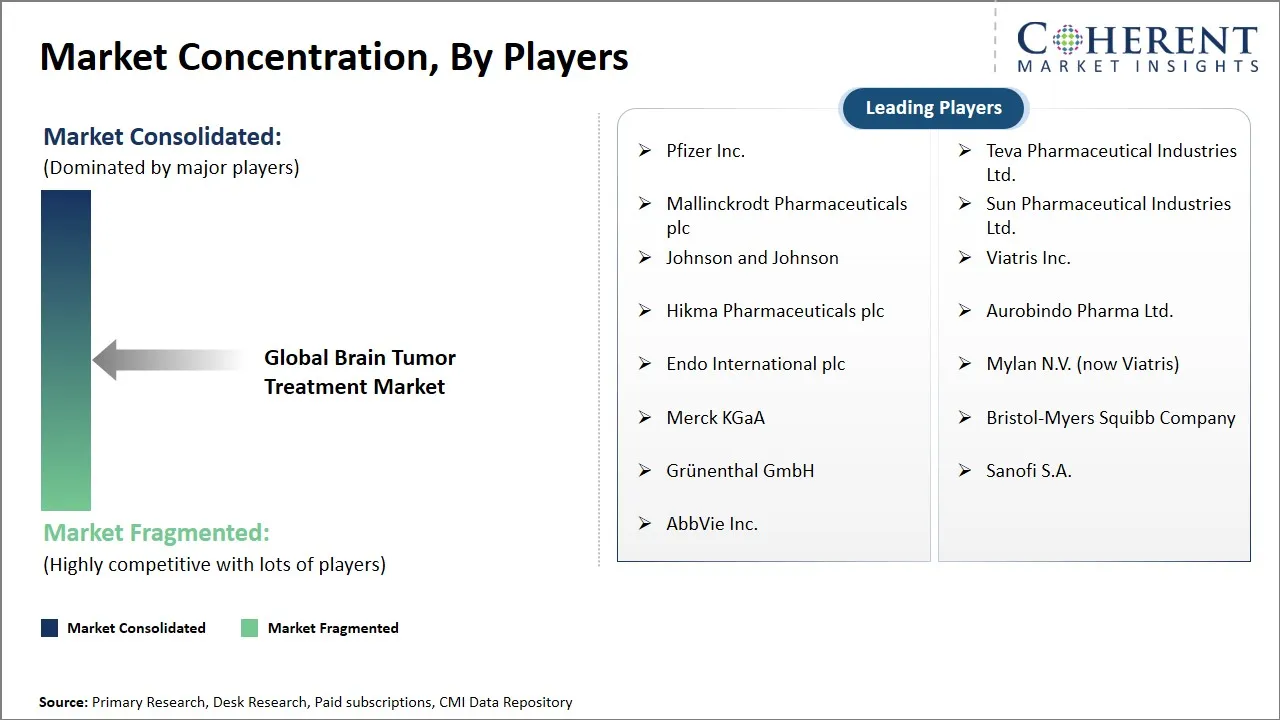
| Companies covered: | Pfizer Inc., Teva Pharmaceutical Industries Ltd., Mallinckrodt Pharmaceuticals plc, Sun Pharmaceutical Industries Ltd., Johnson and Johnson, Viatris Inc., Hikma Pharmaceuticals plc, Aurobindo Pharma Ltd., Endo International plc, Mylan N.V. (now Viatris), Merck KGaA, Bristol‑Myers Squibb Company, Grünenthal GmbH, Sanofi S.A., and AbbVie Inc. | ||
| Growth Drivers: |
| ||
| Restraints & Challenges: |
| ||
Brain Tumor Treatment Market Dynamics
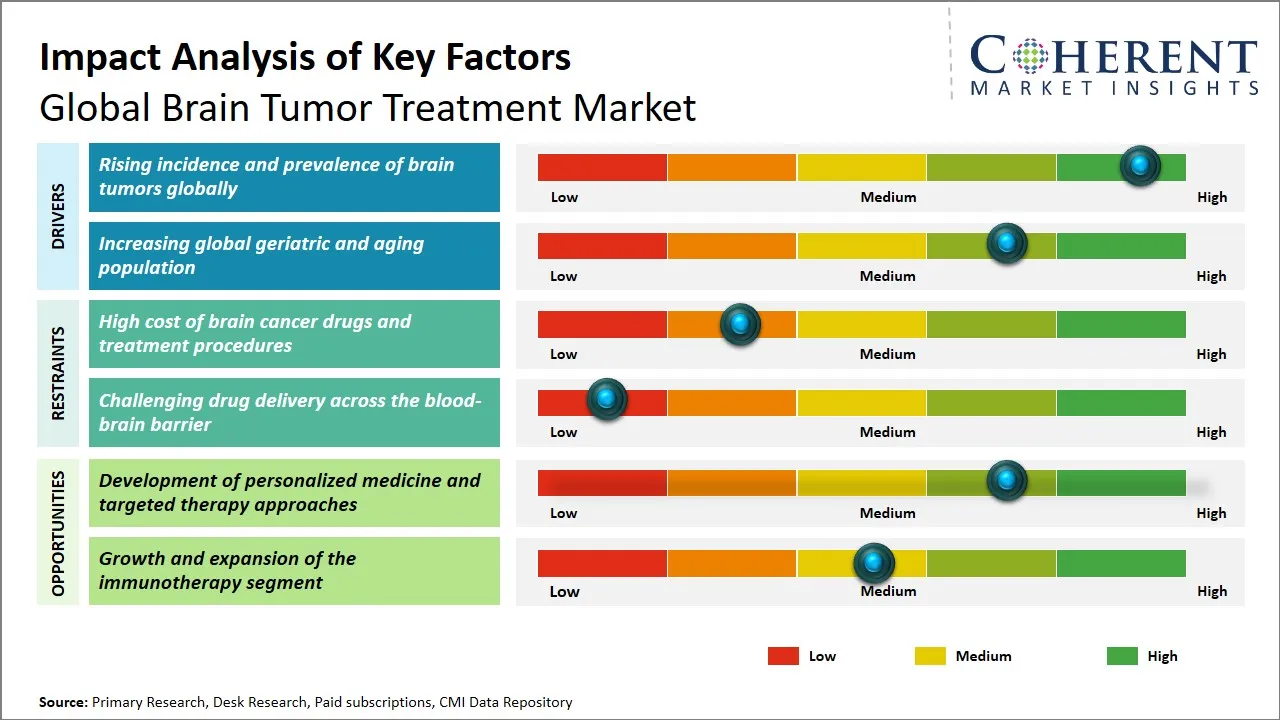
Brain Tumor Treatment Market Driver - Rising Incidence and Prevalence of Brain Tumors Globally
The global brain tumors' incidence and prevalence are rising and this is one of the major reasons for the advanced treatment options demand. The elderly population, environmental factors, and better diagnostic facilities are some of the causes of the increased detection of brain tumors that comprise both benign and malignant types. Additionally, hospitals have become more accessible due to better health infrastructure and imaging technologies such as MRI and CT scans have improved the accuracy and timing of the diagnosis, respectively, thus leading to an increase in the number of patients identified.
For instance, the National Brain Tumor Society reported that over 1 million Americans are living with brain tumors. An estimated 94,390 new brain tumor diagnoses are expected in 2023, with 26,940 being malignant. Glioblastoma, the most common malignant tumor, accounts for 14.2% of all brain tumors. The five-year survival rate for malignant brain tumor patients is 35.7%, and 18,990 Americans are projected to die from malignant brain tumors in 2023.
Brain Tumor Treatment Market Opportunity - Development of Personalized Medicine and Targeted Therapy Approaches
The global brain tumor treatment market is in a significant downstream path due to the introduction of personalized medicine and the use of targeted therapy strategies. These treatment approaches personalize the patient's therapy based on genetic, proteomic, and molecular profiles of the tumor. The biomarker identification and molecular targeting that are the hallmarks of personalized medicine also contribute to increasing the effectiveness of the entire treatment process by creating the development of highly selective drugs with reduced side effects.
In November 2025, scientists from the German Cancer Research Center (DKFZ) and ShanghaiTech University developed the Individualized Patient Tumor Organoid (IPTO) method. This technique grows patient-specific brain tumors in the lab, accurately predicting therapy responses. The IPTO model, tested on 48 tumor types, helps personalize treatment, including targeted therapies for glioblastomas and brain metastases. It also predicts immunotherapy effectiveness, offering new prospects for brain tumor treatment and personalized medicine development. This method is being further explored for drug testing and AI-based treatment optimization.
Analyst Opinion (Expert Opinion)
- The brain tumor treatment market is witnessing a remarkable growth rate due to the advancements in surgical technologies, imaging techniques, and an accompanying increase in research for targeted therapies and immunotherapies, thus the already existing regulatory support and global awareness of brain tumor prevalence are also stirring up the demand for treatment. Nevertheless, the challenges posed by exorbitant costs for treatment and the difficulty in drug delivery across the blood-brain barrier persist. The emergence of precision medicine provides avenues for more individualized treatments, and collaborations across the healthcare sectors will be mainly responsible for the generation of innovations.
- Some of the recent conferences like the Society for Neuro-Oncology (SNO) Annual Meeting and the AACR Annual Meeting have significantly contributed to the process of knowledge-sharing and new brain tumor treatment technologies demonstrations. Collaborative approaches, especially in Europe and North America, are directing their efforts towards enhancing patient access to the latest therapies. These events and initiatives are influencing the market's future by establishing a communication line for technological exchanges and policy discussions in the area of brain tumor treatment.
Speak to the analyst
Want personalized insights?
Take the findings above to one of our principal consultants, or have the report rebuilt around the segments, geographies and competitors you actually track.
Market Segmentation
- Treatment Modality Insights (Revenue, USD Bn, 2021 - 2033)
- Chemotherapy (e.g., alkylating agents, cytotoxic drugs)
- Radiation Therapy (e.g., external beam radiation, stereotactic radiosurgery)
- Targeted Therapy (e.g., molecularly targeted small molecules)
- Immunotherapy (e.g., checkpoint inhibitors, CAR‑T therapies)
- Other Therapies (e.g., tumor‑treating fields, gene therapy, combination modalities)
- Tumor Type Insights (Revenue, USD Bn, 2021 - 2033)
- Primary Brain Tumors (e.g., glioblastoma, astrocytoma)
- Metastatic/Secondary Brain Tumors
- Meningioma
- Pituitary Tumors
- Other Tumor Types (e.g., oligodendroglioma, ependymoma)
- Drug Class Insights (Revenue, USD Bn, 2021 - 2033)
- Alkylating Agents
- Antimetabolites
- Monoclonal Antibodies
- Small‑Molecule Inhibitors
- Other Drug Classes (e.g., proteasome inhibitors, epigenetic modulators)
- Age Group Insights (Revenue, USD Bn, 2021 - 2033)
- Pediatric
- Adult
- Geriatric
- Gender Insights (Revenue, USD Bn, 2021 - 2033)
- Male
- Female
- End User Insights (Revenue, USD Bn, 2021 - 2033)
- Hospitals and Integrated Cancer Centers
- Ambulatory Surgical/Outpatient Centers
- Specialty Clinics (neuro‑oncology clinics)
- Home Care/Remote Care Settings (where applicable)
- Distribution Channel Insights (Revenue, USD Bn, 2021 - 2033)
- Hospital Pharmacies
- Retail Pharmacies
- Online Pharmacies
- Regional Insights (Revenue, USD Bn, 2021 - 2033)
- North America
- U.S.
- Canada
- Latin America
- Brazil
- Argentina
- Mexico
- Rest of Latin America
- Europe
- Germany
- U.K.
- Spain
- France
- Italy
- Russia
- Rest of Europe
- Asia Pacific
- China
- India
- Japan
- Australia
- South Korea
- ASEAN
- Rest of Asia Pacific
- Middle East
- GCC Countries
- Israel
- Rest of Middle East
- Africa
- South Africa
- North Africa
- Central Africa
- North America
- Key Players Insights
- Pfizer Inc.
- Teva Pharmaceutical Industries Ltd.
- Mallinckrodt Pharmaceuticals plc
- Sun Pharmaceutical Industries Ltd.
- Johnson and Johnson
- Viatris Inc.
- Hikma Pharmaceuticals plc
- Aurobindo Pharma Ltd.
- Endo International plc
- Mylan N.V. (now Viatris)
- Merck KGaA
- Bristol‑Myers Squibb Company
- Grünenthal GmbH
- Sanofi S.A.
- AbbVie Inc.
Sources
Primary Research Interviews
- Industry Stakeholders
- National Brain Tumor Society (NBTS)
- Ivy Brain Tumor Center
- End users
- American Brain Tumor Association (ABTA)
- International Brain Tumor Alliance (IBTA)
- Deutsche Hirntumorhilfe e.V.
- Collaborative Ependymoma Research Network Foundation (CERN)
Government & International Databases
- SEER Program (U.S. cancer incidence)
- CBTRUS Database (Central Brain Tumor Registry of the U.S.)
- GDC Data Portal (Cancer genome data)
- NCDB (National Cancer Data Base)
- TCIA (The Cancer Imaging Archive)
- ClinicalTrials.gov (Clinical trials registry)
Trade Publications
- Brain Tumor Research and Treatment
- Clinical Cancer Research
- Neuro-Oncology Advances
- Immunotherapy
- Cancer Immunology, Immunotherapy
- Frontiers in Neurology
Academic Journals
- Science Immunology
- Journal of Neuro-Oncology
- Translational Medicine
- Molecular Cancer Therapeutics
- Nature Reviews Clinical Oncology
- MDPI International Journal of Molecular Sciences
Reputable Newspapers & Media
- The New York Times (health/medicine section)
- The Guardian (global health reporting)
- Financial Times (healthcare markets)
- Reuters (science/medicine news)
- BBC News (health coverage)
- Stat News (life sciences journalism)
Industry Associations
- Neurotechnology Industry Organization
- Society for Brain Mapping and Therapeutics
- International Neuro-Oncology Society
- American Society of Clinical Oncology
- European Association of Neuro-Oncology
- World Federation of Neuro-Oncology Societies
Public Domain Resources
- World Health Organization (WHO) resources
- United Nations Educational, Scientific and Cultural Organization (UNESCO) health statistics
- Centers for Disease Control and Prevention (CDC) public data
- Eurostat (European statistics)
- World Bank health indicators
- Global Health Observatory (GHO)
Proprietary Elements
- CMI Data Analytics Tool: Proprietary analytics tool to analyze real-time market trends, consumer behavior, and technology adoption in market
- Proprietary CMI Existing Repository of Information for Last 8 Years
Get access to 250+ pages report
Every segment, forecast, competitor profile and data table behind the analysis above — available for instant download.
- ESOMAR Member
- ISO 9001:2015 Certified
- D-U-N-S Registered
- GDPR & CCPA Compliant
Missing comfort of reading report in your local language? Find your preferred language:
Transform your Strategy with Exclusive Trending Reports
Frequently Asked Questions
The global brain tumor treatment market is estimated to be valued at USD 2.58 Bn in 2026 and is expected to reach USD 5.05 Bn by 2033.
The CAGR of the global brain tumor treatment market is projected to be 10.1% from 2026 to 2033.
Rising incidence and prevalence of brain tumors globally and increasing global geriatric and aging population are the major factors driving the growth of the global brain tumor treatment market.
High cost of brain cancer drugs and treatment procedures and challenging drug delivery across the blood-brain barrier are the major factors hampering the growth of the global brain tumor treatment market.
In terms of treatment modality, the chemotherapy (e.g., alkylating agents, cytotoxic drugs) segment is estimated to dominate the market revenue share in 2026.
Pfizer Inc., Teva Pharmaceutical Industries Ltd., Mallinckrodt Pharmaceuticals plc, Sun Pharmaceutical Industries Ltd., Johnson and Johnson, Viatris Inc., Hikma Pharmaceuticals plc, Aurobindo Pharma Ltd., Endo International plc, Mylan N.V. (now Viatris), Merck KGaA, Bristol‑Myers Squibb Company, Grünenthal GmbH, Sanofi S.A., and AbbVie Inc. are the major players.
North America is expected to lead the global brain tumor treatment market in 2026.