

Immunodeficiency Therapeutics Market Size and Share Analysis - 2026 To 2033
The immunodeficiency therapeutics market is anticipated to grow at a CAGR of 2.4% with USD 11.1 Bn in 2026 and is expected to reach USD 12.2 Bn in 2033. The rising prevalence of immunodeficiency disease (Primary Immunodeficiency Therapeutics is estimated at USD3.13 Bn in 2025) is expected to drive growth of global immunodeficiency therapeutics market over the forecast period. Moreover, increasing number of research and development activities for improving the effectiveness of immunodeficiency therapeutics is expected to aid in the growth of the market.
Key Takeaways
- Immunoglobulin therapy is expected to account the largest share of 65% in 2026, many patients with antibody deficiencies (such as Common Variable Immunodeficiency and X-linked Agammaglobulinemia) require lifelong immunoglobulin replacement. X-linked Agammaglobulinemia is a rare condition with about 5–10 people in a million affected.
- Blood test will dominate with 80% in 2026, most immunodeficiency conditions are initially evaluated through blood-based assessments, including: immunoglobulin level measurement, Complete blood count (CBC), Lymphocyte and immune-cell profiling, and Functional immune assays. Antibody disorders account for 55% of all primary immunodeficiency diseases in the European Society for Immunodeficiencies (ESID) registry and 78% in the U.S. registry.
- Antibody deficiency segment will dominate with 50% in 2026, antibody deficiencies represent the most common category of primary immunodeficiencies, including disorders such as Common Variable Immunodeficiency and X-linked Agammaglobulinemia. CVID is a relatively frequent form of primary immunodeficiency, found in about 1 in 25,000 persons; this is the reason it is called common.
- Hospital pharmacy segment will dominate with 55% in 2026, many immunodeficiency therapies, especially immunoglobulin replacement therapies (IVIG), require administration, monitoring, or supervision by healthcare professionals, making hospitals a primary distribution point. The U.S. Bureau of Labor Statistics expects pharmacist jobs in outpatient care centers to grow by 8% by 2034.
- North America is expected to acquire the dominant share of 40% in 2026, the region has strong disease awareness, advanced diagnostic capabilities, and better identification of primary immunodeficiency conditions. About 1 in every 1,200 people in the U.S. are diagnosed with a primary immunodeficiency disease (PIDD).
Segmental Insights
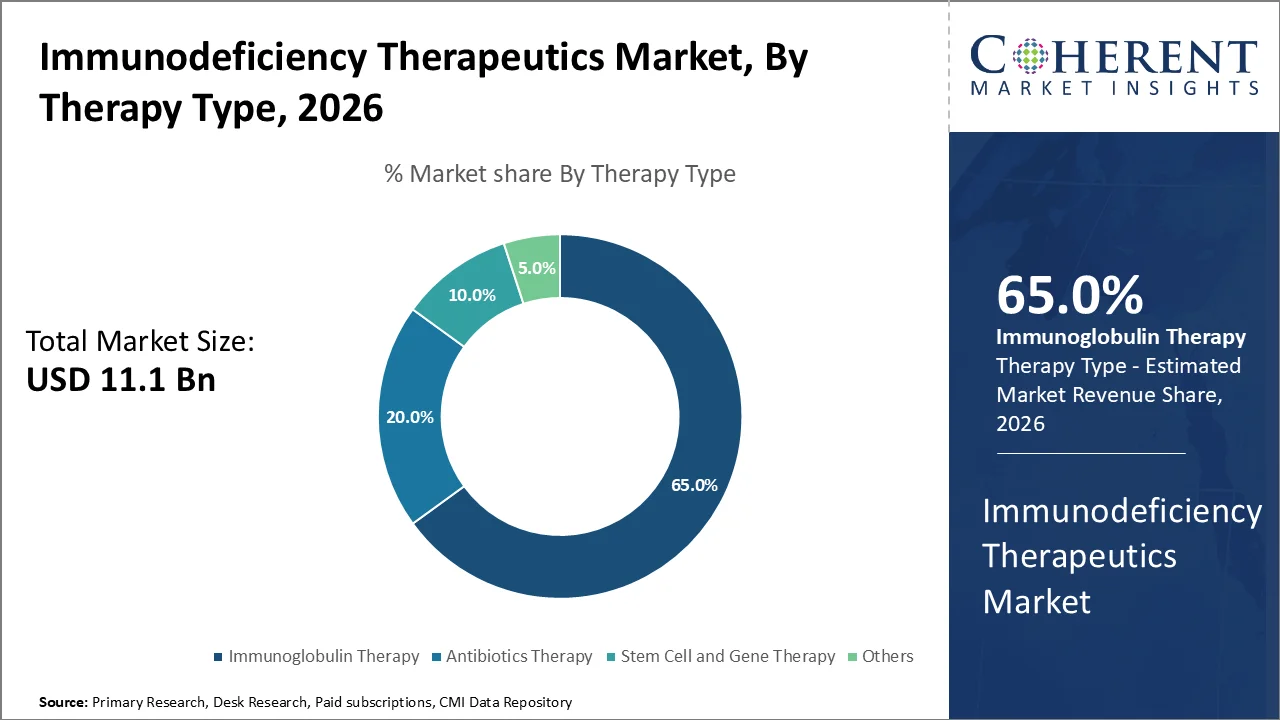
Why is Immunoglobulin Therapy Acquiring the Largest Market Share?
Immunoglobulin therapy is projected to account for the largest share of therapy type in 2026, representing approximately 65% of the total volume. Its well-established clinical efficacy, broad therapeutic applicability across a wide spectrum of primary and secondary immunodeficiency disorders, as well as its long-standing status as a gold-standard treatment modality recognized by leading global health authorities are the factors propelling the market growth.
The dominance of this segment is further reinforced by decades of clinical validation, widespread physician familiarity, and the continuously expanding patient pool diagnosed with conditions such as Common Variable Immunodeficiency (CVID), X-linked agammaglobulinemia (XLA), and other antibody deficiency syndromes that necessitate long-term immunoglobulin replacement therapy. Antibody deficiencies account for 57% of all identified immunodeficiency disorders, making them the largest disease type.
Immunoglobulin Therapy has maintained its leadership position primarily because it directly addresses the fundamental pathophysiology of immunodeficiency the absence or insufficiency of functional antibodies (immunoglobulins) that leaves patients vulnerable to recurrent and life-threatening infections.
- Current Industry Events of 2026
- Market Size Estimation
- Regional Breakdown
- Competitive Landscape
- Customer Intelligence
- Segmental Analysis
- Pricing Analysis
- Key Market Drivers, Challenges & Future Trends
- Customized Insights Section
Blood Test holds the Largest Market Share
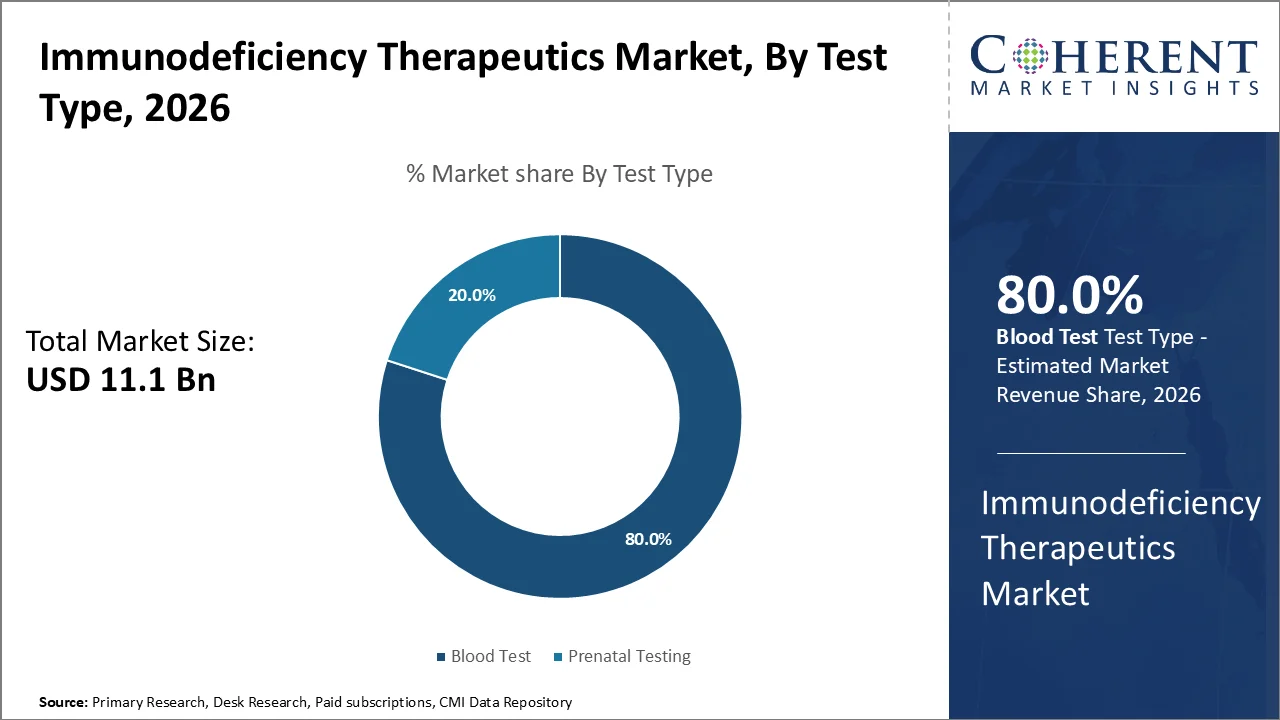
Based on test type, blood test dominates the market, accounting for a significant 80% share in 2026. Its indispensable role in diagnosing, confirming, and monitoring a broad spectrum of primary and secondary immunodeficiency conditions is augmenting the growth.
Blood testing is the cornerstone of immunological evaluation globally, owing to its accessibility, clinical versatility, as well as the breadth of diagnostic information it can yield from a single sample.
Blood-based diagnostic assays including complete blood count (CBC) with differential, lymphocyte subset analysis, immunoglobulin level testing, flow cytometry, as well as complement function tests provide clinicians with a comprehensive immunological profile of the patient, enabling targeted therapeutic strategies.
Antibody Deficiency holds the Largest Market Share
Based on disease type, antibody deficiency dominates the market, accounting for a significant 50% share in 2026, its significantly higher prevalence across global populations, well-established diagnostic pathways, as well as the availability of a broad range of approved therapeutic interventions that have been in clinical use for several decades are the growth inducing factors.
The dominance of this segment is further reinforced by sustained investments in immunoglobulin replacement therapies, a widening patient base driven by improved awareness and screening programs, and the strong clinical infrastructure built around managing antibody-related immune disorders across both developed and developing nations. Primary immunodeficiency diseases affect approximately 1 in 1,200 people in the U.S.
Antibody deficiency disorders, which include conditions including Common Variable Immunodeficiency (CVID), X-linked Agammaglobulinemia (XLA), Selective IgA Deficiency, Hyper-IgM Syndrome, etc., represent the most frequently diagnosed group of primary immunodeficiency diseases (PIDs) globally.
According to the Jeffrey Modell Foundation, a globally recognized non-profit organization dedicated to primary immunodeficiency, antibody deficiencies account for approximately 50% - 60% of all diagnosed primary immunodeficiency cases globally.
Hospital Pharmacy holds the Largest Market Share
Based on distribution channel, hospital pharmacy dominates the market, accounting for a significant 55% share in 2026, the complex as well as highly specialized nature of immunodeficiency therapeutics is propelling the growth necessitating clinical oversight, controlled dispensing environments, with integrated patient management systems that are only available within hospital-based settings.
The dominance of hospital pharmacies is deeply rooted in the clinical complexity associated with immunodeficiency disorders, which include a broad spectrum of primary and secondary immunodeficiency conditions requiring treatments such as immunoglobulin replacement therapy, hematopoietic stem cell transplantation supportive medications, enzyme replacement therapies, and a growing array of biologics and gene therapies.
These treatments are not only expensive and highly specialized but also demand rigorous storage conditions, precise dosing protocols, as well as continuous monitoring of patient responses, all of which are characteristics that are inherently aligned with the operational framework of hospital pharmacies.
Market Drivers
Retroviral and Lentiviral Vector-Based Gene Therapy is transforming the Immunodeficiency Therapeutics Industry
Retroviral and lentiviral vector-based gene therapy is a promising treatment for genetic immunodeficiency diseases such as Severe Combined Immunodeficiency (SCID), Wiskott-Aldrich Syndrome (WAS), and Chronic Granulomatous Disease (CGD). This therapy takes a patient’s own stem cells, corrects the faulty gene in the laboratory using viral vectors, and puts the corrected cells back into the patient. It can provide a long-term or potentially curative solution compared with lifelong treatments.
Several companies are developing or commercializing these therapies, including GSK, Orchard Therapeutics, Autolus Therapeutics, bluebird bio, Rocket Pharmaceuticals, etc. Strimvelis, approved in Europe in 2016 for ADA-SCID, showed more than 70% overall survival in patients without a matched bone marrow donor. These therapies lower the need for donor bone marrow transplants, lower the risk of graft-versus-host disease, and may remove the need for lifelong enzyme replacement therapy in some patients.
CRISPR/Cas9 Gene Editing Technology: A major breakthrough in Immunodeficiency Therapeutics
CRISPR/Cas9 gene editing is an advanced technology that can directly fix faulty genes causing diseases. Unlike traditional gene therapy that adds a new gene, CRISPR can make precise changes in the patient’s DNA, providing the possibility of a more targeted as well as long-lasting treatment for genetic immunodeficiency disorders.
Companies such as CRISPR Therapeutics, Editas Medicine, and Beam Therapeutics are developing CRISPR-based therapies. Casgevy, developed by CRISPR Therapeutics and Vertex Pharmaceuticals, received FDA approval in 2023. This technology may lower the demand for lifelong treatments by correcting disease-causing mutations at the source.
Current Events and Their Impact on the Immunodeficiency Therapeutics Market
Current Event | Description and its Impact |
FDA approval and expansion of gene therapy approach for rare genetic immune disorders |
|
FDA approval of first CRISPR-based gene therapy (Casgevy) in 2023 |
|
Immunodeficiency Therapeutics Market Trends
- The immunodeficiency therapeutics market is experiencing a fundamental paradigm shift, driven by the clinical maturation of gene therapy platforms.
- Conditions including Severe Combined Immunodeficiency (SCID), Wiskott-Aldrich Syndrome (WAS), Adenosine Deaminase Deficiency (ADA-SCID), etc., are highly being targeted by curative gene therapy approaches using lentiviral and adeno-associated viral (AAV) vectors. SCID is a rare disease that affects about 1 in every 40,000 to 75,000 newborns. More than 20 genetic defects have been identified as causes of SCID.
- Historically dominated by intravenous immunoglobulin (IVIg) therapies, the market is experiencing a major transformation toward subcutaneous immunoglobulin (SCIg) formulations.
- Government-mandated newborn screening initiatives particularly in the United States, the European Union, and select Asia-Pacific nations are mandating earlier diagnosis of PIDs such as SCID, thereby expanding the addressable patient population and driving earlier therapeutic intervention.
- Despite advancements in antiretroviral therapy (ART), secondary immunodeficiencies associated with HIV/AIDS continue to constitute a major therapeutic demand driver, particularly across Sub-Saharan Africa, Southeast Asia, and Latin America. Around 25.6 million people in sub-Saharan Africa had HIV in 2023, which shows over two-thirds of the global HIV population.
- The pipeline for immunodeficiency therapeutics is increasingly populated by monoclonal antibodies, cytokine modulators, and checkpoint inhibitor-derived approaches adapted for immunodeficiency contexts.
Regional Insights
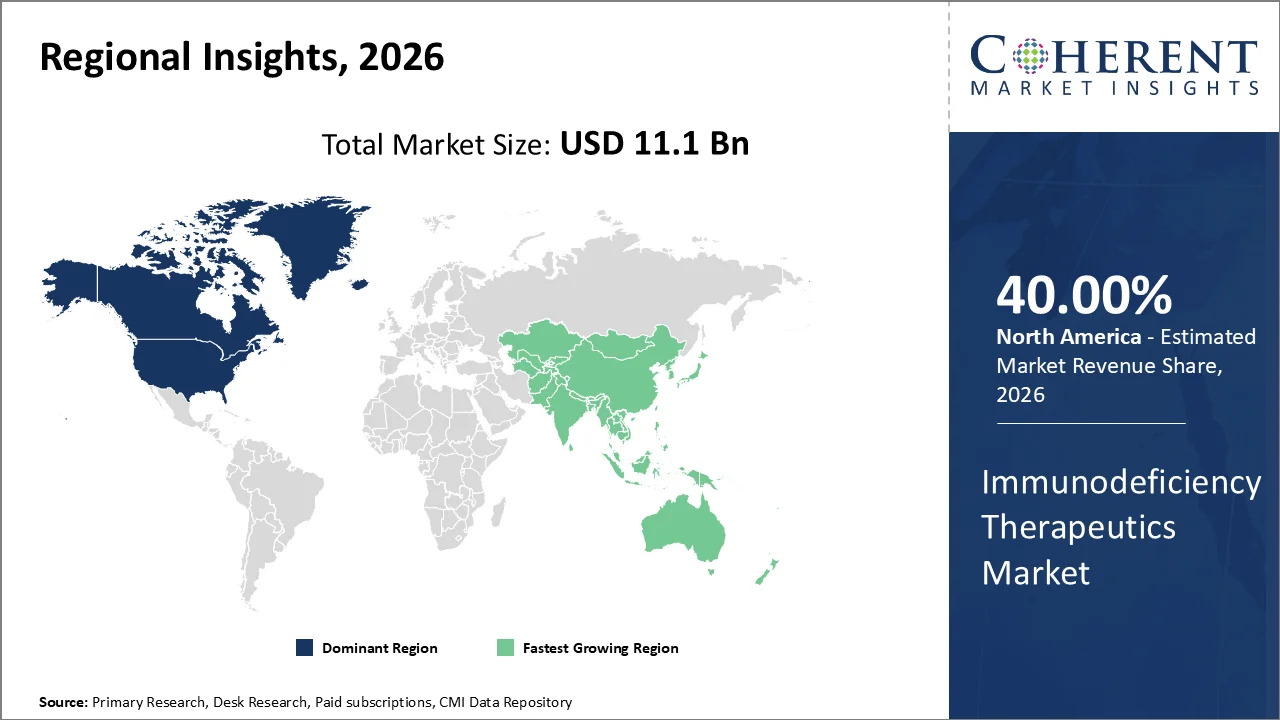
North America dominates owing to owing to its robust reimbursement frameworks
North America account 40% market share in 2026, owing to robust reimbursement frameworks, and the presence of a significantly large patient pool diagnosed with both primary and secondary immunodeficiency disorders. Approximately 1.2 million people in the U.S. have HIV, but about 1 out of every 8 people are unaware of their infection. HIV rates are higher in certain regions of the country.
The United States, in particular, has been a dominant force in driving therapeutic adoption, supported by initiatives from organizations including the Immune Deficiency Foundation (IDF), which reports that over 500,000 individuals are currently diagnosed with primary immunodeficiency diseases (PIDs) in the United States alone, with an estimated 250,000 remaining undiagnosed.
This enormous patient burden has necessitated aggressive therapeutic interventions, including immunoglobulin replacement therapies as well as hematopoietic stem cell transplantation. Furthermore, the U.S. Food and Drug Administration (FDA) has consistently simplified its approval pathways for novel immunodeficiency treatments, with many Breakthrough Therapy Designations granted to pipeline candidates targeting rare immunodeficiency conditions.
Asia Pacific Immunodeficiency Therapeutics Market Trends
The Asia Pacific region is poised to be the fastest-growing region through 2026-2033, expanding at a CAGR of approximately 6.8%. Escalating healthcare investments along with the high adoption of advanced precision medicine approaches are stimulating the market growth. Spending on precision medicine treatments in the region is expected to rise from USD 8.32 billion in 2022 to UD18.2 billion by 2027, supporting the development and adoption of advanced therapies, including immunology-focused treatments.
A major growth driver is the dramatic improvement in diagnostic capabilities across Asia Pacific nations, which has historically suffered from major underdiagnosis of primary and secondary immunodeficiency conditions. The World Health Organization's (WHO) Western Pacific Regional Office has been potentially supporting member states in strengthening laboratory diagnostic networks, enabling identification of immunodeficiency conditions that were previously missed or misclassified.
In Japan, the Ministry of Health, Labour and Welfare has integrated immunodeficiency screening into its national newborn screening protocols, substantially increasing the diagnosed patient pool eligible for therapeutic intervention.
The Robust Federal Funding Mechanisms is Accelerating the Immunodeficiency Therapeutics Market Demand in United States
The U.S. contributes the highest share in the immunodeficiency therapeutics market in North America, owing to its exceptionally advanced healthcare infrastructure, robust federal funding mechanisms, and an extraordinarily high prevalence of diagnosed primary and secondary immunodeficiency disorders across the population.
The United States benefits from a deeply entrenched pharmaceutical ecosystem that accelerates the development, approval, and commercialization of immunodeficiency therapeutics at an unparalleled pace compared to any other North American country.
According to the Immune Deficiency Foundation (IDF), approximately 500,000 Americans are currently living with a diagnosed primary immunodeficiency disease, and a high number remain undiagnosed, creating an enormous untapped therapeutic demand.
Furthermore, the Jeffrey Modell Foundation has identified over 450 distinct primary immunodeficiency diseases, the majority of which are being actively targeted through clinical programs headquartered within U.S. research institutions, further reinforcing the leading position of the country within the North American immunodeficiency therapeutics landscape.
China Immunodeficiency Therapeutics Market Trends
China contributes the highest share in the market in Asia Pacific owing to its massive patient population, robust pharmaceutical manufacturing infrastructure, and accelerating government-backed healthcare investments that have dramatically transformed immunodeficiency diagnosis and treatment accessibility across the country.
National Healthcare Security Administration (NHSA) of China has progressively incorporated immunoglobulin replacement therapies and targeted biologics into its National Reimbursement Drug List (NRDL), substantially reducing out-of-pocket costs for patients suffering from primary immunodeficiency disorders (PIDs) and secondary immunodeficiency conditions, including HIV-associated immunosuppression.
According to the Chinese Center for Disease Control and Prevention (China CDC), China has one of the largest documented HIV-positive populations in Asia, with approximately 1.2 million people living with HIV as of recent national surveillance reports, generating persistent and large-scale demand for antiretroviral and immunomodulatory therapeutics.
Who are the Major Companies in Immunodeficiency Therapeutics Industry
Some of the major key players in immunodeficiency therapeutics market include, Pfizer Inc., CSL Behring, Grifols, S.A., Abbott, ADMA Biologics, Inc., AstraZeneca, Baxter, Bayer AG, Biocon, Bristol-Myers Squibb Company, BDI Pharma, Inc., Bharat Serums and Vaccines Ltd., Eli Lilly and Company, GlaxoSmithKline plc., Lupin Pharmaceuticals Inc., Novartis AG, Octapharma AG, Sanofi, and Takeda Pharmaceutical Company Limited
Key News
- In July 2026, TG Therapeutics, Inc. has started a Phase 2 clinical trial to test BRIUMVI (ublituximab-xiiy) in adults with treatment-resistant schizophrenia. The study will include about 60 adults with schizophrenia who still have significant symptoms despite taking standard antipsychotic medicines. The trial will evaluate the safety and effectiveness of BRIUMVI as a potential new treatment alternative.
- In April 2026, X4 Pharmaceuticals announced that the European Commission has approved XOLREMDI (mavorixafor) for treating patients with WHIM syndrome in the European Union. The approval was based on a positive recommendation from the European Medicines Agency.
Market Report Scope
Immunodeficiency Therapeutics Market Report Coverage
| Report Coverage | Details | ||
|---|---|---|---|
| Base Year: | 2025 | Market Size in 2026: | USD 11.1 Bn |
| Historical Data for: | 2020 To 2024 | Forecast Period: | 2026 To 2033 |
| Forecast Period 2026 to 2033 CAGR: | 2.4% | 2033 Value Projection: | USD 12.2 Bn |
| Geographies covered: |
| ||
| Segments covered: |
| ||
| Companies covered: | Pfizer Inc., CSL Behring, Grifols, S.A., Abbott, ADMA Biologics, Inc., AstraZeneca, Baxter, Bayer AG, Biocon, Bristol-Myers Squibb Company, BDI Pharma, Inc., Bharat Serums and Vaccines Ltd., Eli Lilly and Company, GlaxoSmithKline plc., Lupin Pharmaceuticals Inc., Novartis AG, Octapharma AG, Sanofi, and Takeda Pharmaceutical Company Limited | ||
| Growth Drivers: |
| ||
| Restraints & Challenges: |
| ||
Analyst Opinion
- The immunodeficiency therapeutics market is poised for remarkable transformation, driven by accelerating advancements in precision medicine and molecular diagnostics. Precision for Medicine has surged by USD150M in funding.
- Growing awareness regarding primary and secondary immunodeficiency disorders among healthcare professionals and patients alike continues to expand the treatable patient pool globally.
- Gene therapies as well as stem cell transplantation innovations shows compelling opportunities, providin potentially curative solutions beyond conventional immunoglobulin replacement therapies. A total of 41 gene therapy trials were initiated in Q1 2026, showing continued growth in gene therapy research compared with the previous quarter.
- Furthermore, the high adoption of subcutaneous immunoglobulin therapies over intravenous options shows a meaningful shift toward patient-centric, home-based care models.
- However, the market faces considerable restraints, including extraordinarily high treatment costs, limited reimbursement frameworks in developing nations, as well as persistent challenges in early and accurate disease diagnosis.
- Strategic collaborations between biotech firms as well as research institutions will be instrumental in unlocking the full long-term potential of the market.
Speak to the analyst
Want personalized insights?
Take the findings above to one of our principal consultants, or have the report rebuilt around the segments, geographies and competitors you actually track.
Market Segmentation
- By Therapy Type (Revenue, USD Bn, 2021-2033)
- Immunoglobulin Therapy
- Antibiotics Therapy
- Stem Cell and Gene Therapy
- Others
- By Test Type (Revenue, USD Bn, 2021-2033)
- Blood Test
- Prenatal Testing
- By Disease Type (Revenue, USD Bn, 2021-2033)
- Antibody Deficiency
- Cellular Immunodeficiency
- Innate Immune Disorders
- Others
- By Distribution Channel (Revenue, USD Bn, 2021-2033)
- Hospital Pharmacy
- Retail Pharmacy
- Online Pharmacy
- By Region (Revenue, USD Bn, 2021-2033)
- North America
- U.S.
- Canada
- Latin America
- Brazil
- Mexico
- Argentina
- Rest of Latin America
- Europe
- Germany
- U.K.
- France
- Italy
- Spain
- Russia
- Rest of Europe
- Asia Pacific
- China
- India
- Japan
- Australia
- South Korea
- ASEAN
- Rest of Asia Pacific
- Middle East
- GCC
- Israel
- Rest of Middle East
- Africa
- South Africa
- Central Africa
- North Africa
- North America
Sources
Primary Research Interviews
- Immunologists & Hematologists
- Pharmaceutical & Biotechnology Company Executives
- Hospital Pharmacists & Clinical Specialists
- Healthcare Payers & Reimbursement Experts
- Others
Databases
- IQVIA Health Analytics Database
- EvaluatePharma Database
- Others
Magazines
- Pharmacy Times
- BioPharm International
- Drug Discovery & Development Magazine
- Pharmaceutical Technology Magazine
- Others
Journals
- Journal of Clinical Immunology
- Clinical Immunology (Elsevier)
- Journal of Allergy and Clinical Immunology
- The Lancet Infectious Diseases
- Others
Newspapers
- The Wall Street Journal (Healthcare Section)
- Financial Times (Pharma & Biotech)
- Reuters Health News
- BioPharma Dive
- Others
Associations
- Immune Deficiency Foundation (IDF)
- American Academy of Allergy
- Asthma & Immunology (AAAAI)
- European Society for Immunodeficiencies (ESID)
- International Patient Organisation for Primary Immunodeficiencies (IPOPI)
- Others
Public Domain Sources
- U.S. Food and Drug Administration (FDA) – Drug Approvals & Databases
- World Health Organization (WHO) – Immunization & Disease Reports
- National Institutes of Health (NIH) – ClinicalTrials.gov
- Centers for Disease Control and Prevention (CDC) – Immunodeficiency Statistics
- Others
Proprietary Elements
- CMI Data Analytics Tool
- Proprietary CMI Existing Repository of information for last 10 years
Get access to 250+ pages report
Every segment, forecast, competitor profile and data table behind the analysis above — available for instant download.
- ESOMAR Member
- ISO 9001:2015 Certified
- D-U-N-S Registered
- GDPR & CCPA Compliant
Missing comfort of reading report in your local language? Find your preferred language:
Transform your Strategy with Exclusive Trending Reports
Frequently Asked Questions
The immunodeficiency therapeutics market is expected to reach USD 12.2 Bn in 2033.
Major players operating in the global immunodeficiency therapeutics market include Pfizer Inc., CSL Behring, Grifols, S.A., Abbott, ADMA Biologics, Inc., AstraZeneca, Baxter, Bayer AG, Biocon, Bristol-Myers Squibb Company, BDI Pharma, Inc., Bharat Serums and Vaccines Ltd., Eli Lilly and Company, GlaxoSmithKline plc., Lupin Pharmaceuticals Inc., Novartis AG, Octapharma AG, Sanofi, and Takeda Pharmaceutical Company Limited
Limited availability of plasma donors creating supply chain constraints is one of the major factors that is expected to hamper growth of the market over the forecast period.
Increasing adoption of immunoglobulin replacement therapies and biologics are driving growth of the global Immunodeficiency Therapeutics market.
The immunodeficiency therapeutics market is anticipated to grow at a CAGR of 2.4% between 2026 and 2033.
Among regions, North America is expected to account for a largest market share in the global immunodeficiency therapeutics market over the forecast period.
Stem cell transplantation offers a permanent cure for several forms of life-threatening immunodeficiency. Healthy stem cells are transferred to the person with immunodeficiency, which results in a typically functioning immune system.