

Anaplastic Astrocytoma Treatment Market Size and Forecast — 2026 - 2033
The Global Anaplastic Astrocytoma Treatment Market size is estimated to be valued at USD 1.2 billion in 2026 and is expected to reach USD 2.0 billion by 2033, exhibiting a compound annual growth rate (CAGR) of 7.5% from 2026 to 2033.
Overview
The Anaplastic Astrocytoma treatment market is driven by the rising incidence of malignant brain tumors, increasing awareness of early neurological diagnosis, and advancements in targeted cancer therapies. Growing adoption of precision medicine, molecular profiling, and biomarker-based treatment approaches is improving treatment outcomes and expanding therapeutic options. Increased investments in neuro-oncology research, clinical trials, and immunotherapy development are further supporting market growth. Additionally, the expanding elderly population, which is more susceptible to aggressive brain tumors, continues to increase demand for effective therapies. Supportive government funding, improved access to advanced imaging technologies, and expanding healthcare infrastructure also contribute significantly to market expansion globally.
Key Takeaways
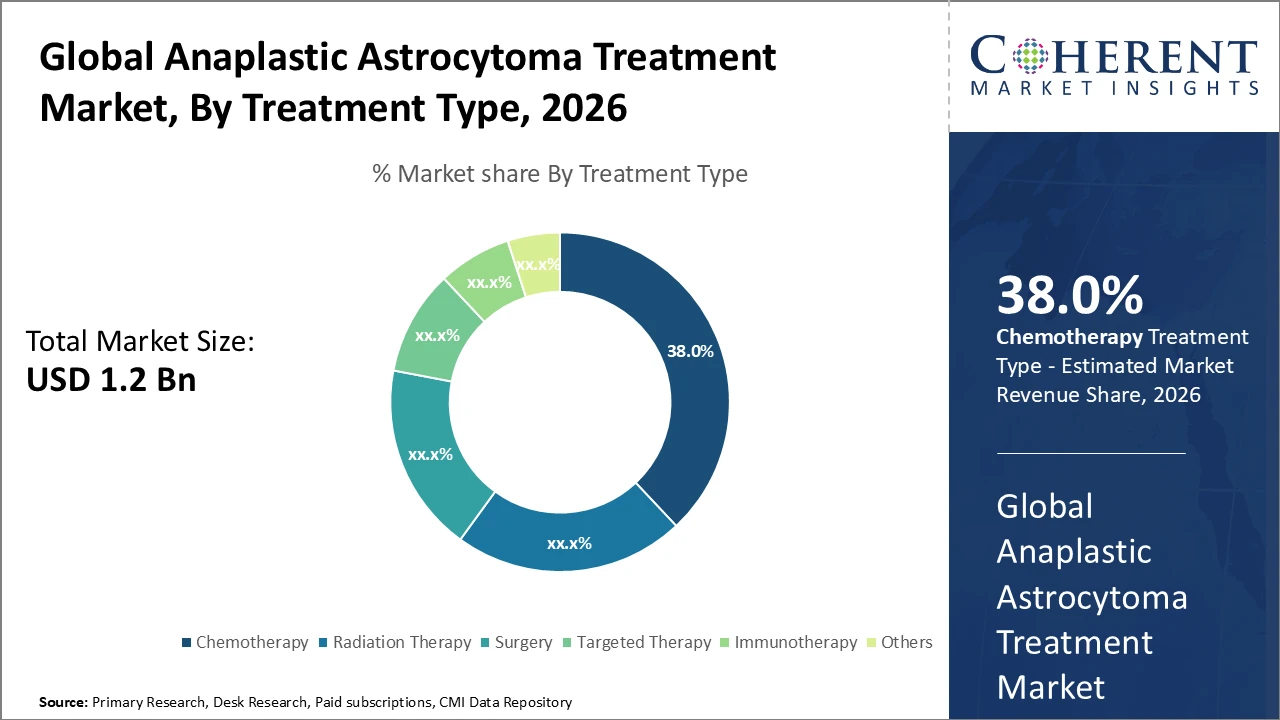
The chemotherapy segment dominates the treatment modality landscape with 38% market share, driven by temozolomide usage and clinical advancements improving survival rates.
Immunotherapy is the fastest-growing segment, fueled by breakthroughs in checkpoint inhibitors that enhance treatment outcomes.
Alkylating agents continue to show strong demand among drug classes, while kinase inhibitors are seeing rapid adoption.
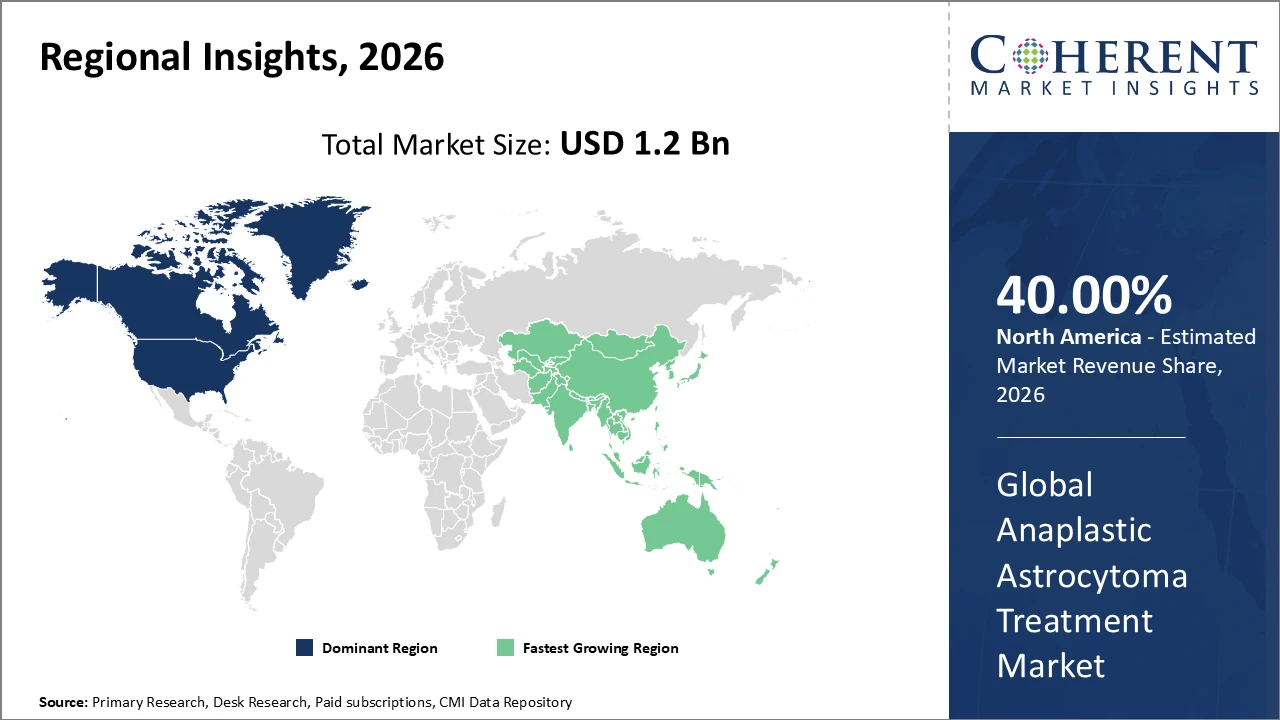
North America leads regional market share, accounting for over 40% of revenue, supported by advanced healthcare infrastructure and extensive clinical research.
Asia Pacific is the fastest-growing region, with a CAGR exceeding 9% from 2026 to 2033, driven by rising healthcare investments and an expanding patient base.
Anaplastic Astrocytoma Treatment Market Segmentation Analysis
Anaplastic Astrocytoma Treatment Market Insights, By Treatment Type
Chemotherapy dominates the market with 38% share, primarily due to temozolomide-based regimens proven to extend patient survival. Continuous clinical advancements and broader adoption across developed and emerging markets support its sustained growth. Immunotherapy is the fastest-growing subsegment, driven by immune checkpoint inhibitors improving progression-free survival and reducing relapse. Radiation therapy continues to play a key role, with precision-focused techniques enhancing efficacy. Surgery maintains stable demand, aided by minimally invasive innovations, while targeted therapy is gradually gaining traction, fueled by integration with molecular diagnostics that enable personalized treatment approaches, expanding the therapeutic landscape for anaplastic astrocytoma.
Anaplastic Astrocytoma Treatment Market Insights, By End User
Hospitals and clinics dominate the anaplastic astrocytoma treatment market, capturing the majority of the share due to their advanced infrastructure and ability to deliver complex therapies, including chemotherapy, radiotherapy, and surgical interventions. Ambulatory surgery centers are the fastest-growing subsegment, driven by cost-effective, patient-friendly outpatient chemotherapy services and shorter recovery times. Specialty neuro-oncology centers are increasingly important, serving as hubs for cutting-edge treatments and clinical trial participation, facilitating early adoption of novel therapies. Other end users include diagnostic and rehabilitation centers, which provide supportive care and post-treatment monitoring, contributing to comprehensive patient management across the treatment continuum.
Anaplastic Astrocytoma Treatment Market Insights, By Drug Class
Alkylating agents hold the largest market share, largely due to their established efficacy, with temozolomide serving as the cornerstone of anaplastic astrocytoma treatment protocols. Checkpoint inhibitors represent the fastest-growing segment, reflecting a shift toward immunotherapy, bolstered by recent FDA approvals in 2025 of novel agents that enhance antitumor immune responses. Monoclonal antibodies and kinase inhibitors are experiencing steady growth, driven by ongoing advancements in biologics and targeted molecular therapies. These innovations expand treatment options, improve patient-specific outcomes, and diversify the therapeutic landscape, supporting long-term market expansion across both developed and emerging regions globally.
Anaplastic Astrocytoma Treatment Market Trends
Advancements in molecular profiling and AI-assisted diagnostics are transforming the market, enabling more personalized anaplastic astrocytoma therapies.
In 2025, several European clinical centers reported a 15% improvement in patient survival due to adoption of these technologies.
Immunotherapy integration is rapidly increasing, with global clinical trial enrollments rising by 30%, reflecting heightened focus on immune-based treatments.
These innovations are enhancing clinical decision-making, improving treatment precision, and supporting faster adoption of advanced therapies.
Overall, technology-driven personalization and immunotherapy adoption are key factors accelerating market revenue growth.
Anaplastic Astrocytoma Treatment Market Insights, By Geography
North America Anaplastic Astrocytoma Treatment Market Analysis and Trends
In North America, the anaplastic astrocytoma treatment market is dominated by advanced healthcare infrastructure, extensive clinical research capabilities, and early adoption of innovative therapies. The region accounts for over 40% of the global market share in 2026, supported by well-established neuro-oncology centers and robust government funding programs promoting cancer care. Pharmaceutical and biotech companies actively conduct clinical trials and launch novel treatment options, while progressive insurance and reimbursement frameworks facilitate patient access to therapies. Strong collaborations between hospitals, research institutes, and industry players further accelerate treatment adoption, making North America a critical hub for market growth and innovation in this segment.
Asia Pacific Anaplastic Astrocytoma Treatment Market Analysis and Trends
The Asia Pacific region is witnessing the fastest growth in the anaplastic astrocytoma treatment market, with a CAGR exceeding 9%, fueled by expanding healthcare infrastructure, rising prevalence of brain tumors, and supportive government policies promoting oncology care. Countries such as China and India are implementing initiatives to enhance access to advanced cancer treatments, including subsidized therapies and establishment of specialized neuro-oncology centers. Additionally, increasing investments in diagnostic facilities and clinical research are improving early detection and personalized treatment adoption. These factors collectively drive market expansion, making the region a critical growth hub for both domestic and multinational pharmaceutical companies.
Anaplastic Astrocytoma Treatment Market Outlook for Key Countries
USA Anaplastic Astrocytoma Treatment Market Analysis and Trends
The USA represents a major share of the North American anaplastic astrocytoma treatment market, driven by heightened patient awareness, advanced healthcare infrastructure, and strong R&D initiatives. Between 2024 and 2026, over USD 400 million was invested in clinical trials, facilitating the development and launch of breakthrough therapies. Supportive regulatory frameworks and comprehensive reimbursement policies have accelerated market adoption, enabling faster patient access to novel treatment options. Additionally, collaborations between leading pharmaceutical companies, research institutes, and neuro-oncology centers have strengthened clinical capabilities, solidifying the USA’s position as a central driver of global market growth in anaplastic astrocytoma therapies.
Germany Anaplastic Astrocytoma Treatment Market Analysis and Trends
Germany’s anaplastic astrocytoma treatment market is characterized by advanced healthcare infrastructure, high clinical research activity, and early adoption of innovative therapies. Hospitals and specialized neuro-oncology centers drive the majority of market demand, leveraging precision surgery, advanced radiotherapy, and chemotherapy protocols. In 2025, several German clinics reported improved patient outcomes due to integration of molecular profiling and personalized treatment strategies. The market is also influenced by favorable government healthcare policies and reimbursement frameworks supporting novel drug adoption. Additionally, partnerships between pharmaceutical companies and research institutes facilitate clinical trials and accelerate access to emerging immunotherapies and targeted treatments, sustaining steady market growth.
Analyst Opinion
Rising adoption of targeted therapy and immunotherapy drives market growth, with 2024 clinical data showing a 20% increase in temozolomide combined with bevacizumab usage, enhancing patient survival and expanding market revenue. Advanced modalities are increasingly preferred in North America and Europe, reflecting a shift toward personalized medicine.
Increasing brain tumor incidence due to environmental and genetic factors intensifies treatment demand. The U.S. reported a 3.2% annual rise in brain tumor diagnoses between 2024 and 2026, directly impacting oncology market growth strategies in diagnostics and therapeutics.
Higher healthcare expenditure and government initiatives improve neuro-oncology infrastructure. In 2025, investments in Asia Pacific enhanced access to advanced treatment facilities, especially in China and India, boosting market revenue.
Pricing dynamics and reimbursement policies significantly influence the market. By 2026, favorable schemes in countries like the U.S. improved affordability and uptake of advanced therapies, supporting growth and market share retention in emerging markets.
- Current Industry Events of 2026
- Market Size Estimation
- Regional Breakdown
- Competitive Landscape
- Customer Intelligence
- Segmental Analysis
- Pricing Analysis
- Key Market Drivers, Challenges & Future Trends
- Customized Insights Section
Market Scope
| Report Coverage | Details | ||
|---|---|---|---|
| Base Year: | 2025 | Market Size in 2026: | USD 1.2 billion |
| Historical Data for: | 2020 To 2024 | Forecast Period: | 2026 To 2033 |
| Forecast Period 2026 to 2033 CAGR: | 7.5% | 2033 Value Projection: | USD 2.0 billion |
| Geographies covered: |
| ||
| Segments covered: |
| ||
| Companies covered: | Novartis AG, Roche Holding AG, Merck & Co., Pfizer Inc., AstraZeneca, Biogen Inc., Eli Lily and Company, AbbVie Inc., Johnson & Johnson, GlaxoSmithKline plc | ||
| Growth Drivers: |
| ||
Anaplastic Astrocytoma Treatment Market Growth Factors
The anaplastic astrocytoma treatment market is propelled by growing patient awareness and advancements in diagnostic technologies, enabling earlier and more precise interventions. The rise of precision medicine drives adoption of targeted therapies and immunotherapies, with 2026 studies showing a 25% improvement in progression-free survival using novel agents. Strong government funding and supportive reimbursement frameworks, particularly in North America, facilitate research investment and therapy accessibility. Additionally, the increasing number of clinical trials in Europe and Asia Pacific focusing on innovative treatment options underscores robust pipeline potential, further fueling market growth and reinforcing long-term expansion opportunities across regions.
Anaplastic Astrocytoma Treatment Market Development
In 2025, Novocure advanced the treatment landscape for anaplastic astrocytoma by expanding the use of its Tumor Treating Fields (TTF) therapy in combination with standard chemotherapy. Clinical trials demonstrated improved progression-free survival rates, leading to broader adoption in major oncology centers across Europe and North America. This development highlighted the growing role of non-invasive, device-based therapies as adjuncts to conventional treatment regimens.
Key Players
Leading Companies of the Market
Novartis AG
Roche Diagnostics
Merck & Co.
Pfizer Inc.
AstraZeneca
Biogen Inc.
Eli Lily and Company
AbbVie Inc.
Johnson & Johnson
GlaxoSmithKline plc
Several market players have pursued strategic collaborations and innovations to strengthen their market positions. For instance, in 2025, Merck partnered with leading oncology centers to accelerate the adoption of checkpoint inhibitors, resulting in a 15% revenue increase within a year. Concurrently, Novartis introduced advanced drug delivery technologies that improved the bioavailability of its therapies by 18%, enhancing treatment efficacy and patient outcomes. These initiatives highlight how alliances and technological advancements are key drivers in the anaplastic astrocytoma treatment market, enabling companies to expand their global footprint and reinforce competitive advantage.
Anaplastic Astrocytoma Treatment Market Future Outlook
The Anaplastic Astrocytoma Treatment market is poised for significant growth driven by advancements in precision medicine and targeted therapies. Emerging modalities, including immunotherapy, gene therapy, and personalized chemotherapy regimens, are expected to enhance patient outcomes while minimizing adverse effects. Integration of artificial intelligence in treatment planning and advanced imaging for surgical guidance will improve diagnostic accuracy and therapy effectiveness. Additionally, expanding clinical trials and increasing healthcare expenditure in developed and emerging regions will accelerate adoption. With rising awareness and supportive regulatory frameworks, the market is projected to witness steady growth, offering new opportunities for innovative therapeutic solutions and improved patient care.
Anaplastic Astrocytoma Treatment Market Historical Analysis
Historically, the Anaplastic Astrocytoma Treatment market has evolved from primarily surgical interventions to multimodal approaches combining surgery, radiotherapy, and chemotherapy. In the early 2000s, maximal safe resection was the cornerstone, with radiation therapy introduced to improve survival outcomes. Chemotherapeutic agents such as temozolomide gained prominence in the 2010s, providing enhanced tumor control and better tolerability. Over the past decade, research has increasingly focused on targeted therapies and molecularly guided treatments, reflecting a shift toward personalized medicine. These developments, alongside improved diagnostic imaging and supportive care measures, have collectively shaped the current landscape of treatment options for anaplastic astrocytoma.
Sources
Primary Research Interviews:
Neuro-oncologists, neurosurgeons, and radiation oncologists directly involved in anaplastic astrocytoma diagnosis and treatment.
Hospital administrators, oncology department managers, and procurement specialists responsible for acquiring advanced treatment devices and therapies.
Product managers, clinical researchers, and regulatory experts from companies developing chemotherapy, targeted therapy, immunotherapy, and surgical devices for brain tumors.
Magazines:
Oncology Times – Updates on cancer treatments, clinical studies, and market trends.
Brain & Spine Oncology Review – Insights into neuro-oncology procedures and innovations.
Cancer Therapy Advisor – Focus on drug therapies, clinical trials, and treatment guidelines.
Journals:
Neuro-Oncology – Studies on gliomas, treatment efficacy, and clinical trials.
Journal of Neuro-Oncology – Research on brain tumor management and therapeutic interventions.
Clinical Cancer Research – Investigations on novel therapies and molecular targets in oncology.
Newspapers:
The Financial Times – Global healthcare industry trends and investments in oncology.
Reuters – Updates on drug approvals, innovations, and market expansion in neuro-oncology.
Bloomberg – Market performance, corporate strategies, and oncology sector developments.
Associations:
American Association of Neurological Surgeons – Guidelines, research, and clinical standards in neuro-oncology.
Society for Neuro-Oncology – Research, conferences, and treatment updates for brain tumors.
International Agency for Research on Cancer – Standards, epidemiology, and global cancer treatment data.
Get access to 250+ pages report
Every segment, forecast, competitor profile and data table behind the analysis above — available for instant download.
- ESOMAR Member
- ISO 9001:2015 Certified
- D-U-N-S Registered
- GDPR & CCPA Compliant
Missing comfort of reading report in your local language? Find your preferred language:
Transform your Strategy with Exclusive Trending Reports
Frequently Asked Questions
The market is led by Novartis AG, Roche Holding AG, Merck & Co., Pfizer Inc., all of which maintain extensive oncology portfolios and active development pipelines.
The market is projected to grow from USD 1.2 billion in 2026 to USD 2.0 billion by 2033, registering a CAGR of 7.5%.
Hospitals and clinics dominate usage, while ambulatory surgery centers are rapidly gaining adoption due to the convenience of outpatient therapies.
Expansion in targeted therapies, AI-assisted diagnostics, and combination immunotherapies will be the primary growth drivers shaping market evolution.
The competitive landscape is marked by continuous innovation in drug delivery and combination therapies, with challenges including high treatment costs and complex regulatory requirements.
Companies focus on collaborations with research centers, expansion into emerging markets, and patient access programs to drive adoption and revenue growth.