

Glycosylated Peptide Market Size and Share Analysis - 2026 To 2033
The global glycosylated peptide market size is expected to reach USD 11,675.31 Mn in 2026 and is projected to grow at a CAGR of 8.6% during the forecast period (2026-2033), surpassing USD 20,800.92 Mn by 2033. This growth is attributable to increasing demand for peptide-based therapeutics, rising prevalence of chronic diseases like cancer and diabetes, and growing adoption of glycopeptides in drug discovery and vaccine development. According to the WHO, cancer is a leading global cause of death, responsible for nearly 10 Mn deaths in 2024—about one in six worldwide.
Key Takeaways from the Glycosylated Peptide Market Report
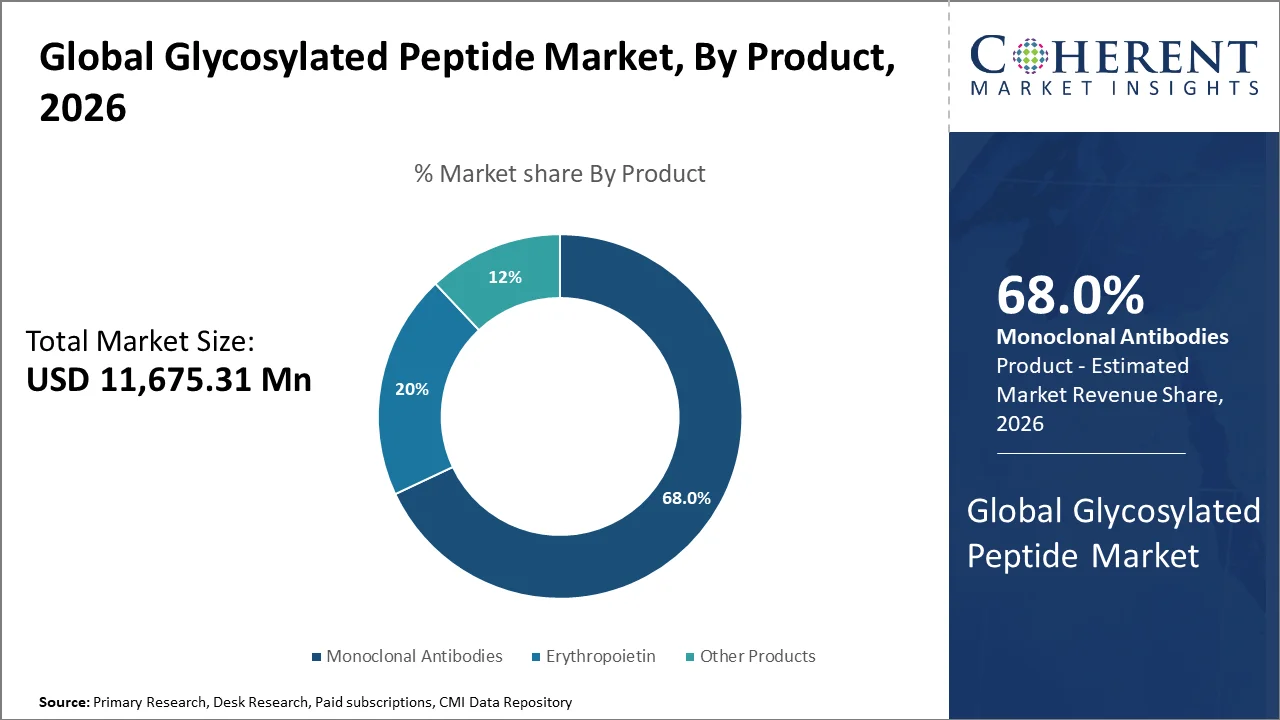
- Monoclonal antibodies are expected to lead the market with a share of 68% in 2026 due to their wide use in cancer, autoimmune, and inflammatory diseases as well as the large number of approved glycosylated antibody therapies. For example, a 2025 review published in Nature Reviews Immunology reported that more than 212 antibody therapeutics have been approved worldwide.
- Hospital pharmacies are slated to account for the largest market share of 61.8% in 2026 because glycosylated peptide therapies are mainly prescription biologics provided through hospitals and specialty care centers.
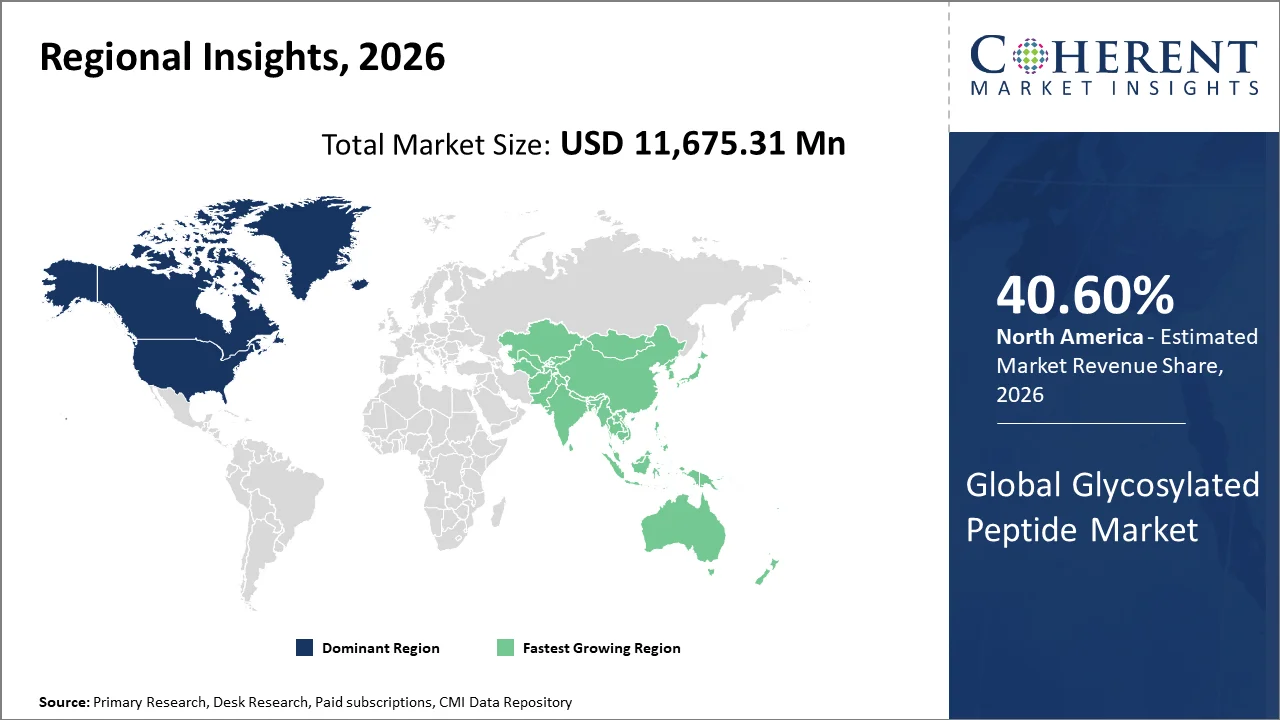
- North America is projected to dominate the global glycosylated peptide industry with a share of 40.60% in 2026 due to its strong biopharmaceutical industry, high biologics use, and increasing R&D investment. For example, according to thesupporting the development of biologics, including glycosylated peptides.
- Asia Pacific, registering a CAGR of 10.8% , is poised to emerge as the fastest-growing market for glycosylated peptides during the forthcoming period, thanks to expanding biopharmaceutical manufacturing capacity, rising chronic disease burden as well as supportive government policies. For example, in 2026, the Government of India launched the ₹10,000 crore 'Biopharma Manufacturing Shakti' initiative to strengthen domestic biopharmaceutical manufacturing and biologics production.
Glycosylated Peptide Market Overview
The global glycosylated peptide market is poised to exhibit strong growth during the forecast period. This can be attributed to increasing popularity of glycopeptide-based therapeutics, increasing investments in biopharmaceutical research, and growing applications of glycosylated peptides in drug discovery, vaccine development, and cancer immunotherapy.
Advancements in glycoproteomics, peptide synthesis technologies, and analytical techniques such as mass spectrometry are also supporting market expansion. In addition, increasing prevalence of chronic diseases, including cancer, autoimmune disorders, and infectious diseases, is driving the need for targeted and effective peptide-based therapies, thereby fueling the growth of the global glycosylated peptide market.
Peptide drugs are promising therapeutic agents used for the treatment of several diseases due to their high activity, target specificity, low toxicity as well as minimal drug–drug interactions. However, limitations such as poor membrane permeability, enzymatic degradation, and low oral bioavailability restrict their clinical application.
Glycosylation of peptides is an effective approach to improve the physicochemical properties, stability, bioactivity, and pharmacokinetic profile of peptide drugs. Glycosylation mainly occurs through N-linked and O-linked pathways and can enhance therapeutic performance by improving selectivity and prolonging drug half-life. These advantages of glycosylated peptides over conventional peptide drugs are supporting the growth of the glycosylated peptide market.
For instance, Amgen’s Aranesp (darbepoetin alfa), a glycosylated recombinant protein with five N-linked oligosaccharide chains, has an approximately three-fold longer half-life than Epogen (epoetin alfa), which contains three N-linked oligosaccharide chains. Furthermore, increasing product approvals, strategic collaborations, and expanding therapeutic applications of glycosylated peptides are expected to drive market growth.
Increasing investments by pharmaceutical companies, biotechnology firms, and research institutions in peptide therapeutics and glycoproteomics are accelerating innovation and commercialization opportunities. In addition, growing research in cancer therapies, immune response modulation, and next-generation biologics is creating new opportunities for glycosylated peptide therapeutics and related applications.
Segmental Insights
Which Product Dominates the Global Glycosylated Peptide Market?
Monoclonal Antibodies Lead the Market with Over Two-Thirds Share
According to Coherent Market Insights’ latest glycosylated peptide market analysis, monoclonal antibodies are set to lead the market, accounting for a revenue share of 68% in 2026. This dominance can be attributed to their widespread use in the treatment of cancer, autoimmune diseases, and infectious disorders as well as their proven clinical efficacy and safety. Autoimmune diseases affect an estimated 5–10% of people in industrialized countries.
Most therapeutic monoclonal antibodies are glycoproteins, making glycosylated peptide analysis essential for monitoring glycosylation patterns, ensuring product quality, and meeting regulatory requirements. Growing investments in biopharmaceutical research, increasing approvals of antibody-based therapies, and rising demand for biosimilars are also driving adoption of monoclonal antibodies.
According to a review article published in Pharmaceuticals in 2025, the U.S. FDA approved 16 biologicals in 2024, out of which 13 were monoclonal antibodies. Approvals for drugs in oncology, Alzheimer's disease, atopic dermatitis, and autoimmune diseases show that there is increasing application of antibody drugs. This also emphasizes the importance of glycosylation of peptides.
- Current Industry Events of 2026
- Market Size Estimation
- Regional Breakdown
- Competitive Landscape
- Customer Intelligence
- Segmental Analysis
- Pricing Analysis
- Key Market Drivers, Challenges & Future Trends
- Customized Insights Section
Which Distribution Channel Accounts for the Largest Market Share?
Hospital Pharmacies to Account for Over Three-Fifths of Market Share in 2026
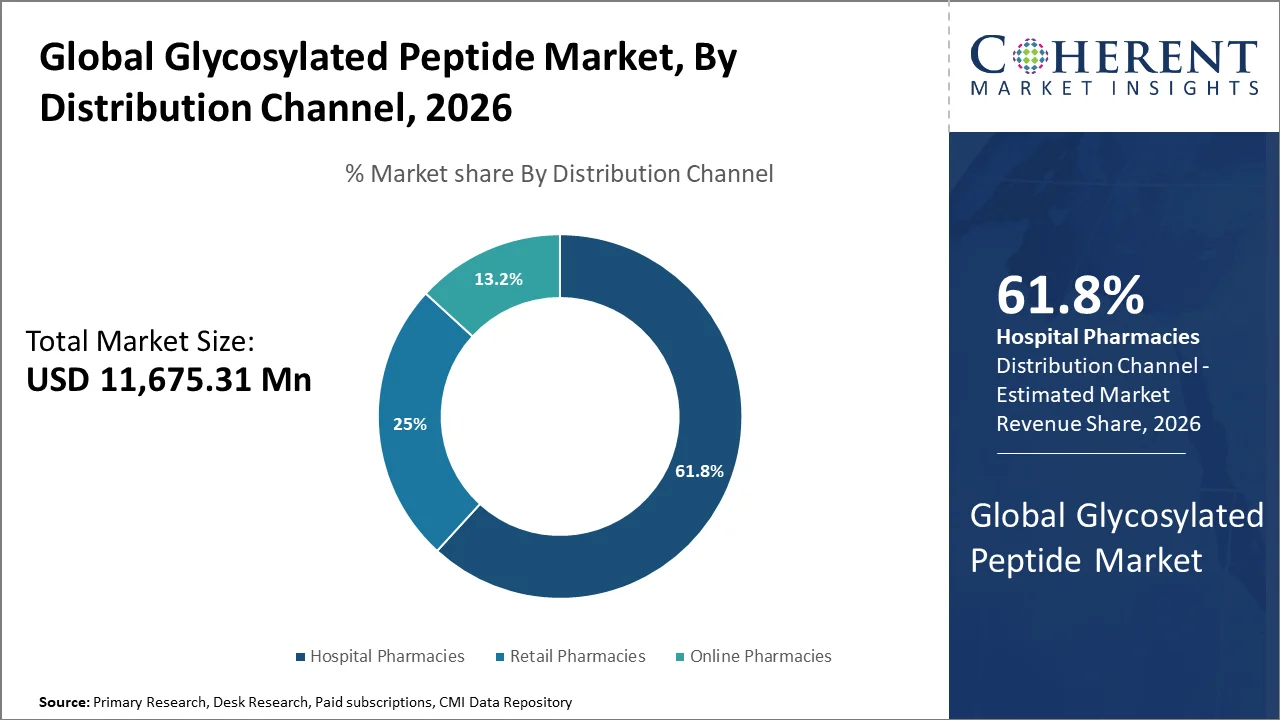
Based on distribution channel, hospital pharmacies are projected to account for the largest market share of 61.8% in 2026. This is mostly due to increasing use of glycosylated peptide therapies in hospital settings, where patients receive specialized treatment under the supervision of healthcare professionals.
Hospital pharmacies ensure proper storage, handling, and administration of these advanced therapeutics while enabling close monitoring of treatment outcomes and adverse reactions. In addition, growing number of hospital-based infusion centers, rising diagnosis of chronic and rare diseases, and increasing availability of biologics and peptide-based therapies through hospitals are expected to boost segment growth during the forecast period.
Glycosylated Peptide Market Growth Drivers
Increasing Demand for Biologics and Targeted Therapies
Rising adoption of biologics and targeted therapies is providing strong impetus for the growth of glycosylated peptide market. For instance, Insilico demonstrated the potential of generative biologics by designing over 5,000 novel GLP1R-targeting peptides within 72 hours using its Biology42 platform, without relying on known GLP1R binders. Monoclonal antibodies, erythropoietin, and other glycosylated biologics are gaining popularity worldwide due to their ability to enhance therapeutic effectiveness, improve stability, and support targeted treatment approaches. Growing use of these advanced therapies is expected to propel demand for glycosylated peptides during the forecast period.
Glycosylated Peptide Market Opportunities
Rising Prevalence of Chronic Diseases
Increasing incidence of chronic diseases is expected to create significant growth opportunities for the glycosylated peptide market in the coming years. There is a spike in cases of cancer, diabetes, autoimmune disorders, and other chronic conditions. For instance, the . This rising disease burden is creating demand for innovative peptide-based therapeutics. Glycosylated peptides offer improved stability, bioavailability, and therapeutic performance, supporting their adoption in drug development.
Glycosylated Peptide Market Trends
Advancements in Glycosylation Technologies
Improvements in recombinant DNA technology, enzymatic glycosylation, and peptide synthesis techniques are enabling more efficient production of glycosylated peptides with enhanced quality, stability, and consistency. These technological advancements are expected to support growth of glycosylated peptide market during the forthcoming period.
For instance, in 2025, researchers developed GLYCO-BUILD, an enzymatic pipeline that enables the synthesis of glycopeptides carrying defined eukaryotic N-glycans with high homogeneity. The platform improves control over glycosylation patterns as well as supports the production of customized glycopeptides for therapeutic and diagnostic applications, highlighting the growing role of advanced glycosylation technologies in biopharmaceutical development.
Current Events and Their Impact on the Glycosylated Peptide Market
Current Event | Description and its Impact |
WHO Adds GLP-1 Medicines to Essential Medicines List (2025) |
|
FDA Approved Four New TIDES Drugs in 2025 |
|
Regional Insights
North America Remains at the Epicenter of Glycosylated Peptide Market Growth
North America is expected to dominate the global glycosylated peptide market with a 40.60% share in 2026. This is attributable to strong presence of biopharmaceutical companies, rising adoption of biologics and targeted therapies, and increasing investment in peptide-based drug development. Growing demand for glycosylated biologics, including monoclonal antibodies and recombinant proteins, is also supporting market expansion in the region.
Increasing prevalence of chronic diseases like cancer, diabetes, and autoimmune disorders is playing a key role in boosting growth of North America glycosylated market. For instance, according to the highlighting the growing need for advanced targeted therapies and biologics. This rising disease burden is expected to fuel demand for innovative glycosylated peptide therapeutics.
Asia Pacific to Become Central Hub for Industry Players
Asia Pacific glycosylated peptide market is projected to record the highest CAGR of 10.8% during the forecast period. This is attributed to increasing biopharmaceutical manufacturing capacity, rising healthcare expenditure, growing prevalence of chronic diseases, and improving access to advanced therapies across countries such as China, India, and Japan.
Rising burden of chronic diseases is a key factor fueling demand for glycosylated peptide therapies in Asia Pacific. According to the creating a strong need for advanced biologic treatments like glycosylated peptide-based medicines across the region.
Glycosylated Peptide Market Outlook – Country-wise
U.S. Glycosylated Peptide Market Trends
The United States is expected to remain a leading market for glycosylated peptides during the forecast period. This is mainly due to increasing adoption of advanced biologic therapies, strong presence of biopharmaceutical companies, and growing investment in peptide-based drug development. Rising prevalence of cancer, diabetes, and autoimmune disorders is also driving demand for targeted therapies. More than 40 million Americans (12% of the population) have diabetes, including over 2 million with type 1 diabetes. Likewise, advancements in recombinant protein production and glycosylation technologies are supporting the development of more effective and stable peptide therapeutics.
China Glycosylated Peptide Market Forecast
The glycosylated peptide market in China is expected to grow rapidly during the assessment period. This can be attributed to booming biopharmaceutical industry, increasing healthcare expenditure, and rising demand for innovative treatments for chronic diseases. Government support for biotechnology research, growing adoption of biologics, and increasing investments by domestic pharmaceutical companies in peptide drug development are also expected to boost market growth in China during the assessment period.
Who are the Major Companies in the Glycosylated Peptide Market?
Some of the major players in glycosylated peptide market are Pfizer Inc., Teva Pharmaceutical Industries Ltd., Bachem Holding AG, GlyTech, Inc., Sussex Research Laboratories Inc., Samsung Bioepis, and Celltrion Inc.
Key Strategies Adopted by Industry Players
Leading manufacturers of glycosylated peptides are adopting various organic and inorganic strategies to boost their revenue as well as gain a competitive edge in the industry. These include new product launches and approvals, increasing investments in R&D, clinical trials, partnerships, mergers and acquisitions, and distribution agreements.
- In July 2026, Samsung Bioepis Co., Ltd. and Organon expanded their development and commercialization agreement to commercialize a new biosimilar in Australia. The agreement aims to expand access to biosimilar medicines in the Australian market.
- In January 2026, Celltrion Inc. presented its drug development pipeline and U.S. manufacturing and R&D expansion plans at the 44th Annual J.P. Morgan Healthcare Conference. The company also received U.S. FDA IND approval for CT-P72, a tetravalent bispecific antibody.
Market Report Scope
Glycosylated Peptide Market Report Coverage
| Report Coverage | Details | ||
|---|---|---|---|
| Base Year: | 2025 | Market Size in 2026: | USD 11,675.31 Mn |
| Historical Data for: | 2020 To 2024 | Forecast Period: | 2026 To 2033 |
| Forecast Period 2026 to 2033 CAGR: | 8.6% | 2033 Value Projection: | USD 20,800.92 Mn |
| Geographies covered: |
| ||
| Segments covered: |
| ||
| Companies covered: | Pfizer Inc., Teva Pharmaceutical Industries Ltd., Bachem Holding AG, GlyTech, Inc., Sussex Research Laboratories Inc., Samsung Bioepis, and Celltrion Inc. | ||
| Growth Drivers: |
| ||
| Restraints & Challenges: |
| ||
Analyst Opinion (Expert Opinion)
- Glycosylated peptides are becoming more important in disease research. Changes in protein glycosylation are linked with cancer, autoimmune disorders, and neurological diseases, making glycosylated peptides valuable for biomarker discovery and precision medicine. This is increasing demand for advanced glycoproteomics tools and research services. Higher research activity is expected to support steady demand for glycosylated peptide products and analytical technologies.
- Mass spectrometry is improving glycopeptide analysis. New workflows are enabling faster and more accurate identification and quantification of glycosylated peptides, allowing researchers to study complex biological samples with greater confidence. Better analytical performance is encouraging wider adoption of glycosylated peptides in life science and pharmaceutical research.
- More than 50% of human proteins are glycosylated, highlighting the importance of this field. Because glycosylation affects a large share of proteins involved in normal body functions and disease, demand for glycopeptide analysis continues to grow in biomedical research.
- Research funding and innovations keep growing. Governmental organizations and research institutes are spending money on developing new technologies that would help better understand glycosylated peptides and their function within diseases. Innovations will allow companies working with the market of glycosylated peptides to enhance the performance of products and discover new opportunities.
Speak to the analyst
Want personalized insights?
Take the findings above to one of our principal consultants, or have the report rebuilt around the segments, geographies and competitors you actually track.
Market Segmentation
- By Product Insights ( Revenue, USD Mn, 2021 - 2033)
- Monoclonal Antibodies (mAbs)
- Erythropoietin (EPO)
- Other Products
- By Distribution Channel Insights ( Revenue, USD Mn, 2021 - 2033)
- Hospital Pharmacies
- Retail Pharmacies
- Online Pharmacies
- By Region Insights ( Revenue, USD Mn, 2021 - 2033)
- North America
- U.S.
- Canada
- Latin America
- Brazil
- Argentina
- Mexico
- Rest of Latin America
- Europe
- Germany
- U.K.
- Spain
- France
- Italy
- Russia
- Rest of Europe
- Asia Pacific
- China
- India
- Japan
- Australia
- South Korea
- ASEAN
- Rest of Asia Pacific
- Middle East
- GCC Countries
- Israel
- Rest of Middle East
- Africa
- South Africa
- North Africa
- Central Africa
Sources
Primary Research Interviews
- Glycopeptide manufacturers and suppliers
- Biopharmaceutical company executives
- Pharmaceutical R&D scientists
- Glycoproteomics researchers
- Academic experts in peptide chemistry
- Clinical research organizations (CROs)
- Biotechnology company product managers
- Regulatory affairs specialists
- Hospital laboratory professionals
- Distributors and procurement managers
Databases
- PubMed
- PubChem
- UniProt
- Protein Data Bank (PDB)
- ClinicalTrials.gov
- European Medicines Agency (EMA) Database
- U.S. Food and Drug Administration (FDA) Database
- NIH RePORTER
- Scopus
- Google Scholar
Magazines
- Genetic Engineering & Biotechnology News (GEN)
- Drug Discovery World
- Pharmaceutical Technology
- European Pharmaceutical Review
- BioPharm International
Journals
- Journal of Proteome Research
- Glycobiology
- Journal of Peptide Science
- Analytical Chemistry
- Nature Biotechnology
- Biotechnology Advances
- Molecular & Cellular Proteomics
- ACS Chemical Biology
- Frontiers in Molecular Biosciences
- Bioconjugate Chemistry
Newspapers
- BioWorld
- Fierce Biotech
- Endpoints News
- The Wall Street Journal
- Financial Times
Associations
- American Society for Biochemistry and Molecular Biology (ASBMB)
- Human Proteome Organization (HUPO)
- American Peptide Society (APS)
- European Peptide Society (EPS)
- International Society for Glycoconjugate Research (ISGR)
- American Association of Pharmaceutical Scientists (AAPS)
- Biotechnology Innovation Organization (BIO)
Public Domain Sources
- U.S. Food and Drug Administration (FDA)
- European Medicines Agency (EMA)
- National Institutes of Health (NIH)
- National Center for Biotechnology Information (NCBI)
- World Health Organization (WHO)
- Organisation for Economic Co-operation and Development (OECD)
- European Commission
- ClinicalTrials.gov
- U.S. Patent and Trademark Office (USPTO)
- World Intellectual Property Organization (WIPO)
Proprietary Elements
- CMI Data Analytics Tool
- Proprietary CMI Existing Repository of information for last 10 years
Get access to 250+ pages report
Every segment, forecast, competitor profile and data table behind the analysis above — available for instant download.
- ESOMAR Member
- ISO 9001:2015 Certified
- D-U-N-S Registered
- GDPR & CCPA Compliant
Missing comfort of reading report in your local language? Find your preferred language:
Transform your Strategy with Exclusive Trending Reports
Frequently Asked Questions
The global market is estimated to be valued at USD 11,675.31 Mn in 2026.
The global Glycosylated Peptide Market value is expected to reach USD 20,800.92 Mn by 2033.
The global market is poised to exhibit a CAGR of 8.6% from 2026 to 2033.
Major growth factors include increasing adoption of glycoproteomics in biomedical research, rising demand for precision medicine and targeted therapeutics, and advancements in mass spectrometry and peptide analysis technologies.
Monoclonal antibodies are expected to lead the market with a share of 68% in 2026.
Some major companies in the glycosylated peptide market include Pfizer Inc., Teva Pharmaceutical Industries Ltd., Bachem Holding AG, GlyTech, Inc., Sussex Research Laboratories Inc., Samsung Bioepis, and Celltrion Inc.
North America, with a 40.60% share in 2026, is set to lead the market during the forecast period.