

Schistosomiasis Treatment Market Size and Forecast — 2026-2033
The Schistosomiasis Treatment Market size is estimated to be valued at USD 1.68 billion in 2026 and is expected to reach USD 2.60 billion by 2033, exhibiting a compound annual growth rate (CAGR) of 6.4% from 2026 to 2033.
Schistosomiasis is a disease caused by infection with freshwater parasitic worms. It can be acute or chronic infection mainly caused by parasitic worm’s blood flukes (trematode worms). There are two forms of schistosomiasis, such as intestinal and urogenital. According to the World Health Organization (WHO) reports in 2017, urogenital schistosomiasis is a high risk factor for the transmission of HIV infection in women. People usually get infected during agriculture, domestic, and occupational activities, which exposes them to infected water resulting into immune reactions. Symptoms in intestinal schistosomiasis infected patient shows various symptoms such as, abdominal pain, diarrhea, liver and spleen enlargement, fibrosis of the bladder, and progressive damage of kidney.
Other chronic symptoms include blood in stool, blood in urea, genital lesions, nodules in vulva, seizures, paralysis, seminal vesicle, and vaginal bleeding. This symptom could result into urogenital related schistosomiasis complications, such as bladder cancer, and long term irreversible consequences such as infertility. According to the World Health Organization (WHO), around 218 million people required preventive treatments for schistosomiasis and more than 66.5 million people were reported as treated for schistosomiasis in the same year. Further, WHO states that the transmission of schistosomiasis was reported in 78 countries. Schistosomiasis treatment is a major concern due to lack of proper medication and vaccination. Preventive chemotherapy for schistosomiasis includes praziquantel, metrifonate, and oxamniquine.
Key Takeaways
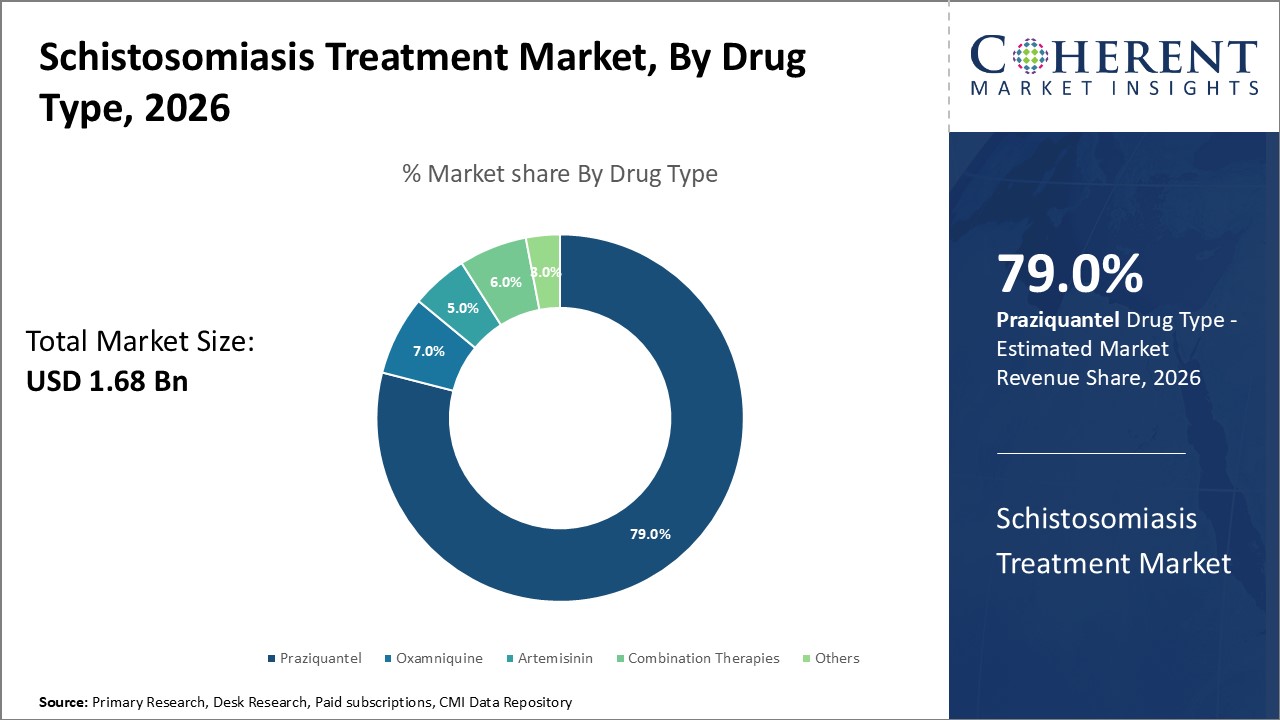
Praziquantel dominates drug type with 79% share driven by its cost-effectiveness and proven efficacy, while hospital pharmacies lead distribution channel with 49% share owing to better drug availability and compliance.
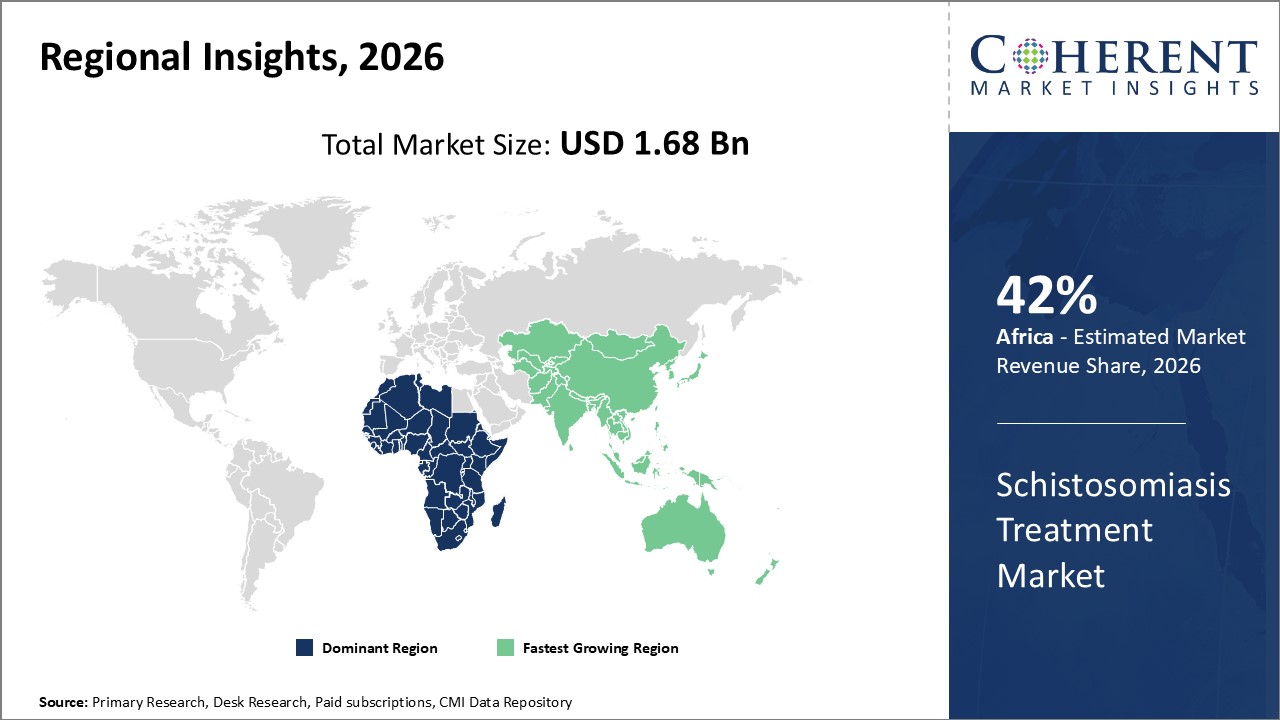
Africa commands the largest market share of 42%, primarily due to endemic prevalence and significant government-led mass drug administration programs. Asia Pacific exhibits the fastest CAGR of 7.1%, attributed to expanding healthcare infrastructure and rising disease awareness.
The market outlook reflects a growing integration of innovative therapies such as combination treatments, reinforcing sustainable market growth alongside strategic partnerships particularly in developing economies.
Schistosomiasis Treatment Market – Segmentation Analysis
Schistosomiasis Treatment Market Insights, By Drug Type
In terms of drug type, Praziquantel dominates the market share with 79%, primarily due to its established efficacy, low cost, and widespread acceptance in global treatment programs. Its extensive use in mass drug administration and individual therapy cements its leading position.
Schistosomiasis Treatment Market Insights, By Distribution Channel
In the distribution channels segment, Hospital Pharmacies lead with 48% market share, attributable to better healthcare infrastructure and patient monitoring capabilities in hospital settings. Rapid improvement in hospital availability in developing countries furthers this subsegment’s growth.
Schistosomiasis Treatment Market Insights, By End User
By end user, Hospitals dominate with a 59% market share due to their comprehensive patient care systems, diagnostic support, and their role in administering high volumes of treatment.
Schistosomiasis Treatment Market Trends
A notable shift in the schistosomiasis treatment market is the increasing adoption of combination therapies, addressing growing concerns over drug resistance amplified by monotherapy reliance. Clinical evidence in 2026 demonstrated combination protocols reducing recurrence rates by nearly 12%, pushing manufacturers toward diversified product portfolios.
Additionally, digitization in drug supply management has minimized treatment gaps in remote areas, with mobile health initiatives enhancing patient monitoring in regions like sub-Saharan Africa. Moreover, integration of schistosomiasis treatment with broader parasitic disease control programs represents an emerging trend toward holistic healthcare delivery that reduces operational costs while improving patient outcomes.
Schistosomiasis Treatment Market Insights, By Geography
An Analysis and Trends of the Africa Schistosomiasis Treatment Market
Africa continues to dominate the schistosomiasis treatment industry, accounting for around 42% of the total market. This region's dominance is reinforced by high illness prevalence, especially in Sub-Saharan Africa, as well as strong government mass drug administration campaigns and donor-funded health initiatives. The WHO's and Nigeria's Ministry of Health's joint efforts have greatly increased treatment rates, thereby solidifying Africa's pivotal role.
An Analysis and Trends of the Asia Pacific Schistosomiasis Treatment Market
Growing healthcare infrastructure, government programs aimed at rural healthcare, and growing awareness of the schistosomiasis burden, especially in nations like China, are the main drivers of Asia Pacific's quickest CAGR of 7.1%. In these nations, rising pharmaceutical manufacturing and rapid urbanization are driving further market expansion.
Schistosomiasis Treatment Market Outlook for Key Countries
Market Analysis and Trends for Schistosomiasis Treatment in the United States
Despite having a comparatively low incidence of schistosomiasis, the USA is a key player in pharmaceutical production and market innovation. Cutting-edge R&D facilities support clinical studies and the creation of new treatment candidates. Furthermore, growing numbers of immigrants from endemic areas fuel demand for specialist healthcare services. The USA's dominance in the industry is strengthened by top firms like Pfizer Inc. and Johnson & Johnson, who use their US-based facilities to advance medication development and increase their capacity for international exports.
Market Analysis and Trends for Schistosomiasis Treatment in the Brazil
Brazil’s schistosomiasis treatment market is buoyed by a substantial endemic population particularly in rural states. The government’s aggressive health policies, including integration of schistosomiasis testing in community health programs, have elevated treatment coverage. Pharmaceutical companies operating locally focus on affordable generic Praziquantel production, enhancing reach. Public-private initiatives in Brazil have improved supply chain distribution, making it a critical growth hub in Latin America.
Analyst Opinion
Expanding Treatment Accessibility Enhances Market Revenue: Increased distribution of Praziquantel, the primary drug for schistosomiasis treatment, especially in endemic regions, has propelled market revenue. As per WHO data in 2025, over 120 million treatments were administered globally, boosting demand for treatment drugs and driving industry size.
Diversification of Therapeutic Solutions Spurs Market Growth: The introduction of alternative treatment candidates such as oxamniquine and combination therapies is reshaping the competitive landscape. Clinical trials in 2026 reported a 16% improvement in cure rates with combination regimens, influencing market growth strategies toward innovation adoption.
Rising Prevalence in Emerging Economies Augments Market Share: Countries in Sub-Saharan Africa and Southeast Asia have experienced a surge in infection rates due to inadequate sanitation infrastructure. For instance, Nigeria reported a 3% year-on-year increase in incidence in 2025, increasing the need for widespread treatment programs and expanding the market scope.
Government Initiatives and Funding Amplify Market Dynamics: Enhanced funding from global health organizations and local governments has facilitated mass drug administration (MDA) campaigns. Budget allocations increased by 19% in 2026 compared to the previous year in regions like Brazil and Egypt, fostering growth in both market segments and revenue streams.
- Current Industry Events of 2026
- Market Size Estimation
- Regional Breakdown
- Competitive Landscape
- Customer Intelligence
- Segmental Analysis
- Pricing Analysis
- Key Market Drivers, Challenges & Future Trends
- Customized Insights Section
Market Scope
| Report Coverage | Details | ||
|---|---|---|---|
| Base Year: | 2025 | Market Size in 2026: | USD 1.68 billion |
| Historical Data for: | 2020 To 2024 | Forecast Period: | 2026 To 2033 |
| Forecast Period 2026 to 2033 CAGR: | 6.4% | 2033 Value Projection: | USD 2.60 billion |
| Geographies covered: |
| ||
| Segments covered: |
| ||
| Companies covered: | Merck KGaA, Johnson & Johnson, Sanofi, Novartis AG, Lupin Limited, Cipla Inc., Bayer AG, GlaxoSmithKline plc, Pfizer Inc., Astellas Pharma Inc. | ||
| Growth Drivers: |
| ||
Schistosomiasis Treatment Market Growth factors
Research advancements leading to novel drug trials continue to fuel market growth by addressing drug resistance issues and improving efficacy.
Increasing funding directed toward neglected tropical disease control enabled larger-scale treatment programs, primarily in endemic nations.
Rising awareness about schistosomiasis’ long-term health impacts motivates early treatment adoption, thereby expanding patient base and market revenue.
Additionally, increased collaboration between governments and non-governmental organizations enhances drug distribution networks, overcoming geographic market restraints effectively.
Schistosomiasis Treatment Market Development
In February 2026, On Unguja Island, the second phase of the China-assisted schistosomiasis control pilot project was launched, marking the beginning of a new chapter in health collaboration between Tanzanian and Chinese officials. After the project was successfully implemented on Pemba Island, it was introduced on Unguja Island in front of a number of dignitaries, including officials from the Zanzibar government, representatives from the World Health Organization, and Chinese specialists in the control of schistosomiasis.
In December 2023, Astellas Pharma Inc., a participant in the Pediatric Praziquantel Consortium (Consortium), helped develop a pediatric formulation to treat schistosomiasis. According to the Consortium, arpraziquantel has been approved by the European Medicines Agency's (EMA) Committee for Medicinal Products for Human Use (CHMP) as a treatment for schistosomiasis, a neglected tropical disease, in preschool-aged children (ages three months to six). In accordance with the EU-Medicines for everyone (EU-M4all) *1 procedure for high-priority medications meant for use in non-EU nations, EMA evaluated arpraziquantel. Please refer to the news release from the Consortium for additional information about arpraziquantel.
Key Players
Merck KGaA
Johnson & Johnson
Sanofi
Novartis AG
Lupin Limited
Bayer AG
GlaxoSmithKline plc
Pfizer Inc.
Astellas Pharma Inc.
Increasing production capacity, extending worldwide access through collaborations with health ministries, and funding research for innovative treatments have been the main focuses of competitive strategies.
For instance, Praziquantel supply chains were strengthened by Merck KGaA's strategic partnership with African health ministries, which led to a 20% increase in market penetration in important regions by 2025. Johnson & Johnson gained more market access in Southeast Asia as a result of their emphasis on pediatric formulations, which enhanced patient compliance.
Schistosomiasis Treatment Market Future Outlook
The future outlook for the schistosomiasis treatment market will be shaped by ongoing innovation in drug formulations, increased adoption of combination treatments, and advancements in diagnostic technology that will improve treatment effectiveness and early detection. Government policies, international collaborations, and public health campaigns will drive wider awareness, expanded access, and investment in research to address unmet needs in endemic regions.
Despite challenges such as drug resistance, limited healthcare infrastructure, and funding gaps, the market will gradually advance with a focus on preventive measures, community engagement, and new therapeutic options, which will contribute to steady progress in controlling and treating schistosomiasis globally.
Historical Analysis
According to the World Health Organization (WHO) in 2017, around 92% people required preventive chemotherapy for schistosomiasis in Africa. Around 75% of school-aged children were at risk of morbidity from schistosomiasis and soil-transmitted helminthiasis. Further, 78% of the economies had an epidemic outbreak of schistosomiasis and 52% of those countries required preventive chemotherapy. Also, as per the WHO estimates, globally 207.7 million people required preventive chemotherapy in 2016, among them around 111.8 million were school-aged children. Increasing prevalence in schistosomiasis and its complications was a major driving factor that fueled the growth of the schistosomiasis treatment market in the near future. Lack of hygienic environment and safe drinking water in emerging economies was expected to propel the growth of the schistosomiasis market.
In May 2017, Global Schistosomiasis Alliance organized the world’s Neglected Tropical Diseases (NTDs) program hosted by the World Health Organization (WHO). Many organizations from various economies supported this schistosomiasis control initiative program, which included Chinese Centers for Disease Control and Prevention (CDC), Research for Control and Elimination (SCORE), Swiss Tropical and Public Health Institute, The Federal Ministry of Health Ethiopia (FMHE), and The Ministry of Health (MoH).
According to the University of Nottingham in 2017, researchers discovered the infiltrin protein on a parasitic egg, which might have been responsible for this infectious disease. This discovery was expected to create opportunities for targeted development of vaccination and treatments. Moreover, the College of Science at Oregon State University (OSU) discovered the new protein in Biomphalaria glabrata snail, known as Grctm6 in 2017. Research was in progress to use this protein as a biocontrol agent against schistosomiasis.
Sources
Primary Research interviews:
Parasitologists
Tropical Medicine Doctors
Public Health Officials (Ministries of Health in endemic regions)
Databases:
Global Health Data Exchange (GHDx)
World Health Organization (WHO) Global Health Observatory
United Nations Data
Magazines:
Scientific American
PharmaTimes
Nature Medicine News
Journals:
American Journal of Tropical Medicine and Hygiene
Tropical Medicine & International Health
- International Journal for Parasitology
Newspapers:
The Guardian – Global Health
BBC News – Health
Al Jazeera – Health & Medicine
Associations:
Centers for Disease Control and Prevention (CDC)
Medicines for Malaria Venture (MMV)
Drugs for Neglected Diseases initiative (DNDi)
Get access to 250+ pages report
Every segment, forecast, competitor profile and data table behind the analysis above — available for instant download.
- ESOMAR Member
- ISO 9001:2015 Certified
- D-U-N-S Registered
- GDPR & CCPA Compliant
Missing comfort of reading report in your local language? Find your preferred language:
Transform your Strategy with Exclusive Trending Reports
Frequently Asked Questions
Leading companies include Merck KGaA, Johnson & Johnson, Sanofi, and Novartis AG, who dominate due to extensive product portfolios and global distribution networks.
The market is forecasted to reach USD 2.60 billion by 2033, demonstrating robust growth driven by rising prevalence and enhanced treatment accessibility.
Hospitals represent the largest end user segment with a 59% share, leveraging advanced healthcare infrastructure and patient care capabilities.
The market will see increased adoption of combination therapies and digital health tools for treatment management, along with expanding mass drug administration programs.
It is characterized by strategic partnerships, product innovations, and expanding reach into endemic regions, while challenges include drug resistance and supply chain constraints.
Companies prioritize collaborations with governments and NGOs, focus on affordability, and invest in R&D to diversify treatment offerings as key market growth strategies.