

Liver Fibrosis Treatment Market Size and Share Analysis - 2026 To 2033
The Liver Fibrosis Treatment Market size is anticipated to grow at a CAGR of 11% with USD 22.6 Bn in 2026 and is expected to reach USD 47 Bn in 2033. The primary drivers are defined by the rising prevalence of chronic liver diseases, hepatitis B and C infections, metabolic dysfunction-associated steatotic liver disease, obesity, and diabetes, alongside greater adoption of non-invasive fibrosis diagnostics and effective antiviral therapies. According to WHO, viral hepatitis B and C caused an estimated 1.3 million deaths from cirrhosis and liver cancer in 2024, thereby underscoring the substantial unmet need for early diagnosis, fibrosis management, and disease-modifying treatment worldwide across developed and emerging economies.
Key Takeaways
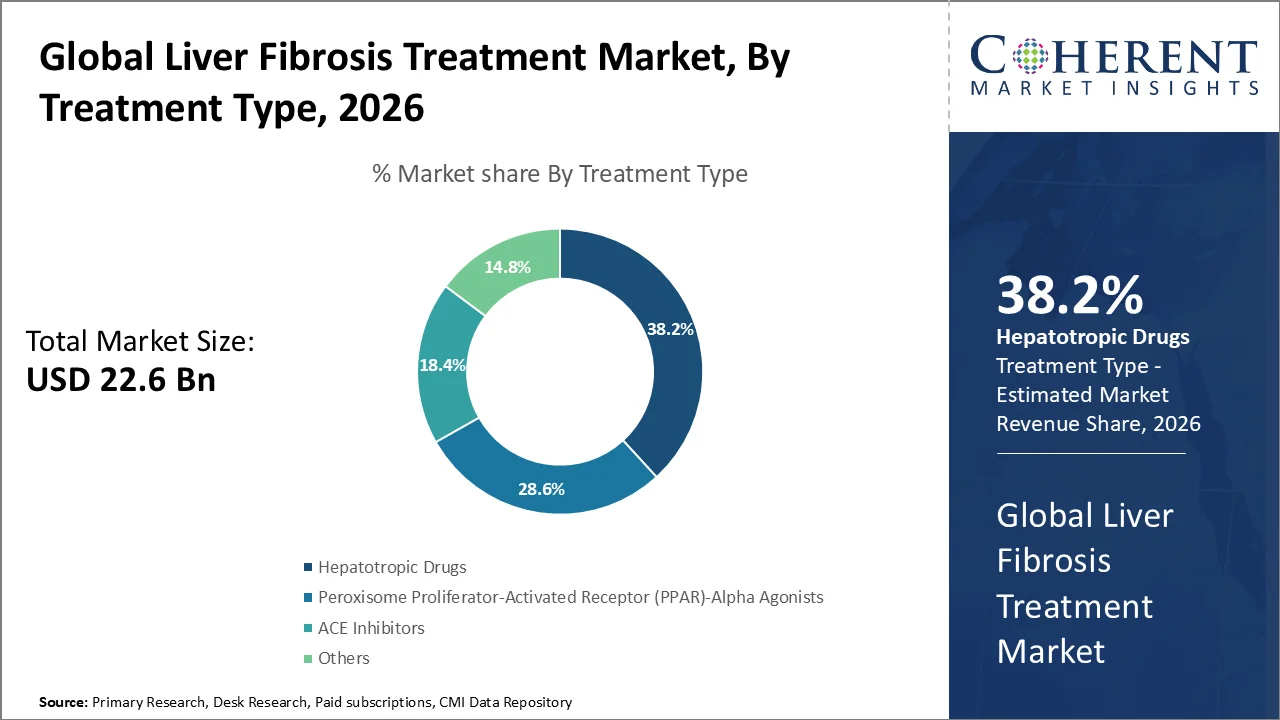
- The hepatotropic drugs segment is likely to dominate the market with 38.2% in 2026. The segment’s growth is owing to the broad use in managing viral hepatitis and chronic liver damage.
- The hepatitis C segment is set to lead with 34.2% in 2026. The segment’s growth is owing to the rising diagnosis rates and access to direct-acting antiviral therapies that can prevent fibrosis progression.
- The hospitals segment is set to lead with 52.4% in 2026. The segment’s growth is owing to the advanced diagnostic facilities, multidisciplinary care, and ability to manage severe fibrosis and cirrhosis. The U.S. recorded 12,344 liver transplants in 2025, an increase of nearly 8%.
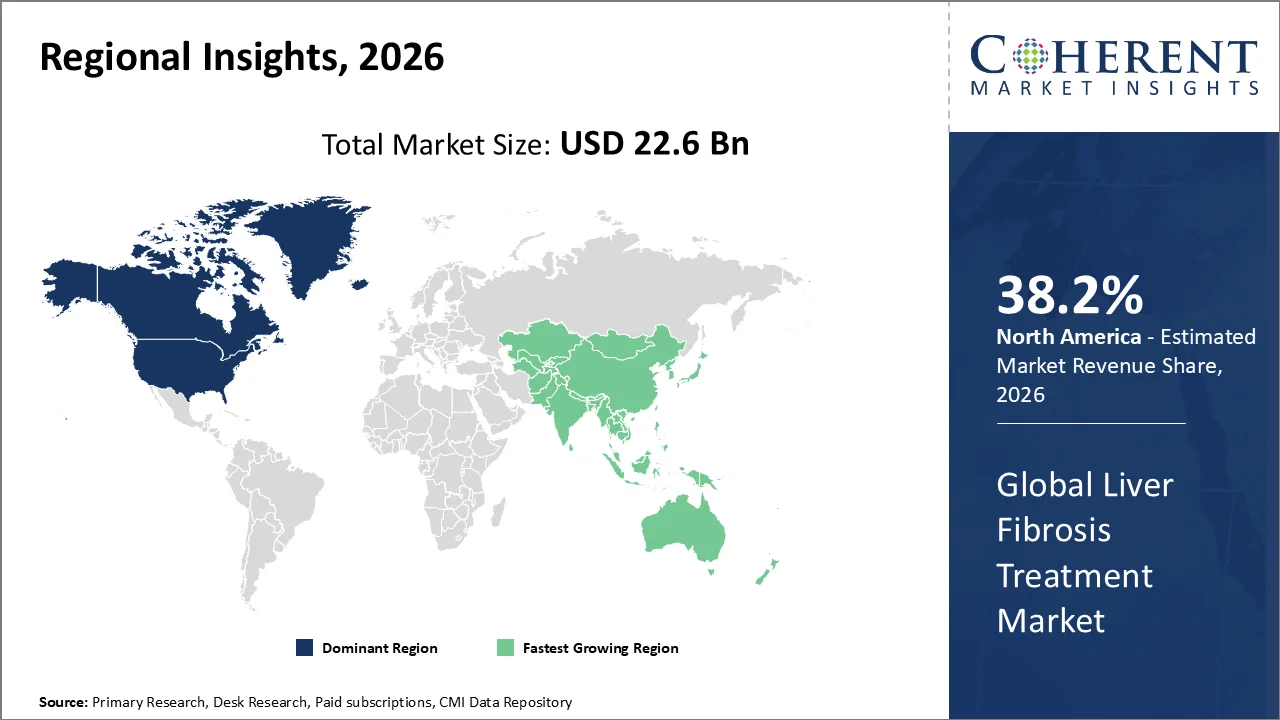
- North America is expected to acquire the prominent share of 38.2% in 2026. The region’s growth is owing to the high liver-disease burden, advanced diagnostic infrastructure, strong research activity, and favorable treatment access. Approximately 24% of U.S. adults have nonalcoholic fatty liver disease, a major cause of liver fibrosis.
Segmental Insights
Why is Hepatotropic Drugs Segment Acquiring the Largest Share?
On the basis of treatment type, the hepatotropic drugs segment is projected to account for the largest Liver Fibrosis Treatment Market share of 38.2% in 2026. The segment’s growth is owing to the ability to act directly on hepatic pathways, the widespread use of antiviral drugs for hepatitis-associated fibrosis, and the introduction of treatments targeting fat accumulation, inflammation, and fibrogenesis. The segment includes liver-directed agents, direct-acting antivirals, and medicines used to modify hepatic disease progression.
According to WHO, approximately 47 million people were living with chronic hepatitis C in 2024, and about 0.9 million new infections occurred during the year. Direct-acting antivirals can cure more than 95% of treated HCV patients, but global access remains inadequate.
- Current Industry Events of 2026
- Market Size Estimation
- Regional Breakdown
- Competitive Landscape
- Customer Intelligence
- Segmental Analysis
- Pricing Analysis
- Key Market Drivers, Challenges & Future Trends
- Customized Insights Section
Hepatitis C hold the Largest Market Share
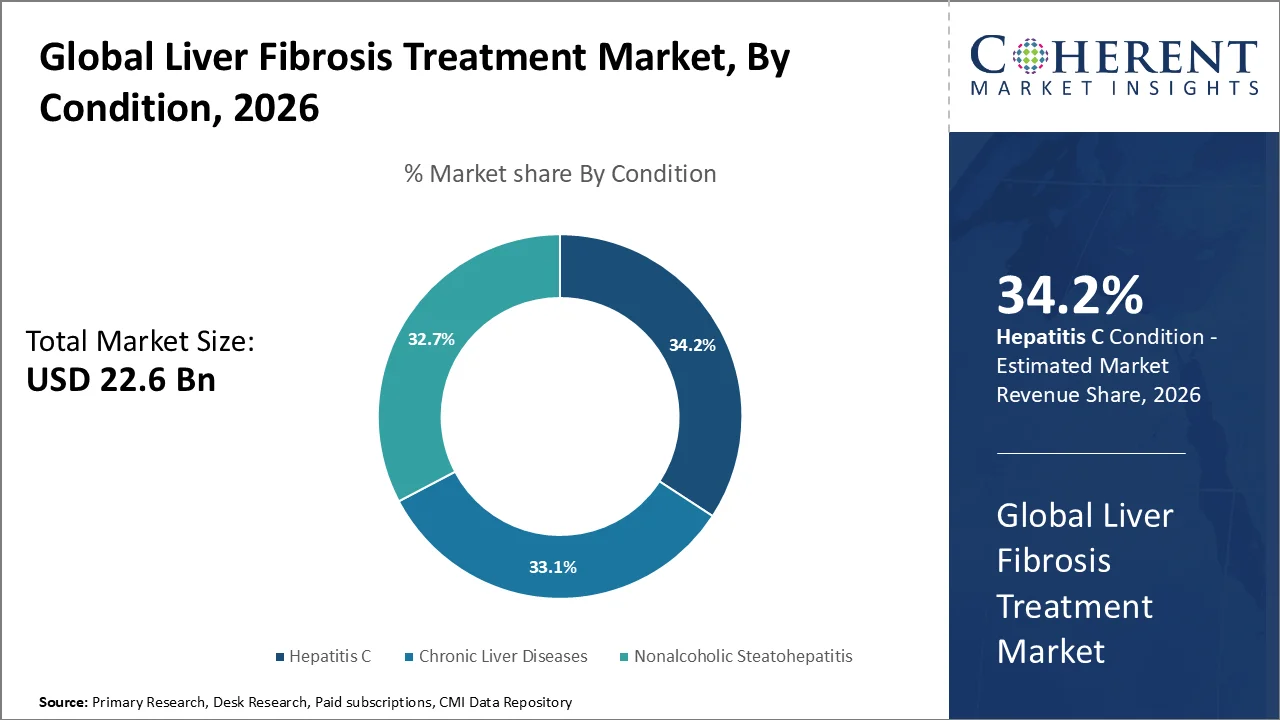
On the basis of condition, the hepatitis C segment lead with a major 34.2% share in 2026. The growth is owing to the high chronic infection burden, expanding diagnosis, and wider use of curative direct-acting antivirals that can halt ongoing hepatic injury and reduce progression toward advanced fibrosis and cirrhosis.
The World Health Organization estimated that 50 million people were living with chronic hepatitis C globally, underscoring the population requiring testing, antiviral therapy, fibrosis staging, and long-term liver monitoring. In the United States, the CDC recorded 101,525 reported chronic hepatitis C cases in 2023, thereby highlighting the treatment demand despite available curative regimens.
In June 2025, the FDA expanded the indication for Mavyret, containing glecaprevir and pibrentasvir, to include acute as well as chronic hepatitis C in adults and children aged three years and older without cirrhosis or with compensated cirrhosis.
Market Drivers
Rising Innovations in Metabolic Liver Disease Are Transforming the Liver Fibrosis Treatment Market in the U.S.
The U.S. is experiencing a major change in the treatment pathway for liver fibrosis, particularly fibrosis associated with MASH. The recent approvals have established a distinct pharmaceutical market and encouraged healthcare providers to identify patients at fibrosis stages F2 and F3 before disease progresses to cirrhosis.
In March 2024, the U.S. Food and Drug Administration approved Madrigal Pharmaceuticals’ Rezdiffra, or resmetirom, for adults with noncirrhotic MASH and moderate-to-advanced liver fibrosis, to be used with diet and exercise. The FDA described it as the first approved treatment for this patient population and estimated that approximately 6–8 million people in the U.S. had MASH with moderate-to-advanced fibrosis.
In the pivotal trial, approximately 26–27% of patients receiving 80 mg and 24–36% receiving 100 mg achieved MASH resolution without worsening fibrosis, compared with 9–13% receiving placebo. This approval established a commercially defined antifibrotic treatment segment and is expected to increase screening, specialist referrals, reimbursement activity, and competition among pipeline therapies.
AI-Assisted Histopathology: A Major Breakthrough in the Liver Fibrosis Treatment Market
Artificial intelligence-assisted histopathology is emerging as an important breakthrough in liver fibrosis drug development. Clinical trials for MASH and other fibrotic liver conditions frequently depend on pathologists assessing liver-biopsy samples for steatosis, inflammation, hepatocellular injury, and fibrosis stage. Manual assessment can be time-consuming and may vary between readers, particularly when changes between adjacent fibrosis stages are subtle.
AI-enabled systems can help standardize feature recognition, improve reproducibility, support central pathology review, and reduce the operational burden associated with large multicenter trials. These technologies do not just replace pathologists. Instead, they provide quantitative and visual assistance, while qualified specialists retain responsibility for the final interpretation.
In December 2025, the U.S. FDA qualified AIM-NASH as the first artificial intelligence drug-development tool for use in MASH clinical trials. The cloud-based system assists pathologists in evaluating liver-biopsy images and scoring steatosis, lobular inflammation, ballooning, as well as fibrosis.
Current Events and Their Impact on the Liver Fibrosis Treatment Market
Current Event | Description and its Impact |
2025 Medicare Part D Redesign and Patient Cost-Sharing Changes in the U.S.
|
|
2026 EU Conditional Authorization of Kayshild for MASH-Related Liver Fibrosis |
|
Liver Fibrosis Treatment Market Trends
- The growing adoption of non-invasive diagnostics like elastography and serum biomarker panels supports earlier fibrosis detection, staging, as well as treatment initiation.
- Precision therapies targeting metabolic, inflammatory, and fibrogenic pathways improve disease-specific management and encourage the development of personalized treatment strategies.
- Oral treatment models combined with diet and exercise gain adoption, thereby supporting convenient long-term disease management along with treatment adherence.
- Rising prevalence of viral hepatitis and metabolic liver disease increases the population at risk of cirrhosis, liver failure, and hepatocellular carcinoma, thereby strengthening the treatment demand. WHO estimated that 240 million people lived with chronic hepatitis B.
- Regulatory approvals and improved prescription-drug affordability are expanding access to advanced liver fibrosis therapies. For 2026, Medicare Part D limits annual out-of-pocket spending on covered medicines to USD 2,100, thereby supporting adherence among eligible patients, although formulary restrictions and prior authorization may influence uptake.
Regional Insights
North America Dominates Owing to the High Chronic Liver Disease Burden and Rapid Adoption of Advanced Fibrosis Therapies
The North America region accounts for 38.2% of the market share in 2026. The region’s growth is owing to the substantial chronic liver disease burden, advanced hepatology infrastructure, diagnostic access, and rapid adoption of targeted therapies.
The CDC recorded 11,194 hepatitis C-related deaths in 2023, highlighting the continuing need for antiviral treatment and management of fibrosis caused by chronic infection.
In August 2025, Novo Nordisk received FDA accelerated approval for Wegovy to treat adults with noncirrhotic MASH and moderate-to-advanced liver fibrosis. Based on ESSENCE trial results, semaglutide significantly improved steatohepatitis resolution and fibrosis outcomes compared with placebo at 72 weeks.
Asia Pacific Liver Fibrosis Treatment Market Trends
Asia Pacificis expected to witness strong growth in market over the forecast period. The region’s growth is owing to the chronic viral hepatitis burden, which increases long-term demand for antiviral therapy, fibrosis monitoring, and treatment of cirrhosis-related complications.
In July 2025, the World Health Organization reported that an estimated 61 million people in its South-East Asia Region were living with hepatitis B, while 9 million were living with hepatitis C. Both infections can progressively cause liver fibrosis, cirrhosis, and liver cancer when untreated.
The treatment pipeline is advancing. Australia’s ANZCTR registry records the launch of Sun Pharmaceutical’s Phase 2a study of GL0034, or utreglutide, for adults with at-risk metabolic dysfunction-associated steatohepatitis. Registered in April 2025 and recruiting since May 2025, the study evaluates liver stiffness, liver fat, FibroScan measurements, and circulating fibrotic markers. This is supporting the development of a potential therapy for fibrosis-associated MASH in clinical settings.
Early Fibrosis Detection Initiatives are Accelerating the Liver Fibrosis Treatment Market in United States
In the United States, the Liver Fibrosis Treatment Market is influenced by the high burden of chronic liver disease and expanding access to targeted therapies. The CDC data show that chronic liver disease and cirrhosis caused 52,274 deaths in the United States in 2024, thereby sustaining the demand for antifibrotic treatment, specialist monitoring, as well as earlier fibrosis assessment.
In March 2026, AASLD launched a national initiative to improve early liver fibrosis detection among people at risk of MASLD. The two-year project will develop consensus recommendations for integrating systematic detection into routine healthcare workflows nationwide.
China Liver Fibrosis Treatment Market Trends
China is emerging as a major growth market for Liver Fibrosis Treatment. The growth is owing to the chronic viral hepatitis burden and expanding MASH drug research. China CDC Weekly reported approximately 75 million people living with chronic hepatitis B in China, a driver of progressive fibrosis, cirrhosis, antiviral prescribing, and long-term hepatology care.
In 2026, ClinicalTrials.gov listed a Chinese multicentre study of chiglitazar in 300 adults with biopsy-confirmed MASH and fibrosis stage F1b or higher. The 72-week randomized trial evaluates steatohepatitis resolution without fibrosis worsening and at least one-stage fibrosis improvement.
Who are the Major Companies in Liver Fibrosis Treatment Industry
Some of the major key players in Liver Fibrosis Treatment Market are Gilead Sciences, Inc., Merck & Co., Inc., Bristol-Myers Squibb, Johnson and Johnson, Novartis AG, Vertex Pharmaceuticals Incorporated, Pfizer Inc., FibroGen, Inc., and Pharmaxis Limited.
Key News
- In May 2026, Roche launched its Liver Disease Panel, a certified suite of digital algorithms supporting chronic liver disease management. By integrating biomarkers with tools such as LiverPRO, the platform enables earlier fibrosis detection, clinical decisions, and liver cancer surveillance.
- In January 2026, McMaster University researchers reported promising preclinical results for EVT0185, a dual ACLY and ACSS2 inhibitor targeting severe liver fibrosis. In animal MASH models, the candidate reduced liver fat, stellate-cell activation, fibrosis, cholesterol, and blood glucose levels significantly.
Market Report Scope
Liver Fibrosis Treatment Market Report Coverage
| Report Coverage | Details | ||
|---|---|---|---|
| Base Year: | 2025 | Market Size in 2026: | USD 22.6 Bn |
| Historical Data for: | 2020 To 2024 | Forecast Period: | 2026 To 2033 |
| Forecast Period 2026 to 2033 CAGR: | 11% | 2033 Value Projection: | USD 47 Bn |
| Geographies covered: |
| ||
| Segments covered: |
| ||
| Companies covered: | Gilead Sciences, Inc., Merck & Co., Inc., Bristol-Myers Squibb, Johnson and Johnson, Novartis AG, Vertex Pharmaceuticals Incorporated, Pfizer Inc., FibroGen, Inc., and Pharmaxis Limited. | ||
| Growth Drivers: |
| ||
| Restraints & Challenges: |
| ||
Analyst Opinion
- The Liver Fibrosis Treatment Market growth is primarily driven by the substantial burden of chronic viral liver disease. WHO estimates that 304 million people were living with chronic hepatitis B or C, while these infections caused 1.3 million deaths, strengthening the need for early fibrosis detection, antiviral treatment, and long-term disease management.
- Metabolic liver disease is creating an expanding treatment pool. MASLD affects more than 30% of the global population, while approximately 6–8 million people in the United States are estimated to have NASH with moderate-to-advanced fibrosis, highlighting substantial unmet demand for disease-modifying therapies.
- Targeted antifibrotic treatment is beginning to reshape the market. In clinical trials supporting Rezdiffra, 23–28% of treated patients achieved fibrosis improvement without worsening NASH, compared with 13–15% receiving placebo. Such outcomes are likely to accelerate prescription uptake, pipeline investment, and earlier identification of eligible patients.
Speak to the analyst
Want personalized insights?
Take the findings above to one of our principal consultants, or have the report rebuilt around the segments, geographies and competitors you actually track.
Market Segmentation
- By Treatment Type (Revenue, USD Bn, 2021-2033)
- Peroxisome Proliferator-activated Receptors (PPAR)-alpha agonist
- ACE Inhibitors
- Hepatotropic Drug
- Others
- By Condition (Revenue, USD Bn, 2021-2033)
- Chronic Liver Diseases
- Hepatitis C
- Nonalcoholic Steatohepatitis
- By Distribution Channel (Revenue, USD Bn, 2021-2033)
- Hospitals
- Specialty Clinics
- Others
- By Region (Revenue, USD Bn, 2021-2033)
- North America
- U.S.
- Canada
- Latin America
- Brazil
- Mexico
- Argentina
- Rest of Latin America
- Europe
- Germany
- U.K.
- France
- Italy
- Spain
- Russia
- Rest of Europe
- Asia Pacific
- China
- India
- Japan
- Australia
- South Korea
- ASEAN
- Rest of Asia Pacific
- Middle East
- GCC
- Israel
- Rest of Middle East
- Africa
- South Africa
- Central Africa
- North Africa
- North America
Sources
Primary Research Interviews
- Hepatologists
- Gastroenterologists
- Liver transplant surgeons
- Hospital administrators
- Hospital pharmacists and pharmacy procurement managers
- Pharmaceutical and biotechnology company executives
- Contract research organizations and clinical trial investigators
- Drug distributors and specialty pharmacy providers
- Key opinion leaders (KOLs) in hepatology and liver disease treatment
Databases
- World Health Organization (WHO)
- Centers for Disease Control and Prevention (CDC)
- National Institutes of Health (NIH)
- National Institute of Diabetes and Digestive and Kidney Diseases (NIDDK)
- U.S. Food and Drug Administration (FDA)
- European Medicines Agency (EMA)
- Organisation for Economic Co-operation and Development (OECD)
Magazines
- Gastroenterology & Endoscopy News
- Pharmaceutical Technology
- BioPharma Dive
- Drug Discovery & Development
Journals
- Hepatology
- Journal of Hepatology
- Liver International
- Gastroenterology
- Clinical Gastroenterology and Hepatology
- Journal of Clinical and Translational Hepatology
Newspapers
- The New York Times
- The Guardian
- The Wall Street Journal
- Financial Times
Associations
- American Association for the Study of Liver Diseases (AASLD)
- European Association for the Study of the Liver (EASL)
- Asian Pacific Association for the Study of the Liver (APASL)
- Latin American Association for the Study of the Liver (ALEH)
- World Gastroenterology Organisation (WGO)
Public Domain Sources
- Company annual reports and investor presentations
- Government health ministry publications
- Clinical trial registries such as ClinicalTrials.gov
- FDA and EMA drug approval databases
- National liver disease surveillance and epidemiological reports
- Published treatment guidelines and consensus statements
Proprietary Elements
- CMI Data Analytics Tool
- Proprietary CMI Existing Repository of Information for Last 10 Years
Get access to 250+ pages report
Every segment, forecast, competitor profile and data table behind the analysis above — available for instant download.
- ESOMAR Member
- ISO 9001:2015 Certified
- D-U-N-S Registered
- GDPR & CCPA Compliant
Missing comfort of reading report in your local language? Find your preferred language:
Transform your Strategy with Exclusive Trending Reports
Frequently Asked Questions
The Liver Fibrosis Treatment Market is expected to reach USD 47 Bn in 2033.
Major players operating in the global Liver Fibrosis Treatment Market include Gilead Sciences, Inc., Merck & Co., Inc., Bristol-Myers Squibb, Johnson and Johnson, Novartis AG, Vertex Pharmaceuticals Incorporated, Pfizer Inc., FibroGen, Inc., and Pharmaxis Limited.
The lack of universally approved definitive drugs for advanced fibrosis, the high costs and invasiveness of diagnostic liver biopsies, and the asymptomatic nature of early-stage disease which delays critical diagnoses are the key factors hampering growth of the market.
The escalating global prevalence of chronic liver diseases like NASH (MASH), NAFLD (MASLD), rising obesity and metabolic disorders, heavy public and private investments into innovative targeted therapies is boosting the demand for Liver Fibrosis Treatment.
The Liver Fibrosis Treatment Market is anticipated to grow at a CAGR of 11% between 2026 and 2033.
Among regions, North America is expected to account for a largest market share in the global Liver Fibrosis Treatment Market over the forecast period.
The market outlook is rapidly shifting from symptom management to direct fibrosis reversal and disease-modifying therapies.