

Proteinuria Therapeutics Market Size and Forecast – 2026 to 2033
The Proteinuria Therapeutics Market is estimated to be valued at USD 24.50 Bn in 2026 and is expected to reach USD 73.40 Bn by 2033, exhibiting a compound annual growth rate (CAGR) of 17.2% from 2026 to 2033.
Key Takeaways
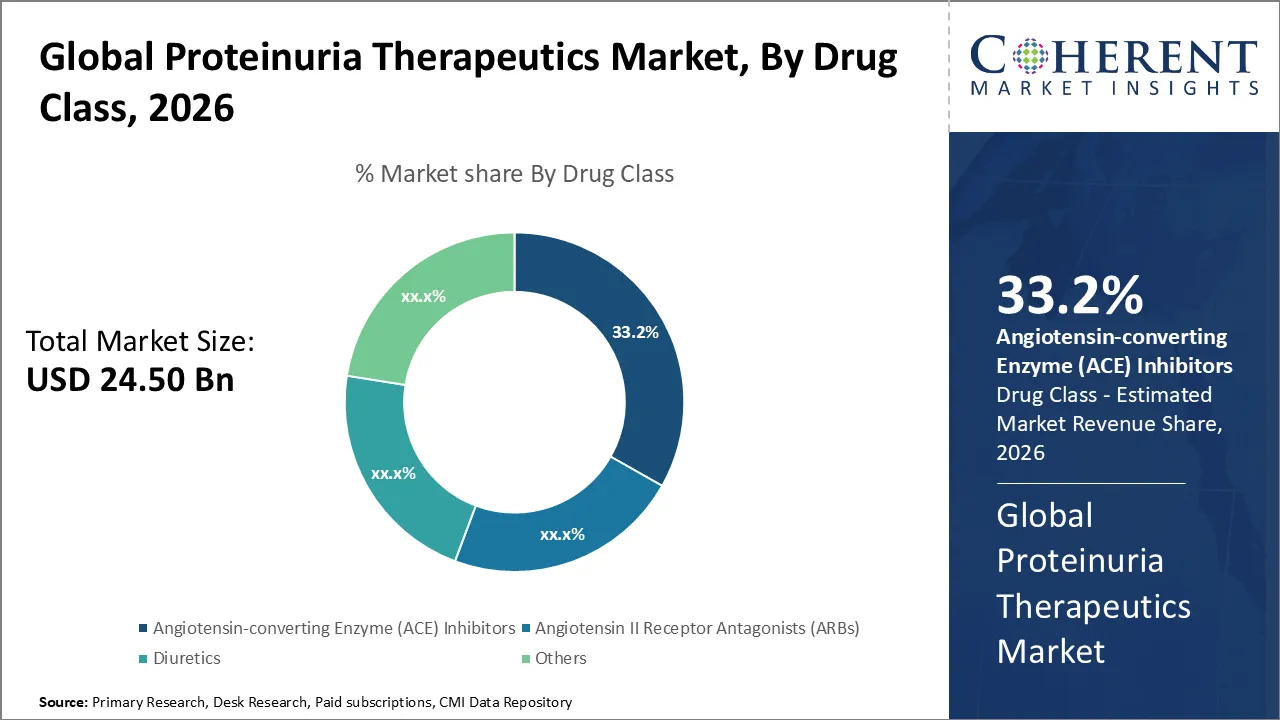
- By Drug Class, Angiotensin-converting Enzyme (ACE) hold the largest market share of 33.2% in 2026 owing to the rising prevalence of CKD and proteinuria‑associated conditions.
- By Route of Administration, Oral expected to hold largest market share of 61.3% in 2026 owing to its patient preference & better compliance.
- By Distribution Channel, Hospitals pharmacies acquired the prominent market share of 34.4% in 2026 owing to the high share of complex and severe cases.
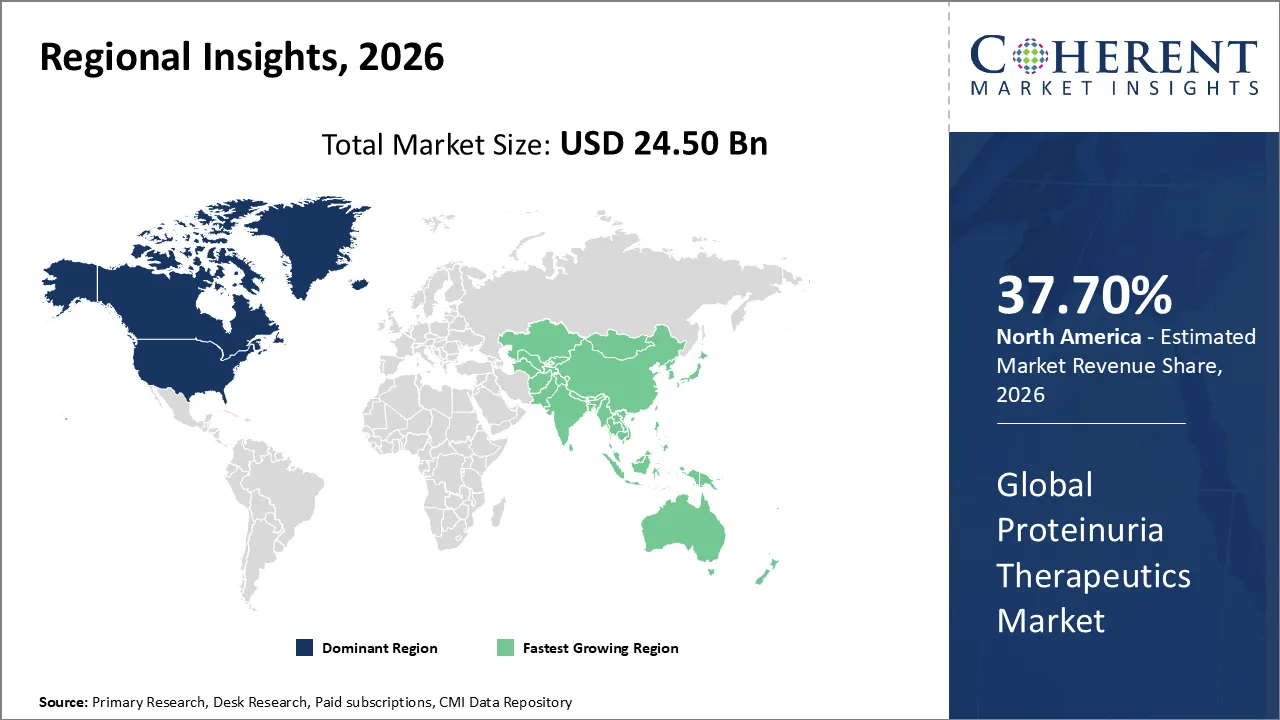
- By Region, North America dominates the overall market with an estimated share of 37.7% in 2026 owing to the high prevalence of ckd, diabetes & proteinuria‑related conditions.
Market Overview
The Proteinuria Therapeutics Market develops and delivers treatments for conditions marked by excess protein in the urine, mainly caused by chronic kidney disease, diabetes, and hypertension. Key therapies include ACE inhibitors, ARBs, SGLT2 inhibitors, and newly emerging oral and injectable targeted drugs. The market expands as kidney-related disorders become more prevalent, awareness of early detection grows, drug development advances, and healthcare infrastructure strengthens. Hospitals and outpatient centers drive distribution, guided by clinical protocols and patient demand for effective, long-term care.
Current Events and Its Impacts on the Proteinuria Therapeutics Market
Current Events | Description and its impact |
Regulatory and Policy Developments |
|
Technological and Scientific Innovations |
|
Epidemiological and Demographic Trends |
|
Segmental Insights
- Current Industry Events of 2026
- Market Size Estimation
- Regional Breakdown
- Competitive Landscape
- Customer Intelligence
- Segmental Analysis
- Pricing Analysis
- Key Market Drivers, Challenges & Future Trends
- Customized Insights Section
Proteinuria Therapeutics Market Insights, By Drug Class: Angiotensin-converting Enzyme (ACE) contribute the highest share of the market owing to its clinical guidelines & physician adoption.
Angiotensin-converting Enzyme (ACE) hold the largest market share of 33.2% in 2026. The Angiotensin-Converting Enzyme (ACE) segment drives the Proteinuria Therapeutics Market by actively slowing kidney damage and reducing proteinuria. Increasing cases of chronic kidney disease, diabetes, and hypertension fuel demand for ACE inhibitors, which control blood pressure while protecting renal function. Physicians follow clinical guidelines and promote early intervention, further boosting their use. Advances in drug formulations and combination therapies improve patient adherence, establishing ACE inhibitors as a central treatment option for the long-term management of proteinuria. For instance, PERINDOPRIL-INDAPAMIDE is prescribed for adults as an initial treatment for mild to moderate essential hypertension. The combination pairs perindopril erbumine, an ACE inhibitor, with indapamide, a chlorosulphamoyl diuretic. Together, these active ingredients work synergistically to effectively lower blood pressure in patients with hypertension.
Proteinuria Therapeutics Market Insights, By Route of Administration: Oral contributes the highest share of the market owing to its growth of chronic conditions requiring long‑term oral therapy.
Oral expected to hold largest market share of 61.3% in 2026. The oral segment actively drives the Proteinuria Therapeutics Market by offering convenient, easy-to-administer, and long-term treatment options. Patients rely on oral medications to manage chronic conditions such as CKD, diabetes, and hypertension, which improves adherence and ensures consistent therapy. The availability of generics and affordable alternatives expands access, while hospitals and outpatient centers efficiently deliver these treatments. Continuous innovations in oral formulations and the launch of targeted agents further boost their use, establishing oral therapies as a major force in proteinuria management. For instance, Travere Therapeutics announced that the U.S. Food and Drug Administration has granted accelerated approval to FILSPARI™ (sparsentan) to reduce proteinuria in adults with primary IgA nephropathy at risk of rapid disease progression.
Proteinuria Therapeutics Market Insights, By Distribution Channel: Hospital Pharmacies contribute the highest share of the market owing to its acute and in‑patient therapeutic delivery.
Hospitals pharmacies acquired the prominent market share of 34.4% in 2026. Hospital pharmacies actively drive the Proteinuria Therapeutics Market by providing patients with chronic kidney disease, diabetes, and hypertension timely access to essential medications. They administer complex therapies, including specialized oral and injectable treatments, while ensuring close monitoring and patient adherence. By integrating pharmacy services with clinical care, hospitals coordinate effective management of proteinuria. Rising patient demand, advanced healthcare infrastructure, and efficient in-house drug distribution further reinforce hospital pharmacies as a central force in delivering successful proteinuria treatments.
Regional Insights
North America Proteinuria Therapeutics Market Trends
North America dominates the overall market with an estimated share of 37.7% in 2026. The North America Proteinuria Therapeutics Market grows as the rising prevalence of chronic kidney disease, diabetes, and hypertension drives demand for effective proteinuria management. Advanced healthcare infrastructure, widespread early diagnostic practices, and adherence to clinical guidelines support this expansion. Pharmaceutical companies actively develop and introduce innovative oral and injectable therapies, broadening treatment options. Increasing patient awareness, strong insurance coverage, and a focus on integrated care continue to influence market dynamics and reinforce North America’s role as a leading region in proteinuria therapeutics. For instance, Tarpeyo™ (budesonide) is now available to treat adults with primary IgA nephropathy by reducing proteinuria in patients at risk of rapid disease progression.
Asia Pacific Proteinuria Therapeutics Market Trends
The Asia Pacific Proteinuria Therapeutics Market expands as the rising incidence of diabetes, hypertension, and chronic kidney disease increases demand for effective treatments. Patients actively seek care due to growing awareness of early diagnosis and improved access to healthcare services. Investments in healthcare infrastructure, the launch of advanced oral and injectable therapies, and engagement by domestic and multinational pharmaceutical companies drive market growth. Governments implement supportive initiatives, hospitals expand networks, and healthcare providers adopt clinical guidelines, collectively shaping the region’s proteinuria therapeutics landscape.
United States Proteinuria Therapeutics Market Trends
The United States Proteinuria Therapeutics Market grows as the high prevalence of chronic kidney disease, diabetes, and hypertension increases the demand for effective proteinuria management. Patients take advantage of early screening programs and advanced diagnostic tools that allow timely intervention. Pharmaceutical companies actively launch innovative oral and injectable therapies, while hospitals and specialty clinics deliver comprehensive care. Strong insurance coverage, robust healthcare infrastructure, and adherence to clinical guidelines enhance treatment access, establishing the United States as a leading market for proteinuria therapeutics. For instance, Aurinia Pharmaceuticals launched Time Is Nephrons, the first lupus nephritis awareness campaign for healthcare professionals. Lupus nephritis, a serious complication of systemic lupus erythematosus, causes kidney inflammation that leads to proteinuria.
India Proteinuria Therapeutics Market Trends
The India Proteinuria Therapeutics Market grows as rising cases of diabetes, hypertension, and chronic kidney disease increase demand for effective treatments. Patients actively seek timely care due to greater awareness of early diagnosis and improved access to healthcare services. Pharmaceutical companies launch innovative oral and injectable therapies, while hospitals and clinics deliver integrated management. Government initiatives, expanding healthcare infrastructure, and the adoption of clinical guidelines further enhance treatment availability, establishing India as a rapidly emerging market in proteinuria therapeutics.
End-user Feedback and Unmet Needs in the Proteinuria Therapeutics Market
- Need for More Effective Therapies: Patients and healthcare providers report that current treatments, while helpful in reducing proteinuria, often fail to fully halt disease progression. There is a growing demand for therapies that provide stronger renal protection, better long-term outcomes, and address underlying causes rather than only managing symptoms.
- Desire for Convenient and Patient-Friendly Options: End-users express a preference for oral or easy-to-administer therapies over frequent injections or hospital-based treatments. Simplified dosing regimens, fewer side effects, and home-based treatment options are critical for improving adherence and overall patient satisfaction, particularly for chronic proteinuria management.
- Early Diagnosis and Monitoring Gaps: Healthcare providers highlight challenges in identifying proteinuria early, as many patients remain asymptomatic until disease advances. Patients need more accessible screening tools, better biomarker identification, and integrated monitoring systems that allow timely intervention to prevent irreversible kidney damage.
Proteinuria Therapeutics Market Trend
Rising Adoption of Oral Therapies
Oral medications are increasingly favored for managing proteinuria due to their convenience, suitability for long-term therapy, and ease of adherence. Patients with chronic conditions like diabetes, hypertension, and CKD prefer oral options over injectables. Pharmaceutical companies are investing in innovative oral formulations, including extended-release and combination therapies, which improve treatment compliance. Hospitals, clinics, and outpatient centers actively distribute these drugs, strengthening the oral segment as a major driver of market growth and patient-centered care.
Expansion of Hospital and Specialty Care Channels
Hospitals and specialty clinics remain key channels for proteinuria treatment, particularly for severe cases and complex comorbidities. These settings enable integrated care, including diagnostics, therapy administration, and patient monitoring. Hospital pharmacies actively coordinate medication access, ensuring adherence to clinical guidelines. The growing network of hospitals, combined with rising patient demand for specialist care, reinforces these channels’ importance, driving both treatment uptake and awareness of advanced therapies across diverse patient populations in proteinuria management.
Proteinuria Therapeutics Market Opportunity
Development of Innovative Oral and Injectable Therapies
The market presents opportunities for pharmaceutical companies to develop advanced oral and injectable treatments that target proteinuria more effectively. Patients increasingly demand therapies with fewer side effects, improved adherence, and long-term kidney protection. Innovation in combination therapies and extended-release formulations can enhance patient compliance. Companies that focus on these novel solutions can capture a growing segment of chronic disease patients, establishing leadership in both established and emerging markets for proteinuria therapeutics.
Market Report Scope
Proteinuria Therapeutics Market Report Coverage
| Report Coverage | Details | ||
|---|---|---|---|
| Base Year: | 2025 | Market Size in 2026: | USD 24.50 Bn |
| Historical Data for: | 2020 To 2024 | Forecast Period: | 2026 To 2033 |
| Forecast Period 2026 to 2033 CAGR: | 17.2% | 2033 Value Projection: | USD 73.40 Bn |
| Geographies covered: |
| ||
| Segments covered: |
| ||
| Companies covered: | GlaxoSmithKline plc, Chinook Therapeutics Inc., Novartis International AG, AbbVie Inc., Calliditas Therapeutics AB, Travere Therapeutics Inc., Walden Biosciences, Ligand Pharmaceuticals Inc., and Retrophin, Inc. | ||
| Growth Drivers: |
| ||
| Restraints & Challenges: |
| ||
Proteinuria Therapeutics Market News
- In August 2024, Novartis announced that the FDA has granted accelerated approval for Fabhalta® (iptacopan), a first-in-class complement inhibitor to reduce proteinuria in adults with primary IgA nephropathy at risk of rapid disease progression.
Analyst Opinion (Expert Opinion)
- The Proteinuria Therapeutics Market is entering a pivotal phase where clinical differentiation and therapeutic innovation are becoming the primary determinants of competitive advantage rather than traditional volume‑based prescribing. The persistent reliance on ACE inhibitors and ARBs — still representing approximately one‑third of the market share — reflects physician comfort with these agents’ dual cardiovascular‑renal benefits, yet fails to capture the ongoing shift toward more targeted mechanisms that address underlying pathophysiology rather than symptomatic control alone. Clinical outcomes data underscore this transition: in real‑world settings, sparsentan has demonstrated relative proteinuria reductions up to 62% even in patients already on background SGLT2 inhibitors, signalling superior efficacy potential beyond RAAS blockade.
- Moreover, the emergence of IgA nephropathy–focused therapies such as FILSPARI, TARPEYO, and newer agents like Otsuka’s Voyxact — which exhibited a 51.2% reduction in urine protein levels in trials — highlights a trend toward precision‑targeted therapeutics that could reshape treatment paradigms and clinical practice patterns.
- From a regional development perspective, North America’s leadership is not merely driven by prevalence but by a mature clinical ecosystem that rapidly assimilates novel evidence into practice, exemplified by early adoption of combination strategies and multidisciplinary care models. In contrast, Asia Pacific’s trajectory will depend on scaling access and strengthening early detection, given that sustained investments in primary care diagnostics are just beginning to unlock latent demand.
Speak to the analyst
Want personalized insights?
Take the findings above to one of our principal consultants, or have the report rebuilt around the segments, geographies and competitors you actually track.
Market Segmentation
- By Drug Class
- Angiotensin-converting Enzyme (ACE) Inhibitors
- Angiotensin II Receptor Antagonists (ARBs)
- Diuretics
- Others
- By Route of Administration
- Oral
- Intravenous
- By Distribution Channels
- Hospital Pharmacies
- Retail Pharmacies
- Online Pharmacies
- By Regional Insights
- North America
- U.S.
- Canada
- Latin America
- Brazil
- Argentina
- Mexico
- Rest of Latin America
- Europe
- Germany
- U.K.
- Spain
- France
- Italy
- Russia
- Rest of Europe
- Asia Pacific
- China
- India
- Japan
- Australia
- South Korea
- ASEAN
- Rest of Asia Pacific
- Middle East
- GCC Countries
- Israel
- Rest of Middle East
- Africa
- South Africa
- North Africa
- Central Africa
- North America
- Key Players Insights
- GlaxoSmithKline plc
- Chinook Therapeutics Inc.
- Novartis International AG
- AbbVie Inc.
- Calliditas Therapeutics AB
- Travere Therapeutics Inc.
- Walden Biosciences
- Ligand Pharmaceuticals Inc.
- Retrophin, Inc.
Sources
Primary Research interviews
- Nephrologists, endocrinologists, and cardiologists specializing in CKD and proteinuria management
- Hospital pharmacists and clinical trial coordinators
- Pharmaceutical R&D and medical affairs teams for ACE inhibitors, ARBs, and SGLT2 inhibitors
- Healthcare administrators overseeing chronic disease treatment programs
Databases
- PubMed
- ClinicalTrials.gov
- WHO Global Health Observatory
- U.S. National Kidney Foundation databases
- FDA Drug Approvals Database
Magazines
- MedPage Today
- Kidney International Reports Magazine
- The Pharmaceutical Journal
- PharmaVoice
Journals
- Journal of the American Society of Nephrology (JASN)
- Kidney International
- Clinical Journal of the American Society of Nephrology (CJASN)
- Nephrology Dialysis Transplantation
- Diabetes Care
Newspapers
- The New York Times – Health Section
- The Washington Post – Health & Science
- The Guardian – Health
- Times of India – Health & Science
Associations
- American Society of Nephrology (ASN)
- National Kidney Foundation (NKF)
- International Society of Nephrology (ISN)
- American Diabetes Association (ADA)
Public Domain Sources
- FDA Drug Labeling and Safety Information
- NIH Clinical Guidelines and Reports
- WHO Kidney Disease Fact Sheets
- CDC Chronic Kidney Disease Reports
Proprietary Elements
- CMI Data Analytics Tool
- Proprietary CMI Existing Repository of information for last 8 years
Get access to 250+ pages report
Every segment, forecast, competitor profile and data table behind the analysis above — available for instant download.
- ESOMAR Member
- ISO 9001:2015 Certified
- D-U-N-S Registered
- GDPR & CCPA Compliant
Missing comfort of reading report in your local language? Find your preferred language:
Transform your Strategy with Exclusive Trending Reports
Frequently Asked Questions
The Proteinuria Therapeutics Market is estimated to be valued at USD 24.50 Bn in 2026 and is expected to reach USD 73.40 Bn by 2033.
The CAGR of the Proteinuria Therapeutics Market is projected to be 17.2% from 2026 to 2033.
North America leads due to high prevalence of CKD and diabetes, advanced healthcare infrastructure, early diagnostic adoption, and strong pharmaceutical presence.
Rising prevalence of CKD, diabetes, and hypertension and Expansion of hospitals, specialty clinics, and outpatient care centers.
High treatment costs and limited access in emerging markets and Side effects and adherence issues with certain therapies.