

Breast Cancer Liquid Biopsy Market Size and Share Analysis – 2026 To 2033
The global Breast Cancer Liquid Biopsy Market size is estimated to be valued at USD 770.1 Mn in 2026 and is expected to reach USD 2,795.5 Mn by 2033, exhibiting a compound annual growth rate (CAGR) of 20.2% from 2026 to 2033. The main growth drivers include increasing incidences of breast cancer, growing adoption of minimally invasive diagnostic technologies, rising demand for early detection and personalized treatment of cancer, and developments in circulating tumor DNA (ctDNA), circulating tumor cells (CTCs), and next-generation sequencing (NGS) technologies. The National Cancer Institute (NCI) states that liquid biopsy is used to detect and analyze tumor-derived biomarkers in blood and other body fluids to help monitor cancer, select treatment options, and identify molecular changes.
Key Takeaways of the Global Breast Cancer Liquid Biopsy Market (2026–2033)
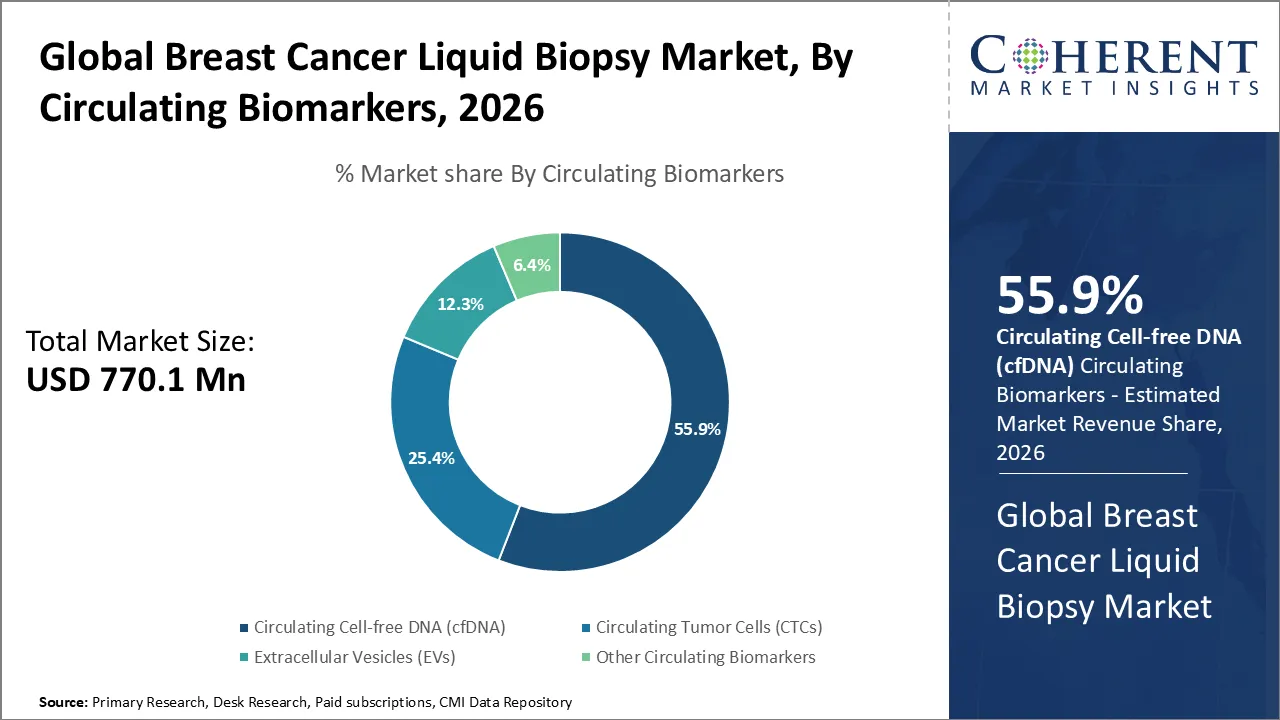
- The Circulating Cell-free DNA (cfDNA) segment is expected to dominate the global breast cancer liquid biopsy market share 55.9% in 2026. Increasing adoption of ctDNA-based molecular profiling, genomic mutation detection, and targeted therapy selection is supporting segment growth. On September 25, 2025, the U.S. FDA approved an expanded indication for Guardant360 CDx to detect ESR1 mutations in breast cancer patients eligible for imlunestrant treatment. The test analyzes circulating cell-free DNA from blood plasma.
- The Treatment Selection segment is expected to hold a leading position in the global breast cancer liquid biopsy market share 52.7% in 2026. Increasing use of liquid biopsy for identifying actionable genetic mutations and selecting precision oncology therapies is supporting adoption. On October 10, 2024, the U.S. FDA approved FoundationOne Liquid CDx as a companion diagnostic for identifying PIK3CA mutations in breast cancer patients eligible for inavolisib-based combination therapy. The supporting INAVO120 clinical trial enrolled 325 patients.
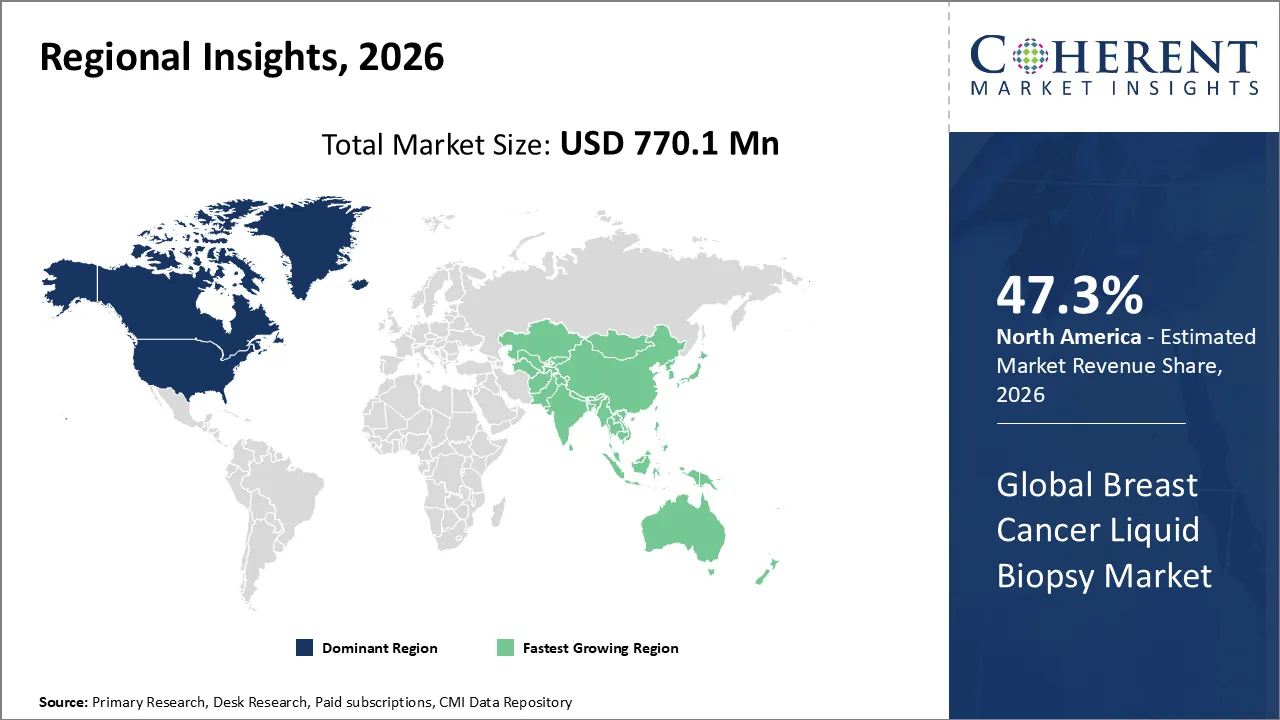
- North America is expected to remain a leading regional market share 47.3% for breast cancer liquid biopsy in 2026. Regional adoption is supported by availability of genomic profiling, advanced molecular diagnostic infrastructure and ongoing regulatory approvals. On September 4, 2026, Guardant360 CDx was granted an expanded breast cancer companion diagnostic indication by the U.S. FDA to detect ESR1 mutations in patients who may benefit from camizestrant.
- The Asia Pacific region is expected to offer the most significant growth opportunities in the global breast cancer liquid biopsy market during the forecast period of 2026-2033. This growth is driven by the increasing incidence of breast cancer, the expansion of molecular diagnostic capabilities, and the rising demand for customized oncology therapies. The WHO International Agency for Research on Cancer (IARC) reported that Asia saw about 1.10 Mn new breast cancer cases in 2022, making up 45.1% of the global total. China and India contributed to around 357,161 and 192,020 new female breast cancer cases respectively.
Segmental Insights
Why Does Circulating Cell-free DNA (cfDNA) Dominate the Global Breast Cancer Liquid Biopsy Market?
The Circulating Cell-free DNA (cfDNA) segment is projected to account for 55.9% of the global breast cancer liquid biopsy market share by 2026. The segment is expected to dominate the market due to the rising adoption of circulating tumor DNA (ctDNA) analysis for molecular profiling, mutation detection, and personalized treatment of cancer. Liquid biopsy using cfDNA allows minimally invasive detection of tumor-associated genetic alterations in blood samples and thus reduces the dependence on repeat tissue biopsies in relevant clinical settings. The demand for cfDNA-based diagnostics is being driven by advances in next generation sequencing, improved assay sensitivity and the increasing integration of genomic testing into oncology treatment pathways.
On September 25, 2025, the U.S. Food and Drug Administration (FDA) approved Guardant360 CDx as a companion diagnostic to identify ESR1 mutations in breast cancer patients who are eligible for treatment with imlunestrant. The clinical relevance of cfDNA testing in precision oncology was demonstrated in the clinical trial EMBER-3, which enrolled 874 patients with ESR1 mutation status determined by blood-based ctDNA analysis.
- Current Industry Events of 2026
- Market Size Estimation
- Regional Breakdown
- Competitive Landscape
- Customer Intelligence
- Segmental Analysis
- Pricing Analysis
- Key Market Drivers, Challenges & Future Trends
- Customized Insights Section
Why Does Treatment Selection Dominate the Global Breast Cancer Liquid Biopsy Market?
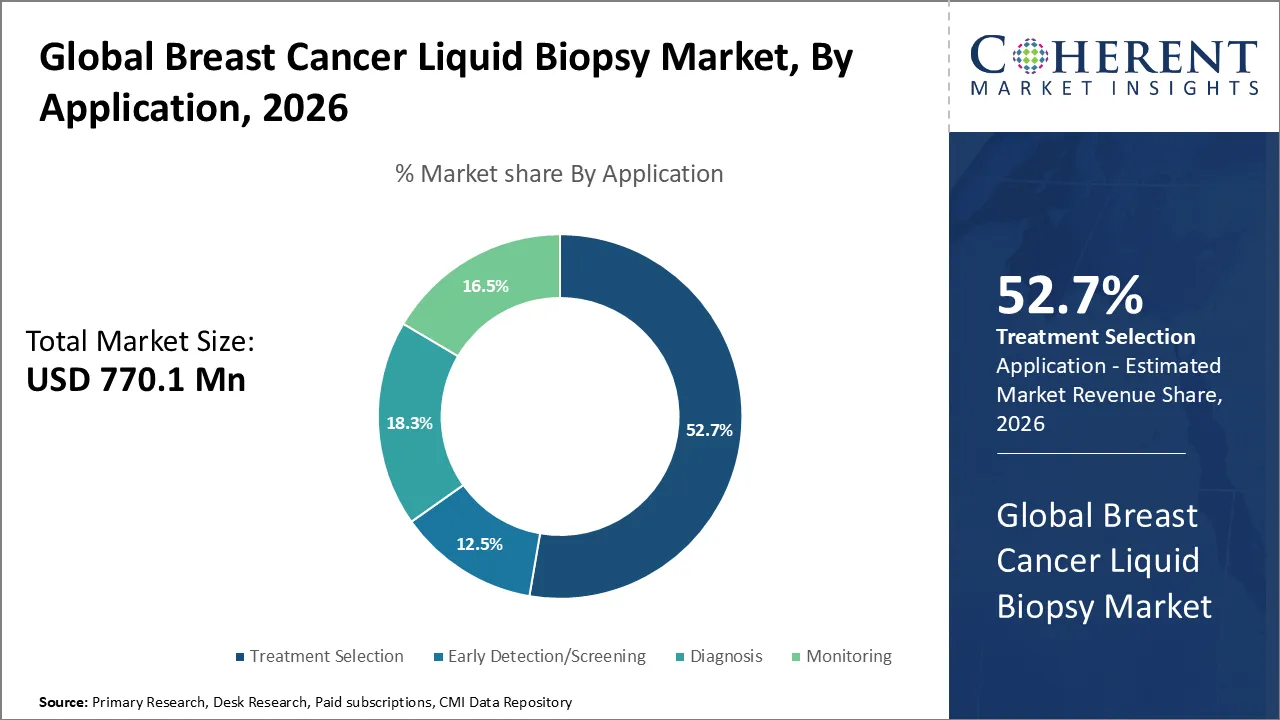
The Treatment Selection segment is projected to hold a market share of 52.7% of the global breast cancer liquid biopsy market by 2026. The segment is driven by growing adoption of liquid biopsy for detection of actionable genetic variants, selection of targeted treatments and guiding personalized treatment decisions. Liquid biopsy technologies can help oncologists identify molecular changes, such as ESR1 and PIK3CA mutations, that affect treatment decisions for patients with advanced breast cancer. The segment growth is driven by the increasing availability of FDA-approved companion diagnostics, expanding applications of precision medicine and growing demand for less invasive genomic testing.
On October 10, 2024, the U.S. FDA approved FoundationOne Liquid CDx as a companion diagnostic to identify patients with PIK3CA-mutated breast cancer eligible for treatment with inavolisib, palbociclib, and fulvestrant. The approval was based on the INAVO120 clinical trial of 325 patients with endocrine-resistant, HR-positive, HER2-negative advanced or metastatic breast cancer. This development demonstrates the increasing role of blood-based molecular testing in the choice of targeted treatments.
Current Events and Their Impact on the Breast Cancer Liquid Biopsy Market
Current Event | Description and its Impact |
U.S. FDA Expands Breast Cancer Liquid Biopsy Companion Diagnostic Approvals (2026) |
|
European Union Advances In Vitro Diagnostic Regulation (IVDR) Compliance Requirements (2026) |
|
Breast Cancer Liquid Biopsy Market Dynamics
Market Drivers
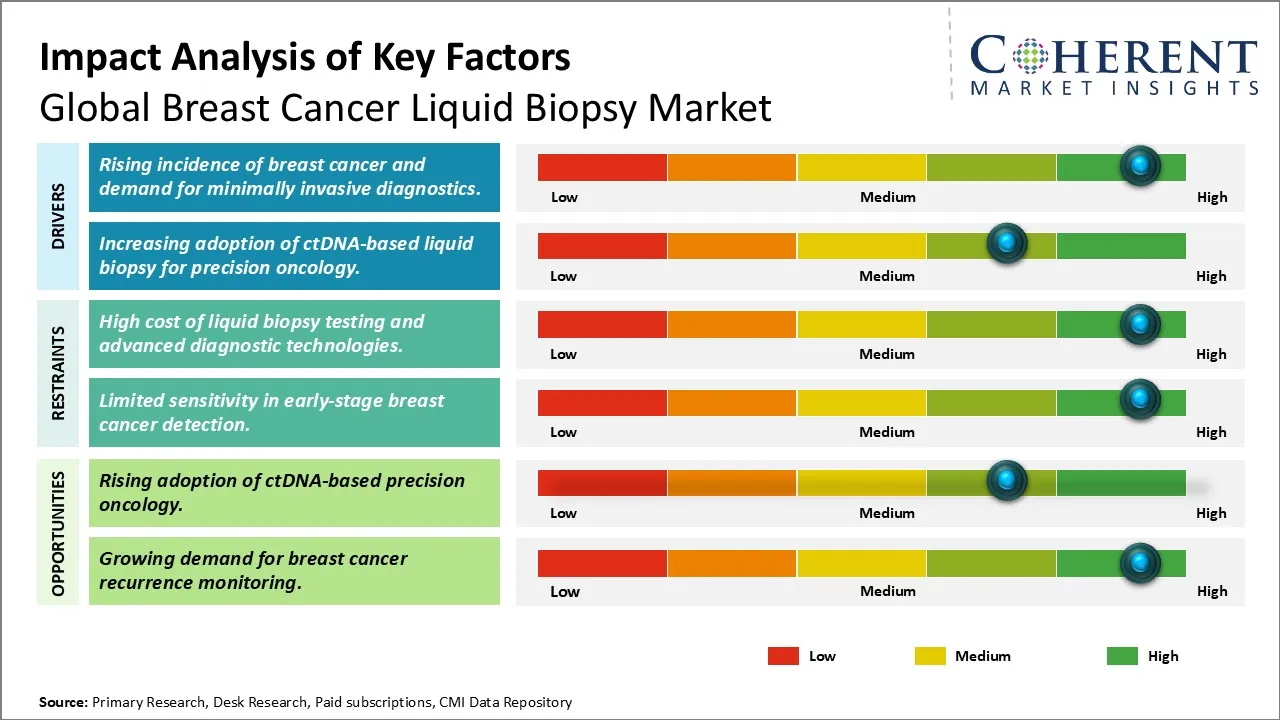
- Growing incidence of breast cancer and increasing demand for minimally invasive diagnostic testing: Growing incidence of breast cancer is increasing the demand for advanced liquid biopsy technologies globally. As the disease burden increases, healthcare providers are embracing molecular diagnostic tools to identify tumor-associated mutations, determine targeted treatment decisions, and monitor disease progression. Liquid biopsy is a minimally invasive approach for the analysis of ctDNA, CTCs and other blood-based biomarkers. In appropriate clinical settings, blood testing can allow for longitudinal molecular assessment as opposed to repeat tissue biopsies. Heightened awareness of precision oncology and rising demand for customized cancer treatment are further fueling the market expansion.
- According to the National Cancer Institute’s (NCI) SEER Program estimates that there will be 321,910 new cases of female breast cancer in the U.S. in 2026, which is 15.2% of all new cancers. The incidence of female breast cancer also increased by about 1.0% per year, with a greater annual increase of 1.4% among women younger than 50 years, according to a report by the American Cancer Society. These trends point to the growing population that needs cancer diagnosis, treatment selection and ongoing disease monitoring.
- Rising adoption of precision oncology and blood-based companion diagnostics: Increasing use of precision medicine in breast cancer treatment is driving demand for liquid biopsy testing. Oncologists are increasingly using molecular profiling to identify actionable mutations, assess treatment resistance, and select targeted therapeutic regimens. Technologies of liquid biopsy allow identification of mutations such as ESR1 and PIK3CA from blood samples, which may help in treatment decisions without the need of repeated invasive tumor sampling in all cases. Next-generation sequencing, digital PCR and highly sensitive ctDNA assays are making molecular testing increasingly feasible. Expanding regulatory approvals for blood-based companion diagnostics are also supporting clinical adoption and market growth.
- On September 4, 2026, the U.S. Food and Drug Administration granted accelerated approval to camizestrant in combination with a CDK4/6 inhibitor for patients with ESR1-mutated advanced or metastatic breast cancer. The FDA also approved Guardant360 CDx as a companion diagnostic to identify eligible patients.
Breast Cancer Liquid Biopsy Market Trends
- The development of circulating tumor DNA (ctDNA)-based liquid biopsy is improving personalized breast cancer therapy by minimally invasive detection of genetic changes and treatment resistance. On September 4, 2026, the U.S. FDA approved Guardant360 CDx for identifying ESR1 mutations to guide camizestrant treatment. The supporting SERENA-6 trial reported median progression-free survival of 16.0 months versus 9.2 months in the comparator group.
- The growing application of liquid biopsy in minimal residual disease (MRD) detection and cancer recurrence monitoring is encouraging the development of highly sensitive blood-based testing technologies. A study in the Journal of Clinical Oncology in March 2026 analyzing 227 patients showed that patients with detectable ctDNA after neoadjuvant therapy had an 8.9-fold increased hazard of recurrence, indicating the potential of ctDNA in risk assessment of breast cancer.
- The growing use of next-generation sequencing (NGS) and highly sensitive molecular diagnostics is improving the capability of detecting multiple actionable genetic alterations from a single blood sample. On May 19, 2026, the U.S. FDA approved Guardant360 Liquid CDx, an NGS-based assay that can detect genetic alterations in 741 genes, including mutations relevant for breast cancer treatment selection.
Regional Insights
Why Does North America Dominate the Breast Cancer Liquid Biopsy Market?
North America will account for 47.3% of the global breast cancer liquid biopsy market share in 2026 The region’s dominance is attributable to the developed molecular diagnostics infrastructure, increasing adoption of precision oncology, growing availability of FDA-approved liquid biopsy tests and robust investments in cancer research. The U.S. has an established network of oncology centers, reference labs and genomic testing facilities to support the clinical adoption of circulating tumor DNA (ctDNA) analysis. Demand for blood-based companion diagnostics for detecting ESR1 and PIK3CA mutations is increasing due to growing demand for customized breast cancer treatment.
The U.S. Food and Drug Administration (FDA) approved Guardant360 CDx as a companion diagnostic on September 4, 2026, for the detection of ESR1 mutations in patients with advanced breast cancer who are eligible for treatment with camizestrant. In the supporting SERENA-6 clinical trial of 315 patients, median progression-free survival was 16.0 months compared to 9.2 months in the comparator group. The clinical importance of blood-based molecular testing is growing.
Why Does Asia Pacific Exhibit High Growth in the Breast Cancer Liquid Biopsy Market?
The Asia Pacific regional market is projected to witness rapid growth during the forecast period 2026-2033 owing to the rising incidence of breast cancer, development of molecular diagnostic infrastructure, increasing investments in precision oncology, and improved access to genomic testing technologies. Countries such as China, India, Japan, South Korea and Australia are seeing increasing demand for minimally invasive diagnostics of cancer and personalized approaches to treatment. The growth of oncology centers, next-generation sequencing capabilities and advanced laboratory networks is driving the adoption of ctDNA-based testing. Government initiatives to control cancer and growing awareness about molecular diagnostics will also further create opportunities for manufacturers of liquid biopsy.
As per WHO/IARC, Global Cancer Observatory, Asia also reported about 334,713 deaths due to breast cancer in 2022, 48.3% of the global breast cancer mortality. The number of people living in the region within five years of a breast cancer diagnosis was about 3.29 million, accounting for 40.3% of the world’s five-year prevalence. The heavy disease burden combined with increasing access to molecular testing indicates considerable opportunities for liquid biopsy technologies in treatment selection, disease monitoring and recurrence assessment.
Global Breast Cancer Liquid Biopsy Market Outlook for Key Countries
Why is the U.S. Emerging as a Major Hub in the Breast Cancer Liquid Biopsy Market?
The U.S. breast cancer liquid biopsy market is driven by advanced oncology infrastructure and increasing usage of genomic profiling and rising regulatory approvals for blood-based companion diagnostics. Healthcare providers are turning to testing for circulating tumor DNA (ctDNA) to detect actionable mutations, guide specific therapies, and monitor for treatment resistance in advanced breast cancer. The availability of next-generation sequencing platforms, specialized oncology laboratories, and established precision medicine programs is facilitating clinical adoption. According to the National Cancer Institute (NCI), there will be 321,910 new female breast cancer cases in the U.S. in 2026, and 42,140 deaths. Breast cancer constitutes 15.2% of all new cancers in the country.
Is China the Next Growth Engine for the Breast Cancer Liquid Biopsy Market?
China's breast cancer liquid biopsy market is driven by its heavy burden of breast cancer, expanding molecular diagnostic laboratory infrastructure, and increasing focus on precision oncology. Healthcare institutions are increasingly exploring ctDNA-based technologies for detection of ESR1 and PIK3CA mutations, evaluation of treatment resistance and support of personalized therapeutic decisions. China saw some 357,161 new female breast cancer cases in 2022, accounting for 15.6% of all new female cancer cases in the country, the International Agency for Research on Cancer (IARC) of the World Health Organization said. Researchers affiliated with China’s National Center for Clinical Laboratories evaluated the first external quality assessment scheme for ctDNA-based ESR1 mutation testing in breast cancer in China in a study published in April 2025.
Germany Breast Cancer Liquid Biopsy Market Analysis and Trends
Germany’s breast cancer liquid biopsy market is driven by the country’s strong healthcare system, extensive cancer registry network and increasing use of molecular diagnostics in the practice of oncology. Genomic profiling technologies are being increasingly considered by hospitals and specialized cancer treatment centers for identifying actionable mutations and directing personalized treatment strategies. According to the Robert Koch Institute (RKI), Germany recorded approximately 75,900 new breast cancer cases in 2023, based on cancer registry data reported in its January 2026 publication. Breast cancer remains one of the country's most frequently diagnosed malignancies. Growing clinical interest in ctDNA-based testing for treatment selection, response assessment, and recurrence monitoring is supporting opportunities for molecular diagnostic laboratories.
U.K. Breast Cancer Liquid Biopsy Market Analysis and Trends
The U.K. breast cancer liquid biopsy market is gathering pace owing to the expansion of NHS genomic testing services, rising adoption of precision oncology, and increasing integration of ctDNA testing into clinical treatment pathways. The NHS is introducing molecular testing with blood to identify clinically actionable mutations in eligible breast cancer patients, including alterations in ESR1 and PIK3CA. Breast cancer is the most common cancer in the UK, with about 59,400 new cases every year, accounting for about 15% of all new cancer cases (Cancer Research UK).
Japan Breast Cancer Liquid Biopsy Market Analysis and Trends
The Japan breast cancer liquid biopsy market is driven by increasing demand for customized cancer treatment, advanced molecular diagnostic capabilities and increasing amount of research in ctDNA-based disease monitoring. Hospitals and cancer research organizations are exploring minimally invasive testing technologies to evaluate molecular changes, to measure treatment response, and to detect potential disease recurrence. Japan’s National Cancer Center estimates breast cancer will be the most frequently diagnosed cancer among Japanese women, with 98,100 new female cases expected in 2025. The center also estimated around 16,200 female breast cancer deaths in 2025.
How is the Growing Adoption of ctDNA-Based Precision Oncology Creating New Growth Opportunities in the Breast Cancer Liquid Biopsy Market?
The global breast cancer liquid biopsy market growth opportunities due to rising adoption of circulating tumor DNA (ctDNA). Based Precision Oncology Blood-based molecular testing is increasingly being utilized by healthcare providers to identify actionable mutations, monitor treatment resistance and guide personalized therapeutic decisions. Next-generation sequencing, digital PCR, and high-sensitivity molecular assays are improving the capacity to detect tumor-associated genetic alterations without repeated invasive tissue biopsies. The increasing use of liquid biopsy for ESR1 and PIK3CA mutations is creating opportunities for diagnostic manufacturers, specialty laboratories and companion diagnostic developers. Companies can strengthen their market position through the development of high-sensitivity assays, increased biomarker coverage and the integration of testing platforms into oncology treatment pathways.
For instance, on September 4, 2026, the U.S. Food and Drug Administration (FDA) approved Guardant360 CDx as a companion diagnostic to detect ESR1 mutations in eligible patients being treated with camizestrant-based therapy. These developments provide scope for expanded ctDNA testing, clinically validated mutation panels and molecular diagnostics embedded in oncology treatment pathways.
Market Players, Key Development, and Competitive Intelligence
Key Developments
- In August 2026, NeoGenomics announced expanded Medicare coverage for its RaDaR ST molecular residual disease assay, including immunotherapy treatment-response monitoring in late-stage solid tumors. The assay already had a covered indication for a subset of HR-positive HER2-negative breast cancer patients.
- In December 2025, Menarini Silicon Biosystems announced the results of biomarker analysis from the PACE trial, which demonstrated the potential of its CELLSEARCH® circulating tumor cell (CTC) technology to guide treatment decisions in patients with HR-positive, HER2-negative metastatic breast cancer.
Competitive Landscape
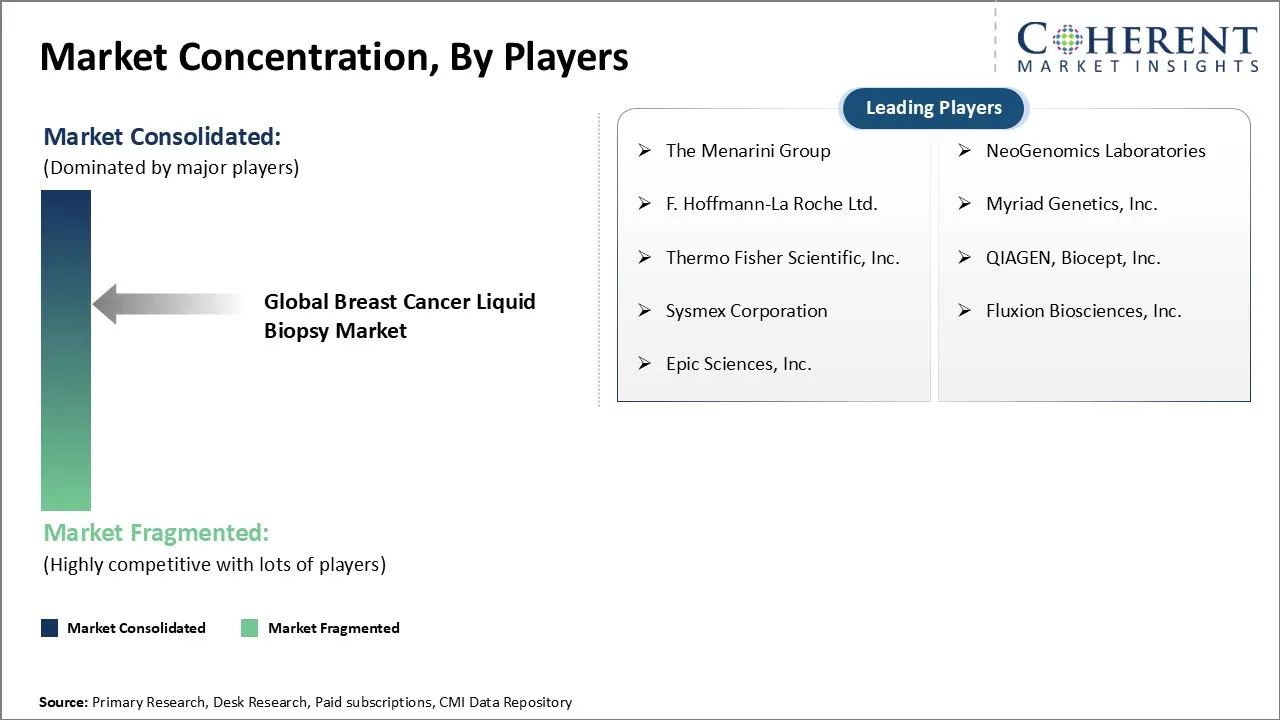
The global breast cancer liquid biopsy market is marked by growing competition between established molecular diagnostic companies, niche oncology labs, and emerging developers of liquid biopsy technology. The Menarini Group is reinforcing its position with the CELLSEARCH® platform for the detection and characterization of circulating tumor cells (CTCs). NeoGenomics Laboratories is enhancing its molecular residual disease testing capabilities through the RaDaR® platform and Roche, through Foundation Medicine, is developing comprehensive genomic profiling and ctDNA-based monitoring solutions. Myriad Genetics is dedicated to the identification of personalized molecular residual disease through its Precise MRD™ test. Liquid biopsy workflows are supported by next-generation sequencing equipment, sample preparation systems and molecular diagnostic solutions from Thermo Fisher Scientific and QIAGEN. Specialized expertise in circulating tumor cell analysis, microfluidics and cellular biomarker profiling is offered by Sysmex Corporation, Fluxion Biosciences and Epic Sciences. Competitive differentiation will increasingly be driven by assay sensitivity, biomarker coverage, clinical validation, regulatory approvals, reimbursement access, and integration into precision oncology treatment pathways.
Top Manufacturers and Notable Products/Solutions in the Breast Cancer Liquid Biopsy Market
Company/Manufacturer | Notable Product/Brand | Key Features |
The Menarini Group | CELLSEARCH® Circulating Tumor Cell System | FDA-cleared CTC enumeration technology, EpCAM-based cell enrichment, detection of epithelial tumor cells, prognostic assessment and monitoring support for metastatic breast cancer. |
NeoGenomics Laboratories | RaDaR® ST | Personalized ctDNA-based molecular residual disease (MRD) testing, whole-exome sequencing-based assay design, tracking of up to 48 patient-specific mutations, treatment response monitoring and recurrence surveillance. |
F. Hoffmann-La Roche Ltd. | FoundationOne® Liquid CDx; FoundationOne® MRD (Foundation Medicine) | Blood-based comprehensive genomic profiling, detection of actionable PIK3CA mutations, FDA-approved companion diagnostic applications, tumor-informed ctDNA detection and molecular recurrence monitoring. |
Myriad Genetics, Inc. | Precise MRD™ | Personalized whole-genome sequencing-based ctDNA testing, tracking of up to 1,000 tumor-specific variants, high-sensitivity molecular residual disease detection, treatment response assessment and longitudinal breast cancer surveillance. |
Thermo Fisher Scientific, Inc. | Oncomine™ Breast cfDNA Assay | Targeted next-generation sequencing for breast cancer-associated alterations, cfDNA mutation profiling, ESR1 and PIK3CA mutation analysis, Ion Torrent sequencing compatibility and research applications |
QIAGEN | QIAseq Targeted cfDNA Ultra Human Breast Cancer Panel | Targeted NGS analysis of breast cancer-associated genes, ultra-sensitive cfDNA mutation detection, molecular barcoding, identification of low-frequency somatic variants and research-use genomic profiling |
Market Report Scope
Breast Cancer Liquid Biopsy Market Report Coverage
Report Coverage | Details | ||
Base Year: | 2025 | Market Size in 2026: | USD 770.1 Mn |
Historical Data for: | 2020 to 2024 | Forecast Period: | 2026 to 2033 |
CAGR: | 20.2% | 2033 Value Projection: | USD 2,795.5 Mn |
Geographies covered: |
| ||
Segments covered: |
| ||
Companies covered: | The Menarini Group, NeoGenomics Laboratories, F. Hoffmann-La Roche Ltd., Myriad Genetics, Inc., Thermo Fisher Scientific, Inc., QIAGEN, Biocept, Inc., Sysmex Corporation, Fluxion Biosciences, Inc., and Epic Sciences, Inc. | ||
Growth Drivers: |
| ||
Restraints & Challenges: |
| ||
Analyst Opinion (Expert Opinion)
- The global breast cancer liquid biopsy market in the future will be more inclined toward ctDNA based precision oncology, molecular profiling and treatment response monitoring rather than the conventional diagnostic applications. Advances in next generation sequencing, digital PCR and high sensitivity molecular assays are enhancing the clinical utility of blood-based testing for detection of actionable mutations and surveillance of treatment resistance. On September 4, 2026, the U.S. FDA approved Guardant360 CDx as a companion diagnostic for the detection of ESR1 mutations in patients who are eligible to receive treatment with camizestrant. The key SERENA-6 clinical trial in 315 randomized patients showed median progression-free survival of 16.0 vs. 9.2 months in the comparator group. This highlights the increasing potential of ctDNA-guided treatment decisions in advanced breast cancer.
- The most significant growth opportunities are expected in companion diagnostics, molecular residual disease detection and longitudinal cancer monitoring. North America offers significant opportunities, supported by a well-developed oncology infrastructure, regulatory approvals and strong genomic testing networks. The National Cancer Institute (NCI) estimates that in 2026, 321,910 new cases of female breast cancer will be diagnosed in the U.S., representing 15.2% of all new cancer diagnoses. Europe is also becoming a key market due to integration of molecular testing into publicly funded healthcare systems. On 7 April 2026, NHS England announced the commissioning of ctDNA testing for ESR1 and PIK3CA/AKT/PTEN genomic alterations in eligible patients with breast cancer. Longer-term opportunities are present in the Asia Pacific region, as molecular diagnostics infrastructure expands and access to precision oncology increases.
- Market participants should focus on clinical validation, analytical sensitivity, comprehensive biomarker coverage, regulatory compliance and reimbursement access, rather than competing on technology alone. Manufacturers need to show that low-frequency tumor mutations can be detected reliably, that the test results are reproducible across testing platforms, and that there is measurable clinical value for treatment selection and disease monitoring. Expanding companion diagnostic applications may be valuable to companies developing assays for ESR1, PIK3CA and other actionable mutations. Data from NCI SEER 2019-2023 suggest that nearly 70% of female breast cancers were hormone receptor-positive HER2-negative, illustrating the large clinical population relevant to endocrine treatment pathways.
Speak to the analyst
Want personalized insights?
Take the findings above to one of our principal consultants, or have the report rebuilt around the segments, geographies and competitors you actually track.
Market Segmentation
- By Circulating Biomarkers (Revenue, USD Mn, 2021-2033)
- Circulating Tumor Cells (CTCs)
- Circulating Cell-free DNA (cfDNA)
- Extracellular Vesicles (EVs)
- Other Circulating Biomarkers
- By Application (Revenue, USD Mn, 2021-2033)
- Early Detection/Screening
- Diagnosis
- Treatment Selection
- Monitoring
- Global Breast Cancer Liquid Biopsy Market, By Region (Revenue, USD Mn, 2021-2033)
- North America
- U.S.
- Canada
- Latin America
- Brazil
- Mexico
- Argentina
- Rest of Latin America
- Europe
- Germany
- U.K.
- France
- Italy
- Spain
- Russia
- Rest of Europe
- Asia Pacific
- China
- India
- Japan
- Australia
- South Korea
- ASEAN
- Rest of Asia Pacific
- Middle East
- GCC
- Israel
- Rest of Middle East
- Africa
- South Africa
- Central Africa
- North Africa
- North America
- Key Players
- The Menarini Group
- NeoGenomics Laboratories
- F. Hoffmann-La Roche Ltd.
- Myriad Genetics, Inc.
- Thermo Fisher Scientific, Inc.
- QIAGEN, Biocept, Inc.
- Sysmex Corporation
- Fluxion Biosciences, Inc.
- Epic Sciences, Inc.
Sources
Primary Research Interviews
- Medical oncologists and breast cancer specialists
- Molecular pathologists and clinical laboratory directors
- Liquid biopsy technology developers and diagnostic assay manufacturers
- Genomics researchers and next-generation sequencing (NGS) specialists
- R&D heads from molecular diagnostics and biotechnology companies
- Hospital procurement managers and reference laboratory executives
- Key opinion leaders (KOLs) in precision oncology, breast cancer diagnostics, and circulating tumor DNA (ctDNA) testing
Databases
- National Cancer Institute (NCI) – Surveillance, Epidemiology, and End Results (SEER)
- World Health Organization (WHO) – Global Health Observatory
- International Agency for Research on Cancer (IARC) – Global Cancer Observatory
- U.S. Food and Drug Administration (FDA) – Medical Device Databases
- National Center for Biotechnology Information (NCBI) – PubMed
- ClinicalTrials.gov – U.S. National Library of Medicine
- Centers for Medicare & Medicaid Services (CMS)
- Organisation for Economic Co-operation and Development (OECD) – Health Statistics
Magazines
- Clinical OMICs
- GenomeWeb
- The Pathologist
- Medical Laboratory Observer
- Diagnostics World
- European Medical Journal – Oncology
Journals
- Journal of Clinical Oncology
- JAMA Oncology
- Clinical Cancer Research
- Annals of Oncology
- npj Breast Cancer
- Nature Reviews Clinical Oncology
- Molecular Cancer
- Breast Cancer Research
- Clinical Chemistry
- The Lancet Oncology
Newspapers
- The New York Times
- The Wall Street Journal
- Financial Times
- The Guardian
- The Economic Times
- Reuters
Associations
- American Society of Clinical Oncology (ASCO)
- European Society for Medical Oncology (ESMO)
- American Association for Cancer Research (AACR)
- Association for Molecular Pathology (AMP)
- College of American Pathologists (CAP)
- European Society of Pathology (ESP)
- International Society of Liquid Biopsy (ISLB)
- American Society for Clinical Pathology (ASCP)
Public Domain Sources
- Company Annual Reports, SEC Filings, and Investor Presentations
- U.S. FDA Diagnostic Test Approvals and Companion Diagnostic Listings
- NCI and WHO/IARC Cancer Incidence and Mortality Publications
- ClinicalTrials.gov and Peer-Reviewed Clinical Study Publications
- Government Cancer Screening and Precision Oncology Initiatives
- CMS Reimbursement Policies and Medicare Coverage Determinations
- European Medicines Agency (EMA) and European Commission Regulatory Publications
- University Research Publications and Cancer Institute Reports
- Patent Databases, including WIPO, USPTO, and Google Patents
- Publicly Available Product Portfolios, Technical Specifications, and Clinical Validation Reports from Liquid Biopsy Manufacturers
Proprietary Elements
- CMI Data Analytics Tool
- Proprietary CMI Existing Repository of Information for the Last 10 Years
Get access to 250+ pages report
Every segment, forecast, competitor profile and data table behind the analysis above — available for instant download.
- ESOMAR Member
- ISO 9001:2015 Certified
- D-U-N-S Registered
- GDPR & CCPA Compliant
Frequently Asked Questions
The global Breast Cancer Liquid Biopsy Market is expected to reach USD 2,795.5 Mn by 2033, increasing from USD 770.1 Mn in 2026.
Major players operating in the global Breast Cancer Liquid Biopsy Market include The Menarini Group, NeoGenomics Laboratories, F. Hoffmann-La Roche Ltd., Myriad Genetics, Inc., Thermo Fisher Scientific, Inc., QIAGEN, Biocept, Inc., Sysmex Corporation, Fluxion Biosciences, Inc., and Epic Sciences, Inc.
High liquid biopsy testing costs, limited sensitivity in early-stage breast cancer detection, lack of standardized testing protocols, and reimbursement challenges are the major factors hampering market growth.
The rising incidence of breast cancer, increasing adoption of minimally invasive diagnostic technologies, growing demand for personalized cancer treatment, and advancements in ctDNA testing and next-generation sequencing are driving market growth.
The global Breast Cancer Liquid Biopsy Market is anticipated to grow at a CAGR of 20.2% from 2026 to 2033.
North America is expected to dominate the global Breast Cancer Liquid Biopsy Market, accounting for approximately 47.3% of the market share in 2026, supported by advanced oncology infrastructure and increasing adoption of molecular diagnostics.
Breast cancer liquid biopsy is a minimally invasive diagnostic approach that analyzes tumor-derived biomarkers, including circulating tumor DNA (ctDNA), circulating tumor cells (CTCs), and extracellular vesicles, in blood or other body fluids to support molecular profiling, treatment selection, and cancer monitoring.