

Global Brugada Syndrome Market Size and Forecast – 2026 to 2033
The Global Brugada Syndrome Market is estimated to be valued at USD 1.47 Bn in 2026 and is expected to reach USD 2.23 Bn by 2033, reflecting a compound annual growth rate (CAGR) of 6.1% from 2026 to 2033. This steady growth is driven by increasing awareness, improved diagnostic techniques, and advancements in treatment options that cater to the rising patient population diagnosed with this genetic cardiac disorder worldwide.
Key Takeaways of the Global Brugada Syndrome Market
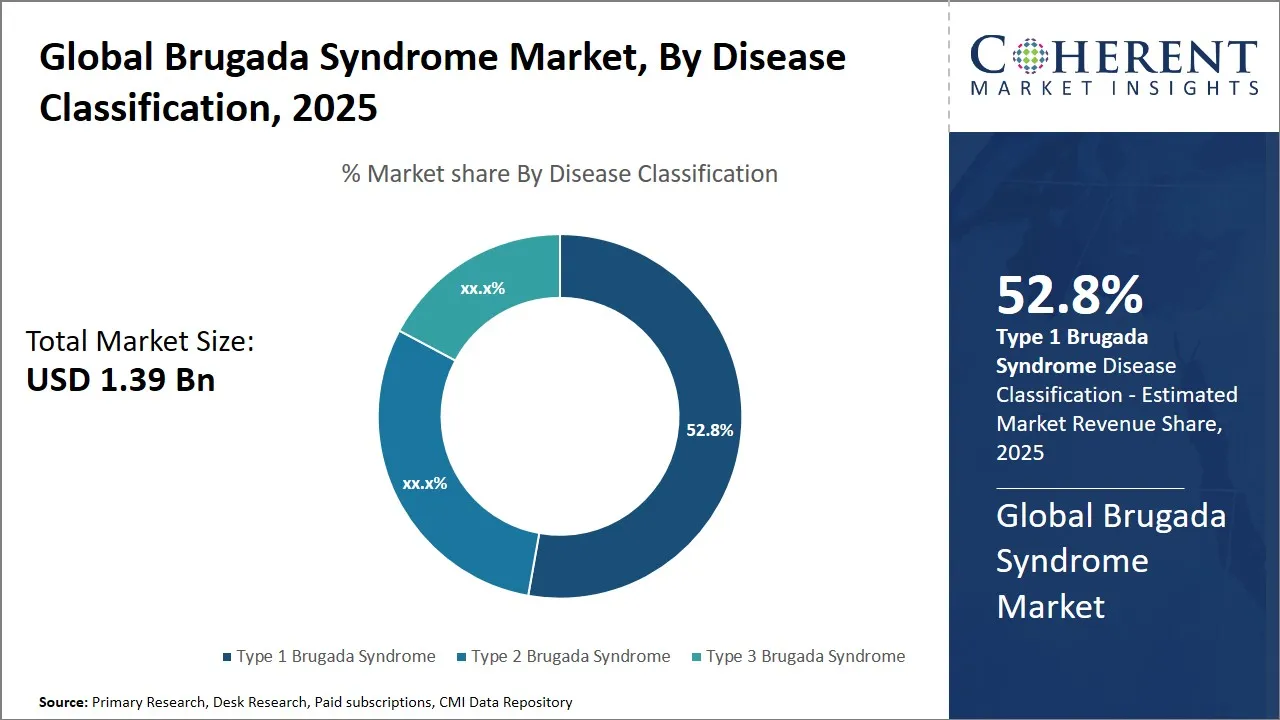
- In disease classification, type 1 Brugada syndrome segment is expected to account for the largest share of the market at 53.8 % in 2026.
- Within product types, Implantable Cardioverter-Defibrillators (ICDs) segment is projected to dominate with a 35.4 % of the market share in 2026.
- Resting Electrocardiogram (ECG) segment is expected to command 35.8 % share in 2026.
- North America is expected to lead the market, holding a share of 39.2 % in 2026. Asia Pacific is anticipated to be the fastest-growing region, with 23.5% share in 2026.
Market Overview
- The market trend indicates a shift towards personalized medicine and the incorporation of advanced genetic testing to better identify at-risk individuals for Brugada Syndrome.
- Additionally, there is growing adoption of implantable cardioverter-defibrillators (ICDs) and novel pharmacological therapies that enhance patient outcomes.
- Increasing R&D investments, along with rising collaboration between academic institutions and industry players, are further propelling innovation and expanding the therapeutic landscape within the Brugada syndrome market.
Current Events and Its Impact
Current Events | Description and its Impact |
Accelerated Adoption of mRNA & Biologic Therapies |
|
Ultra Long‑Acting & Digital Delivery Innovation |
|
Segmental Insights
- Current Industry Events of 2026
- Market Size Estimation
- Regional Breakdown
- Competitive Landscape
- Customer Intelligence
- Segmental Analysis
- Pricing Analysis
- Key Market Drivers, Challenges & Future Trends
- Customized Insights Section
Why Does Type 1 Brugada Syndrome Lead the Global Brugada Syndrome Market in 2026?
In terms of disease classification, Type 1 Brugada syndrome dominates the global market, accounting for 53.8% share in 2026, driven by its clearly defined ECG pattern and strong diagnostic certainty. The coved-type ST-segment elevation in the right precordial leads on the ECG, which is used as a definitive diagnostic feature, is seen in Type 1 and permits early and assured diagnosis as there is in other types.
The syndrome is linked to sudden cardiac death as a result of malignant arrhythmias; therefore, timely risk stratification and management is essential as this diagnosis is clearly indicated by this diagnostic signature. The acuity and increased morbidity of lethal arrhythmias associated with Type 1 Brugada Syndrome also focus markets on this market.
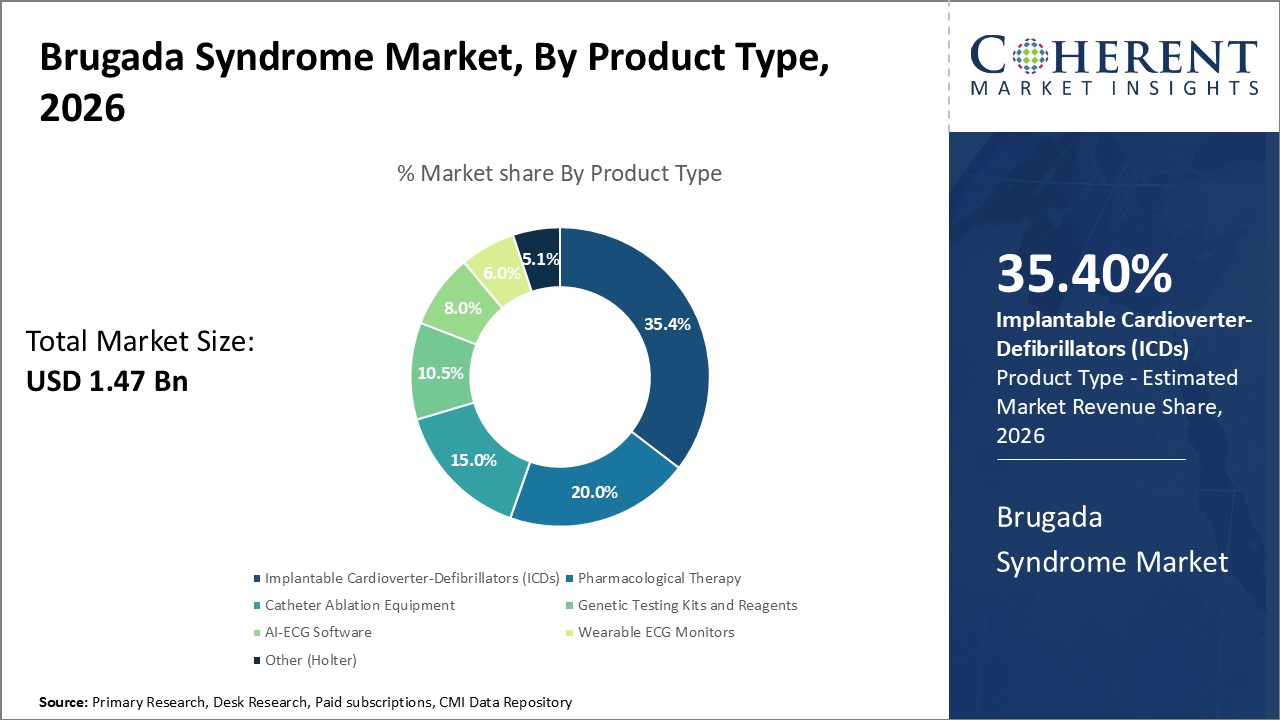
Why are Implantable Cardioverter-Defibrillators (ICDs) Central to Treatment Strategies in Brugada Syndrome?
In the product type category, implantable cardioverter-defibrillators (ICDs) will hold the largest market share of 35.4% in 2026. This is mostly due to the saving aspect that ICDs have on the prevention of sudden cardiac death, which is the most dreaded symptom of the syndrome. ICDs continuously record heart rhythms and provide a timely shock to eliminate life-threatening arrhythmias, which makes them essential to high-risk Brugada patients, especially Type 1.
Clinical practice guidelines that suggest the use of ICDs as an intervention to be used with patients experiencing cardiac arrest or syncope that can be attributed to ventricular fibrillation or tachycardia reinforce the importance of the intervention. This has been a powerful clinical recommendation that has led to massive application of ICD technology making it the foundation of the management of Brugada syndrome.
Why Does Resting ECG Remain the Go-To Diagnostic Tool for Identifying Brugada Syndrome?
The Resting Electrocardiogram (ECG) is expected to account for the largest market share of 34.8% in 2025 due to its simplicity, affordability, and accuracy in diagnosis.
Primary tool to identify the characteristic ways the ST-segment elevation patterns of Brugada syndrome look when in the resting ECG is the way to initially diagnose and regularly follow up with the disease without invasive intervention or costly machinery. The non-invasive and easy accessibility of resting ECG have led to its use as a screening in a wide variety of clinical environments, including special electrophysiology laboratories and in the primary care setting.
In Asia and emerging markets, companies such as Nihon Kohden, Mindray, and Schiller Group have expanded access to cost-efficient resting ECG machines across secondary hospitals and diagnostic labs.
(Source:https://eu.nihonkohden.com/products/cardiology/cardiofax-M)
Genetic Testing Uptake and Diagnostic Yield in Brugada Syndrome
- Genetic testing penetration in the Brugada syndrome market remains moderate but is steadily increasing, driven by improved clinical awareness, guideline-backed testing recommendations, and wider access to next-generation sequencing. Testing is most commonly adopted in tertiary cardiac centers, inherited arrhythmia clinics, and academic hospitals, particularly for patients with unexplained ventricular fibrillation or a positive family history. Despite this progress, routine genetic screening is not universally applied, as diagnosis remains primarily ECG-based, and cost–benefit considerations still limit widespread testing in lower-risk or asymptomatic populations.
- Yield rates from genetic testing in Brugada syndrome are relatively low compared with other inherited cardiac disorders. Pathogenic or likely pathogenic variants are identified in roughly 20–30% of clinically diagnosed patients, with SCN5A accounting for the majority of positive findings. The remaining cases often involve variants of uncertain significance or unidentified genetic mechanisms, which constrains the clinical utility of testing for definitive diagnosis. As a result, genetic testing is primarily used for risk stratification, family screening, and research rather than standalone confirmation.
Regional Insights
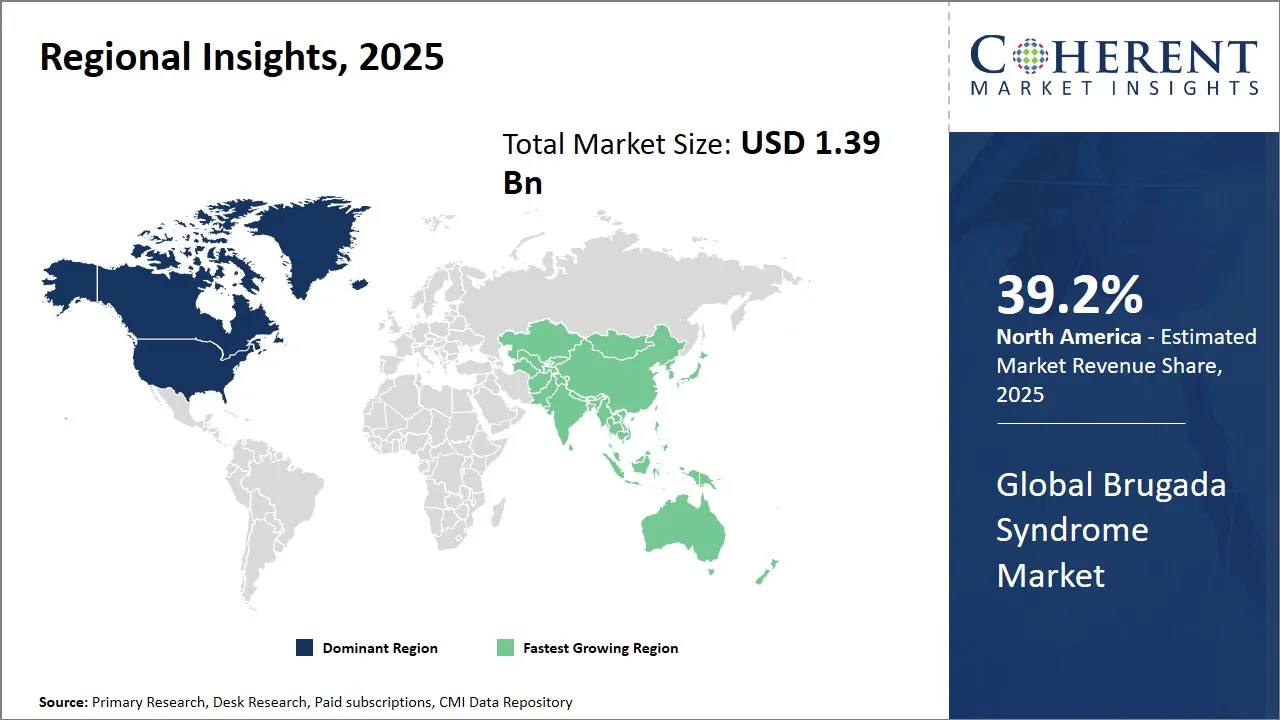
North America Brugada Syndrome Market Analysis and Trends
North America’s dominance in the global Brugada syndrome market, with an estimated share of 39.2% in 2026, is caused by a well-developed healthcare system, high level of medical research, and high investment in cardiac health awareness.
The existence of major pharmaceutical and medical equipment corporations with a specialization on arrhythmia and inherited cardiac disorders also contributes to the growth in the market greatly. The main companies, such as Medtronic, Abbott Laboratories, and Boston Scientific, have strong operations in this area, developing such technologies as implantable cardioverter defibrillators (ICDs), which is an essential part of the management and treatment of Brugada syndrome.
In March 2026, Silvia G. Priori, a globally recognized cardiology researcher, received the ACC Valentin Fuster Award. The honor recognized her pioneering contributions to inherited cardiac arrhythmias, including Brugada Syndrome risk stratification. Her work advanced genetic diagnostics, clinical risk models, and gene therapy development. The award was presented during the ACC Annual Scientific Session in Chicago, U.S.
(Source:https://www.cnic.es/en/noticias/silvia-g-priori-receive-acc-valentin-fuster-award-innovation-science)
Asia Pacific Brugada Syndrome Market Analysis and Trends
Asia Pacific has the highest growth rate due to the growing awareness of cardiovascular diseases with market share of 23.5% in 2026, enhanced health care buildings and rising government spending on heart care. Other countries such as India, China, Japan are experiencing an improved diagnostic facility and increased investment in genetic research and electrophysiology centers.
The growing population of middle classes and the growing number of sudden cardiac death cases promote the adoption of early diagnosis and treatment. The major companies like Abbott Laboratories, Medtronic, and Biosensors International Group have greatly extended their reach by the way of joint ventures and domestic production, which brought about the reduction in the treatment costs and the ease of access.
Brugada Syndrome Market Outlook for Key Countries
How is Advanced Healthcare Infrastructure Shaping the U.S. Brugada Syndrome Market?
The market of the U.S. Brugada syndrome is characterized by high-level healthcare provision and high interest rate in cardiac electrophysiology and genetics R&D. The most successful companies such as Medtronic and Boston Scientific are putting heavy investments on the creation of new ICDs and diagnostic equipment.
Moreover, Brugada syndrome is early diagnosed and treated with federal grants on rare heart diseases and proactive recommendations by organizations like the American Heart Association. Healthy insurance systems and patient advocacy societies are also a source of improved disease management.
Japan Brugada Syndrome Market Trends
Japan continues playing a critical role in Brugada syndrome market owing to its developed healthcare system and considerable genetic research efforts. The government encourages genetic screening programs to be integrated into the routine care that facilitates early diagnosis.
Firms like Abbott and domestic forces like Nihon Kohden Corporation are targeting customized equipment and treatments that would suit the genetic mutations that are common in the East Asian market. Japan has a strict regulatory culture that is guaranteed to keep new treatments safe and effective and encourages innovation.
How is China’s Healthcare Expansion Influencing the Brugada Syndrome Market?
The Brugada syndrome market in China is currently developing at high rates due to the increase in access of specialized cardiac care and genetic testing with government reforms of the healthcare system. Local partnerships and enhanced production in the country lower the prices and enhance supply of ICDs and electrophysiology devices.
Large multinational companies such as Medtronic invest with domestic companies to expansive operations to streamline supply chains. Also, increasing public awareness of such diseases as Brugada syndrome helps to interfere in the treatment earlier and monitor the patients longer.
Germany Brugada Syndrome Market Trends
The Brugada syndrome market leadership in Germany is greatly due to the high pharmaceutical and medical device industry in Europe that is backed by the government in personalized medicine and genetic research. It has such companies as BioNTech and Siemens Healthineers that help to reduce the number of diagnostic and treatment alternatives to Brugada syndrome.
The universal healthcare reimbursement model of the country enables wider access by the patients to novel treatment, thereby increasing the market maturity and its adoption level. The German Cardiac Society is also significant in the development of clinical guidelines and informing physicians.
Geographic Hotspots and Ethnic Concentration Shaping the Global Brugada Syndrome Market
- Brugada syndrome shows clear geographic hotspot concentration in Southeast Asia, making the region the global epicenter for disease prevalence and clinical burden. Countries such as Thailand, Philippines, Indonesia, Malaysia, Vietnam, Singapore, along with parts of South Asia, consistently report higher prevalence than Europe and North America. East Asia (Japan, China) represents a secondary hotspot, while the Middle East appears under-mapped due to limited systematic screening. In Western markets, detected prevalence is lower and largely concentrated in tertiary electrophysiology centers and high-risk subpopulations.
- From an ethnic prevalence perspective, individuals of Southeast Asian ancestry demonstrate the strongest over-representation, with higher rates of spontaneous Type-1 ECG patterns and malignant arrhythmic events. Across all geographies, male predominance is pronounced, particularly in young to middle-aged adults, amplifying screening yield in this cohort. Ethnic differences in genetic mutation yield and clinical presentation shape market demand, with high-prevalence populations driving greater utilization of ECG screening, fever-triggered diagnostic protocols, ICD implantation, ablation services, and family cascade screening pathways.
Market Players, Key Developments, and Competitive Intelligence
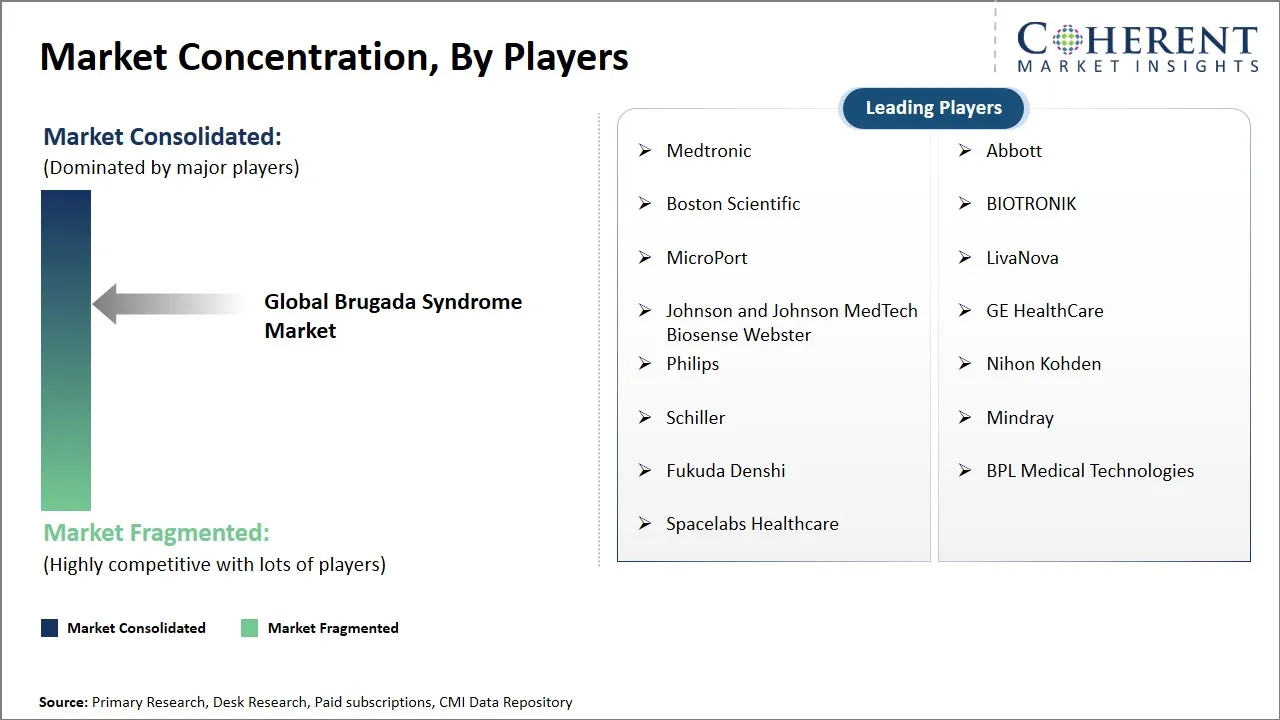
Key Developments
- In August 2025, Medera, a cardiovascular biotechnology company, and Novoheart, a human cardiac organoid developer, advanced heart-in-a-jar technology for drug testing. The platform supports human-relevant cardiac safety screening, including arrhythmia risk assessment for Brugada Syndrome. Regulatory momentum increased following USFDA workshops and alignment with the USFDA Modernization Act 2.0. The mini-heart model demonstrated improved prediction of cardiotoxicity compared to animal testing.
- In March 2025, Abbott, a global medical device leader in cardiovascular and electrophysiology solutions, received CE Mark approval for its Volt Pulsed Field Ablation System, demonstrating 99.1% pulmonary-vein isolation success and initiating commercial procedures across European markets.
- In January 2025, AliveCor, a pioneer in AI-driven cardiac diagnostics and remote ECG technologies, validated its Kardia 12L ECG System, confirming equivalence to conventional 12-lead ECGs across 35 cardiac determinations and strengthening the case for AI-enabled point-of-care cardiac screening.
- In July 2025, the BRAVE trial was discussed live at Heart Rhythm 2025 in San Diego, U.S. the multicenter study showed catheter ablation significantly reduced ventricular fibrillation episodes in Brugada Syndrome patients with ICDs. Interim results demonstrated 83% ventricular fibrillation freedom after one procedure and 90% after repeat ablation. Findings strengthen ablation as a preventive strategy for high-risk Brugada Syndrome patients.
Top Strategies Followed by Global Brugada Syndrome Market Players
Player Type | Strategic Focus | Example |
Established Market Leaders | Heavy R&D for clinically advanced ICDs EP systems and high-fidelity ECG platforms strategic alliances with OEMs and hospital networks global expansion into faster diagnosis markets | Medtronic Abbott Boston Scientific BIOTRONIK Johnson & Johnson MedTech Biosense Webster expand ICD and EP portfolios and scale globally |
Mid-Level Players | Cost optimized devices meeting core clinical standards partnerships with research labs and contract manufacturing to reduce R&D burden expansion in price sensitive public and mid-tier private hospitals | MicroPort LivaNova Schiller Mindray Nihon Kohden compete on value engineering and regional channel build out |
Small-Scale Players | Niche innovation in portable monitoring AI assisted ECG interpretation and digital follow up localized partnerships for faster regulatory entry and provider onboarding focus on specific workflows and unmet needs | AliveCor iRhythm and regional digital cardiology firms in India build wearable ECG and remote monitoring focused offerings |
Market Report Scope
Brugada Syndrome Market Report Coverage
| Report Coverage | Details | ||
|---|---|---|---|
| Base Year: | 2025 | Market Size in 2026: | USD 1.47 Bn |
| Historical Data for: | 2020 To 2024 | Forecast Period: | 2026 To 2033 |
| Forecast Period 2026 to 2033 CAGR: | 6.1% | 2033 Value Projection: | USD 2.23 Bn |
| Geographies covered: |
| ||
| Segments covered: |
| ||
| Companies covered: | Medtronic, Abbott, Boston Scientific, BIOTRONIK, MicroPort, LivaNova, Johnson and Johnson MedTech Biosense Webster, GE HealthCare, Philips, Nihon Kohden, Schiller, Mindray, Fukuda Denshi, BPL Medical Technologies, and Spacelabs Healthcare | ||
| Growth Drivers: |
| ||
| Restraints & Challenges: |
| ||
Brugada Syndrome Market Dynamics
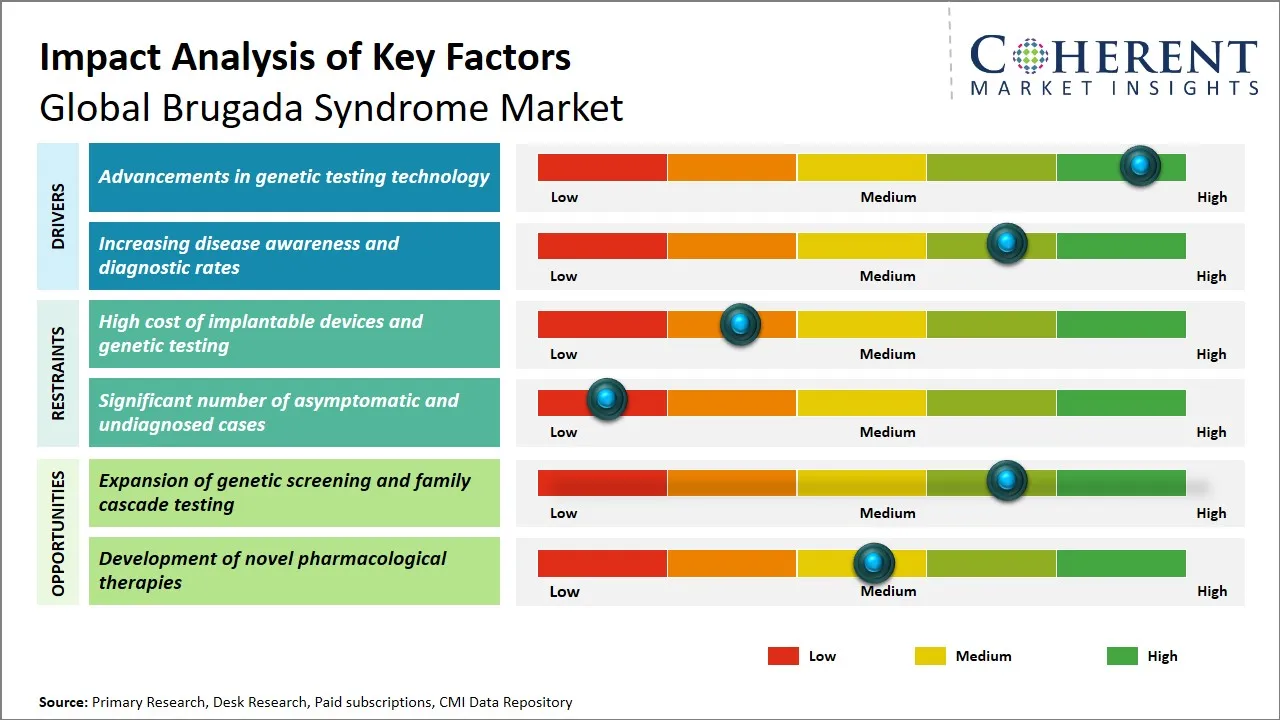
Brugada Syndrome Market Driver - Advancements in Genetic Testing Technology
Genetic testing technology has played an important role in the field of Brugada syndrome market in terms of having a more precise and timely diagnosis of this inherited cardiac disorder. State-of-the-art next-generation sequencing (NGS) technologies and enhanced bioinformatics tools have enabled the identification of gene mutation in SCN5A and other diseases with more precision and speed, enabling people at risk to be discovered before they become clinically relevant. Such technological advances do not only increase the accuracy of the diagnosis, but also contribute to the individualized treatment strategies based on the genetic characteristics of a particular patient.
In December 2025, Victor Chang Cardiac Research Institute, an Australian heart research leader, partnered with Vanderbilt University Medical Center, a U.S. academic hospital, to advance Brugada Syndrome diagnosis. Researchers developed a high-throughput SCN5A genetic function test improving risk assessment accuracy. The study analyzed 252 variants from over 450 Brugada Syndrome patients. Nearly half of previously uncertain variants were reclassified, enabling clearer clinical decisions.
(Source: https://www.victorchang.edu.au/news/new-brugada-test)
Brugada Syndrome Market Opportunity - Expansion of Genetic Screening and Family Cascade Testing
The Brugada syndrome market on the global level is also a huge business opportunity with the growing focus on the genetic screening and family cascade testing. Brugada Syndrome is an inherited cardiac disorder associated with unanticipated cardiac death and is usually caused by mutation in certain genes like SCN5A. With the level of awareness on the genetically patterned Brugada Syndrome, there is rising pressure on advanced genetic testing to detect the at-risk persons before the symptoms appear. Genetic screening allows identifying pathogenic mutations and diagnosing early and intervening on time.
Moreover, family cascade testing screening relatives of diagnosed patients may reveal other affected ones in the family, which will greatly enhance the pool of patients receiving targeted therapy as well as monitoring.
In April 2025, Jiangxi Provincial Maternal and Child Health Hospital, a leading maternal genetics center, published major screening findings. The study appeared in Scientific Reports, a global peer reviewed medical research journal. Researchers analyzed expanded carrier screening data from over 6,300 individuals in Southern Central China. Results showed high carrier rates for inherited conditions, improving early genetic risk detection. The findings strengthen population screening relevance for inherited cardiac risks, including Brugada Syndrome predisposition pathways.
Analyst Opinion (Expert Opinion)
- Brugada syndrome market: The Brugada syndrome market is developing as ECG analytics, genetic testing, and electroanatomical mapping have become more accurate in their diagnosis and risk assessment. There is an increase in clinical confidence of epicardial catheter ablation gradually eliminating the use of implantable defibrillators, therefore, in the selected patients. Still, the skewed screening procedures, shortage of specialists, and non-uniformity in reimbursement of genetic tests remain to limit the wider adoption. The gaps make the application of AI-aided diagnostics, standard treatment routes, and increased electrophysiology services possible, and point at the need to assist the translation of research-based innovations into the everyday practice.
- The dissemination of information and awareness has been marked to a large extent by the major cardiology conferences like the Heart Rhythm Society Scientific Sessions, European Heart Rhythm Association Congress and ESC Congress with recent trial information and updates in consensus on the latest treatment options of cardiovascular diseases. In the implementation level, multicenter studies such as that of BRAVE have impacted hospital investment on advanced ablation infrastructure especially in Asia Pacific and Europe. The need to develop high-quality evidence over the long term is being enhanced by national registries and academic industry partnerships, which are supporting a slow shift to more active and interventionist management of Brugada syndrome.
Speak to the analyst
Want personalized insights?
Take the findings above to one of our principal consultants, or have the report rebuilt around the segments, geographies and competitors you actually track.
Market Segmentation
- Disease Classification Insights (Revenue, USD Bn, 2021 - 2033)
- Type 1 Brugada Syndrome
- Type 2 Brugada Syndrome
- Type 3 Brugada Syndrome
- Product Type Insights (Revenue, USD Bn, 2021 - 2033)
- Implantable Cardioverter-Defibrillators (ICDs)
- Pharmacological Therapy
- Catheter Ablation Equipment
- Genetic Testing Kits and Reagents
- AI-ECG Software
- Wearable ECG Monitors
- Other (Holter)
- Diagnostic Modality Insights (Revenue, USD Bn, 2021 - 2033)
- Resting Electrocardiogram (ECG)
- Provocation Testing (Sodium Channel Blocker Tests)
- Genetic Testing
- Electrophysiology Study (EPS)
- Age Group Insights (Revenue, USD Bn, 2021 - 2033)
- Pediatric
- Adult
- Geriatric
- Gender Insights (Revenue, USD Bn, 2021 - 2033)
- Male
- Female
- End User Insights (Revenue, USD Bn, 2021 - 2033)
- Hospitals
- Specialty Cardiac Centers
- Diagnostic and Genetic Testing Laboratories
- Home/Remote Care Providers
- Research and Academic Institutes
- Regional Insights (Revenue, USD Bn, 2021 - 2033)
- North America
- U.S.
- Canada
- Latin America
- Brazil
- Argentina
- Mexico
- Rest of Latin America
- Europe
- Germany
- U.K.
- Spain
- France
- Italy
- Russia
- Rest of Europe
- Asia Pacific
- China
- India
- Japan
- Australia
- South Korea
- ASEAN
- Rest of Asia Pacific
- Middle East
- GCC Countries
- Israel
- Rest of Middle East
- Africa
- South Africa
- North Africa
- Central Africa
- North America
- Key Players Insights
- Medtronic
- Abbott
- Boston Scientific
- BIOTRONIK
- MicroPort
- LivaNova
- Johnson and Johnson MedTech Biosense Webster
- GE HealthCare
- Philips
- Nihon Kohden
- Schiller
- Mindray
- Fukuda Denshi
- BPL Medical Technologies
- Spacelabs Healthcare
Sources
Primary Research Interviews
Industry Stakeholders List
- Consultant Cardiac Electrophysiologists
- Clinical Geneticists (Cardiac Genetics)
- Hospital EP Lab Directors
- Medical Device Regulatory Affairs Heads
- University Cardiology Researchers
- Clinical Trial Investigators
End Users List
- Tertiary Care Hospitals
- Cardiac Specialty Hospitals
- Academic Medical Centers
- Public Healthcare Systems
- Private Multispecialty Hospitals
- Advanced Electrophysiology Clinics
Government and International Databases
- World Health Organization
- National Institutes of Health
- Centers for Disease Control and Prevention
- European Medicines Agency
- U.S. Food and Drug Administration
- National Center for Biotechnology Information
Trade Publications
- Circulation: Arrhythmia and Electrophysiology
- Heart Rhythm Journal
- European Heart Journal
- Journal of Cardiovascular Electrophysiology
- Nature Medicine
- The Lancet Cardiology
Academic Journals
- Journal of the American College of Cardiology
- Heart Rhythm O2
- Europace
- Scientific Reports
- PLOS One
Reputable Newspapers
- The New York Times
- The Guardian
- Financial Times
- The Washington Post
- The Hindu
- South China Morning Post
Industry Associations
- Heart Rhythm Society
- European Society of Cardiology
- European Heart Rhythm Association
- American Heart Association
- Asia Pacific Heart Rhythm Society
- World Heart Federation
Public Domain Resources
- ClinicalTrials.gov
- WHO Global Health Observatory
- MedlinePlus
- Open Access Government Portals
- National Health Service Knowledge Hub
Proprietary Elements
- CMI Data Analytics Tool: Proprietary analytics tool to analyze real-time market trends, consumer behavior, and technology adoption in market
- Proprietary CMI Existing Repository of Information for Last 8 Years
Get access to 250+ pages report
Every segment, forecast, competitor profile and data table behind the analysis above — available for instant download.
- ESOMAR Member
- ISO 9001:2015 Certified
- D-U-N-S Registered
- GDPR & CCPA Compliant
Missing comfort of reading report in your local language? Find your preferred language:
Transform your Strategy with Exclusive Trending Reports
Frequently Asked Questions
The global Brugada syndrome market is estimated to be valued at USD 1.47 Bn in 2026 and is expected to reach USD 2.23 Bn by 2033.
The CAGR of global Brugada syndrome market is projected to be 6.1% from 2026 to 2033.
Advancements in genetic testing technology and increasing disease awareness and diagnostic rates are the major factors driving the growth of the global Brugada syndrome market.
High cost of implantable devices and genetic testing and significant number of asymptomatic and undiagnosed cases are the major factors hampering the growth of the global Brugada syndrome market.
In terms of disease classification, the type 1 Brugada syndrome segment is estimated to dominate the market revenue share in 2026.
Genetic testing supports risk stratification but remains complementary due to variable mutation detection rates.
AI-enabled ECG algorithms improve pattern recognition and reduce diagnostic variability.