

Global Cell Signaling Market Size and Forecast – 2026 to 2033
The Global Cell Signaling Market is estimated to be valued at USD 6.60 Bn in 2026 and is expected to reach USD 11.09 Bn by 2033, exhibiting a compound annual growth rate (CAGR) of 7.8% from 2026 to 2033.
Key Takeaways of the Global Cell Signaling Market:
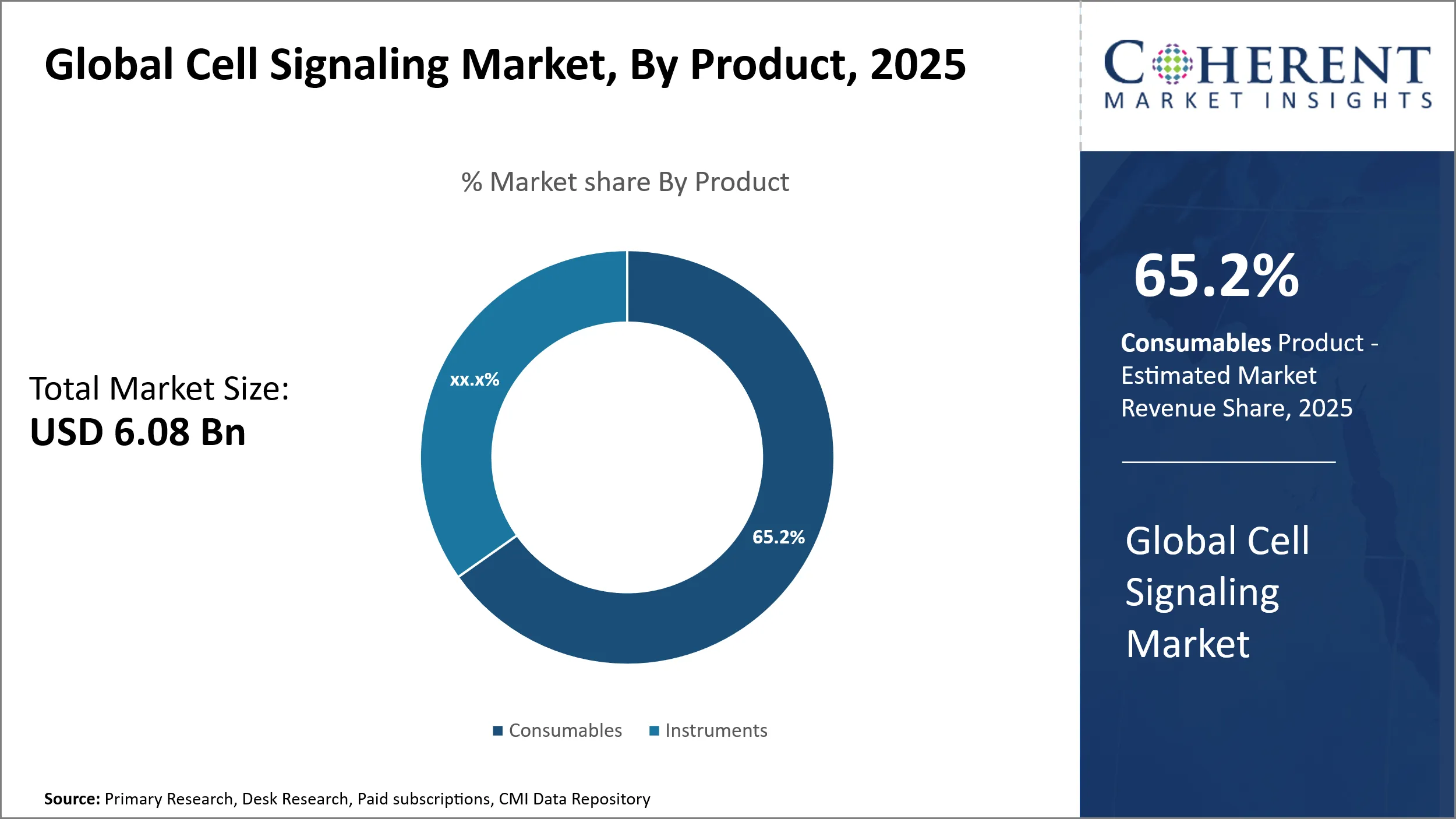
- By product, the consumables segment is expected to lead the market with a 66.2% share in 2026.
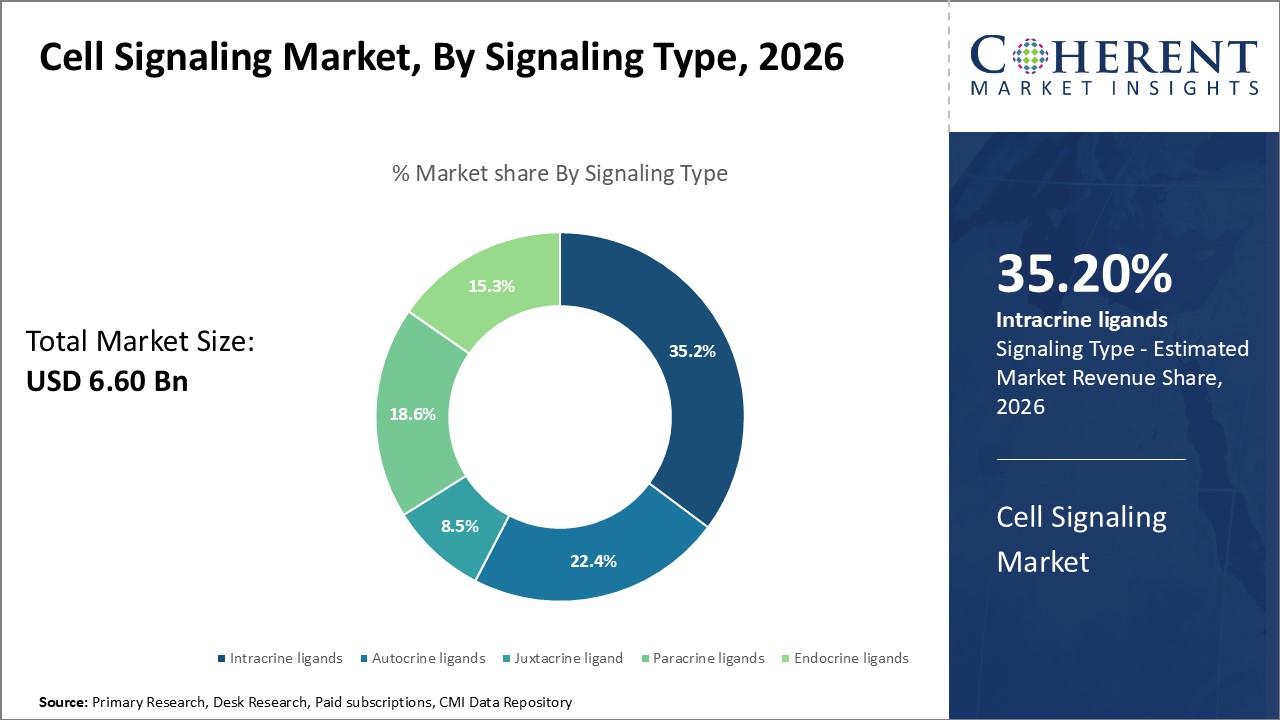
- By signaling type, the intracrine ligands segment is projected to dominate with a 35.2% share in 2026.
- By pathway, the MAPK/ERK pathway segment is expected to account for the highest share of 22.1% in 2026.
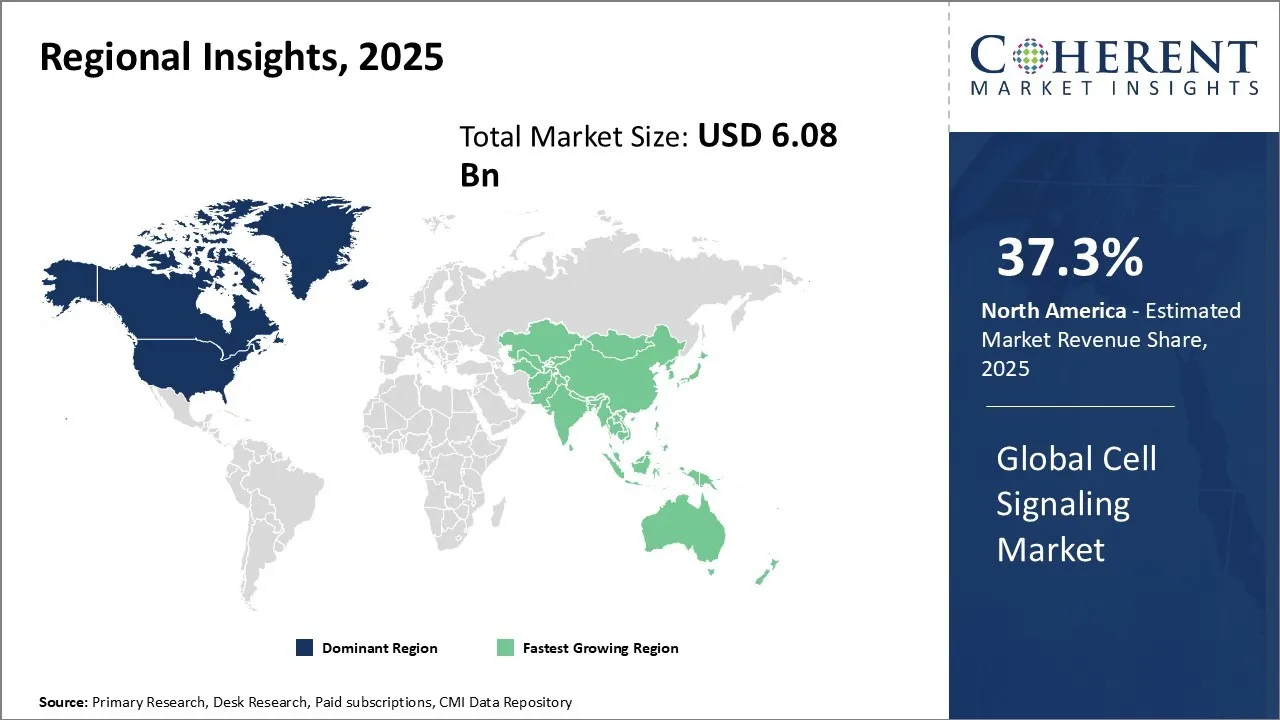
- North America is expected to lead the market, holding a share of 37.3% in 2026. Asia Pacific is anticipated to be the fastest-growing region, with a market share of 32.4% in 2026.
Market Overview:
The cell signaling market is experiencing significant growth due to the increasing prevalence of chronic diseases, advancements in cell signaling technologies, and growing investments in research and development. The market is also driven by the rising demand for personalized medicine and the expanding applications of cell signaling in drug discovery and development. Furthermore, the growing focus on targeted therapies and the increasing adoption of cell signaling techniques in various research fields are expected to fuel market growth in the coming years.
Currents Events and their Impact
Current Events | Description and its impact |
Technological Advancements in Cell Signaling Research Tools |
|
Increased Investment in Biotechnology |
|
Segmental Analysis
- Current Industry Events of 2026
- Market Size Estimation
- Regional Breakdown
- Competitive Landscape
- Customer Intelligence
- Segmental Analysis
- Pricing Analysis
- Key Market Drivers, Challenges & Future Trends
- Customized Insights Section
Cell Signaling Market Insights, By Product - Consumables Dominate the Cell Signaling Market Due to Their Crucial Role in Research and Development
In terms of product, the consumables segment is expected to contribute the highest share of the market with 66.2% in 2026 owing to their essential role in cell signaling research and development. Consumables, which include reagents, antibodies, and assay kits, are the backbone of cell signaling studies. These products are widely used in various research applications, such as protein expression analysis, cell viability assays, and pathway-specific investigations. The increasing demand for consumables can be attributed to several factors, including the growing interest in understanding cellular mechanisms, the rising prevalence of chronic diseases, and the need for targeted therapies.
One of the primary drivers of the consumables segment's growth is the continuous advancements in technology and the development of novel research tools. Manufacturers are focusing on creating innovative and high-quality consumables that cater to the evolving needs of researchers. For instance, the introduction of multiplex assays and high-throughput screening kits has revolutionized the way cell signaling studies are conducted, enabling researchers to analyze multiple targets simultaneously and obtain more comprehensive data.
Cell Signaling Market Insights, By Signaling Type - Intracrine Ligands Lead the Way in Cell Signaling Market Growth
In terms of signaling type, the intracrine ligands segment is expected to contribute the highest share of the market with 35.2% in 2026. Intracrine signaling involves the binding of ligands to intracellular receptors, which then directly influence gene expression and cellular processes. The growth of this segment can be attributed to several factors, including the increasing recognition of the role of intracrine signaling in various physiological and pathological processes, the development of novel research tools to study intracrine pathways, and the potential therapeutic applications of targeting intracrine signaling.
Intracrine signaling has been implicated in a wide range of biological processes, such as cell growth, differentiation, and apoptosis. The growing understanding of the importance of intracrine signaling in regulating these processes has spurred research interest in this area. Researchers are actively investigating the mechanisms underlying intracrine signaling and its role in diseases such as cancer, autoimmune disorders, and metabolic syndromes. This increased research activity has driven the demand for specialized tools and reagents to study intracrine pathways, thereby contributing to the growth of this segment.
Cell Signaling Market Insights, By Signaling Pathway - MAPK/ERK Pathway Dominates the Cell Signaling Market with Its Pivotal Role in Cell Proliferation and Survival
The MAPK/ERK pathway holds the largest share in the global cell signaling market with an estimated share of 22.1% in 2026, owing to its central function in regulating key cellular activities such as proliferation, differentiation, and survival. This signaling cascade is activated by a variety of extracellular stimuli—including growth factors and cytokines—and plays a critical role in transducing signals from the cell surface to the nucleus.
One of the primary factors contributing to the dominance of this segment is the pathway’s crucial involvement in cancer biology. Aberrations in the Mitogen-Activated Protein Kinase/Extracellular Signal-Regulated Kinase signaling cascade, such as mutations in RAS or RAF proteins, are frequently associated with various forms of cancer, making it a high-priority target for oncology research and drug development. As a result, there has been a surge in the development of targeted therapies, such as MEK and ERK inhibitors, which are designed to modulate this pathway in cancer treatment.
Role of Artificial Intelligence (AI) in the global cell signaling market
- Artificial Intelligence (AI) is reshaping the global cell signaling market by enabling unprecedented efficiency, precision, and innovation across drug discovery, diagnostics, and personalized medicine. By leveraging AI-powered predictive analytics, researchers can simulate complex signaling pathways and predict cellular responses to specific stimuli, thereby accelerating the identification of potential drug targets. This reduces the time and cost associated with laboratory experiments and enhances the probability of success in preclinical stages. AI also plays a key role in automating image analysis and flow cytometry, which are critical techniques in cell signaling research, leading to faster and more reproducible outcomes. Furthermore, AI-driven platforms facilitate real-time data interpretation and decision-making, allowing researchers and biopharmaceutical companies to streamline R&D pipelines, personalize treatment strategies, and improve overall operational workflows.
- An example of AI application in this market is BenevolentAI, a U.K.-based biotechnology company that integrates AI to decode complex biological systems. BenevolentAI uses machine learning to understand cell signaling networks and discover novel drug candidates by analyzing massive datasets from scientific literature, clinical trials, and biological databases. Their proprietary platform has been instrumental in identifying new therapeutic hypotheses in areas such as immunology and oncology, where cell signaling mechanisms are crucial. Companies in the market can adopt similar AI-driven strategies to enhance drug discovery, reduce development timelines, and gain competitive advantages. However, challenges such as data privacy, algorithm bias, and the need for domain-specific datasets must be addressed to realize the full potential of AI. While AI presents transformative opportunities, its success in the cell signaling space depends on careful integration, regulatory alignment, and cross-disciplinary collaboration.
Regional Insights
North America Cell Signaling Market Analysis and Trends
North America’s dominance in the global cell signaling market with an estimated share of 37.3% in 2026 can be attributed to several factors. The region boasts a robust market ecosystem, with a strong presence of key players and a well-established research and development infrastructure. The U.S., in particular, has been at the forefront of cell signaling research, with numerous academic institutions and biotechnology companies driving innovation in this field. Government policies and funding initiatives have also played a crucial role in supporting the growth of the cell signaling market in North America. The National Institutes of Health (NIH) and other government agencies have consistently invested in research projects related to cell signaling, fueling advancements in drug discovery and therapeutic development.
Additionally, the region's favorable regulatory environment and streamlined approval processes have encouraged companies to pursue cell signaling-based therapies. For instance, in May 2023, Pfizer Inc., a global biopharmaceutical leader, and Thermo Fisher Scientific Inc., a world-renowned provider of scientific instrumentation and diagnostic solutions, announced a strategic partnership to expand access to next-generation sequencing (NGS)-based cancer screening. The initiative aims to improve the availability of advanced genomic testing for lung and breast cancer patients in over 30 countries.
Asia Pacific Cell Signaling Market Analysis and Trends
The Asia Pacific region is expected to exhibit the fastest growth in the global cell signaling market with a share of 32.4% in 2026. This growth can be attributed to several factors, including the increasing focus on research and development activities, rising government investments in healthcare and biotechnology, and the presence of a large patient population. Countries such as China, Japan, and South Korea have emerged as key players in the Asia Pacific cell signaling market. These countries have witnessed a surge in collaborations between academic institutions and industry players, fostering innovation and accelerating the development of cell signaling-based therapies.
Moreover, the increasing prevalence of chronic diseases and the growing demand for personalized medicine have further fueled the growth of the cell signaling market in the region. Companies like Thermo Fisher Scientific, Bio-Rad Laboratories, and Merck KGaA have recognized the immense potential of the Asia Pacific cell signaling market and have expanded their presence in the region through strategic partnerships and investments.
Global Cell Signaling Market Outlook for Key Countries:
U.S. Cell Signaling Market Trends
The U.S. market for cell signaling is characterized by a strong emphasis on research and development, coupled with a favorable regulatory environment. The presence of world-renowned academic institutions and a thriving biotechnology industry has positioned the country as a leader in cell signaling research.
For instance, in January 2026, Johnson & Johnson, a global healthcare leader, acquired Intra-Cellular Therapies, a neuroscience-focused biotech firm, for approximately USD 15 billion. The acquisition aims to counterbalance upcoming revenue declines from expiring drug patents and strengthen J&J’s central nervous system portfolio. The deal—the largest biotech acquisition in over a year—adds Caplyta (lumateperone) to J&J’s pipeline, a drug projected to surpass USD 5 billion in peak annual sales.
China Cell Signaling Market Trends
China's market for cell signaling is experiencing rapid growth, driven by increasing government investments in healthcare and biotechnology. The country's large patient population and the rising prevalence of chronic diseases have created a significant demand for cell signaling-based therapies. China has also witnessed a surge in collaborations between academic institutions and industry players, fostering innovation and accelerating the development of new products.
In September 2024, Roche, a global leader in diagnostics and pharmaceuticals, announced the expansion of its Digital Pathology Open Environment in September 2024, integrating over 20 AI algorithms from eight new collaborators. This move aims to enhance cancer diagnostics by supporting pathologists with advanced, AI-driven insights for more precise and personalized treatment.
Japan Cell Signaling Market Trends
Japan continues to be a key player in the global cell signaling market, with a well-established research and development infrastructure and a strong focus on innovation. The country's aging population and the increasing prevalence of chronic diseases have driven the demand for advanced cell signaling techniques. Japanese companies such as Takara Bio Inc. and Wako Pure Chemical Industries have made significant contributions to the cell signaling market through their cutting-edge products and solutions.
In February 2023, Bio-Techne Corporation, a global leader in life sciences solutions, partnered with Cell Signaling Technology (CST), a renowned provider of research antibodies, to add Simple Western validation to CST’s antibody portfolio. This collaboration enhances researchers' ability to study key molecular signaling pathways with greater accuracy and efficiency, supporting advancements in drug discovery and development.
Germany Cell Signaling Market Trends
Germany's market for cell signaling is characterized by a strong emphasis on research and development, coupled with a robust healthcare system. A key trend fueling this expansion is the adoption of advanced imaging technologies such as contact imaging systems like e-BLOT’s Touch Imager which offer higher sensitivity and efficiency in cell signaling research. This aligns with Germany’s increasing emphasis on personalized medicine, where precise cellular analysis is essential for targeted therapies.
In September 2024, BIOKE, a European life science technology distributor and a business unit of Cell Signaling Technology (CST) partnered with e-BLOT, a leading innovator in biomedical imaging tools, to distribute Western Blot devices across multiple European countries, including the Netherlands, Germany, the U.K., and Scandinavia.
Market Players, Key Developments, and Competitive Intelligence
Key Developments:
- In March 2025, Leveragen Inc., a US-based biotech firm focused on advanced genetic models for antibody discovery, announced a strategic collaboration with Cell Signaling Technology (CST), a global leader in research antibodies. The partnership will leverage Leveragen’s proprietary Singularity Musculus platform to accelerate the development of mouse-derived nanobodies for use in reagent antibody applications.
- In September 2023, Cell Signaling Technology (CST), a leading provider of antibodies and research tools, launched SignalStar Multiplex IHC, a high-throughput spatial biology platform enabling simultaneous detection of up to eight proteins in FFPE tissues. Designed for rapid two-day workflows, the technology enhances signal amplification and sensitivity, allowing researchers to analyze cell localization, function, and biomarker coexpression within the tissue microenvironment.
- In February 2023, Bio-Techne, a global leader in life sciences reagents, instruments, and services, entered into a strategic partnership with Cell Signaling Technology (CST), a prominent provider of high-quality antibodies and related tools. Through this collaboration, CST antibodies gained Simple Western validation, a powerful protein analysis platform from Bio-Techne. This integration enhances researchers’ ability to more effectively study and quantify key molecular signaling pathways.
- In December 2022, Merck KGaA, a leading science and technology company based in Darmstadt, Germany, signed a research collaboration and commercial licensing agreement with Mersana Therapeutics, a clinical-stage biopharmaceutical company known for its innovative antibody-drug conjugate (ADC) platforms. The agreement focuses on developing novel STING-agonist ADCs targeting up to two specific cancer-related antigens, leveraging Mersana’s proprietary Immunosynthen technology to conjugate Merck’s proprietary antibodies, thereby aiming to advance next-generation targeted oncology therapeutics.
Top Strategies Followed by Global Cell Signaling Market Players
- Established players in the global cell signaling market are focusing on extensive research and development to innovate high-performance products. These companies are investing heavily in R&D to gain a competitive edge and meet the evolving needs of their customers. Moreover, strategic partnerships with major industry players or original equipment manufacturers (OEMs) are crucial for established companies to solidify their market presence.
- In January 2025, Johnson & Johnson, a global healthcare leader, acquired Intra-Cellular Therapies, a neuroscience-focused biotech firm, for approximately USD 15 billion. The acquisition aims to counterbalance upcoming revenue declines from expiring drug patents and strengthen J&J’s central nervous system portfolio. The deal—the largest biotech acquisition in over a year—adds Caplyta (lumateperone) to J&J’s pipeline, a drug projected to surpass USD 5 billion in peak annual sales.
- Mid-level players in the global cell signaling market are actively pursuing strategic collaborations to strengthen their technological capabilities and market reach. A key focus is on delivering cost-effective, high-quality solutions that appeal to price-sensitive consumers.
- For example, Sino Biological Inc. is a mid-sized reagent manufacturer that focuses on cost-effective production of proteins and antibodies, including many for cell signaling pathways. Sino Biological has been aggressively expanding its capabilities through partnerships and acquisitions. In 2024, it acquired SignalChem Biotech, a specialist in kinase enzymes and signaling reagents – to broaden its product portfolio.
- Small-scale players are adopting niche specialization strategies to differentiate themselves in the market. These companies are targeting specific market segments with unique features or innovative products. By focusing on niche areas, small-scale players can establish themselves as experts and gain a loyal customer base. Additionally, they are leveraging cutting-edge technologies to remain competitive and deliver advanced solutions.
- For example, Montana Molecular specializes in fluorescent biosensors for real-time, live-cell GPCR signaling. The company is known for its ultra-bright, genetically encoded sensors widely used in drug discovery. It collaborates with academic laboratories and assay platform providers to advance research and development.
Market Report Scope
Cell Signaling Market Report Coverage
| Report Coverage | Details | ||
|---|---|---|---|
| Base Year: | 2025 | Market Size in 2026: | USD 6.60 Bn |
| Historical Data for: | 2020 To 2024 | Forecast Period: | 2026 To 2033 |
| Forecast Period 2026 to 2033 CAGR: | 7.8% | 2033 Value Projection: | USD 11.09 Bn |
| Geographies covered: |
| ||
| Segments covered: |
| ||
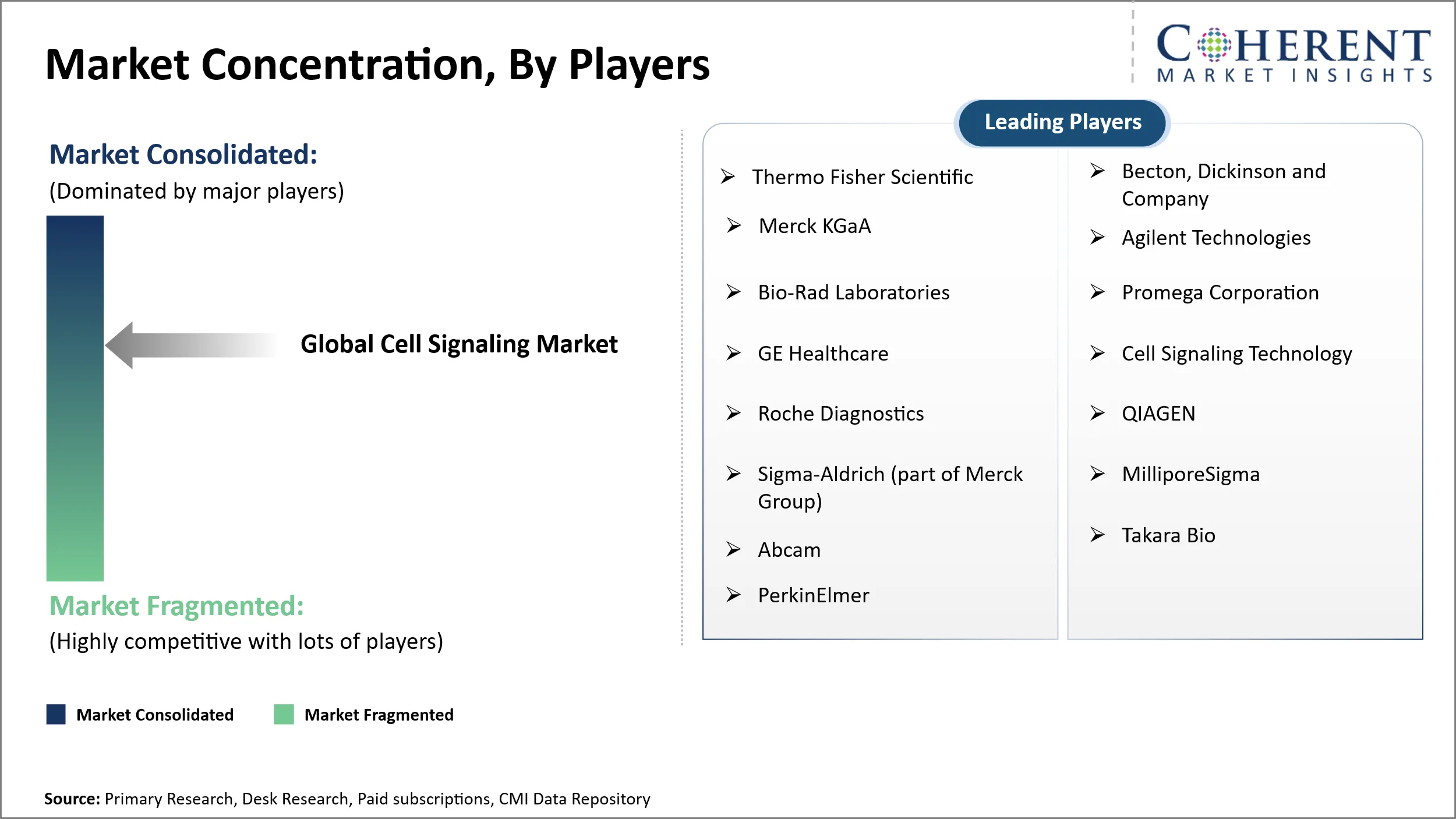
| Companies covered: | Thermo Fisher Scientific, Merck KGaA, Bio-Rad Laboratories, GE Healthcare, Roche Diagnostics, Sigma-Aldrich (part of Merck Group), Abcam, PerkinElmer, Becton, Dickinson and Company, Agilent Technologies, Promega Corporation, Cell Signaling Technology, QIAGEN, MilliporeSigma, and Takara Bio | ||
| Growth Drivers: |
| ||
| Restraints & Challenges: |
| ||
Cell Signaling Market Dynamics
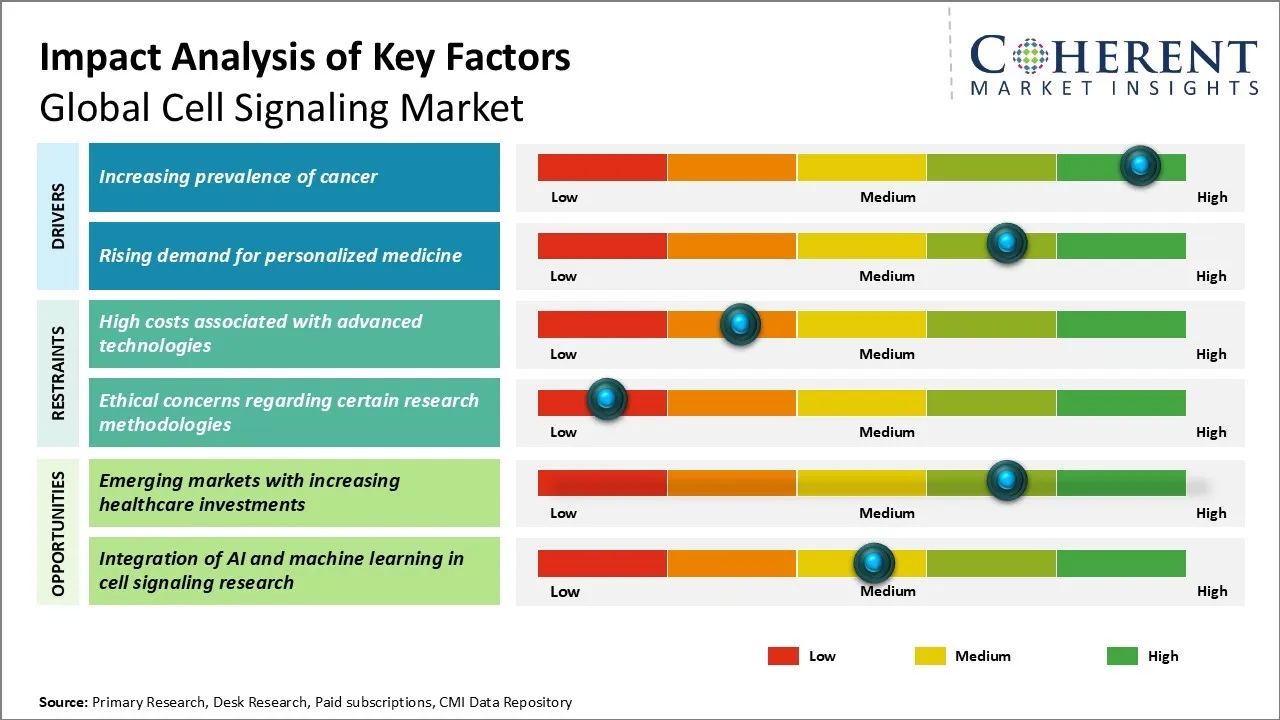
Cell Signaling Market Driver - Increasing Prevalence of Cancer
The global cell signaling market is experiencing significant growth, largely driven by the increasing prevalence of cancer worldwide. As cancer remains one of the leading causes of death globally, the demand for effective cancer treatments and cancer therapies continues to rise. Cell signaling pathways play a crucial role in the development and progression of various types of cancer, making them attractive targets for cancer research and drug development. With the growing understanding of cell signaling mechanisms and their involvement in cancer, pharmaceutical companies and research institutions are actively investing in the discovery and development of novel cancer therapies targeting these pathways. The increasing incidence of cancer, coupled with the need for more effective and targeted treatments, is propelling the growth of the global cell signaling market, as stakeholders seek to capitalize on the potential of cell signaling-based approaches in the fight against cancer.
In February 2024, the World Health Organization (WHO) and its cancer research arm, the International Agency for Research on Cancer (IARC), released alarming data showing that cancer cases reached 20 million globally in 2022, resulting in 9.7 million deaths. Despite this rising burden, a global survey of 115 countries revealed that only 39% provide basic cancer care under universal health coverage, with just 28% covering palliative services like pain relief.
Cell Signaling Market Opportunity - Emerging Markets with Increasing Healthcare Investments
The global cell signaling market has a significant opportunity for growth in emerging markets, where healthcare investments are increasing rapidly. Countries such as China, India, Brazil, and South Africa are witnessing a surge in healthcare spending, driven by factors such as growing populations, rising incomes, and increasing prevalence of chronic diseases. These emerging markets present a vast untapped potential for cell signaling-based therapies and research. As healthcare infrastructure improves and access to advanced medical technologies increases in these countries, there is a growing demand for innovative treatments targeting various diseases, including cancer, autoimmune disorders, and neurological conditions.
Cell signaling research holds immense promise in developing targeted therapies for these diseases, and the increasing healthcare investments in emerging markets provide a conducive environment for the growth of this field. Moreover, these markets offer cost advantages in terms of research and development, clinical trials, and manufacturing, making them attractive destinations for global pharmaceutical companies seeking to expand their presence.
Analyst Opinion (Expert Opinion)
- The global cell signaling market is experiencing robust growth, propelled by advancements in molecular biology techniques, rising investments in cancer and immunology research, and expanding applications of signal transduction pathways in drug discovery. Governments and regulatory bodies worldwide are offering significant support through funding and fast-track approvals, particularly for precision medicine and targeted therapies. However, the market still faces challenges such as high costs of advanced instruments, variability in assay reproducibility, and limited access to cutting-edge technologies in low-resource settings. Emerging opportunities lie in the integration of AI and single-cell analysis for deeper pathway insights, and the increasing demand for biomarkers in personalized treatment.
- Events such as the AACR Annual Meeting, BIO International Convention, and Cell Signaling Symposium by Nature Conferences have played a critical role in fostering knowledge-sharing and collaboration. Noteworthy developments include the strategic partnership between Bio-Techne and Cell Signaling Technology for antibody validation using Simple Western, enhancing research reliability. In addition, government-funded projects like the NIH’s Cancer Moonshot initiative and the European Union’s Horizon Europe program continue to drive innovation in signaling research and therapeutic development, shaping the market’s forward momentum.
Speak to the analyst
Want personalized insights?
Take the findings above to one of our principal consultants, or have the report rebuilt around the segments, geographies and competitors you actually track.
Market Segmentation
- Product Insights (Revenue, USD Bn, 2021 - 2033)
- Consumables
- Instruments
- Signaling Type Insights (Revenue, USD Bn, 2021 - 2033)
- Intracrine ligands
- Autocrine ligands
- Juxtacrine ligand
- Paracrine ligands
- Endocrine ligands
- Signaling Pathway Insights (Revenue, USD Bn, 2021 - 2033)
- MAPK/ERK Pathway
- PI3K/Akt Pathway
- Wnt Pathway
- Notch Signaling Pathway
- NF-kB Pathway
- JAK/STAT Pathway
- TGF-β Pathway
- Calcium Signaling Pathway
- Technology Insights (Revenue, USD Bn, 2021 - 2033)
- Microscopy
- Flow Cytometry
- Western Blotting
- ELISA
- Mass Spectrometry
- Immunohistochemistry
- Others
- Application Insights (Revenue, USD Bn, 2021 - 2033)
- Cancer Research
- Immunology
- Neuroscience
- Cardiovascular Research
- Stem Cell Research,
- Others (Metabolic disorders, etc.)
- End User Insights (Revenue, USD Bn, 2021 - 2033)
- Pharmaceutical and Biotechnology Companies
- Academic Research Institutions
- Hospitals and Clinical Laboratories
- Government Agencies
- Contract Research Organizations
- Regional Insights (Revenue, USD Bn, 2021 - 2033)
- North America
- U.S.
- Canada
- Latin America
- Brazil
- Argentina
- Mexico
- Rest of Latin America
- Europe
- Germany
- U.K.
- Spain
- France
- Italy
- Russia
- Rest of Europe
- Asia Pacific
- China
- India
- Japan
- Australia
- South Korea
- ASEAN
- Rest of Asia Pacific
- Middle East
- GCC Countries
- Israel
- Rest of Middle East
- Africa
- South Africa
- North Africa
- Central Africa
- North America
- Key Players Insights
- Thermo Fisher Scientific
- Merck KGaA
- Bio-Rad Laboratories
- GE Healthcare
- Roche Diagnostics
- Sigma-Aldrich (part of Merck Group)
- Abcam
- PerkinElmer
- Becton, Dickinson and Company
- Agilent Technologies
- Promega Corporation
- Cell Signaling Technology
- QIAGEN
- MilliporeSigma
- Takara Bio
Sources
Primary Research Interviews:
- Cell Biology Researchers and Professors (e.g., Harvard Medical School, University of California)
- R&D Heads of Biotechnology and Pharmaceutical Companies
- Laboratory Technicians and Biomedical Scientists specializing in cell signaling assays
- Procurement Managers from hospitals and research labs
- Healthcare Technology Consultants and System Integrators
Databases:
- U.S. National Institutes of Health (NIH)
- U.S. Food and Drug Administration (FDA)
- European Medicines Agency (EMA)
- World Health Organization (WHO)
- Centers for Disease Control and Prevention (CDC)
- OECD Health Statistics
Magazines:
- GEN (Genetic Engineering & Biotechnology News)
- BioPharma Dive
- Nature Biotechnology News
- Fierce Biotech
- The Scientist Magazine
- Drug Discovery & Development
- PharmaVOICE
Journals:
- Nature Cell Biology
- Journal of Cell Signaling
- Molecular Cell
- Trends in Cell Biology
- Journal of Biological Chemistry (JBC)
- Cellular Signalling
- Frontiers in Cell and Developmental Biology
Newspapers:
- The New York Times
- The Guardian
- The Washington Post
- Financial Times
Associations:
- American Society for Cell Biology (ASCB)
- International Society for Cell and Gene Therapy (ISCT)
- Federation of American Societies for Experimental Biology (FASEB)
- European Federation of Biotechnology (EFB)
Public Domain Sources:
- U.S. National Institutes of Health (NIH)
- Gene Ontology (GO) Consortium
- The Human Protein Atlas
- KEGG (Kyoto Encyclopedia of Genes and Genomes)
- EMBL-EBI (European Bioinformatics Institute)
- World Health Organization (WHO)
- European Medicines Agency (EMA)
Proprietary Elements:
- CMI Data Analytics Tool: Proprietary analytics tool to analyze real-time market trends, consumer behavior, and technology adoption in market
- Proprietary CMI Existing Repository of Information for Last 8 Years
Get access to 250+ pages report
Every segment, forecast, competitor profile and data table behind the analysis above — available for instant download.
- ESOMAR Member
- ISO 9001:2015 Certified
- D-U-N-S Registered
- GDPR & CCPA Compliant
Missing comfort of reading report in your local language? Find your preferred language:
Transform your Strategy with Exclusive Trending Reports
Frequently Asked Questions
The global cell signaling market is estimated to be valued at USD 6.08 Bn in 2025 and is expected to reach USD 10.15 Bn by 2032.
The CAGR of the global cell signaling market is projected to be 7.6% from 2025 to 2032.
Increasing prevalence of cancer and rising demand for personalized medicine are the major factors driving the growth of the global cell signaling market.
High costs associated with advanced technologies and ethical concerns regarding certain research methodologies are the major factors hampering the growth of the global cell signaling market.
In terms of product, the consumables segment is estimated to dominate the market revenue share in 2025.
Thermo Fisher Scientific, Merck KGaA, Bio-Rad Laboratories, GE Healthcare, Roche Diagnostics, Sigma-Aldrich (part of Merck Group), Abcam, PerkinElmer, Becton, Dickinson and Company, Agilent Technologies, Promega Corporation, Cell Signaling Technology, QIAGEN, MilliporeSigma, and Takara Bio are the major players.
North America is expected to lead the global cell signaling market in 2025.