

Global Chemical Fungicides Market Size and Forecast – 2026-2033
The Global Chemical Fungicides Market is estimated to be valued at USD 19.40 Bn in 2026 and is expected to reach USD 27.89 Bn by 2033, exhibiting a compound annual growth rate (CAGR) of 5.3% from 2026 to 2033.
Key Takeaways of the Chemical Fungicides Market :
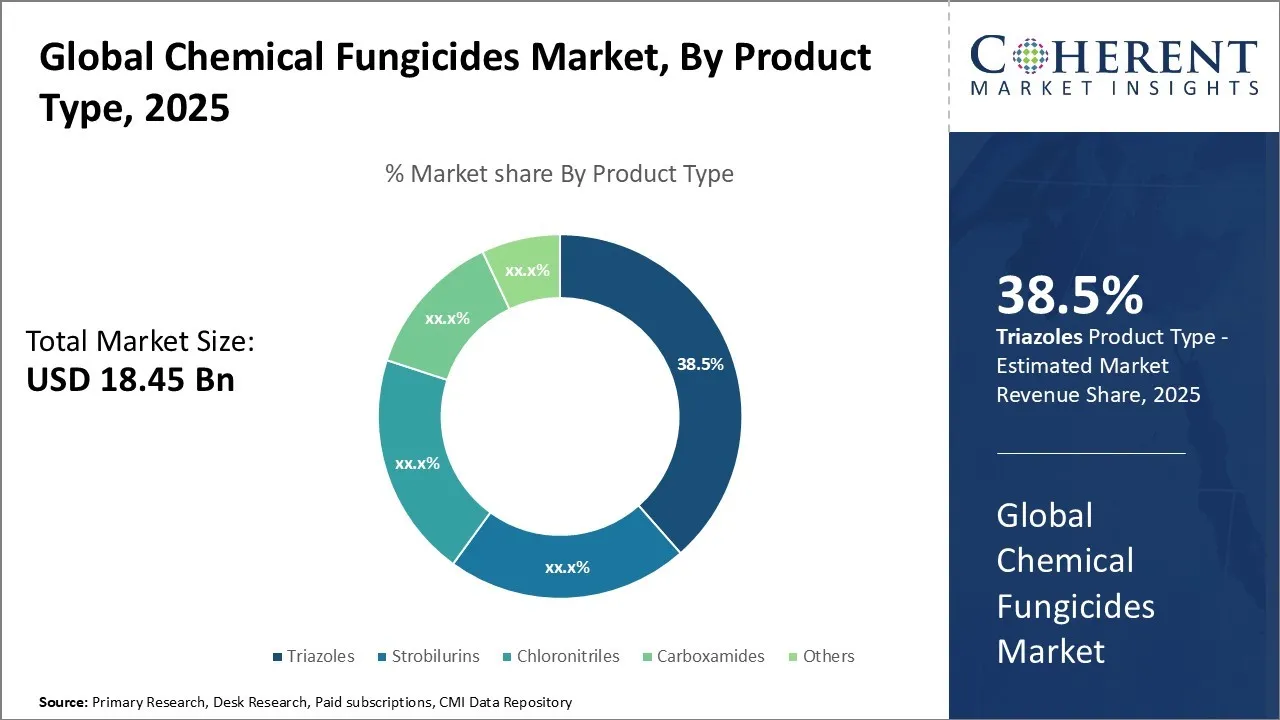
- The triazoles segment is projected to account for 39.5% of the market share in 2026, driven by its broad-spectrum efficacy and widespread use across various crop protection applications.
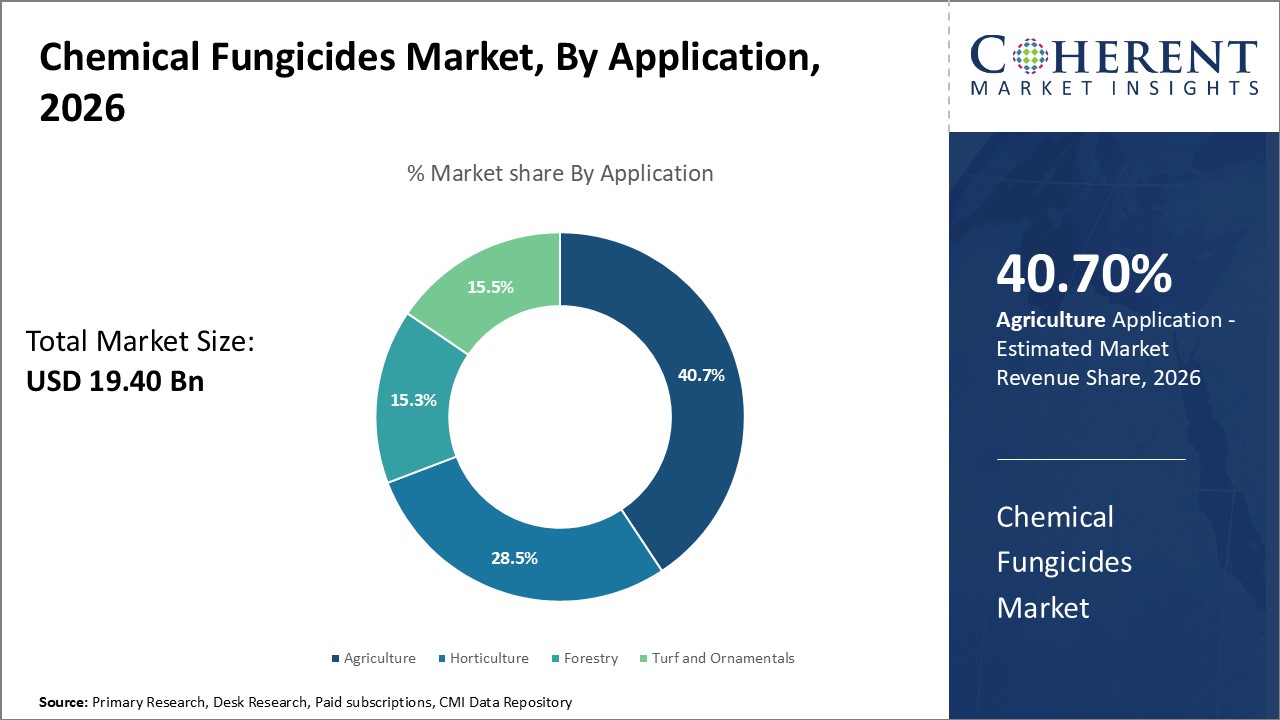
- The agriculture segment is expected to hold a 40.7% share of the chemical fungicides market in 2026, reflecting its dominant role in driving the demand for crop protection solutions.
- The systemic fungicides segment is projected to account for 59.7% of the chemical fungicides market share in 2026.
Market Overview:
The market trend for chemical fungicides is driven by the increasing demand for effective crop protection chemicals to combat fungal diseases and enhance agricultural productivity. The growing global population, along with the pressing need to ensure food security, is accelerating the adoption of chemical fungicides. However, the market also faces challenges, including the emergence of resistance among fungal pathogens and rising environmental concerns associated with chemical fungicides. These factors are encouraging the development and adoption of alternative and sustainable fungal disease management strategies.
Currents Events and their Impact
Current Events | Description and its impact |
EU Ban on Certain Fungicide Actives (e.g., Mancozeb) |
|
Surge in Wheat Rust Outbreaks in North America and South Asia |
|
Segmental Analysis
- Current Industry Events of 2026
- Market Size Estimation
- Regional Breakdown
- Competitive Landscape
- Customer Intelligence
- Segmental Analysis
- Pricing Analysis
- Key Market Drivers, Challenges & Future Trends
- Customized Insights Section
Chemical Fungicides Market Insights, By Product Type - Triazoles Dominate the Chemical Fungicides Market as its Efficacy and Versatility Drive Demand
Triazoles segment is expected to contribute 39.5% share of the market in 2026, owing to their exceptional efficacy against a wide range of fungal pathogens and their versatility in applications across various crops and plants. Triazoles are a class of systemic fungicides that inhibit the biosynthesis of ergosterol, a crucial component of fungal cell membranes, thereby disrupting fungal growth and development. The popularity of triazoles can be attributed to several key factors. Firstly, they exhibit a broad spectrum of activity, effectively controlling a wide array of economically significant fungal diseases, such as rusts, powdery mildews, and leaf spots, across diverse crop types.
Fo example, Bayer’s Folicur (tebuconazole) is widely used by wheat farmers in the U.S. and India for its proven control of rusts and septoria leaf blotch. Folicur, developed by Bayer Crop Science, contains tebuconazole as its active ingredient, which belongs to the triazole class of systemic fungicides. It is recognized globally for its high efficacy in controlling key fungal diseases in cereals, particularly wheat.
Chemical Fungicides Market Insights, By Application - Agriculture Sector Drives the Demand for Chemical Fungicides, Thus Ensuring Food Security and Crop Quality
The agriculture segment is expected to contribute 40.7% share of the chemical fungicides market in 2026, highlighting the critical role of fungicides in ensuring food security and crop quality worldwide. The agricultural sector relies heavily on chemical fungicides to control and prevent the spread of fungal diseases that can significantly impact crop yields, quality, and ultimately, the profitability of farming operations.
One of the primary factors driving the demand for chemical fungicides in agriculture is the increasing global population and the consequent need to enhance food production. As the world population continues to grow, the pressure on agricultural systems to produce sufficient food to meet the rising demand intensifies. Chemical fungicides play a vital role in protecting crops from devastating fungal infections, thereby maximizing crop yields and ensuring a stable food supply.
Chemical Fungicides Market Insights, By Type of Fungicides – Systemic Fungicides Segment Leads Owing to Their Prevalence in the Chemical Fungicides Market
The systemic fungicides segment is expected to contribute 60.7% share of the chemical fungicides market in 2026. Systemic fungicides are absorbed by the plant tissues and distributed throughout the plant system, providing comprehensive protection against fungal infections. The popularity of systemic fungicides can be attributed to their ability to combat fungal diseases from within the plant, offering long-lasting and effective control.
For example, triazole fungicides, a type of systemic fungicide, have been widely adopted in agriculture due to their broad-spectrum activity against various fungal pathogens. According to a report by the Food and Agriculture Organization (FAO), triazole fungicides have been successfully used to control diseases such as rust, powdery mildew, and leaf spot in crops like wheat, barley, and soybeans.
Regional Insights
Asia Pacific Chemical Fungicides Market Analysis and Trends
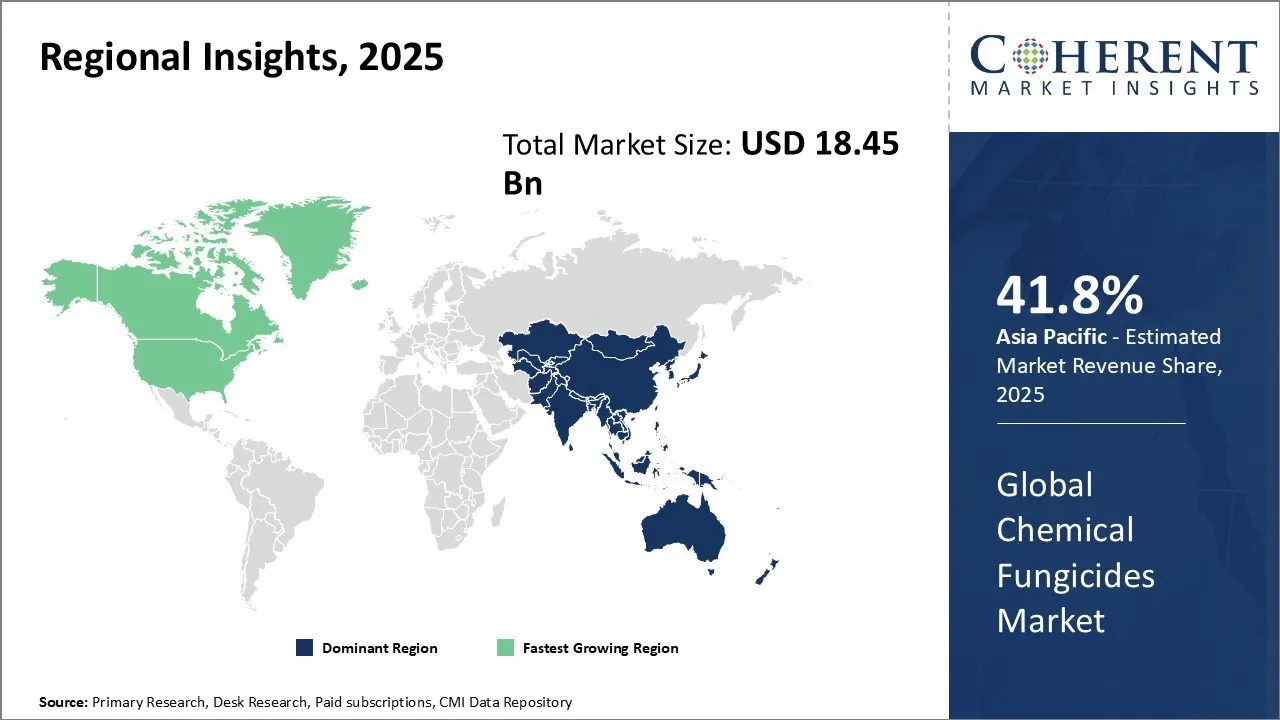
The Asia Pacific region is projected to lead the market with a 41.8% share in 2026. This can be attributed to several key factors. The region is home to vast and diverse agricultural landscapes, including countries like India, China, and Vietnam, where farming remains a critical component of the economy. This has led to a consistently high demand for effective crop protection solutions to safeguard yields from fungal diseases. The rapid growth of population and increasing food security concerns have further intensified the need for chemical fungicides across staple and commercial crops.
For example, BASF Agricultural Solutions Malaysia is dedicated to supporting farmers and ensuring food security in Asia Pacific. BASF Agricultural Solutions Malaysia recently launched Belanty Fungicide; an innovative rice fungicide powered by Revysol Active.
North America Chemical Fungicides Market Analysis and Trends
The North America region is expected to exhibit the fastest growth in the market contributing 23.5% share in 2026. The region’s increasing emphasis on sustainable agriculture, coupled with the rising threat of crop diseases due to changing climate patterns, is driving a surge in fungicide adoption. Countries like the United States and Canada are witnessing a shift toward high-efficiency farming practices, supported by advanced agritech and precision agriculture tools that optimize fungicide application.
In 2024, BASF Agricultural Solutions launched Endura PRO fungicide, its latest broad-spectrum innovation designed specifically for potato growers. This advanced formulation offers extended protection against challenging potato diseases such as early blight and white mold, enabling farmers to enhance crop health and maximize yield potential.
Global Chemical Fungicides Market Outlook for Key Countries:
U.S. Chemical Fungicides Market Trends
The U.S. chemical fungicides market is characterized by a strong emphasis on precision agriculture and sustainable farming practices. Major players such as Bayer AG and Syngenta AG have a significant presence in the country, offering a wide range of fungicide products. These companies collaborate with research institutions and universities to develop targeted fungicide solutions that minimize environmental impact while maximizing crop protection efficacy. The U.S. government's support for agricultural research and extension services further enhances the adoption of advanced fungicide technologies.
China Chemical Fungicides Market Trends
China chemical fungicides market is driven by the country's vast agricultural landscape and the need to feed its growing population. The government's focus on food security and agricultural modernization has led to increased investments in the agrochemical sector. Chinese companies, such as Adama Agricultural Solutions and Nutrichem Company Limited, play a crucial role in meeting the domestic demand for fungicides. These companies also actively engage in international markets, exporting cost-effective fungicide formulations to various regions worldwide.
India Chemical Fungicides Market Trends
India continues to be a significant player in the global chemical fungicides market, with a large agricultural base and diverse crop cultivation. The country's fungicides market is characterized by a mix of multinational and domestic companies, such as UPL Limited and Rallis India Limited. These companies focus on developing fungicide formulations tailored to the specific needs of Indian farmers, considering factors such as climate, crop varieties, and disease prevalence. The Indian government's initiatives, such as the "Make in India" program, encourage local manufacturing and innovation in the agrochemical sector.
Brazil Chemical Fungicides Market Trends
Brazil chemical fungicides market is driven by its expansive agricultural industry, particularly in crops such as soybeans, corn, and coffee. The country's tropical climate and favorable growing conditions also contribute to the high demand for effective fungicide solutions. Companies like BASF SE and Sumitomo Chemical Company have a strong presence in Brazil, offering a range of fungicide products suitable for local conditions. The Brazilian government's support for sustainable agriculture practices and the adoption of precision farming technologies further enhances the market potential for chemical fungicides in the country.
End User Feedback and Unmet Needs
- Many commercial farmers report high satisfaction with broad-spectrum fungicides such as triazoles and strobilurins, which effectively control a wide range of fungal diseases in crops like wheat, soybeans, and vegetables. For example, Corteva Agriscience’s Aproach Prima, a preventive and curative fungicide, has been praised by U.S. corn growers for its ability to reduce yield losses during early fungal outbreaks.
- End users in tropical regions like India and Southeast Asia have appreciated fungicides that offer longer residual activity and rainfast properties. Products like BASF’s Seltima, which uses controlled-release technology, have received positive feedback from paddy farmers in India for their effectiveness under humid and monsoonal conditions.
- A significant challenge highlighted by farmers and agronomists is the development of resistance due to the repeated use of single-mode-of-action fungicides. For example, wheat farmers in Canada have reported reduced effectiveness of certain Quinone Outside Inhibitor (QoI) fungicides due to resistant strains of Septoria tritici. This underscores the need for multi-site and rotation-compatible formulations.
Market Players, Key Development, and Competitive Intelligence
Key Developments:
- In June 2024, BASF Agricultural Solutions launched Cevya, a new rice fungicide in China—the first isopropanol triazole fungicide approved for rice use in over 20 years. Developed to combat rice false smut and manage fungicide resistance, Cevya features the active ingredient mefentrifluconazole and is aimed at improving crop yields. Its release follows extensive field trials since 2020 in collaboration with leading agricultural research institutions.
- In August 2023, Bayer AG announced a USD 238.84 million investment in a new R&D facility at its Monheim site in Germany—its most substantial commitment to crop protection innovation in four decades. The facility is dedicated to advancing next-generation fungicides and crop protection solutions with a strong emphasis on environmental and human safety.
- In 2021, Bayer AG partnered with Mitsui Chemicals Crop & Life Solutions, Inc. Agro to enhance its fungicide portfolio, with a particular focus on strengthening its presence in Asia Pacific markets. This strategic alliance with Mitsui Chemicals Agro enabled both companies to leverage their complementary technologies and extend their regional market reach. Mitsui Chemicals Crop & Life Solutions, Inc. (MCLS) is a Japan-based company specializing in the research, development, manufacture, and sale of agrochemicals and life science solutions.
Top Strategies Followed by Global Chemical Fungicides Market Players
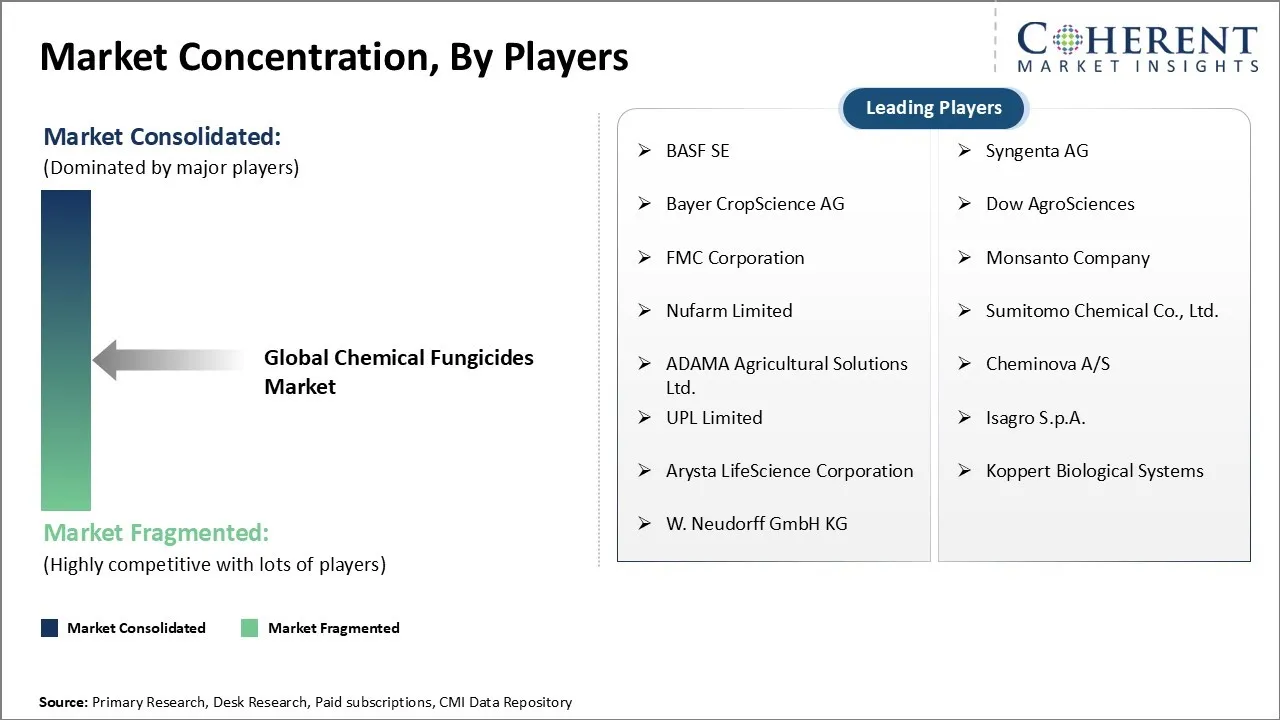
- Established Players: Leading companies in the chemical fungicides market—such as BASF SE, Syngenta AG, and Bayer AG—are heavily investing in research and development (R&D) to create next-generation fungicides. These products are designed for enhanced efficacy, reduced environmental impact, and improved safety.
- For instance, BASF’s Revysol, a novel triazole fungicide, offers strong performance against a broad spectrum of crop diseases while being environmentally sustainable.
- Mid-level players: Mid-scale companies like UPL Limited (India) and Nufarm Limited (Australia) focus on cost-effective yet high-quality products to cater to price-sensitive markets in Asia Pacific and Africa. These players streamline manufacturing and optimize supply chains to reduce costs and offer competitive pricing.
- For example, Nufarm partnered with Sumitomo Chemical to co-develop and distribute new crop protection products, combining their R&D capabilities and regional insights. This approach allows mid-level firms to enhance product portfolios, scale faster, and meet diverse customer needs in emerging markets.
- Small-scale players in the global chemical fungicides market are adopting niche specialization as a key strategy. They focus on targeting specific market segments with unique features or innovative products. Small-scale companies frequently team up with regional distributors or agri-tech startups to penetrate new markets. For example, AgBiTech, a U.S. based biopesticide producer, has formed distribution agreements with local partners in Brazil and Southeast Asia to broaden reach and visibility.
Market Report Scope
Chemical Fungicides Market Report Coverage
| Report Coverage | Details | ||
|---|---|---|---|
| Base Year: | 2025 | Market Size in 2026: | USD 19.40 Bn |
| Historical Data for: | 2020 To 2024 | Forecast Period: | 2026 To 2033 |
| Forecast Period 2026 to 2033 CAGR: | 5.3% | 2033 Value Projection: | USD 27.89 Bn |
| Geographies covered: |
| ||
| Segments covered: |
| ||
| Companies covered: | BASF SE, Syngenta AG, Bayer CropScience AG, Dow AgroSciences, FMC Corporation, Monsanto Company, Nufarm Limited, Sumitomo Chemical Co., Ltd., ADAMA Agricultural Solutions Ltd., Cheminova A/S, UPL Limited, Isagro S.p.A., Arysta LifeScience Corporation, Koppert Biological Systems, and W. Neudorff GmbH KG | ||
| Growth Drivers: |
| ||
| Restraints & Challenges: |
| ||
Chemical Fungicides Market Dynamics
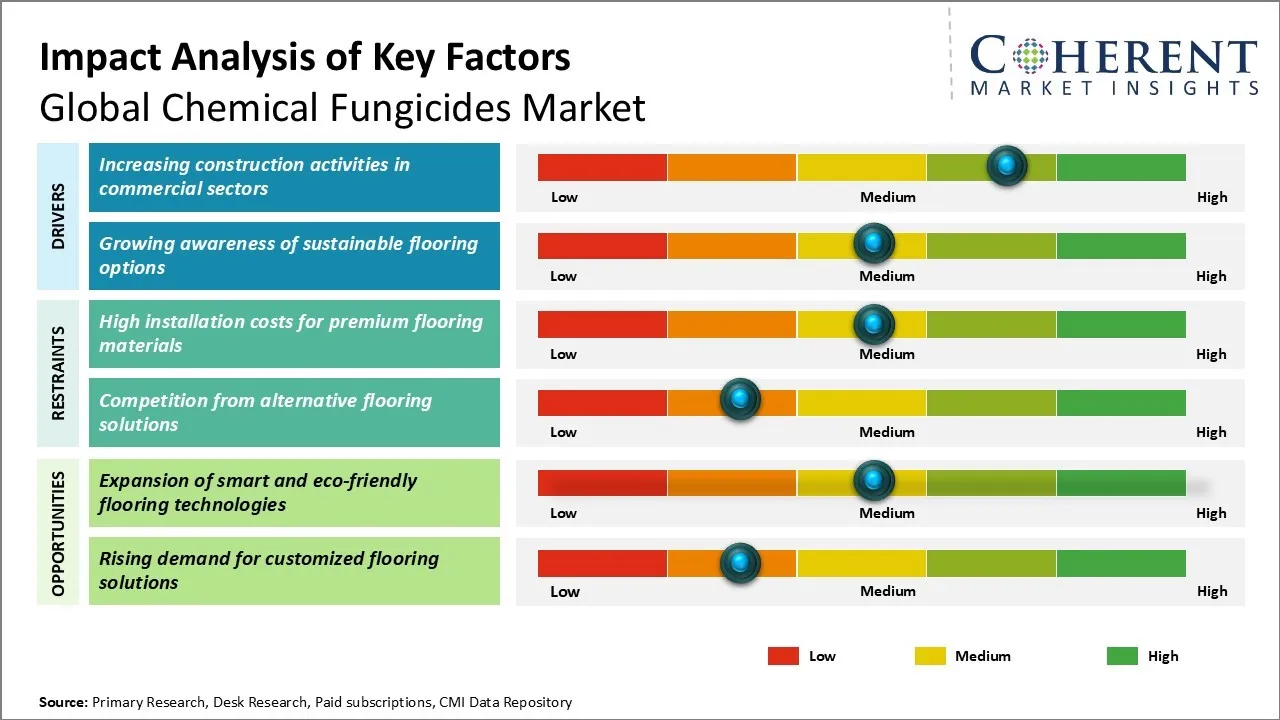
Chemical Fungicides Market Driver - Increasing construction activities in commercial sectors
The global chemical fungicides market is witnessing strong growth, driven by rising commercial construction and increased urbanization, which elevate the risk of fungal decay in building materials. Chemical fungicides help prevent structural damage by controlling harmful fungi. Additionally, growing adoption of seed treatment fungicides to protect crops during germination is further boosting market expansion.
According to the United Nations Environment Programme (UNEP), the global building and construction sector is expected to double in size by 2030, with the majority of this growth occurring in emerging economies (UNEP, 2021). This expansion in construction activities directly translates to a higher demand for chemical fungicides, as they are essential in protecting the building materials and ensuring a healthy indoor environment.
Chemical Fungicides Market Opportunity - Expansion of smart and eco-friendly flooring technologies
The global chemical fungicides market is witnessing a promising opportunity in the expansion of smart and eco-friendly flooring technologies. As consumers become increasingly aware of the environmental impact of their choices and the benefits of sustainable living, there is a growing demand for flooring solutions that prioritize both functionality and sustainability.
These innovative flooring solutions often incorporate natural or recycled materials, such as bamboo, cork, or reclaimed wood, that are inherently resistant to fungal growth without the need for harmful chemicals. According to the United Nations Environment Programme (UNEP), the global market for eco-friendly building materials, including flooring, is expected to grow significantly in the coming years, driven by increasing consumer awareness and government regulations promoting sustainable construction practices.
Analyst Opinion (Expert Opinion)
- The chemical fungicides market is experiencing significant growth, driven by the urgent need for effective crop protection amid rising agricultural challenges such as climate change and pest resistance. Leading companies like Bayer are innovating with new formulations that enhance efficacy while minimizing environmental impact, responding to increasing regulatory scrutiny and consumer demand for safer agricultural practices.
- Key events like the International Crop Science Conference (2022) and the AgriTech Expo (2023) have provided essential platforms for industry experts to share advancements in fungicide technologies and discuss sustainable practices. These conferences underscore the critical importance of collaboration and innovation in addressing global food security challenges, highlighting the need for the industry to balance efficacy with environmental stewardship as it navigates an evolving regulatory landscape.
Speak to the analyst
Want personalized insights?
Take the findings above to one of our principal consultants, or have the report rebuilt around the segments, geographies and competitors you actually track.
Market Segmentation
- Product Type Insights (Revenue, USD Bn, 2021 - 2033)
- Triazoles
- Strobilurins
- Chloronitriles
- Carboxamides
- Others
- Application Insights (Revenue, USD Bn, 2021 - 2033)
- Agriculture
- Horticulture
- Forestry
- Turf and Ornamentals
- Type of Fungicides Insights (Revenue, USD Bn, 2021 - 2033)
- Systemic Fungicides
- Contact Fungicides
- Formulation Insights (Revenue, USD Bn, 2021 - 2033)
- Liquid
- Granular
- Powder
- Regional Insights (Revenue, USD Bn, 2021 - 2033)
- North America
- U.S.
- Canada
- Latin America
- Brazil
- Argentina
- Mexico
- Rest of Latin America
- Europe
- Germany
- U.K.
- Spain
- France
- Italy
- Russia
- Rest of Europe
- Asia Pacific
- China
- India
- Japan
- Australia
- South Korea
- ASEAN
- Rest of Asia Pacific
- Middle East
- GCC Countries
- Israel
- Rest of Middle East
- Africa
- South Africa
- North Africa
- Central Africa
- North America
- Key Players Insights
- BASF SE
- Syngenta AG
- Bayer CropScience AG
- Dow AgroSciences
- FMC Corporation
- Monsanto Company
- Nufarm Limited
- Sumitomo Chemical Co., Ltd.
- ADAMA Agricultural Solutions Ltd.
- Cheminova A/S
- UPL Limited
- Isagro S.p.A.
- Arysta LifeScience Corporation
- Koppert Biological Systems
- W.Neudorff GmbH KG
Sources
Primary Research Interviews:
- Product Development Head – Global Agrochemical Major (insights on innovation and next-gen fungicide formulation)
- Procurement Manager – Large-Scale Agribusiness Corporation (U.S. & LATAM) (bulk purchasing behavior, resistance management preferences)
- Agronomist – Government Agricultural Research Body (India) (on-ground disease outbreaks and farmer feedback)
- Regulatory Affairs Expert – Crop Protection Standards Body (EU) (impact of changing MRLs, eco-toxicology regulations)
Stakeholders:
- Manufacturers – Multinational chemical companies producing broad-spectrum and targeted fungicides
- End-use Sectors:
- Regulatory & Certification Bodies – FAO, EPA, EFSA, REACH, BIS, ICAR, APVMA
- Distribution Chains – Agricultural cooperatives, B2B agrochemical distributors, online agro-portals
- Extension and Advisory Services – Crop consultants, university extension programs
- Raw Material Suppliers – Active ingredient providers (e.g., triazoles, strobilurins), emulsifiers, surfactants, solvents
Databases:
- FAO – Global crop loss and pesticide usage statistics
- UN Comtrade Database – Trade data of agrochemicals and chemical fungicides
- India EXIM Database – Import-export of fungicides and active chemical ingredients
Magazines:
- AgriBusiness Global – Market trends, product launches, and regional insights
- CropLife International – Innovation, regulatory changes, and sustainability discussions
- Farm Chemicals International – Pricing shifts and active ingredient demand
- Chemical & Engineering News (C&EN) – R&D breakthroughs and mergers in crop protection
- AgriBusiness Times – Farmer perspectives on efficacy and usage experience
Journals:
- Pest Management Science – Efficacy studies, resistance patterns, and IPM integration
- Journal of Agricultural and Food Chemistry – Chemical interactions and mode of action studies
- Crop Protection Journal – Field trial reports and environmental risk assessments
- Journal of Environmental Science and Health – Part B – Toxicology and regulatory impacts
- Plant Disease Journal – Global fungal disease emergence and treatment responses
Newspapers
- The Hindu Business Line – India’s agrochemical policies and monsoon impact on crop diseases
- Reuters Agriculture Section – Global crop protection deals and harvest risks
- Financial Times – M&A activity and agro-input trends in Europe
- South China Morning Post – China’s fungicide demand outlook and regulatory push
- Business Today – Indian agri-tech and fungicide adoption in government schemes
Associations:
- CropLife International – Global association of agrochemical firms
- Indian Chemical Council (ICC) – Domestic production and R&D trends
- International Society for Plant Pathology (ISPP) – Disease monitoring and best practices
- Pesticide Manufacturers & Formulators Association of India (PMFAI)
- European Crop Protection Association (ECPA)
- American Phytopathological Society (APS)
Public Domain Sources
- EPA (U.S.) – Registration and environmental safety data for fungicides
- European Chemicals Agency (ECHA) – Chemical classification and REACH guidelines
- Food and Agriculture Organization (FAO) – Guidelines on pesticide use and impact
- Ministry of Agriculture and Farmers Welfare (India) – Approved fungicide lists and subsidy programs
- World Health Organization (WHO) – Human health impact of agrochemicals
- World Bank – Climate change effects on plant disease proliferation and input demand
Proprietary Elements:
- CMI Data Analytics Tool, Proprietary CMI Existing Repository of information for last 8 years.
Get access to 250+ pages report
Every segment, forecast, competitor profile and data table behind the analysis above — available for instant download.
- ESOMAR Member
- ISO 9001:2015 Certified
- D-U-N-S Registered
- GDPR & CCPA Compliant
Missing comfort of reading report in your local language? Find your preferred language:
Transform your Strategy with Exclusive Trending Reports
Frequently Asked Questions
The global chemical fungicides market is estimated to be valued at USD 18.45 Bn in 2025 and is expected to reach USD 26.13 Bn by 2032.
The CAGR of the global chemical fungicides market is projected to be 5.1% from 2025 to 2032.
Increasing construction activities in commercial sectors and growing awareness about sustainable flooring options are the major factors driving the growth of the global chemical fungicides market.
High installation costs for premium flooring materials and competition from alternative flooring solutions are the major factors hampering the growth of the global chemical fungicides market.
In terms of product type, the triazoles segment is estimated to dominate the market revenue share in 2025.
BASF SE, Syngenta AG, Bayer CropScience AG, Dow AgroSciences, FMC Corporation, Monsanto Company, Nufarm Limited, Sumitomo Chemical Co., Ltd., ADAMA Agricultural Solutions Ltd., Cheminova A/S, UPL Limited, Isagro S.p.A., Arysta LifeScience Corporation, Koppert Biological Systems, and W. Neudorff GmbH KG are the major players.
Asia Pacific is expected to lead the global chemical fungicides market in 2025.