

Global Circular Packaging Market Size and Forecast – 2026-2033
The Global Circular Packaging Market is estimated to be valued at USD 268.98 Bn in 2026 and is expected to reach USD 420.75 Bn by 2033, exhibiting a compound annual growth rate (CAGR) of 6.6% from 2026 to 2033.
Key Takeaways of the Circular Packaging Market :
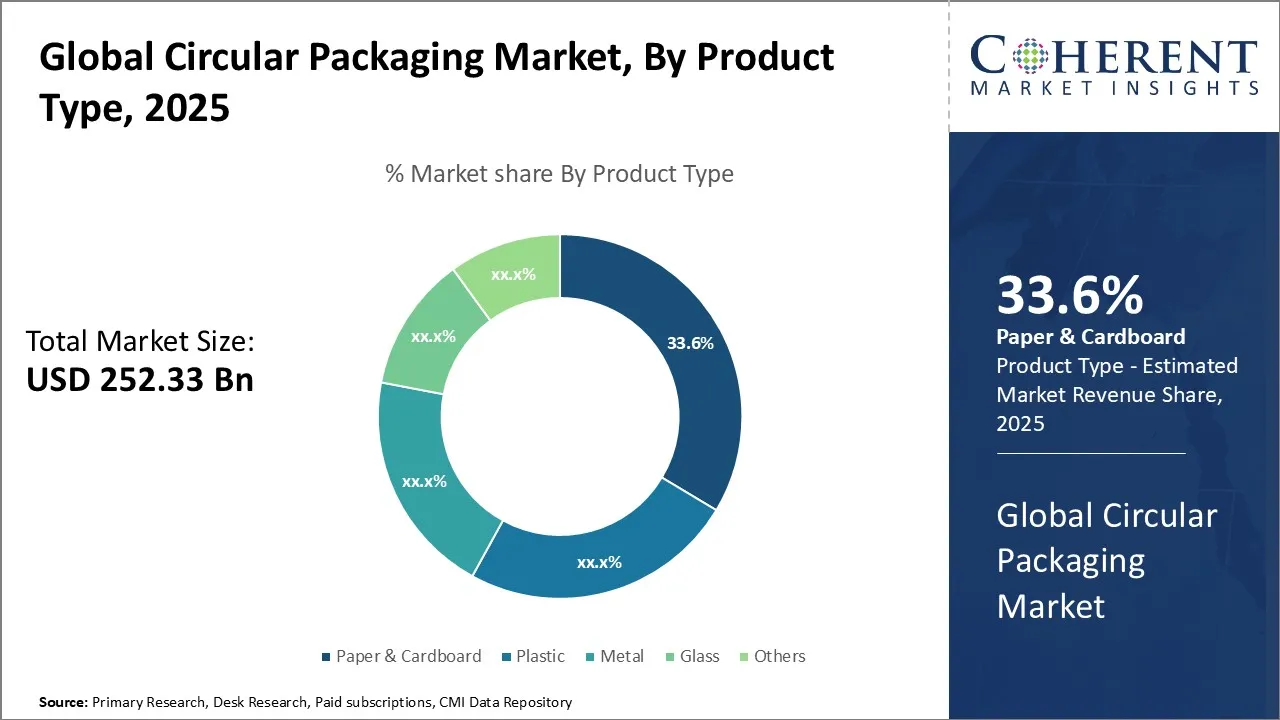
- The paper & cardboard segment is projected to account for 34.6% of the global circular packaging market share in 2026.
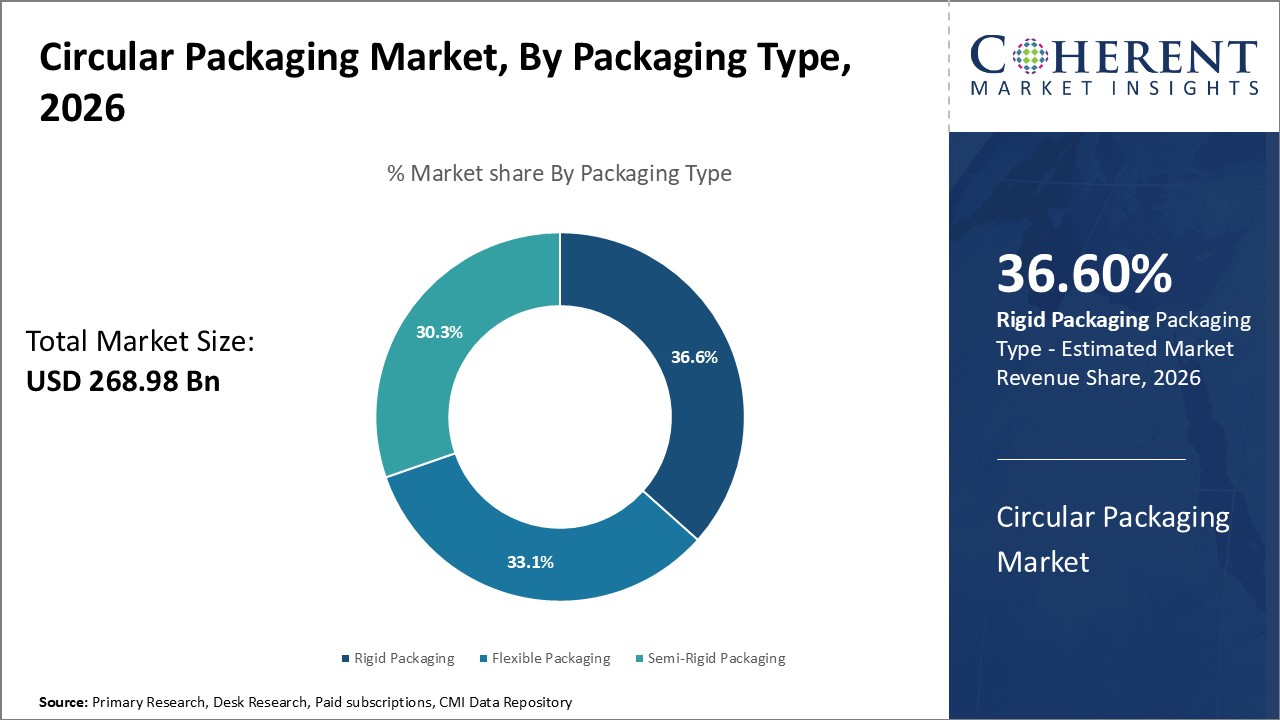
- Rigid packaging is expected to hold a 36.6% share of the market in 2026, driven by its enhanced protection features and versatility across industries that demand robust containment solutions.
- The food and beverage segment is projected to dominate the end-use industry segment, capturing a 38.6% share of the market in 2026, highlighting its pivotal role in driving packaging innovations and sustainability trends.
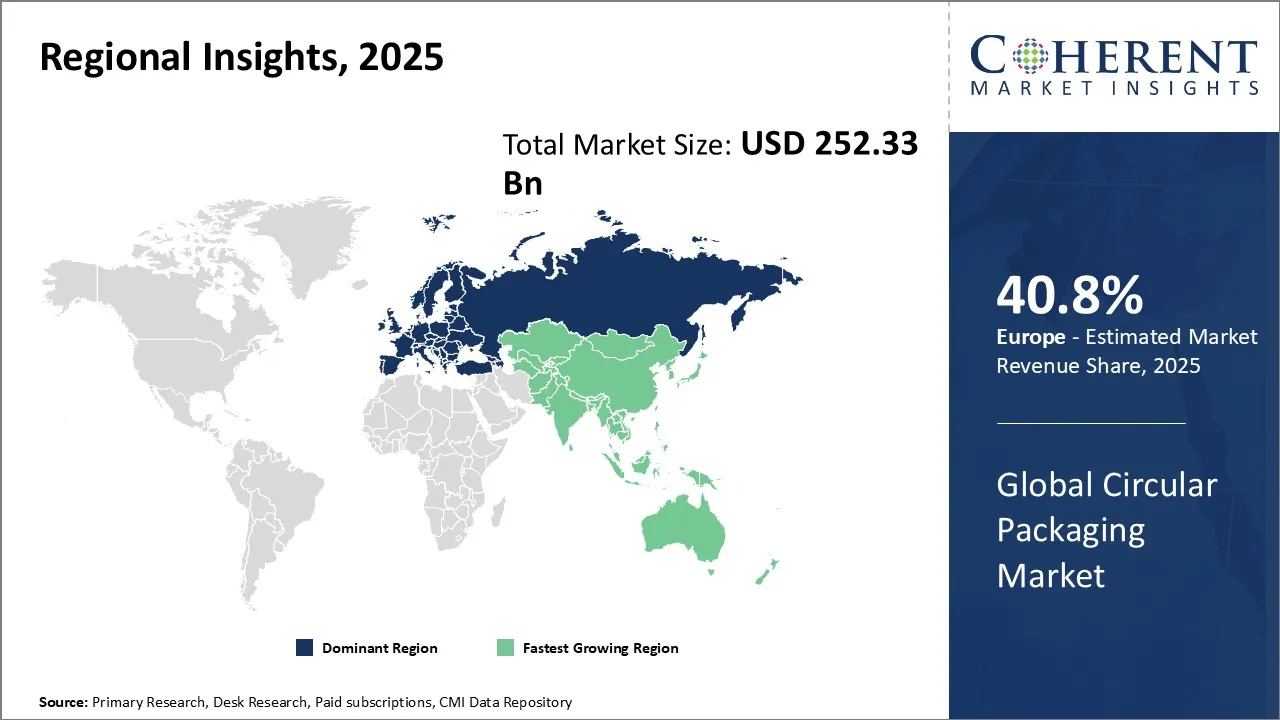
- Europe is expected to lead the global circular packaging market in 2026 with a 40. 8% share, driven by strong regulatory support for sustainability, high demand for eco-friendly packaging, and the increasing adoption of circular economy practices. Asia Pacific, with a 14.5% share in 2026, will be the fastest-growing region, fueled by rapid industrialization, growing consumer awareness of sustainability, and government initiatives to reduce plastic waste and promote recycling.
Market Overview:
Key market trends include the rising innovation in biodegradable plastics and recyclable materials, enhanced product lifecycle management, and increased collaboration between manufacturers and recyclers. Companies are investing in advanced technologies to design packaging that can be reused or efficiently recycled, aligning with global sustainability goals. Additionally, a shift towards circular supply chains and eco-friendly packaging designs is gaining momentum, further bolstering market expansion over the forecast period.
Currents Events and their Impact
Current Events | Description and its impact |
Extended Producer Responsibility (EPR) Scheme in the U.K. |
|
Consumer Willingness to Pay for Sustainable Packaging |
|
Segmental Analysis
- Current Industry Events of 2026
- Market Size Estimation
- Regional Breakdown
- Competitive Landscape
- Customer Intelligence
- Segmental Analysis
- Pricing Analysis
- Key Market Drivers, Challenges & Future Trends
- Customized Insights Section
Circular Packaging Market Insights, By Product Type - The Paper & Cardboard Segment Leads the Market due to its Sustainability in Circular Packaging
Paper & cardboard segment is expected to hold 34.6% market share in 2026, within the global circular packaging landscape. This dominant positioning is primarily driven by increasing environmental consciousness among manufacturers and consumers alike, who are prioritizing sustainability and recyclability in packaging solutions. Paper and cardboard materials offer a biodegradable and renewable alternative to non-degradable plastics and metals, making them highly attractive to brands aiming to reduce their ecological footprint.
Circular Packaging Market Insights, By Packaging Type - Rigid Packaging Rigidity and Protection Drive Leadership of Rigid Packaging in Circular Systems
Rigid packaging segment is expected to capture 36.6% share of the market in 2026, due to its superior protection capabilities and adaptability across industries requiring sturdy containment solutions. Rigid packaging, typically made from durable materials including plastics, metals, glass, and composite materials, provides exceptional structural integrity that is essential for preserving product quality, extending shelf life, and facilitating safe transportation.
A major driver behind rigid packaging’s prominence is its critical role in sectors with stringent safety and hygiene standards like food and beverage, healthcare, and personal care. This packaging type minimizes the risk of contamination or damage during handling, preserving sensitive contents against environmental factors such as moisture, oxygen, and light exposure. Consequently, rigid packaging is especially favored for perishable or delicate goods that demand higher levels of protection.
Circular Packaging Market Insights, By End-use industry - The Food and Beverage segment is Driven by Growing Consumer Demand and Increasing Regulatory Focus
Food and beverage segment is expected to lead in terms of end-use industry, accounting for 38.6% share of the market in 2026, underscoring the sector’s critical influence on packaging innovations and sustainability trends. This dominance is fueled by growing consumer awareness about health, safety, and environmental impact related to food packaging, alongside mounting regulatory pressures aimed at reducing packaging waste within this high-volume industry.
Regional Insights:
Europe Circular Packaging Market Analysis and Trends
The Europe region is projected to lead the market with a 40.8% share in 2026 driven by a well-established ecosystem that prioritizes sustainability and stringent regulatory frameworks. The European Union’s ambitious policies such as the Circular Economy Action Plan and Single-Use Plastics Directive have been instrumental in accelerating adoption of circular packaging solutions.
The presence of advanced recycling infrastructure and strong consumer awareness further support market expansion. Europe is home to several notable players, such as Amcor, Tetra Pak, and Mondi Group, which lead innovation in bio-based materials, reusable packaging designs, and efficient recycling systems. These companies actively collaborate with governments and industry bodies to enhance circularity standards. Additionally, Europe’s integrated trade networks facilitate the distribution of sustainable packaging solutions throughout the region.
Asia Pacific Circular Packaging Market Analysis and Trends
The Asia Pacific region is expected to exhibit the fastest growth in the market contributing 14.5% share in 2026, propelled by increasing environmental regulations, rising sustainability commitments by large corporations, and heightened consumer demand for eco-friendly products. Rapid industrialization and urbanization have led to innovative packaging startups and established firms adopting circular economy principles.
Governments in countries like China, Japan, India, and South Korea have implemented supportive policies and incentives for sustainable material use and waste reduction. Key market players in the region include Toyo Seikan Group Holdings, Uflex Limited, and Rengo Co., which focus on developing recyclable packaging materials and expanding recycling capacities. The expanding manufacturing base and evolving supply chain networks in Asia Pacific also contribute to the accelerative market trajectory.
Circular Packaging Market Outlook for Key Countries
Germany Circular Packaging Market Trends
Germany circular packaging market is characterized by robust regulatory frameworks encouraging closed-loop packaging systems. The country’s leadership in environmental sustainability and waste management infrastructure, such as the Green Dot system, ensures high recycling rates of packaging materials. Companies like ALPLA Werke and Schütz GmbH champion the use of recycled plastics and refillable packaging. Germany’s well-established industrial base and consumer preference for sustainable products further validate its pivotal role in the circular packaging landscape.
U.S. Circular Packaging Market Trends
The U.S. displays a dynamic market backed by growing corporate sustainability commitments and investments in innovative packaging technologies. Although regulatory measures are less centralized compared to Europe, state-level initiatives and consumer pressure fuel the demand for circular packaging alternatives. Key players such as Sealed Air Corporation and Berry Global are advancing biodegradable packaging and recyclable solutions, collaborating with retailers and Fast-moving consumer goods (FMCG) sectors to promote circularity. The U.S. market benefits from a mature supply chain ecosystem and widespread adoption of sustainability reporting standards.
China Circular Packaging Market Trends
China circular packaging market advances rapidly due to government-driven initiatives aimed at reducing plastic pollution and promoting recycling technologies. The country emphasizes circular economy principles in its national development goals, incentivizing companies to adopt sustainable packaging. Large enterprises including Nine Dragons Paper and China National Packaging Holdings spearhead innovations in paper-based packaging and plastic recycling advancements. Additionally, China’s extensive manufacturing ecosystem enables scalable production of circular packaging materials to meet both domestic and export demands.
Japan Circular Packaging Market Trends
Japan continues to lead in integrating high-tech solutions with circular packaging efforts, leveraging advanced materials engineering and efficient recycling systems. National policies, such as the Act on Promotion of Resource Circulation for Plastics, reflect the country’s commitment to minimizing environmental impact. Corporations like Sekisui Chemical and Rengo Co. contribute significantly by developing compostable films and reusable packaging systems compatible with Japan’s sophisticated waste management infrastructure. The strong collaboration between government, industry, and academia drives steady progress in circular packaging adoption.
End User Feedback and Unmet Needs in the Circular Packaging Market:
- Food and Beverage Industry
End users in the food and beverage industry have increasingly adopted circular packaging solutions, particularly those incorporating biodegradable materials and recyclable plastic alternatives. One major player, a multinational beverage brand, reported significant improvements in customer satisfaction due to the shift towards 100% recyclable PET packaging. Consumers appreciated the brand’s commitment to sustainability, leading to enhanced brand loyalty and a notable increase in positive sentiment. Moreover, the company observed a reduction in packaging waste by up to 30%, aligning with its sustainability goals.
- Electronics and Industrial Goods Sector
On the flip side, the electronics industry has faced challenges with circular packaging solutions, particularly when it comes to packaging durability. A large electronics manufacturer reported frequent concerns from their logistics and supply chain teams, particularly with the use of eco-friendly materials for packaging components such as smartphones and laptops. While these materials are recyclable, they often do not provide the level of protection required to prevent damage during shipping.
Market Players, Key Development, and Competitive Intelligence:
Key Developments:
- In January 2025, SIG entered into a partnership with the Ellen MacArthur Foundation to advance circular packaging systems. Through this collaboration, SIG is leveraging the Foundation’s expertise to minimize waste, enhance recyclability, and expand the use of renewable materials.
- In August 2024, Unilever, USAID, and EY launched The CIRCLE Alliance to drive packaging circularity and tackle plastic waste. Backed by a commitment of USD 21 million, the initiative is designed to empower small businesses and entrepreneurs across the plastics value chain, with a special focus on supporting women working in the informal waste sector in the Global South. The CIRCLE Alliance aims to cut plastic consumption, improve waste management, and accelerate the development of circular economies, initially targeting India, Indonesia, Vietnam, and the Philippines.
Top Strategies Followed by Global Circular Packaging Market Players
- Established players, often industry giants, heavily invest in research and development to drive innovation in high-performance and sustainable packaging solutions. Their R&D efforts focus on improving material efficiency, durability, and recyclability, which align with the growing demand for environmentally friendly products.
- For example, Amcor is a leading player in the global circular packaging market. The company invests heavily in R&D, developing packaging that can be fully recycled or reused. In 2020, Amcor announced its goal to make all of its packaging recyclable or reusable by 2025. Its commitment to sustainability has earned it recognition in global markets.
- Mid-level market players adopt a slightly different approach by focusing on delivering cost-effective circular packaging solutions that strike a balance between quality and affordability. This strategy is particularly aimed at price-sensitive consumers and small- to medium-sized enterprises, which represent a significant and growing customer base in developing economies.
- Sealed Air, a packaging solutions provider, entered into a partnership with Platinum Packaging to produce sustainable and cost-effective circular packaging. This partnership allows them to expand their product portfolio and gain access to cutting-edge packaging technologies.
- Small-scale players, operating in a highly competitive and niche-driven environment, differentiate themselves by concentrating on specialized product features or groundbreaking innovations in circular packaging. They frequently adopt cutting-edge technologies such as biodegradable composites, smart packaging, or customized design solutions to meet specific customer needs.
- For example, Biopak is a small-scale player specializing in biodegradable packaging. The company focuses on providing eco-friendly packaging solutions, including compostable containers made from plant-based materials. Its niche market focus has earned them a strong presence in the foodservice industry, particularly in regions like Australia and New Zealand.
Market Report Scope
Circular Packaging Market Report Coverage
| Report Coverage | Details | ||
|---|---|---|---|
| Base Year: | 2025 | Market Size in 2026: | USD 268.98 Bn |
| Historical Data for: | 2020 To 2024 | Forecast Period: | 2026 To 2033 |
| Forecast Period 2026 to 2033 CAGR: | 6.6% | 2033 Value Projection: | USD 420.75 Bn |
| Geographies covered: |
| ||
| Segments covered: |
| ||
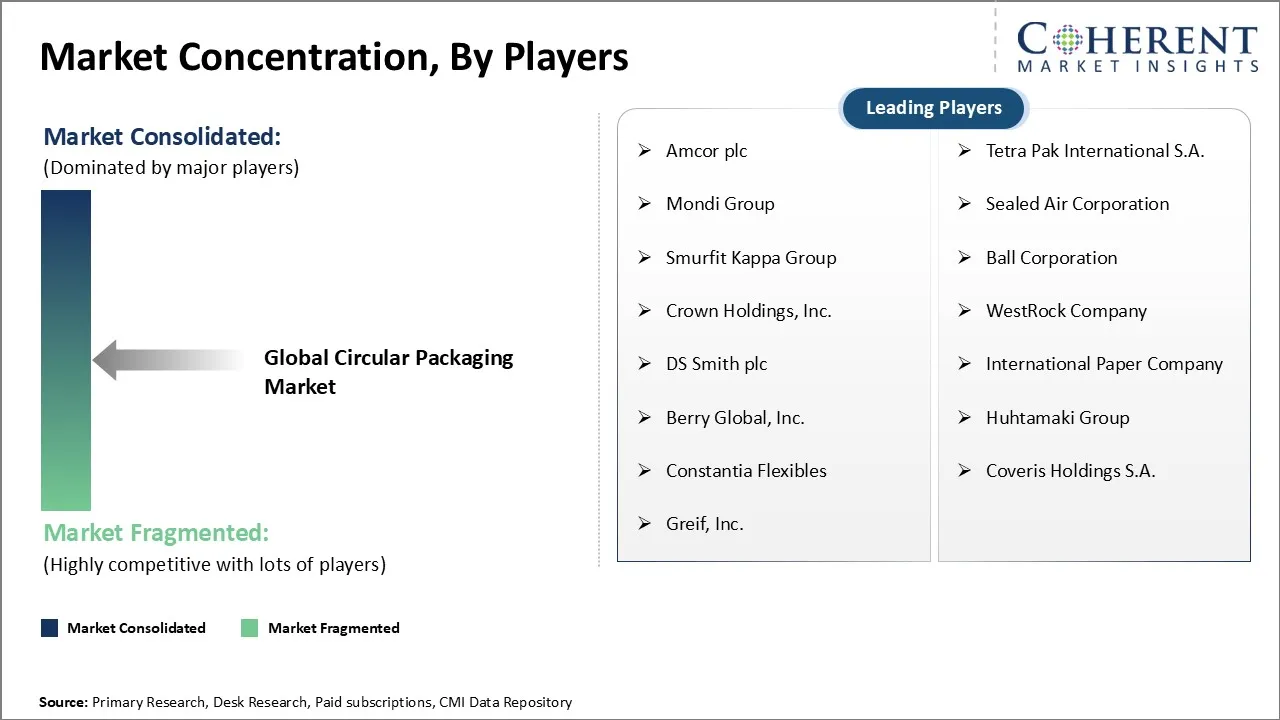
| Companies covered: | Amcor plc, Tetra Pak International S.A., Mondi Group, Sealed Air Corporation, Smurfit Kappa Group, Ball Corporation, Crown Holdings, Inc., WestRock Company, DS Smith plc, International Paper Company, Berry Global, Inc., Huhtamaki Group, Constantia Flexibles, Coveris Holdings S.A., and Greif, Inc. | ||
| Growth Drivers: |
| ||
| Restraints & Challenges: |
| ||
Circular Packaging Market Dynamics
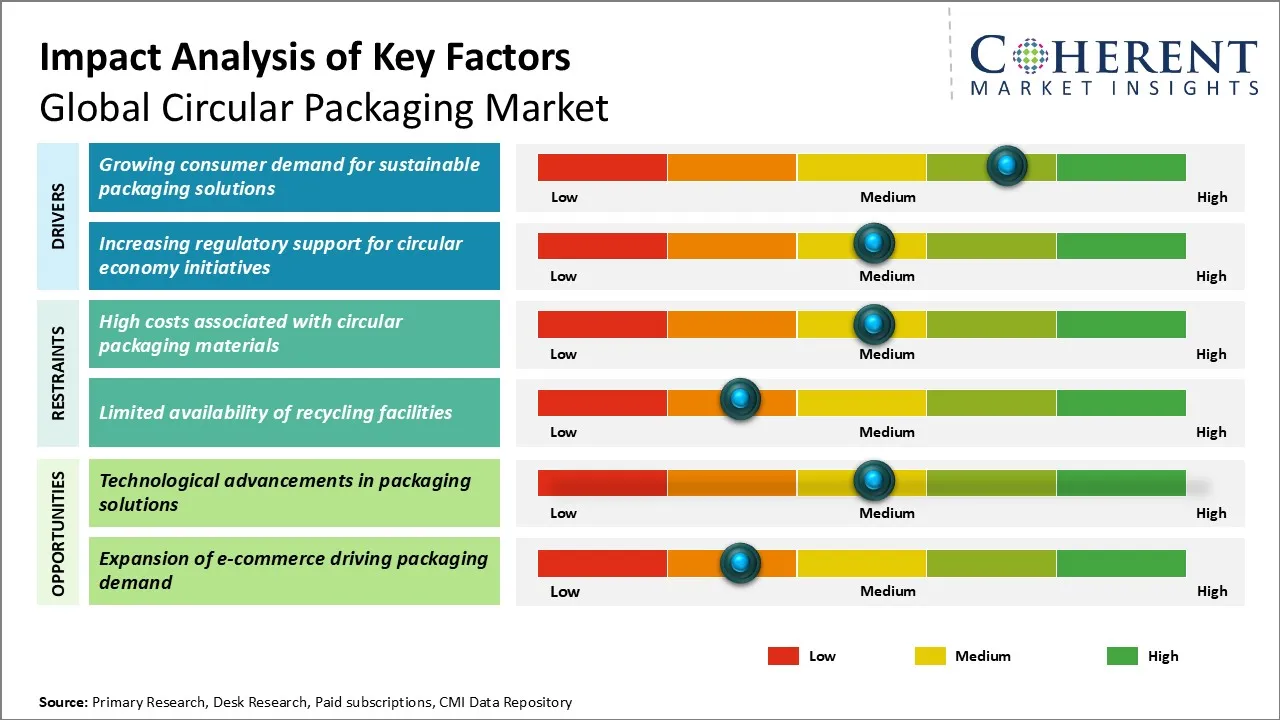
Circular Packaging Market Driver - Growing Consumer Demand for Sustainable Packaging Solutions
Increasing environmental awareness among consumers has significantly influenced purchasing decisions, driving the demand for sustainable packaging solutions. Today’s buyers are more conscious of the ecological footprint associated with the products they consume, prompting a shift toward packaging that minimizes waste and supports recycling or reuse. This trend is particularly pronounced among younger generations, who prioritize brands demonstrating commitment to environmental responsibility. Consequently, manufacturers and retailers are under growing pressure to adopt circular packaging models that reduce plastic usage, incorporate biodegradable or recyclable materials, and ensure packaging can be reintegrated into supply chains without compromising quality.
For example, Unilever has committed to ensuring that 100% of its plastic packaging is recyclable, reusable, or compostable by 2025. As part of this initiative, the company has already been investing in sustainable alternatives like paper-based and biodegradable packaging to reduce plastic usage.
Circular Packaging Market Opportunity - Technological Advancements in Packaging Solutions
Technological advancements in packaging solutions represent a significant opportunity for the global circular packaging market, driving innovation and enhancing sustainability across the value chain. With increasing consumer awareness and regulatory pressure to reduce environmental impact, companies are investing heavily in research and development to create smart, efficient, and eco-friendly packaging. Innovations such as biodegradable materials, bio-based polymers, and advanced recycling technologies are reshaping the market landscape by enabling the production of packaging that can be easily reused, recycled, or composted.
For example, Nestlé is actively investing in biodegradable packaging technologies. The company has partnered with multiple suppliers to explore biodegradable and compostable packaging materials, which would replace traditional plastic packaging. This aligns with Nestlé's sustainability goals to make 100% of its packaging recyclable or reusable by 2025.
Analyst Opinion (Expert Opinion):
- The circular packaging market is set for significant growth, propelled by increasing regulatory pressures and consumer demand for sustainable practices. Companies like Amcor and Tetra Pak are at the forefront, innovating with biodegradable materials and recyclable designs that minimize environmental impact.
- Recent conferences, such as the Sustainable Packaging Summit (2023) and the Circular Packaging Forum (2022), have emphasized the critical importance of collaboration across industries to achieve circularity. These events showcased successful initiatives where brands have implemented closed-loop systems, significantly reduced waste and enhancing brand loyalty among eco-conscious consumers. As businesses increasingly recognize the economic benefits of sustainable packaging solutions, the circular packaging market is well-positioned for robust expansion, driven by innovations that meet both regulatory requirements and evolving consumer expectations for sustainability.
Speak to the analyst
Want personalized insights?
Take the findings above to one of our principal consultants, or have the report rebuilt around the segments, geographies and competitors you actually track.
Market Segmentation
- Product Type Insights (Revenue, USD Bn, 2021 - 2033)
- Paper & Cardboard
- Plastic
- Metal
- Glass
- Others
- Packaging Type Insights (Revenue, USD Bn, 2021 - 2033)
- Rigid Packaging
- Flexible Packaging
- Semi-Rigid Packaging
- End-use Industry Insights (Revenue, USD Bn, 2021 - 2033)
- Food and Beverage
- Personal Care
- Healthcare
- Consumer Goods
- Others
- Regional Insights (Revenue, USD Bn, 2021 - 2033)
- North America
- U.S.
- Canada
- Latin America
- Brazil
- Argentina
- Mexico
- Rest of Latin America
- Europe
- Germany
- U.K.
- Spain
- France
- Italy
- Russia
- Rest of Europe
- Asia Pacific
- China
- India
- Japan
- Australia
- South Korea
- ASEAN
- Rest of Asia Pacific
- Middle East
- GCC Countries
- Israel
- Rest of Middle East
- Africa
- South Africa
- North Africa
- Central Africa
- North America
- Key Players Insights
- Amcor plc
- Tetra Pak International S.A.
- Mondi Group
- Sealed Air Corporation
- Smurfit Kappa Group
- Ball Corporation
- Crown Holdings, Inc.
- WestRock Company
- DS Smith plc
- International Paper Company
- Berry Global, Inc.
- Huhtamaki Group
- Constantia Flexibles
- Coveris Holdings S.A.
- Greif, Inc.
Sources:
Primary Research Interviews:
- Sustainability Manager – Leading Packaging Manufacturer
- Procurement Manager – Global Packaging Materials Supplier
- Product Development Head – Major FMCG Brand Focused on Sustainability
- Packaging Engineer – Renowned Circular Packaging Solution Provider
Stakeholders:
- Manufacturers
- End-use Sectors:
- Consumer Goods (Food & Beverage, Personal Care, Household Products)
- Packaging Solution Providers (Recycled Materials, Compostable Packaging)
- Regulatory & Certification Bodies
- Sustainable Packaging Certification Bodies
- Recyclability Standard Organizations
- E-commerce Platforms and Retailers
- Technology Integration Players:
- AI-driven packaging optimization platforms
- Automation in packaging processes for sustainability
Databases:
- UN Comtrade Database
- European Environment Agency (EEA) Database
- EPA Circular Economy & Packaging Recycling Data
Magazines:
- Packaging Europe – Innovations in circular packaging
- Sustainable Packaging News – Market trends in eco-friendly packaging solutions
- Packaging Strategies – Circular packaging market analysis
- Plastics Recycling Update – Circular economy and packaging material innovations
- Flexible Packaging Magazine – Packaging solutions in the circular economy
Journals:
- Journal of Cleaner Production – Sustainable packaging practices in the circular economy
- Packaging Technology and Science – Advances in circular packaging materials
- Waste Management – Recycling and packaging waste management strategies
- Journal of Environmental Management – Circular economy in packaging materials
- Resources, Conservation & Recycling – Innovations in packaging recycling technologies
Newspapers
- The Financial Times – Business shifts towards circular economy in packaging
- The Guardian – Circular packaging and sustainability trends
- Asia Packaging Journal – Packaging waste reduction in Asia-Pacific
- European Recycling News – Circular packaging regulation and industry trends
- The New York Times – Corporate adoption of circular packaging in major brands
Associations:
- Sustainable Packaging Coalition (SPC)
- European Federation of Corrugated Board Manufacturers (FEFCO)
- The Ellen MacArthur Foundation – Circular economy insights for packaging
- Institute of Packaging Professionals (IOPP)
Public Domain Sources
- U.S. FDA – Guidelines for food packaging and recyclability standards
- European Commission – Regulations on circular economy and packaging waste
- World Economic Forum (WEF) – Circular economy and packaging policies
Proprietary Elements:
- CMI Data Analytics Tool, Proprietary CMI Existing Repository of information for last 8 years.
Get access to 250+ pages report
Every segment, forecast, competitor profile and data table behind the analysis above — available for instant download.
- ESOMAR Member
- ISO 9001:2015 Certified
- D-U-N-S Registered
- GDPR & CCPA Compliant
Missing comfort of reading report in your local language? Find your preferred language:
Transform your Strategy with Exclusive Trending Reports
Frequently Asked Questions
The global circular packaging market is estimated to be valued at USD 268.98 Bn in 2026 and is expected to reach USD 420.75 Bn by 2033.
The CAGR of the global circular packaging market is projected to be 6.6% from 2026 to 2033.
Growing consumer demand for sustainable packaging solutions and increasing regulatory support for circular economy initiatives are the major factors driving the growth of the global circular packaging market.
High costs associated with circular packaging materials and limited availability of recycling facilities are the major factors hampering the growth of the global circular packaging market.
In terms of product type, paper & cardboard is estimated to dominate the market revenue share in 2026.
Amcor plc, Tetra Pak International S.A., Mondi Group, Sealed Air Corporation, Smurfit Kappa Group, Ball Corporation, Crown Holdings, Inc., WestRock Company, DS Smith plc, International Paper Company, Berry Global, Inc., Huhtamaki Group, Constantia Flexibles, Coveris Holdings S.A., and Greif, Inc. are the major players.
Europe is expected to lead the global circular packaging market in 2026.