

Consumer Battery Market Size And Share Analysis
The Global Consumer Battery Market is estimated to be valued at USD 30.80 Bn in 2026 and is expected to reach USD 47.85 Bn by 2033, exhibiting a compound annual growth rate (CAGR) of 6.5% from 2026 to 2033.
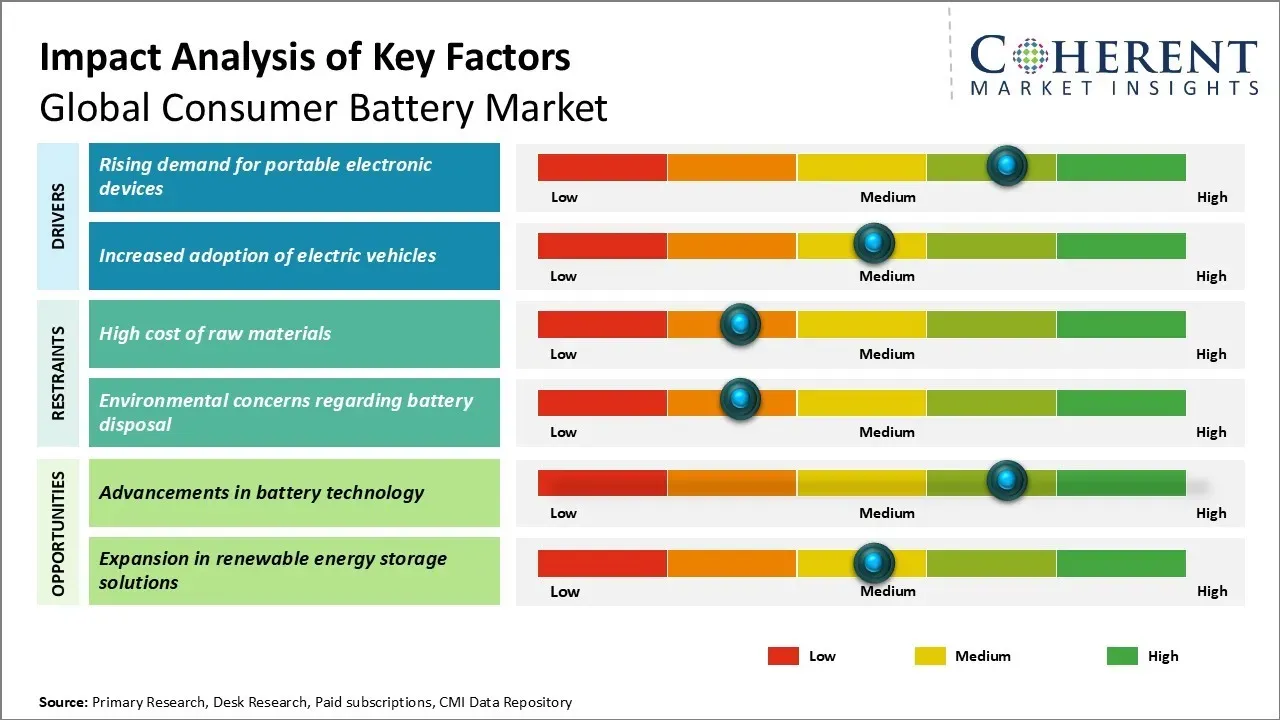
Key Takeaways
- By Battery Type, secondary battery segment is projected to dominate the global consumer battery market, commanding a substantial 66.3% share in 2026.
- By Form Factor, Cylindrical batteries are expected to hold the largest market share of 41.6% in 2026.
- By Application, consumer electronics segment is anticipated to be the largest application segment, capturing 43.3% of the market in 2026.
- Asia Pacific is projected to dominate the global consumer battery market with a commanding 49.80% share in 2026.
Market Overview
The global Consumer Battery Market is witnessing robust growth, driven by rising demand for portable electronics, increasing adoption of rechargeable devices, and advancements in battery technology. The market is expanding rapidly due to the proliferation of smartphones, laptops, wearable’s, and smart home devices that require compact, efficient power sources. Secondary (rechargeable) batteries dominate the market, supported by environmental concerns and cost-effectiveness.
Current Events and its Impact on the Consumer Battery Market
Current Event | Description and its impact |
Technological Advancements in Battery Chemistry and Design |
|
Shifting Preferences Toward Sustainability and Reusability |
|
Evolving Regulatory Landscape and Supply Chain Constraints |
|
Pricing Analysis Consumer Battery Market
The pricing dynamics in the global consumer battery market are shaped by multiple factors, including raw material availability, manufacturing technology, energy density performance, and evolving end-user preferences. In 2025, the market is experiencing pricing fluctuations due to increased demand for high-performance batteries and pressure on raw material supply chains.
Prices of critical components such as lithium, cobalt, nickel, and graphite have remained volatile due to geopolitical tensions, mining constraints, and growing demand from both the consumer electronics and electric vehicle sectors. These price surges directly impact the cost of lithium-ion batteries, which dominate the consumer segment.
Additionally, the shift toward solid-state and silicon-anode battery technologies while offering improved energy efficiency and safety adds R&D and production costs, often translating to higher price points in premium products.
Consumer expectations for longer battery life, faster charging, and compact form factors also influence pricing strategies. Brands offering value-added features often price their products at a premium. However, increasing automation in battery cell production, standardization of battery packs, and economies of scale especially in China and South Korea are helping offset rising costs.
Overall, while the mass-market segment remains highly price-sensitive, particularly in developing regions, there is a clear shift toward value-based pricing in advanced consumer batteries. Manufacturers are striving to balance innovation, sustainability, and affordability to meet global demand without compromising profitability.
- Current Industry Events of 2026
- Market Size Estimation
- Regional Breakdown
- Competitive Landscape
- Customer Intelligence
- Segmental Analysis
- Pricing Analysis
- Key Market Drivers, Challenges & Future Trends
- Customized Insights Section
Integration Of New Technologies – Consumer Battery Market
The consumer battery market is undergoing rapid transformation through the integration of cutting-edge technologies aimed at enhancing energy density, safety, and sustainability. One major innovation is the development of solid-state battery technology, which replaces liquid electrolytes with solid alternatives to offer higher energy density, faster charging, and improved safety. These batteries are particularly suitable for compact devices like smartphones and wearables, where space efficiency and thermal stability are critical.
Another technological leap is the incorporation of silicon anode materials in lithium-ion batteries. Compared to traditional graphite, silicon anodes can hold significantly more lithium ions, resulting in longer battery life and higher capacity. This advancement is being increasingly adopted by major manufacturers for premium consumer electronics.
Smart battery management systems (BMS) powered by AI and machine learning are also becoming mainstream. These systems monitor battery health, predict usage patterns, and optimize charging cycles to extend battery lifespan and ensure user safety. Additionally, eco-conscious innovations such as recyclable battery designs and cobalt-free chemistries are gaining momentum in response to environmental concerns and regulatory pressures.
Collectively, these innovations are reshaping the consumer battery market by delivering smarter, more durable, and sustainable energy solutions tailored for modern lifestyles.
Consumer Feedback and Unmet Demand – Consumer Battery Market
Consumer Feedback
Consumers across global markets consistently emphasize the importance of longer battery life, faster charging times, and greater safety as top expectations in battery-powered devices. Feedback from users of smartphones, laptops, and wearable’s reveals growing frustration with battery degradation over time, particularly after frequent charge cycles.
In addition, there is increasing concern about overheating, especially during high-performance tasks such as gaming or video streaming. Portable device users also highlight the need for more compact yet powerful batteries to support lightweight product designs without compromising functionality.
Unmet Demand
Despite significant advancements, several unmet needs persist in the consumer battery market. A major gap lies in the limited availability of ultra-fast-charging batteries that do not compromise cycle life or safety. Consumers are also seeking batteries that maintain high performance in extreme temperatures, especially in regions with very hot or cold climates.
Moreover, there is rising demand for eco-friendly and recyclable batteries as environmental awareness grows yet many battery products still rely on materials with limited recycling infrastructure or contain toxic components like cobalt.
Addressing these unmet needs represents a key opportunity for manufacturers to differentiate through innovation and sustainability.
Consumer Battery Market Trends
- Rising demand for portable electronic devices
The demand for portable consumer electronic devices such as smartphones, laptops, tablets, wearable’s, and other smart devices have increased exponentially over the last decade. Smartphones in particular have become almost like an extension of human beings as people rely on them for various daily tasks ranging from basic communications to banking, entertainment and more.
As the processing power and capabilities of these devices increase consistently with each new model, the battery life however has not been able to keep pace. Users now demand battery packs that can last for longer hours of active use like photography, gaming, streaming, and others without frequent charging. Device manufacturers are focusing heavily on introducing enhanced features and functionalities in newer models each year but the battery technology has lagged behind.
This gap between rising device capabilities and stagnant battery improvements has created a booming demand for aftermarket removable and replaceable consumer batteries with higher capacities. Users now prefer to carry additional portable battery packs to provide backup power for their devices when on the move. The bring-your-own-device trend in enterprises has further accelerated this demand.
Newer categories of devices like truly wireless earbuds, smartwatches, and other wearables are hugely dependent on high-density batteries to support their small form factors. The Battery as a Service model is also gaining traction where users pay a monthly subscription for battery swapping services. All these factors are expected to continue driving strong growth in the consumer battery market across product categories.
Opportunities in the Consumer Battery Market
- Advancements in Battery Technology
One of the major opportunities for the global consumer battery market is the significant advancements happening in battery technology. After dominating the market for decades, lithium-ion battery technology is now advancing to new promising chemistries like lithium-sulphur, solid-state, and lithium-metal batteries which promise to boost energy density significantly while reducing costs.
Start-ups and large automotive companies are investing heavily in research and development of these next-generation battery technologies. Additionally, new cathode and anode materials are being developed which can store more energy than current graphite or NCM/NCA materials. Promising low-cost lithium alternatives like sodium-ion batteries are also in testing phases.
Once commercialized at scale, these advanced battery technologies have the potential to address the issues of driving range and charging times for EVs while bringing down battery costs. This will accelerate the adoption of battery powered products and drive higher revenues for consumer battery market players.
Segmental Insights
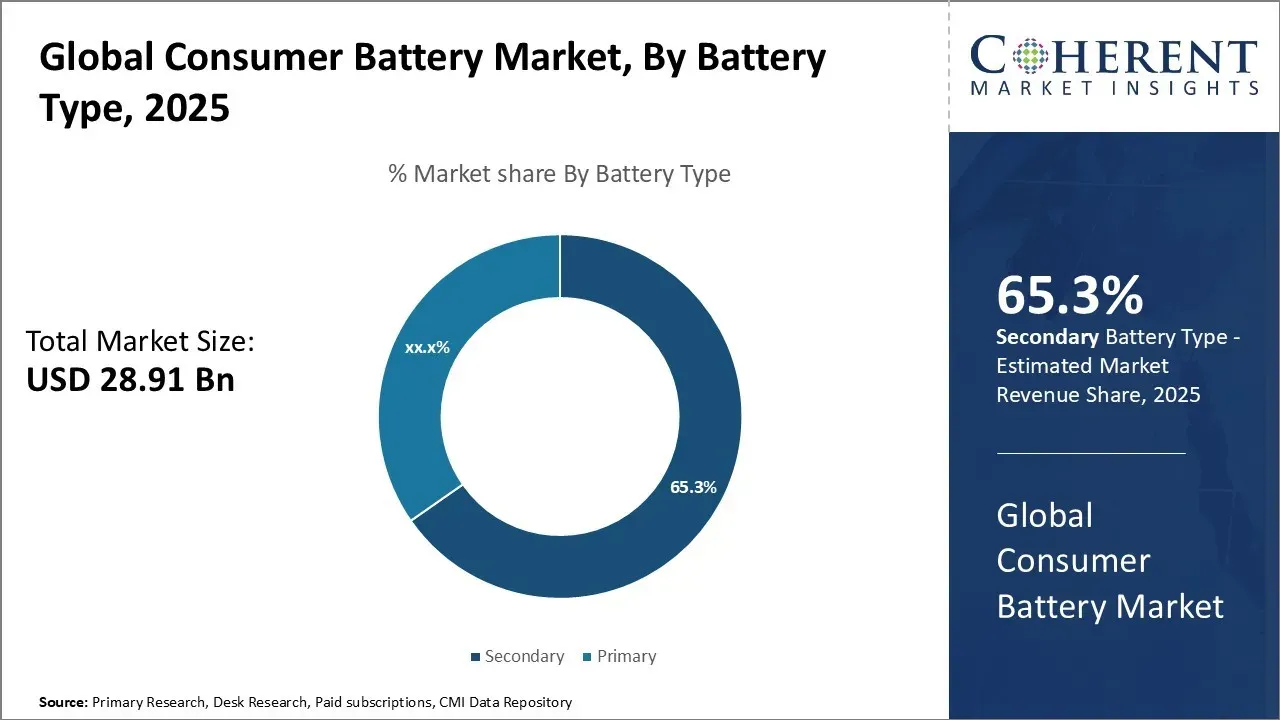
Consumer Battery Market Insights, By Battery Type
The secondary battery segment is projected to dominate the global consumer battery market, accounting for a substantial 66.3% share in 2026. This dominance is attributed to their rechargeable nature and broad versatility, which make them ideal for powering a wide range of portable electronics including smartphones, laptops, tablets, and wearable’s.
The ability to recharge these batteries multiple times not only provides economic advantages for consumers but also reduces environmental impact, aligning with global sustainability goals. This shift towards reusable energy storage solutions highlights the increasing importance of cost-effectiveness, longevity, and eco-conscious consumer behaviour.
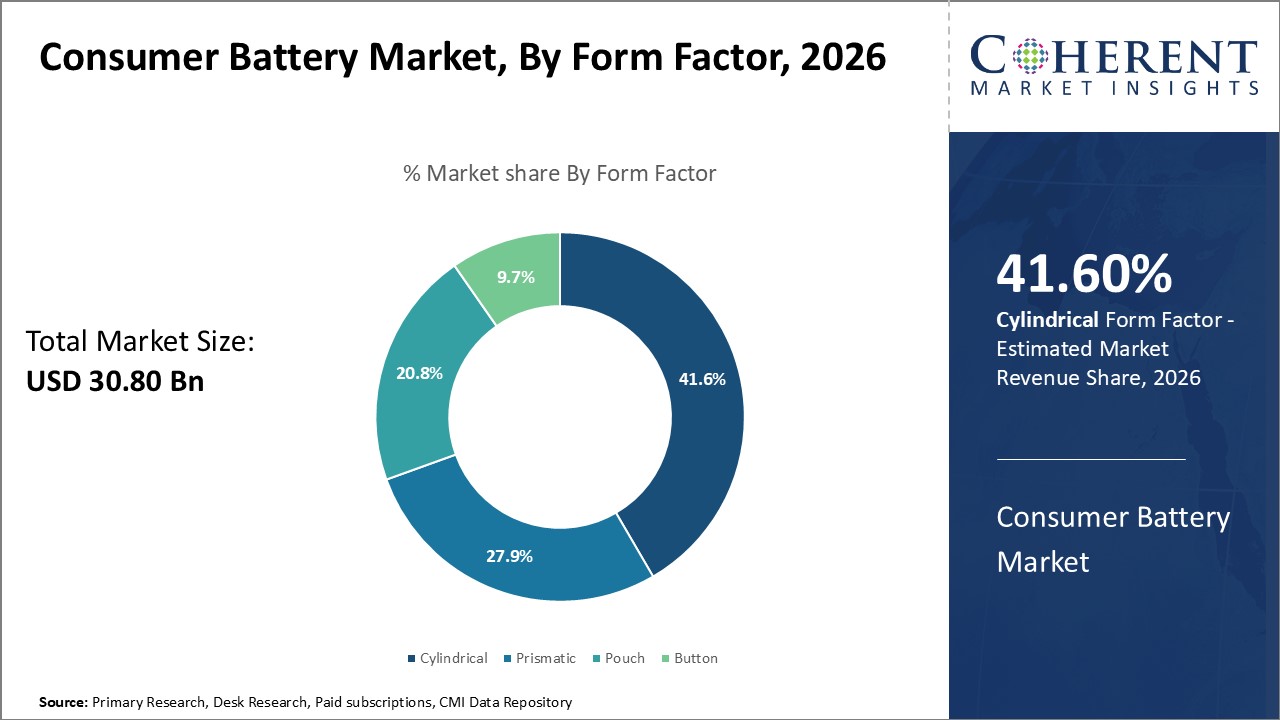
Consumer Battery Market Insights, By Form Factor
Cylindrical batteries are expected to hold the largest market share of 41.6% in 2026, owing to their standardized size, robust performance, and easy integration into a variety of devices. Their consistent form factor supports simple insertion and replacement in electronics such as flashlights, toys, remote controls, and power tools.
The cylindrical design also enhances mechanical stability and thermal management, making it highly reliable for both low- and high-drain applications. These batteries remain a preferred choice among manufacturers and consumers alike due to their availability, affordability, and flexible use across diverse product categories.
Consumer Battery Market Insights, By Application
The consumer electronics segment is anticipated to be the largest application category in the consumer battery market, contributing 43.3% of total market share in 2026. This growth is primarily driven by the global proliferation of battery-powered devices, including smartphones, wireless earbuds, smartwatches, digital cameras, and laptops.
As these gadgets become increasingly compact and powerful, the demand for high-density, long-lasting batteries continues to soar. The segment also benefits from ongoing technological advancements in lithium-ion and solid-state chemistries, which offer improved performance, faster charging, and enhanced safety, further fuelling market expansion.
Regional Insights
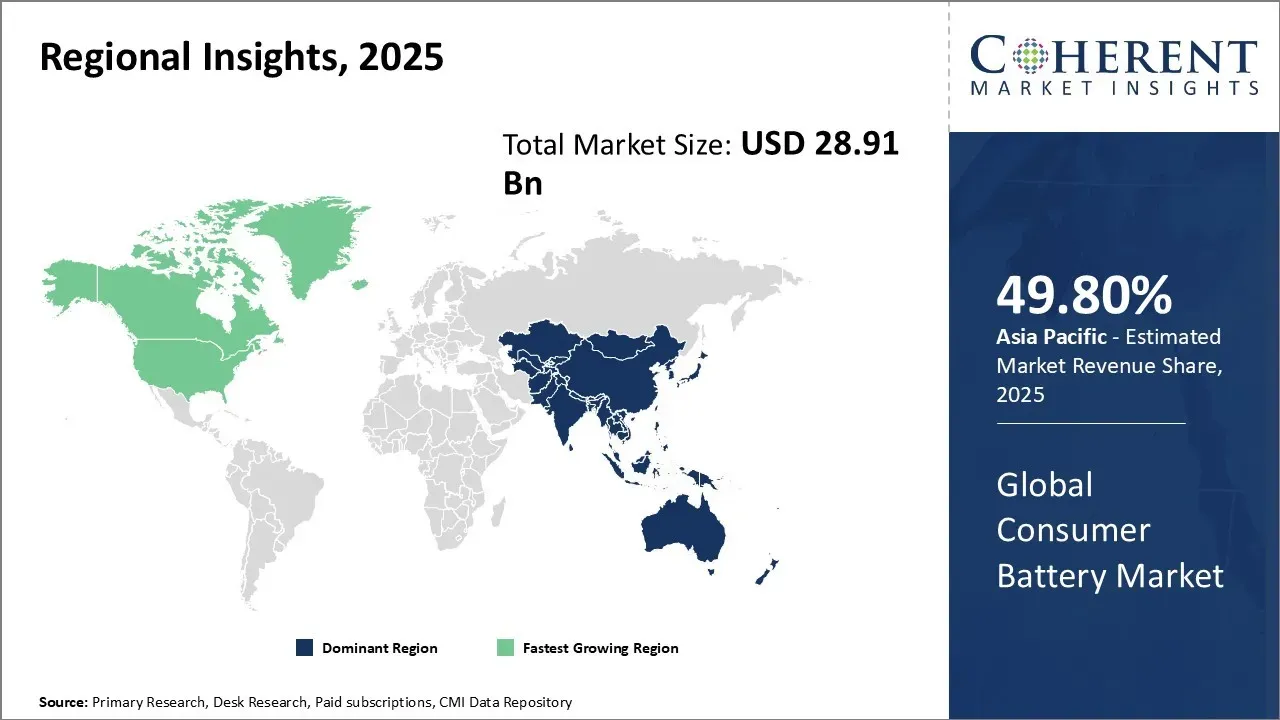
Asia Pacific Consumer Battery Market Trends and Analysis
The Asia Pacific region is projected to dominate the global consumer battery market, holding a commanding 49.80% share in 2026. This regional leadership is fuelled by rising disposable incomes, rapid urbanization, and an explosive growth in consumer electronics usage across countries like China, India, Japan, and South Korea.
The region is also home to major battery producers and innovators, including CATL, Panasonic, LG Energy Solution, and BYD, which drive advancements in lithium-ion and next-gen battery technologies. High smartphone penetration, growing demand for portable devices, and increased government support for electronics manufacturing continue to reinforce Asia Pacific’s role as the primary engine of growth in the consumer battery sector.
North America Consumer Battery Market Trends and Analysis
North America is expected to witness the fastest growth in the global consumer battery market, accounting for a notable 28.4% share in 2026. This growth is underpinned by strong consumer demand for high-performance electronic devices, such as wireless earbuds, wearables, and gaming accessories. The region benefits from the presence of leading battery manufacturers and technology firms, along with a highly digital consumer base.
In addition, government incentives, sustainable product initiatives, and increased adoption of rechargeable and eco-friendly battery solutions are accelerating innovation and market expansion. The U.S. and Canada continue to invest heavily in R&D and domestic production capabilities, further strengthening the region’s competitive position.
Consumer Battery Market Dominating Countries
United States and Canada
The United States holds a dominant position in the North American consumer battery market, which is projected to account for 28.4% of the global share in 2026. The country benefits from the presence of leading battery manufacturers and technology firms, including Tesla, Energizer, and Duracell.
Tech-savvy population with high demand for consumer electronics like smartwatches, wireless headphones, and gaming devices fuels strong battery consumption. Additionally, government support for domestic battery production and innovation in lithium-ion and solid-state technologies continues to boost the U.S. market share.
Canada also plays a vital role in North America's consumer battery market, supported by increasing adoption of portable electronic devices and sustainability initiatives encouraging the use of rechargeable batteries.
The country’s strong focus on clean energy, electronic recycling programs, and investments in battery R&D reinforce its contribution to regional market growth. Canadian companies are also exploring niche segments, such as batteries for medical devices and IoT applications, which support further market expansion.
Market Players, Key Devlopment and Competitive Intelligence
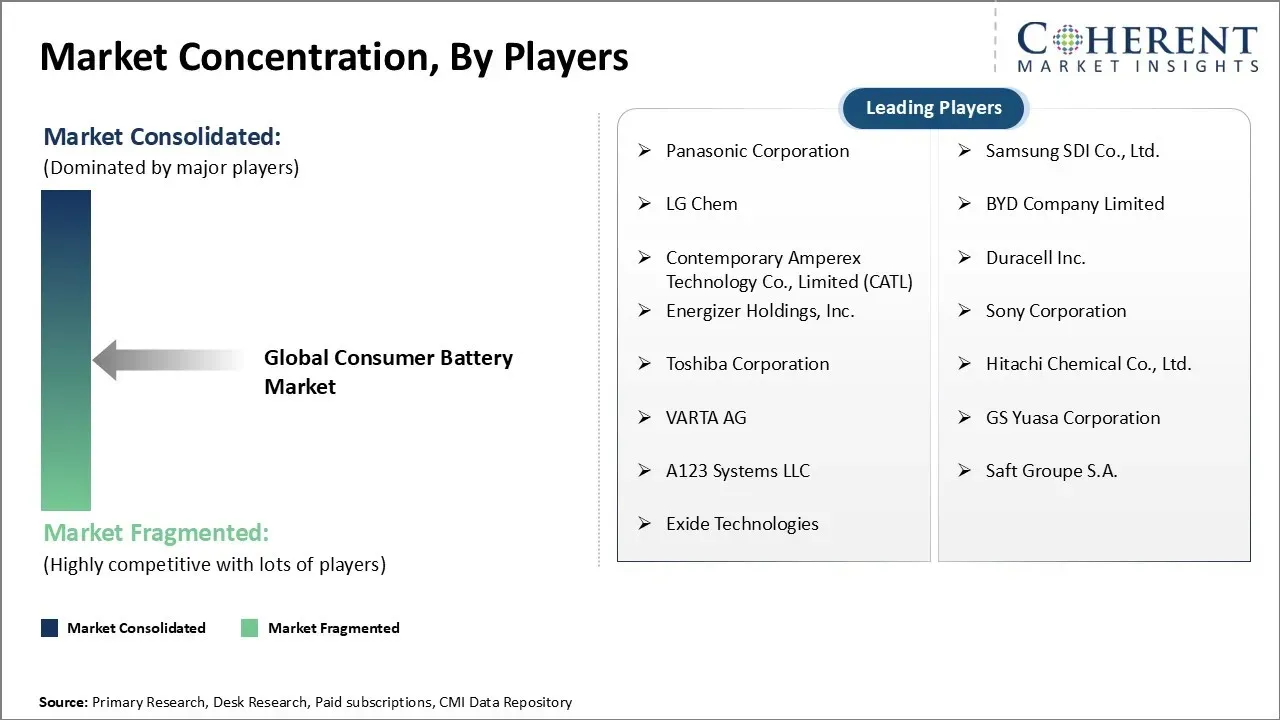
Top Strategies Followed by Global Consumer Battery Market Players
- Established Players: Leading consumer battery companies, such as Duracell and Energizer, focus heavily on research and development to drive product innovation. They invest over 5% of annual revenues into R&D aiming to develop batteries with higher power capacities, longer shelf lives, and improved environmental friendliness. Through extensive R&D, companies aim to stay ahead of competition and introduce batteries tailored to emerging consumer electronics.
- Mid-Level Players: Companies like Lionenergy and Nanfu focus on addressing the needs of price-sensitive customers through affordably priced batteries. They leverage economies of scale achieved through collaboration with OEMs to minimize production costs. While maintaining quality standards, these companies price their products 10-15% lower than market leaders to gain market share in high-volume retail channels and among value-conscious consumers.
- Small-Scale Players: Startups like Programmable Battery focus on targeting niche segments ignored by larger brands. They custom-design batteries optimized for unique applications like medical devices, toys, or outdoor equipment. Through laser-focused R&D, these small players introduce innovations to specialized markets previously underserved.
Emerging Startups – Consumer Battery Industry Ecosystem
- Innovative Technologies: Startups like StoreDot are developing batteries with revolutionary fast-charging capabilities using nanoparticle technologies. While still in the prototype phase, these batteries could potentially charge smartphones fully within minutes. Amprius produces micro-scale lithium-ion batteries using silicon nanowires for high energy densities, enabling mobile devices to operate for days on a single charge. These emerging technologies promise to reshape consumer expectations around portability and convenience.
- Market Contribution: Startups are also addressing specific customer segments. For example, Battery Tender creates specialized batteries and chargers for recreational vehicles and electric boats to boost performance in outdoor applications. Fenix Outdoor International launched a range of rugged, rechargeable LED flashlights suited to outdoor adventure sports.
Market Report Scope
Consumer Battery Market Report Coverage
| Report Coverage | Details | ||
|---|---|---|---|
| Base Year: | 2025 | Market Size in 2026: | USD 30.80 Bn |
| Historical Data for: | 2020 To 2024 | Forecast Period: | 2026 To 2033 |
| Forecast Period 2026 to 2033 CAGR: | 6.5% | 2033 Value Projection: | USD 47.85 Bn |
| Geographies covered: |
| ||
| Segments covered: |
| ||
| Companies covered: | Panasonic Corporation, Samsung SDI Co., Ltd., LG Chem, BYD Company Limited, Contemporary Amperex Technology Co., Limited (CATL), Duracell Inc., Energizer Holdings, Inc., Sony Corporation, Toshiba Corporation, Hitachi Chemical Co., Ltd., VARTA AG, GS Yuasa Corporation, A123 Systems LLC, Saft Groupe S.A., and Exide Technologies | ||
| Growth Drivers: |
| ||
| Restraints & Challenges: |
| ||
Analyst Viewpoint – Consumer Battery Market
- Analysts maintain a highly optimistic outlook on the global consumer battery market, citing its pivotal role in powering the digital lifestyle and its integration across a wide array of electronic devices. The surge in demand for portable gadgets, smart home devices, and wearable’s continues to underpin the sector’s rapid growth. The market is seen as a cornerstone of the modern electronics ecosystem, with consumer preferences increasingly centred on battery reliability, longevity, and safety.
- Experts identify innovation as the primary catalyst for market advancement. The development of solid-state batteries, improvements in lithium-ion chemistry, and the incorporation of silicon anodes are expected to significantly boost energy density, reduce charging times, and extend battery lifespan.
- Moreover, sustainable manufacturing practices and the push for cobalt-free, recyclable batteries are gaining strategic importance amid rising environmental concerns and regulatory pressure.
- Regionally, Asia Pacific leads due to its massive electronics manufacturing base and presence of battery giants like CATL, Panasonic, and LG Energy Solution. North America is expected to register strong growth, supported by high-end consumer demand and investments in local battery production. Analysts foresee the future of the consumer battery market shaped by rapid innovation, sustainability initiatives, and the diversification of battery applications across new consumer tech categories.
Consumer Battery Market: Key Development
- In June 2025, Recyclekaro announced the launch of its new direct-to-consumer battery recycling platform in India. The aim of this new launch is ton recycle e-waste more accessible.
- In April 2025, Ford announced the development of its new lithium-ion battery technology. As per the company, the Lithium Manganese Rich chemistry provides long range at low cos as compared to other EV batteries in the market.
Market Segmentation
- Battery Type Insights (Revenue, USD Bn, 2021 - 2033)
- Secondary
- Primary
- Form Factor Insights (Revenue, USD Bn, 2021 - 2033)
- Cylindrical
- Prismatic
- Pouch
- Button
- Application Insights (Revenue, USD Bn, 2021 - 2033)
- Consumer Electronics
- Automotive (Electric Vehicles)
- Power Tools
- Uninterruptible Power Supplies (UPS)
- Regional Insights (Revenue, USD Bn, 2021 - 2033)
- North America
- U.S.
- Canada
- Latin America
- Brazil
- Argentina
- Mexico
- Rest of Latin America
- Europe
- Germany
- U.K.
- Spain
- France
- Italy
- Russia
- Rest of Europe
- Asia Pacific
- China
- India
- Japan
- Australia
- South Korea
- ASEAN
- Rest of Asia Pacific
- Middle East
- GCC Countries
- Israel
- Rest of Middle East
- Africa
- South Africa
- North Africa
- Central Africa
- North America
- Key Players Insights
- Panasonic Corporation
- Samsung SDI Co., Ltd.
- LG Chem
- BYD Company Limited
- Contemporary Amperex Technology Co., Limited (CATL)
- Duracell Inc.
- Energizer Holdings, Inc.
- Sony Corporation
- Toshiba Corporation
- Hitachi Chemical Co., Ltd.
- VARTA AG
- GS Yuasa Corporation
- A123 Systems LLC
- Saft Groupe S.A.
- Exide Technologies
Sources
The Stakeholders Consulted
- Battery cell and pack manufacturers
- Suppliers of raw materials including lithium, cobalt, nickel, and graphite
- Consumer electronics OEMs and design engineers
- Energy storage solution providers
- Regulatory and safety compliance consultants
- Research institutions focused on battery chemistry and power systems
- Electric mobility and portable electronics industry professionals
- Public and private entities involved in waste management and battery recycling
Databases Opened
- U.S. Department of Energy (DOE) – Battery Materials and Supply Chain Reports
- International Energy Agency (IEA) – Global EV and Battery Usage Data
- Eurostat – Battery Waste and Recycling Statistics
- Ministry of Heavy Industries (India) – EV & Battery Manufacturing Incentive Programs
- World Bank Open Data – Global Energy Access and Consumption Patterns
- UNIDO (United Nations Industrial Development Organization) – Battery Manufacturing and Export Data
Magazines & Trade Publications
- Battery & Energy Storage Technology (BEST) Magazine
- Energy Storage News
- Recharge News – Battery Materials & Circular Economy Section
- Power Electronics News
- Manufacturing.net – Consumer Electronics & Battery Section
Scientific and Industry Journals
- Journal of Power Sources
- Journal of Energy Storage
- Nature Energy
- Electrochimica Acta
- Energy Technology
Newspapers & Media Outlets
- The Wall Street Journal – Technology & Battery Innovation
- Bloomberg – Battery Metals and Energy Storage Markets
- Reuters – Global Battery Manufacturing & EV Supply Chain
- The Economic Times – Indian Battery and Electronics Sector
- Business Standard – Lithium-Ion and Consumer Electronics Supply Chains
Associations and Regulatory Bodies
- International Energy Agency (IEA)
- U.S. Environmental Protection Agency (EPA) – Battery Disposal and Recycling Regulations
- Bureau of Indian Standards (BIS) – Battery Safety and Performance Standards
- International Electrotechnical Commission (IEC)
- Ministry of Environment, Forest and Climate Change (India) – E-waste Management Rules
- Public Domain Sources
- U.S. Energy Information Administration (EIA) – Battery Demand and Usage Statistics
- European Commission – Battery Directive and Recycling Data
- World Bank – E-Mobility and Energy Storage Projects
- International Renewable Energy Agency (IRENA) – Battery Storage and Integration Reports
Proprietary Research Elements
- CMI Data Analytics Tool
- Proprietary CMI Repository of Market Data (covering past 8 years)
- CMI Expert Interviews and Transcripts (focused on battery materials, usage trends, recycling, and innovation)
Get access to 250+ pages report
Every segment, forecast, competitor profile and data table behind the analysis above — available for instant download.
- ESOMAR Member
- ISO 9001:2015 Certified
- D-U-N-S Registered
- GDPR & CCPA Compliant
Missing comfort of reading report in your local language? Find your preferred language:
Transform your Strategy with Exclusive Trending Reports
Frequently Asked Questions
The global consumer battery market size is estimated to be valued at USD 28.91 Bn in 2025 and is expected to reach USD 44.34 Bn by 2032.
The CAGR of the global consumer battery industry is projected to be 6.3% from 2025 to 2032.
Rising demand for portable electronic devices and increased adoption of electric vehicles are the major factors driving the growth of the global consumer battery industry.
High cost of raw materials and environmental concerns regarding battery disposal are the major factors hampering the growth of the global consumer battery industry.
In terms of battery type, the secondary segment is estimated to dominate the market revenue share in 2025.
Panasonic Corporation, Samsung SDI Co., Ltd., LG Chem, BYD Company Limited, Contemporary Amperex Technology Co., Limited (CATL), Duracell Inc., Energizer Holdings, Inc., Sony Corporation, Toshiba Corporation, Hitachi Chemical Co., Ltd., VARTA AG, GS Yuasa Corporation, A123 Systems LLC, Saft Groupe S.A., and Exide Technologies are the major players.
Asia Pacific is expected to lead the global consumer battery industry in 2025, holding a share of 49.8%.