

Global Copper Fungicides Market Size and Forecast – 2026 To 2033
The Global Copper Fungicides Market is estimated to be valued at USD 528.3 Mn in 2026 and is expected to reach USD 773.6 Mn by 2033, exhibiting a compound annual growth rate (CAGR) of 5.6% from 2026 to 2033. Growth is mainly supported by the rising need to reduce crop losses caused by fungal and bacterial diseases, especially in fruits, vegetables, vineyards, and plantation crops. According to the FAO, up to 40% of global crop production is lost every year due to plant pests and diseases, causing economic losses of more than USD 220 billion annually, which strengthens the need for preventive fungicide applications. Additionally, global fruit and vegetable production reached 2.1 billion tons in 2023, creating a large disease-sensitive crop base where copper fungicides are widely used for blight, downy mildew, leaf spot, and bacterial disease control. (Source: Food and Agriculture Organization of the United Nations)
Key Takeaways of the Global Copper Fungicides Market
- Copper oxychloride will be the leading product type, accounting for an estimated 32.5 % of the global copper fungicides market share in 2026. Growers prefer this segment for its broad-spectrum fungicidal activity and for its ability to successfully control downy mildew, blight and leaf spot in several crops. Because of its reliability and versatility, it is widely used in commercial agriculture, especially in Europe and North America.
- The fruits & vegetables segment is projected to account for 34.9 % of the global copper fungicides market in 2026, representing the largest application category. They are prone to fungal and bacterial diseases and copper fungicides play a vital role in quality yield and shelf life. Fruit and vegetables losses due to plant diseases are for example estimated to exceed 45% of all disease losses worldwide, making copper fungicides a crucial product in this area.
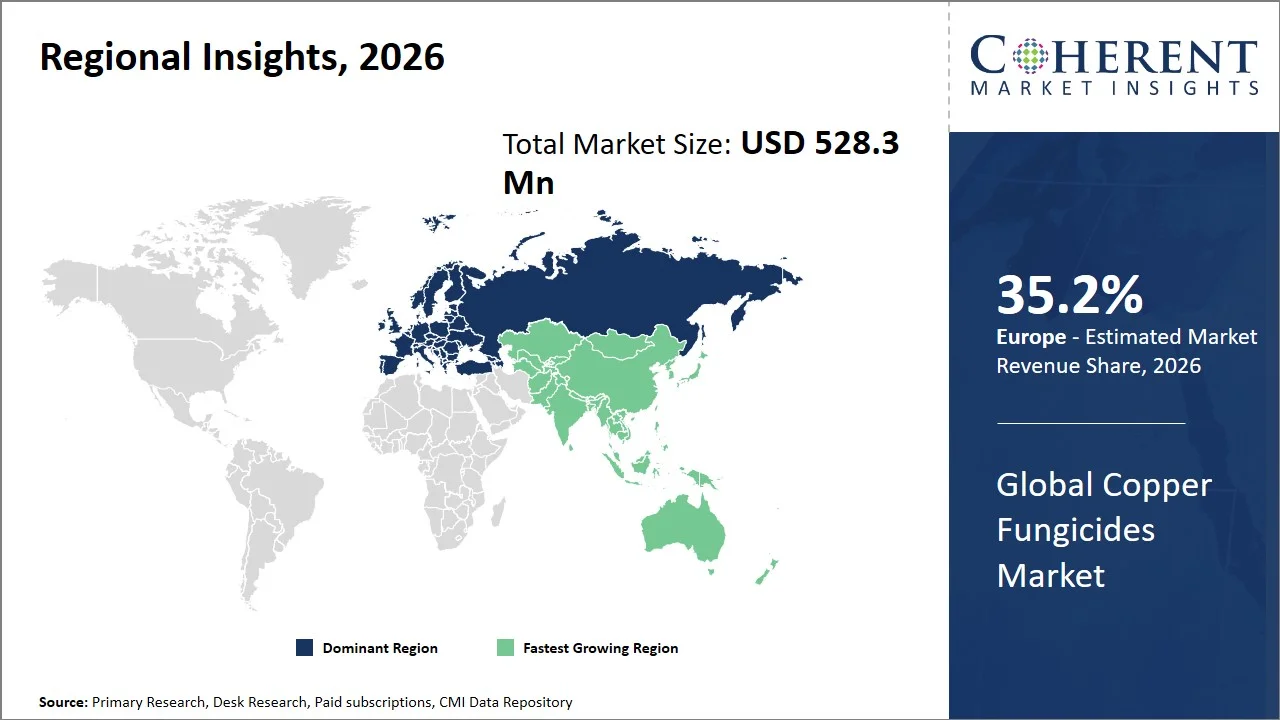
- Europe leads the global copper fungicides market, accounting for an estimated 35.2 % share in 2026. Strict agricultural quality standards, high value crops (grapes, vegetables and orchards) and extensive use of Integrated Pest Management (IPM) have all contributed to the regional market growth.
- Asia Pacific copper fungicides market is projected to grow at the highest rate, accounting for an estimated 19.3 % share of the global copper fungicides market by 2026. The key drivers include rapid urbanization, growing farm areas and demand for quality crops. As per the Asian Development Bank, the region needs US$ 1.7 trillion in annual investments in infrastructure and agriculture, and the indirect support of higher usage of crop protection in the region will help the copper fungicides market to grow.
- Sustainable Agriculture Alignment: Copper fungicides continue to play a key role in integrated pest management and organic farming practices, helping growers meet sustainability goals and reduce chemical reliance while maintaining crop yields.
- Market Expansion Catalysts: Rising prevalence of fungal and bacterial plant diseases, combined with increasing cultivation of high-value crops (fruits, vegetables, and vineyards) and government-backed crop protection programs, crop protection chemicals are driving market growth globally.
Segmental Insights
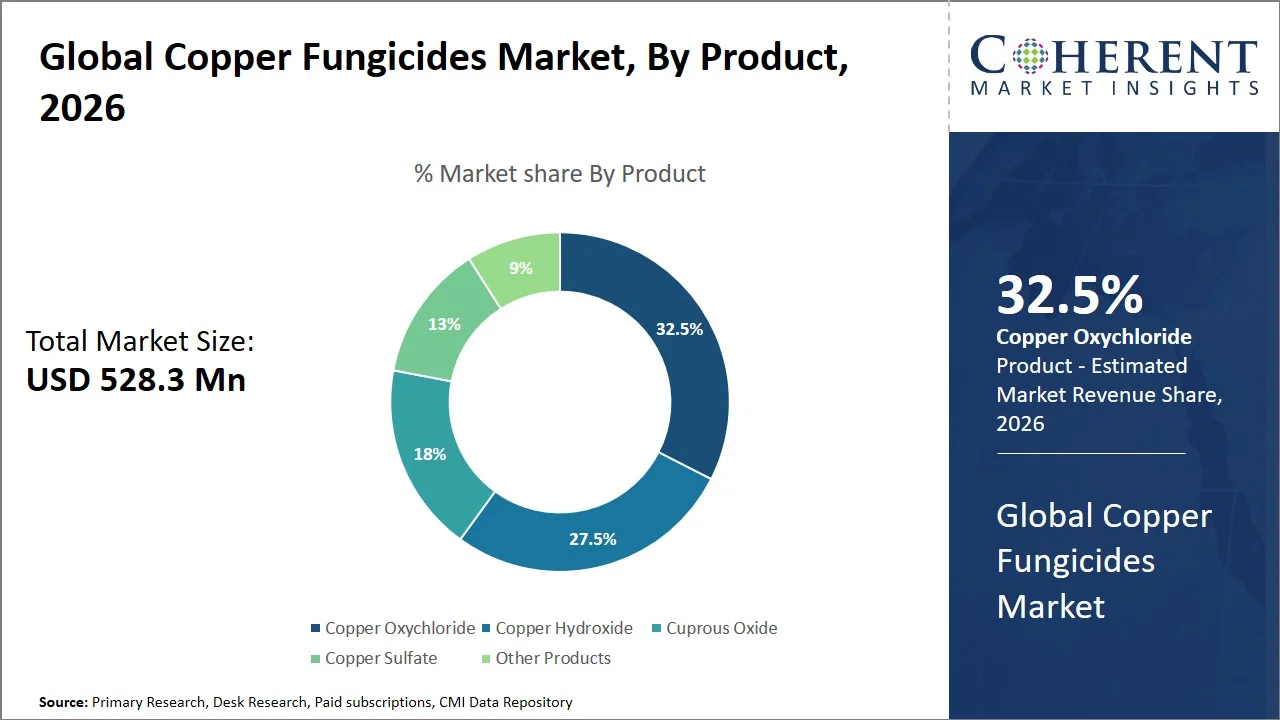
Why Does the Copper Oxychloride Segment Dominate the Copper Fungicides Market?
The copper oxychloride segment is expected to hold 32.5% of the global copper fungicides market in 2026 and has wide spectrum antimicrobial activity. It is effective on a wide spectrum of diseases including downy mildew of grape, blight of potato and tomato and leaf spot and is very effective against pathogens. Copper oxychloride is listed in the USDA National Organic Program (NOP) for use in organic crop production, and it is widely used in disease prevention for fruits and vegetables. (Source: USDA)
EFSA regulatory documentation confirms that copper oxychloride 50% WP is officially registered for downy mildew and other fungal pathogens in vineyards and other horticulture crops in Italy.
- Current Industry Events of 2026
- Market Size Estimation
- Regional Breakdown
- Competitive Landscape
- Customer Intelligence
- Segmental Analysis
- Pricing Analysis
- Key Market Drivers, Challenges & Future Trends
- Customized Insights Section
Fruits & Vegetables Segment Dominates the Copper Fungicides Market
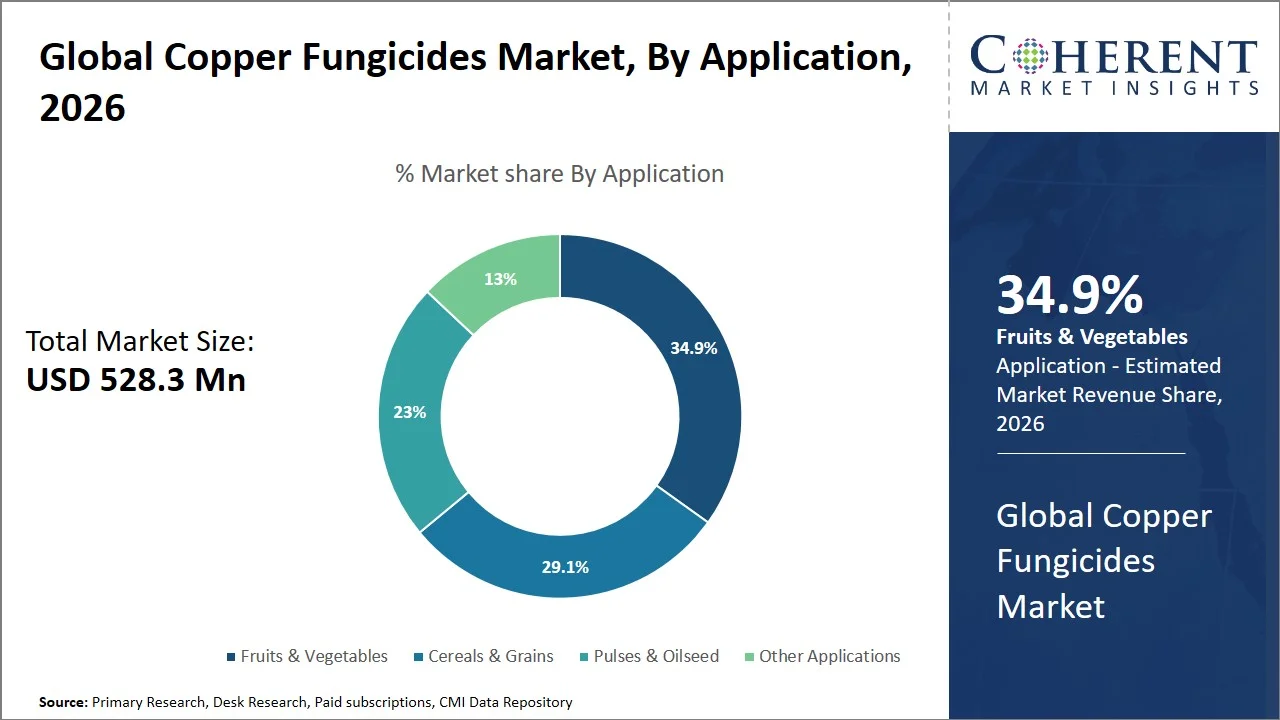
The fruits & vegetables segment is expected to witness 34.9% growth in the global copper fungicides market during the forecast period. High levels of susceptibility to fungal diseases like powdery mildew, anthracnose and bacterial leaf spot, particularly in humid and temperate geographical areas, drive this growth. Quality and shelf life of crop is important as is yield to the market and so copper fungicides are the first choice. Copper oxychloride and copper hydroxide formulations are recommended for control of fungal diseases of vegetables like tomato, cucumber and okra and are considered as important tools in controlling these diseases, according to the TNAU. (Source: TNAU Crop Protection Guide)
Currents Events and their Impact
Current Events | Description and its Impact |
EU Regulatory Action on Copper‑Based Active Substances |
|
EU Water Directive Strengthening Includes Pesticide Monitoring |
|
(Source: European Commission)
Copper Fungicides Market Dynamics
Market Driver
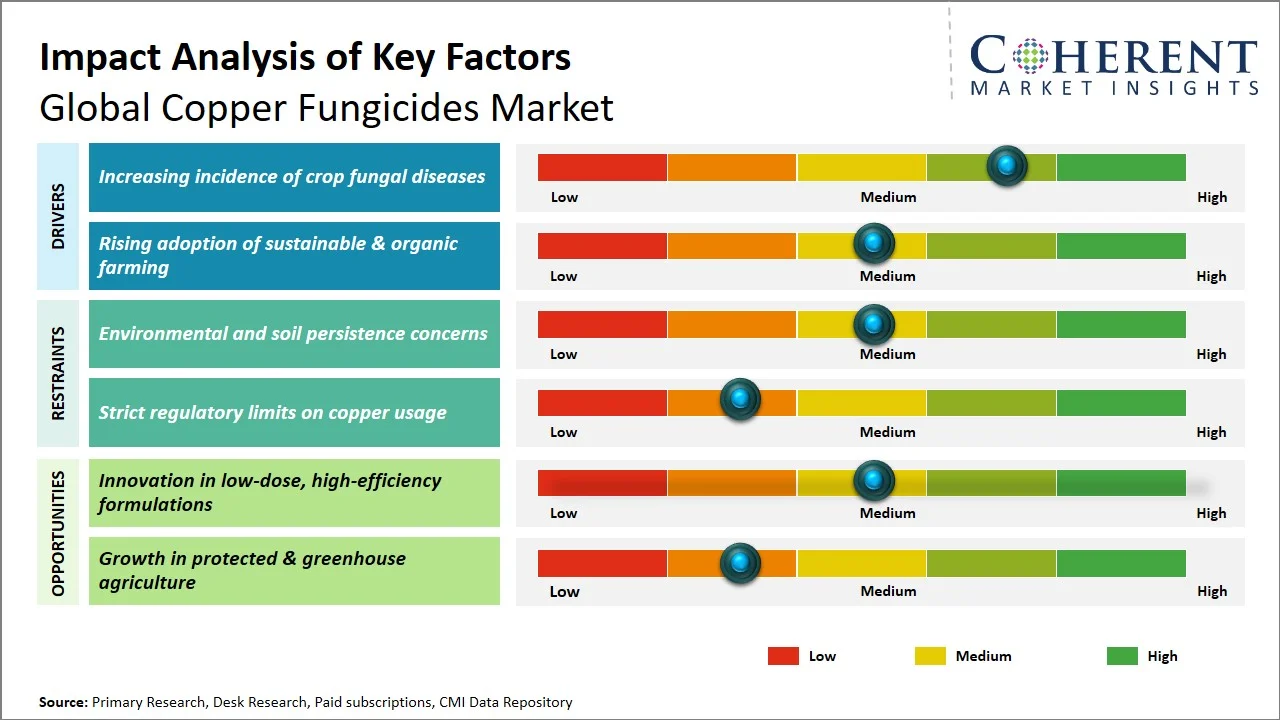
- Increasing incidence of crop fungal diseases: Copper fungicides are becoming more popular due to increased incidence of fungal diseases of crops. Fungal pathogens such as the downy mildew of grapes and cucurbits, powdery mildew of cereals and vegetables, and late blight of potatoes and tomatoes are taking advantage of climatic changes, such as increased humidity, extended wet periods and increases in temperatures. These are diseases that can bring huge losses of yield and/or low quality of crops, which can affect food security and incomes of the farmers. For instance, the U.S. reported significant occurrences of grape downy mildew in the California wine regions, resulting in chemistries (EPA registered copper hydroxide 20% DF) being applied as a preventive to stop the spread of the disease (USDA NASS). (Source: USDA NASS)
- Rising adoption of sustainable & organic farming: Copper fungicides are important for the growth of the market in Europe and Asia because sustainable farming and organic farming emphasizes the need to reduce the use of synthetic chemical inputs in crop protection. In certified organic systems, only a limited number of mineral fungicides are allowed, including copper hydroxide and copper oxychloride, and these will play an important role in managing fungal diseases in organic crops where systemic synthetic fungicides are not allowed. Copper compounds continue to be on the USDA National Organic Program (NOP) 2026 list of approved substances to be used in organic agriculture, but there is a limitation on the amount that can be used that will not lead to accumulation in the soil. (Source: USDA)
Emerging Trends
- Precision Application and Reduced Copper Loading: Advanced formulations enable precision application and reduced copper loading, supporting growers to maintain efficacy while reducing copper usage per hectare and to reach the goals in sustainability and regulatory limits.
- Use of Copper fungicides in relation to Sustainable and Biological Programs: Copper fungicides are now being used in combinations with biological crop protection products and micronutrients, as well as integrated disease management and resistance mitigation.
- Focus on High-Value Horticultural Crops: Demand for premium and reliable fungicide solutions is growing as new varieties of fruits, vegetables, and export horticulture, which are vulnerable to disease and require residue compliance, stimulate growth in these sensitive crops.
Regional Insights
Why is Europe a Strong Market for Copper Fungicides?
Europe leads the global copper fungicides market, accounting for an estimated 35.2% share in 2026. Copper compounds are still legally available in member states and recognized as authorized active substances for fungicidal applications by EFSA peer reviews for EU pesticide legislation. Integrated pest management (IPM) and sustainable farming are encouraged by European policies such as Farm to Fork, which includes favoring the use of non-systemic, multi-site protectants such as copper compounds that are compatible with resistance management programs. (Source: European Commission).
Why Does the Asia Pacific Copper Fungicides Market Exhibit High Growth?
Asia Pacific copper fungicides market is projected to grow at the highest rate, accounting for an estimated 19.3% share of the global copper fungicides market by 2026, and this can be attributed to the prevalence of agriculture, the government's support, and the presence of a strong agrochemical industry in the region. In China and India, for example, much of the country is under cultivation for crop segments where the use of effective fungicidal measures, such as copper-based fungicides, is crucial for controlling fungal diseases. Government policies in the Asia Pacific region often encourage sustainable agriculture and environmentally friendly pest management practices. For example, countries like Japan promote integrated pest management (IPM) programs that favor the use of less harmful substances such as copper-based fungicides. These policies support farmers in reducing chemical inputs while maintaining crop protection, aligning with broader sustainability and food safety goals
Global Copper Fungicides Market Outlook for Key Countries
Why is China Leading Innovation and Adoption in the Copper Fungicides Market?
Copper fungicides are still strong in China, where the cereal, fruit and vegetable cultivation base is large, fungal/bacterial disease control is a necessity to ensure yield and crop quality. The size of the country's vineyards also boosts the demand for protectant fungicides, since grapes are susceptible to downy mildew and other foliage diseases. The use of copper-based fungicides is still in China's list of approved crop protection products, as they have been registered by regulatory authorities under the ICAMA framework. The need for a broad-spectrum, contact-based disease control in high volume crops and specialty horticulture is a support for demand.
Is India a Favorable Market for Copper Fungicides?
High crop output in the Indian large horticulture sector (fruits, vegetables, pulses) as reflected in official government data shows that the sector requires disease management. Crop protection extension documents produced by the government include copper fungicides as acceptable alternatives, particularly for the control of fungal diseases such as anthracnose and blight. This is further evidence of the value of copper fungicides for official IPM programs. Examples of such fungicides are copper oxychloride 50% WG and copper hydroxide 53.8% DF which are used in practice as fungicide products for disease control in horticultural crops and are referenced in government extension literature.
Is Brazil Emerging as a Key Growth Hub for the Copper Fungicides Market?
Brazil maintains its position as the dominant market player, with large-scale planting of crops that are susceptible to fungal diseases, including soy, coffee and sugarcane. Brazil's official agricultural statistics confirm the size of the crop base in Brazil, which is geared to produce a broad range of crop protection solutions. The existence of official monographs for copper compounds in the national pesticide authorization database indicates regulatory acceptance of copper‑based fungicides for crop disease control. In the case of agricultural copper compounds, for instance, there is an official database published by Agência Nacional de Vigilância Sanitária (ANVISA) that provides information on the authorized list of active ingredients in pesticides.
Why Does the U.S. Top the Copper Fungicides Market?
The U.S. coper fungicides market is well-known for its cutting-edge agriculture practices and rigorous regulations that prioritize environmental protection and effectiveness. Copper fungicides are a major part of the fungicide industry for high value crops like grapes, apples and potatoes where fungal disease control is critical. The top companies such as FMC Corporation, Valent USA and Nufarm offer technologically advanced fungicides of copper targeted to meet rigorous regulatory requirements. There is a strong emphasis on sustainable strategies for pest control and investment in research guarantees a consistent demand and product development. Copper Hydroxide 10% Liquid is labeled by EPA as a Group M01 multi-site contact fungicide. In addition, USDA's National Organic Program technical report estimated the annual level of copper in use in crops including grapes, apples and potatoes, providing a real-world example of copper use in U.S. agriculture.
How is the need for more efficient and sustainable copper fungicide formulations creating new growth opportunities in the copper fungicides market?
The global copper fungicides market is witnessing a significant opportunity driven by the innovation in low-dose, high-efficiency formulations. Although effective, traditional fungicides based on copper come with issues of relatively high application rates and environmental concerns and phytotoxicity. In response, manufacturers are investing in research and development to develop formulations which have improved antifungal activity at low copper concentrations. The high-tech formulations are based on new technologies, including a nano-copper particle and improved bioavailability agents, allowing for a more targeted and prolonged release of active ingredients.
For instance, copper hydroxide suspension concentrates and water-dispersible granules are now becoming available which are developed with a controlled-release or nano-copper technology; this ensures an enhanced bioavailability of the active ingredient and enables a targeted antifungal action. Nano-formulations, such as BASF and Syngenta, have been trialed in tomato and potato and have shown a 30-40% reduction in active copper, with effectiveness maintained.
Macro-Economic and Micro Economic Factors Impacting the Copper Fungicides Market
Factor Type | Factor | Impact on Copper Fungicides Market |
Macro-Economic Factor | Rising crop-loss pressure from pests and diseases | This supports steady demand for preventive crop-protection products such as copper fungicides, especially in fruits, vegetables, vineyards, coffee, citrus, and plantation crops where fungal and bacterial diseases can directly reduce yield and quality. |
Macro-Economic Factor | Climate change and disease spread | Changing rainfall, humidity, and temperature patterns increase disease pressure, creating higher need for protectant fungicides such as copper hydroxide, copper oxychloride, copper sulfate, and Bordeaux mixture. |
Micro Economic Factor | Crop-specific disease incidence | Demand is strongest in crops where disease outbreaks are frequent, such as grapes, citrus, potatoes, tomatoes, apples, coffee, and vegetables. |
Micro Economic Factor | Farmer preference for preventive protection | This creates repeat seasonal demand, especially during humid, rainy, or high-risk disease periods. |
Market Players, Key Development, and Competitive Intelligence
Key Developments
- In March 2023, Corteva Agriscience announced the commercial launch of Adavel Active. This innovative fungicide has recently obtained product registrations in Australia, Canada, and South Korea. Adavel Active is distinguished by its unique mode of action, which protects against various diseases that can significantly impact crop yields.
Competitive Landscape
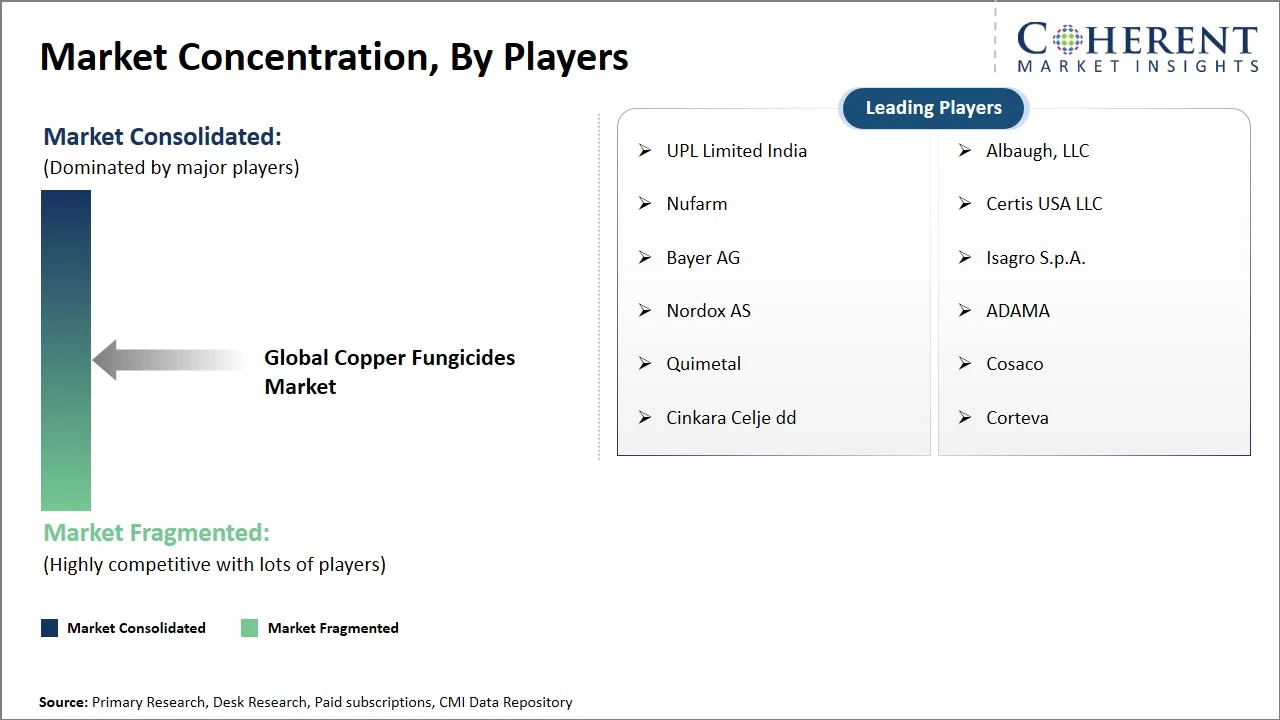
The copper fungicides market is highly competitive, with the well-established agrochemical players dominating the market by having wide distribution networks, compliance with regulations, and high production capacity. There is a competition among regional and local manufacturers in product customization, formulation innovations, and costs. Some focus areas are:
- Formulating products with lower residues and for specific crop groups in order to address the new, more restrictive regulations on residues
- Product diversification by formulation – wettable powder, suspension concentrates and water-dispersible granules – and combination products
Market Report Scope
Copper Fungicides Market Report Coverage
| Report Coverage | Details | ||
|---|---|---|---|
| Base Year: | 2025 | Market Size in 2026: | USD 528.3 Mn |
| Historical Data for: | 2020 To 2024 | Forecast Period: | 2026 To 2033 |
| Forecast Period 2026 to 2033 CAGR: | 5.6% | 2033 Value Projection: | USD 773.6 Mn |
| Geographies covered: |
| ||
| Segments covered: |
| ||
| Companies covered: | UPL Limited India, Albaugh, LLC, Nufarm, Certis USA LLC, Bayer AG, Isagro S.p.A., Nordox AS, ADAMA, Quimetal, Cosaco, Cinkara Celje dd, and Corteva | ||
| Growth Drivers: |
| ||
| Restraints & Challenges: |
| ||
Analyst Opinion (Expert Opinion)
- The copper fungicides industry will continue to be important as biological crop protection and low-residue chemistries become more important, but copper is one of the most trusted broad-spectrum protectant fungicides for control of bacterial and fungal diseases. But the industry's future is not simply set to be defined by traditional copper products. Rise will be seen with lower dosage, high coverage, residue-free and crop-specific products like copper hydroxide suspension concentrates, water-dispersible granules and combination products in integrated disease management programs. Reduction of copper per hectare, coupled with disease control efficacy, will be an advantage to players, particularly in export crops of fruits and vegetables where residue limits and sustainability are increasingly tightening.
- Horticulture is a field of great potential in India as diseases are prevalent across seasons, crops like tomato, potato, onion, grapes, citrus, banana and vegetables are cultivated under humid conditions, which are linked to the monsoon and high-density settings. The most appealing opportunity is to tap into progressive growers, export-oriented farms, contract farming clusters and organized agri-input channels as opposed to the conventional approach of selling through generic pesticide distribution. Copper fungicides that are marketed as prevention fungicides for high-value crops will have greater pricing power than fungicides sold as low-cost generic fungicides.
Speak to the analyst
Want personalized insights?
Take the findings above to one of our principal consultants, or have the report rebuilt around the segments, geographies and competitors you actually track.
Market Segmentation
- Product Insights (Revenue, USD Mn, 2021 - 2033)
- Copper Oxychloride
- Copper Hydroxide
- Cuprous Oxide
- Copper Sulfate
- Other Products
- Application Insights (Revenue, USD Mn, 2021 - 2033)
- Fruits & Vegetables
- Cereals & Grains
- Pulses & Oilseed
- Other Applications
- Regional Insights (Revenue, USD Mn, 2021 - 2033)
- North America
- U.S.
- Canada
- Latin America
- Brazil
- Argentina
- Mexico
- Rest of Latin America
- Europe
- Germany
- U.K.
- Spain
- France
- Italy
- Russia
- Rest of Europe
- Asia Pacific
- China
- India
- Japan
- Australia
- South Korea
- ASEAN
- Rest of Asia Pacific
- Middle East
- GCC Countries
- Israel
- Rest of Middle East
- Africa
- South Africa
- North Africa
- Central Africa
- North America
- Key Players Insights
- UPL Limited India
- Albaugh, LLC
- Nufarm
- Certis USA LLC
- Bayer AG
- Isagro S.p.A.
- Nordox AS
- ADAMA
- Quimetal
- Cosaco
- Cinkara Celje dd
- Corteva
Sources
Primary Research Interviews
- Copper fungicides manufacturer R&D Director
- Supply Chain Director of agrochemical producer
- Formulation scientist at crop protection company
- Sustainability Officer of organic farming certification authority
Stakeholders
- Manufacturers of copper fungicides (e.g., Bayer AG, BASF SE, UPL Limited, Nufarm, ADAMA, Corteva Agriscience, Certis USA L.L.C., Spiess-Urania Chemicals GmbH, Nordox AS, Albaugh LLC, Isagro S.p.A.)
- End-use Sectors
- Row Crop Farmers (e.g., large-scale soybean, corn, cotton producers)
- Fruit & Vegetable Growers (e.g., grapevine, olive, tomato, citrus orchards)
- Horticulture & Nursery Operations (ornamental flowers, shrubs)
- Organic Farming Operations (certified organic vineyards, olive groves, vegetable farms)
- Vineyards & Wine Producers (downy mildew management)
- Cooperative Agricultural Associations
- Regulatory & Certification Bodies
- EPA (U.S. Environmental Protection Agency) – pesticide registration & VOC guidelines
- USDA National Organic Program (NOP) – organic certification & copper use allowances
- EFSA (European Food Safety Authority) – copper pesticide approval & restrictions
- FAO (Food and Agriculture Organization) – international pesticide standards
- E-commerce Platforms and Retailers: AgriSupply, Farm & Fleet, Tractor Supply Co., Wilco Farm Stores
- Technology Integration Players: Innovators in biofungicides & copper alternatives (e.g., Koppert Biological Systems, Bioworks)
Databases
- UN Comtrade Database (HS Code 3808 for insecticides/fungicides)
- FAO STAT (agricultural chemical use statistics)
- IR4 Project Database (residue data for specialty crops)
- USGS Mineral Commodity Summaries (copper production & usage)
- Eurostat Pesticide Statistics for EU member states
- USITC DataWeb for pesticide imports/exports
Magazines
- Crop Protection Magazine – copper fungicide efficacy & resistance management
- Progressive Farmer – agricultural chemical application trends
- Vineyard Team – grapevine disease management & copper use
- Olive Oil Times – copper fungicides in olive cultivation
- Greenhouse Grower – nursery & ornamental fungicide applications
Journals
- Crop Protection – copper fungicide efficacy & resistance studies
- Plant Disease – fungal disease control with copper compounds
- Journal of Agricultural and Food Chemistry – copper formulation chemistry
Newspapers
- The Wall Street Journal – agrochemical industry & agricultural demand
- Business Standard (India) – copper fungicide imports & Indian agriculture growth
- Agri-Pulse – pesticide policy & regulatory updates
- Farm Journal – crop protection practices & farmer adoption
Associations
- Crop Life International – global agrochemical industry
- American Phytopathological Society (APS) – plant disease research
- International Organization for Biological Control (IOBC) – IPM & biocontrol
- National Corn Growers Association (NCGA)
- United Vineyard Owners Association
- Western Society of Crop Protection
- European Crop Protection Association (ECPA)
Public Domain Sources
- EPA – pesticide registration documents & copper tumor classification
- USDA Agricultural Research Service (ARS) – copper fungicide research
- European Chemicals Agency (ECHA) – copper biocide regulation
- FAO – pesticide residue guidelines & copper use in organic agriculture
Proprietary Elements
- CMI Data Analytics Tool, Proprietary CMI Existing Repository of information for last 10 years.
Get access to 250+ pages report
Every segment, forecast, competitor profile and data table behind the analysis above — available for instant download.
- ESOMAR Member
- ISO 9001:2015 Certified
- D-U-N-S Registered
- GDPR & CCPA Compliant
Missing comfort of reading report in your local language? Find your preferred language:
Transform your Strategy with Exclusive Trending Reports
Frequently Asked Questions
The global copper fungicides market is estimated to be valued at USD 528.3 Mn in 2026 and is expected to reach USD 773.6 Mn by 2033.
Copper fungicides are agricultural crop protection chemicals containing copper compounds that help prevent and control fungal and bacterial diseases in crops.
The CAGR of the global copper fungicides market is projected to be 5.6% from 2026 to 2033.
Copper ions act as a broad spectrum protectant by disrupting pathogen cell membranes and inhibiting fungal growth when applied on plant surfaces.
Increasing incidence of crop fungal diseases and rising adoption of sustainable & organic farming are the major factors driving the growth of the global copper fungicides market.
Environmental and soil persistence concerns and strict regulatory limits on copper usage are the major factors hampering the growth of the global copper fungicides market.
In terms of product, copper oxychloride is estimated to dominate the market revenue share in 2026.