

Dried Herbs Market Size and Share Analysis – Growth Trends and Forecasts (2026-2033)
The dried herbs market is valued at USD 4.30 Bn in 2026 and is expected to reach USD 6.54 Bn by 2033, with a compound annual growth rate (CAGR) of 6.2% from 2026 to 2033.
Dried Herbs Market Key Takeaways
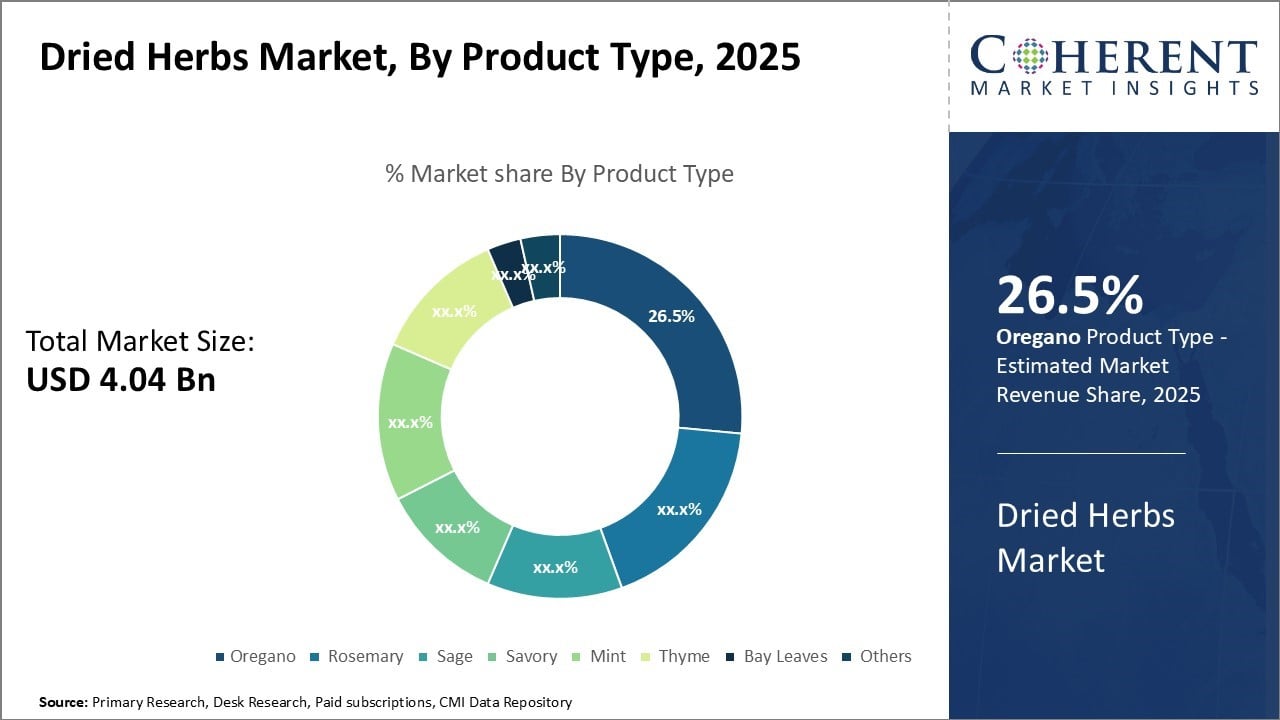
- Based on Product Type, Bay Leaf Segment will hold a 27.5% market share in 2026. This is due to their widespread application in the culinary and medical sector throughout the globe.
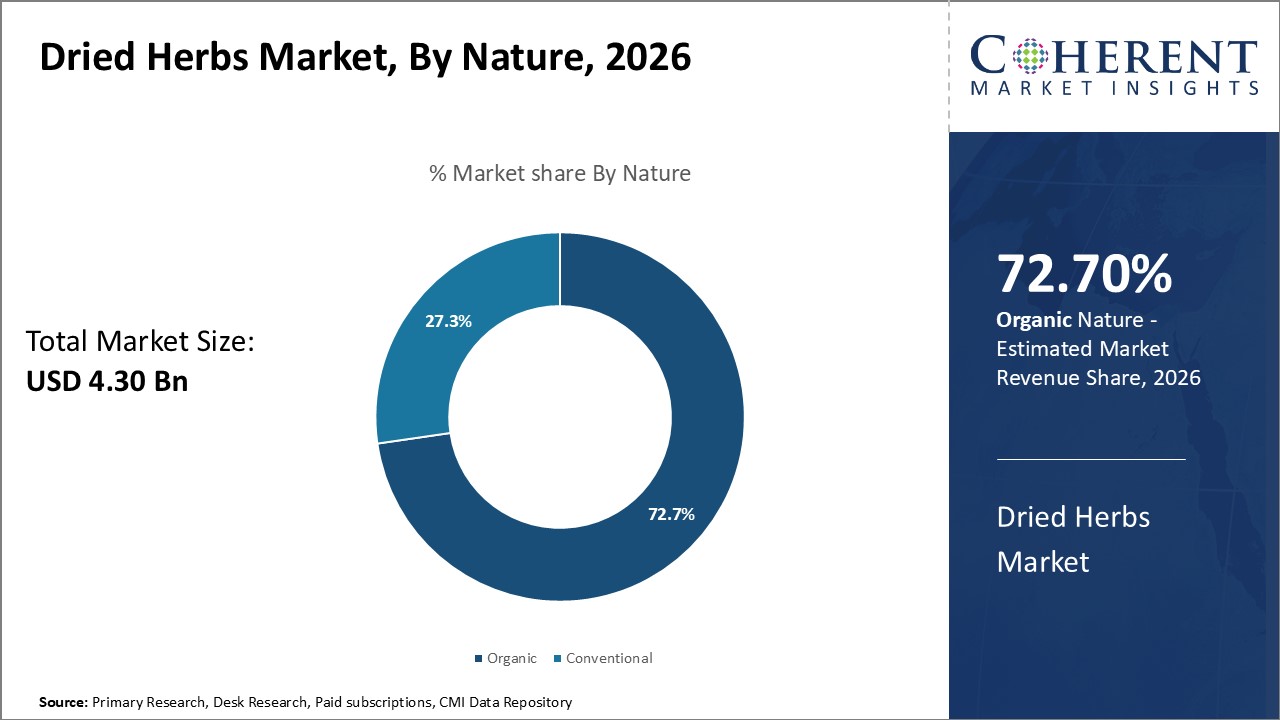
- Based on Nature, The Organic Segment will capture 72.7% market share of the global dried herbs market in 2026. This is due to increase in health consciousness and interest in the use of natural remedies compared to artificial pharmaceuticals.
- By Application, The Food and Beverage Industry are most likely to generate the maximum demand in the global dried herbs market with 39.1% market share due to the usage of herbs in daily cooking cultures globally.
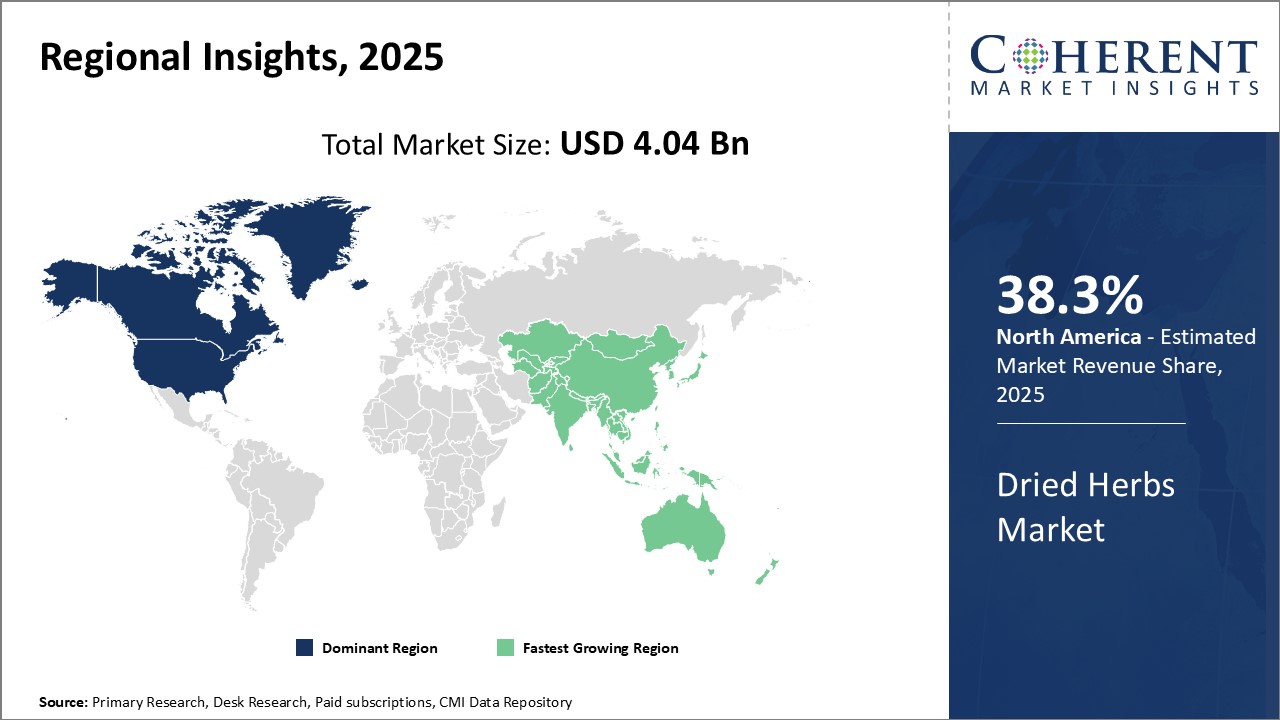
- North America is expected to lead the global market with a 38.3% market share in 2026. This is driven by high consumption rates, robust distribution networks, and popularity for Mediterranean food.
Market Overview
The dried herbs market is driven mostly by rising demand for natural and clean-label products, which keeps pace with consumers' increased interest in wellness and health. Dried herbs are especially popular because they are long-lasting, easy to use, and versatile in gastronomical and medicinal applications. Typical herbs such as basil, thyme, rosemary, and oregano find extensive applications across the food industry, with the drug industry and personal care industry.
Current Events and Its Impact
Current Events | Description and its impact |
Growth of organic Herbs |
|
Technological Innovations in Herb Drying Operations |
|
Dried Herbs Market Pricing Analysis
- Common Dried Herbs: The prices of common dried herbs such as basil, thyme, and oregano are $4 -$8, $3 - $6, and $3 - $7 per ounce respectively.
- Organic Dried herbs: The prices of common organic dried herbs such as organic basil and organic rosemary are $7 -$15, $6 - $12per ounce respectively
- Current Industry Events of 2026
- Market Size Estimation
- Regional Breakdown
- Competitive Landscape
- Customer Intelligence
- Segmental Analysis
- Pricing Analysis
- Key Market Drivers, Challenges & Future Trends
- Customized Insights Section
Production Analysis
- Advances in Technology: Developments in drying methods, including freeze-drying, vacuum-drying, and spray-drying, have improved the quality and shelf life of dried herbs. These techniques assist in retaining the herbs' flavor, color, and nutritional values, hence becoming more desirable to consumers.
- Organic Farming Methods: A shift towards organic farming of herbs is on the rise, based on consumer demands for chemical-free products. Such a trend is backed up by certifications such as USDA Organic, which guarantee the quality and sustainability of the product. Supply Chain Dynamics: Dried herb production is prone to raw material price fluctuations based on weather patterns, crop yields, and land availability. These factors can affect the consistency and cost-effectiveness of production.
- Regional Production Centers: India, China, and Egypt are some of the countries that are key producers of dry herbs, given their favorable weather conditions and conventional agricultural practices. These countries are increasing their capacity to produce, in order to cater to increased global demand.
Consumer Preference and Unmet Demand in the Dried Herbs Market
- Consumer preferences in the dried herbs market are rapidly evolving, driven by a growing demand for natural, organic, and health-focused ingredients in food, beverages, and wellness products. Consumers are increasingly leaning toward products that are free from artificial additives and preservatives, pushing the market toward cleaner, more sustainable options. Organic dried herbs, in particular, are seeing significant growth as consumers prioritize health and environmental sustainability. Herbs like basil, thyme, oregano, rosemary, and mint are becoming staples in households for both culinary and medicinal uses.
- There is also a shift toward functional herbs with medicinal properties, as consumers seek products that offer health benefits beyond basic nutrition. Herbs known for their antioxidant, anti-inflammatory, and digestive health properties, such as turmeric, ginger, and chamomile, are in high demand. This trend aligns with the growing popularity of herbal teas, supplements, and wellness products, which offer consumers natural alternatives to pharmaceutical solutions.
- However, there remains unmet demand in several areas of the dried herbs market. Consumers are looking for more variety in organic dried herbs, especially in regions where access to such products is limited. Additionally, the market is calling for more sustainable packaging solutions, as eco-conscious consumers demand environmentally friendly options. The demand for new herb-based product innovations, including convenience-based solutions like pre-mixed herb packs, also presents an opportunity for growth.
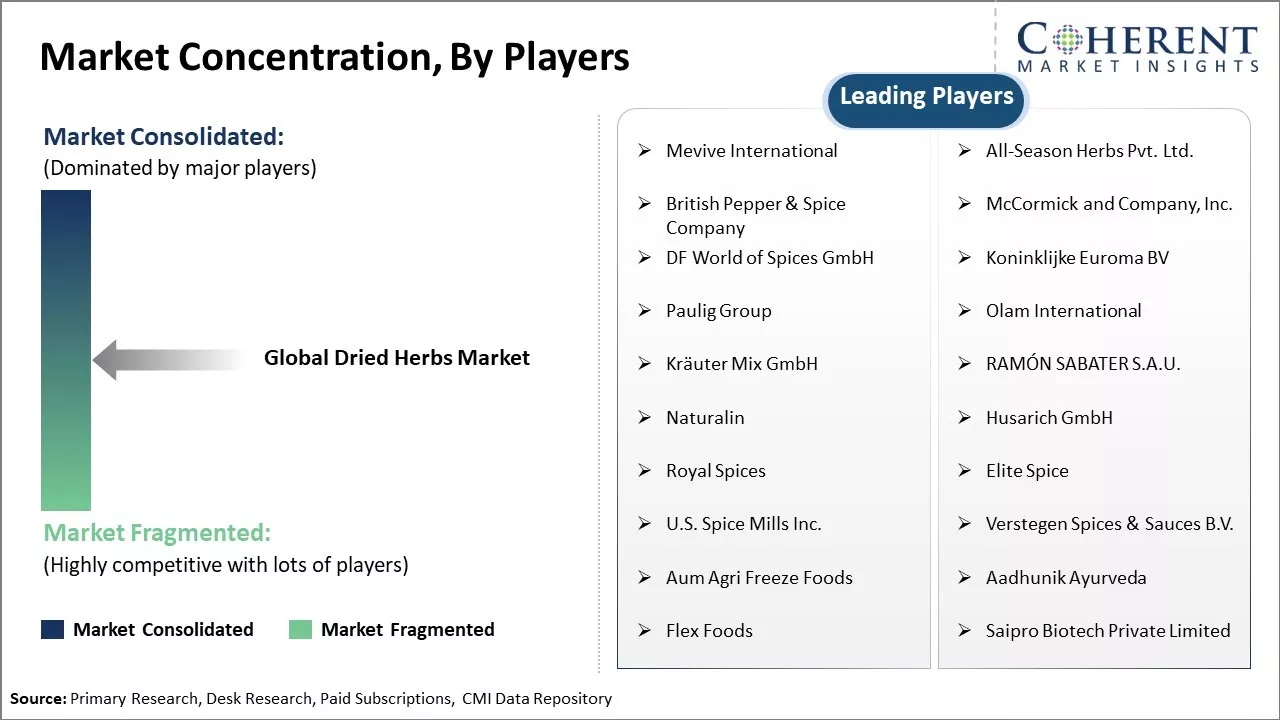
Market Concentration and Competitive Landscape
Dried Herbs Market Trends
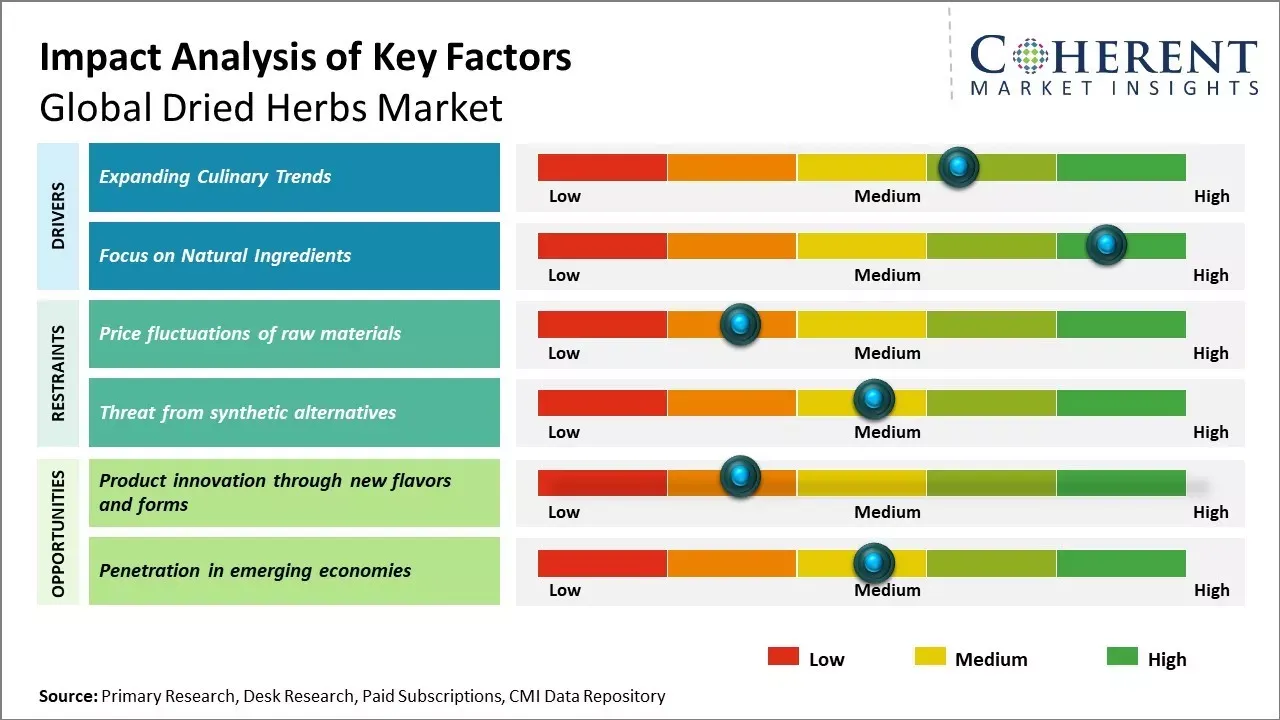
- Growing Culinary Trend
Globalization of cuisine has enhanced the popularity of herbs and spices globally. With more people getting used to a variety of new flavors, there is an increased appetite for different types of dried herbs and spices. Home cooks have been made capable of accessing international cuisines' recipes through food networks and internet videos. This curiosity has driven the demand for a broad range of dried herbs and spices. Items previously only available in ethnic specialty grocery stores are now ubiquitous in the major supermarkets as well.
Unilever introduced a new product line called Royco Spices, which is based on environmentally friendly dry spices. The spices are defined by sustainable production, packaging, and distribution processes that are designed to reduce environmental footprint.
- Emphasis on Natural Ingredients
Over the last decade, consumers have been enthusiastically seeking out food that is free from artificial preservatives, additives, and colorants. The clean label trend has driven demand for chemical-free, organic, and natural ingredients. Dehydrated herbs are an acceptable choice since they require minimal processing and contain no artificial components. The dehydration technique used in dry herbs retains a lot of their nutritional value along with their flavors and aroma. But functional and consumer-acceptable products are also needed by industries.
Market Opportunity
- Innovation in products with new flavour and form
Product innovation through new flavor and form is a significant growth opportunity in the global market for dried herbs. As consumers continually look for variety in what they eat and drink, dried herb manufacturers that try different, new flavor combinations and offerings are poised to gain increased share of the market. Several trends indicate the significant potential for gains through innovation.
Feyecon and VNK BV joined forces to lead the development of herb-flavored powders from waste products based on green CO₂ technology. This groundbreaking drying method not only improves the flavor profile of herbs but also supports sustainable methods in the processing of herbs.
Segmental Insights
Global Dried Herbs Market Insights, by Product Type
Based on product type, bay leaf is anticipated to capture highest share in dried herbs market in 2026 due to its universal uses in cooking and medicine across the world. One of the most widely used herbs in European, Middle Eastern, and North African cooking, bay leaves are a standard ingredient in numerous soups, stews, braised meats and seafood recipes.
Bay leaves add a fragrant, woody flavor that enhances the flavor of robust comfort foods. In traditional medicine too, bay leaves are very much prized for their anti-inflammatory and digestive benefits. Steeping them in boiling water results in a caffeine-free herbal tea that can cure coughs, colds, and stomach upsets.
Global Dried Herbs Market Insights, by Nature
Nature-wise, the organic segment is poised to hold dominating share of the global dried herbs market in 2026. This growth is attributed to the surging consumer trend for clean-label products. Individuals are becoming increasingly health-aware and interested in using natural remedies in place of artificial pharmaceuticals. Organic certification assures them that herbs were produced chemical-free, without the application of pesticides, artificial fertilizers or GMOs. This sense of superior nutritional content and purity fuels premium pricing.
Simultaneously, consumers also care about the environmental footprint of their purchases and like organic farming practices that build up soils instead of depleting them. The thriving organic dried herbs industry provides sustainable livelihoods for smallholder farmers while preserving biodiversity and traditional farming practices. As global public awareness of wellness and sustainability continues to grow, increasing numbers of consumers will be likely to shift towards certified organic dried herbs products.
Global Dried Herbs Market Insights, by Application- Food and Beverage Segment Remains Dominant Application Space
Regarding application, the food and beverage industry is anticipated to create the highest demand in the global dried herbs market. This is attributed to the necessity of herbs in everyday cooking cultures around the world with a 39.1% market share in 2026. From ground spices adding depth to curries and chili pastes in Asia Pacific to dried herb mixes flavoring potatoes, meats, and pasta dishes in Europe, herbs are at the center of flavor enhancement in world cuisines.
Regional Insights
North America Dried Herb Market Analysis and Trend
North America has become the largest regional market for dried herbs worldwide. The region is likely to hold 38.3% of the market share in 2026. The U.S. holds the significant share because of strong consumption and demand for dried herbs for food and pharmaceutical uses. Presence of well-known food processing majors and already set up herbal processing units has helped in continuous availability and supply of varied dry herbs.
Additionally, increased trend in Mediterranean cuisines with high content of more herbs and spices has significantly raised sales of dried herbs. Finally, growing consumer concern for health has driven up the demand for dry herbs because of their anti-inflammatory and antioxidant capabilities.
Asia Pacific Dried Herb Market Analysis and Trend
Asia Pacific is the fastest developing regional market for dried herbs globally. India and China are leading countries in market growth due to increasing disposable incomes, enhanced health consciousness, and the change in consumption pattern towards herb cuisines and home food. In India, large-scale utilization of dried herbs and spices in recipes of daily food products and Ayurvedic and herbal medicines has been a key driver for market expansion.
Simultaneously in China, dried herbs are extensively utilized in traditional Chinese medicine to provide therapeutic effects. Also, enhanced production agronomy and processing methods in these Asian developing nations are allowing for greater yield and quality of dried herbs for domestic markets and exports.
Global Dried Herbs Market Dominating Countries
India Dried Herbs Market Analysis and Trend
India is a commanding force in the international dried herbs market due to its fertile farming background and mixed climate, with which it supports the growth of numerous types of herbs. The nation is an important producer as well as exporter of dried herbs like turmeric, coriander, basil, ginger, and mint, among others. India's very successful spice market further boosts its status in the dried herbs sector.
United States Dried Herbs Market Analysis and Trend
The United States is among the biggest markets for dry herbs, fueled by an expanding base of consumers interested in health and wellness. Consumers in America are increasingly choosing organic, non-GMO dry herbs such as basil, oregano, thyme, and rosemary to add taste and nutritional elements to their food.
Market Report Scope
Dried Herbs Market Report Coverage
| Report Coverage | Details | ||
|---|---|---|---|
| Base Year: | 2025 | Market Size in 2026: | USD 4.30 Bn |
| Historical Data for: | 2020 To 2024 | Forecast Period: | 2026 To 2033 |
| Forecast Period 2026 to 2033 CAGR: | 6.2% | 2033 Value Projection: | USD 6.54 Bn |
| Geographies covered: |
| ||
| Segments covered: |
| ||
| Companies covered: | Mevive International, All-Season Herbs Pvt. Ltd., British Pepper & Spice Company, McCormick and Company, Inc., DF World of Spices GmbH, Koninklijke Euroma BV, Paulig Group, Olam International, Kräuter Mix GmbH, RAMÓN SABATER S.A.U., Naturalin, Husarich GmbH, Royal Spices, Elite Spice, U.S. Spice Mills Inc., Verstegen Spices & Sauces B.V., Aum Agri Freeze Foods, Aadhunik Ayurveda, Flex Foods, and Saipro Biotech Private Limited | ||
| Growth Drivers: |
| ||
| Restraints & Challenges: |
| ||
Key Takeaways from Analyst
- The global dried herbs market is expected to witness steady growth over the next few years. The market is fueled by rising health awareness among consumers and a growing trend towards using fresh and natural ingredients in cooking. Dried herbs are gaining popularity as they enable the use of herbs year-round. The increasing interest in genuine ethnic cuisines across the globe is also driving market growth.
- Non- availability of particular herbs from specific geographic regions can be a challenge for producers. Stringent quality requirements and potential contamination also present pressures in the supply chain. The market also experiences constraints from the availability of cheap fresh herb substitutes in some areas.
- North America leads the market for dried herbs now and will continue to lead in the future with the support of established distribution channels and shifting consumer tastes towards healthy diets. On the other hand, Eastern Europe and Asia Pacific will witness robust growth. Increasing disposable incomes and growing middle-class population are raising the demand for quality dried herbs in these two regions.
Dried Herbs Recent Developmets
- In 2024, Finnish food industry business Paulig Group bought a spices business in the Middle East to enhance its hold in the MENA region.
- In June 2024, DSM-Firmenich sold its yeast extract business to Lesaffre, a world leader in fermentation and microorganisms. This step is a part of DSM-Firmenich's plan to concentrate on its core business segments of Taste, Texture & Health, including dried herbs and spices
Market Segmentation
- Product Type Insights (Revenue, USD Bn, 2021 - 2033)
- Oregano
- Rosemary
- Sage
- Savory
- Mint
- Thyme
- Bay Leaves
- Others
- Nature Insights (Revenue, USD Bn, 2021 - 2033)
- Organic
- Conventional
- Application Insights (Revenue, USD Bn, 2021 - 2033)
- Food and Beverage
- Pharmaceuticals
- Cosmetics and Personal Care
- Others
- Regional Insights (Revenue, USD Bn, 2021 - 2033)
- North America
- U.S.
- Canada
- Latin America
- Brazil
- Argentina
- Mexico
- Rest of Latin America
- Europe
- Germany
- U.K.
- Spain
- France
- Italy
- Russia
- Rest of Europe
- Asia Pacific
- China
- India
- Japan
- Australia
- South Korea
- ASEAN
- Rest of Asia Pacific
- Middle East & Africa
- GCC Countries
- Israel
- Rest of Middle East & Africa
- Key Players Insights (Revenue, USD Bn, 2021 - 2033)
- Mevive International
- All-Season Herbs Pvt. Ltd.
- British Pepper & Spice Company
- McCormick and Company, Inc.
- DF World of Spices GmbH
- Koninklijke Euroma BV
- Paulig Group
- Olam International
- Kräuter Mix GmbH
- RAMÓN SABATER S.A.U.
- Naturalin
- Husarich GmbH
- Royal Spices
- Elite Spice
- U.S. Spice Mills Inc.
- Verstegen Spices & Sauces B.V.
- Aum Agri Freeze Foods
- Aadhunik Ayurveda
- Flex Foods
- Saipro Biotech Private Limited
Sources
Primary Research interviews
- Dry herb producers and suppliers
- Food industry buying specialists
- Culinary specialists/chefs in herb use
- Organic agriculture certification bodies
- Others
Databases
- IBISWorld (industry benchmarking)
- Euromonitor International (market sizing)
- Mintel (tracking of flavor innovation)
- Others
Magazines
- Food Technology Magazine
- Global Food & Beverage
- Organic Processing Magazine
- Culinary Trends Quarterly
- Others
Journals
- Journal of Agricultural and Food Chemistry
- International Journal of Gastronomy and Food Science
- Food Packaging and Shelf Life
- Others
Newspapers
- The Wall Street Journal (food industry section)
- Financial Times (commodities analysis)
- The Guardian (sustainability reports)
- Others
Associations
- American Herbal Products Association (AHPA)
- International Herb Association (IHA)
- National Association of Specialty Food Trade (NASFT)
- Sustainable Agriculture Network
- Others
Public Domain sources
- U.S. Department of Agriculture (USDA) reports
- Food and Agriculture Organization (FAO) statistics
- World Health Organization (WHO) traditional medicine databases
- European Food Safety Authority (EFSA) guidelines
- Others
Proprietary Elements
- CMI Data Analytics Tool
- Proprietary CMI Existing Repository of information for last 8 years
*Definition: The global dried herbs market refers to the worldwide business of producing, processing, packaging, and distributing various types of dried herbs. It includes dried herbs like basil, oregano, rosemary, thyme, sage, savory, and bay leaves which are used worldwide in cooking, seasoning, flavoring, and preserving foods. Dried herbs have a longer shelf life compared to fresh herbs and are therefore popular with commercial food manufacturers and consumers.
Get access to 250+ pages report
Every segment, forecast, competitor profile and data table behind the analysis above — available for instant download.
- ESOMAR Member
- ISO 9001:2015 Certified
- D-U-N-S Registered
- GDPR & CCPA Compliant
Missing comfort of reading report in your local language? Find your preferred language:
Transform your Strategy with Exclusive Trending Reports
Frequently Asked Questions
The Dried Herbs Market size is estimated to be valued at USD 4.30 Bn in 2026, and is expected to reach USD 6.54 Bn by 2033.
The CAGR of the Dried Herbs Market is projected to be 6.2% from 2026 to 2033.
Expanding culinary trends and focus on natural ingredients are the major factors driving the growth of the global market.
Price fluctuations of raw materials and threat from synthetic alternatives are the major factors hampering the growth of the global dried herbs industry.
In terms of product type, bay leaves are estimated to dominate the market revenue share in 2026.
Mevive International, All-Season Herbs Pvt. Ltd., British Pepper & Spice Company, McCormick and Company, Inc., DF World of Spices GmbH, Koninklijke Euroma BV, Paulig Group, Olam International, Kräuter Mix GmbH, RAMÓN SABATER S.A.U., Naturalin, Husarich GmbH, Royal Spices, Elite Spice, U.S. Spice Mills Inc., Verstegen Spices & Sauces B.V., Aum Agri Freeze Foods, Aadhunik Ayurveda, Flex Foods, and Saipro Biotech Private Limited are the major players.
North America is expected to lead the global dried herbs market.