

Global Emergency Bandage Market Size and Forecast – 2026-2033
The global emergency bandage market is estimated to be valued at USD 61.3 Mn in 2026 and is expected to reach USD 99.6 Mn by 2033, exhibiting a compound annual growth rate (CAGR) of 7.18% from 2026 to 2033. The significant growth of the market can be attributed to the increased need for advanced wound care products in military as well as civilian settings due to the increasing incidence of traumatic injuries and advances in medical technology to make bandages more effective as well as easier to use.
Key Takeaways of the Global Emergency Bandage Market
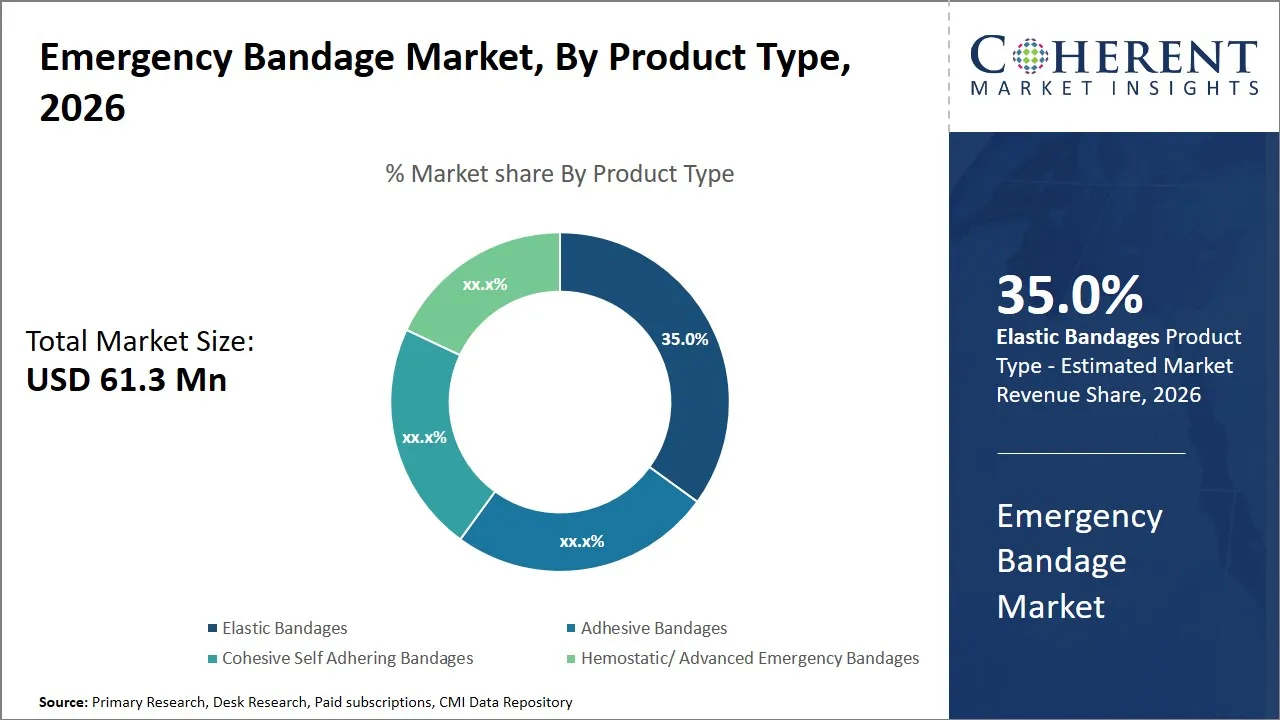
- The elastic bandages segment is expected to dominate the global emergency bandage market, accounting for 35.0% share in 2026.
- The trauma and emergency care segment is expected to dominate the global emergency bandage market, projected for 44.0% share in 2026.
- Hospitals and trauma centers segment is estimated to capture 32% of the market share in 2026.
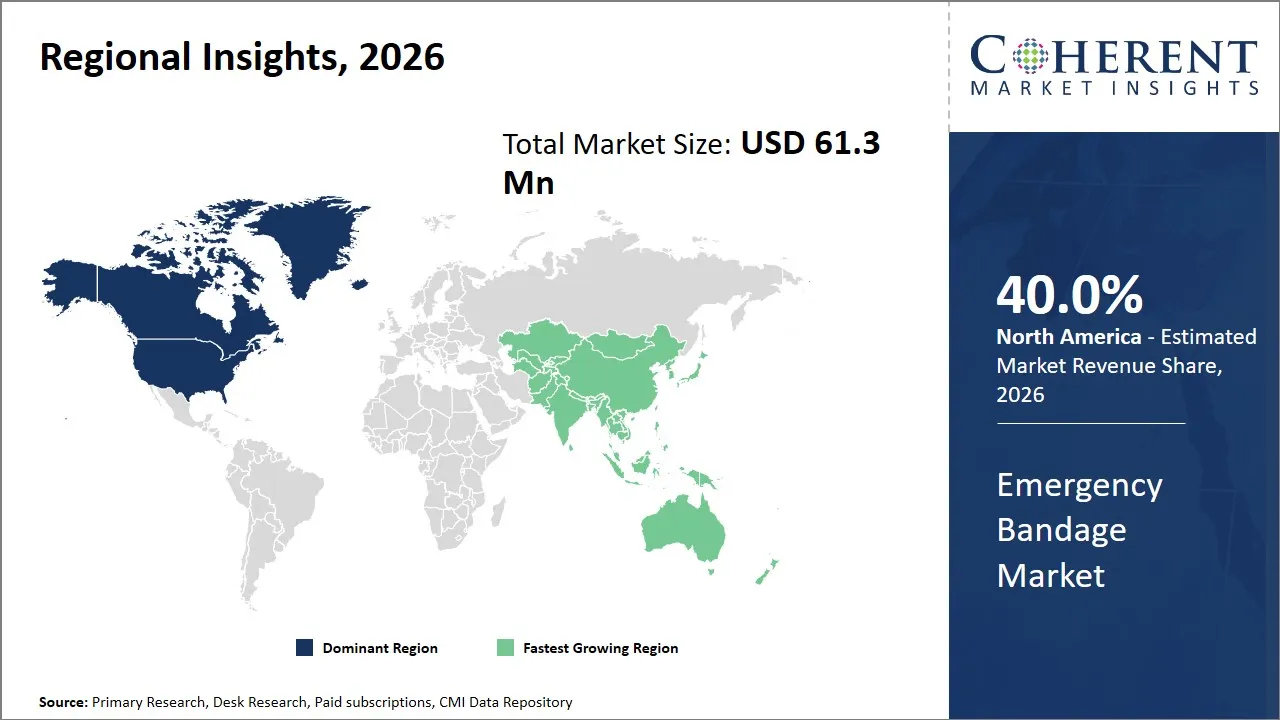
- North America is expected to dominate the global emergency bandage market in 2026, accounting for 40.0% share.
- Asia Pacific is witness the fastest growth during the forecast period, hold 8.75% share in 2026.
Market Overview
- Emergency bandage are specialized medical supplies designed for trauma care. They are used to address significant blood loss and wounds at accident sites, in the event of injuries, or during other emergencies. Their purpose is to provide immediate care until professional medical assistance arrives.
- The growing number of road accidents, sports injuries, workplace accidents, and natural calamities is a major factor that is boosting the demand for emergency bandage in hospitals, emergency medical services, the army, and disaster response teams.
- Emergency bandage are commonly used for trauma care, first aid kits, military medical care, and prehospital emergency medical care. The emergency bandages are vital for controlling severe bleeding important to improve patient's survival during the first hour after injury.
- The global emergency bandage market is expanding, driven by increased research into hemostatic materials for bandages, the development of smaller bandage designs, and the growing awareness of hemorrhage control programs like Stop the Bleed.
Currents Events and their Impact
Current Events | Description and its Impact |
Growing focus on Bleeding Control Training Programs |
|
Increasing Investments in Emergency Preparedness and Response to Disasters |
|
Advancements in Hemostatic and Trauma Bandage Technologies |
|
Segmental Insights
- Current Industry Events of 2026
- Market Size Estimation
- Regional Breakdown
- Competitive Landscape
- Customer Intelligence
- Segmental Analysis
- Pricing Analysis
- Key Market Drivers, Challenges & Future Trends
- Customized Insights Section
Why Does the Elastic Bandages Segment Dominate the Global Emergency Bandage Market in 2026?
Elastic bandages segment is expected to hold the largest share of 35% of the global emergency bandage market share in 2026. These bandages are the go-to choice, largely due to their adaptability, straightforward application, and proven efficacy in addressing various wounds and injuries. They are favored for their capacity to offer both compression and immobilization, critical for dealing with sprains, strains, and swelling. This flexibility, allows them to conform to different body areas particularly valuable in urgent care scenarios.
In addition, these bandages are reusable, unlike other bandages that are not very effective, such as hemostatic or emergency bandages, which are mostly used once in treating very serious situations of bleeding.
Furthermore, their adaptability is another reason why elastic bandages are so widely used. This type of bandage can be used for different patient requirements. It is useful in cases of trauma, sports, and surgery where it is necessary to stabilize tissues and control swelling.
For instance, in April 2024, Vomaris Innovations revealed the over-the-counter availability of its U.S. FDA-cleared PowerHeal bioelectric bandage. The recent launch unveiled a cutting-edge technology aimed at revolutionizing wound care. To improve infection control and accelerate the healing process. This in turn, underscores the advancements achieved through modern technology, particularly in the treatment of injuries and wounds using bandages.
(Source- Vomaris Inc.)
Why Does the Trauma and Emergency Care Segment Dominate the Global Emergency Bandage Market in 2026?
The trauma and emergency care segment is expected to hold the largest share of 44% in 2026, representing the most substantial market segment, due to the imperative for swift wound management and hemorrhage control in urgent scenarios. Trauma, arising from incidents like accidents, natural calamities, or violent acts, demands immediate action to prevent grave health repercussions, including substantial blood loss, infection, or lasting disability. Emergency bandages, which are specifically engineered for trauma treatment, are essential within emergency care. These bandages are designed for immediate use, incorporating features that enable pressure application, ensure easy adhesion, and accommodate diverse wound presentations.
Furthermore, the preeminence of the trauma care segment is also a consequence of the escalating incidence of road accidents, industrial injuries, and violence, which consistently fuels the demand for emergency bandages within trauma care. The use of emergency bandages for trauma care can be attributed to the fact that, during emergency situations, bandages are often used for immediate care, with the primary objective of ensuring the bandages are easy to apply and can maintain a secure fit under adverse, uncertain situations.
In situations where immediate care is required, bandages with hemostatic capabilities, besides basic care, are highly valuable. For instance, in January 2026, Champaign County in Ohio began its Stop the Bleed initiative. The program focused on equipping law enforcement personnel with the skills to control significant hemorrhaging. Patrol cars were equipped with hemorrhage control kits, stocked with tourniquets and pressure bandages.
(Source- Stop the Bleed Coalition)
The Hospitals and Trauma Centers Segment Dominates the Global Emergency Bandage Market
The hospitals and trauma centers segment is expected to hold the largest share of 32% in 2026, as they offer immediate healthcare services for different healthcare needs. The controlled hospital environment allows the use of different emergency bandages, which are tailored to specific patient needs. The use of emergency bandages in hospitals is because they need reliable, clinically approved bandages that meet strict standards for infection control, sterility, and effectiveness. The institutions are the primary site for the application of emergency bandages to treat patients while also conducting outcome studies for the healing process of patients who require emergency care services.
Furthermore, the existence of specialized trauma centers within a hospital system has led to advancements in state-of-the-art bandage technology, which has helped these institutions maintain their top position in terms of end-user demand. The role of hospitals in supply chains is substantial, given that these institutions need large quantities of bandages to be ready for emergency situations or elective surgeries that may be required.
The training of staff is also an important investment for these institutions, which ensures that various types of bandages are utilized optimally, thereby increasing their benefits and justifying their demand. The contribution of hospitals in clinical studies also helps manufacturers create better bandages, thus creating a symbiotic relationship between these two entities that ensures the growth of this end-user segment of bandages.
Emergency Medical Infrastructure and Trauma Response Capacity
The development of emergency medical facilities around the globe is contributing to the improvement of the response to trauma and medical emergencies. Governments are investing more resources in emergency ambulance vehicles, emergency medical services, and hospital emergency rooms to enhance response to emergencies. The increasing number of visits to emergency facilities and trauma centers underscores the escalating requirement for effective bleeding control products such as emergency bandages used by paramedics, first responders, and hospital staff.
Key Indicators of Emergency Medical Infrastructure
Infrastructure Indicator | Key Data | Insight |
Emergency Department Visits | ~131 million visits annually | Indicates surging demand for trauma and emergency care services |
Hospitals with Emergency Departments | ~6,100 hospitals | Robust hospital network supporting emergency treatment |
EMS Workforce | ~1 million EMS professionals | Extensive workforce providing pre-hospital trauma response |
Ambulance Network Example | 10,000+ ambulances in GVK-EMRI system | Demonstrates large-scale emergency transport infrastructure |
Global Injury Burden | ~4.4 million deaths annually | Highlights the global need for effective trauma response systems |
Regional Insights
North America Emergency Bandage Market Analysis and Trends
North America is estimated to hold the largest share of 40% in the emergency bandage market in 2026, owing to the presence of a highly developed healthcare system and government support. The region has a well-established market ecosystem with significant collaborations between manufacturers, hospitals, and the military. Government support is evident in the implementation of a strong regulatory framework for the development of trauma care services.
The U.S. and Canada, as key contributors to the industry, are home to some of the best players in the business, including North American Rescue and Emergency Medical Products, which have been instrumental in taking the bandage industry forward with their unique designs that have improved the efficacy of hemostasis. Also, the presence of defense bodies driving demand for better emergency products is a positive for the North American market. Trade environment is conducive for the North American region owing to the presence of robust domestic manufacturing capabilities coupled with the flexibility to import.
For instance, in December 2025, the American College of Surgeons (ACS) reported that its Stop the Bleed program had achieved a significant milestone in training over 5 million people across the world to gain access to bleeding control kits with trauma bandages in hospitals, schools, and emergency services across the U.S.
(Source- American College of Surgeons)
Asia Pacific Emergency Bandage Market Analysis and Trends
The Asia Pacific is expected to exhibit the fastest growth of 8.75% share in 2026, driven by increasing awareness about trauma care services. The increasing emergency care services in countries like China, India, Japan, and Australia are also driving the growth of the emergency bandage market. The region is also witnessing increased government initiatives for improving healthcare services in rural areas. There is also a surge in the demand for emergency care products like bandages. The changing market dynamics are also driven by the increasing number of local players and an improving regulatory environment for faster product approvals.
Companies like 3M, Smith & Nephew, and local players like Ashirvad Healthcare in countries like India have been successful in tapping the market by offering cost-effective products. Trade agreements are also improving supply chain efficiency for better distribution networks to serve the vast geographical landscape of countries like Japan, India, and Australia.
Emergency Bandage Market Outlook for Key Countries
How is the U.S. Helping in the Growth of the Emergency Bandage Market?
The U.S. market for emergency bandage is marked by a strong presence of specialized emergency medical device companies, along with a high rate of adoption of these products in both civil and military environments. Companies like North American Rescue and Battle Sight Technologies are leading the industry in terms of innovation, creating state-of-the-art products designed for instant bleeding control, which is critical in paramedic and military environments. Government spending on trauma care programs and disaster readiness programs is another driver of the demand for such products.
Additionally, a good regulatory environment ensures the safety and efficacy of such products. The U.S. also has a highly developed system of healthcare delivery. There is a high level of awareness among citizens regarding first aid.
How is Germany Helping in the Growth of the Emergency Bandage Market?
Germany emergency bandage market is benefitted by its well-organized system of health care, as well as its strong regulation of medical products, carried out by organizations such as the Federal Institute for Drugs and Medical Devices (BfArM). The presence of major companies such as Hartmann Group and Lohmann & Rauscher also adds strength to the overall dominance of this region in Europe. The government policies in improving emergency medical services and trauma care are also helping this market grow steadily. This country is an important contributor in terms of exports in Europe, given its high standards of manufacturing, which is reflected in its trade patterns. The integration of smart technology into emergency bandages is also visible through companies’ focus on multifunctional and easy-to-use products.
Key Drivers for the Growth of the India Emergency Bandage Market
The emergency bandage market in India is growing at a fast rate due to increasing healthcare expenditure and better government initiatives to improve emergency care services, particularly in rural and semi-urban regions. Companies like Ashirvad Healthcare and Lifeline Biotech are contributing to the growth of the emergency bandage market in India by providing affordable emergency care products to the population. The increasing rate of accidents and awareness about trauma care are also driving the emergency bandage market.
Additionally, regulatory changes are slowly improving the process for product approvals. Companies like 3M and Smith & Nephew are expanding their presence in the emergency bandage market by entering into business collaborations. The population size and increasing accessibility of healthcare services have made India a key growth zone for the emergency bandage market.
Japan Emergency Bandage Market Trends
Japan is a key player in the Asia Pacific market for emergency bandage services due to its high-tech platform for medicine and a controlled environment for pharmaceuticals by the Pharmaceuticals and Medical Devices Agency (PMDA). The focus on the integration of innovative materials into the bandages is a clear indication of the country's efforts in ensuring that the product is effective for users. Companies like Nitto Denko and Nihon Kohden ensure the delivery of high-quality products for the civilian emergency services as well as the industrial sector. The aging population and the awareness of emergency preparedness add to the requirement for the product. The developed trade infrastructure also helps the nation to import advanced materials for the product, ensuring that the local manufacturers remain competitive in the global scenario.
First-Aid and Trauma Response Training Program Participation
Across the globe, a growing number of individuals are enrolling in first-aid and trauma response courses. Governments, healthcare institutions, and community organizations are working together to provide training to the public. They're also ensuring that first responders have the essential skills they need, such as how to apply pressure bandages, use tourniquets, and pack wounds when professional medical assistance isn't readily accessible.
Besides that, such campaigns are causing the appearance of bleeding control kits in different public places such as schools, workplaces, and transit stations, thus, indirectly contributing to the market for emergency bandages and other trauma care products.
Selected Global Training & Preparedness Initiatives
Program | Year | Initiative | Relevance to Emergency Preparedness |
Stop the Bleed Coalition | 2025 | Grant program offering over $250,000 in bleeding control kits to schools and communities | Improves civilian preparedness and expands availability of bleeding control equipment |
American College of Surgeons – Stop the Bleed | Ongoing | Public education program teaching bleeding control skills such as tourniquets and wound packing | Increases awareness and participation in trauma response training |
American Red Cross | Ongoing | First aid, CPR, and emergency response training programs for communities and workplaces worldwide | Enhances emergency readiness and promotes the use of first-aid supplies |
British Red Cross | Ongoing | Community first aid training programs in the UK for injury and trauma response | Encourages widespread first-aid knowledge among civilians |
St John Ambulance | Ongoing | Offers first aid and emergency medical training programs for schools, workplaces, and communities | Strengthens first-response capabilities in public settings |
National Safety Council | 2024 | Workplace first aid and emergency response training for industrial and corporate employees | Improves occupational injury preparedness and trauma response |
International Federation of Red Cross and Red Crescent Societies | Ongoing | Community first aid programs worldwide for life-saving skills in disasters and emergencies | Expands global adoption of first aid and trauma response practices |
Market Players, Key Developments, and Competitive Intelligence
Key Developments
- On March 3, 2026, a team of researchers from the University of Mississippi developed 3-D printed medicated patches to accelerate the healing of chronic wounds. The smart bandage dispenses medication as needed, tracks tissue condition continuously, and enhances recovery time for ailments such as diabetic ulcers, providing optimism for the millions affected by wounds that do not heal.
- In February 2026, the researchers from Texas A&M University developed an emergency injectable bandage, that reduces the bleeding time by up to 70%. This innovation met surging demand driven by rising traumatic injuries and programs like ACS Stop the Bleed, which had trained 5 million people worldwide by July 2025.
- In September 2025, researchers at University of Nebraska Medical Center (UNMC) introduced an innovative "smart bandage" designed to enhance wound healing via chemical and electrical stimulation while reducing scarring.
- In August 2024, scientists at North Carolina State University and Columbia University developed an electric bandage powered by water and can heal chronic wounds 30% faster. The water-activated, electronics-free dressing creates an electric field to help heal diabetic ulcers and other hard-to-treat wounds.
Top Strategies Followed by Global Emergency Bandage Market Players
Player Type | Strategic Focus | Examples |
Established Market Leaders | The prominent companies involved in the production of emergency bandages and trauma care products are focused on developing innovative products, creating advanced products such as hemostatic bandages, and strengthening distribution networks around the globe. These companies are focused on developing the efficiency of hemorrhage control products through R&D activities and strengthening their market presence through partnerships with medical facilities, military units, and emergency response agencies. | The prominent companies involved in the production of trauma care products are 3M Company, Johnson & Johnson, Medline Industries, H&H Medical Corporation, etc. |
Mid-Level Players | Mid-sized companies focus on the development of wound care product portfolios as well as manufacturing capabilities. These companies often partner with regional distributors, healthcare organizations, as well as emergency medical training organizations to enhance the penetration of emergency bandage products. | Companies like Safeguard Medical, PerSys Medical, as well as First Care Products Ltd., focus on trauma bandages as well as hemorrhage control products for the EMS, military, as well as disaster response markets. |
Small-Scale Players | The small manufacturers focus on niche emergency medical products and cost-effective first aid bandages for local markets. They also provide first aid kits, outdoor emergency products, and basic trauma care products through retail pharmacies and online stores. | Small-scale players such as First Care Products Ltd. and RHINO Rescue, offer cost-effective emergency bandages, trauma kits, and first aid supplies for the local and outdoor safety market. |
Market Report Scope
Emergency Bandage Market Report Coverage
| Report Coverage | Details | ||
|---|---|---|---|
| Base Year: | 2025 | Market Size in 2026: | USD 61.3 Mn |
| Historical Data for: | 2020 To 2024 | Forecast Period: | 2026 To 2033 |
| Forecast Period 2026 to 2033 CAGR: | 7.18% | 2033 Value Projection: | USD 99.6 Mn |
| Geographies covered: |
| ||
| Segments covered: |
| ||
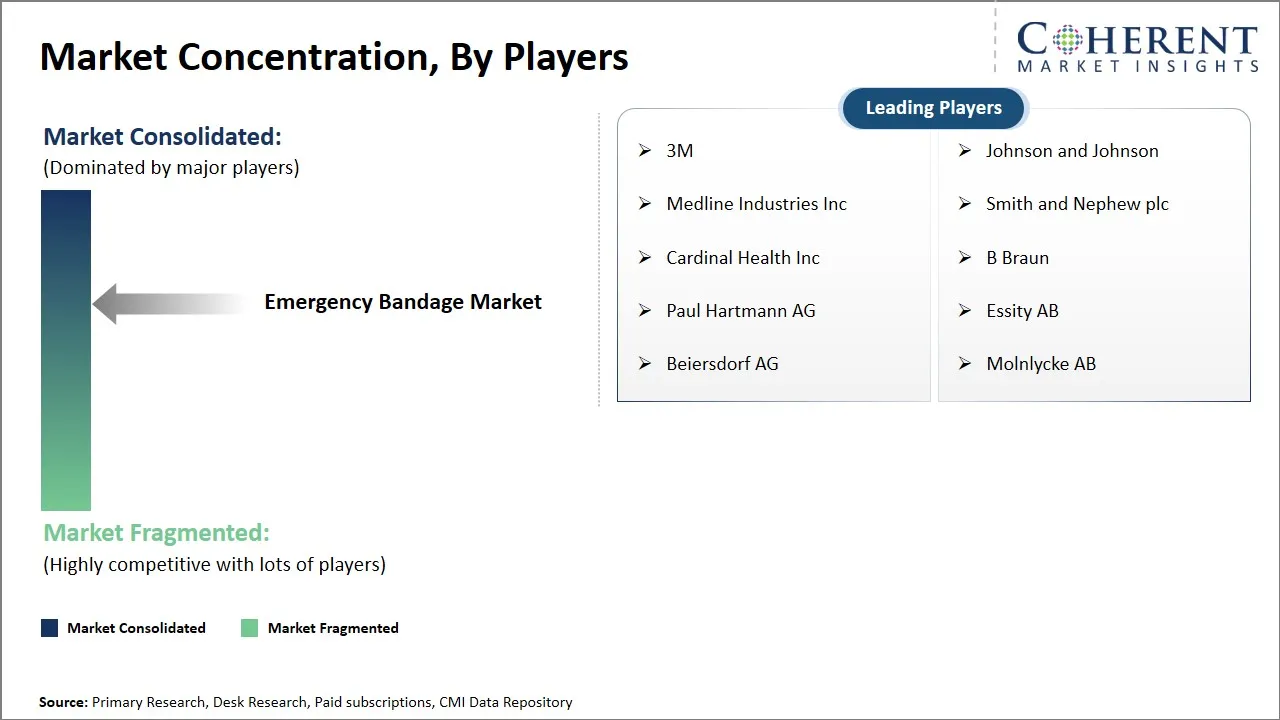
| Companies covered: | 3M, Johnson and Johnson, Medline Industries Inc, Smith and Nephew plc, Cardinal Health Inc, B Braun, Paul Hartmann AG, Essity AB, Beiersdorf AG, and Molnlycke AB | ||
| Growth Drivers: |
| ||
| Restraints & Challenges: |
| ||
Global Emergency Bandage Market Dynamics
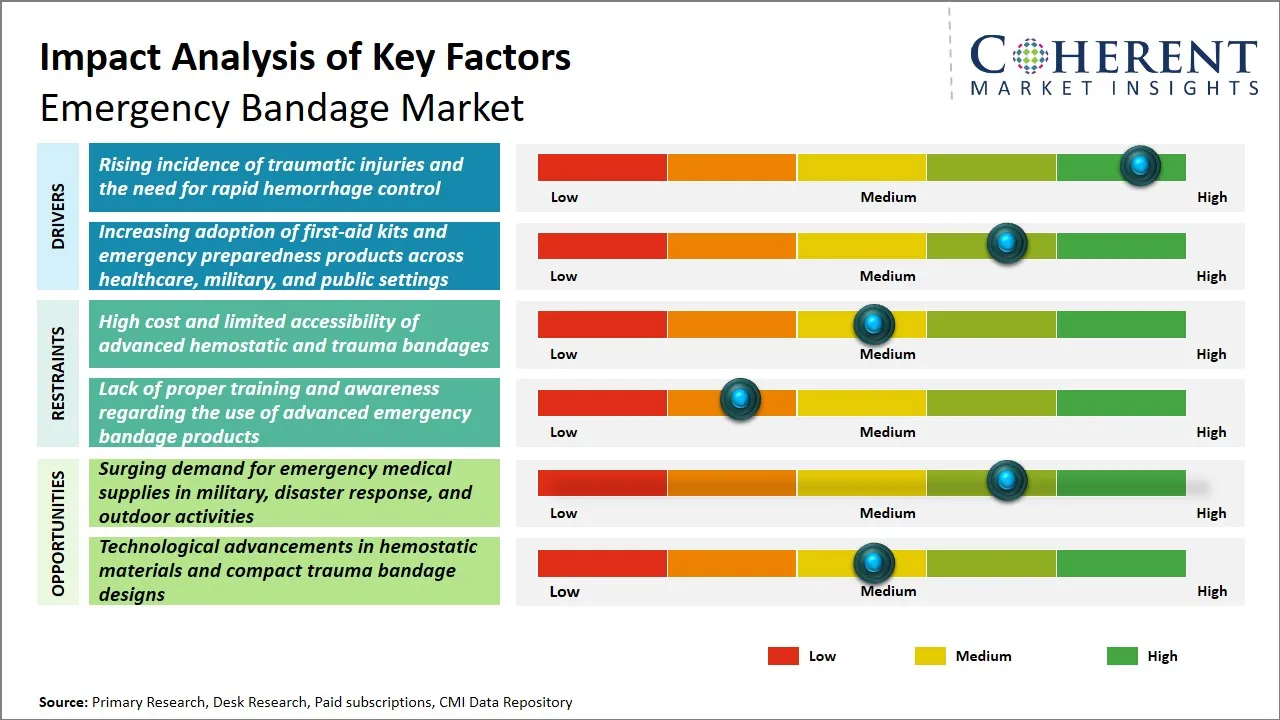
Emergency Bandage Market Driver - Rising Incidence of Traumatic Injuries and the Need for Rapid Hemorrhage Control
The increasing rate of traumatic injuries due to accidents, natural calamities, and war-torn regions has increased the need for effective emergency medical solutions, including hemorrhage control measures. Injuries due to accidents result in profuse bleeding, which if not immediately addressed, may cause life-threatening situations or death even before proper medical help is sought. Emergency bandages are extremely useful in providing instant relief during accidents by applying required pressure on the injured area, thus saving lives during the golden hour of emergency situations.
The growing awareness of the importance of immediate hemorrhage control has prompted the use of sophisticated emergency bandages. They're designed to be simple to use and highly effective at stopping blood loss. For Instance, in December 2025, study by the American College of Surgeons (ACS), part of its Stop the Bleed program. The research, which looked at homicide data from Maryland, revealed a startling statistic: nearly half of the more than 5,000 victims of gunshot wounds and stabbings died from bleeding out from their extremities. This type of death is readily preventable with prompt hemorrhage control.
The increasing need to address bleeding situations effectively is creating a sense of urgency in terms of innovation and usage of emergency bandages, highlighting their need as an essential item in trauma situations worldwide.
(Source- American College of Surgeons)
Emergency Bandage Market Opportunity - Rising Demand for Emergency Bandages in Military, Disaster Response, and Outdoor Activities
The emergency bandage market is witnessing an upsurge owing to the increasing demand for emergency bandages in the military, disaster relief operations, and outdoor recreational activities. The armed forces worldwide are focusing on acquiring the best medical materials to ensure better casualty care during war situations. The emergency bandages play a significant role in war situations since timely medical care is always needed. The increasing rate of natural disasters like hurricanes, earthquakes, and wild fires is also fueling demand for emergency bandages since emergency medical kits are becoming an essential part of disaster relief operations. The increasing investment for disaster relief operations is also contributing to the growth of the emergency bandage market.
For instance, in December 2025, new legislation in the U.S. expanded the accessibility of funding for Stop the Bleed kits and hemorrhage control supplies for law enforcement officers and first responders through the Edward J. Byrne Memorial Justice Assistance Grant Program. This has increased the procurement of emergency trauma bandages for public safety preparedness.
(Source- American College of Surgeons)
Analyst Opinion (Expert Opinion)
- The emergency bandage sector is a vital part of the global trauma care and first-aid management industry owing to the increasing number of road accidents, workplace injuries and emergency medical situations around the world. Emergency bandages are needed for hemorrhage management and pre-hospital trauma care. They are used in hospitals, ambulances, military teams and disaster response groups.
- Emergency bandages are very useful in settings. They provide compression and wound protection during emergencies. The design of emergency bandages is very helpful. They have a dressing, a pressure applicator and securing mechanisms all in one. This makes it easy to use them quickly and efficiently. Emergency bandages are perfect for paramedics, emergency responders and people who are trained to help with trauma management and first-aid assistance.
- When it comes to distribution, hospitals and emergency medical services use a lot of emergency bandages. This is because they have to deal with a lot of trauma incidents that need hemorrhage management. The military and defense sectors also use a lot of emergency bandages being a part of combat medical kits and tactical trauma care materials.
- Overall emergency bandages will continue to be vital for trauma and emergency wound care management owing to the increasing number of trauma cases, the development of emergency response systems and the growing awareness of first-aid readiness.
Speak to the analyst
Want personalized insights?
Take the findings above to one of our principal consultants, or have the report rebuilt around the segments, geographies and competitors you actually track.
Market Segmentation
- Product Type Insights (Revenue, USD Mn, 2021 - 2033)
- Elastic Bandages
- Adhesive Bandages
- Cohesive Self Adhering Bandages
- Hemostatic/ Advanced Emergency Bandages
- Application Insights (Revenue, USD Mn, 2021 - 2033)
- Trauma and Emergency Care
- Surgical and Post-Surgical Wound Care
- Sports and Accidental Injuries
- End User Insights (Revenue, USD Mn, 2021 - 2033)
- Hospitals and Trauma Centers
- Emergency Medical Services (EMS) and First Responders
- Military and Defense
- Clinics and Ambulatory Surgical Centers
- Homecare and Consumer First Aid
- Distribution Channel Insights (Revenue, USD Mn, 2021 – 2033)
- Institutional Sales
- Retail Pharmacies and Medical Stores
- Online Pharmacies
- Regional Insights (Revenue, USD Mn, 2021 - 2033)
- North America
- U.S.
- Canada
- Latin America
- Brazil
- Argentina
- Mexico
- Rest of Latin America
- Europe
- Germany
- U.K.
- Spain
- France
- Italy
- Russia
- Rest of Europe
- Asia Pacific
- China
- India
- Japan
- Australia
- South Korea
- ASEAN
- Rest of Asia Pacific
- Middle East
- GCC Countries
- Israel
- Rest of Middle East
- Africa
- South Africa
- North Africa
- Central Africa
- North America
- Key Players Insights
- 3M
- Johnson and Johnson
- Medline Industries Inc
- Smith and Nephew plc
- Cardinal Health Inc
- B Braun
- Paul Hartmann AG
- Essity AB
- Beiersdorf AG
- Molnlycke AB
Sources
Primary Research Interviews
Industry Stakeholders
- Emergency bandage and wound care product manufacturers
- Trauma care equipment suppliers and distributors
- Medical device product development specialists
- Emergency medical equipment procurement managers
- Military medical supply providers
- Regulatory experts in medical devices and wound care products
End Users
- Emergency physicians and trauma surgeons
- Emergency Medical Services (EMS) personnel and paramedics
- Military combat medics
- Nurses and wound care specialists
- First aid trainers and disaster response teams
- Homecare users and first aid kit consumers
Government and International Databases
- World Health Organization (WHO) – Global Injury and Trauma Care Reports
- Centers for Disease Control and Prevention (CDC) – Injury and Violence Prevention Data
- National Institutes of Health (NIH) – Trauma and Hemorrhage Research
Trade Publications
- Journal of Emergency Medical Services (JEMS)
- EMS World Magazine
- Emergency Medicine News
- Medical Device Network
- Healthcare Purchasing News
Academic Journals
- Journal of Trauma and Acute Care Surgery
- Injury Journal
- Prehospital Emergency Care
- Wound Repair and Regeneration
- International Journal of Emergency Medicine
Reputable Newspapers
- The New York Times – Health Section
- The Guardian – Science & Health
- Financial Times – Global Health
- Reuters Health News
- The Hindu – Health
Industry Associations
- American College of Surgeons (ACS)
- Stop the Bleed Campaign
- Association for the Advancement of Wound Care (AAWC)
- World Federation of Societies of Anaesthesiologists (WFSA)
- International Trauma Life Support (ITLS)
Public Domain Resources
- ClinicalTrials.gov
- WHO Global Health Observatory
- NIH PubMed Database
- U.S. FDA Medical Device Databases
- CDC Injury Statistics Database
Proprietary Elements
- CMI Data Analytics Tool: Proprietary analytics tool to analyze real-time market trends, consumer behavior, and technology adoption in market
- Proprietary CMI Existing Repository of Information for Last 8 Years
Get access to 250+ pages report
Every segment, forecast, competitor profile and data table behind the analysis above — available for instant download.
- ESOMAR Member
- ISO 9001:2015 Certified
- D-U-N-S Registered
- GDPR & CCPA Compliant
Missing comfort of reading report in your local language? Find your preferred language:
Transform your Strategy with Exclusive Trending Reports
Frequently Asked Questions
The global emergency bandage market is estimated to be valued at USD 61.3 million in 2026 and is expected to reach USD 99.6 million by 2033.
The CAGR of the global emergency bandage market is projected to be 7.18% from 2026 to 2033.
Rising incidence of traumatic injuries and the need for rapid hemorrhage control, and increasing adoption of first-aid kits and emergency preparedness products across healthcare, military, and public settings are the major factors driving the growth of the global emergency bandage market.
High cost and limited accessibility of advanced hemostatic and trauma bandages, and lack of proper training and awareness regarding the use of advanced emergency bandage products are the major factors hampering the growth of the global emergency bandage market.
In terms of product type, elastic bandages are estimated to lead the market with a share of 35% in 2026.
3M, Johnson and Johnson, Medline Industries Inc, Smith and Nephew plc, Cardinal Health Inc, B Braun, Paul Hartmann AG, Essity AB, Beiersdorf AG, and Molnlycke AB are the major players.
North America is expected to lead the global emergency bandage market in 2026.