

Ventricular Drainage Sets Market Size and Share Analysis- 2026 To 2033
The Ventricular Drainage Sets Market size is anticipated to grow at a CAGR of 6.7%, with USD 314.55 Mn in 2026 and is expected to reach USD 496.37 Mn in 2033. The primary drivers are largely defined by the rising incidence of hydrocephalus, traumatic brain injuries, intracranial hemorrhage, and other neurological conditions, increasing volumes of neurosurgical procedures, growing adoption of intracranial pressure (ICP) monitoring, and wider utilization of external ventricular drainage systems across hospitals and neurocritical care units. According to the Neurocritical Care Society, external ventricular drains (EVDs) are commonly used for intracranial pressure monitoring and the management of acute hydrocephalus across a range of intracranial condition
Key Takeaways
- The ventricular drainage set segment is likely to dominate the market with 70.0% in 2026. The segment’s growth is owing to the essential role of complete drainage systems in cerebrospinal fluid diversion, intracranial pressure monitoring, and management of acute neurological emergencies, along with their integrated use of ventricular catheters, drainage chambers, collection bags, and pressure-monitoring components. A 2025 international multi-institutional study published in Neurosurgery reviewed 401 patients treated with conventional external ventricular drainage, emphasizing the ongoing ubiquitous clinical use of EVD systems in neurocritical care settings.
- The hydrocephalus segment is expected to lead the application category with 34.0% in 2026. The segment’s growth is owing to the frequent requirement for urgent cerebrospinal fluid diversion in acute obstructive and hemorrhage-associated hydrocephalus. The 2023 American Heart Association/American Stroke Association guideline reports that the risk of acute hydrocephalus following aneurysmal subarachnoid hemorrhage ranges from 15% to 87% and recommends urgent CSF diversion through external ventricular drainage and/or lumbar drainage in patients with acute symptomatic hydrocephalus.
- The hospitals segment is set to dominate the end-user category with 91.0% in 2026. The segment’s growth is owing to the requirement for neurosurgical expertise, intensive care monitoring, sterile catheter insertion, continuous intracranial pressure assessment, and management of EVD-associated complications within acute-care facilities. A recent clinical study to evaluate EVD infection-control practices included 123 patients treated with 156 EVDs in March 2024, with EVD placement and management performed in operating room and intensive care unit environments, highlighting the hospital-centric nature of ventricular drainage procedures.
- North America is expected to acquire the prominent share of 41.8% in 2026. The region’s growth is owing to the high burden of traumatic brain injury and intracranial hemorrhage, established neurocritical care infrastructure, availability of specialized neurosurgical centers, and widespread adoption of intracranial pressure monitoring and CSF drainage procedures. According to the U.S. Centers for Disease Control and Prevention (CDC), updated in April 2026, 68,663 TBI-related deaths were recorded in the U.S. in 2023, while approximately 214,110 TBI-related hospitalizations were reported in its latest hospitalization dataset, indicating a substantial clinical burden requiring advanced neurological care.
Market Drivers
Increasing Use of Ventricular Drainage in Acute Traumatic Brain Injury and Intracranial Hypertension
The Ventricular Drainage Sets Market is expanding consistently owing to the rising utilization of external ventricular drainage to control high intracranial pressure in patients experiencing severe traumatic brain injury and other acute neurological conditions. Ventricular drainage systems play an important role in neurocritical care of patients with severe neurological deterioration, providing therapeutic cerebrospinal fluid drainage and intracranial pressure monitoring.
In 2026 multicenter study conducted across nine regional trauma centers, 176 patients with traumatic brain injury and intracranial hypertension refractory to maximal medical therapy were treated with external ventricular drainage. EVD treatment achieved sustained intracranial pressure control in 50% of patients, while healthcare-associated ventriculitis and significant EVD-path hematoma were each reported in only 3% of cases.
Automation and Advanced Intracranial Pressure Monitoring are Improving Ventricular Drainage Systems
Technological advancement in ventricular drainage is emerging as another important market driver. Conventional EVD systems require manual leveling, pressure monitoring, drainage adjustment, and frequent nursing supervision. Manufacturers and clinical researchers are increasingly focusing on automated drainage, more accurate intracranial pressure measurement, image-guided catheter placement, and integrated monitoring technologies to improve procedural consistency and patient safety.
In March 2026, a prospective randomized clinical study evaluated a novel automated ventricular drainage system against conventional manual EVD management. The automated system demonstrated significantly greater intracranial pressure measurement accuracy, with a median absolute difference of 1.07 compared with 2.88 for the manual EVD system (p<0.001).
Current Events and Their Impact on the Ventricular Drainage Sets Market
Current Event | Description and its Impact |
U.S. FDA Implements New Quality Management System Regulation for Medical Devices (2026) |
|
European Union Makes Key EUDAMED Modules Mandatory (2026) |
|
- Current Industry Events of 2026
- Market Size Estimation
- Regional Breakdown
- Competitive Landscape
- Customer Intelligence
- Segmental Analysis
- Pricing Analysis
- Key Market Drivers, Challenges & Future Trends
- Customized Insights Section
Segmental Insights
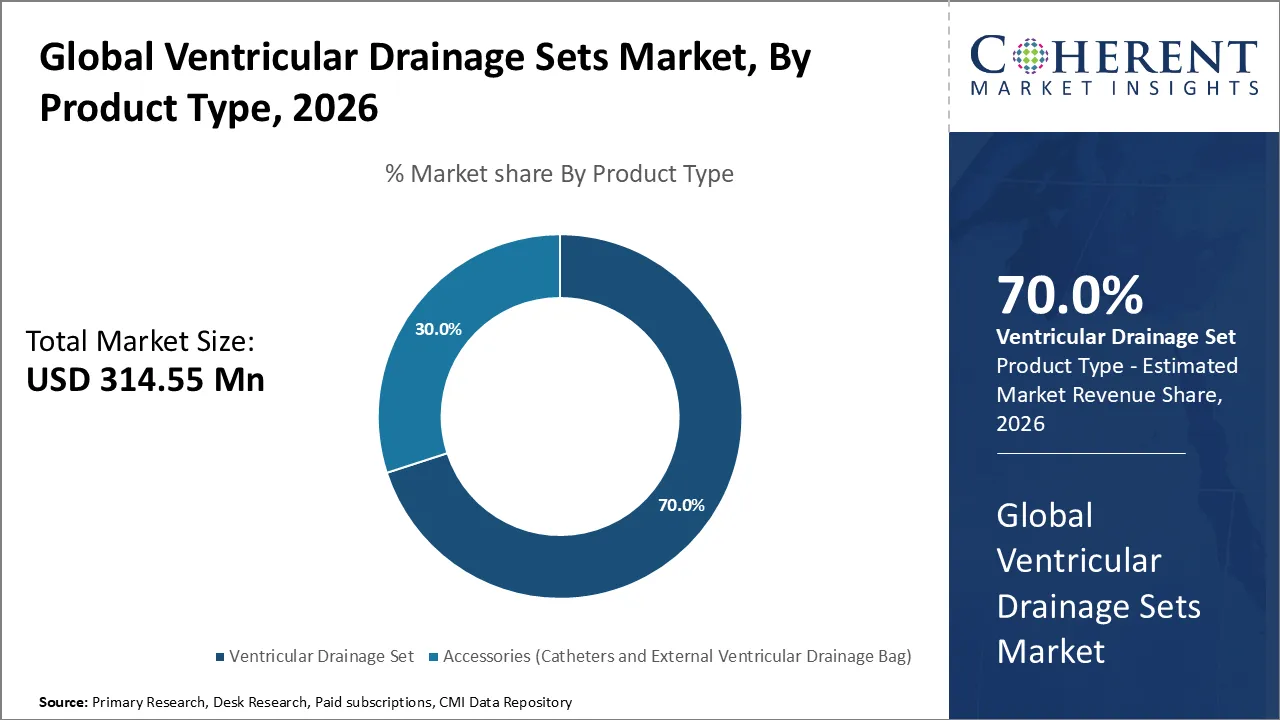
Why is the Ventricular Drainage Set Segment Acquiring the Largest Share?
On the basis of product type, the ventricular drainage set segment is projected to account for the largest Ventricular Drainage Sets Market share of 70.0% in 2026. The segment’s growth is owing to the requirement for complete drainage assemblies for cerebrospinal fluid diversion, intracranial pressure monitoring, fluid collection, and controlled drainage in patients undergoing neurocritical care.
A 2025 international multicenter study published in Neurosurgery evaluated 519 patients across academic neurocritical care units in the U.S. and Europe, of whom 401 patients were managed using conventional external ventricular drainage, compared with 118 patients receiving active cerebrospinal fluid exchange.
In August 2025, Integra LifeSciences received U.S. FDA 510(k) clearance for its Codman Libertís 1.5 mm and 1.9 mm EVD Catheters with Bactiseal and Endexo Technology. The new external ventricular drainage catheters incorporate Bactiseal antimicrobial technology together with Endexo surface-modifying technology, which is designed to reduce protein-biomaterial interactions associated with thrombus formation and cellular adhesion.
Why is Hydrocephalus Acquiring the Largest Application Share?
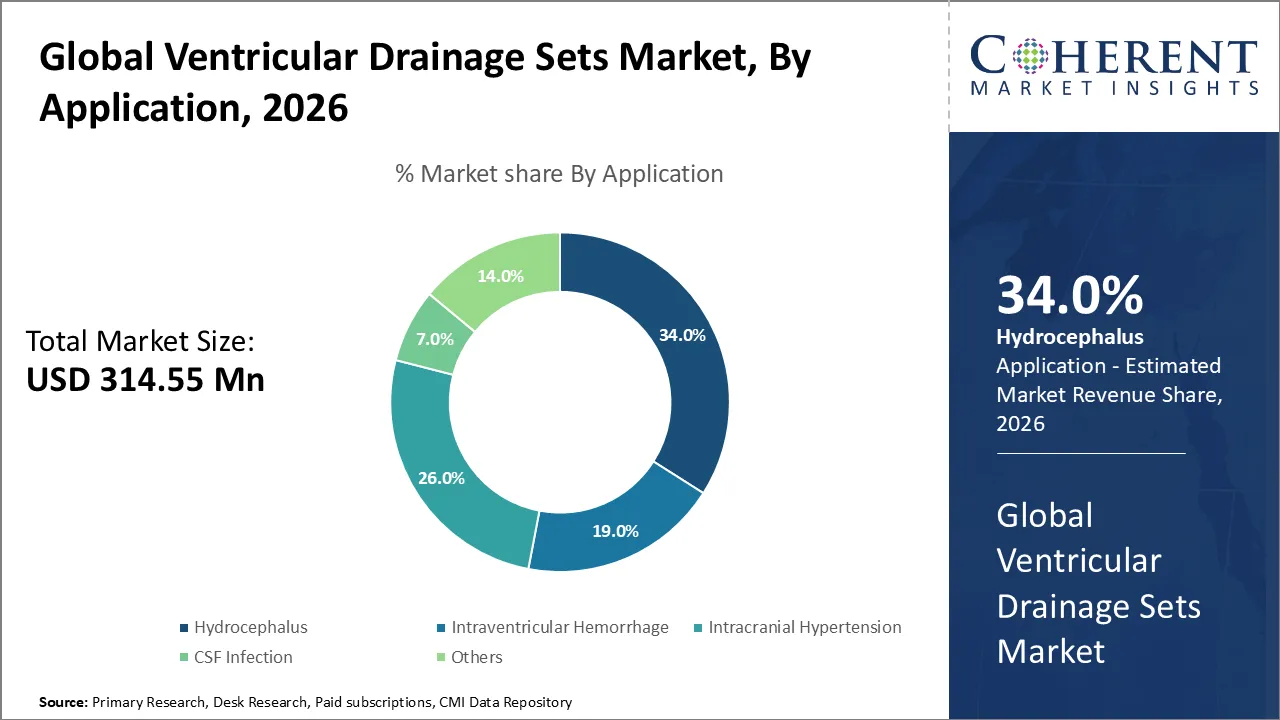
On the basis of application, the hydrocephalus segment is expected to account for the largest Ventricular Drainage Sets Market share of 34.0% in 2026. The segment’s growth is owing to the direct requirement for cerebrospinal fluid diversion when ventricular enlargement and increased intracranial pressure develop following subarachnoid hemorrhage, intracranial bleeding, tumors, infections, and other neurological disorders.
A 2025 two-center study published in Neurosurgery evaluated patients requiring treatment for acute hydrocephalus within 72 hours following aneurysmal subarachnoid hemorrhage. Among the study population, 77 patients initially received external ventricular drainage, demonstrating the continued clinical role of EVD in the immediate management of acute hydrocephalus.
In June 2026, CereVasc completed patient enrollment in its STRIDE pivotal trial evaluating the investigational eShunt System for the treatment of normal pressure hydrocephalus (NPH).
Why are Hospitals Acquiring the Largest Market Share?
On the basis of end user, the hospitals segment is projected to account for the largest Ventricular Drainage Sets Market share of 91.0% in 2026. The segment’s dominance is owing to the requirement for neurosurgical intervention, continuous intracranial pressure monitoring, intensive nursing supervision, imaging support, sterile catheter management, and rapid management of neurological complications. These capabilities are predominantly concentrated within tertiary hospitals, trauma centers, and specialist neurosurgical facilities.
A 2026 study using the national Hospital Episode Statistics database in England identified 10,239 adult patients who underwent insertion of an external ventricular drain. The national cohort included EVD procedures performed within hospital-based neurosurgical care and outcomes were mortality, length of stay, emergency admission, and readmission.
Ventricular Drainage Sets Market Trends
- Growing use of antimicrobial impregnated ventricular catheters improves neurocritical care infection prevention strategies. In a study involving 510 EVD patients in 2026, the infection rate for antimicrobial-impregnated catheters was 2.6% and 8.0% for standard catheters, highlighting the ongoing need for drainage products resistant to infection.
- Increased emphasis on advanced EVD-site protection and postoperative infection control technologies. Chlorhexidine-containing dressings are used with ventricular drainage systems. A 2025 study of 258 patients and 2,373 cumulative EVD days showed that EVD-associated infection rates decreased from 19% to 8% after the introduction of chlorhexidine dressings, with a number needed to treat of nine patients.
- The rising integration of augmented reality and image-guided technologies is improving ventricular catheter-placement precision. A 2025 multicenter randomized crossover study found that AR-assisted EVD placement achieved 57.6% optimal placement compared with 37.3% for freehand placement, while erroneous placement decreased from 40.7% to 21.2%.
Regional Insights
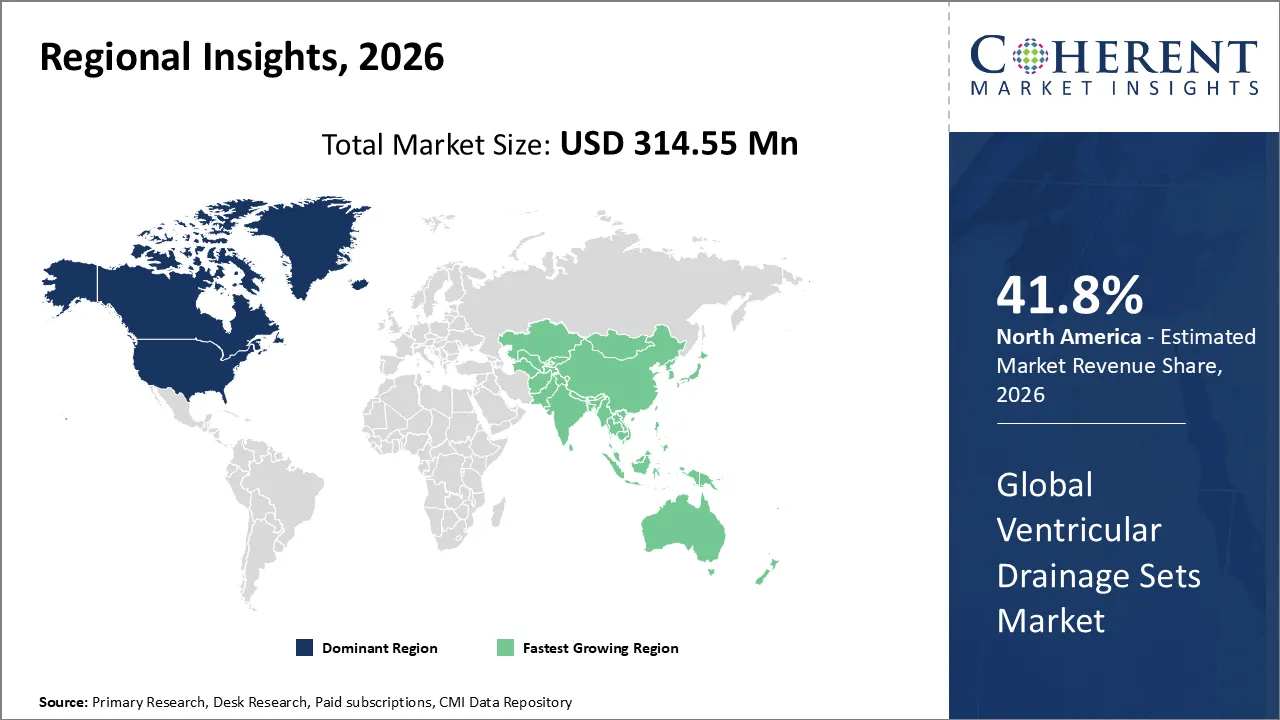
North America Dominates Owing to Advanced Neurocritical Care Infrastructure and High Neurological Disease Burden
The North America region accounts for 41.8% of the Ventricular Drainage Sets Market share in 2026. The region’s dominance is owing to the established network of comprehensive stroke and trauma centers, high availability of neurosurgical intensive care, widespread intracranial pressure monitoring, and early adoption of advanced ventricular drainage and CSF-management technologies.
According to the American Heart Association's 2026 guidelines, more than 600,000 people in the U.S. experience a first ischemic stroke every year, while approximately 200,000 experience a recurrent stroke. More than 9 million U.S. adults aged 20 years and above report having experienced a stroke, indicating the substantial neurological patient population supported by the country's advanced hospital infrastructure.
In April 2025, The Joint Commission, together with the American Heart Association/American Stroke Association, reduced the aneurysmal subarachnoid hemorrhage volume requirement for Comprehensive Stroke Center certification.
Asia Pacific is Expected to be the Fastest-Growing Region
Asia Pacific, which represents an estimated 19.0% of the Ventricular Drainage Sets Market in 2026, is expected to witness the fastest growth over the forecast period. The region’s growth is owing to the substantial burden of hemorrhagic stroke and other neurological disorders, expansion of tertiary hospitals and stroke centers, improving access to neurosurgical treatment, and increasing adoption of critical-care technologies across China, India, Japan, South Korea, and other emerging healthcare markets.
A 2026 national stroke analysis from China integrated data from 7,536 hospitals and reported approximately 4.23 million new stroke cases, 26.68 million prevalent cases, and 2.05 million stroke-related deaths in 2023. The study further found that stroke admissions were concentrated in tertiary public hospitals and that intracerebral hemorrhage and subarachnoid hemorrhage were associated with substantially higher in-hospital mortality than ischemic stroke.
Advanced Hospital Infrastructure and Expanding CSF-Diversion Research are Supporting the Ventricular Drainage Sets Market in the United States
The U.S. Ventricular Drainage Sets Market is experiencing stable growth due to the large number of acute-care hospitals, the presence of a robust neurosurgical and neurocritical-care network, and the rising adoption of ventricular drainage in the treatment of hydrocephalus, intraventricular hemorrhage, and elevated intracranial pressure.
The American Hospital Association’s 2025 Hospital Statistics states that there are 6093 hospitals in the U.S. and 913,136 staffed hospital beds with approximately 34.43 million hospital admissions yearly. This large inpatient infrastructure provides a substantial clinical base for emergency neurosurgical procedures and ventricular drainage utilization.
China Ventricular Drainage Sets Market Trends
China is expected to witness strong growth in the Ventricular Drainage Sets Market owing to its expanding hospital infrastructure, increasing availability of neurosurgical care, large inpatient population, and rising adoption of external CSF drainage for complex hydrocephalus and postoperative neurological complications.
According to China’s 2024 national healthcare statistics, the country had 38,710 hospitals by the end of 2024, an increase of 355 hospitals from the previous year. China recorded approximately 311.92 million inpatient admissions in 2024, while public hospitals operated at an 84.8% bed-utilization rate. These figures indicate a large and highly utilized hospital system capable of supporting increasing volumes of specialized neurosurgical and neurocritical-care procedures.
In May 2026, researchers from the Chinese Academy of Medical Sciences in Beijing published a study involving 384 patients with post-infectious hydrocephalus following craniotomy. Patients initially underwent external ventricular drainage and intravenous antibiotic therapy before transitional drainage and definitive shunt treatment.
Who are the Major Companies in Ventricular Drainage Sets Industry
Some of the major key players in Ventricular Drainage Sets Market are Integra LifeSciences Corporation, Medtronic plc, Fuji Systems Corporation, Moller Medical GmbH, Sophysa, Dispomedica, Spiegelberg GmbH & Co. KG.
Key News
- In June 2026, Integra LifeSciences Corporation received U.S. FDA 510(k) clearance for its Codman Distal Peritoneal Catheter and Codman HOLTER Peritoneal Catheter (SALMON Design). The products are Class II neurological devices used as components of cerebrospinal fluid shunting systems for the treatment of hydrocephalus.
- In March 2025, Medtronic Neurosurgery received U.S. FDA 510(k) clearance for the Duet External Drainage and Monitoring System (EDMS). The system is designed for external ventricular and lumbar drainage of cerebrospinal fluid while simultaneously supporting intracranial pressure monitoring.
Market Report Scope
Ventricular Drainage Sets Market Report Coverage
Report Coverage | Details | ||
Base Year: | 2025 | Market Size in 2026: | USD 314.55 Mn |
Historical Data for: | 2020 to 2024 | Forecast Period: | 2026 to 2033 |
CAGR: | 6.7% | 2033 Value Projection: | USD 496.37 Mn |
Geographies covered: |
| ||
Segments covered: |
| ||
Companies covered: | Integra LifeSciences Corporation, Medtronic plc, Fuji Systems Corporation, Moller Medical GmbH, Sophysa, Dispomedica, Spiegelberg GmbH & Co. KG. | ||
Growth Drivers: |
| ||
Restraints & Challenges: |
| ||
Analyst Opinion
- The Ventricular Drainage Sets Market is expected to maintain steady demand as external ventricular drainage remains relevant across a broad range of neurosurgical conditions, including acute hydrocephalus, tumors, hemorrhage, and postoperative complications. A 2025 study of 130 patients undergoing posterior fossa metastasis surgery found postoperative hydrocephalus in 11% of patients and highlighted the role of perioperative EVD placement in high-risk cases.
- In the analyst’s view, infection control, catheter reliability, and reduced need for repeat intervention will remain major areas of product differentiation. A recent tertiary-care study involving 74 patients, 86 EVD insertions, and 797 catheter-days reported EVD-related infection in 16.2% of patients, while another 16.2% required subsequent shunt placement.
- The market is also moving toward drainage systems designed for safer and potentially longer-duration CSF management. A 2025 systematic review and meta-analysis covering 15 studies and 1,024 patients evaluated long-tunneled external ventricular drainage, with a mean tunneling length of 41.3 cm and median drainage duration of 7 days. Reported catheter blockage was 2.7% with long-tunneled EVDs compared with 7.0% with conventional short-tunneled drainage, although the difference was not statistically significant.
Speak to the analyst
Want personalized insights?
Take the findings above to one of our principal consultants, or have the report rebuilt around the segments, geographies and competitors you actually track.
Market Segmentation
- By Product Type (Revenue, USD Mn, 2021-2033)
- Ventricular Drainage Set
- Accessories (Catheters and External Ventricular Drainage Bag)
- By Application (Revenue, USD Mn, 2021-2033)
- Intraventricular Hemorrhage
- Intracranial Hypertension
- Hydrocephalus
- CSF Infection
- Others
- By End User (Revenue, USD Mn, 2021-2033)
- Hospitals
- Ambulatory Surgical Centers
- By Region (Revenue, USD Mn, 2021-2033)
- North America
- U.S.
- Canada
- Latin America
- Brazil
- Mexico
- Argentina
- Rest of Latin America
- Europe
- Germany
- U.K.
- France
- Italy
- Spain
- Russia
- Rest of Europe
- Asia Pacific
- China
- India
- Japan
- Australia
- South Korea
- ASEAN
- Rest of Asia Pacific
- Middle East
- GCC
- Israel
- Rest of Middle East
- Africa
- South Africa
- Central Africa
- North Africa
- North America
Sources
Primary Research Interviews
- Neurosurgeons and neurocritical care physicians
- Neurologists and intensive care specialists
- Hospital procurement and medical device purchasing managers
- Neurosurgical nurses and EVD/ICP monitoring specialists
- Ventricular drainage system manufacturers and product managers
- Medical device distributors and hospital supply-chain partners
- Biomedical engineers and clinical engineering teams
- Key opinion leaders (KOLs) in hydrocephalus, traumatic brain injury, and CSF management
Databases
- U.S. Food and Drug Administration (FDA) – 510(k) Database
- FDA Manufacturer and User Facility Device Experience (MAUDE) Database
- ClinicalTrials.gov
- PubMed / National Library of Medicine (NLM)
- World Health Organization (WHO) Global Health Observatory
- Centers for Disease Control and Prevention (CDC)
- Organisation for Economic Co-operation and Development (OECD) Health Statistics
- National Center for Health Statistics (NCHS)
Magazines
- Medical Device and Diagnostic Industry (MD+DI)
- Medical Product Outsourcing
- MedTech Dive
- Medical Design & Outsourcing
- NeuroNews International
- MassDevice
Journals
- Neurosurgery
- Journal of Neurosurgery
- Neurocritical Care
- World Neurosurgery
- Journal of Neurotrauma
- Stroke
- Acta Neurochirurgica
- Fluids and Barriers of the CNS
Newspapers
- Reuters
- The Wall Street Journal
- Financial Times
- The New York Times
- The Guardian
- The Economic Times
Associations
- Neurocritical Care Society (NCS)
- American Association of Neurological Surgeons (AANS)
- Congress of Neurological Surgeons (CNS)
- Hydrocephalus Association
- Society of NeuroInterventional Surgery (SNIS)
- European Association of Neurosurgical Societies (EANS)
- World Federation of Neurosurgical Societies (WFNS)
- American Heart Association / American Stroke Association (AHA/ASA)
Public Domain Sources
- Company Annual Reports and Investor Presentations
- Company Product Catalogs, Instructions for Use, and Technical Datasheets
- U.S. FDA 510(k), PMA, Recall, and MAUDE Records
- European Commission EUDAMED and Medical Device Regulatory Publications
- Clinical Practice Guidelines for Hydrocephalus, TBI, Intracranial Hemorrhage, and CSF Drainage
- Hospital and Academic Medical Center Publications
- Government Health Statistics and Hospital Utilization Data
- Peer-reviewed Clinical Studies on External Ventricular Drainage and ICP Monitoring
- Patent Databases such as WIPO, USPTO, and Google Patents
Proprietary Elements
- CMI Data Analytics Tool
- Proprietary CMI Existing Repository of Information for the Last 10 Years
Get access to 250+ pages report
Every segment, forecast, competitor profile and data table behind the analysis above — available for instant download.
- ESOMAR Member
- ISO 9001:2015 Certified
- D-U-N-S Registered
- GDPR & CCPA Compliant
Missing comfort of reading report in your local language? Find your preferred language:
Transform your Strategy with Exclusive Trending Reports
Frequently Asked Questions
The Ventricular Drainage Sets Market is expected to reach USD 496.37 Mn in 2033, compared with USD 314.55 Mn in 2026.
Major players operating in the global Ventricular Drainage Sets Market include Integra LifeSciences Corporation, Medtronic plc, Fuji Systems Corporation, Moller Medical GmbH, Sophysa, Dispomedica, and Spiegelberg GmbH & Co. KG.
The risk of catheter-related infections and high cost of advanced drainage systems are among the key factors hampering growth of the Ventricular Drainage Sets Market.
The rising prevalence of hydrocephalus and intracranial hypertension, increasing incidence of traumatic brain injury and intracranial hemorrhage, growing neurosurgical procedure volumes, and increasing adoption of intracranial pressure monitoring are boosting demand for ventricular drainage sets.
The Ventricular Drainage Sets Market is anticipated to grow at a CAGR of 6.7% between 2026 and 2033.
Among regions, North America is expected to dominate the global Ventricular Drainage Sets Market, accounting for approximately 41.8% of the market share in 2026.
Asia Pacific is expected to be the fastest-growing region over the forecast period, supported by expanding tertiary hospitals and stroke centers, improving access to neurosurgical care, and increasing adoption of critical-care technologies.