

External Ventricular Drain Market Size and Forecast – 2026-2033
The global external ventricular drain market was valued at USD 7.31 Bn in 2026 and is expected to reach USD 11.00 Bn by 2033, exhibiting a compound annual growth rate (CAGR) of 6.0% from 2026 to 2033.
Key Takeaways
- Based on the Application, the Traumatic Brain Injury segment is leading the market with 37.2% of the market share. The growth can be attributed to a rise in traumatic brain injuries.
- Based on Patient Type, the Adult segment is dominating the market share, owing to an increase in TBIs and strokes in the aged population.
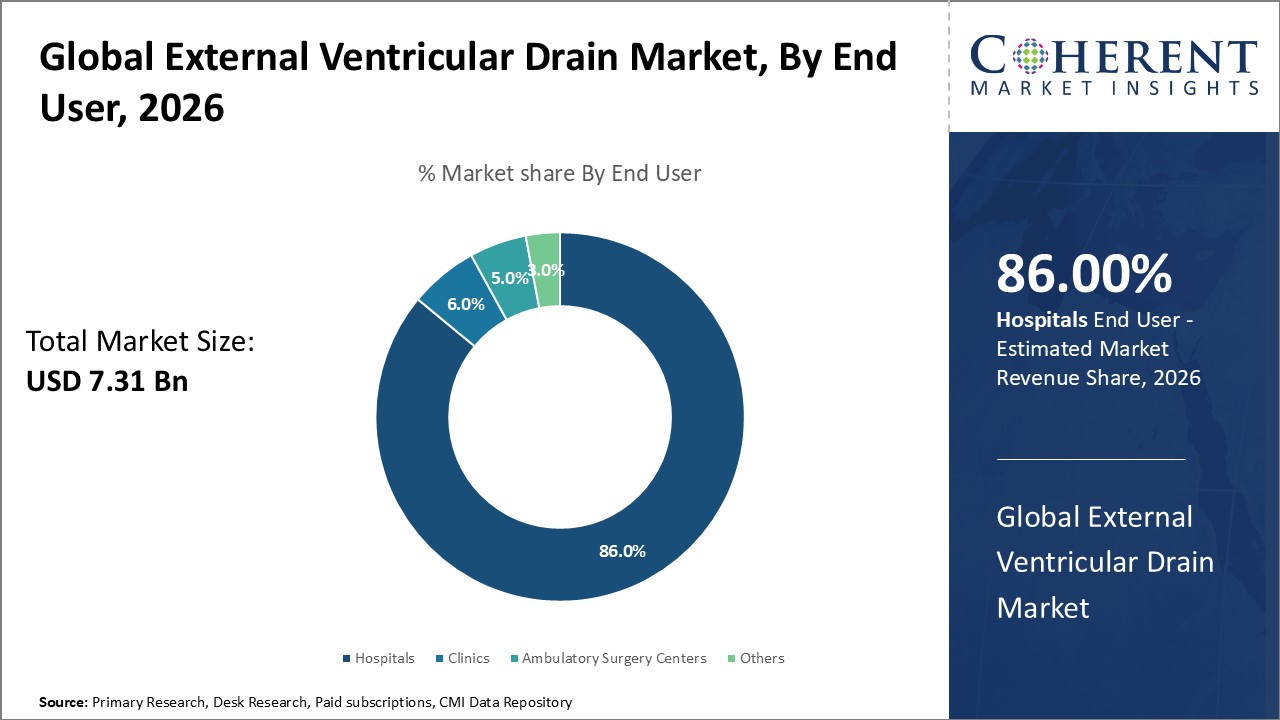
- Based on End-User, the Hospitals segment is dominating the market, accounting for 86%, owing to the high availability of neurosurgical ICUs.
- Based on Region, North America is dominating the market, accounting for 43.7% of the overall market share, owing to a strong presence of leading med-tech companies.
Market Overview
External ventricular drainage (EVD) is a temporary method of draining cerebrospinal fluid (CSF) from the ventricles in the brain. The brain and spinal cord are surrounded by CSF, which helps to protect them. The areas in the brain that contain this fluid are called ventricles. The external ventricular drainage (EVD) system uses a catheter, a thin, plastic tube, which is placed in the ventricle of the brain. This is connected to a drainage system outside the body.
Current Events and Their Impact on External Ventricular Drain Market
Current Events | Description and its impact |
Aging Population and Increasing Prevalence of Neurological Disorders |
|
Technological Advancements in Neurosurgery |
|
Reimbursement Scenario in External Ventricular Drain Market
In the U.S., EVDs are primarily reimbursed through Medicare and private insurance providers. Medicare typically covers EVD procedures under the inpatient prospective payment system (IPPS) when performed during hospitalization. The reimbursement is bundled into the Diagnosis-Related Group (DRG) payment, which depends on the patient's primary diagnosis and comorbidities. For instance, DRGs related to neurological conditions like subarachnoid hemorrhage or hydrocephalus may encompass the costs associated with EVD placement and management.
- Current Industry Events of 2026
- Market Size Estimation
- Regional Breakdown
- Competitive Landscape
- Customer Intelligence
- Segmental Analysis
- Pricing Analysis
- Key Market Drivers, Challenges & Future Trends
- Customized Insights Section
Segmental Analysis
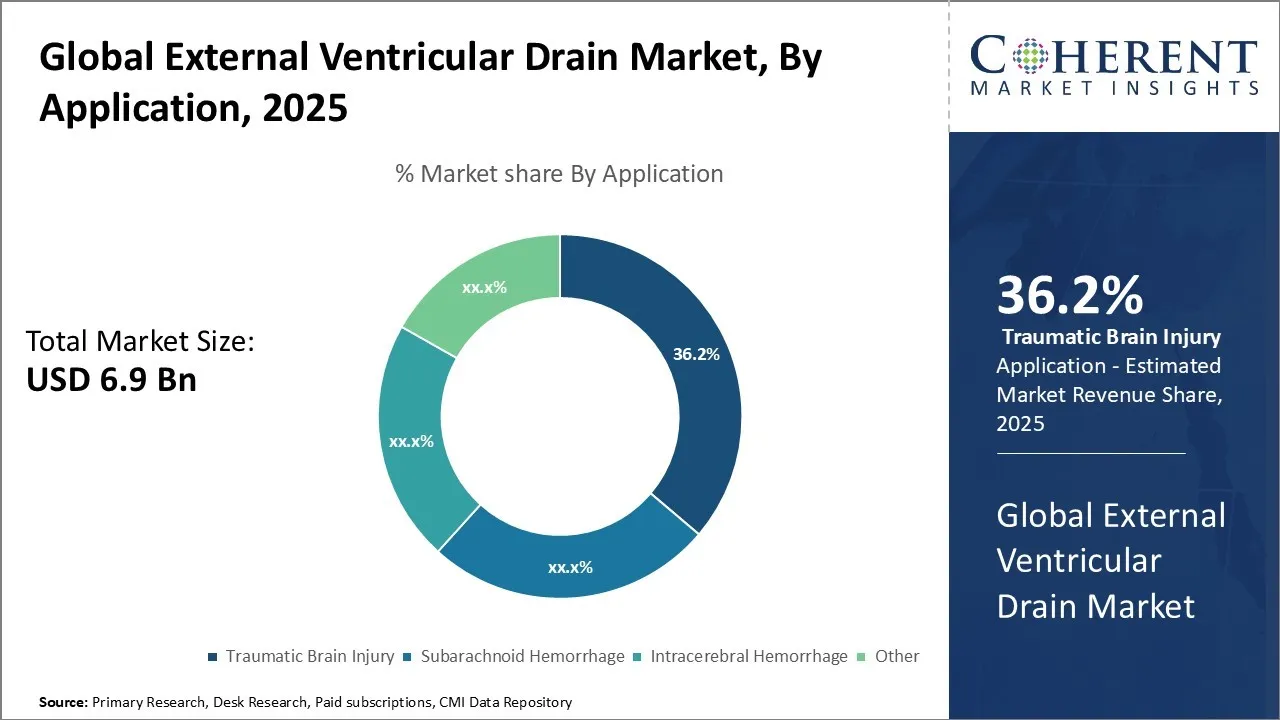
External Ventricular Drain Market Insights, by Application- High Global Incidence is Driving the Traumatic Brain Injury Segment’s Growth.
Based on the Application, the Traumatic Brain Injury segment is said to dominate the market. The growth of this segment can be attributed to various factors, such as a rise in mortality rates across the globe due to road accidents and sports injuries. External Ventricular Drains play a crucial role in draining cerebrospinal fluid to reduce the pressure in TBI. The use of EVDs in TBI cases is more recurrent in developed nations for faster diagnosis and neurocritical care. For instance, according to a study published in the Journal of Neurotrauma in 2024, research was conducted with over 2500 patients across several trauma centers to study the timing of External Ventricular Drain insertion in patients suffering from traumatic brain injuries. The conclusions drawn from the study showed that the patients who had an EVD inserted in the first 24 hours after the injury had better neurological outcomes.
External Ventricular Drain Market Insights, by Patient Type- Increased TBIs and Strokes drive the Adult Segment’s Growth.
Based on Patient Type, the market is segmented into Pediatric and Adult. The Adult segment is dominating the market in 2026. The growth of the segment can be attributed to the rise in incidences of strokes and TBIs. Especially, the aged population is prone to hemorrhages, strokes, and head injuries. Thus, there is an increase in demand for EVDs in adults. For instance, a clinical study conducted in 2024 suggests that an early EVD placement in adult patients of Spontaneous Subarachnoid Hemorrhage results in a better neurological recovery, by draining the excess cerebrospinal fluid. This is further escalating the external ventricular drain market growth.
External Ventricular Drain Market Insights, by End-User- the Availability of Neurosurgical ICUs and Trained Staff is Driving the Hospital Segment’s Growth.
Based on End User, the Hospitals segment is dominating the market. The growth of this segment can be attributed to the availability of neurosurgical ICUs and trained staff. Hospitals are one of the best options with tertiary care centers. There is also a high patient inflow during emergency and critical care conditions, and the traumatic injuries and acute hemorrhages are also treated in many hospitals. Another big reason for the dominance of the hospital segment could be that they offer integrated services like diagnosis, surgery, post-operative care, and monitoring, etc. Technical advancements in hospitals result in advanced features and systems. For instance, according to a study conducted in 2025, the integration of Augmented Reality in neurosurgical procedures like EVD placements will help improve the accuracy of placement and reduce the time taken in the procedure, thus minimizing complications.
Regional Analysis
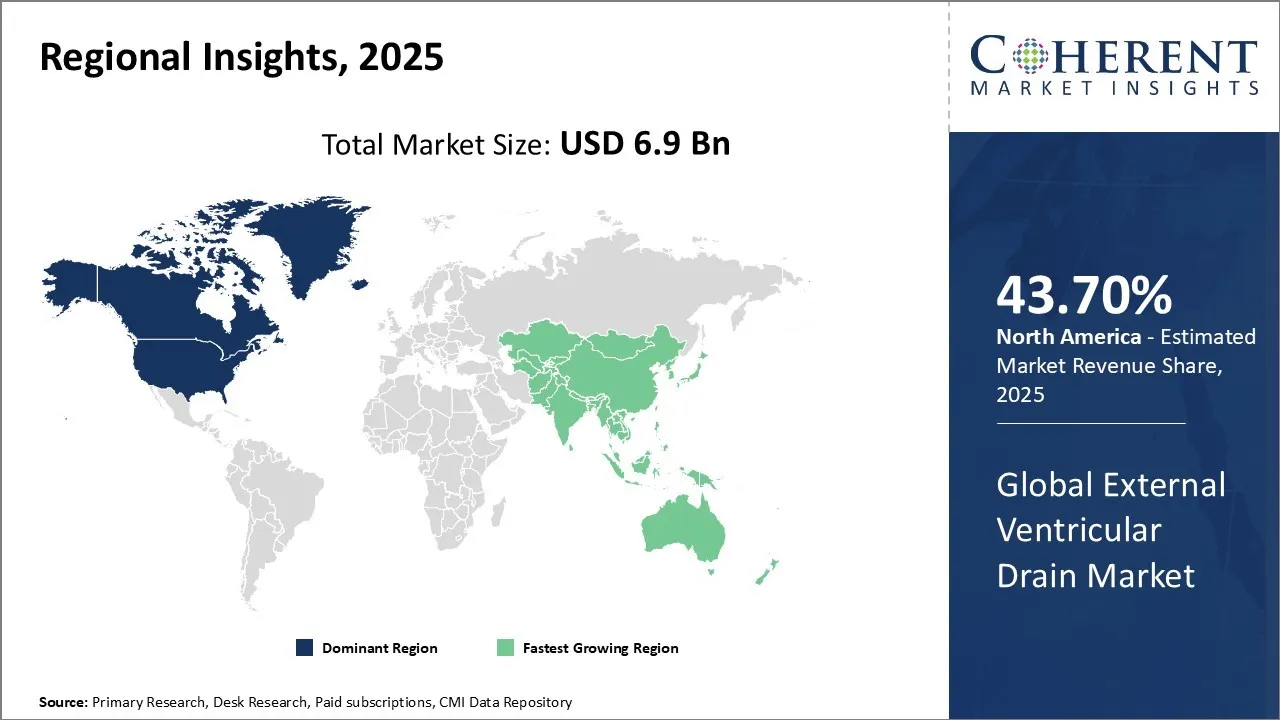
North America External Ventricular Drain Market Trends
North America is expected to be the largest market for external ventricular drains during the forecast period, accounting for over 43.7% of the market share in 2025. North America has emerged as the largest regional market for external ventricular drains globally. The region enjoys a strong presence of leading med-tech companies, which are engaged in manufacturing drainage devices and neurosurgical catheters. Advanced healthcare facilities and a high incidence of neurological disorders in the region boost the demand for external ventricular drains. Growing acceptance of minimally invasive neurosurgical procedures and favorable reimbursement policies further support market growth. Manufacturers can attract higher prices in North America as compared to other regions, owing to high purchasing power and brand loyalty among neurosurgeons. The United States and Canada are the top two regions contributing significantly to the market’s growth in North America. A high incidence of neurological disorders, brain injuries, advanced healthcare infrastructure, and multiple trauma centers are driving the External Ventricular Drain Market growth in the United States. For instance, in March 2025, the FDA gave Breakthrough Device Designation to Anuncia Medical’s ReFlow® for its noninvasive manual flushing system that restores and maintains cerebrospinal fluid flow. This will help in reducing the risk of drain blockages and will avoid the need for any other additional surgery. While in Canada, the rise in prevalence of neurovascular conditions, heavy investments from government institutions, and advanced medical facilities are driving the External Ventricular Market share.
Asia Pacific External Ventricular Drain Market Trends
Asia Pacific is expected to be the second-largest market for the external ventricular drain market, accounting for over 25.2% of the market share in 2025. The Asia Pacific market is witnessing rapid expansion and is poised to become the fastest-growing external ventricular drain regional market shortly. Countries like China, India, and South Korea are witnessing rising healthcare expenditures and neurological disease burden, which is driving the demand for neurological devices. At the same time, the growing medical tourism industry in these nations has amplified the supply of the external ventricular drain. The presence of emerging economies with improving access to healthcare and the increasing focus of global market players to tap opportunities are some key factors fueling the market growth. Favorable foreign investment policies have encouraged global players to set up manufacturing bases and expand distribution networks in the Asia Pacific to cater growing demand.
United States External Ventricular Drain Market Trends
The growing elderly demographic is more susceptible to neurological disorders, thereby increasing the demand for EVD procedures. The population of Americans aged 65 and older is expected to grow from 58 million in 2022 to 82 million by 2050, marking a 47% increase. As a result, the proportion of the total population represented by this age group is projected to rise from 17% to 23%. This is further propelling the external ventricular drain market share.
India External Ventricular Drain Market Trends
The increasing prevalence of conditions such as traumatic brain injuries (TBIs), hydrocephalus, and subarachnoid hemorrhages is a significant driver. For instance, the Centers for Disease Control and Prevention (CDC) reported over 69,000 TBI-related fatalities in 2021, equating to approximately 190 deaths daily. These conditions often necessitate EVD procedures to manage elevated intracranial pressure (ICP) effectively. This is further supporting the external ventricular drain market revenue.
External Ventricular Drain Market Trends
Rising adoption of temporary external ventricular drains
Rising adoption of temporary external ventricular drains is having a significant impact on the global external ventricular drain market. Temporary external ventricular drains are witnessing increasing usage as they provide an effective, minimally invasive solution for conditions that require cerebrospinal fluid drainage and ventricular decompression, such as hydrocephalus, intraventricular hemorrhage, and traumatic brain injuries. More hospitals and healthcare facilities are opting for temporary external ventricular drains as they allow for rapid cerebrospinal fluid (CSF) drainage at the site of injury or blockage. With temporary external ventricular drains, patients do not require multiple invasive surgeries for ventricular catheter placement and do not need permanent ventriculoperitoneal (VP) shunt implantation. This has made temporary external ventricular drains a preferred treatment option for conditions requiring short-term CSF diversion. According to the report published by the United Nations' World Health Organization, "The Lancet Commission on Global Surgery", in 2022, road traffic accidents and falls are among the leading causes of traumatic brain injuries worldwide, which often require surgical intervention by using ventricular drainage devices. The report found that every year, over 5 million people suffer traumatic brain injuries, with over 1 million patients needing neurosurgical procedures. Increasing incidence of traumatic brain injuries and the preference of healthcare professionals for temporary external ventricular drains over other ventricular diversion methods are fueling the adoption of temporary external ventricular drains globally.
External Ventricular Drain Market Challenges
Risk of post-surgery infections
The risk of post-surgery infections is one of the major factors restraining the growth of the global external ventricular drain market. Infections contracted during or after neurosurgery pose serious health risks to patients. Ventricular drains are essential medical devices that are used to drain cerebrospinal fluid (CSF) from the brain ventricles during and after neurosurgeries. However, these drains are also potential entry points for pathogens/bacteria to enter the brain ventricles and cause infections. For instance, in June 2023, according to data published by the American Academy of Neurology, CSF leakage is considered a major risk factor for external ventricular drain (EVD) related infection.
High cost of an external ventricular drain
The high cost of an external ventricular drain is significantly restraining the growth of the global external ventricular drain market. External ventricular drains are life-saving medical devices used for serious conditions like brain hemorrhage, brain tumors, and head injuries to drain excess CSF (cerebrospinal fluid) from the brain. However, the significant cost burden that is associated with these devices is proving as a major roadblock. For instance, in March 2021, according to data published by Integra LifeSciences Corporation, the cost of external ventricular drain replacements ranged from US$ 1,300 to US$ 3,200 per replacement.
External Ventricular Drain Market Drivers
Increasing prevalence of traumatic injuries
The rising incidence of traumatic brain injuries (TBIs) across the globe is one of the major factors fueling the demand for external ventricular drains. TBIs can occur due to car accidents, falls, assaults, and other incidents. According to a study by the Centers for Disease Control and Prevention (CDC), almost 3 million TBI-related emergency department visits, hospitalizations, and deaths occur in the U.S. each year. For instance, in March 2021, according to the Centers for Disease Control and Prevention, approximately 4.4 million people around the world suffered from traumatic injuries, thereby escalating the external ventricular drain market demand.
Government funding
Government funding is playing a major role in driving the growth of the global external ventricular drain market. Governments across the world are increasingly allocating higher healthcare budgets to provide better treatment options and facilities for neurological disorders. With rising cases of brain injuries, brain tumors, and strokes, the demand for efficient cerebrospinal fluid management procedures has increased significantly. For instance, in May 2023, UTHealth Houston, a comprehensive academic health university in Texas, U.S., announced that it has received nearly US$ 13 million in federal grant funds to study treatments for traumatic brain injury, which kills an average of 190 people and hospitalizes another 600 in the U.S. every day. This is further proliferating the external ventricular market revenue.
External Ventricular Drain Market Opportunities
Growing health expenditure globally
One of the key drivers propelling the growth of the global external ventricular drain market is the increasing incidence of traumatic brain injuries (TBIs) across the world. TBIs can occur due to falls, vehicular accidents, assaults, and recreational sporting activities, among other causes. The Centers for Disease Control and Prevention (CDC) also states that falls are responsible for over 50% of all TBIs in the U.S. alone. These alarming numbers are a matter of great concern since TBIs often lead to life-threatening conditions that require immediate medical intervention and intensive care.
Market Report Scope
External Ventricular Drain Market Report Coverage
| Report Coverage | Details | ||
|---|---|---|---|
| Base Year: | 2025 | Market Size in 2026: | USD 7.31 Bn |
| Historical Data for: | 2020 To 2024 | Forecast Period: | 2026 To 2033 |
| Forecast Period 2026 to 2033 CAGR: | 6.0% | 2033 Value Projection: | USD 11.00 Bn |
| Geographies covered: |
| ||
| Segments covered: |
| ||
| Companies covered: | Spiegelberg GmbH & Co. KG, Medtronic, Sophysa, Neuromedex GmbH, Integra LifeSciences, Möller Medical GmbH, B. Braun SE and Fuji Systems | ||
| Growth Drivers: |
| ||
| Restraints & Challenges: |
| ||
Key Developments
- In March 2025, Anuncia Medical, Inc., a trailblazer in CSF management and neurocritical care, received Breakthrough Device Designation from the FDA for its ReFlow® EVD. This cutting-edge external ventricular drain (EVD) offers a new approach to managing brain swelling and elevated intracranial pressure.
- In August 2022, Brain Navi Biotechnology, a surgical robotic company based in China, announced that NaoTrac, the Conformité Européenne (CE) certified neurosurgical navigation robot, achieved approval from Taiwan's Food and Drug Administration (TFDA) in July 2022, and is planned for submission to the U.S. Food and Drug Administration (USFDA) for clearance by the end of 2022. The NaoTrac human trials were performed at the reputable Hualien Tzu-Chi Medical Center, with the external ventricular drain (EVD).
- In October 2021, RAUMEDIC, a medical-technology company, announced the expansion of its manufacturing unit in Mills River, North Carolina, U.S.
Analyst Viewpoint
- The global external ventricular drain market continues to be driven by the rising incidence of neurological disorders such as traumatic brain injury, hemorrhage, and tumors. The growing geriatric population which is highly susceptible to such conditions, also aids the market growth. Further, advancement in technology has enabled manufacturers to develop more effective and safer drainage systems that can be safely that are used for longer durations. This has increased the adoption of external ventricular drains among healthcare facilities globally.
- However, risks associated with EVD placement, including infection, haemorrhage, and malfunction require highly skilled expertise, which may limit the market expansion. Moreover, the availability of alternate treatment options for certain conditions can hamper sales opportunities. High costs of these devices also restrict their access in low and middle-income countries.
- North America dominated the market owing to higher healthcare expenditure and a sizable patient population. Several leading global players are also based in the region. Within the region, the U.S accounted for the major revenue share. Asia Pacific is expected to witness the fastest growth over the forecast period on the back of rising medical tourism, increasing healthcare investments, and growing disposable incomes in developing countries like China and India. Key market players are strengthening their presence in emerging markets through strategic collaborations with local suppliers.
Market Segmentation
- By Application (Revenue, USD Bn, 2021 - 2033)
- Traumatic Brain Injury
- Subarachnoid Hemorrhage
- Intracerebral Hemorrhage
- Other (Non-traumatic Hydrocephalus Condition)
- By Patient Type (Revenue, USD Bn, 2021 - 2033)
- Pediatric
- Adult
- By End User (Revenue, USD Bn, 2021 - 2033)
- Hospitals
- Clinics
- Ambulatory Surgery Centers
- Others
Regional Insights (Revenue, USD Bn, 2021 - 2033)
- North America
- U.S.
- Canada
- Latin America
- Brazil
- Argentina
- Mexico
- Rest of Latin America
- Europe
- Germany
- U.K.
- Spain
- France
- Italy
- Russia
- Rest of Europe
- Asia Pacific
- China
- India
- Japan
- Australia
- South Korea
- ASEAN
- Rest of Asia Pacific
- Middle East
- GCC Countries
- Israel
- Rest of Middle East
- Africa
- South Africa
- North Africa
- Central Africa
- North America
- North America
- Europe
- Asia Pacific
- Latin America
- Middle East
- Africa
- Key Player Insights (Revenue, USD Bn, 2021 - 2033)
- Spiegelberg GmbH & Co. KG
- Medtronic
- Sophysa
- Neuromedex GmbH
- Integra LifeSciences
- Möller Medical GmbH
- B. Braun SE
- Fuji Systems
Sources
Primary Research Interviews
- Neurosurgeons, neuro ICU specialists, hospital procurement officers, device manufacturers, and clinical trial coordinators.
Databases
- PubMed
- ClinicalTrials.gov
- FDA MAUDE Database (for device recalls and adverse events)
- World Bank and WHO health statistics portals
Magazines
- Medical Device + Diagnostic Industry (MD+DI)
- MedTech Dive
- Nature Outlook – Medical Devices
- HealthTech Magazine
Journals
- Journal of Neurosurgery
- Neurosurgical Review
- Critical Care Medicine
- Journal of Neurocritical Care
- World Neurosurgery
Newspapers
- The New York Times – Health Section
- The Guardian – Health
- The Wall Street Journal – Healthcare
- The Economic Times – Healthcare & Life Sciences
Associations
- American Association of Neurological Surgeons (AANS)
- European Association of Neurosurgical Societies (EANS)
- Society of Critical Care Medicine (SCCM)
- Medical Device Innovation Consortium (MDIC)
- U.S. FDA’s Center for Devices and Radiological Health (CDRH)
Public Domain Sources
- U.S. Food and Drug Administration (FDA)
- Centers for Disease Control and Prevention (CDC)
- World Health Organization (WHO)
- European Medicines Agency (EMA)
- National Institutes of Health (NIH)
- Public annual reports and investor presentations from companies such as Medtronic, Integra LifeSciences, and B. Braun
Get access to 250+ pages report
Every segment, forecast, competitor profile and data table behind the analysis above — available for instant download.
- ESOMAR Member
- ISO 9001:2015 Certified
- D-U-N-S Registered
- GDPR & CCPA Compliant
Missing comfort of reading report in your local language? Find your preferred language:
Transform your Strategy with Exclusive Trending Reports
Frequently Asked Questions
The Global External Ventricular Drain Market is estimated to be valued at USD 7.31 Bn in 2026, and is expected to reach USD 11.00 Bn by 2033.
Risk of post-surgery infections and high cost of external ventricular drain are the key factor hampering the growth of the global external ventricular drain market.
Increasing prevalence of traumatic injuries and government funding are the major factors driving the global external ventricular drain market.
Traumatic brain injury segment is the leading application segment in the global external ventricular drain market.
The major players operating in the global external ventricular drain market are Spiegelberg GmbH & Co. KG, Medtronic, Sophysa, Neuromedex GmbH, Integra LifeSciences, Möller Medical GmbH, B. Braun SE and Fuji Systems.
North America leads the global external ventricular drain market.
The CAGR of the Global External Ventricular Drain Market is projected to be 6.0% from 2026 to 2033.