

MEDICAL COMPOSITES MARKET SIZE AND SHARE ANALYSIS
The global medical composites market is estimated to be valued at USD 1.49 Bn in 2026 and is expected to reach USD 2.94 Bn by 2033, exhibiting a compound annual growth rate (CAGR) of 10.2% from 2026 to 2033.
Key Takeaways
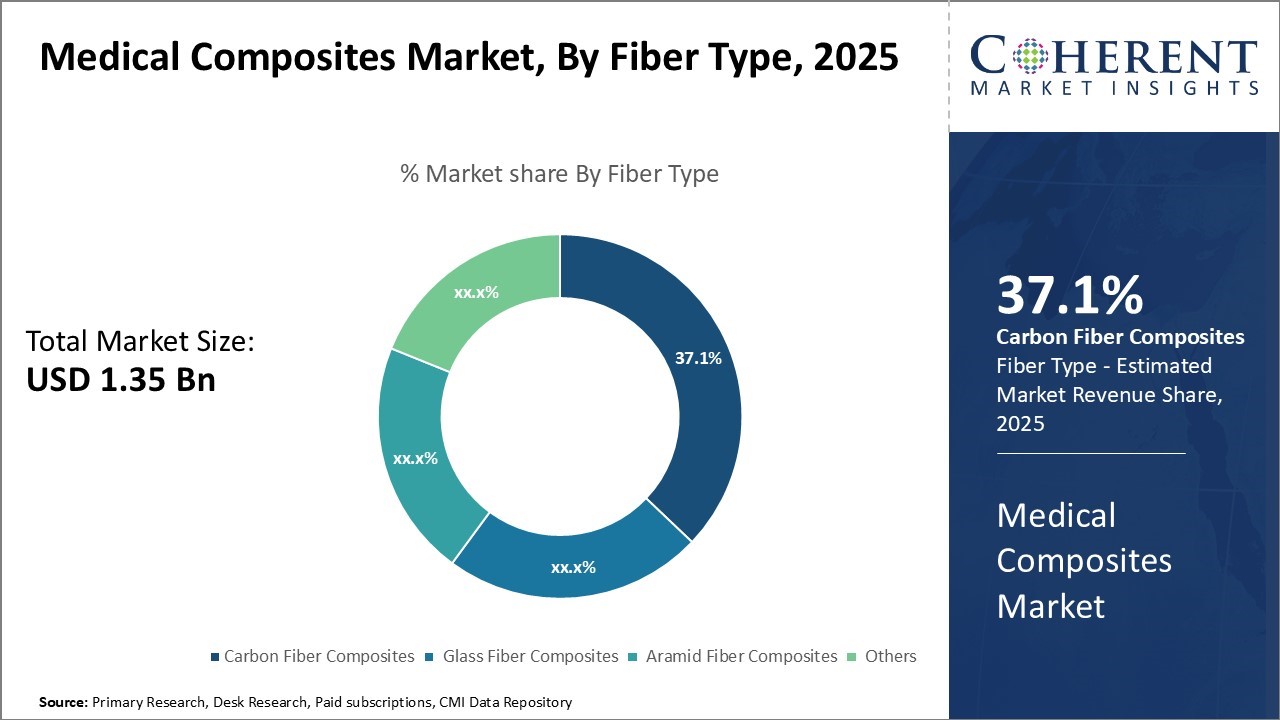
- Based on the Fiber Type, the carbon fiber composites sub-segment is estimated to hold 38.1% of the market share in 2026 due to Superior Mechanical Properties.
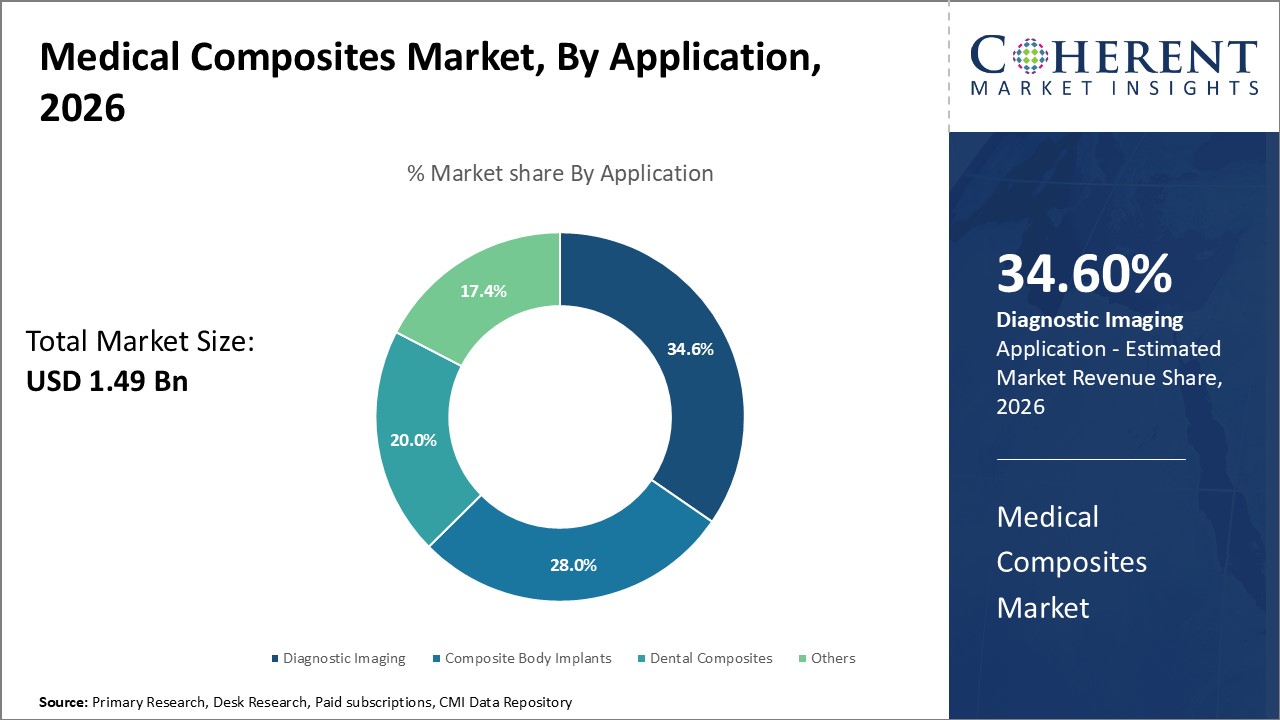
- Based on the Application, the diagnostic imaging sub-segment is estimated to hold 34.6% of the market share in 2026 due to Composites’ Indispensable Role in Diagnostic Imaging.
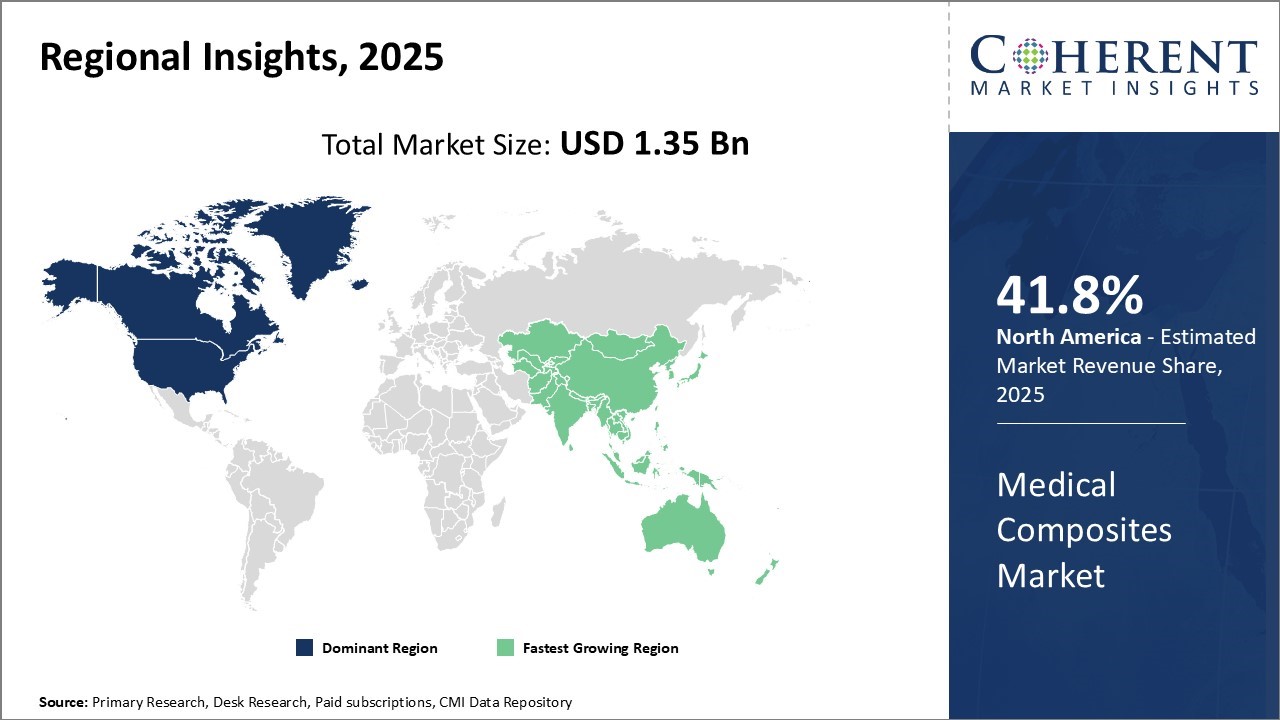
- On the basis of Region, North America remains the dominant region in the global medical composites market and is estimated to hold 41.8% of the market share in 2026.
Market Overview
The rise in the medical composites market is driven by the growing demand for lightweight, biocompatible materials in orthopedic implants and prosthetics. Additionally, increasing surgical procedures and aging populations worldwide are accelerating product adoption.
Current Events and Their Impact on the Medical Composites Market
Current Events | Description and its impact |
Technological and Industrial Innovations |
|
Healthcare Economic Trends |
|
End user Feedback and Unmet Needs in the Medical Composites Market
End-user Feedback
- Improved Biocompatibility: Surgeons and biomedical engineers frequently highlight the need for composites that better integrate with human tissue, especially in long-term implants such as orthopedic screws, dental posts and spinal cages.
- Mechanical Performance: End users appreciate fiber-reinforced composites for their high strength-to-weight ratio, but still express concern about fatigue resistance under cyclic loading in applications like joint replacement.
- Ease of Processing: Manufacturers and devices often report challenges in machining, molding, and sterilizing composite materials, especially when scaling up production for high-volume devices.
Unmet Needs
- Cost-effective Customization: Custom composite solutions tailored for patient-specific needs, for example, 3D printed orthopedic implants, remain expensive and technically complex, limiting accessibility in mid-tier healthcare systems.
- Radiolucency with functional additives: While radiolucent composites are valued in imaging, there’s an unmet need for materials that maintain radiolucency while allowing for drug elution, antimicrobial properties, or thermal conductivity.
- Sustainable and Bio-based Composites: There’s a growing demand for eco-friendly, biodegradable composites suitable for single-use medical devices, driven by sustainability initiatives and regulatory pressure.
- Current Industry Events of 2026
- Market Size Estimation
- Regional Breakdown
- Competitive Landscape
- Customer Intelligence
- Segmental Analysis
- Pricing Analysis
- Key Market Drivers, Challenges & Future Trends
- Customized Insights Section
End Use Application of Medical Composites
- Orthopedic Implants and Devices
- Bone plates, screws, rods, and pins (e.g. carbon fiber-reinforced PEEK)
- Joint prosthetics (hip, knee, shoulder)
- Spinal cages and fixation devices
- Prosthetics and Orthotics
- Lightweight prosthetic limbs for enhanced mobility and comfort
- Custom orthotic braces and supports
- Dental Applications
- Composite resins for fillings and crowns
- Dental posts and bridges
- Temporary and permanent prostheses
- Surgical Instruments
- MRI-compatible tools due to non-magnetic properties
- Lightweight and durable surgical handles and components
- Medical Imaging Equipment
- Structural components for MRI, CT, and X-ray machines
- Patient positioning systems and tables that do not interfere with imaging
Segmental Insights
Medical Composites Market Insights, By Fiber Type
The carbon fiber composites segment dominates the market due to Superior Mechanical Properties
The fiber type segment includes carbon fiber composites, glass fiber composites, aramid fiber composites, and others. The carbon fiber composites sub-segment is estimated to hold 38.1% of the market share in 2026, owing to their superior mechanical properties. Carbon fibers exhibit high stiffness, strength, temperature tolerance, and low weight. They are lightweight yet very durable, making them well-suited for applications that require strength and flexibility. In medical devices and implants, these properties translate to devices that are less likely to fracture or fail under stress. Carbon fiber composites also allow for intricate designs that optimize function while minimizing size and mass. This is highly valuable in anatomical devices like joint replacements that must replicate complex biological structures.
Carbon fibers also exhibit good biocompatibility and do not degrade in the body over time, as some other materials may. Implants made from carbon composites have demonstrated long-term stability without deterioration. This durability gives patients and physicians confidence in the longevity of carbon-based implants. Carbon composites are also corrosion resistant, an important factor for any material inserted or interacting with tissues and fluids in the body. Their chemical inertness prevents toxic reactions that could compromise health. For instance, Toray Industries’ TORAYCA M40X, developed for medical applications, is a new carbon fiber composite that offers high strength, modulus, and biocompatibility for orthopedic implants and surgical instruments.
Medical Composites Market Insights, By Application
The diagnostic imaging segment dominates the market due to Composites’ Indispensable Role in Diagnostic Imaging
The application segment includes diagnostic imaging, composite body implants, dental composites, and others. The diagnostic imaging sub-segment is estimated to hold 34.6% of the market share in 2026 due to composites’ indispensable role in technologies like Computed Tomography, Magnetic Resonance Imaging, X-ray, and ultrasound. Composite materials are favored in this field because they combine radiolucency with toughness and design versatility. For CT and MRI systems, composites allow the construction of large, precisely shaped components that do not interfere with or degrade the quality of scans. They accept complex geometries needed to achieve high-resolution imaging from multiple angles.
Composites are also non-corrosive, light, and easy to fabricate into large, seamless parts. In X-ray equipment, composites replace traditional heavier metals in components like tubes, frames, casings, and components close to the patient. Their radiolucency does not obscure images, nor do they generate undesirable artifacts. Lighter composite housings also improve mobility and ergonomics. For ultrasound machines, composites construct durable probes and wand attachments that effectively transmit high-frequency waves. They propagate ultrasonic energy for diagnosis without distorting or attenuating the signal. For instance, Composites United (CU) has developed a special resin matrix that can be blended with carbon fiber composites, enhancing the sterilizing factor of diagnostic imaging components. This blend is also biocompatible, corrosion-resistant, and physiologically innocuous.
Regional Insights
North America Medical Composites Market Trends
North America remains the dominant region in the global medical composites market and is estimated to hold 41.8% of the market share in 2026. The presence of large medical device companies such as Vermont Composites, Inc., and established healthcare infrastructure has propelled the demand for advanced composite materials in the region. The U.S. accounts for the major share of the North American medical composites market owing to the increasing healthcare expenditure and high diagnosis and treatment rates compared to other countries.
Manufacturers in the region also benefit from strong industry associations that help foster collaboration for innovation. Moreover, strict regulations regarding product approvals set the benchmark for quality and drive manufacturers to continuously enhance their materials. This regional medical supply chain is highly integrated, which facilitates easy sourcing of raw materials and components. For instance, the U.S. company 3M introduced the Filtek Universal restorative composites, a product combining a unique shading system with innovative materials for esthetic and long-lasting results. This is further accelerating the medical composites market demand.
Asia Pacific Medical Composites Market Trends
Asia Pacific has emerged as the fastest-growing regional market for medical composites globally. Rapid economic development, rising disposable incomes, and growing medical tourism are major macroeconomic factors augmenting the healthcare sector in the region. Countries such as China, India, Japan, and South Korea are witnessing increased healthcare access and expansions in their healthcare capacities. This has boosted the demand for medical devices and, hence, medical composites.
Moreover, the availability of cheap labor and resources in the region provides an attractive value proposition for the outsourcing of production by global medical device brands. As a result, many international medical composites manufacturers have set up manufacturing units to cater to the burgeoning regional demand. With rising exports, the medical composites industry is gaining strategic importance for many Asia Pacific economies. In particular, trade agreements have boosted exports from China, which is fast becoming a key global hub for medical composites production. For instance, the China Jushi Co., Ltd., a prominent Chinese manufacturer of glass fiber and composites, supplies materials relevant to medical composites. The company’s primary business is the production and sale of fiberglass and its finished products.
United States Medical Composites Market Trends
The rise in the United States medical composites market is primarily driven by increasing demand for minimally invasive surgical tools and advanced diagnostic imaging devices, where lightweight and radiolucent materials are critical. Growing orthopedic and prosthetic procedures due to an aging population and rising sports injuries further fuel adoption.
For instance, the American company Hillrom launched the PST 500 and PST 300 precision surgical tables, offering 360-degree radiolucency and suitability for various surgical procedures. Additionally, strong innovation pipelines from the U.S.-based medical device OEMs are accelerating composite integration into next-gen implants and devices.
India Medical Composites Market Trends
The growth of India’s medical composites market is driven by increasing demand for lightweight, biocompatible materials in orthopedic implants, diagnostic imaging, and minimally invasive devices. Government initiatives like “Make in India” and the Producting Linked Incentives (PLI) scheme are boosting local manufacturing capabilities.
For instance, a Pune-based dental technology firm, D-Tech Compomax, has launched a nano-hybrid light-cured composite kit for anterior and posterior restorations in India. It features high strength, low shrinkage, and easy sculpting, which is ideal for dental composite applications. Additionally, growing adoption of advanced materials such as carbon fiber and NiTi alloys in prosthetics and surgical equipment is accelerating medical composites market revenue.
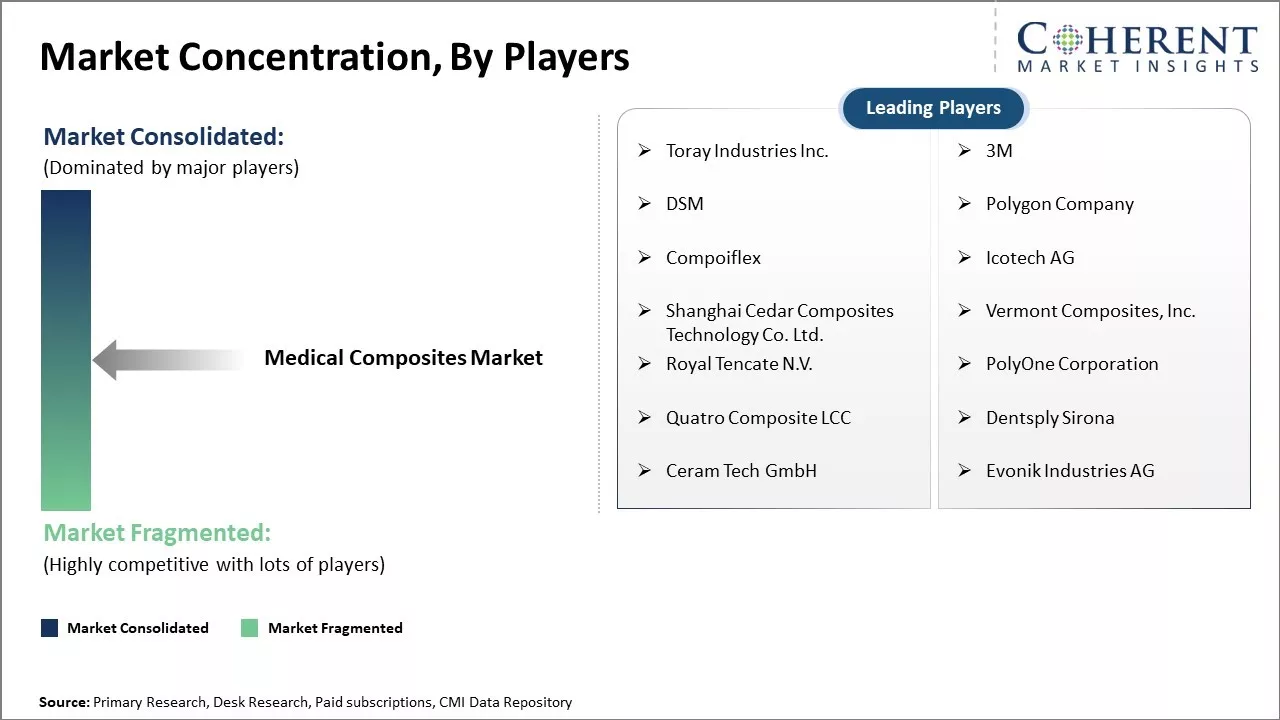
Market Concentration and Competitive Landscape
Medical Composites Industry News
- In April 2025, at RAPID + TCT, PolySpectra and Tethon 3D unveiled the ThOR 10, a high-performance composite photopolymer.
- In January 2025, the U.K. introduced the National Materials Innovation Strategy to steer materials innovation over the next ten years. Led by the Henry Royce Institute in Manchester, the strategy highlights several focus areas, including composites, which are identified as a key opportunity within the Structural Innovations Opportunity theme.
- In February 2024, Toray Industries Inc., a material manufacturer, unveiled the Lifecycle assessment program for its Toray Cetex range of thermoplastic composite materials. The Lifecycle assessment will initially focus on Toray Cetex materials manufactured at its site in Nijverdal, Netherlands, with plans to broaden the program to include U.S. facilities and the company’s thermoset composite materials.
Market Report Scope
Medical Composites Market Report Coverage
| Report Coverage | Details | ||
|---|---|---|---|
| Base Year: | 2025 | Market Size in 2026: | USD 1.49 Bn |
| Historical Data for: | 2020 To 2024 | Forecast Period: | 2026 To 2033 |
| Forecast Period 2026 to 2033 CAGR: | 10.2% | 2033 Value Projection: | USD 2.94 Bn |
| Geographies covered: |
| ||
| Segments covered: |
| ||
| Companies covered: | Toray Industries Inc., 3M, DSM, Polygon Company, Compoiflex, Icotech AG, Shanghai Cedar Composites Technology Co. Ltd., Vermont Composites, Inc., Royal Tencate N.V., PolyOne Corporation, Quatro Composite LCC, Dentsply Sirona, Ceram Tech GmbH, and Evonik Industries AG | ||
| Growth Drivers: |
| ||
| Restraints & Challenges: |
| ||
Medical Composites Market Growth Drivers
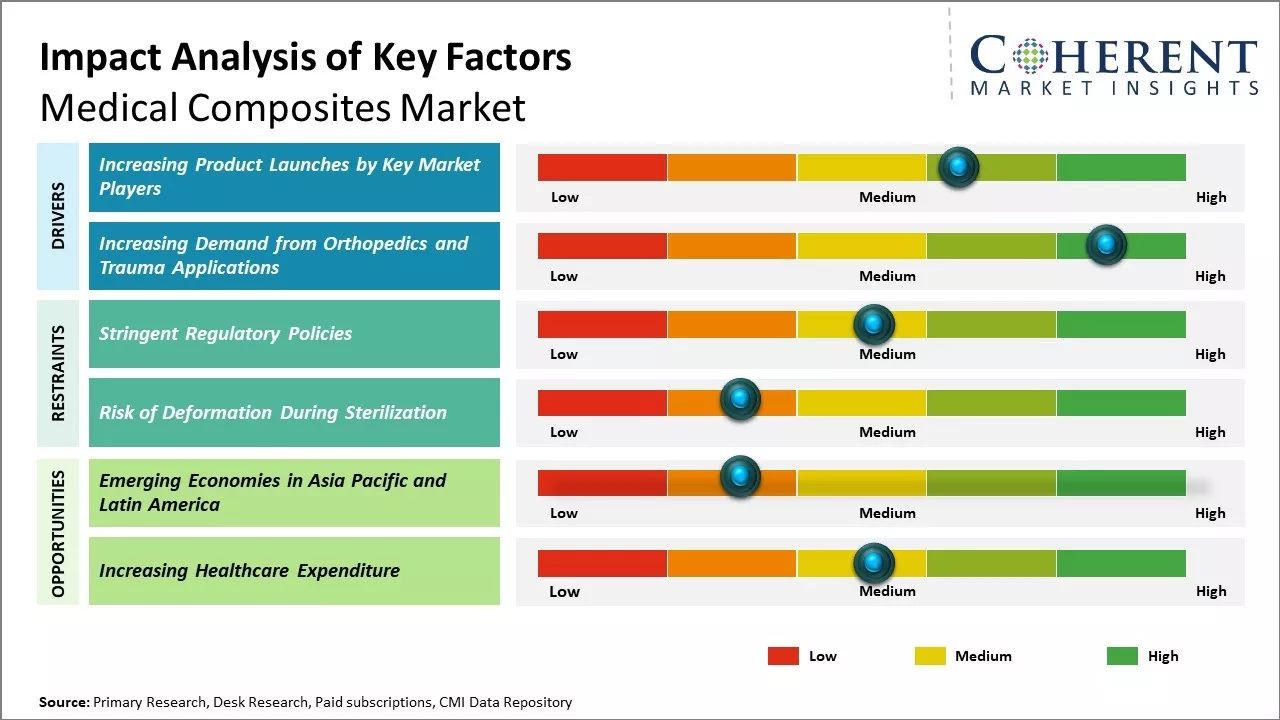
The medical composites market has witnessed steady growth driven by increasing demand for medical implants and devices. Key factors, such as the rising geriatric population susceptible to various medical ailments, the growing number of trauma & accident cases, and the increasing focus on the development of advanced lightweight medical implants, have boosted the demand for medical composites. Additionally, medical composites provide benefits such as biocompatibility, sterilizability, durability, and the ability to mimic human tissues, which has further enhanced their adoption in the healthcare industry. With ongoing technological advancements, the medical composites market is expected to flourish during the forecast period.
Increasing Product Launches by Key Market Players
The increasing adoption of organic growth strategies, such as product launches by key market players, is expected to drive the market growth over the forecast period. For instance, in October 2023, Superior Polymers, Magnolia Trinity PEEK, a combination of three biomaterials: carbon fiber, hydroxyapatite, and polyether ether ketone, for use in medical devices such as orthopedic implants or surgical instruments. This is further contributing to the medical composites market share.
Increasing Demand from Orthopedics and Trauma Applications
Medical composites are increasingly being used in load-bearing implants such as hips and knees due to their high strength-to-weight ratio. Composite materials provide surgeons with flexibility in designing implants precisely suited for individual patient anatomy, which helps improve implant fixation and longevity. This has led to superior clinical outcomes and higher patient satisfaction levels. Moreover, composites offer design advantages over metal implants, allowing implants to mimic characteristics of natural bone more closely. This results in reduced stress shielding effects and enhances bone regeneration around implants over the long term. Composites are also becoming the material of choice for components in trauma fixation devices such as plates, screws, and rods. Their elastic modulus, being closer to bone modulus compared to stainless steel and titanium, helps reduce stress problems often associated with stiff metal implants. At the same time, advanced fiber reinforced composites offer high tensile strength and resistance to fatigue required in trauma fixation applications, which is further propelling the medical composites market demand.
Analyst Opinion (Expert Opinion)
- Surging demand for advanced prosthetics and orthopedics is reshaping material innovation, as with over 185,000 amputations occurring annually in the U.S. alone, there is a growing demand for lightweight, durable, and biocompatible materials, due to their superior strength-to-weight ratio, which are increasingly replacing traditional materials like metal. Companies like Ottobock and Ossur are actively integrating composite technologies to enhance mobility solutions.
- Miniaturization in diagnostic imaging is accelerating the use of radiolucent composites due to the non-interference of composites with imaging technologies such as MRI and CT scans is driving their adoption in surgical tables, braces, and instruments. For instance, Orthopedic Innovations INC. reported a 32% YoY increase in demand for composite-based surgical instruments, citing improved imaging clarity and reduced patient trauma as key benefits.
- Regenerative medicine and implant innovation are catalyzing composite R&D, with the emergence of bioresorbable composites in tissue engineering applications disrupting traditional implant design. Evonik’s launch of bioresorbable polymer-based composites for cardiovascular scaffolds exemplifies this trend, aligning with clinical trials indicating up to 40% faster healing rates compared to metal-based counterparts.
Speak to the analyst
Want personalized insights?
Take the findings above to one of our principal consultants, or have the report rebuilt around the segments, geographies and competitors you actually track.
Market Segmentation
- Fiber Type Insights (Revenue, USD Bn, 2021 - 2033)
- Carbon Fiber Composites
- Glass Fiber Composites
- Aramid Fiber Composites
- Others
- Application Insights (Revenue, USD Bn, 2021 - 2033)
- Diagnostic Imaging
- Composite Body Implants
- Dental Composites
- Others
- Regional Insights (Revenue, USD Bn, 2021 - 2033)
- North America
- U.S.
- Canada
- Latin America
- Brazil
- Argentina
- Mexico
- Rest of Latin America
- Europe
- Germany
- U.K.
- Spain
- France
- Italy
- Russia
- Rest of Europe
- Asia Pacific
- China
- India
- Japan
- Australia
- South Korea
- ASEAN
- Rest of Asia Pacific
- Middle East
- GCC Countries
- Israel
- Rest of Middle East
- Africa
- South Africa
- North Africa
- Central Africa
- North America
- Key Players Insights
- Toray Industries Inc.
- 3M
- DSM
- Polygon Company
- Compoiflex
- Icotech AG
- Shanghai Cedar Composites Technology Co. Ltd.
- Vermont Composites, Inc.
- Royal Tencate N.V.
- PolyOne Corporation
- Quatro Composite LCC
- Dentsply Sirona
- Ceram Tech GmbH
- Evonik Industries AG
Sources
Primary Research
Interviews from the following stakeholders
Stakeholders
Interviews were conducted with clinical operations managers, regulatory affairs directors, business development heads, project managers, medical monitors, R&D directors, pharmacovigilance heads, supply chain leaders, and procurement managers involved in the development, clinical evaluation, site operations, and commercialization of composite-based medical devices and materials across orthopedics, dental, cardiovascular, neurological, and minimally invasive therapeutic domains.
Databases
- ClinicalTrials.gov – Registered Trials for Composite-Based Devices
- U.S. FDA – 510(k), PMA, and De Novo Filings for Medical Devices
- European Commission EUDAMED – Notified Body and Regulatory Filings
- WHO Global Medical Device Nomenclature (GMDN) Database
- Japan PMDA – Medical Device Submissions and Review Summaries
- India CDSCO – Device Registrations and Import Approvals
- China NMPA – Approved Composite Devices and Import Data
Magazines
- Medical Device and Diagnostic Industry (MD+DI)
- Medical Plastics News
- CompositesWorld
- Medical Design & Outsourcing
- Orthopedic Design & Technology (ODT)
- Today's Medical Developments
Journals
- Journal of Biomedical Materials Research
- Composites Part B Engineering
- Journal of Materials Science Materials in Medicine
- Advanced Healthcare Materials
- Journal of the Mechanical Behavior of Biomedical Materials
- Journal of Biomedical Engineering
Newspapers
- The Economic Times – Medical Devices & Technology Section
- Business Standard – Life Sciences and Innovation News
- The Hindu BusinessLine – Healthcare Manufacturing and Exports
- Reuters – Global Medical Device and Materials Market News
- Financial Times – Medtech & Materials Innovation Coverage
Associations
- U.S. FDA – Center for Devices and Radiological Health (CDRH)
- European Medicines Agency (EMA) – Device and Combination Product Guidance
- Indian Medical Device Industry (AiMeD)
- Association of Indian Medical Device Industry (AIMED)
- ISO and ASTM – Composite Materials and Biocompatibility Standards
- International Society for Biomedical Polymers and Polymeric Biomaterials (ISBPPB)
- World Health Organization (WHO) – Global Model Regulatory Framework
Public Domain Sources
- Ministry of Health & Family Welfare (India) – Medical Device Rules, GSR Notifications
- WHO Global Observatory on Medical Devices
- U.S. NIH – Biomedical Device Grants and Funding Data
- European Commission – Horizon Europe Biomedical Materials Projects
- OECD – Medical Technology and Biocomposite Innovation Data
- UNCTAD – Global Trade and Export Data for Medical Devices
Proprietary Elements
In-house analytics via CMI Data Analytics Tool and proprietary CMI repository, including benchmarking dashboards, innovation mapping for composite materials in healthcare, device launch timelines, material regulatory pathways, reimbursement evolution logs, and surgeon/end-user feedback intelligence collected and curated over the past 8+ years.
*Definition: Medical composites offer key benefits like biocompatibility, corrosion resistance, lightweight strength, and customizable designs tailored for specific medical applications. The market involves companies producing carbon fiber, glass fiber, polyethylene, and other composite materials used in devices like diagnostic imaging systems, orthopedic implants, biosensors, and other medical tools and equipment where durability, strength, and biocompatibility are important considerations.
Get access to 250+ pages report
Every segment, forecast, competitor profile and data table behind the analysis above — available for instant download.
- ESOMAR Member
- ISO 9001:2015 Certified
- D-U-N-S Registered
- GDPR & CCPA Compliant
Missing comfort of reading report in your local language? Find your preferred language:
Transform your Strategy with Exclusive Trending Reports
Frequently Asked Questions
The Medical Composites Market is estimated to be valued at USD 1.49 Bn in 2026, and is expected to reach USD 2.94 Bn by 2033.
The CAGR of the Medical Composites Market is projected to be 10.2% from 2026 to 2033.
Increasing product launches by key market players and increasing demand from orthopedics and trauma applications are the major factors driving the growth of the medical composites market.
Stringent regulatory policies and the risk of deformation during sterilization are the major factors hampering the growth of the medical composites market.
In terms of fiber type, carbon fiber composites are estimated to dominate the market revenue share in 2026.
Toray Industries Inc., 3M, DSM, Polygon Company, Compoiflex, Icotech AG, Shanghai Cedar Composites Technology Co. Ltd., Vermont Composites, Inc., Royal Tencate N.V., PolyOne Corporation, Quatro Composite LCC, Dentsply Sirona, Ceram Tech GmbH, and Evonik Industries AG are the major players.
North America is expected to lead the medical composites market.