

Joint Pain Injections Market Size and Trends Forecast – 2026 - 2033
The joint pain injections market is estimated to be valued at USD 6.28 Bn in 2026 and is expected to reach USD 11.56 Bn by 2033, exhibiting a compound annual growth rate (CAGR) of 9.1% from 2026 to 2033.
Key Takeaways of the Joint Pain Injections Market
- By injection type, the corticosteroid injections segment is estimated to contribute 53.1 % share of the market in 2026.
- By joint type, the knee and ankle segment is estimated to contribute the highest market share of 34.6 % in 2026.
- By distribution channel, the hospital pharmacies segment is estimated to contribute the highest market share of 45.2 % in 2026.
- North America remains the dominant player in the joint pain injections market and is estimated to account for 35.4 % of the global market share in 2026.
Market Overview
The global joint pain injections market is driven by the growing geriatric population globally, who are more prone to joint disorders. Rising awareness about non-invasive treatments is also augmenting the demand for joint injections. Furthermore, innovations in injection materials like hyaluronic acid and platelet rich plasma are expanding the treatment landscape and clinician confidence in non-surgical options.
However, risks of injection such as infections and allergic reactions pose challenges to market growth.
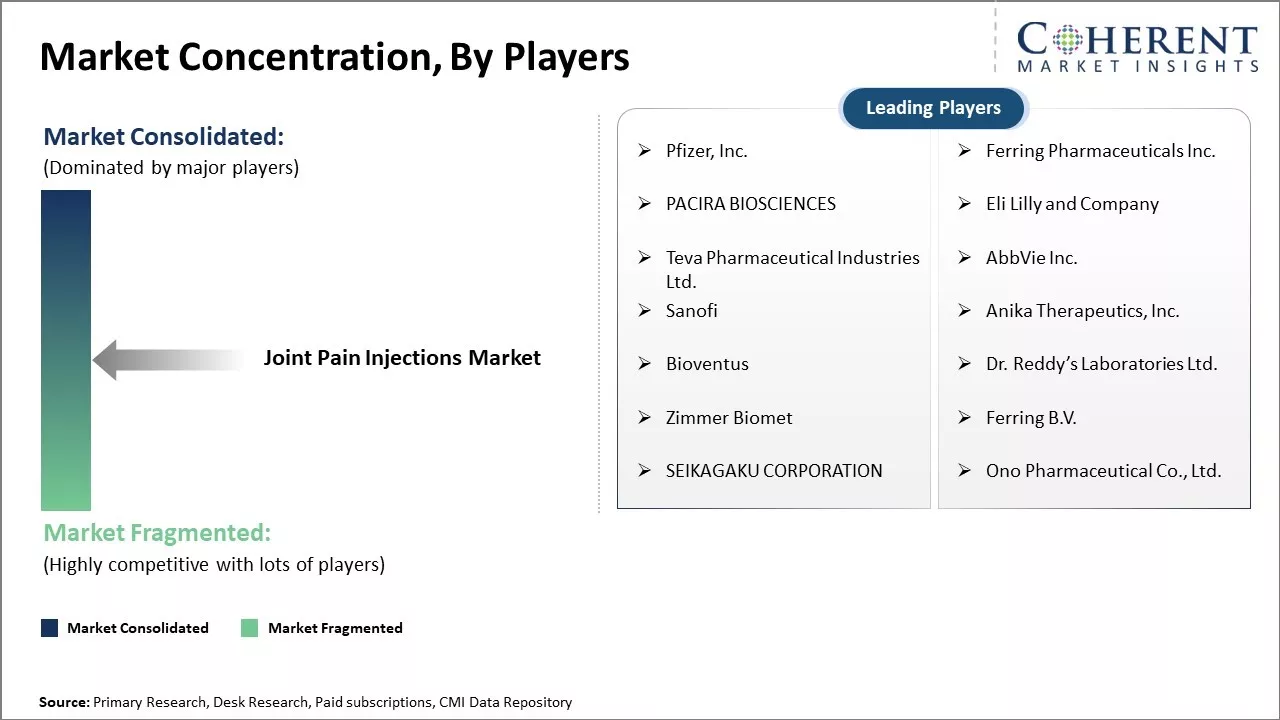
Market Concentration and Competitive Landscape
Current Events and Its Impact
Current Events | Description and its impact |
Pharmaceutical Trade and Tariff Dynamics |
|
Industry Consolidation and Investment Trends |
|
- Current Industry Events of 2026
- Market Size Estimation
- Regional Breakdown
- Competitive Landscape
- Customer Intelligence
- Segmental Analysis
- Pricing Analysis
- Key Market Drivers, Challenges & Future Trends
- Customized Insights Section
Market Trends
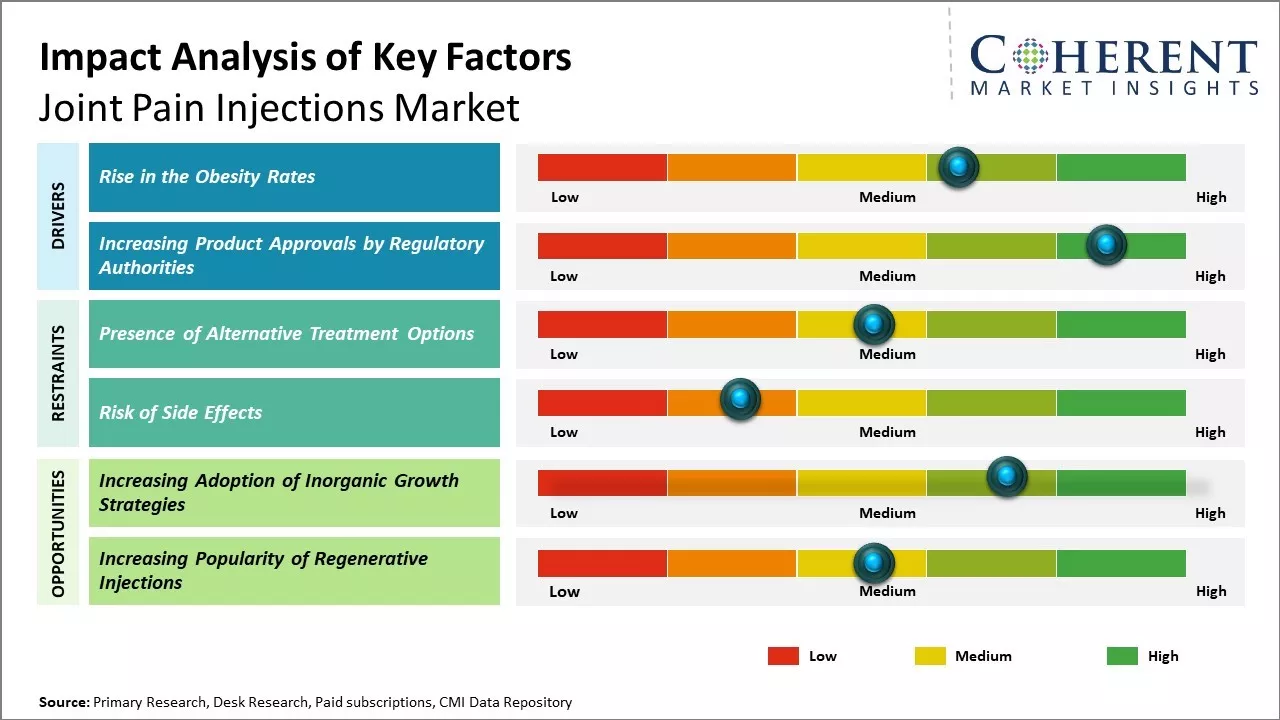
Rise in the Obesity Rates
The increasing prevalence of obesity has become a major public health issue globally and is seen as one of the key factors contributing to the rising knee osteoarthritis disease rates. Obese and overweight populations are at a much higher risk of developing osteoarthritis of the knee as excess weight places undue pressure and stress on the knee joints over a prolonged period.
For instance, according to a report published by the World Health Organization in May 2025, in 2022, 1 in 8 people in the world were living with obesity. Additionally, over 390 million children and adolescents aged 5–19 years were overweight in 2022, including 160 million who were living with obesity. This growing burden of obesity is expected to significantly increase the global demand for joint pain management solutions, including intra-articular injections for knee osteoarthritis.
Risk of Side Effects
The risk of side effects of joint pain injections is significantly restraining the growth of the global joint pain injections market. Joint pain injections involve administering corticosteroids and other drugs directly into the joints to reduce inflammation and pain. Common side effects include increased pain, swelling or bruising at the injection site. In some rare cases, injections can also cause tendon or ligament damage if the drug leaks into surrounding tissues. This is a major concern for patients and doctors alike.
Segmental Insights
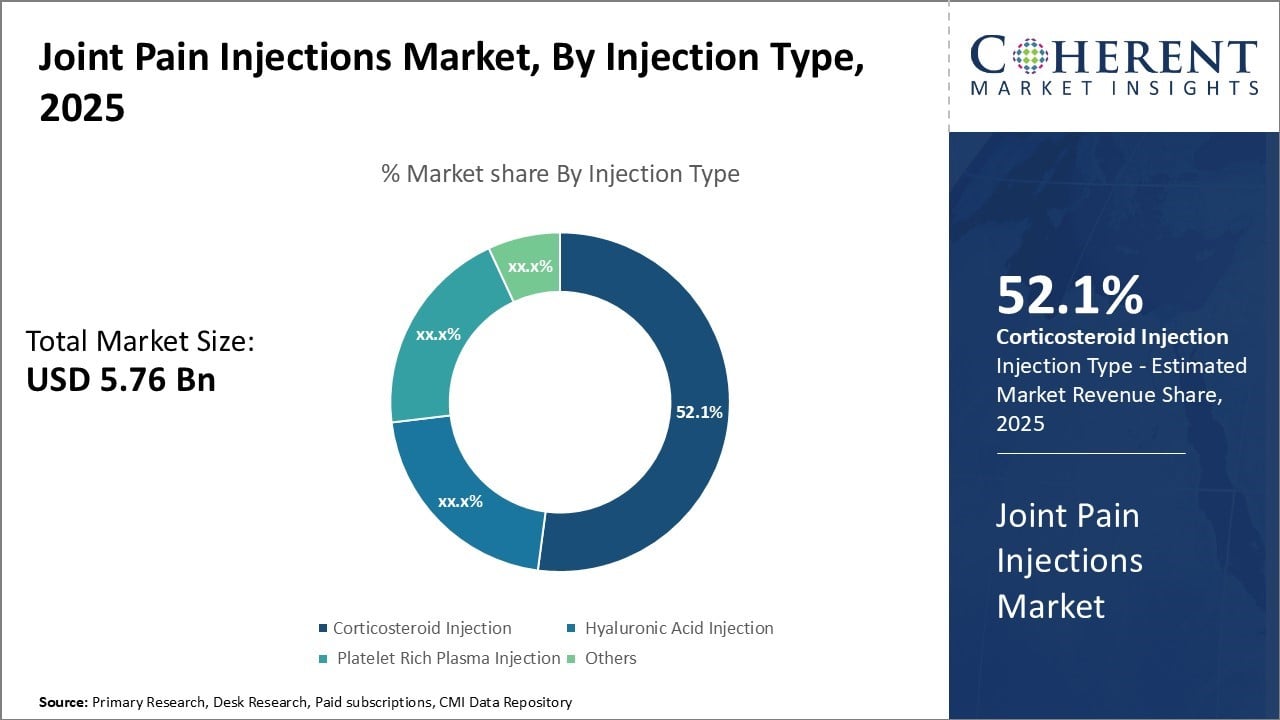
Joint Pain Injections Market Insights, by Injection Type: Corticosteroid Injections Dominate Due to its Low-Inflammatory Property
The injection type segment includes corticosteroid injections, hyaluronic acid injection, platelet rich plasma injection, and others. The corticosteroid injection sub-segment is estimated to hold 53.1% of the market share in 2026, due to their proven effectiveness in reducing inflammation and pain associated with joint disorders.
Corticosteroids such as triamcinolone acetonide work by inhibiting the production of prostaglandins - hormone-like substances that amplify pain signals. By lowering prostaglandin levels, corticosteroids provide swift and significant relief from both stiffness and tenderness in joints affected by conditions like osteoarthritis. Their fast onset of action within a few days of administration, coupled with long lasting effects for 6-8 weeks per injection make corticosteroids highly preferable over other options.
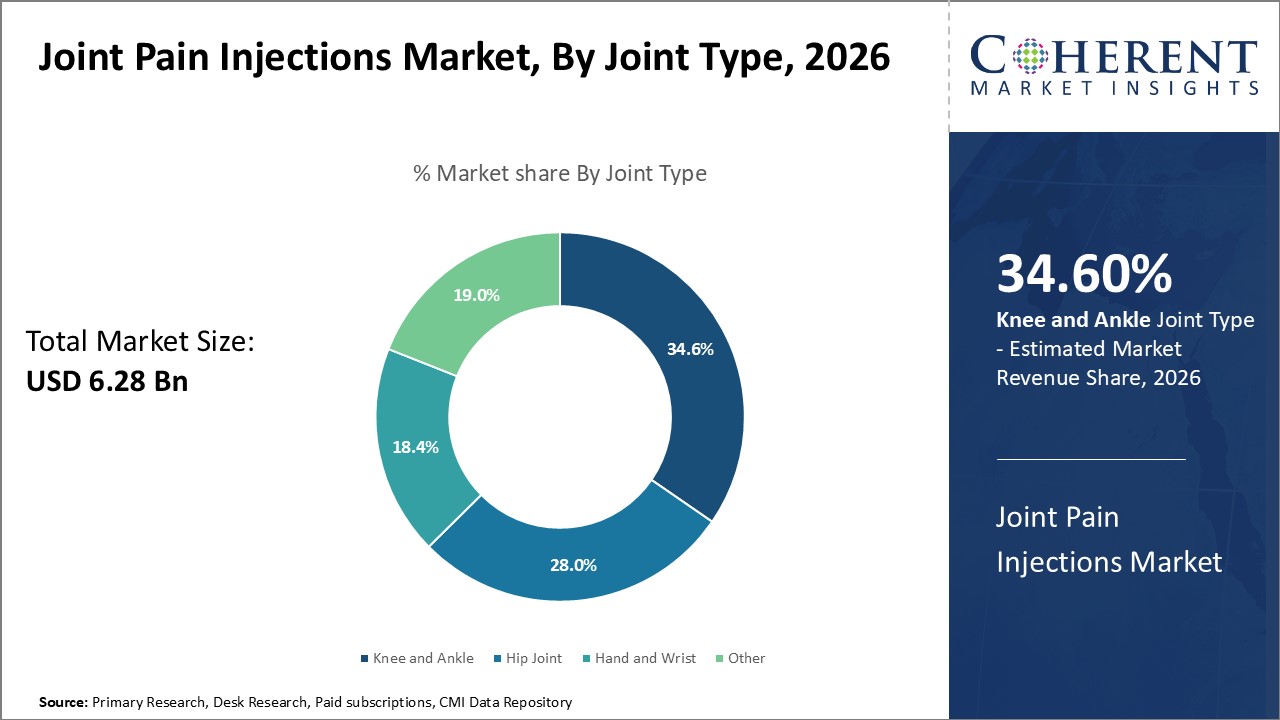
Joint Pain Injections Market Insights, by Joint Type: Knee and Ankle Injections Dominate Due to High Susceptibility and Usage
The joint type segment includes knee and ankle, hip joint, hand and wrist, and others. The knee and ankle sub-segment are estimated to hold 34.6% of the market share in 2026 owing to the higher susceptibility of these joints to damage from mechanical stress and traumatic injuries. Common knee disorders like osteoarthritis, meniscal tears, and bursitis are leading causes of debilitating pain worldwide.
At the same time, ankle sprains and related conditions that compromise ankle joint stability are a widespread concern. Regular overuse of these weight bearing joints through activities of daily living, exercise and sports places them at an elevated risk of degeneration. Therefore, corticosteroid injections are extensively used as the first line of treatment in painful knee and ankle joints to alleviate symptoms and improve mobility.
Joint Pain Injections Market Insights, by Distribution Channel: Hospital Pharmacies Dominate Because They Manage Most Osteoarthritis Treatment Within Hospitals
The distribution channel segment includes hospital pharmacies, retail pharmacies, and online pharmacies. The hospital pharmacies sub-segment is estimated to hold 45.2% of the market share in 2026. Hospital pharmacies serve as an integral distribution channel for knee osteoarthritis drugs, providing direct access to patients undergoing treatment within healthcare facilities.
These pharmacies offer several advantages for distributing such medications. Hospital pharmacies are conveniently located within medical centers, ensuring easy access for patients receiving care for knee osteoarthritis. This proximity enhances patient convenience and compliance with prescribed treatment regimens.
Emerging Innovations in the Joint Pain Injections Market
- Cortisone Shot
- Application: Cortisone, a type of corticosteroid, is often injected to help reduce inflammation and provide pain relief for conditions such as bursitis, tendinitis, and rotator cuff injuries. These injections can provide short-term relief and help patients resume normal activities.
- Knee Gel Injections
- Application: Gel injections are made of hyaluronic acid, a thick substance that mimics the normal cushioning fluid inside your joints. Some insurance plans may cover gel injections, but only for your knee (and sometimes your shoulder). Knee gel injections work well for most knee pain, especially if you have mild to moderate arthritis. The effects generally last 6 to 12 months.
- For instance, Hyaluronate injections have been available in the U.S. for a number of years, but only Gel-One therapy delivers a complete knee pain treatment without surgery using a non-steroid, natural and highly purified single injection to treat knee pain due to osteoarthritis.
Impacts of AI on the Joint Pain Injections Market
Artificial Intelligence is playing a transformative role in the field of joint pain injections by enhancing diagnostic precision, injection accuracy, and personalized treatment planning.
- In June 2025, AIMPLAS develops AI-powered KINESSENSOR system for joint diagnosis and rehabilitation; project enables personalized treatment monitoring for musculoskeletal conditions.
- Koios decision support AI platform assists clinicians with real-time ultrasound interpretation during joint assessments. Enables more accurate needle placement for joint injections (e.g., corticosteroids or hyaluronic acid), particularly in small or complex joints.
Regional Insights
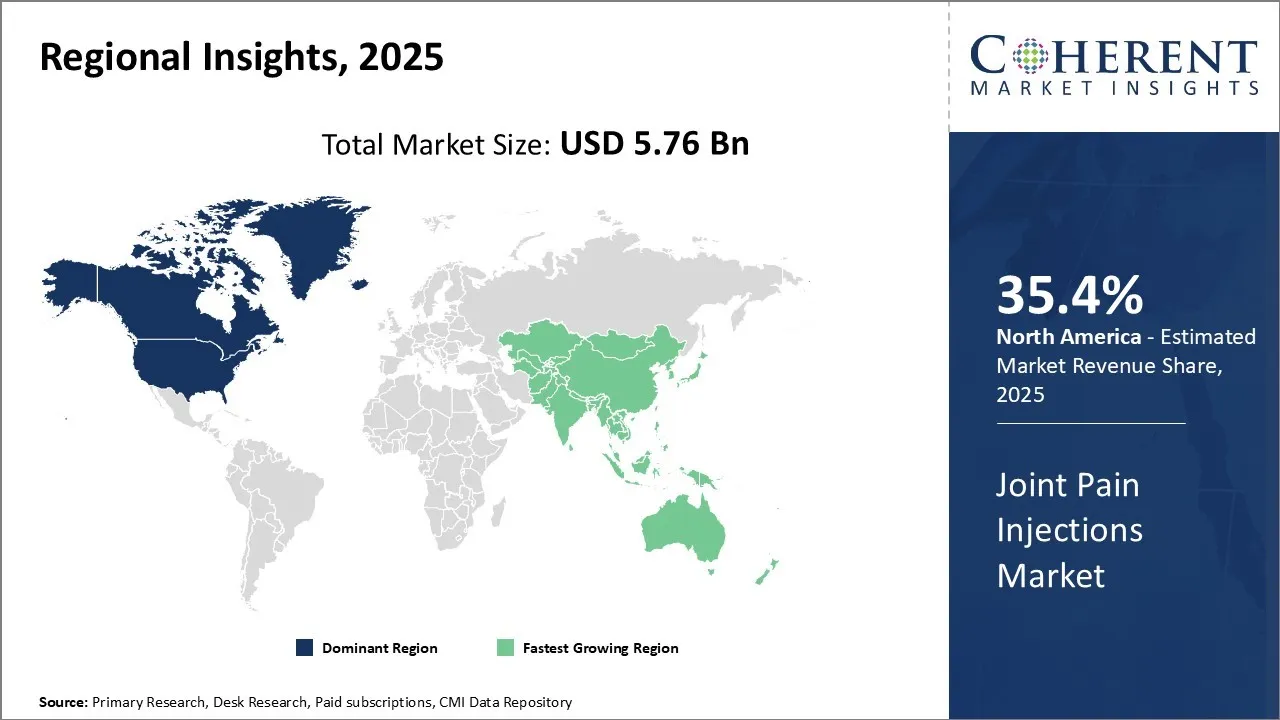
North America Joint Pain Injections Market Analysis and Trends
North America remains the dominant region in the global joint pain injections market and is estimated to hold 35.4% of the market share in 2026 due to early adoption of advanced technologies and growing prevalence of arthritis.
For instance, according to a report published by the Knee Pain Centers of America in February 2026, approximately 25% of adults over the age of 45 in the U.S. experience frequent knee pain.
Asia Pacific Joint Pain Injections Market Analysis and Trends
The Asia Pacific region is emerging as the fastest growing market for joint pain injections in 2026. China and India as the most populated countries are witnessing tremendous increase in geriatric population susceptible to osteoarthritis and other forms of arthritis. This has ramped up the requirement for pain relief measures.
For instance, in June 2026, the Asian Pain Academy successfully conducted another enriching Hands-on workshop on interventional pain management. This intensive four-day training program brought together passionate pain physicians and orthopedic specialists from across the country, all committed to advancing their practical skills in ultrasound-guided and fluoroscopy-guided pain interventions.
Pain Injections Market Outlook for Key Countries
U.S Joint Pain Injections Market Analysis and Trends
The U.S. remains the largest market for joint pain injections, primarily driven by its aging population and the widespread prevalence of osteoarthritis. The growing demand for non-surgical pain management, combined with early adoption of advanced injectable therapies such as hyaluronic acid and corticosteroids, has made the U.S. a hub for both innovation and consumption.
According to the Centers for Disease Control and Prevention (CDC), over 33 million adults in the U.S. suffer from osteoarthritis, with the knee being the most commonly affected joint. The market benefits further from strong insurance coverage and the presence of key pharmaceutical players.
Germany Joint Pain Injections Market Analysis and Trends
Germany leads the Europe joint pain injections market due to its advanced healthcare infrastructure and patient preference for minimally invasive treatment options. With a steadily aging population and increasing obesity rates, the incidence of joint-related disorders, especially knee osteoarthritis, continues to rise.
German clinics increasingly utilize image-guided intra-articular injections and regenerative therapies like platelet-rich plasma (PRP). Additionally, the presence of domestic biopharma firms and early access to CE-marked injectable solutions have solidified Germany’s position as a key driver of European market growth.
India Joint Pain Injections Market Analysis and Trends
India represents one of the fastest-growing joint pain injections markets globally, driven by its rising incidence of osteoarthritis. Meanwhile, increasing healthcare awareness, expanding insurance coverage, and a surge in orthopedic and physiotherapy clinics are enabling more patients to access injectable therapies. Affordable options such as corticosteroid and hyaluronic acid injections are becoming standard treatment in both urban hospitals and semi-urban care centers.
Japan Joint Pain Injections Market Analysis and Trends
Japan’s rapidly aging population—where nearly 30% of citizens are aged 65 or older—is fueling the demand for joint pain interventions that avoid surgery. Japanese patients and physicians show strong acceptance of biologic and regenerative approaches, including stem cell-derived injections and PRP.
The country’s commitment to improving quality of life for elderly patients and reducing long-term care costs is pushing health providers toward early-stage, injectable osteoarthritis solutions. As a result, Japan is emerging as a leading market for next-generation joint pain injectables that promise longer relief and fewer side effects.
Pricing Analysis of the Joint Pain Injections Market
- Treatment Type Breakdown
- Corticosteroid Injections: Average Price (Global): USD 50–150 per injection. Treatment Cycle: Often administered every 3–6 months
- Hyaluronic Acid (Viscosupplementation)
- Average Price: USD 300–800 per injection (knee). Treatment Cycle: Typically, 1–3 injections per course; lasts up to 6 months
- Stem Cell Injections (Emerging)
- Average Price: USD 2,000–5,000 per injection. Treatment Cycle: Typically, once per affected joint; effects last 6–12 months or longer.
Market Report Scope
Joint Pain Injections Market Report Coverage
| Report Coverage | Details | ||
|---|---|---|---|
| Base Year: | 2025 | Market Size in 2026: | USD 6.28 Bn |
| Historical Data for: | 2020 To 2024 | Forecast Period: | 2026 To 2033 |
| Forecast Period 2026 to 2033 CAGR: | 9.1% | 2033 Value Projection: | USD 11.56 Bn |
| Geographies covered: |
| ||
| Segments covered: |
| ||
| Companies covered: | Pfizer, Inc., Ferring Pharmaceuticals Inc., PACIRA BIOSCIENCES, Eli Lilly and Company, Teva Pharmaceutical Industries Ltd., AbbVie Inc., Sanofi, Anika Therapeutics, Inc., Bioventus, Dr. Reddy’s Laboratories Ltd., Zimmer Biomet, Ferring B.V., SEIKAGAKU CORPORATION, and Ono Pharmaceutical Co., Ltd. | ||
| Growth Drivers: |
| ||
| Restraints & Challenges: |
| ||
Joint Pain Injections Industry News
- In June 2025 Pfizer announced Positive Topline Phase 3 Results for HYMPAVZI in Hemophilia A or B with Inhibitors. The study demonstrates superiority, showing both statistically significant and clinically meaningful reduction in annualized bleeding rate with a generally well-tolerated safety profile compared to on-demand treatment in patients 12 years and older
- In April 2025, Pacira BioSciences announced two-year efficacy data following a Single Local Administration of PCRX-201 in patients with mild to severe osteoarthritis of the knee.
- In June 2025, Eli Lilly and Company announced that the U.S. Food and Drug Administration (FDA) approved a label update for Amyvid (florbetapir F 18 injection) for intravenous use. Amyvid is used for brain imaging to estimate amyloid plaque density in patients with cognitive impairment being evaluated for Alzheimer’s disease and other causes of cognitive decline.
- In February 2025, Teva Pharmaceuticals, a U.S. affiliate of Teva Pharmaceutical Industries Ltd., and Alvotech announced the availability of SELARSDI (ustekinumab-aekn) injection in the U.S., a biosimilar to Stelara (ustekinumab), for the treatment of psoriatic arthritis, plaque psoriasis, Crohn’s disease, ulcerative colitis, pediatric plaque psoriasis, and pediatric psoriatic arthritis.
Analyst View
- The joint pain injections market is undergoing a significant transformation driven by an aging population, increasing prevalence of osteoarthritis, and growing patient preference for non-surgical pain management solutions.
- Corticosteroids and hyaluronic acid remain widely used, but there's a noticeable shift toward regenerative therapies such as platelet-rich plasma (PRP) and stem cell injections, which are increasingly seen as premium alternatives offering longer-lasting relief. This shift is driven not only by rising patient demand but also by improved clinical data and broader acceptance within orthopedic and sports medicine communities.
- Moreover, analysts highlight the role of technology integration, particularly AI-guided imaging and robotic-assisted injection systems, which are enhancing precision and reducing variability in outcomes. This tech-driven evolution is expected to expand the market into outpatient and primary care settings, making advanced therapies more accessible.
Speak to the analyst
Want personalized insights?
Take the findings above to one of our principal consultants, or have the report rebuilt around the segments, geographies and competitors you actually track.
Market Segmentation
- Injection Type Insights (Revenue, USD Billion, 2021 - 2033)
- Corticosteroid Injection
- Hyaluronic Acid Injection
- Platelet Rich Plasma Injection
- Others
- Joint Type Insights (Revenue, USD Billion, 2021 - 2033)
- Knee and Ankle
- Hip Joint
- Hand and Wrist
- Other
- Distribution Channel Insights (Revenue, USD Billion, 2021 - 2033)
- Hospital Pharmacies
- Retail Pharmacies
- Online Pharmacies
- Regional Insights (Revenue, USD Billion, 2021 - 2033)
- North America
- U.S.
- Canada
- Latin America
- Brazil
- Argentina
- Mexico
- Rest of Latin America
- Europe
- Germany
- U.K.
- Spain
- France
- Italy
- Russia
- Rest of Europe
- Asia Pacific
- China
- India
- Japan
- Australia
- South Korea
- ASEAN
- Rest of Asia Pacific
- Middle East
- GCC Countries
- Israel
- Rest of Middle East
- Africa
- South Africa
- North Africa
- Central Africa
- Key Players Insights
- Pfizer, Inc.
- Ferring Pharmaceuticals Inc.
- PACIRA BIOSCIENCES
- Eli Lilly and Company
- Teva Pharmaceutical Industries Ltd.
- AbbVie Inc.
- Sanofi
- Anika Therapeutics, Inc.
- Bioventus
- Dr. Reddy’s Laboratories Ltd.
- Zimmer Biomet
- Ferring B.V.
- SEIKAGAKU CORPORATION
- Ono Pharmaceutical Co., Ltd.
Sources
Primary Research Interviews
- Joint Pain Injection Manufacturers (e.g., AbbVie (Botox), Sanofi, Bioventus, Zimmer Biomet, Seikagaku Corporation)
- Orthopedic Surgeons and Sports Medicine Physicians
- Rheumatologists and Pain Management Specialists
- Hospital Procurement Heads and Clinic Administrators
- Regulatory Experts from Food and Drug Administration (FDA), EMA, and Local Health Agencies
Magazines
- Practical Pain Management
- Orthopedics Today
- MedEsthetics Magazine
- Pain Medicine News
- Outpatient Surgery Magazine
- Modern Healthcare
- Others (e.g., PM360, The Rheumatologist)
Journals
- Journal of Pain Research
- Clinical Journal of Pain
- Osteoarthritis and Cartilage
- Journal of Orthopaedic Research
- BMC Musculoskeletal Disorders
- Journal of Clinical Rheumatology
- Others (e.g., Pain Practice, The Lancet Rheumatology)
Newspapers
- The Wall Street Journal (Healthcare & Pharmaceuticals)
- Financial Times (Life Sciences & Biotech)
- The Economic Times (Healthcare & Pharma)
- Business Standard
- New York Times (Health Section)
- Forbes (Healthcare Innovation)
- Others
Associations
- American Academy of Orthopaedic Surgeons (AAOS)
- International Association for the Study of Pain (IASP)
- American College of Rheumatology (ACR)
- International Society for Physical and Rehabilitation Medicine (ISPRM)
- World Institute of Pain (WIP)
- Others (e.g., Osteoarthritis Research Society International - OARSI)
Public Domain Sources
- U.S. Food and Drug Administration (FDA) – drug and device approvals
- European Medicines Agency (EMA)
- Centers for Medicare & Medicaid Services (CMS) – reimbursement trends
- World Health Organization (WHO) – musculoskeletal disease data
- Eurostat – chronic disease and health expenditure statistics
- United Nations Comtrade Database – pharmaceutical trade data
- World Bank Open Data – global healthcare access indicators
- Others
Proprietary Elements
- CMI Data Analytics Tool – Joint Pain Injections Market
- CMI Existing Repository of Information for the Last 8 Years
*Definition: The joint pain injections are used for intra-articular or periarticular injections to treat pain caused by damaged or inflamed joints, such as osteoarthritis, rheumatoid arthritis, gout, or other forms of arthropathy. Common injection treatments in this market include corticosteroids, visco supplementation products made from hyaluronic acid or platelet-rich plasma injections to relieve pain and maximize joint mobility for patients suffering from joint disorders.
Get access to 250+ pages report
Every segment, forecast, competitor profile and data table behind the analysis above — available for instant download.
- ESOMAR Member
- ISO 9001:2015 Certified
- D-U-N-S Registered
- GDPR & CCPA Compliant
Missing comfort of reading report in your local language? Find your preferred language:
Transform your Strategy with Exclusive Trending Reports
Frequently Asked Questions
The joint pain injections market is estimated to be valued at USD 6.28 Billion in 2026, and is expected to reach USD 11.56 Billion by 2033.
The CAGR of the joint pain injections market is projected to be 9.1% from 2026 to 2033.
Rise in the obesity rates and increasing product approvals by regulatory authorities are the major factors driving the growth of the joint pain injections market.
Presence of alternative treatment options and risk of side effects are the major factors hampering the growth of the joint pain injections market.
In terms of injection type, corticosteroid injection is estimated to dominate the market revenue share in 2026.
Hyaluronic acid injections can cause mild pain, swelling, redness or itching at the injection site—and in rare cases infection or severe inflammatory reactions—while corticosteroid injections may lead to temporary pain flares, skin thinning, blood sugar spikes, tendon damage, or cartilage deterioration with overuse.
Most health insurance plans—including Medicare—typically cover corticosteroid injections when deemed medically necessary, while coverage for hyaluronic acid (HA) injections varies and often requires prior authorization or proof of failed conservative treatments.