

mTOR Inhibitors Market Size and Forecast: 2026 - 2033
The mTOR Inhibitors Market is estimated to be valued at USD 6.6 Bn in 2026 and is expected to reach USD 8.3 Bn by 2033, exhibiting a compound annual growth rate (CAGR) of 5.8% from 2026 to 2033.
Key Takeaways
- By Drug Type, Everomilus hold the largest market share of 42.2% in 2026 owing to the rising global cancer incidence.
- By Indication, Oncology expected to hold largest market share of 36.6% in 2026 owing to its increasing adoption of targeted cancer therapies.
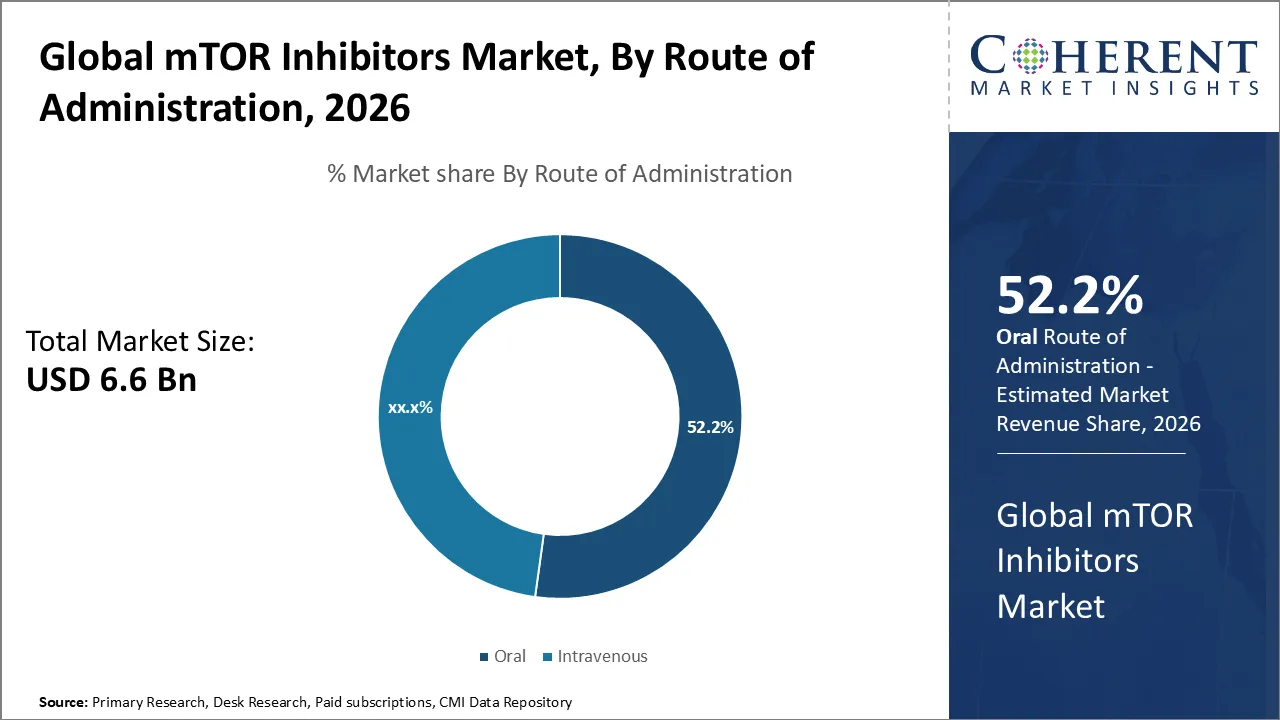
- By Route of Administration, Oral acquired the prominent market share of 52.2% in 2026 owing to the convenience and ease of administration.
- By Distribution Channel, Hospital Pharmacies captures the largest market share of 38.8% in 2026 owing to the high use of mTOR inhibitors in hospital-based treatments.
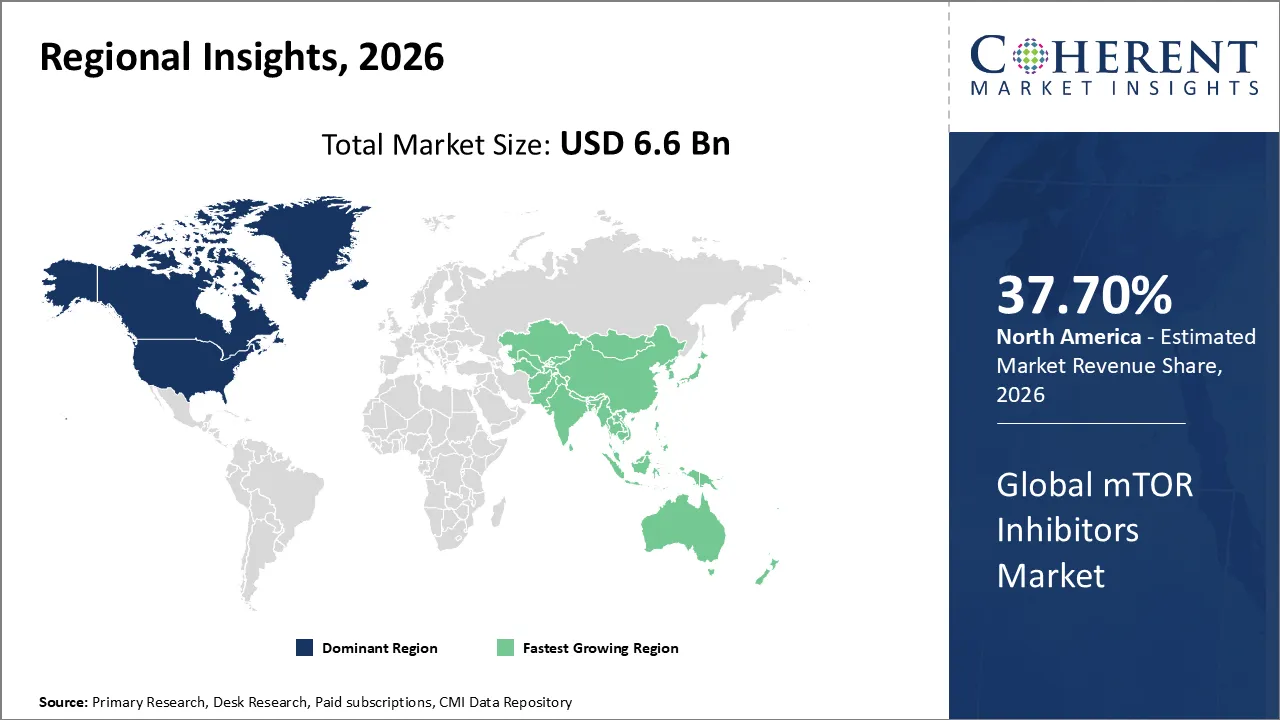
- By Region, North America dominates the overall market with an estimated share of 37.7% in 2026 owing to the strong presence of major pharmaceutical companies.
Market Overview
Researchers and healthcare providers are driving steady growth in the mTOR inhibitors market as cancer prevalence rises and the use of targeted therapies increases. Physicians widely prescribe mTOR inhibitors such as Everolimus, Temsirolimus, and Sirolimus in oncology and organ transplantation to regulate cell growth and control immune responses. Scientists continue to expand research in molecular biology and explore new clinical applications, while the healthcare sector increasingly adopts precision medicine. At the same time, pharmaceutical companies actively develop new drugs and healthcare systems improve infrastructure, which further accelerates the global adoption of mTOR inhibitor therapies.
Current Events and their Impact on the mTOR Inhibitors Market
Current Events | Description and its impact |
Advances in Precision Medicine and Biomarker Development |
|
Regulatory and Reimbursement Policy Changes in Key Regions |
|
Emerging Competition from Next-Generation Therapeutics and Combination Regimens |
|
Segmental Insights
- Current Industry Events of 2026
- Market Size Estimation
- Regional Breakdown
- Competitive Landscape
- Customer Intelligence
- Segmental Analysis
- Pricing Analysis
- Key Market Drivers, Challenges & Future Trends
- Customized Insights Section
mTOR Inhibitors Market Insights, By Route of Administration - Oral contributes the highest share of the market owing to its reduced healthcare costs
Oral acquired the prominent market share of 52.2% in 2026. Patients and clinicians are driving growth in the oral segment of the mTOR inhibitors market by favoring convenient, self-administered therapies. Medications such as Everolimus and Sirolimus enable patients to continue treatment at home, minimizing hospital visits and simplifying long-term therapy management. Healthcare providers actively recommend oral formulations for chronic conditions and post-transplant care, while pharmaceutical companies develop highly bioavailable, patient-friendly options. Together, these factors—convenience, improved adherence, and continuous innovation—are accelerating the adoption of oral mTOR inhibitor therapies. For instance, in March 2025, the phase 1/2 trial of oral zelenirstat (PCLX-001), a first-in-class N-myristoyltransferase inhibitor, has dosed its first patient with relapsed/refractory acute myeloid leukemia (AML) at The University of Texas MD Anderson Cancer Center, building on prior phase 1 trials in solid tumors and non-Hodgkin lymphoma and preclinical anti-AML data.
mTOR Inhibitors Market Insights, By Drug Type - Everomilus contribute the highest share of the market owing to its expansion of drug indications
Everomilus hold the largest market share of 42.2% in 2026. Clinicians are increasing the use of Everolimus, which is driving its demand in the mTOR inhibitors market. Oncologists commonly prescribe the drug to treat conditions such as renal cell carcinoma and hormone-receptor-positive breast cancer, strengthening its role in targeted therapy. Hospitals also administer it after organ transplantation to regulate immune responses and help prevent rejection. Researchers continue to conduct clinical trials while healthcare providers expand patient access to targeted treatments, and this growing awareness of pathway-based cancer therapy is accelerating the adoption of Everolimus. For instance, in October 2025, Natco Pharma has launched 1 mg Everolimus tablets, a generic version of Novartis’ Zortress, in the immunosuppressant therapeutic class.
mTOR Inhibitors Market Insights, By Indication - Oncology contributes the highest share of the market owing to its expanding clinical applications in multiple cancer types
Oncology expected to hold largest market share of 36.6% in 2026. Healthcare providers are actively driving the growth of the oncology segment in the mTOR inhibitors market by increasingly adopting pathway-targeted treatments for complex cancers. Doctors commonly prescribe mTOR inhibitors like Everolimus and Temsirolimus to treat conditions such as renal cell carcinoma and neuroendocrine tumors. Clinicians rely on biomarker-based diagnostics to identify patients who will benefit most from these therapies. Meanwhile, pharmaceutical companies develop combination regimens and new oncology indications, and hospitals expand specialized cancer programs, collectively reinforcing the importance of mTOR inhibitors in contemporary oncology care. For instance, in January 2025, Kazia Therapeutics Limited, an oncology-focused drug development company, received regulatory approval and initiated a clinical trial to evaluate the combination of paxalisib and immunotherapy in patients with advanced breast cancer.
mTOR Inhibitors Market Insights, By Distribution Channel - Hospital Pharmacies contribute the highest share of the market owing to its growth in organ transplant procedures
Hospital Pharmacies captures the largest market share of 38.8% in 2026. Hospital pharmacies actively drive growth in the mTOR inhibitors market by functioning as the main distribution channel for specialized therapies. Clinicians depend on these pharmacies to supply drugs such as Everolimus and Temsirolimus for oncology and post-transplant treatments, ensuring accurate dosing and careful monitoring. Hospitals provide the necessary infrastructure for safe storage, preparation, and administration of these medications. At the same time, the rising number of cancer treatments and organ transplants, supported by skilled pharmacy staff, enhances the availability and use of mTOR inhibitors through hospital pharmacies.
Regional Insights
North America mTOR Inhibitors Market Trends
North America dominates the overall market with an estimated share of 37.70% in 2026. Healthcare providers in North America are actively driving the mTOR inhibitors market by increasingly adopting targeted therapies for cancer and transplant care. Pharmaceutical companies are developing new formulations, including oral and combination therapies, and conducting research to meet growing clinical demand. Hospitals and specialized treatment centers are expanding patient access, leveraging advanced healthcare infrastructure and skilled professionals. Meanwhile, rising awareness of precision medicine and proactive regulatory support for innovative oncology and immunosuppressive treatments are shaping market trends and accelerating the adoption of mTOR inhibitors across the region. For instance, in November 2025, Hyderabad-based NATCO Pharma has launched the immunosuppressant generic Everolimus, an mTOR inhibitor used to prevent organ rejection in adult kidney and liver transplant patients, in the United States.
Europe mTOR Inhibitors Market Trends
Healthcare providers across Europe are actively expanding the mTOR inhibitors market by integrating targeted therapies into oncology and transplant treatment protocols. Pharmaceutical companies are developing and launching new drugs and formulations, including oral and combination therapies, to meet diverse patient needs. Hospitals and specialty clinics are increasing patient access by leveraging advanced infrastructure and skilled medical staff. At the same time, rising awareness of precision medicine, along with supportive regulations and ongoing clinical research, is accelerating the adoption of mTOR inhibitors and establishing Europe as a leading region for innovative targeted therapies. For instance, Novartis announced that the EMA’s CHMP issued a positive opinion for Votubia (everolimus) dispersible tablets as an adjunctive treatment for patients aged two and older with TSC-related refractory partial-onset seizures.
United States mTOR Inhibitors Market Trends
Clinicians in the United States are actively driving the mTOR inhibitors market by increasingly using targeted therapies for cancer and post-transplant care. Biopharmaceutical companies are developing and launching novel oral and combination formulations while conducting clinical trials to expand indications and enhance treatment outcomes. Leading hospitals and specialty centers are improving patient access through advanced infrastructure and skilled healthcare professionals. At the same time, growing focus on precision medicine, along with supportive FDA regulations and heightened awareness of pathway-specific therapies, is accelerating the adoption of mTOR inhibitors, positioning the U.S. as a key hub for innovative targeted treatments. For instance, in March 2025, Faeth Therapeutics and The GOG Foundation have dosed the first patient in their Phase 2 trial combining PIKTOR—FTH-001 (serabelisib) and FTH-003 (sapanisertib)—with paclitaxel, exploring dual PI3Kɑ-mTORC1/2 inhibition in endometrial cancer.
United Kingdom mTOR Inhibitors Market Trends
Healthcare providers across the United Kingdom are actively driving growth in the mTOR inhibitors market by integrating targeted therapies into cancer treatment and post-transplant care. Pharmaceutical companies are developing and launching new oral and combination formulations while conducting clinical studies to expand their therapeutic use. Hospitals and specialized clinics are enhancing patient access through advanced infrastructure and skilled healthcare staff. At the same time, rising awareness of precision medicine, combined with supportive guidance from regulators like the MHRA, is accelerating the adoption of mTOR inhibitors, establishing the U.K. as an emerging hub for innovative targeted therapies.
End-user Feedback and Unmet Needs in the mTOR Inhibitors Market
- Need for Improved Safety and Tolerability: Patients and clinicians report side effects such as fatigue, mouth ulcers, and immunosuppression with mTOR inhibitors. End-users seek therapies that maintain efficacy while reducing adverse events. Pharmaceutical companies are challenged to develop formulations or combination regimens that improve patient comfort and adherence without compromising therapeutic outcomes.
- Demand for Oral and Convenient Formulations: Healthcare providers and patients express preference for oral therapies over intravenous options to reduce hospital visits and simplify long-term treatment. There is an unmet need for highly bioavailable, patient-friendly oral mTOR inhibitors that support self-administration while ensuring consistent therapeutic levels and efficacy across oncology and transplant indications.
- Access to Targeted Therapy Across Regions: End-users highlight limited availability of mTOR inhibitors in certain regions or hospitals, especially for rare cancers or transplant indications. Patients and providers emphasize equitable access to advanced therapies, along with improved reimbursement policies and distribution channels that enable broader, timely treatment options.
mTOR Inhibitors Market Trend
Shift Toward Targeted Oncology Therapies
Healthcare providers increasingly prefer targeted therapies like mTOR inhibitors over traditional chemotherapy for cancer management. Drugs such as Everolimus and Temsirolimus are gaining traction in treating renal cell carcinoma, breast cancer, and neuroendocrine tumors. Advances in molecular research and biomarker-based patient selection are enabling clinicians to deliver more personalized treatment plans, improving efficacy and safety. This trend highlights precision medicine as a key driver for adoption of mTOR inhibitors in modern oncology care.
Growth of Oral Formulations
Oral mTOR inhibitors, including Everolimus and Sirolimus, are becoming more popular due to patient convenience and home-based administration. Patients and healthcare providers favor oral therapies to reduce hospital visits, improve adherence, and facilitate long-term management of oncology and post-transplant conditions. Pharmaceutical companies are responding with highly bioavailable, patient-friendly formulations. The trend reflects a broader move toward outpatient care and self-administered therapies, enhancing patient quality of life while maintaining therapeutic effectiveness.
mTOR Inhibitors Market Opportunity
Development of Oral and Patient-Friendly Formulations
Oral mTOR inhibitors present a growing opportunity as patients and providers increasingly prefer convenient, self-administered therapies. Companies can develop highly bioavailable, patient-friendly formulations that reduce hospital visits and improve adherence. Expanding the availability of oral therapies in oncology and post-transplant care can enhance patient quality of life and support broader adoption of mTOR inhibitors across chronic and long-term treatment settings.
Market Report Scope
mTOR Inhibitors Market Report Coverage
| Report Coverage | Details | ||
|---|---|---|---|
| Base Year: | 2025 | Market Size in 2026: | USD 6.6 Bn |
| Historical Data for: | 2020 To 2024 | Forecast Period: | 2026 To 2033 |
| Forecast Period 2026 to 2033 CAGR: | 5.8% | 2033 Value Projection: | USD 8.3 Bn |
| Geographies covered: |
| ||
| Segments covered: |
| ||
| Companies covered: | Novartis AG, Hikma Pharmaceuticals PLC., Par Pharmaceutical, Teva Pharmaceutical Industries Ltd., Dr. Reddy’s Laboratories Ltd., Zydus Cadilla, Pfizer, Inc., Biocon, Alkem Laboratories Ltd., Accord Healthcare Inc., Gland Pharma Ltd., Apotex Inc., and Glenmark Pharmaceuticals Ltd. | ||
| Growth Drivers: |
| ||
| Restraints & Challenges: |
| ||
mTOR Inhibitors Market News
- In February 2026, the Milken Institute’s Science Philanthropy Accelerator for Research and Collaboration (SPARC), in partnership with the Ann Theodore Foundation (ATF), launched the ATF Sarcoidosis Inhibitor of mTOR (SIM) funding program. The initiative will provide up to US$575,000 over two years to support independent biomedical researchers in designing and conducting a Phase 2 investigator-initiated clinical trial evaluating the effectiveness of mTOR inhibitors in treating cutaneous sarcoidosis.
Analyst Opinion (Expert Opinion)
- Analyst opinion on the mTOR inhibitors market must recognize that this segment is no longer defined by broad cancer drug adoption but by nuanced clinical performance and evolving scientific strategy. Leading mTOR inhibitors such as everolimus and temsirolimus have established themselves in targeted oncology regimens, yet their efficacy is tempered by significant toxicity profiles; meta‑analyses report notable rates of hematologic adverse events like anemia and thrombocytopenia in nearly 40% and 33% of patients, respectively, highlighting real‑world tolerability challenges that shape prescribing behavior and limit long‑term adherence.
- Moreover, while everolimus has extended survival in metastatic renal cell carcinoma compared with interferon‑alpha, clinicians increasingly confront resistance mechanisms and competing next‑generation inhibitors that aim to overcome incomplete pathway blockade seen with traditional rapalogs, signaling a shift in therapeutic expectations.
- Market dynamics also reveal that regulatory complexity and safety monitoring requirements do not merely delay approval but influence commercial prioritization, particularly as healthcare systems weigh incremental benefit against toxicity and cost. The most successful companies are those aligning advanced molecular insight with practical clinical value, investing in combination strategies and next‑generation agents capable of addressing both efficacy and safety gaps in precision oncology.
Speak to the analyst
Want personalized insights?
Take the findings above to one of our principal consultants, or have the report rebuilt around the segments, geographies and competitors you actually track.
Market Segmentation
- By Drug Type
- Everomilus
- Temsirolimus
- Siromilus
- By Indication
- Oncology
- Immunosuppressant
- Organ Transplant
- Others
- By Route of Administration
- Oral
- Intravenous
- By Distribution Channel
- Hospital Pharmacies
- Retail Pharmacies
- Online Pharmacies
- By Regional Insights
- North America
- U.S.
- Canada
- Latin America
- Brazil
- Argentina
- Mexico
- Rest of Latin America
- Europe
- Germany
- U.K.
- Spain
- France
- Italy
- Russia
- Rest of Europe
- Asia Pacific
- China
- India
- Japan
- Australia
- South Korea
- ASEAN
- Rest of Asia Pacific
- Middle East
- GCC Countries
- Israel
- Rest of Middle East
- Africa
- South Africa
- North Africa
- Central Africa
- North America
- Key Players Insights
- Novartis AG
- Hikma Pharmaceuticals PLC.
- Par Pharmaceutical
- Teva Pharmaceutical Industries Ltd.
- Reddy’s Laboratories Ltd.
- Zydus Cadilla
- Pfizer, Inc.
- Biocon
- Alkem Laboratories Ltd.
- Accord Healthcare Inc.
- Gland Pharma Ltd.
- Apotex Inc.
- Glenmark Pharmaceuticals Ltd.
Sources
Primary Research interviews
- Interviews with oncologists specializing in targeted therapies
- Discussions with clinical pharmacologists researching mTOR pathways
- Conversations with pharmaceutical R&D professionals involved in drug development
- Feedback from regulatory experts on mTOR inhibitor approvals
- Interviews with hospital formulary decision-makers
Databases
- PubMed database searches for clinical and preclinical studies
- ClinicalTrials.gov registry for ongoing and completed trials
- FDA (U.S. Food and Drug Administration) drug approval database
- EMA (European Medicines Agency) public assessment reports
- WHO (World Health Organization) drug information database
Magazines
- Pharmaceutical Technology
- BioPharma Magazine
- Drug Discovery World
- Genetic Engineering & Biotechnology News (GEN)
- Oncology Times
Journals
- Nature Reviews Drug Discovery
- Journal of Clinical Oncology
- Cancer Research
- Molecular Cancer Therapeutics
- The Lancet Oncology
Newspapers
- The New York Times – Health & Medicine section
- The Guardian – Science and Health section
- The Times of India – Health & Science section
- The Washington Post – Health section
- Financial Times – Healthcare coverage
Associations
- American Association for Cancer Research (AACR)
- European Society for Medical Oncology (ESMO)
- American Society of Clinical Oncology (ASCO)
- International Union Against Cancer (UICC)
- National Cancer Institute (NCI)
Public Domain sources
- U.S. National Institutes of Health (NIH) publications
- World Health Organization (WHO) public reports
- Government health ministry websites and releases
- Patent databases (USPTO, EPO)
- Clinical practice guidelines (e.g., NCCN, ESMO guidelines)
Proprietary Elements
- CMI Data Analytics Tool
- Proprietary CMI Existing Repository of information for last 8 years
Get access to 250+ pages report
Every segment, forecast, competitor profile and data table behind the analysis above — available for instant download.
- ESOMAR Member
- ISO 9001:2015 Certified
- D-U-N-S Registered
- GDPR & CCPA Compliant
Missing comfort of reading report in your local language? Find your preferred language:
Transform your Strategy with Exclusive Trending Reports
Frequently Asked Questions
The mTOR Inhibitors Market is estimated to be valued at USD 6.6 Bn in 2026 and is expected to reach USD 8.3 Bn by 2033.
Novartis AG, Hikma Pharmaceuticals PLC., Par Pharmaceutical, Teva Pharmaceutical Industries Ltd., Dr. Reddy’s Laboratories Ltd., Zydus Cadilla, Pfizer, Inc., Biocon, Alkem Laboratories Ltd., Accord Healthcare Inc., Gland Pharma Ltd., Apotex Inc., and Glenmark Pharmaceuticals Ltd. are some of the prominent players operating in the market.
The market is expected to be valued at USD 8.3 Bn in 2033.
North America is the prominent region in the market
Everolimus, which belongs to the drug type segment, is the prominent segment in the market