

Brazil Enteral Nutrition Market Size and Share Analysis - 2026 To 2033
The Brazil Enteral Nutrition Market size is anticipated to grow at a CAGR of 7% with USD 380.3 Mn in 2026 and is expected to reach USD 609.2 Mn in 2033. The market is growing with the rising chronic disease burden, increasing cancer and stroke cases, expanding home healthcare services, growing hospital nutrition screening, and higher use of disease-specific formulas. According to IBGE, Brazil had 22.2 Mn people aged 65 years and above, representing 10.9% of the population, strengthening demand for clinical nutrition among elderly and chronically ill patients.
Key Takeaways
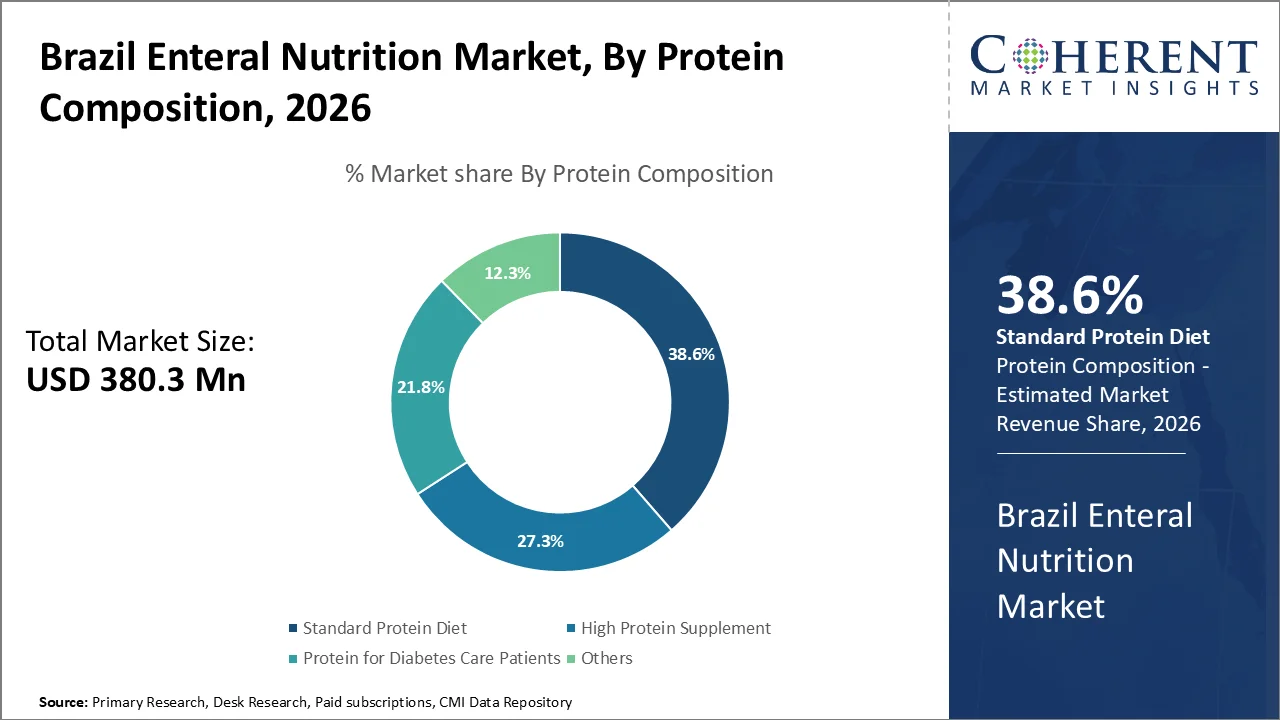
- The standard protein diet segment is projected to account for the largest share of 38.6% in 2026. The segment growth is due to the higher use among elderly, post-surgery, and general malnutrition patients. Brazil’s population aged 60 years and above increased to 16.6% in 2025, supporting demand for routine enteral formulas.
- The nutrition source segment is projected to account for the largest share of 58.4% in 2026. The segment’s growth is attributable to the rising use of enteral nutrition as a primary feeding option for patients unable to meet nutritional needs orally, especially in long-term care and home-based recovery settings.
- The hospitals segment is projected to account for the largest share of 48.2% in 2026. The segment growth is due to the higher patient admissions, critical care nutrition needs, and formal hospital nutrition teams. Brazil had 52.9 Mn medical-plan beneficiaries in March 2026, supporting institutional nutrition demand.
- The ready to drink segment is projected to account for the largest share of 36.7% in 2026. The segment’s growth is attributable to the ease of administration, reduced preparation errors, better hygiene, and suitability for hospitals, nursing care, and home enteral nutrition programs. Public programs in Brazil list nutritional formulas for domiciliary enteral therapy.
Segmental Insights
Which Standard Protein Diet Segment Dominates the Market?
On the basis of protein composition, the standard protein diet segment accounts for the largest Brazil Enteral Nutrition Market share of 38.6% in 2026. The growth of the segment is mainly driven by the wide use as a first-line nutritional support option for patients with general malnutrition, inadequate oral intake, post-surgical recovery, elderly care needs, and chronic disease-related nutritional deficiency. Standard protein formulas are preferred because they provide balanced macro- and micronutrients and also can be used across hospital, home-care, as well as long-term care settings.
According to Danone Nutricia Brazil, Nutri Enteral Soya is a standard enteral and oral nutrition formula that is normocaloric and normoproteic, thereby supporting the broad clinical relevance of standard protein diets. A Brazilian hospital study published in 2025 found high malnutrition levels among patients receiving nutritional support, with 44.1% severely malnourished by SGA and 43.1% severely malnourished by GLIM, thereby strengthening the need for standard nutrition support.
- Current Industry Events of 2026
- Market Size Estimation
- Regional Breakdown
- Competitive Landscape
- Customer Intelligence
- Segmental Analysis
- Pricing Analysis
- Key Market Drivers, Challenges & Future Trends
- Customized Insights Section
Nutrition Source Segment to Secure the Largest Share
On the basis of application, the nutrition source segment accounts for the largest Brazil Enteral Nutrition Market share of 58.4% in 2026. The growth of the segment is mainly driven by the increasing use of enteral nutrition as a complete or primary nutrition source for patients who are unable to meet their nutritional requirements through normal oral intake. This includes patients with cancer, swallowing difficulty, neurological disorders, critical illness, gastrointestinal conditions, and post-surgical recovery needs.
Fresenius Kabi Brazil states that enteral nutrition supplies nutrients through the digestive tract, either orally or through feeding tubes, and is indicated for patients with insufficient oral intake, swallowing difficulties, or increased nutritional requirements.
Which Hospitals Segment Dominates the Market?
On the basis of distribution channel, the hospitals segment accounts for the largest Brazil Enteral Nutrition Market share of 48.2% in 2026. The segment’s growth is owing to the high patient flow, ICU admissions, cancer care, neurological cases, gastrointestinal surgeries, trauma, and prolonged hospital stays. Brazil has a large hospital ecosystem; according to the U.S. International Trade Administration, the country had 7,309 hospitals, 500,253 hospital beds, and 575,930 physicians in 2024.
Hospitals also remain the primary point of diagnosis for disease-related malnutrition. The classic Brazilian IBRANUTRI study found malnutrition in 48.1% of hospitalized patients, including 12.5% severe malnutrition, showing the high clinical relevance of nutrition therapy in inpatient care.
Ready to Drink Segment to Secure the Largest Share
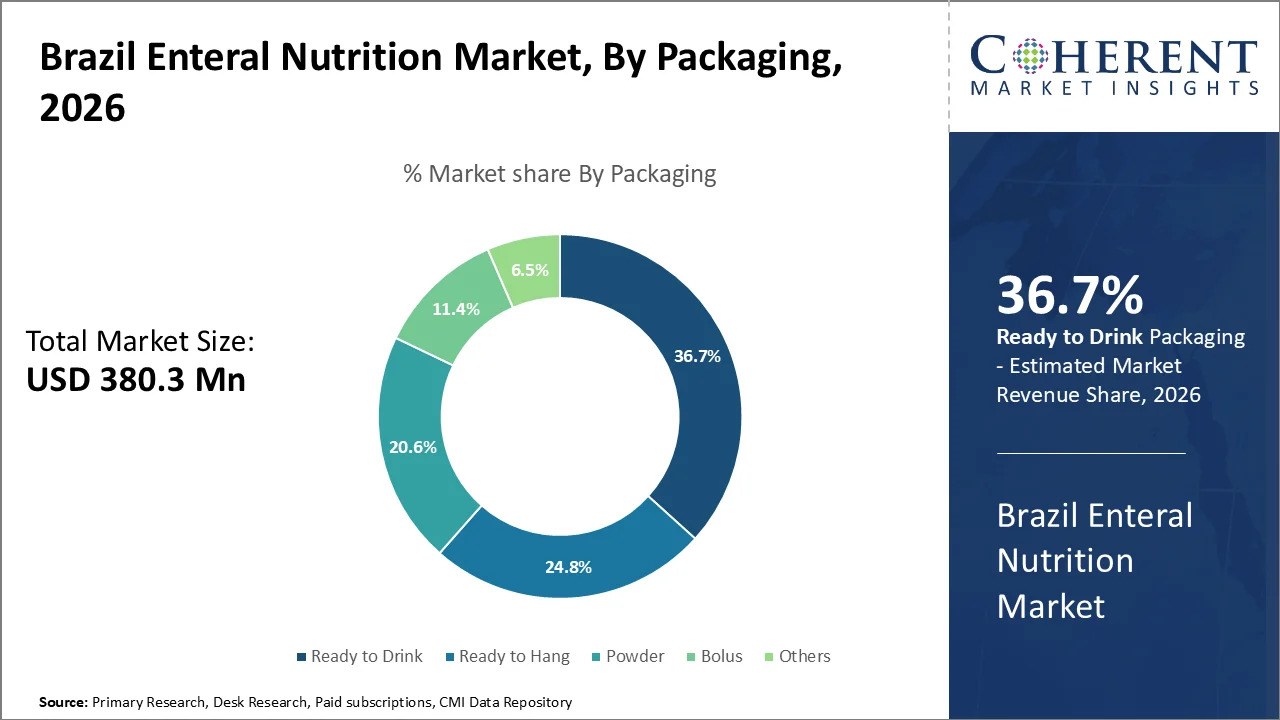
On the basis of packaging, the ready to drink segment accounts for the largest Brazil Enteral Nutrition Market share of 36.7% in 2026. The segment’s growth is owing to the convenience, dosing accuracy, reduced preparation time, lower contamination risk, and suitability for both hospital and home-care use. Ready-to-drink formats are especially useful for elderly patients, oncology patients, renal patients, and caregivers who require easy-to-administer nutritional products.
Nestle Health Science Brazil lists Nutren Control 200 ml as a ready-to-consume product containing 15 g of protein per 200 ml, with fibers, omega-3, vitamins, and minerals. Nestlé’s Novasource REN 200 ml is also listed as a modified formula for enteral and oral nutrition, with 1.5 kcal/ml energy density and 18 g protein per portion, supporting demand for compact ready-to-drink formats.
Market Drivers
Rising Aging and Chronic Disease Burden is Driving Demand for Brazil Enteral Nutrition Market
Brazil’s enteral nutrition demand is closely linked to aging, cancer, neurological conditions, gastrointestinal disorders, and post-surgical recovery. Elderly patients are more likely to experience dysphagia, frailty, sarcopenia, malnutrition, dementia, and chronic disease complications, all of which increase the need for oral nutritional supplements and tube-based feeding.
WHO states that the global population aged 60 years and above is expected to rise from 1.0 billion in 2020 to 1.4 billion by 2030 and 2.1 billion by 2050, indicating a structural rise in clinical nutrition needs worldwide. In Brazil, IBGE reported that the number of people aged 65 years and over grew 57.4% between 2010 and 2022, making aging one of the strongest long-term demand drivers.
This rising aging base supports higher demand for high-protein, fiber-enriched, diabetes-specific, renal-specific, and oncology nutrition formulas. In Brazil, the aging trend is expected to increase both hospital-based enteral nutrition use and long-term home enteral nutrition consumption.
Rising Innovations in Clinical Nutrition are Transforming the Enteral Nutrition Market in Brazil
Brazil’s clinical nutrition market is moving from basic caloric supplementation toward disease-specific, high-protein, fiber-enriched, peptide-based, and home-care-compatible products. This shift is important because hospitals and home-care programs increasingly need standardized formulas that can support malnourished, oncology, diabetic, neurological, and post-surgical patients. Enteral formulas are also being supported by clearer regulatory guidance. ANVISA lists standard enteral nutrition formulas, modified formulas, pediatric formulas, and enteral nutrition modules under RDC 21/2015, which creates a formal product classification structure for manufacturers and importers.
In June 2025, Nestlé Health Science Brazil presented nutrition solutions at Naturaltech 2025, one of Brazil’s major nutrition events, through an interactive stand focused on health and nutrition products. This development supports the wider professional and consumer awareness of specialized nutrition categories and strengthens the visibility of clinical nutrition brands in Brazil. Such company-led engagement is expected to support the adoption of enteral and oral nutritional solutions across hospitals, pharmacies, clinics, as well as home-care channels.
Current Events and Their Impact on the Brazil Enteral Nutrition Market
Current Event | Description and its Impact |
Anvisa’s 2026 Regulatory Review of Foods for Medical Purposes |
|
RDC 976/2025 and IN 367/2025 Composition and Labeling Controls |
|
Brazil Enteral Nutrition Market Trends
- Rising hospital and home-care adoption of enteral nutrition supports patients unable to meet nutritional needs orally, especially elderly, oncology, and neurological patients.
- Demand for ready-to-drink and disease-specific formulas is increasing, improving convenience, dosage accuracy, caregiver handling, and patient compliance.
- Growing prevalence of chronic diseases, cancer, stroke, dysphagia, and age-related malnutrition is strengthening demand for long-term enteral nutrition support. Home enteral nutrition use among older adults in Brazil has increased due to chronic diseases such as neoplasms and neurological disorders.
- Brazil’s rising cancer burden is supporting enteral nutrition demand, as oncology patients often require nutritional therapy during treatment. INCA estimates around 781,000 new cancer cases per year in Brazil during 2026–2028, including 518,000 cases excluding non-melanoma skin cancer.
- Supportive regulatory and public health initiatives are improving market access. ANVISA regulates standard, modified, pediatric, and modular enteral nutrition formulas, while PL 6254/2025 proposes universal SUS access to oral, enteral, and parenteral nutritional therapy.
Who are the Major Companies in Brazil Enteral Nutrition Market
Some of the major key players in Brazil Enteral Nutrition Market are Abbott Laboratories, Prodiet Nutricao Clinica, Nestle S.A., Danone, Royal Friesland Campina, Baxter International Inc., Nutrimed, B. Braun Melsungen AG, Pfizer, Inc., Reckitt Benckiser Group plc, Eurofarma, Nuteral, Fresenius Kabi AG, and Nutricium.
Key News
- In February 2026, representative Weliton Prado (Solidariedade-MG) proposed Bill 6254/25, which establishes the National Policy for Specialized Nutritional Therapy (PNTNE) within Brazil’s Unified Health System (SUS). The initiative aims to ensure universal access to oral, enteral, and parenteral nutrition therapies for patients with chronic diseases, cancer, and malnutrition risks.
- In March 2025, Nutrisens acquired a majority stake in Prodiet Medical Nutrition, a Brazilian manufacturer of oral and enteral nutrition products. The deal expands Nutrisens’ presence in Latin America while supporting cross-selling, innovation, sourcing, and logistics synergies across the region.
Market Report Scope
Brazil Enteral Nutrition Market Report Coverage
| Report Coverage | Details | ||
|---|---|---|---|
| Base Year: | 2025 | Market Size in 2026: | USD 380.3 Mn |
| Historical Data for: | 2020 To 2024 | Forecast Period: | 2026 To 2033 |
| Forecast Period 2026 to 2033 CAGR: | 7% | 2033 Value Projection: | USD 609.2 Mn |
| Geographies covered: |
| ||
| Segments covered: |
| ||
| Companies covered: | Abbott Laboratories, Prodiet Nutrição Clínica, Nestlé S.A., Danone, Royal Friesland Campina, Baxter International Inc., Nutrimed, B. Braun Melsungen AG, Pfizer, Inc., Reckitt Benckiser Group plc, Eurofarma, Nuteral, Fresenius Kabi AG, and Nutricium. | ||
| Growth Drivers: |
| ||
| Restraints & Challenges: |
| ||
Analyst Opinion
- Brazil enteral nutrition market is driven by strong medical need. Hospital malnutrition remains a major concern in the country, with Brazil’s national IBRANUTRI survey reporting malnutrition in 48.1% of hospitalized patients and severe malnutrition in 12.5%. This creates steady demand for enteral formulas in hospitals, ICUs, oncology care, and long-term patient support.
- Aging population is another key growth factor. IBGE data shows Brazil’s population aged 60 years and above increased from 15.2 million in 2000 to 33.0 million in 2023, while their population share rose from 8.7% to 15.6%. This is increasing nutritional-risk cases linked to dysphagia, chronic illness, surgery recovery, stroke, and frailty.
- Competitive growth will be strongest among companies with disease-specific portfolios, ready-to-use formulas, regulatory compliance capacity, and home-care support. ANVISA’s requirements on stability, homogeneity, viscosity, labeling, and formula classification increase the importance of quality assurance and documented product performance.
Speak to the analyst
Want personalized insights?
Take the findings above to one of our principal consultants, or have the report rebuilt around the segments, geographies and competitors you actually track.
Market Segmentation
- By Protein Composition (Revenue, USD Mn, 2021-2033)
- Standard Protein Diet
- High Protein Supplement
- Protein for Diabetes Care Patient
- Others
- By Application (Revenue, USD Mn, 2021-2033)
- Nutrition Source
- Pediatric Nutrition
- Adult and Elderly Nutrition
- Sports Nutrition
- Disease Specific
- Diabetes
- Cancer
- Obesity
- Allergy Management
- Others
- Nutrition Source
- By Distribution Channel (Revenue, USD Mn, 2021-2033)
- Hospitals
- Retail Channel
- Government Institutes and Other Public Institutes
- Online Channel
- By Packaging (Revenue, USD Mn, 2021-2033)
- Ready to Drink
- Ready to Hang
- Powder
- Bolus
- Others
Sources
Primary Research Interviews
- Clinical nutritionists and dietitians
- Gastroenterologists
- Hospital nutrition department heads
- ICU and critical care physicians
- Oncology and geriatric care specialists
- Home healthcare service providers
- Enteral nutrition product manufacturers
- Medical nutrition distributors and suppliers
- Hospital procurement managers
- Key opinion leaders (KOLs) in clinical nutrition
Databases
- World Health Organization (WHO)
- Pan American Health Organization (PAHO)
- Brazilian Health Regulatory Agency (ANVISA)
- Ministry of Health Brazil
- DATASUS
- Brazilian Institute of Geography and Statistics (IBGE)
- Organisation for Economic Co-operation and Development (OECD)
Magazines
- Clinical Nutrition Insight
- Nutrition Today
- Healthcare Business International
- Hospital Healthcare Europe
Journals
- Clinical Nutrition
- Journal of Parenteral and Enteral Nutrition
- Nutrition in Clinical Practice
- Brazilian Journal of Medical and Biological Research
- Revista de Nutrição
Newspapers
- Valor Econômico
- Folha de S.Paulo
- Globo
- The New York Times
- The Guardian
Associations
- Brazilian Society of Parenteral and Enteral Nutrition
- Brazilian Association of Nutrology
- Brazilian Society of Clinical Nutrition
- American Society for Parenteral and Enteral Nutrition
- European Society for Clinical Nutrition and Metabolism
Public Domain Sources
- Company Annual Reports and Investor Presentations
- Government Health Ministry Publications
- ANVISA Regulatory Publications
- Hospital Procurement and Tender Documents
- Clinical Trial Registries Such as ClinicalTrials.gov
- Public Health and Nutrition Policy Documents
Proprietary Elements
- CMI Data Analytics Tool
- Proprietary CMI Existing Repository of Information for the Last 10 Years
Get access to 250+ pages report
Every segment, forecast, competitor profile and data table behind the analysis above — available for instant download.
- ESOMAR Member
- ISO 9001:2015 Certified
- D-U-N-S Registered
- GDPR & CCPA Compliant
Missing comfort of reading report in your local language? Find your preferred language:
Transform your Strategy with Exclusive Trending Reports
Frequently Asked Questions
The Brazil Enteral Nutrition Market is expected to reach USD 609.2 Mn in 2033.
Major players operating in the global Brazil Enteral Nutrition Market include Abbott Laboratories, Prodiet Nutricao Clinica, Nestle S.A., Danone, Royal Friesland Campina, Baxter International Inc., Nutrimed, B. Braun Melsungen AG, Pfizer, Inc., Reckitt Benckiser Group plc, Eurofarma, Nuteral, Fresenius Kabi AG, and Nutricium.
The inadequate public reimbursement structures, lack of medical awareness, stringent government regulations, and device-related complications are the key factors hampering growth of the market.
The surging geriatric population, an escalating incidence of non-communicable chronic diseases (such as cancer and diabetes), and a notable paradigm shift from parenteral to enteral nutrition is boosting demand for Enteral Nutrition.
The Brazil Enteral Nutrition Market is anticipated to grow at a CAGR of 7% between 2026 and 2033.
The standard protein diet segment is expected to account for a largest market share in the Brazil Enteral Nutrition Market over the forecast period.
The market outlook is positive owing to the aging population, a rising prevalence of non-communicable diseases, and a shift toward home healthcare