

Colorectal Cancer Therapeutics Market Size and Trends
The colorectal cancer therapeutics market is estimated to be valued at USD 9.80 Billion in 2026 and is expected to reach USD 13.54 Billion by 2033, exhibiting a compound annual growth rate (CAGR) of 4.7% from 2026 to 2033.
Key Takeaways of the Colorectal Cancer Therapeutics Market
- By therapy type, chemotherapy segment is estimated to contribute the highest market share of 47.4% in 2026.
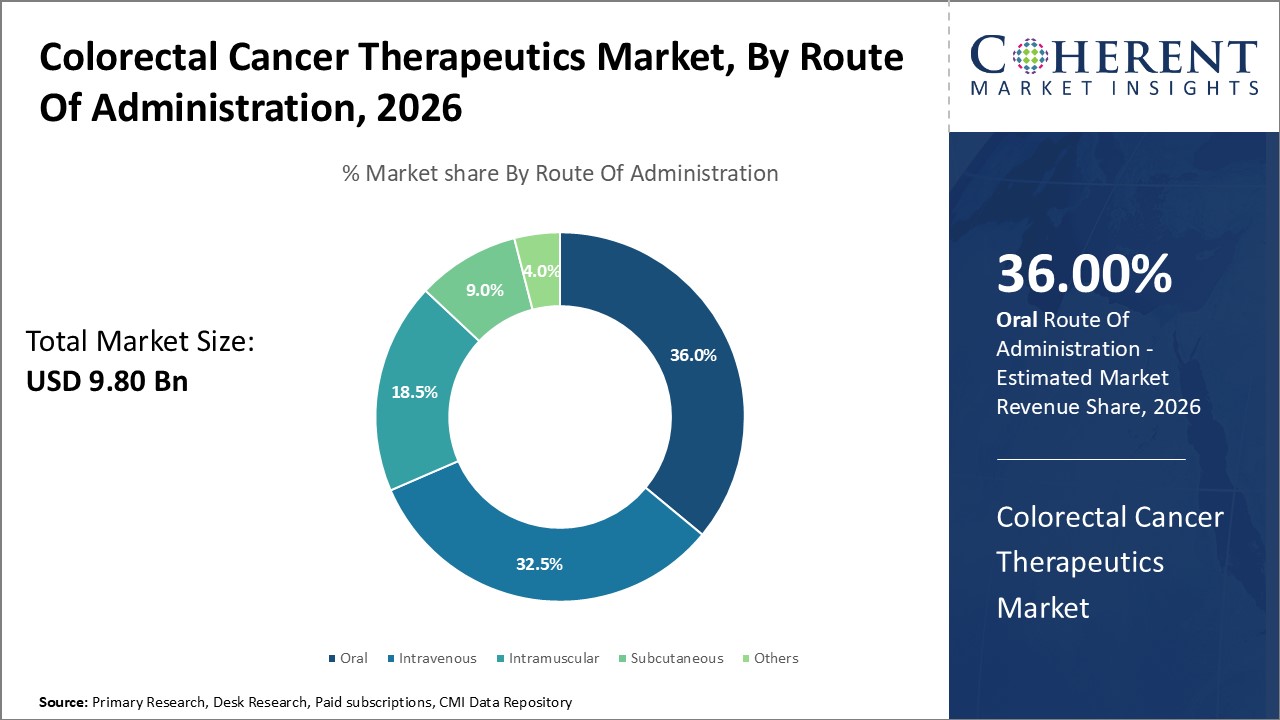
- By route of administration, oral segment is estimated to contribute the highest share of 36% in 2026.
- In terms of distribution channel, hospital pharmacies segment is estimated to contribute the highest market share of 54.6% in 2026.
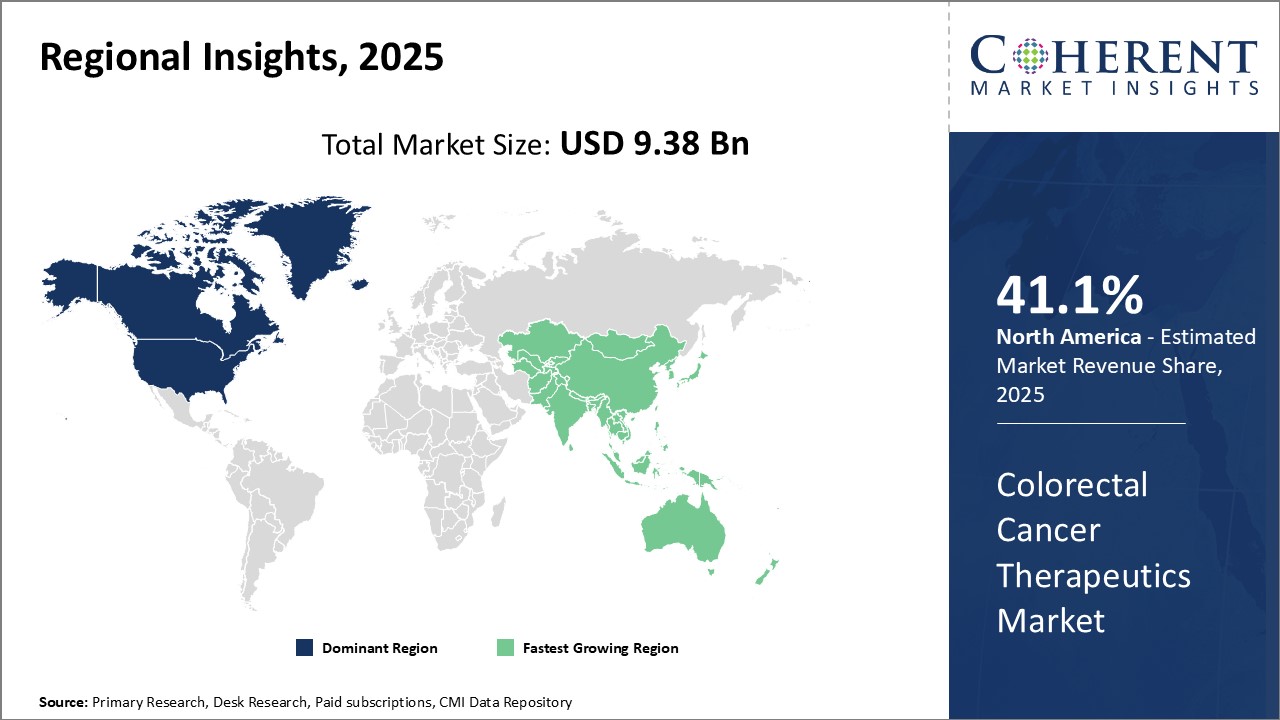
- North America remains the dominant player in the colorectal cancer therapeutics market and is estimated to account for 41. 1% of the global market share in 2026.
- Asia Pacific exhibits the fastest growth in the colorectal cancer therapeutics industry with a market share of 18. 9% in 2026.
Market Overview
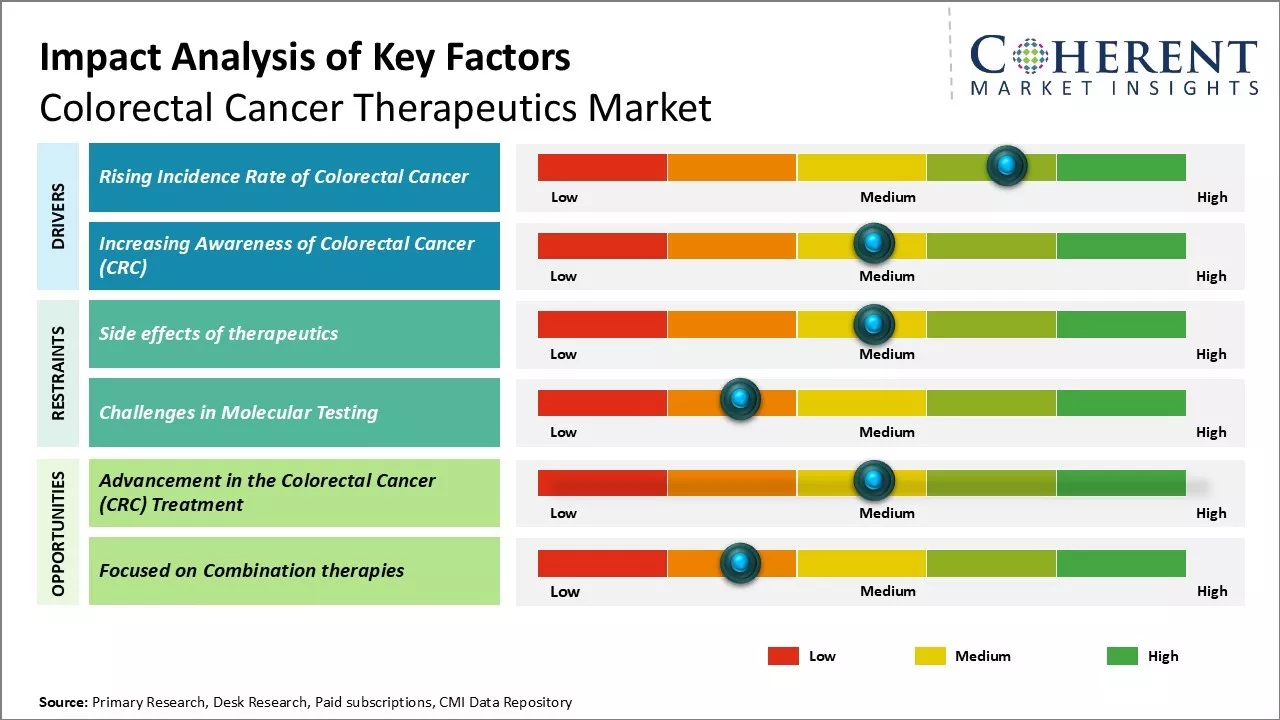
Global colorectal cancer therapeutics industry can witness a positive growth trend over the forecast period, owing to increasing prevalence of colorectal cancer around the world due to changing lifestyles and dietary habits of people. Moreover, rising research and development activities for the development of innovative targeted therapy options for the treatment of colorectal cancer can also drive the colorectal cancer therapeutics industry growth.
However, side effects of therapeutics as well as challenges in molecular testing in the industry are some of the restraining factors.
Market Concentration and Competitive Landscape
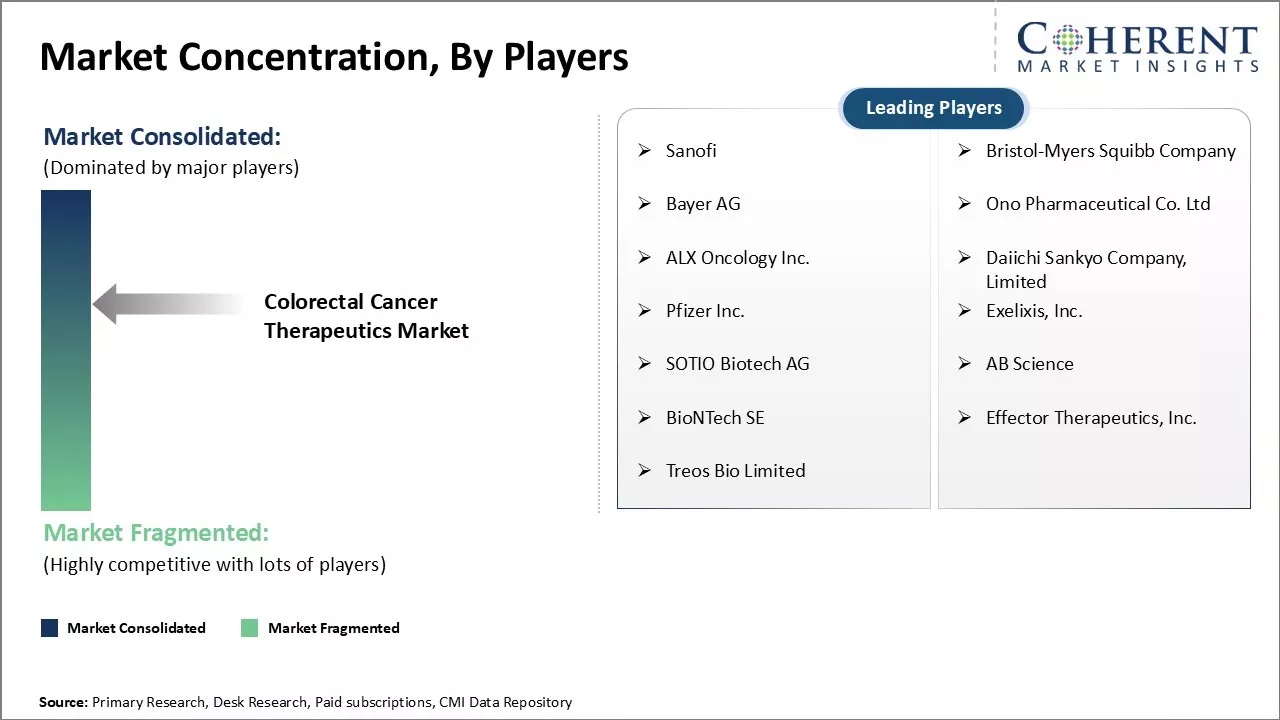
- Established players in the colorectal cancer therapeutics industry focuses heavily on research and development to deliver innovative treatment solutions. Companies like Roche, Amgen, and Bristol-Myers Squibb invest over 15% of annual revenue into R&D. These conduct clinical trials to refine drug candidates and biomarkers that enhance precision oncology.
- Mid-sized companies concentrate on providing affordable treatment alternatives. For example, Varian Medical Systems works with local providers to offer flat panel digital radiotherapy devices at reduced rates. Their streamlined manufacturing helps pass cost savings to consumers in emerging markets.
- Small biotechs focuses on niche cancer subtypes or novel delivery systems. StemoniX develops human bioengineered neural platforms for personalized therapy screening and toxicity testing. Its specialized approach addresses the needs of rare patient segments left behind by blockbuster drugs. Another strategy is leveraging digital platforms. Biofourmis uses artificial intelligence to power virtual care and improve treatment adherence for colorectal cancer patients.
Current Events and Their Impact on the Colorectal Cancer Therapeutics Market
Current Events | Description and its impact |
Regulatory Approvals & Label Expansions |
|
Supply Chain & Manufacturing Dynamics |
|
- Current Industry Events of 2026
- Market Size Estimation
- Regional Breakdown
- Competitive Landscape
- Customer Intelligence
- Segmental Analysis
- Pricing Analysis
- Key Market Drivers, Challenges & Future Trends
- Customized Insights Section
Market Trends
Increasing Awareness of Colorectal Cancer (CRC)
Increasing awareness programs regarding colorectal cancer can increase the diagnosis and treatment rate. Increasing public awareness is not merely educational—it is a tangible driver reshaping healthcare policy, redirecting resources to screening infrastructure, and ultimately saving lives by promoting early detection.
For instance, the International Agency for Research on Cancer (IARC) marked Colorectal Cancer Awareness Month 2025 by highlighting the most recent advances their researchers had made toward understanding the disease—and in particular, the rising incidence of colorectal cancer among younger people. IARC’s most recently published figures estimated that there are about 1.9 million new cases of colorectal cancer and more than 900 000 deaths due to colorectal cancer worldwide each year.
Advancement in the Colorectal Cancer (CRC) Treatment
Advancement in the colorectal cancer treatment offers significant opportunities. Immunotherapy combinations are also redefining survival benchmarks.
For instance, in April 2025, the U.S. Food and Drug Administration approved Opdivo (nivolumab) plus Yervoy (ipilimumab) as a treatment for patients with previously untreated microsatellite instability-high or mismatch repair deficient unresectable or metastatic colorectal cancer. This advancement offers a significant treatment option for patients with this aggressive form of colorectal cancer, potentially improving survival outcomes and quality of life.
Segmental Analysis

Colorectal Cancer Therapeutics Market Insights, by Therapy Type: Clinical Efficacy and Versatility of Chemotherapy Drive Its Demand
In terms of therapy type, chemotherapy segment is estimated to contribute the highest market share of 47.4% in 2026, due to its effectiveness in treating colorectal cancer.
This treatment utilizes various cytotoxic drugs to target cancer cells, often serving as the first-line approach. A Phase III trial revealed that combining trifluridine/tipiracil with bevacizumab significantly enhanced survival rates in patients with refractory metastatic colorectal cancer.
Colorectal Cancer Therapeutics Market Insights, by Route of Administration: Patient Convenience Drives the Oral Segment Growth
In terms of route of administration, oral segment is estimated to contribute the highest share of 36% in 2026 in colorectal cancer therapeutics industry, due to its convenience for patients.
Oral medications allow for self-administration at home, eliminating the need for infusions or injections, and this streamlines treatment and enhances accessibility. This method reduces time and travel commitments, improving adherence and clinical outcomes.
Colorectal Cancer Therapeutics Market Insights, by Distribution Channel: Integral Role of Hospital Pharmacies in Cancer Care Fuels Growth
In terms of distribution channel, hospital pharmacies segment is estimated to contribute the highest market share of 54.6% in 2026 in colorectal cancer therapeutics industry.
The colorectal cancer therapeutics market is positively inflated by their vital role in cancer care. These pharmacies provide the necessary infrastructure and trained staff to store, prepare, and dispense complex cancer medications, ensuring a wide variety of chemotherapy agents are available.
Emerging Innovations in the Colorectal Cancer Therapeutics Market
- Immunotherapy-Only Treatment for Mismatch Repair-Deficient (dMMR) CRC
Application: Therapies like dostarlimab, a PD‑1 inhibitor, train the immune system to recognize and kill cancer cells. This strategy targets tumors with mismatch repair deficiency (dMMR/MSI-H), a mutation seen in approximately 5–10% of CRC cases.
Example: In September 2024, Roche announced that the U.S. Food and Drug Administration (FDA) has approved Tecentriq HybrezaTM (atezolizumab and hyaluronidase-tqjs), the first and only PD-(L)1 inhibitor for subcutaneous (SC), under the skin injection for patients in the U.S. Tecentriq Hybreza can be injected subcutaneously over approximately seven minutes, compared with 30-60 minutes for standard intravenous (IV) infusion of Tecentriq (atezolizumab).
- Targeted Nanoparticle Drug Delivery for Colonic Chemotherapy
Application: Nanoparticles (e.g., mesoporous silica, hydroxyapatite, or natural resin-based like mastic gum) are engineered to protect drug through the GI tract and release payload specifically in the colon (zero-order kinetics).
Example: Colon‑Targeted Mastic Gum Nanoparticles (MG‑NPs) with 5‑FU, published in Nature Scientific Reports as of May 2025; currently in preclinical development aiming for clinical translation.
Impact Of AI on the Colorectal Cancer Therapeutics Market
Artificial Intelligence (AI) is revolutionizing numerous fields and healthcare, particularly cancer diagnostics. With the promise of faster, more accurate diagnoses, AI is transforming how clinicians detect, diagnose, and treat cancer.
- AI in cancer diagnostics uses machine learning and deep learning algorithms to analyze vast amounts of data, including medical imaging (e.g., CT scans, MRIs, and mammograms), pathology slides, genetic data, and clinical records. These algorithms are trained to recognize patterns in the data, identifying potential signs of cancer that may not be visible to the human eye. In essence, AI can act as a powerful assistant to radiologists, pathologists, and oncologists, enhancing their ability to make more accurate and timely decisions.
- AI’s ability to predict how patients will respond to treatment is particularly valuable in oncology, where the choice of therapy is often complex and individualized. One of the challenges in cancer treatment is determining the optimal therapy for each patient, as tumors can vary widely in terms of their molecular characteristics and their response to drugs.
- For instance, in the case of breast cancer, AI models can analyze genetic and molecular data from a patient’s tumor to predict whether they will respond to specific chemotherapy regimens or whether a targeted therapy, such as a HER2 inhibitor, might be more effective. These predictive models can also be used to assess the likelihood of adverse side effects, allowing for a more personalized treatment plan that maximizes the chances of success while minimizing unnecessary toxicities.
Reimbursement Scenario in the Colorectal Cancer Therapeutics Market
The reimbursement landscape for colorectal cancer therapeutics is complex and varies significantly by region and payer.
- U.S.
- Value-based pricing models have been implemented for colorectal cancer therapeutics therapies by the Centers for Medicare & Medicaid Services (CMS) in the United States. Nivolumab (Opdivo) and pembrolizumab (Keytruda), for example, have payment that is increasingly linked to clinical outcomes like progression-free survival. Since performance-based compensation has become more prevalent, over 30% of U.S. payers now want empirical evidence to back up clinical trial results.
- India
- In India, the government has introduced measures to enhance access to cancer care. The establishment of daycare cancer centers in district hospitals aims to decentralize treatment and reduce costs. Additionally, specified drugs provided through patient assistance programs are exempt from Basic Customs Duty (BCD) when supplied free of cost to patients.
- Global Trends: Conditional Reimbursement and Biosimilar Integration
- Strategies for reimbursement differ across countries. Cost-effectiveness evaluations, frequently utilizing metrics such as cost per Quality-Adjusted Life Year (QALY), are mandated by Health Technology Assessment (HTA) agencies in Europe. For instance, the lack of enough cost-effectiveness data has led the UK's National Institute for Health and Care Excellence (NICE) to reject some treatments.
Regional Insights
North America Colorectal Cancer Therapeutics Market Analysis and Trends
North America is expected to dominate the colorectal cancer therapeutics market with the market share of 41.1% in 2026, driven by increased product approvals.
For instance, in January 2026, the U.S. Food and Drug Administration approved Amgen’s oral drug Lumakras (sotorasib), used together with the antibody Vectibix (panitumumab), for adults with metastatic colorectal cancer carrying the KRAS G12C mutation, who have not responded to prior chemotherapy. Amgen's Lumakras in combination with Vectibix was approved to treat adult patients whose cancer has spread to other parts of the body despite receiving chemotherapy.
Asia Pacific Colorectal Cancer Therapeutics Market Analysis and Trends
Asia Pacific exhibits the fastest growth in colorectal cancer therapeutics industry with market share of 18.9% in 2026 due to improving access to healthcare, rising medical expenditures. Countries like China and India have emerged as global pharmaceutical hubs, attracting numerous pharmaceutical giants to partner manufacturing bases in the region.
For instance, according to National Library of Medicine, in Asia, the overall cure rate of colorectal cancer has not improved dramatically in the last decade, 5-year survival remaining at approximately 60%. Colorectal cancer has become an important problem in Asian countries which is fueling the demand for the treatment.
U.S. Colorectal Cancer Therapeutics Market Analysis and Trends
The U.S. colorectal cancer therapeutics sector is characterized by a substantial patient population and rapid adoption of innovative therapies. Companies like Bristol-Myers Squibb and Merck have significantly impacted the economy through the launch of novel drugs, enhancing treatment options and improving patient outcomes in this critical healthcare sector. Their ongoing research and development efforts further drive market growth.
For instance, according to U.S. National Cancer Institute (NCI) data, more than 90% of people treated for early-stage colorectal cancer were alive five years after diagnosis. (NCI data doesn’t break out separate survival rates for colon and rectal cancer.)
Germany Colorectal Cancer Therapeutics Market Analysis and Trends
Germany colorectal cancer therapeutics sector is bolstered by a robust research infrastructure, universal healthcare coverage, and a favorable regulatory environment for clinical trials. The presence of regional leaders like Roche and Bayer further strengthens this market, as these leverage Germany's advanced capabilities in drug development and innovation.
China Colorectal Cancer Therapeutics Market Analysis and Trends
China's colorectal cancer therapeutics industry is rapidly expanding, driven by improvements in healthcare infrastructure and increased access to both branded and generic drugs. As patients gain better access to treatments in public and private settings, the demand for effective therapies rises, enhancing overall market growth. This progress reflects the government's commitment to universal health coverage and improved healthcare services.
India Colorectal Cancer Therapeutics Market Analysis and Trends
India's colorectal cancer therapeutics market is significantly influenced by rising incidence rates, largely attributed to lifestyle changes such as the adoption of calorie-rich diets and reduced physical activity, alongside an aging population. These factors contribute to a growing patient pool, necessitating enhanced therapeutic options and early intervention strategies. The Indian government's initiatives to improve healthcare access and affordability further support the expansion of treatment options for colorectal cancer.
Pricing Analysis of the Colorectal Cancer Therapeutics Market
- Therapy-Specific Pricing Trends
- Immunotherapy: Nivolumab (Opdivo): The wholesale acquisition cost (WAC) for nivolumab is approximately USD 959.20 per 4-mL vial. For a 70 kg patient receiving 210 mg every two weeks, the estimated annual cost is around USD 130,931.
- Targeted Therapies: Cetuximab (Erbitux): The cost of cetuximab can vary, but a typical 18-week treatment regimen for non-small cell lung cancer (NSCLC) costs an average of USD 80,000, translating into an expenditure of USD 800,000 to prolong the life of one patient by one year.
- Biosimilars and Generic Drugs
- The introduction of biosimilars has led to a 62% reduction in costs for certain drugs like bevacizumab, significantly lowering treatment expenses for both healthcare systems and patients.
- Insurance and Reimbursement
- In the U.S., Medicare Part D caps annual out-of-pocket costs at USD 2,000 starting in 2025. However, high upfront costs and co-pays remain barriers for many patients.
- In India, government schemes provide subsidies for certain treatments, but innovative therapies often face reimbursement challenges, leading to significant budget shortages for advanced CRC treatments.
- Emerging Pricing Models
- Value-based pricing is gaining traction, where the cost of a drug is linked to its clinical outcomes, aiming to make treatments more affordable and accessible.
- Patient assistance programs are being implemented by pharmaceutical companies to alleviate financial burdens, offering discounts or free medications to eligible patients.
Market Report Scope
Colorectal Cancer Therapeutics Market Report Coverage
| Report Coverage | Details | ||
|---|---|---|---|
| Base Year: | 2025 | Market Size in 2026: | USD 9.80 Bn |
| Historical Data for: | 2020 To 2024 | Forecast Period: | 2026 To 2033 |
| Forecast Period 2026 to 2033 CAGR: | 4.7% | 2033 Value Projection: | USD 13.54 Bn |
| Geographies covered: |
| ||
| Segments covered: |
| ||
| Companies covered: | Sanofi, Bristol-Myers Squibb Company, Bayer AG, Ono Pharmaceutical Co. Ltd, ALX Oncology Inc., Daiichi Sankyo Company, Limited, Pfizer Inc., Exelixis, Inc., SOTIO Biotech AG, AB Science, BioNTech SE, Effector Therapeutics, Inc., and Treos Bio Limited | ||
| Growth Drivers: |
| ||
| Restraints & Challenges: |
| ||
Global Colorectal Cancer Therapeutics Industry News
- In May 2025, Bristol Myers Squibb presented data at ASCO 2025 highlighting differentiated research platform of oncology treatments and innovative research pipeline. Data from more than 80 company-sponsored studies, investigator-sponsored studies, and collaborations showcase results spanning more than 20 cancer types.
- In June 2025, Vividion Therapeutics and Bayer strengthened oncology development pipeline with clinical-stage WRN inhibitor. VVD-214 is the only clinical-stage covalent inhibitor of Werner helicase (WRN) in development worldwide. WRN inhibition may provide therapeutic benefit in a range of solid tumor types with high microsatellite instability (MSI), such as colorectal, endometrial, ovarian, gastric, and other cancers.
- In June 2025, Ono and Bristol-Myers Squibb KK received supplemental approval of Opdivo and Yervoy in Combination Treatment in Japan to expand the use for unresectable Hepatocellular Carcinoma.
- In December 2024, the S. Food & Drug Administration (FDA) approved Pfizer’s BRAFTOVI Combination Regimen as First-Line Treatment of BRAF V600E-Mutant Metastatic Colorectal Cancer.
Analyst View
- The colorectal cancer (CRC) therapeutics landscape in 2025 is undergoing a transformative shift, driven by significant advancements in precision medicine, immunotherapy, and targeted therapies. This evolution is not merely incremental but represents a fundamental change in how CRC is treated, moving from generalized approaches to highly personalized, biomarker-driven strategies.
- Immunotherapy has emerged as a cornerstone in CRC treatment, particularly for patients with deficient mismatch repair (dMMR) or microsatellite instability-high (MSI-H) tumors. The approval of dostarlimab, an anti-PD-1 monoclonal antibody, has set a new benchmark, with clinical trials demonstrating a 100% response rate in dMMR rectal cancer patients, allowing many to avoid chemotherapy and surgery entirely.
- Liquid biopsy technologies, such as Guardant Health's Shield blood test, have revolutionized CRC screening and monitoring. The Shield test has achieved over 83% sensitivity in detecting colorectal cancers, offering a non-invasive alternative to traditional colonoscopies. This advancement not only facilitates early detection but also enables real-time monitoring of treatment responses and minimal residual disease, thereby personalizing patient management.
Market Segmentation
- Therapy Type Insights (Revenue, USD, 2021 – 2033)
- Chemotherapy
- Alkylating Agents
- Antimetabolites
- Others
- Immunotherapy
- Immune Checkpoint Inhibitors
- Oncolytic Virus Therapy
- Others
- Targeted Therapy
- Monoclonal antibodies
- Small molecule inhibitors
- Others
- Route of Administration Insights (Revenue, USD, 2021 – 2033)
- Oral
- Intravenous
- Intramuscular
- Subcutaneous
- Others
- Distribution Channel Insights (Revenue, USD, 2021 – 2033)
- Hospital Pharmacies
- Retail Pharmacies
- Online Pharmacies
- Regional Insights (Revenue, USD, 2021 – 2033)
- North America
- U.S.
- Canada
- Latin America
- Brazil
- Argentina
- Mexico
- Rest of Latin America
- Europe
- Germany
- U.K.
- Spain
- France
- Italy
- Russia
- Rest of Europe
- Asia Pacific
- China
- India
- Japan
- Australia
- South Korea
- ASEAN
- Rest of Asia Pacific
- Middle East
- GCC Countries
- Israel
- Rest of Middle East
- Africa
- South Africa
- North Africa
- Central Africa
- Key Players Insights (Revenue, USD Bn, 2021 - 2033)
- Sanofi
- Bristol-Myers Squibb Company
- Bayer AG
- Ono Pharmaceutical Co. Ltd
- ALX Oncology Inc.
- Daiichi Sankyo Company, Limited
- Pfizer Inc.
- Exelixis, Inc.
- SOTIO Biotech AG
- AB Science
- BioNTech SE
- Effector Therapeutics, Inc.
- Treos Bio Limited
Sources
Stakeholders:
- Oncology clinicians (medical oncologists, surgical oncologists).
- Hospital pharmacies & cancer treatment centers.
- Research institutions and trial consortia (e.g., Alliance for Clinical Trials in Oncology).
- Patient advocacy groups (e.g., Colorectal Cancer Alliance).
- Diagnostic laboratories offering biomarker/genetic testing.
- Pharmaceutical & biotech companies developing CRC therapies.
- Payors and reimbursement bodies (e.g., Medicare/Medicaid, HTA agencies).
Primary Sources:
- Interviews with medical oncologists regarding adoption and reimbursement of new agents.
- Discussions with hospital pharmacy directors on formulary inclusion and procurement criteria.
- Conversations with clinical trial leads about enrollment challenges and endpoint validation.
- Sessions with patient advocacy representatives on access, disparities, and treatment guidelines.
Secondary Sources:
- Regulatory approvals and clinical updates
- Industry publications detailing market drivers
- Clinical & academic research (e.g., KRAS testing protocols, pharmacogenomics)
Associations:
- American Society of Clinical Oncology (ASCO)
- European Society for Medical Oncology (ESMO)
- Colorectal Cancer Alliance
- National Comprehensive Cancer Network (NCCN)
- Others
Newspapers:
- The New York Times (Health Section)
- The Guardian (Health)
- The Lancet News
- Others
Journals:
- Journal of Clinical Oncology
- Cancer Research
- Therapeutic Advances in Medical Oncology
- Nature Reviews Clinical Oncology
- Others
Proprietary Elements:
- CMI Data Analytics Tool – Colorectal Cancer Therapeutics Market
- CMI Existing Repository of Information for the Last 8 Years
*Definition: The colorectal cancer therapeutics market refers to all medicinal interventions used to treat colorectal cancer, including immune checkpoint inhibitors, targeted biologic drugs (such EGFR and VEGF inhibitors), chemotherapy regimens, and newer techniques including hepatic arterial infusion and delivery systems based on nanoparticles.
Get access to 250+ pages report
Every segment, forecast, competitor profile and data table behind the analysis above — available for instant download.
- ESOMAR Member
- ISO 9001:2015 Certified
- D-U-N-S Registered
- GDPR & CCPA Compliant
Missing comfort of reading report in your local language? Find your preferred language:
Transform your Strategy with Exclusive Trending Reports
Frequently Asked Questions
The colorectal cancer therapeutics market is estimated to be valued at USD 9.80 Billion in 2026, and is expected to reach USD 13.54 Billion by 2033.
The CAGR of the colorectal cancer therapeutics market is projected to be 4.7% from 2026 to 2033.
Rising incidence rate of colorectal cancer and increasing awareness of colorectal cancer (CRC) are the major factors driving the growth of colorectal cancer therapeutics market.
Side effects of therapeutics and challenges in molecular testing are the major factors hampering the growth of colorectal cancer therapeutics market.
In terms of therapy type, chemotherapy segment is estimated to dominate the market in 2026.
Sanofi, Bristol-Myers Squibb Company, Bayer AG, Ono Pharmaceutical Co. Ltd, ALX Oncology Inc., Daiichi Sankyo Company, Limited, Pfizer Inc., Exelixis, Inc., SOTIO Biotech AG, AB Science, BioNTech SE, Effector Therapeutics, Inc., and Treos Bio Limited are the major players in the colorectal cancer therapeutics market.
North America is expected to lead the colorectal cancer therapeutics market in 2026.