

Medical Waste Management Market Size and Forecast — 2026 - 2033
The Global Medical Waste Management Market size is estimated to be valued at USD 15.8 billion in 2026 and is expected to reach USD 27.3 billion by 2033, exhibiting a compound annual growth rate (CAGR) of 8.4% from 2026 to 2033.
Overview
The medical waste management market is driven by the increasing generation of healthcare waste due to rising hospital admissions, surgical procedures, and expanding healthcare infrastructure worldwide. Growing awareness of infection control and stringent government regulations for safe disposal of biomedical waste are key factors supporting demand. The rise in prevalence of infectious and chronic diseases has further intensified the need for proper waste handling to prevent contamination and environmental hazards. Technological advancements in waste treatment methods, such as autoclaving, incineration, and chemical disinfection, are improving efficiency and safety. Additionally, increased focus on sustainability and eco-friendly disposal practices is boosting market growth globally.
Key Takeaways
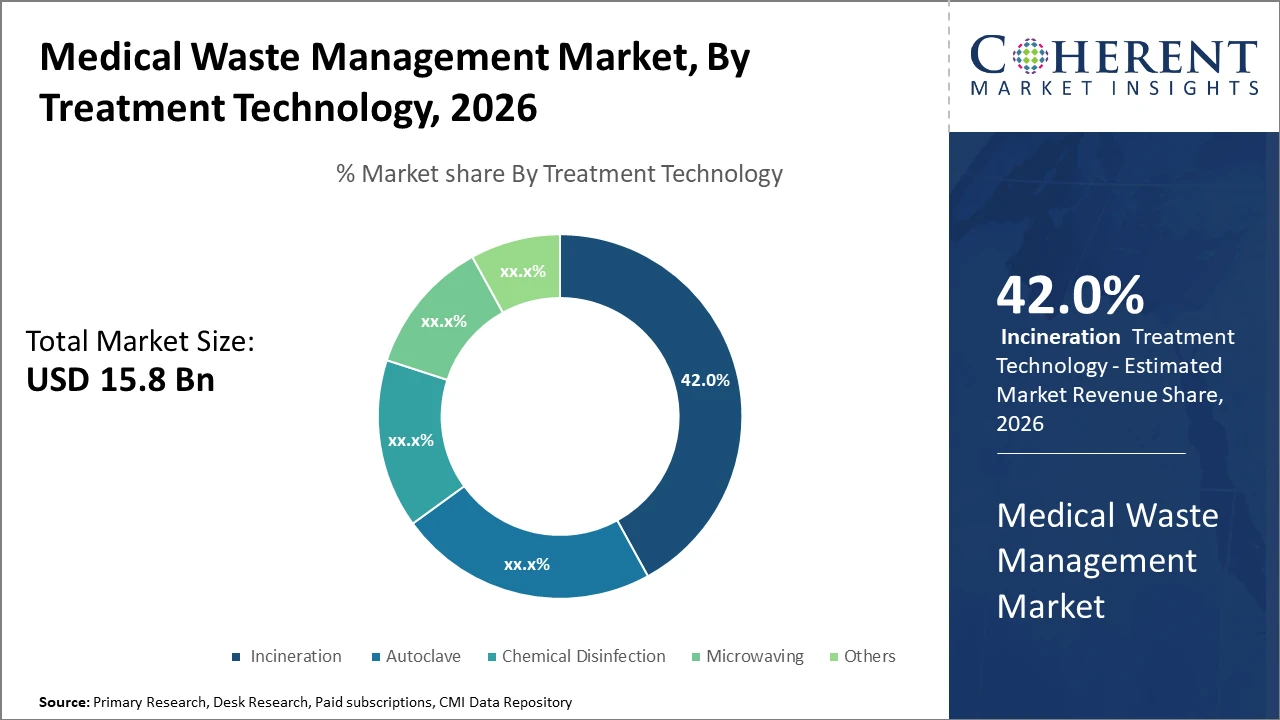
The Incineration subsegment dominates market share by 42%, owing to its widespread application and regulatory acceptance globally. Infectious waste maintains the leading share within waste types due to stringent disposal norms.
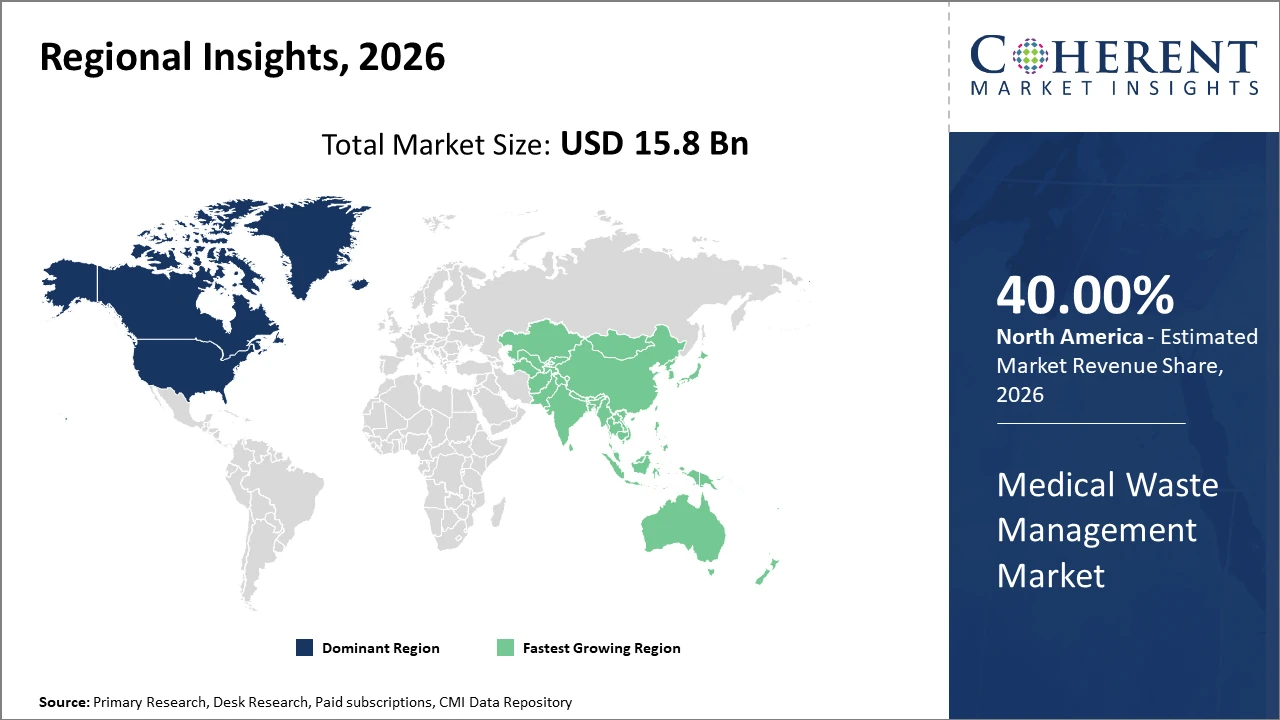
North America holds predominant industry share driven by advanced healthcare infrastructure and regulatory frameworks, while Asia Pacific is the fastest-growing market, propelled by rising healthcare investments and urbanization trends. Europe’s evolving sustainability regulations also present significant market opportunities.
Market revenue in hospitals and clinics as end users accounts for over 54% of total industry revenues, emphasizing healthcare facilities as critical stakeholders in driving business growth and demand for innovative treatment technologies.
Medical Waste Management Market Segmentation Analysis
Medical Waste Management Market Insights, By Treatment Technology
Incineration dominates the medical waste management market with a 42% share, driven by its effectiveness in complete pathogen destruction and regulatory acceptance worldwide. Autoclave treatment is the fastest-growing subsegment due to its eco-friendly nature and rising use in emerging markets concerned with hazardous emissions. Chemical disinfection is widely applied for liquid medical waste, offering rapid and cost-effective sterilization. Microwaving is gaining traction as a technology for volume reduction and pathogen inactivation. The ‘Others’ category, including plasma and irradiation, remains in early adoption stages but demonstrates significant potential for future market expansion as innovation and environmental considerations continue to shape treatment preferences.
Medical Waste Management Market Insights, By Waste Type
Infectious waste holds the largest share of the medical waste management market at 38%, driven by high volumes and strict disposal regulations for contaminated hospital materials. Pathological waste, though smaller in quantity, demands specialized handling due to significant biohazard risks. Sharps waste is heavily regulated to prevent injuries and infections, ensuring safe disposal practices. Pharmaceutical waste management is expanding, supported by regulatory requirements for proper handling and disposal of medications and hazardous compounds. The ‘Others’ category includes chemical and radioactive wastes, which, while representing a smaller portion of the market, require specialized treatment technologies and remain critical for comprehensive medical waste management strategies.
Medical Waste Management Market Insights, By End User
Hospitals and clinics lead the medical waste management market with a 54% share, driven by substantial waste from surgical, diagnostic, and patient care activities. Diagnostic laboratories are the fastest-growing subsegment, fueled by rising testing demands and increased waste generation, particularly after the pandemic. Research centers contribute primarily through experimental and pathological waste, requiring specialized handling. Other healthcare facilities, such as dental and veterinary clinics, represent smaller but steadily growing market segments. The ‘Others’ category includes mobile healthcare providers and pharmaceutical manufacturers, which generate specific waste streams and require targeted management solutions, reflecting the diversification and complexity of medical waste sources.
Medical Waste Management Market Trends
The medical waste management market is increasingly moving towards automation and sustainable practices.
In North America, 2025 saw the adoption of IoT-enabled waste containers and digital tracking platforms, optimizing waste segregation and collection processes.
Europe’s implementation of waste-to-energy policies and strict emission controls has driven the adoption of eco-friendly incineration technologies.
Developing countries such as India and Brazil are utilizing modular treatment plants, promoting decentralized waste management that aligns with local healthcare infrastructures and regulations.
These trends encourage innovation, regulatory compliance, and business growth, expanding the overall market scope.
Medical Waste Management Market Insights, By Geography
North America Medical Waste Management Market Analysis and Trends
In North America, the medical waste management market is dominated by high healthcare expenditure, stringent regulatory frameworks, and advanced technological adoption. The United States accounts for over 40% of the regional market share in 2026, driven by policies such as the Medical Waste Tracking Act, which enforce strict compliance and safe disposal practices. Key players, including Stericycle and Clean Harbors, operate extensive service networks that provide comprehensive waste collection, treatment, and disposal solutions. Their investments in innovation, automation, and sustainable technologies strengthen market efficiency and reliability. This combination of regulatory oversight, industry expertise, and technological advancement ensures North America’s leading position in the global medical waste management market.
Asia Pacific Medical Waste Management Market Analysis and Trends
The Asia Pacific region is experiencing the fastest growth in the medical waste management market, with a CAGR exceeding 10%. This growth is driven by expanding healthcare infrastructure in countries such as China and India, coupled with increased government initiatives focused on public health and safety. Rising awareness of environmental sustainability further motivates adoption of proper waste management practices. Local manufacturers and service providers are actively implementing advanced technologies, including automated treatment systems and eco-friendly disposal methods. These developments are enhancing operational efficiency, ensuring regulatory compliance, and contributing to substantial revenue growth, positioning Asia Pacific as a key market for future expansion in medical waste management.
Medical Waste Management Market Outlook for Key Countries
USA Medical Waste Management Market Analysis and Trends
The USA maintains its leadership in the medical waste management market through strong regulatory frameworks established by the Environmental Protection Agency and the Occupational Safety and Health Administration, ensuring consistent enforcement of treatment standards. In 2025, over 7 million tons of medical waste were managed nationwide, reflecting the scale of healthcare activities and regulatory compliance. Investments in advanced treatment technologies, including plasma gasification and autoclaving, have increased efficiency and environmental safety. Major industry players have strengthened their positions through strategic mergers and acquisitions, such as Stericycle’s acquisition of biomedical waste companies, enhancing market share, operational capacity, and nationwide service coverage.
Germany Medical Waste Management Market Analysis and Trends
Germany’s medical waste management market is characterized by strict regulatory oversight, advanced healthcare infrastructure, and strong environmental standards. Hospitals and clinics generate the majority of medical waste, with infectious and pathological waste segments leading in volume. Incineration remains the dominant treatment method, supported by eco-friendly technologies to meet stringent emission norms, while autoclaving and chemical disinfection are gaining traction for sustainable waste handling. The market is also witnessing digitalization trends, including IoT-enabled waste tracking and automated segregation systems. Growing awareness of environmental sustainability, coupled with government initiatives promoting safe disposal, is driving innovation and steady market growth in Germany.
Analyst Opinion
A key driver of the medical waste management market is the growth of healthcare infrastructure, which increases medical waste generation. In 2025, over 1,200 new hospitals were established across Asia Pacific, causing a 12% rise in regulated medical waste volumes and driving demand for advanced disposal systems.
Supply-side growth is supported by the adoption of advanced treatment technologies such as autoclaving and incineration. In 2024, over 60% of North American facilities upgraded their treatment capacity, shifting market share toward high-efficiency processing and improving operational efficiency.
On the demand side, strict regulations in Europe and North America have increased compliance needs, with expenditures on specialized waste management equipment expected to rise by 18% by 2026, shaping revenue and growth strategies.
Micro-indicators like urbanization in emerging economies expand market scope. India’s urban population growth of 2.3% per year in 2024 increased healthcare utilization, medical waste volumes, and business opportunities for market players in these regions.
- Current Industry Events of 2026
- Market Size Estimation
- Regional Breakdown
- Competitive Landscape
- Customer Intelligence
- Segmental Analysis
- Pricing Analysis
- Key Market Drivers, Challenges & Future Trends
- Customized Insights Section
Market Scope
| Report Coverage | Details | ||
|---|---|---|---|
| Base Year: | 2025 | Market Size in 2026: | USD 15.8 billion |
| Historical Data for: | 2020 To 2024 | Forecast Period: | 2026 To 2033 |
| Forecast Period 2026 to 2033 CAGR: | 8.4% | 2033 Value Projection: | USD 27.3 billion |
| Geographies covered: |
| ||
| Segments covered: |
| ||
| Companies covered: | SUEZ, Ecolab Inc., GE Healthcare, Clean Harbors Inc., Medline Industries Inc., Waste Management Inc., SteriCycle Canada, Bio Medical Waste Solutions, Sharps Compliance Inc. | ||
| Growth Drivers: |
| ||
Medical Waste Management Market Growth Factors
The medical waste management market is expanding due to rising hospital-generated waste from increasing patient inflow, directly boosting industry size and revenue. Globally, surgical procedures are projected to grow at 5.2% annually until 2026, further driving demand for efficient waste treatment solutions. Strict governmental policies, such as the U.S. Environmental Protection Agency’s updated 2024 guidelines, are reinforcing compliance requirements and encouraging investment in environmentally sustainable technologies. Additionally, awareness campaigns on healthcare-associated infections have prompted healthcare facilities to implement safer disposal protocols. These factors collectively strengthen market growth strategies, emphasizing safety, regulatory compliance, and sustainable waste management practices.
Medical Waste Management Market Development
In February 2025, Union Minister Jitendra Singh launched India’s first indigenous Automated Biomedical Waste Treatment Rig, “Sṛjanam,” at AIIMS New Delhi. Developed by the CSIR–NIIST, the system marks a significant advancement in the country’s biomedical waste management capabilities.
Key Players
Leading Companies of the Market
SUEZ
Ecolab Inc.
GE Healthcare
SteriCycle Canada
Bio Medical Waste Solutions
Sharps Compliance Inc.
Waste Management Inc.
Medline Industries Inc.
Clean Harbors Inc.
Several leading market players are focusing on integrated service expansion and technology innovation to maintain competitiveness. In 2025, Stericycle, Inc. increased its market share by acquiring regional waste treatment providers in the U.S., expanding its operational footprint and boosting revenue by over 14%. On the technological side, Veolia implemented real-time tracking systems for medical waste collection in Europe, improving supply chain transparency, reducing operational costs by 9%, and enhancing client satisfaction. These strategies reflect a dual approach of geographic expansion and digital innovation, enabling companies to strengthen market presence, optimize efficiency, and deliver value-added services in the medical waste management sector.
Medical Waste Management Market Future Outlook
The future outlook for the medical waste management market points to steady growth driven by increasing healthcare activities, stricter regulations, and rising awareness of environmental and public health risks. Emerging technologies such as AI-enabled tracking systems, automated segregation, and eco-friendly treatment methods are expected to improve efficiency and sustainability. Expansion in developing regions, coupled with government initiatives to support safe waste disposal, will further boost market demand. Additionally, integration of circular economy principles, such as recycling certain medical materials and reducing hazardous emissions, is likely to shape the market, making medical waste management more technologically advanced and environmentally responsible.
Medical Waste Management Market Historical Analysis
The medical waste management market has experienced significant growth over the past decade, driven by increasing healthcare infrastructure, rising hospital admissions, and heightened awareness of infectious disease risks. Historically, the market relied heavily on incineration and basic segregation practices, with limited automation or tracking. Regulatory frameworks, particularly in North America and Europe, gradually shaped safer disposal practices and standardized waste handling. Emerging economies began adopting modern waste treatment technologies in the 2010s, including autoclaves and chemical disinfection. The combination of stricter environmental regulations, technological advancements, and growing healthcare demands laid the foundation for the current expansion of the medical waste management market worldwide.
Sources
Primary Research Interviews:
Engineers, R&D managers, and project leaders from companies manufacturing medical waste treatment equipment, including autoclaves, incinerators, and chemical disinfection systems.
Technical specialists from firms providing hospital waste management services, hazardous waste disposal, and modular treatment plants.
Industry experts from companies supplying automated segregation systems, IoT-enabled tracking solutions, and environmentally sustainable disposal technologies.
Magazines:
Healthcare Purchasing News – Market trends, regulatory updates, and hospital waste management solutions.
Infection Control Today – Innovations in infectious waste handling, sterilization technologies, and compliance best practices.
Waste Management World – Developments in medical waste treatment, disposal technologies, and sustainability practices.
Journals:
Waste Management – Research on hazardous medical waste treatment, disposal efficiency, and environmental impact.
Journal of Hospital Infection – Studies on infection control, pathogen management, and safe medical waste handling.
Environmental Technology & Innovation – Insights into eco-friendly waste treatment methods and emerging technologies.
Newspapers:
The Wall Street Journal – Corporate activities, mergers, and investments in medical waste management companies.
Financial Times – Market trends, regulatory developments, and industry growth in healthcare waste management.
Reuters – News on advanced treatment technologies, regulatory compliance, and global market performance.
Bloomberg – Company strategies, revenue trends, and international medical waste management market growth.
Associations:
International Solid Waste Association (ISWA) – Standards, research, and data on medical and hazardous waste management.
Healthcare Environmental Resource Center (HERC) – Guidance on compliance, treatment technologies, and hospital waste programs.
World Health Organization (WHO) – Guidelines, global standards, and data on healthcare waste management practices.
Get access to 250+ pages report
Every segment, forecast, competitor profile and data table behind the analysis above — available for instant download.
- ESOMAR Member
- ISO 9001:2015 Certified
- D-U-N-S Registered
- GDPR & CCPA Compliant
Missing comfort of reading report in your local language? Find your preferred language:
Transform your Strategy with Exclusive Trending Reports
Frequently Asked Questions
The market is led by companies such as Stericycle, Bio Medical Waste Solutions, and Clean Harbors, with several expanding through acquisitions and technological advancements.
The market size is projected to grow from USD 15.8 billion in 2026 to USD 27.3 billion by 2033, driven by increasing healthcare waste generation and regulatory compliance requirements.
Hospitals and clinics represent the largest growth opportunity, accounting for 54% of market share, due to escalating medical procedures and waste generation volumes.
Digitalization, sustainable waste treatment technologies, and enhanced regulatory frameworks will shape market trends, promoting efficiency and environmental responsibility.
Competition revolves around service integration, technological innovation, and geographic expansion. Challenges include regulatory complexities and rising operational costs.
Strategies focus on acquisitions, partnerships, technology integration, and expansion into emerging markets to capture growing demand and optimize operational efficiency.