

Cancer Monoclonal Antibodies Market Size and Forecast – 2026 to 2033
The cancer monoclonal antibodies market is estimated to be valued at USD 129.40 Bn in 2026 and is expected to reach USD 361.40 Bn by 2033, exhibiting a compound annual growth rate (CAGR) of 15.8% from 2026 to 2033.
Key Takeaways
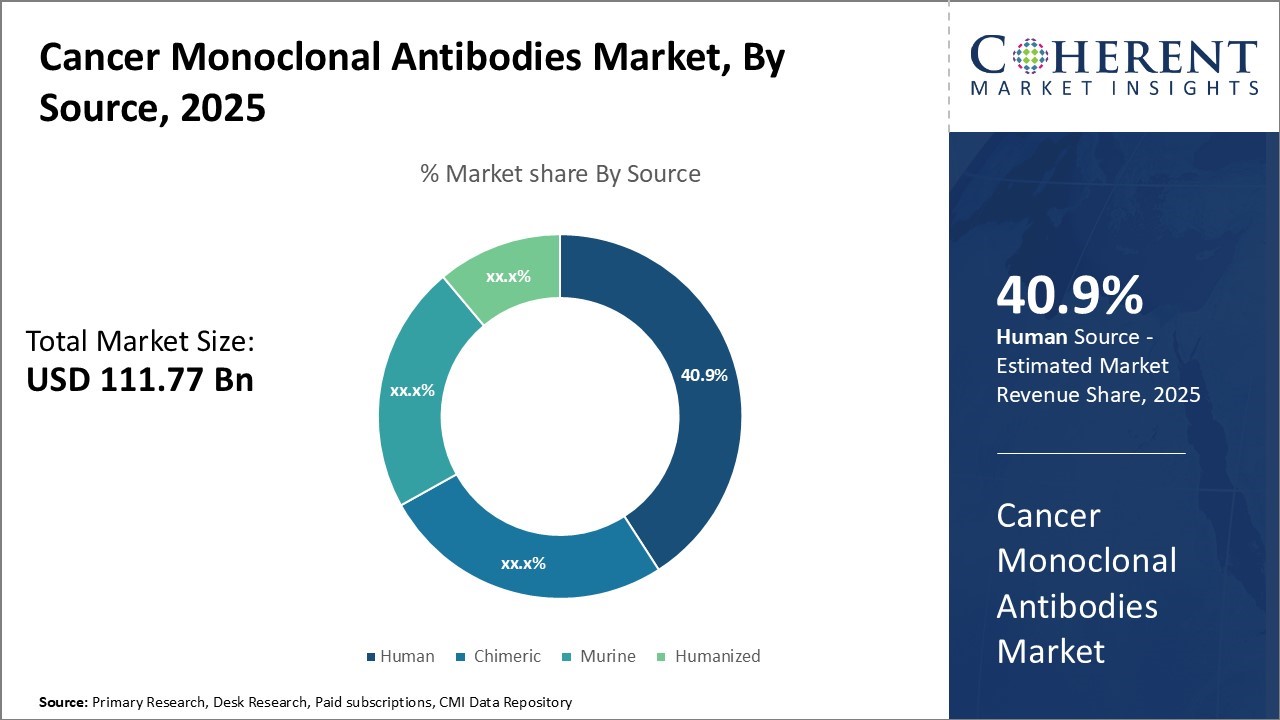
- By Source, Human hold the largest market share of 41.9% in 2026 owing to its rising global cancer incidence.
- By Application, Blood Cancer expected to hold largest market share of 55.1% in 2026 owing to the proven effectiveness of mab therapies in hematologic malignancies.
- By End User, Hospital acquired the prominent market share of 44.6% in 2026 owing to the complex administration requirements.
- By Region, North America dominates the overall market with an estimated share of 39.9% in 2026 owing to the advanced healthcare infrastructure.
Market Overview
The Cancer Monoclonal Antibodies Market is rapidly evolving as oncology therapeutics advance, with increasing demand for targeted and personalized cancer treatments driving its growth. Healthcare providers are using monoclonal antibodies more frequently to treat cancers such as blood, breast, and lung cancer because of their high specificity and enhanced safety. Biotechnology innovations, rising cancer cases, expanding treatment indications, and strengthened healthcare infrastructure are accelerating market expansion, with hospitals, specialty clinics, and research centers actively delivering these therapies worldwide
Current Events and Its Impact on the Cancer Monoclonal Antibodies Market
Current Events | Description and its impact |
Geopolitical and Regulatory Developments |
|
Technological and Scientific Advances |
|
Public Health and Epidemiological Factors |
|
Segmental Insights
- Current Industry Events of 2026
- Market Size Estimation
- Regional Breakdown
- Competitive Landscape
- Customer Intelligence
- Segmental Analysis
- Pricing Analysis
- Key Market Drivers, Challenges & Future Trends
- Customized Insights Section
Cancer Monoclonal Antibodies Market Insights, By Source - Human contribute the highest share of the market owing to its expansion of therapeutic applications
Human hold the largest market share of 41.9% in 2026. The human segment in the Cancer Monoclonal Antibodies Market is expanding as healthcare providers increasingly choose fully human and humanized antibodies to minimize immune reactions and improve treatment safety. Rising cancer cases and the move toward precision medicine push clinicians to deliver therapies customized to individual patient profiles. Ongoing innovations in antibody engineering, broader clinical applications across various cancers, and intensified research and development efforts actively drive the adoption of these therapies in hospitals, specialty clinics, and research centers worldwide. For instance, in August 2025, Pilatus Biosciences, based in Épalinges, Vaud, launched its first-in-human Phase 1 trial testing its lead candidate, PLT012, with Roche’s atezolizumab (Tecentriq) in patients with hepatocellular carcinoma.
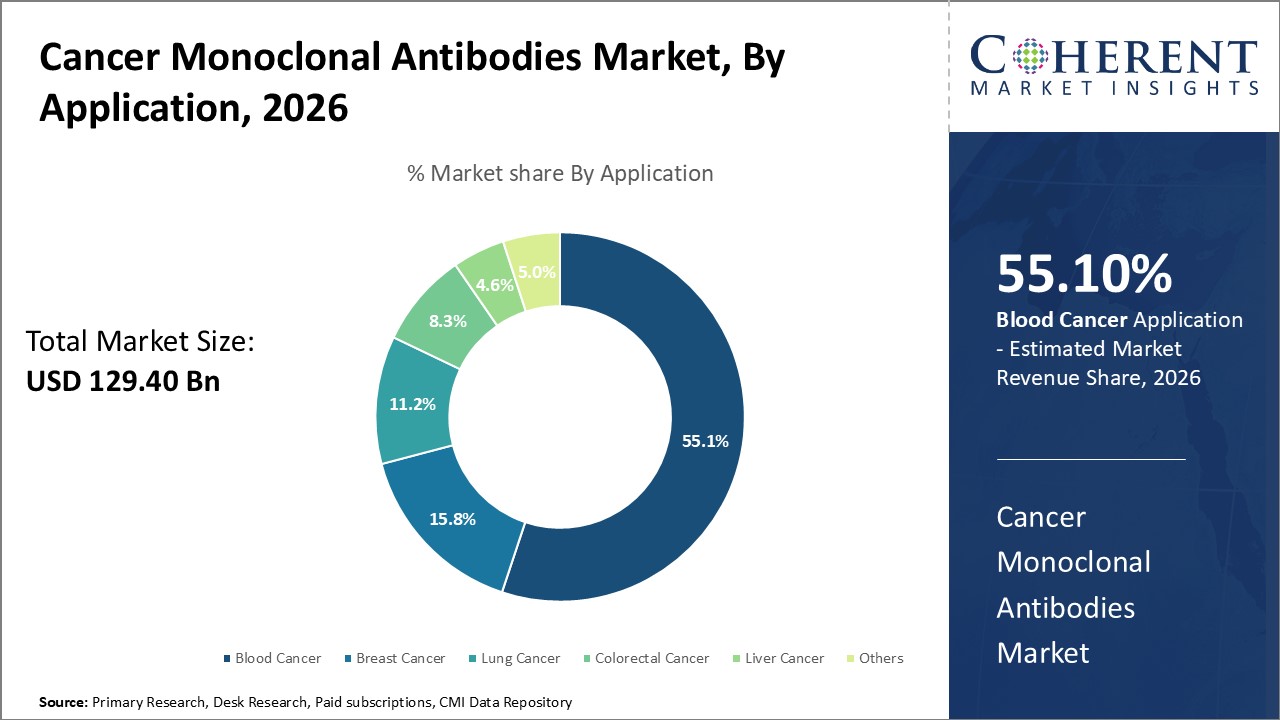
Cancer Monoclonal Antibodies Market Insights, By Application - Blood Cancer contribute the highest share of the market owing to its clinical practice shift toward targeted therapies
Blood Cancer expected to hold largest market share of 55.1% in 2026. The blood cancer segment in the Cancer Monoclonal Antibodies Market is growing as healthcare providers respond to the high incidence of leukemia, lymphoma, and multiple myeloma, driving demand for targeted therapies. Clinicians use monoclonal antibodies to precisely bind cancer cell markers, enhancing treatment effectiveness and safety. Ongoing innovations, including antibody-drug conjugates and bispecific antibodies, along with expanding regulatory approvals and broader treatment indications, actively promote adoption. Hospitals and specialty oncology centers are increasingly administering these therapies to deliver precise and effective blood cancer care. For instance, in December 2025, Zydus Lifesciences launched a broad range of biosimilars to treat cancers, including breast, prostate, other solid tumors, and blood cancers
Cancer Monoclonal Antibodies Market Insights, By End User - Hospital contributes the highest share of the market owing to its integrated and coordinated care
Hospital acquired the prominent market share of 44.6% in 2026. The hospital segment in the Cancer Monoclonal Antibodies Market is expanding as hospitals actively administer complex biologic therapies. With advanced oncology infrastructure, skilled medical teams, and specialized infusion facilities, hospitals deliver monoclonal antibodies safely and effectively. Increasing numbers of cancer patients, integrated treatment services, and the capacity to manage therapy-related side effects strengthen their central role. Moreover, robust insurance coverage and reimbursement systems enable hospitals to drive widespread adoption of these targeted cancer treatments across patient populations. For instance, in August 2025, HCA Healthcare, a U.S.-owned private hospital operator, introduced bispecific antibody therapy for patients with extensive-stage small-cell lung cancer.
Reimbursement Policies in the Cancer Monoclonal Antibodies Market
Reimbursement policies actively shape the Cancer Monoclonal Antibodies Market by enabling patients to access high-cost biologic therapies more easily. Hospitals and specialty clinics leverage robust insurance frameworks and government-supported healthcare programs to provide monoclonal antibody treatments without placing heavy financial burdens on patients. These policies drive early adoption of advanced therapies, expand patient coverage, and lower out-of-pocket expenses, boosting treatment utilization. Consequently, reimbursement mechanisms play a key role in promoting market growth and integrating monoclonal antibodies into routine cancer care.
Regional Insights
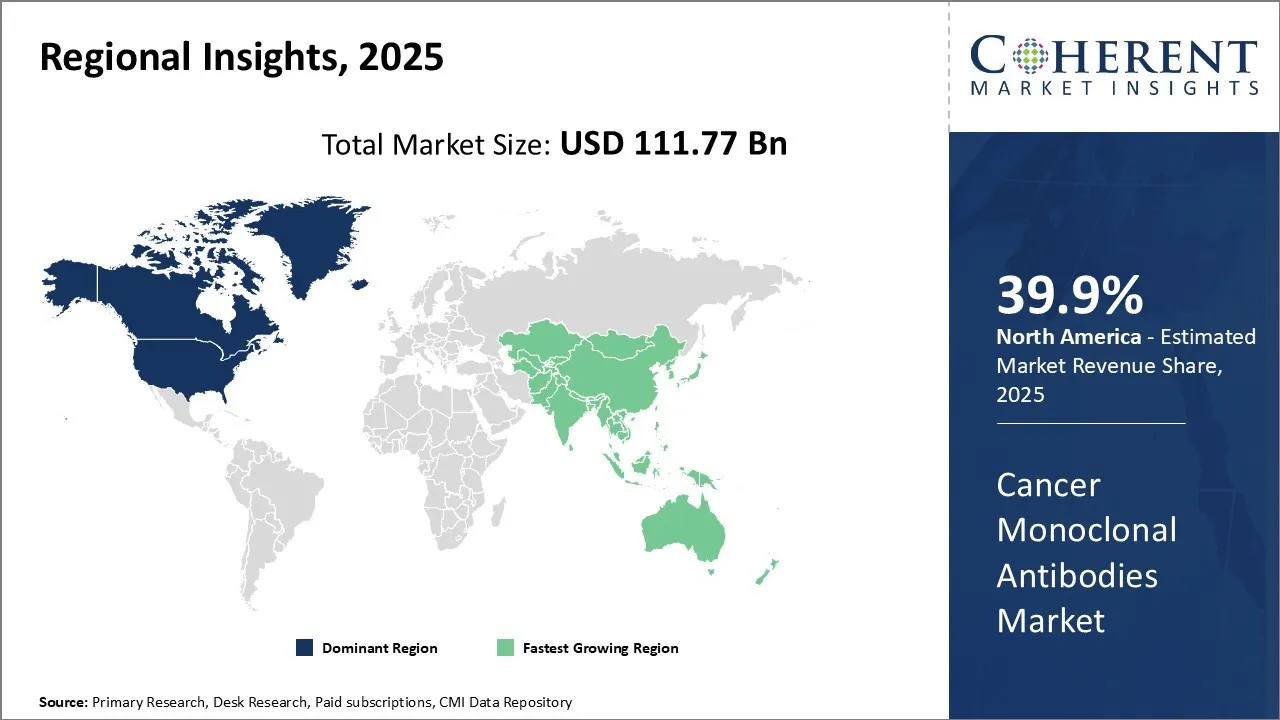
North America Cancer Monoclonal Antibodies Market Trends
North America dominates the overall market with an estimated share of 39.9% in 2026. The North America Cancer Monoclonal Antibodies Market is evolving rapidly as healthcare providers actively adopt advanced biologic therapies and precision medicine. Clinicians increasingly use targeted monoclonal antibodies to treat various cancers, supported by strong research infrastructure and ongoing clinical trials. Innovations like bispecific antibodies and antibody-drug conjugates are gaining momentum, while hospitals and specialty clinics expand oncology services to accommodate rising patient demand. Favorable regulations, comprehensive insurance coverage, and increased healthcare investments actively drive the market’s growth across the region. For instance, in October 2026, Health Canada approved Enhertu® (trastuzumab deruxtecan) for adults with unresectable or metastatic HR-positive, HER2-low or HER2-ultralow breast cancer who previously received endocrine therapy and are not candidates for further endocrine treatment.
Asia Pacific Cancer Monoclonal Antibodies Market Trends
The Asia Pacific Cancer Monoclonal Antibodies Market is growing rapidly as healthcare providers actively adopt targeted cancer therapies across the region. Rising cancer cases, expanding healthcare infrastructure, and wider access to advanced diagnostics are driving clinicians to use monoclonal antibodies more frequently. Governments and private sectors are investing in oncology centers and treatment programs, while local biopharmaceutical companies develop innovative therapies. Increasing patient and clinician awareness, combined with supportive reimbursement initiatives, actively promotes the use of monoclonal antibodies in hospitals and specialty clinics throughout Asia Pacific. For instance, in June 2026, Glenmark Pharmaceuticals launched TEVIMBRA (tislelizumab) in India after CDSCO approval, marking its entry into immune-oncology. TEVIMBRA, an anti-PD-1 monoclonal antibody, was originally developed by BeiGene (now BeOne Medicines).
United States Cancer Monoclonal Antibodies Market Trends
The United States Cancer Monoclonal Antibodies Market is progressing as healthcare providers actively integrate targeted biologic therapies into cancer treatment protocols. Strong research and development capabilities, supported by numerous clinical trials, drive the introduction of innovative therapies like bispecific antibodies and antibody-drug conjugates. Hospitals and specialty clinics are expanding oncology services to accommodate increasing patient demand, while favorable regulatory policies, comprehensive insurance coverage, and substantial healthcare investments promote wider access. Growing patient awareness further encourages the adoption of monoclonal antibodies across the country. For instance, Mylan launched its trastuzumab biosimilar in the U.S., a monoclonal antibody for treating HER2-positive breast cancer, previously sold by Genentech as Herceptin.
Japan Cancer Monoclonal Antibodies Market Trends
The Japan Cancer Monoclonal Antibodies Market is advancing as healthcare providers actively adopt targeted therapies for various cancers. Advanced healthcare infrastructure, broad access to diagnostics, and strong government support for oncology programs drive clinicians to use monoclonal antibodies more widely. Pharmaceutical companies are developing innovative therapies and conducting local clinical trials to address patient needs. Hospitals and specialty clinics are expanding services to administer these treatments efficiently, while increasing patient awareness and supportive reimbursement policies actively promote the adoption of monoclonal antibodies across Japan. For instance, in March 2024, Astellas Pharma Inc. announced that Japan's Ministry of Health, Labour and Welfare approved VYLOY™ (zolbetuximab), an anti-claudin 18.2 monoclonal antibody, on March 26, 2024, for patients with CLDN18.2-positive, unresectable, advanced, or recurrent gastric cancer.
End-user Feedback and Unmet Needs in the Cancer Monoclonal Antibodies Market
- Patient Experience and Safety: End-users highlight the importance of therapies with minimal side effects and manageable administration schedules. While monoclonal antibodies are effective, patients often face infusion-related reactions and fatigue. There is a demand for safer, more convenient treatment options that improve quality of life and reduce hospital visits during therapy.
- Accessibility and Affordability: Clinicians and patients report that high costs and limited insurance coverage restrict access to monoclonal antibody treatments. Many hospitals and specialty clinics face challenges in providing these therapies to a broader patient population. Greater affordability, expanded reimbursement, and financial support programs are needed to enhance access and equity.
- Treatment Personalization: Oncologists emphasize the need for therapies tailored to individual tumor profiles and genetic markers. Current options may not address all patient subtypes effectively, creating gaps in treatment outcomes. End-users seek more personalized monoclonal antibodies that target specific cancer mutations for improved efficacy and reduced adverse effects.
Cancer Monoclonal Antibodies Market Trend
Rise of Targeted Therapies
The market is increasingly driven by the adoption of targeted monoclonal antibodies that specifically bind cancer cell antigens. These therapies offer improved efficacy and reduced side effects compared with traditional chemotherapy. Healthcare providers are prioritizing precision medicine approaches, tailoring treatments to individual patient profiles. Innovations such as antibody-drug conjugates and bispecific antibodies are gaining traction, enhancing clinical outcomes and expanding therapeutic options across various cancer types, from solid tumors to hematologic malignancies.
Expansion in Blood Cancer Treatments
Monoclonal antibodies are witnessing significant adoption in blood cancers, including leukemia, lymphoma, and multiple myeloma. Their ability to precisely target cancer cell markers improves patient outcomes. Hospitals and specialty oncology centers are increasingly integrating these therapies into standard treatment protocols. Advances in bispecific antibodies, combination therapies, and antibody-drug conjugates are further enhancing their effectiveness, while regulatory approvals and clinical trial activity continue to support market expansion in the hematologic oncology segment.
Cancer Monoclonal Antibodies Market Opportunity
Development of Next-Generation Antibodies
The market offers opportunities in developing next-generation monoclonal antibodies, including bispecific antibodies, antibody-drug conjugates, and immune checkpoint-targeting therapies. These innovative treatments promise higher efficacy, reduced toxicity, and expanded indications across cancer types. Companies can focus on research and development to address resistant or rare cancers, offering differentiated solutions. Collaborations with academic institutions and clinical research organizations can accelerate product development, strengthen pipelines, and capture unmet medical needs in oncology.
Market Report Scope
Cancer Monoclonal Antibodies Market Report Coverage
| Report Coverage | Details | ||
|---|---|---|---|
| Base Year: | 2025 | Market Size in 2026: | USD 129.40 Bn |
| Historical Data for: | 2020 To 2024 | Forecast Period: | 2026 To 2033 |
| Forecast Period 2026 to 2033 CAGR: | 15.8% | 2033 Value Projection: | USD 361.40 Bn |
| Geographies covered: |
| ||
| Segments covered: |
| ||
| Companies covered: | Abnova Corporation, BioGenex, Bio-Rad Laboratories, Inc., AMSBIO, Elabscience Bionovation Inc., Fortis Life Sciences, Creative Diagnostics, Rockland Immunochemicals, Inc., GenScript, Leinco Technologies, Abcam Limited, and Sino Biological, Inc. | ||
| Growth Drivers: |
| ||
| Restraints & Challenges: |
| ||
Cancer Monoclonal Antibodies Market News
- In November 2024, Reddy’s Laboratories launched Toripalimab in India to treat adults with nasopharyngeal carcinoma, a rare and aggressive head and neck cancer.
- In November 2024, Purdue University’s College of Veterinary Medicine and Akston Biosciences have launched a clinical trial testing a novel anti-cPD-L1 immunotherapy for dogs with urinary bladder cancer.
Analyst Opinion (Expert Opinion)
- The Cancer Monoclonal Antibodies Market has demonstrably shifted from traditional cytotoxic therapies to precision‑targeted biologics, yet this transition reveals both profound advancements and emerging limitations. The clinical impact of monoclonal antibodies such as trastuzumab and rituximab in HER2‑positive breast cancer and non‑Hodgkin lymphoma has set new standards of care, underpinning declines in disease‑specific mortality rates and validating targeted intervention strategies. For instance, HER2‑directed antibody‑drug conjugates like Enhertu have recently been granted first‑line indications after extending median progression‑free survival to over 40 months in pivotal trials, with tumor shrinkage or disappearance in nearly nine out of ten patients, underscoring the paradigm value of antibody‑based precision approaches.
- However, recent industry attrition — exemplified by the discontinuation of late‑stage programs such as domvanalimab due to lack of survival benefit — signals that the antibody landscape is not universally translatable across all targets, particularly in complex solid tumors where the immune microenvironment and resistance pathways blunt monotherapy efficacy.
- The true market impetus now lies in next‑generation constructs: bispecific antibodies and antibody‑drug conjugates account for a significant proportion of clinical pipelines and are actively redefining therapeutic borders. Clinical development statistics estimate that approximately 19 % of monoclonal antibody candidates are ADCs and about 14 % are bispecific constructs, reflecting strategic prioritization toward enhanced cytotoxic payload delivery and dual‑antigen engagement.
- Despite these innovations, the unmet clinical need remains palpable, particularly in refractory and heterogeneous tumor subsets where conventional and next‑generation antibodies alike show limited durable responses. The emergence of biosimilars — already reducing treatment costs in Europe by billions and projected to deliver substantial savings in the U.S. — will broaden access, yet cost savings alone do not equate to therapeutic breakthroughs.
Speak to the analyst
Want personalized insights?
Take the findings above to one of our principal consultants, or have the report rebuilt around the segments, geographies and competitors you actually track.
Market Segmentation
- By Source Insights (Revenue, USD Bn, 2021 - 2033)
- Human
- Chimeric
- Murine
- Humanized
- By Application Insights (Revenue, USD Bn, 2021 - 2033)
- Blood Cancer
- Breast Cancer
- Lung Cancer
- Colorectal Cancer
- Liver Cancer
- Others
- By End User Insights (Revenue, USD Bn, 2021 - 2033)
- Hospital
- Clinical and Diagnostic Laboratories
- Research Institutes
- Others
- Regional Insights (Revenue, USD Bn, 2021 - 2033)
- North America
- U.S.
- Canada
- Latin America
- Brazil
- Argentina
- Mexico
- Rest of Latin America
- Europe
- Germany
- U.K.
- Spain
- France
- Italy
- Russia
- Rest of Europe
- Asia Pacific
- China
- India
- Japan
- Australia
- South Korea
- ASEAN
- Rest of Asia Pacific
- Middle East
- GCC Countries
- Israel
- Rest of Middle East
- Africa
- South Africa
- North Africa
- Central Africa
- North America
- Key Players Insights
- Abnova Corporation
- BioGenex
- Bio-Rad Laboratories, Inc.
- AMSBIO
- Elabscience Bionovation Inc.
- Fortis Life Sciences
- Creative Diagnostics
- Rockland Immunochemicals, Inc.
- GenScript
- Leinco Technologies
- Abcam Limited
- Sino Biological, Inc.
Sources
Primary Research interviews
- Oncologists and hematologists
- Pharmaceutical and biotechnology company executives
- Clinical research organizations (CROs)
- Hospital procurement managers
- Immunology researchers
Databases
- PubMed
- ClinicalTrials.gov
- FDA Biologics License Applications (BLA) database
- EMA (European Medicines Agency) database
- WHO International Clinical Trials Registry Platform (ICTRP)
Magazines
- Nature Biotechnology
- Genetic Engineering & Biotechnology News
- The Scientist
- BioPharm International
Journals
- Journal of Clinical Oncology
- Cancer Research
- mAbs (Monoclonal Antibodies journal)
- Blood
- Immunology and Cell Biology
Newspapers
- The New York Times (Health Section)
- The Guardian (Science Section)
- The Washington Post (Health & Science Section)
Associations
- American Association for Cancer Research (AACR)
- American Society of Clinical Oncology (ASCO)
- International Society for Biological Therapy of Cancer (iSBTc)
- European Society for Medical Oncology (ESMO)
- International Society for Antibody-based Therapy (ISABT)
Public Domain sources
- U.S. National Library of Medicine
- World Health Organization (WHO) reports
- National Cancer Institute (NCI) publications
- Open-access government health reports
Proprietary Elements
- CMI Data Analytics Tool
- Proprietary CMI Existing Repository of information for last 8 years
Get access to 250+ pages report
Every segment, forecast, competitor profile and data table behind the analysis above — available for instant download.
- ESOMAR Member
- ISO 9001:2015 Certified
- D-U-N-S Registered
- GDPR & CCPA Compliant
Missing comfort of reading report in your local language? Find your preferred language:
Transform your Strategy with Exclusive Trending Reports
Frequently Asked Questions
The Cancer Monoclonal Antibodies Market is estimated to be valued at USD 129.40 Bn in 2026, and is expected to reach USD 361.40 Bn by 2033.
The CAGR of the Cancer Monoclonal Antibodies Market is projected to be 15.8% from 2026 to 2033.
Adoption of inorganic growth strategies by market players and increase in the number of research and development activities are the major factors driving the growth of the cancer monoclonal antibodies market.
High treatment cost and data security and complex manufacturing processes of monoclonal antibodies are the major factors hampering the growth of the cancer monoclonal antibodies market.
In terms of source, human segment is estimated to dominate the market revenue share in 2026.
Abnova Corporation, BioGenex, Bio-Rad Laboratories, Inc., AMSBIO, Elabscience Bionovation Inc., Fortis Life Sciences, Creative Diagnostics, Rockland Immunochemicals, Inc., GenScript, Leinco Technologies, Abcam Limited, and Sino Biological, Inc. are the major players.
North America is expected to lead the cancer monoclonal antibodies market in 2026.