

Global Energy Efficient Windows Market Size and Forecast – 2026-2033
The global energy efficient windows market is estimated to be valued at USD 17.31 Bn in 2026 and is expected to reach USD 27.16 Bn by 2033, exhibiting a compound annual growth rate (CAGR) of 6.7% from 2026 to 2033.
Key Takeaways of the Energy Efficient Windows Market
- The double glazed windows segment is projected to account for 45.5% of the market share in 2026.
- The glass segment is expected to capture 33.7% of the market share in 2026.
- The residential segment is estimated to account for 35.7% of the market share in 2026.
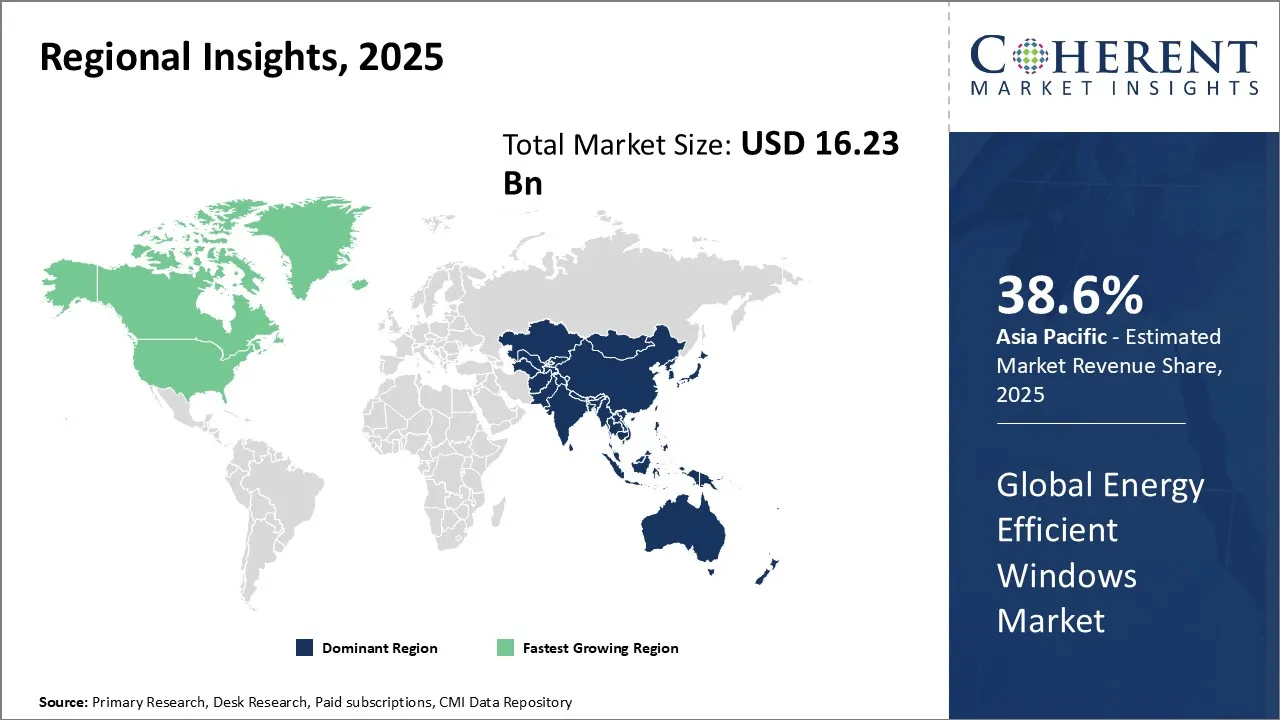
- Asia Pacific is projected to dominate the global energy efficient windows market in 2026 with a 38.6% share. North America, holding an estimated share of 29.5% in 2026, is expected to be the fastest-growing region.
Market Overview
The market trend is characterized by advancements in window technologies, such as triple glazing, low-emissivity coatings, and smart window that improve thermal insulation and reduce energy consumption. Additionally, rising environmental awareness and investments in green building certifications are propelling the adoption of energy efficient windows. Integration with smart home systems and rising retrofitting activities in existing infrastructures also contribute to the market's expansion, reflecting a growing emphasis on reducing carbon footprints and enhancing occupant comfort.
Current Events and Its Impact
Current Events | Description and its Impact |
EU Energy Performance of Buildings Directive (EPBD) Recast Accelerates Toward Zero-Emission Buildings |
|
U.S. Energy-Efficient Home Improvement Credit (25C) Sustains Incentives for Window Upgrades |
|
Segmental Insights
- Current Industry Events of 2026
- Market Size Estimation
- Regional Breakdown
- Competitive Landscape
- Customer Intelligence
- Segmental Analysis
- Pricing Analysis
- Key Market Drivers, Challenges & Future Trends
- Customized Insights Section
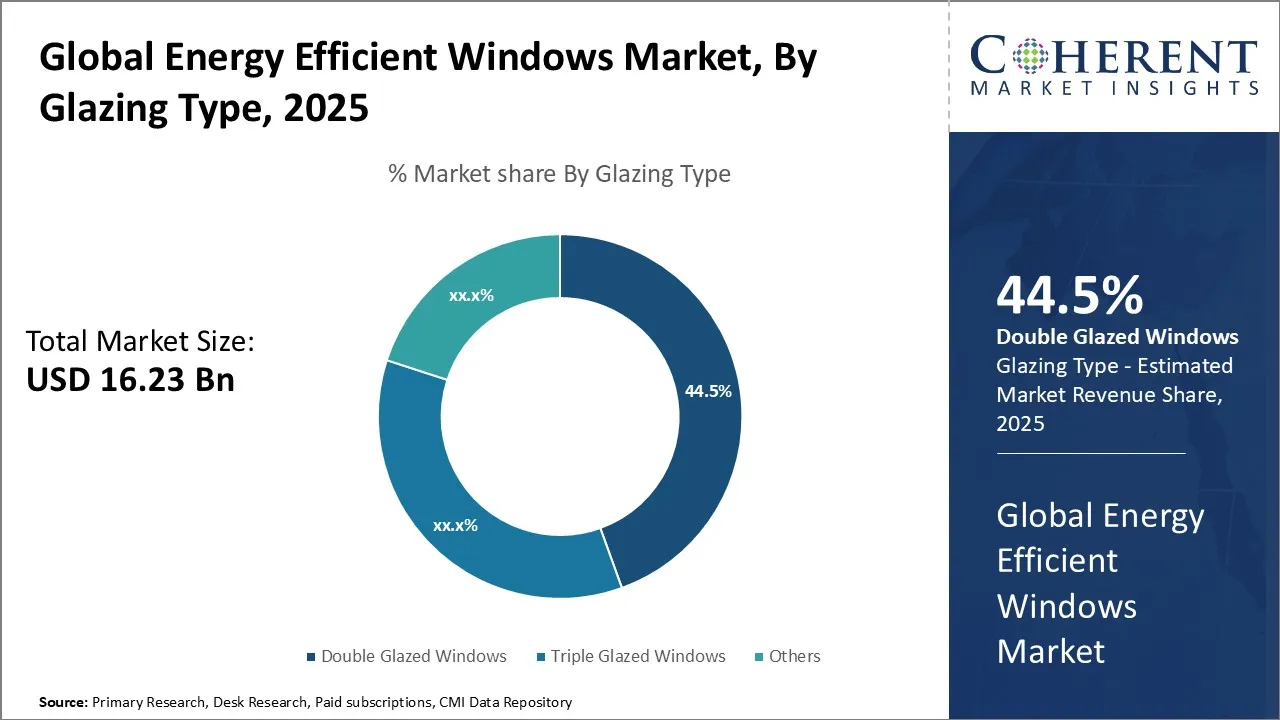
Energy Efficient Windows Market Insights, by Glazing Type - Double Glazed Windows Segment Dominates the Market Due to Superior Thermal Performance and Cost-Effectiveness
Double glazed windows segment is expected to hold 45.5% share of the market in 2026, because they offer an optimal balance between energy savings and affordability. These windows consist of two panes of glass separated by a spacer filled with air or inert gas, which significantly reduces heat transfer compared to single-pane alternatives. This improved insulation helps maintain indoor temperatures, reducing the reliance on heating and cooling systems and, in turn, lowering energy consumption.
The widespread adoption of double-glazed windows is further driven by increasing awareness of environmental sustainability and the rising energy costs globally. Homeowners and building developers recognize the role these windows play in enhancing energy efficiency while keeping installation and maintenance costs manageable. Additionally, double glazed windows deliver effective noise reduction, adding to their appeal in urban and high-traffic areas, where sound pollution is a concern.
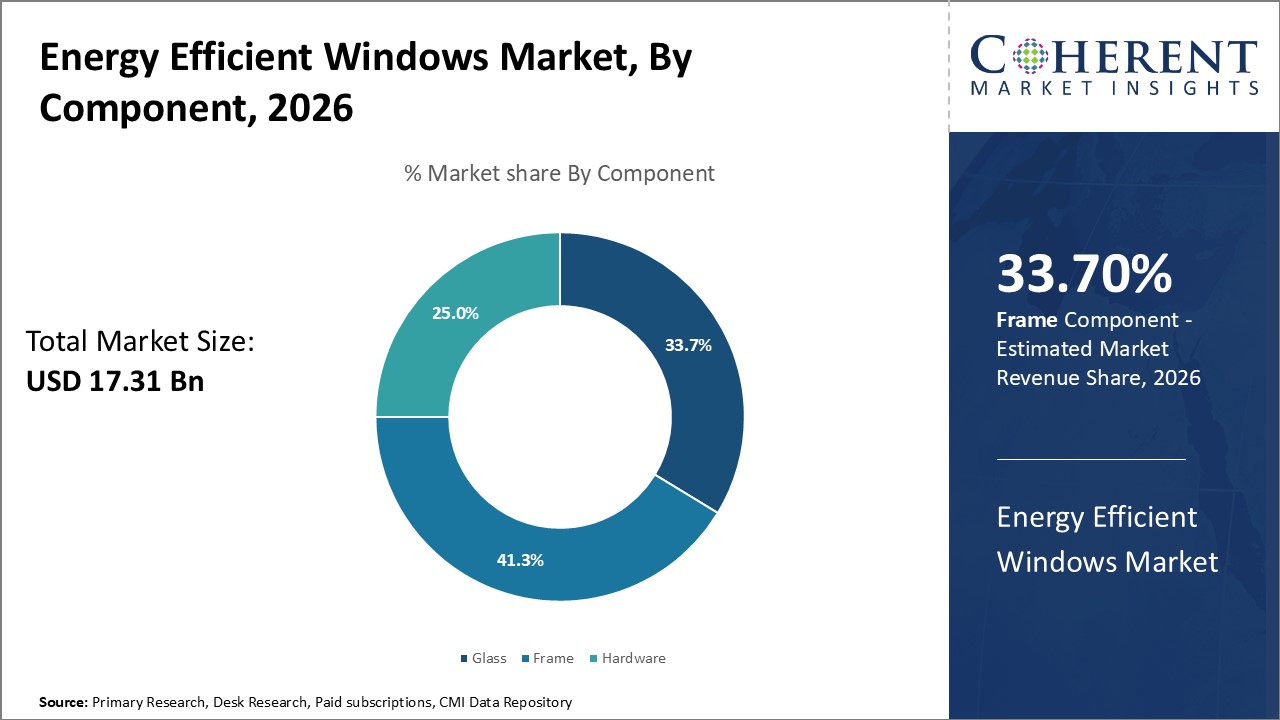
Energy Efficient Windows Market Insights, by Component – Glass Segment Dominates the Market Due to its Critical Role in Energy Conservation and Advancements in Glazing Technology
Glass segment is expected to capture 33.7% share in 2026. It directly impacts the window’s ability to reduce heat transfer, control solar heat gain, and enhance natural lighting, which are all vital elements in energy conservation. The growing the demand for smart and high-performance glass products is primarily responsible for the glass segment’s leadership position.
Innovations such as Low-Emissivity (Low-E) coatings, tinted glass, and gas-filled cavities between glass panes have revolutionized how windows perform thermally. Low-E glass significantly reduces infrared and ultraviolet light, allowing greater control over heat movement while maximizing daylight. This not only improves indoor comfort but also minimizes cooling and heating loads, leading to substantial energy savings.
Energy Efficient Windows Market Insights, by Application – Residential Segment Dominates the Market Driven by Increasing Adoption of Energy Efficiency Measures in Homes and Rising Consumer Awareness
The residential segment is projected to hold 35.7% share in 2026, because of the growing emphasis on reducing household energy consumption and enhancing living comfort. Homeowners are more conscious than ever about energy bills and environmental impacts, driving the demand for improved window solutions that curtail heat loss in winters and heat gain during summers.
Government incentives, rebates, and stricter building codes focused on residential energy efficiency have accelerated adoption rates. Many countries are encouraging the use of energy-efficient building materials in new housing developments as well as in renovation projects, which propels the demand for high-performance windows designed specifically for residential applications.
Shifts in consumer preferences toward sustainable living and smart home integration also bolster this segment. Energy-efficient windows complement smart thermostats and home automation technologies, creating a holistic approach to energy conservation. Moreover, increased urbanization and the rise of multi-family housing units, apartment complexes, and gated communities emphasize the need for standardized energy-saving solutions.
Regional Insights
Asia Pacific Energy Efficient Windows Market Analysis and Trends
The Asia Pacific region is projected to lead the market with a 38.6% share in 2026, fueled by rapid urbanization, increasing awareness about environmental concerns, and aggressive government incentives for energy conservation. Emerging economies such as China, India, and Southeast Asian countries are witnessing a boom in commercial and residential construction, often incorporating green building practices influenced by global sustainability trends.
Governments across the region are progressively introducing energy efficiency codes and subsidies, such as China’s Green Building Action Plan and India’s Energy Conservation Building Code (ECBC), which stimulate demand for advanced window solutions. The rise of local manufacturers like Fenzi Group (China) and V-Guard Industries (India), alongside multinational companies establishing production bases and partnerships, builds a robust industry presence. Trade policies and infrastructural improvements also facilitate expanded distribution and adoption of energy efficient products.
North America Energy Efficient Windows Market Analysis and Trends
The North America region is expected to exhibit the fastest growth in the market contributing 29.5% share in 2026, the energy efficient windows market is driven by strict regulations (DOE, EPA ENERGY STAR, IECC codes), high energy usage, and strong retrofit demand. Advanced technologies like Low-E coatings, triple glazing, and smart glass are widely adopted. Key players include Andersen, Pella, JELD-WEN, and Marvin, supported by Canadian sustainability initiatives. Trade under USMCA and widespread LEED/ENERGY STAR certifications further strengthen the market growth.
Global Energy Efficient Windows Market Outlook for Key Countries
Germany Energy Efficient Windows Market Analysis and Trends
Germany energy efficient windows market is characterized by strong regulatory support from the federal government, promoting energy-saving practices across residential and commercial sectors. The country has a well-established manufacturing base with companies like SCHÜCO International and Wiegand-Glas leading innovations in high-performance window systems. The emphasis on passive house standards and energy-saving renovations significantly boosts the demand. Germany’s innovation-driven market benefits from extensive R&D and integration of smart window technologies, cementing its role as a trendsetter in the regional market.
U.S. Energy Efficient Windows Market Analysis and Trends
The U.S. has a dynamic energy efficient windows market driven by state-level regulations and federal initiatives targeting energy usage reductions in buildings. The Department of Energy’s ENERGY STAR program plays a vital role in endorsing windows that meet efficiency criteria. Major players such as Andersen Corporation and Pella Corporation leverage vast manufacturing capabilities and extensive distribution networks. The market also benefits from growing consumer awareness regarding energy savings and environmental responsibility, particularly in eco-conscious states like California and New York.
China Energy Efficient Windows Market Analysis and Trends
China is rapidly advancing its energy efficient windows market through stringent building codes and a growing green construction movement. Government policies targeting carbon neutrality increase the demand for high-performance window solutions in urban centers. Japanese and European companies, including Saint-Gobain and YKK AP, have established partnerships with local firms like Fenzi Group to optimize production and meet domestic requirements. Additionally, China’s scale of construction and industrial capabilities accelerates the market penetration for innovative window products.
India Energy Efficient Windows Market Analysis and Trends
India energy efficient windows market is evolving with increasing emphasis on energy conservation driven by government initiatives such as the Energy Conservation Building Code. Urbanization, rising disposable incomes, and growing environmental awareness contribute to expanding the demand for energy efficient windows, especially in metropolitan areas. Domestic companies like V-Guard Industries and international players such as Jeld-Wen actively contribute by offering affordable and customized solutions. Challenges like price sensitivity are addressed through competitive pricing and increasing availability of low-cost, efficient window technologies.
U.K. Energy Efficient Windows Market Analysis and Trends
The U.K. energy efficient windows market continues to lead in stringent building regulations that encourage retrofit and new constructions to prioritize energy efficiency. The government’s commitment to achieving net-zero emissions by 2050 reinforces market demand for high-quality windows with superior insulation properties. Notable companies such as Anglian Home Improvements and Everest contribute with innovation and customer-centric offerings. The emphasis on sustainability in the U.K. construction industry, paired with consumer preference for energy-saving products, sustains robust the market momentum.
Macro and Micro Economic Factors Impacting the Energy Efficient Windows Market Growth
Macro-Economic Factors
- Government Regulation and Incentives: Stricter building codes and energy performance directives globally, such as Europe’s EPBD and U.S. green certifications, are spurring market uptake. Incentives including tax credits and subsidies boost adoption in residential and commercial sectors.
- Rising Energy Costs: Steadily increasing energy prices motivate property owners and developers to install energy efficient windows as a cost-saving measure, supporting market growth worldwide.
- Urbanization and Construction Boom: Rapid urban expansion, especially in Asia-Pacific and developing economies, leads to greater demand for energy efficient construction materials, with windows being a primary target for sustainability upgrades.
- Environmental Sustainability Pressures: Global climate change concerns drive regulatory and consumer focus on energy-saving measures, positioning energy efficient windows as an accessible solution for reducing emissions.
- Trade Policies and Tariffs: Protectionist measures and tariffs on imported glass and window components may raise costs and impact market competitiveness, particularly in the U.S. and Europe.
Micro Economic Factors
- Technological Innovation: Advancements in window designs—such as low-emissivity coatings, triple glazing, gas-filled units, and smart glass—result in improved performance and wider appeal. Manufacturers compete on efficiency and design innovation for competitive differentiation.
- Consumer Awareness and Behavior: Growing consumer concern for reducing utility bills and contributions to environmental sustainability drives selection of energy efficient windows, especially in urban and well-educated markets.
- Installation and Upfront Costs: High initial investment remains a barrier for price-sensitive consumers and retrofitting in older buildings, though long-term savings on energy bills counteract the upfront expenses.
- Green Certifications and Market Perception: The pursuit of certifications (LEED, BREEAM) and visible sustainability credentials enhances market penetration, especially in commercial and institutional construction.
- Product Customization and Aesthetics: Increased demand for tailored window solutions, integrating energy performance with architectural aesthetics, drives growth in premium and retrofit segments.
Market Players, Key Development, and Competitive Intelligence
Key Developments
- In February 2025, Saint-Gobain finalized its acquisition of Fosroc, a prominent global construction chemicals company with a particularly strong presence across India, the Middle East, and the Asia Pacific region.
- In January 2023, YES WORLD Climate Tech Pte Ltd introduced its energy-efficient Windows Solution for residential and commercial buildings. The offering features a specialized glass system made of double-pane and sandwich glass that reflects up to 85% of solar radiant heat. It enables control over reflectivity, emissivity, absorption, radiant heat gain, solar heat gain, and privacy. Moreover, the solution also serves as a passive solar collector by capturing sunlight and radiating free heat into the building.
Top Strategies Followed by Global Energy Efficient Windows Market Players
- Established players dominate the market by investing heavily in research and development (R&D) to continually innovate high-performance windows that meet stringent energy standards and evolving customer expectations. These companies focus on developing advanced glazing technologies, enhanced insulation materials, and smart window solutions that improve thermal efficiency and reduce energy consumption.
- For example, Andersen Corporation and Saint-Gobain have introduced advanced low-emissivity (Low-E) coated glass and triple-glazing solutions that enhance insulation while allowing natural light transmission.
- Mid-level companies in the energy efficient windows market typically tailor their strategies toward offering cost-effective solutions that strike a balance between quality and affordability, making energy efficiency accessible to price-sensitive consumers. These players concentrate on optimizing manufacturing processes and sourcing durable yet economical materials to reduce production costs without compromising performance. Their product portfolios often include standard and modular window designs that appeal to budget-conscious residential and commercial sectors.
- For example, JELD-WEN and YKK AP often focus on regional markets, offering competitively priced double-glazed windows and modular frame designs that fit both residential and small commercial buildings.
- Small-scale players in the global energy efficient windows market carve out niches by concentrating on specialized features or innovative product offerings that differentiate them from larger competitors. These companies often pioneer unique solutions such as customized window designs, smart coatings, or eco-friendly materials tailored for specific climatic conditions or architectural styles. To maintain competitiveness, small players adopt cutting-edge technologies like nano-coatings, vacuum insulating glass, or IoT-enabled smart windows that appeal to environmentally conscious consumers and innovative construction projects.
- For example, start-ups like Halio and Nodis are experimenting with nano-coatings and film-based technologies to create dynamic, eco-friendly smart windows for modern office towers and luxury homes.
Market Report Scope
Energy Efficient Windows Market Report Coverage
| Report Coverage | Details | ||
|---|---|---|---|
| Base Year: | 2025 | Market Size in 2026: | USD 17.31 Bn |
| Historical Data for: | 2020 To 2024 | Forecast Period: | 2026 To 2033 |
| Forecast Period 2026 to 2033 CAGR: | 6.7% | 2033 Value Projection: | USD 27.16 Bn |
| Geographies covered: |
| ||
| Segments covered: |
| ||
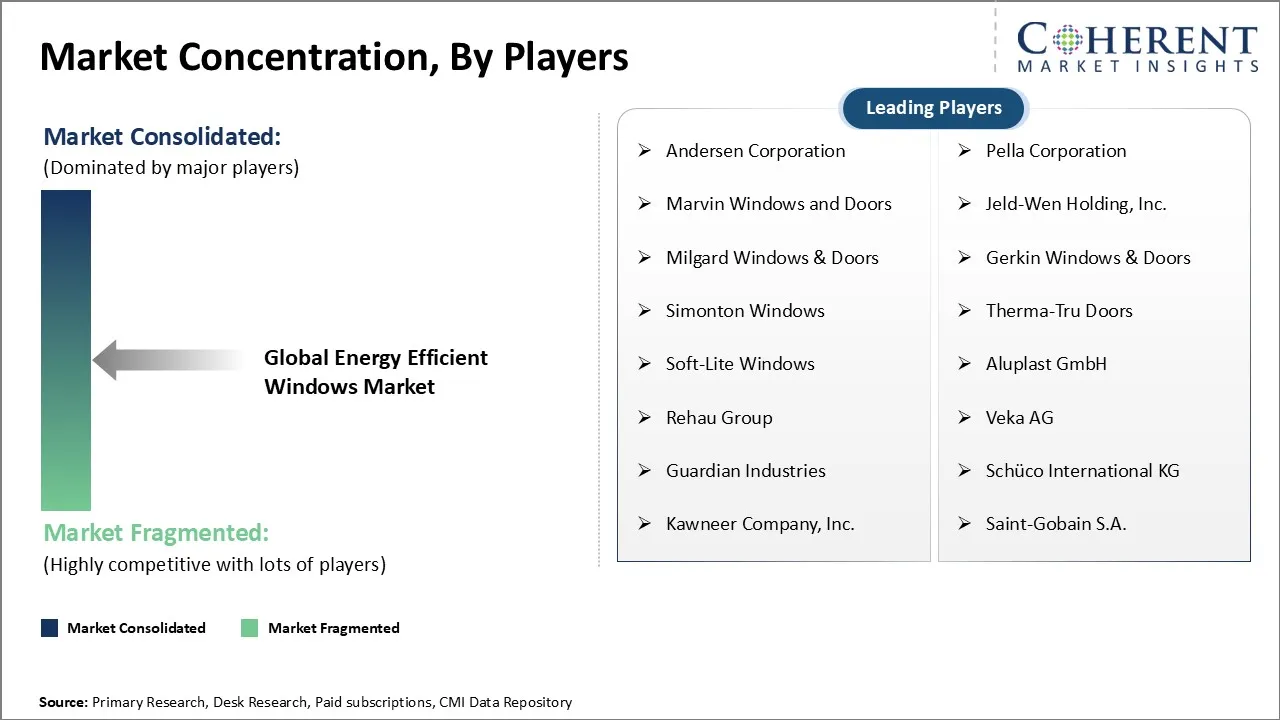
| Companies covered: | Andersen Corporation, Pella Corporation, Marvin Windows and Doors, Jeld-Wen Holding, Inc., Milgard Windows & Doors, Gerkin Windows & Doors, Simonton Windows, Therma-Tru Doors, Soft-Lite Windows, Aluplast GmbH, Rehau Group, Veka AG, Guardian Industries, Schüco International KG, Kawneer Company, Inc., and Saint-Gobain S.A. | ||
| Growth Drivers: |
| ||
| Restraints & Challenges: |
| ||
Energy Efficient Windows Market Dynamics
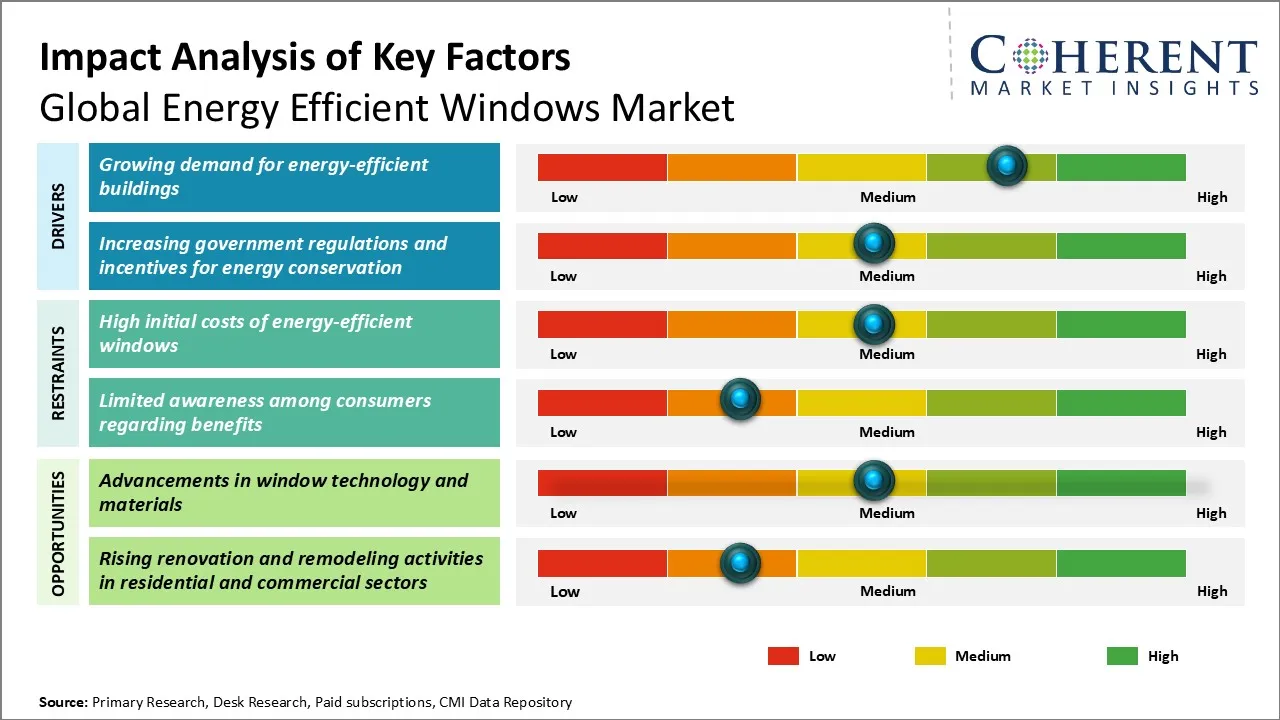
Energy Efficient Windows Market Driver - Growing Demand for Energy-Efficient Buildings
The increasing emphasis on sustainable construction practices and stringent government regulations aimed at reducing carbon emissions have significantly propelled the demand for energy-efficient buildings worldwide. As environmental concerns and rising energy costs continue to gain attention, architects, builders, and homeowners are prioritizing energy conservation measures during building design and renovation processes. Energy-efficient windows play a crucial role in minimizing heat loss or gain, thereby enhancing insulation and lowering the overall energy consumption of buildings.
For example, the European Union’s Energy Performance of Buildings Directive (EPBD) mandates Nearly Zero-Energy Buildings (NZEBs), encouraging the installation of energy-efficient glazing solutions. Similarly, in the U.S., LEED-certified green buildings often incorporate double or triple-pane Low-Emissivity (Low-E) windows to meet energy performance standards.
Energy Efficient Windows Market Opportunity - Advancements in Window Technology and Materials
The global energy efficient windows market stands to benefit significantly from ongoing advancements in window technology and materials, presenting a substantial growth opportunity. Innovations such as Low-Emissivity (Low-E) coatings, vacuum insulated glass, and smart glass technologies are transforming traditional window functionalities by dramatically improving thermal insulation and reducing energy consumption in buildings. These technologies enable windows to adapt dynamically to external conditions—controlling heat transfer, optimizing natural light, and enhancing occupant comfort—thereby aligning with increasing regulatory requirements for energy-efficient building solutions.
For instance, Saint-Gobain’s SageGlass uses electrochromic technology that allows windows to tint automatically in response to sunlight, reducing the need for artificial cooling and lighting.
Analyst Opinion (Expert Opinion)
- The global energy efficient windows market is witnessing robust growth, spurred by increasing energy costs and a rising awareness of sustainable building practices. Insights from the International Energy Efficiency Conference (2023) and the Green Building Expo (2022) highlighted the pivotal innovations in the sector, with companies like Andersen Windows and Pella Corporation leading the charge in advanced glazing technologies.
- Andersen's recent launch of triple-pane windows with enhanced thermal insulation exemplifies a strategic response to consumer demand for energy savings and comfort. Discussions at these conferences underscored the critical role of government incentives and building codes in promoting energy-efficient solutions, as many regions are tightening regulations to reduce carbon footprints. However, challenges such as high initial costs and the need for consumer education on long-term savings were noted as potential hurdles.
- Companies that focus on integrating smart technologies, such as automated shading systems, will likely differentiate themselves in the market. Additionally, partnerships with architects and builders can facilitate wider adoption. Ultimately, the energy efficient windows market trajectory will depend on its ability to innovate while addressing consumer needs for sustainability and cost-effectiveness in building design.
Speak to the analyst
Want personalized insights?
Take the findings above to one of our principal consultants, or have the report rebuilt around the segments, geographies and competitors you actually track.
Market Segmentation
- Glazing Type Insights (Revenue, USD Bn, 2021 - 2033)
- Double Glazed Windows
- Triple Glazed Windows
- Others
- Component Insights (Revenue, USD Bn, 2021 - 2033)
- Glass
- Frame
- Hardware
- Application Insights (Revenue, USD Bn, 2021 - 2033)
- Residential
- Commercial
- Industrial
- Regional Insights (Revenue, USD Bn, 2021 - 2033)
- North America
- U.S.
- Canada
- Latin America
- Brazil
- Argentina
- Mexico
- Rest of Latin America
- Europe
- Germany
- U.K.
- Spain
- France
- Italy
- Russia
- Rest of Europe
- Asia Pacific
- China
- India
- Japan
- Australia
- South Korea
- ASEAN
- Rest of Asia Pacific
- Middle East
- GCC Countries
- Israel
- Rest of Middle East
- Africa
- South Africa
- North Africa
- Central Africa
- North America
- Key Players Insights
- Andersen Corporation
- Pella Corporation
- Marvin Windows and Doors
- Jeld-Wen Holding, Inc.
- Milgard Windows & Doors
- Gerkin Windows & Doors
- Simonton Windows
- Therma-Tru Doors
- Soft-Lite Windows
- Aluplast GmbH
- Rehau Group
- Veka AG
- Guardian Industries
- Schüco International KG
- Kawneer Company, Inc.
- Saint-Gobain S.A.
Sources
Primary Research Interviews
- R&D Director – Leading Energy-Efficient Glass & Window Manufacturer
- Procurement Manager – Major Green Building Materials Retailer
- Product Development Head – Smart Glass & Window Technologies Brand
- Sustainability Manager – Green Building Certification Body
Stakeholders
- Manufacturers
- End-use Sectors:
- Residential Construction (Single-Family, Multi-Family Housing)
- Commercial Construction (Offices, Retail, Hospitality)
- Industrial & Institutional Buildings (Factories, Schools, Hospitals)
- Regulatory & Certification Bodies
- E-commerce & Retail Platforms (Home improvement & construction materials)
- Technology Integration Players: Smart glass, low-emissivity coating, IoT-enabled building automation
Databases
- UN Comtrade Database (global trade flows of windows & glass)
- India Import Export (EXIM) Database
- International Energy Agency (IEA) Energy Efficiency Data
Magazines
- Glass Magazine – Innovations in architectural & energy-efficient glass
- Window & Door Magazine – Trends in fenestration and sustainable windows
- Green Building & Design (gb&d) – Sustainable construction and materials trends
- Construction Week – Smart building material adoption
Journals
- Energy & Buildings – Studies on energy savings through efficient windows
- Journal of Building Engineering – Performance of glazing and insulation systems
- Building & Environment – Window design impact on energy efficiency
- Solar Energy Materials & Solar Cells – Smart glass and low-E coating technologies
- Journal of Architectural Engineering – Case studies on energy-efficient windows in modern buildings
Newspapers
- The Financial Times – Coverage of sustainable construction investments
- The Guardian – Green housing and energy-efficient building policies
- Asia Construction News – Energy-efficient construction trends in Asia-Pacific
- European Construction Review – EU regulations on building energy performance
- The New York Times – Consumer demand for sustainable homes & retrofits
Associations
- American Architectural Manufacturers Association (AAMA)
- National Fenestration Rating Council (NFRC)
- U.S. Green Building Council (USGBC – LEED)
- European Committee for Standardization (CEN) – Building & glazing standards
- International Energy Agency (IEA) Energy Efficiency Hub
- Glass for Europe Association
Public Domain Sources
- U.S. Department of Energy (DOE) – ENERGY STAR guidelines for windows
- European Commission – Energy Performance of Buildings Directive (EPBD)
- World Green Building Council – Global Net Zero and efficiency standards
- International Organization for Standardization (ISO) – Standards on thermal performance of windows
Proprietary Elements
- CMI Data Analytics Tool, Proprietary CMI Existing Repository of information for last 8 years.
Get access to 250+ pages report
Every segment, forecast, competitor profile and data table behind the analysis above — available for instant download.
- ESOMAR Member
- ISO 9001:2015 Certified
- D-U-N-S Registered
- GDPR & CCPA Compliant
Missing comfort of reading report in your local language? Find your preferred language:
Transform your Strategy with Exclusive Trending Reports
Frequently Asked Questions
The global energy efficient windows market is estimated to be valued at USD 17.31 Bn in 2026 and is expected to reach USD 27.16 Bn by 2033.
The CAGR of the global energy efficient windows market is projected to be 6.7% from 2026 to 2033.
Growing demand for energy-efficient buildings and increasing government regulations and incentives for energy conservation are the major factors driving the growth of the global energy efficient windows market.
High initial costs of energy-efficient windows and limited awareness among consumers regarding benefits are the major factors hampering the growth of the global energy efficient windows market.
In terms of glazing type, the double glazed windows segment is estimated to dominate the market revenue share in 2026.
Andersen Corporation, Pella Corporation, Marvin Windows and Doors, Jeld-Wen Holding, Inc., Milgard Windows & Doors, Gerkin Windows & Doors, Simonton Windows, Therma-Tru Doors, Soft-Lite Windows, Aluplast GmbH, Rehau Group, Veka AG, Guardian Industries, Schüco International KG, Kawneer Company, Inc., and Saint-Gobain S.A. are the major players.
Asia Pacific is expected to lead the global energy efficient windows market in 2026.