

Energy ESO Market Size and Trends
The global energy ESO market is estimated to be valued at USD 650.0 Mn in 2026 and is expected to reach USD 2,261.8 Mn by 2033, growing at a compound annual growth rate (CAGR) of 19.5% from 2026 to 2033.
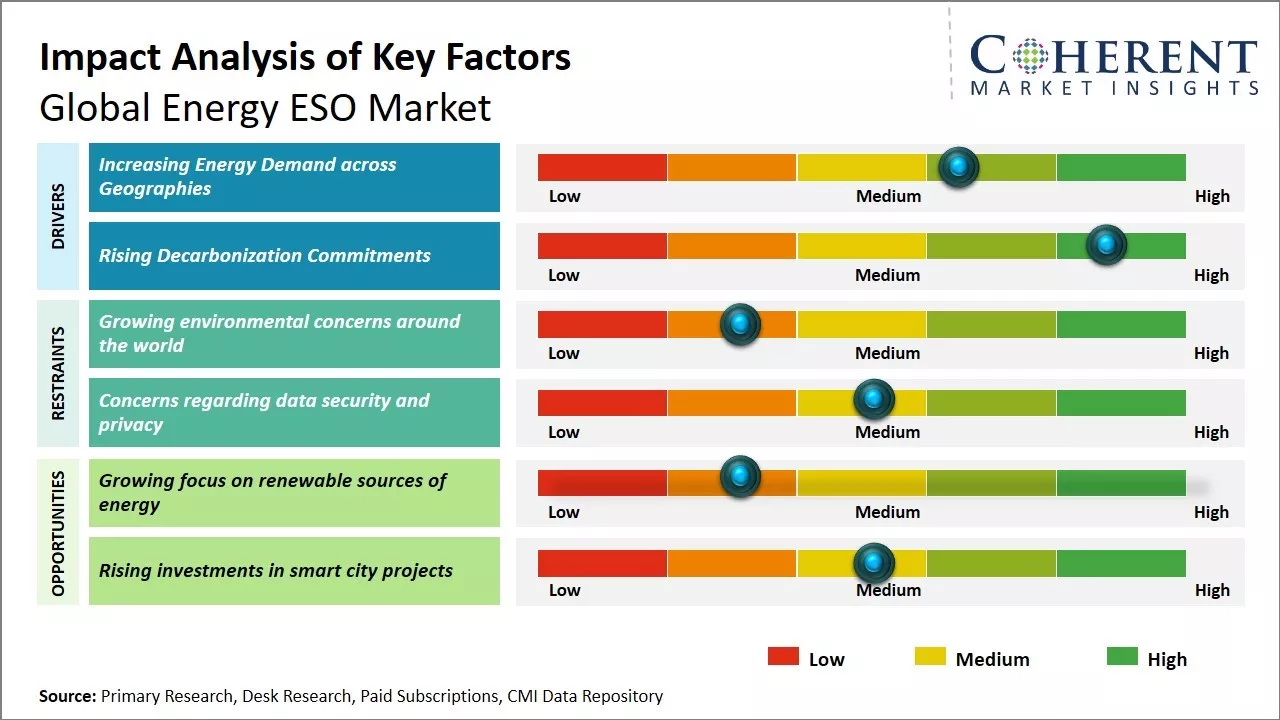
Key Takeaways
- Based on Service, the structuring & layout segment is projected to capture 37.3% share of the market in 2026, supported by its ability to optimize costs and streamline project management.
- Based on location, the onshore segment is expected to hold 62.7% share of the market in 2026, driven by the established infrastructure and regulations.
- Based on energy, the non-renewable segment is expected to account for 44.1% share of the market in 2026, owing to scalability and complexity
- Based on region, North America is set to lead the energy ESO market in 2026 with a 39.3% share due to the presence of key industry players. While, Aisa Pacific is considered as the fastest growing region during the forecast period due to heavy investment and modernization.
Market Overview
The market is expected to witness significant growth during the forecast period. There is an increasing focus on improving energy efficiency and reducing carbon emissions worldwide. Numerous countries are investing heavily in renewable energy technologies to meet their growing energy demands in a sustainable manner. Also, advancements in technologies such as artificial intelligence, internet of things, and Blockchain are enabling energy and utility companies to better manage energy supply and demand. These factors are expected to drive greater adoption of energy and sustainability optimization software and services across the utility and industrial sectors.
Current Events and Its Impact
Current Events | Description and its Impact |
Global Climate Change Initiatives |
|
Economic Factors and Market Dynamics |
|
Role of Artificial Intelligence in the Energy ESO Market
Integration of artificial intelligence into energy ESO is expected to transform the energy sector, helping it overcome efficiency, sustainability and innovation challenges. With the help of AI technology, the energy companies are reshaping in terms of production, storage and distribution resources as well as optimization of their processes. Energy companies outsource AI tolls and techniques such as machine learning, statistical modeling and data mining to quickly fill the knowledge gap.
In May 2025, Edgecom Energy, an intelligent energy management solutions company, launched AI-driven 24-hour optimized production scheduling with their AI energy CoPilot. This innovation is designed to help industrial facilities intelligently align production with real-time.
- Current Industry Events of 2026
- Market Size Estimation
- Regional Breakdown
- Competitive Landscape
- Customer Intelligence
- Segmental Analysis
- Pricing Analysis
- Key Market Drivers, Challenges & Future Trends
- Customized Insights Section
Segmental Insights
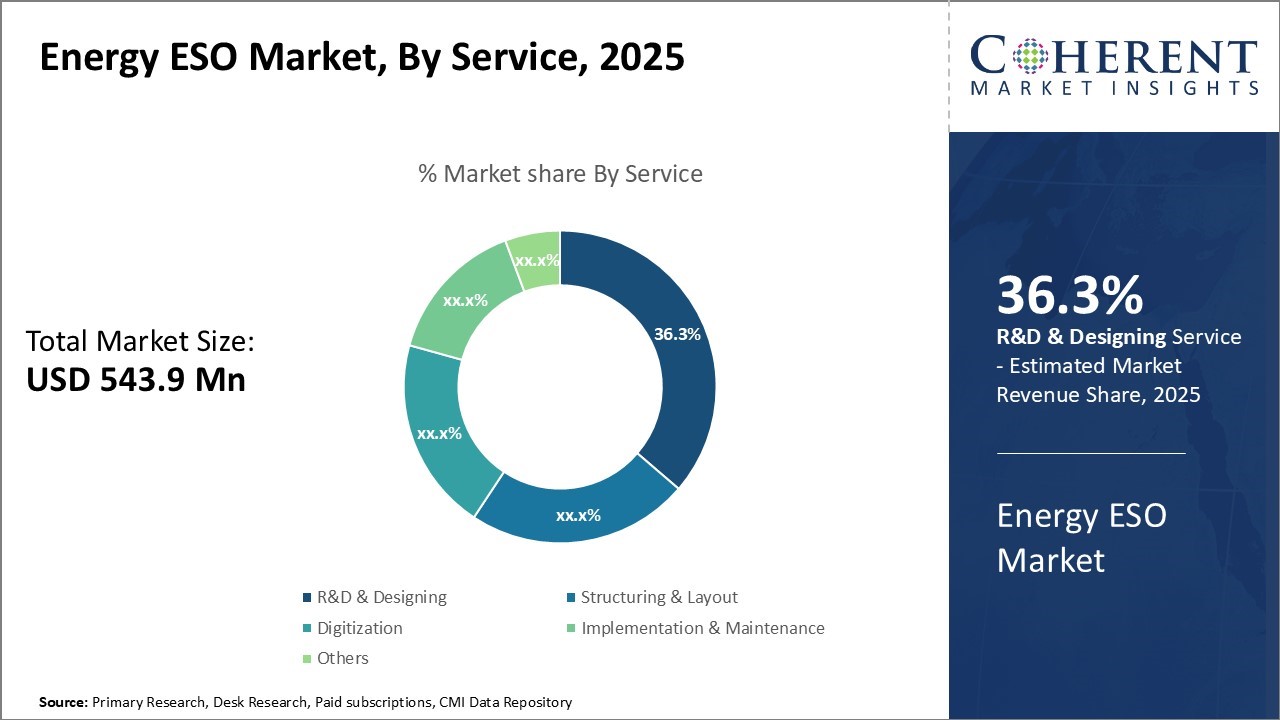
Energy ESO Market Insights, By Service: Cost Optimization and Project Management Drive the Structuring & Layout Share
In terms of service, structuring & layout contributes 37.3% share of the market owing to its ability to optimize costs and streamline project implementation for energy companies. Structuring the design and layout of energy infrastructure requires expertise in evaluating various technical, geographical, and operational factors. This ensures the most cost effective and productive use of capital expenditure. Complex energy projects involving setting up power generation facilities, transmission networks, or extraction operations benefit tremendously from professional structuring and layout services.
Energy companies rely on specialized consultants to structure deals, draft contracts, and coordinate with multiple stakeholders during the planning phase. Effective project management is also a key strength of structuring and layout services. Consultants help create detailed project schedules, allocation of resources and responsibilities to smoothly executes projects within budget and timeline. This reduces operational disruptions and cost overruns. With the rising energy demand globally, structuring optimum infrastructure expansion plans is a high priority for companies. The segment leads owing to value addition at the initial critical stages of projects.
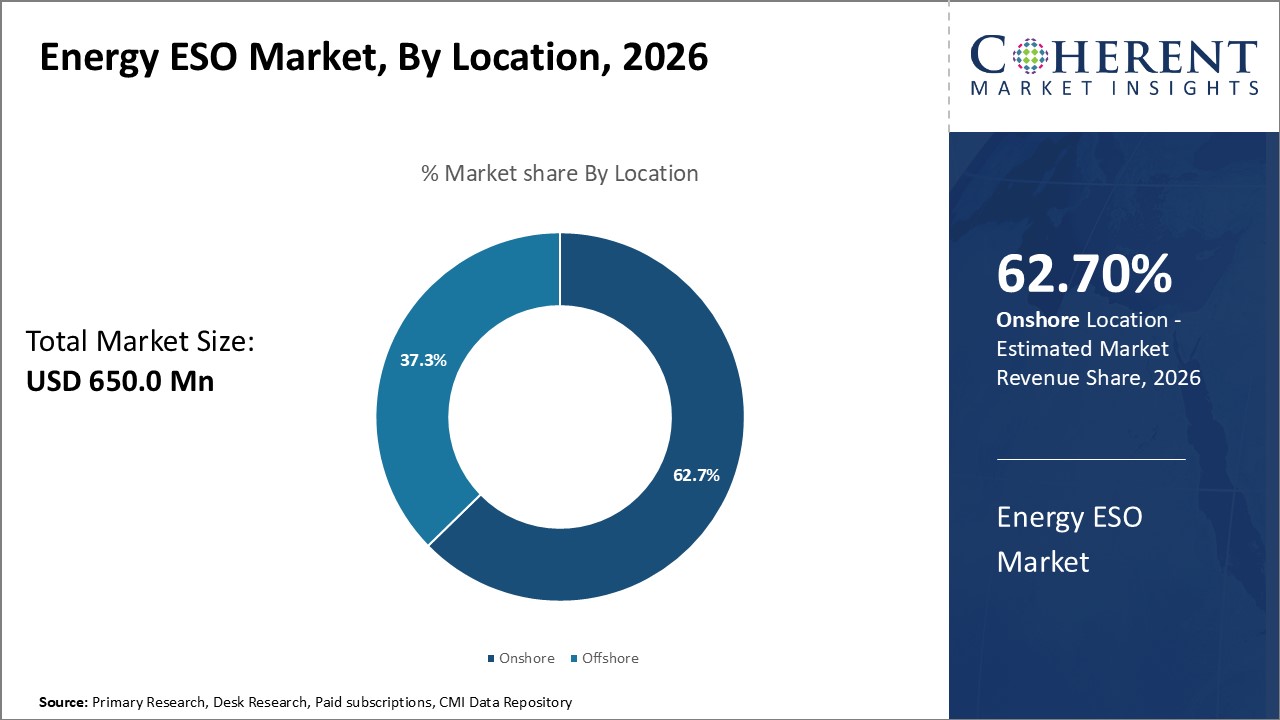
Energy ESO Market Insights, By Location: Onshore Segment Dominates Due to Established Infrastructure and Regulations
In terms of location, onshore contributes 62.7% share of the market primarily because of the established onshore energy infrastructure and regulations. In November 2024, Alcazar Energy Partners signed an MoU with Egypt’s Electricity Transmission Company and the New and Renewable Energy Authority to develop a 2 GW onshore wind project, aiming to provide clean power to over 1.3 million households and boost Egypt’s renewable energy transition. Onshore energy projects have the advantage of leveraging existing transportation networks for equipment, material, and workforce movement. Established supply chains for components and regular service/maintenance also contribute to lower investment needs compared to offshore projects. Onshore power plants, refineries, and pipelines are easier to access, inspect, and repair if needed. Land acquisition and construction related challenges are relatively less complex than offshore developments. Regulatory frameworks for onshore energy development are more crystallized over decades of experience. This is further propelling the energy ESO market share.
Energy ESO Market Insights, By Energy Source: Non-renewable Sources Dominate the Market Due to Scale and Complexity
In terms of energy source, the non-renewable segment contributes 44.1% share of the global Energy ESO market. This is chiefly because non-renewable energy production typically involves larger scale and more complex operations compared to renewable sources. Traditional thermal and nuclear power stations have generation capacities measured in hundreds of megawatts. Extracting and transporting fossil fuels also requires setting up of huge integrated facilities.
ESO providers play vital engineering, management and digitization roles across the entire value chain of non-renewable energy production. Their process expertise handles operation of giga-scale gas processing units, optimization of largescale coal mining and assisting long term LNG supply chain logistics. Decades old nuclear and coal power assets also driving significant ESO demand for upgrades, efficiency improvements, and transition to new fuels. In contrast, many renewable projects have modular setups with distributed generation model. While renewable ESO demand is growing swiftly, the scale of individual projects is comparatively smaller presently. Nevertheless, elements like integration of renewables into national grids will propel specialized ESO adoption across renewable portfolios of global energy companies.
Regional Insights
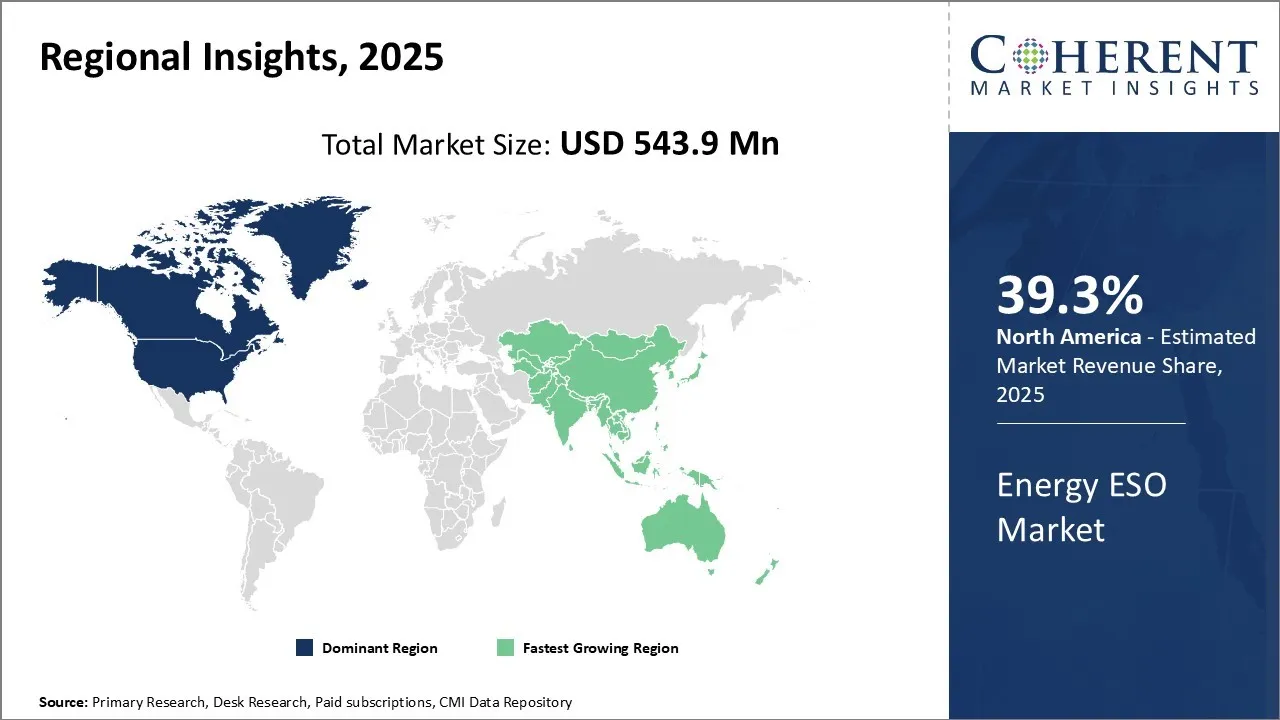
North America Energy ESO Market Analysis and Trends
North America has established itself as the dominant region in the global energy ESO market. With the presence of key industry players, such as AES, Engie, Honeywell, Schneider Electric, and Siemens, the region accounts for over 39.3% share of the total market. The early adoption of ESO services in the U.S. along with the trend of outsourcing non-core energy management operations has propelled growth. Furthermore, investments made in upgrading aging power infrastructure through public-private partnerships have increased the demand for energy optimization, maintenance, and asset management solutions offered by ESOs. Additionally, advancements in smart grid and smart metering technologies have prompted utilities to leverage the capabilities of external service providers for managing distributed energy resources and improving the distribution network efficiency.
Asia Pacific Energy ESO Market Analysis and Trends
The Asia Pacific region has emerged as the fastest growing market for energy ESOs globally. Countries such as China, India, and Japan are investing heavily in expanding and modernizing their energy infrastructure to meet the rising demands of industrialization, urbanization, and electrification. This has opened up significant opportunities for ESO players to offer consultancy, engineering, and managed services across utility scale power generation plants, transmission & distribution networks and micro-grids. Favorable government regulations supporting private sector participation in developing renewable energy assets have also boosted the market growth. Geopolitical risks associated with importing fuel have prompted nations in the region to undertake initiatives ensuring energy security through greater reliance on indigenous clean resources and the adoption of cost-effective outsourced Operations and Maintenance (O&M) models. Such macroeconomic and policy factors are strengthening the position of Asia Pacific as a highly lucrative market for energy ESO companies globally.
Energy ESO Market Outlook Country-wise
China Energy ESO Market Trends
China is experiencing a rapid advancement in energy ESO industry, driven by its aggressive push for electrification and renewable energy integration. China mainly focuses on electric vehicles, high-speed rail expansion and renewable power capacity, particularly solar and wind. China has a dedicated commitment to reducing greenhouse gas emission and becoming a global leader in clean energy. China is investing heavily in renewable sources with hydropower and biofuel.
According to IEA, in 2023, China led the overall renewable energy consumption with highest installed capacity for renewable energy.
The United States Energy ESO Market Trends
The great market growth in the United States is observed due to the country’s focus on renewable energy adoption, smart grit development and technological innovation. The government policies and hefty investments are further contributing to the growth of market with sustainable energy solutions. Renewable energy adoption in the US is growing with renewable sources now generating over 20% of the U.S. electricity. Many states have pledges to produce 100% clean energy within the next two decades.
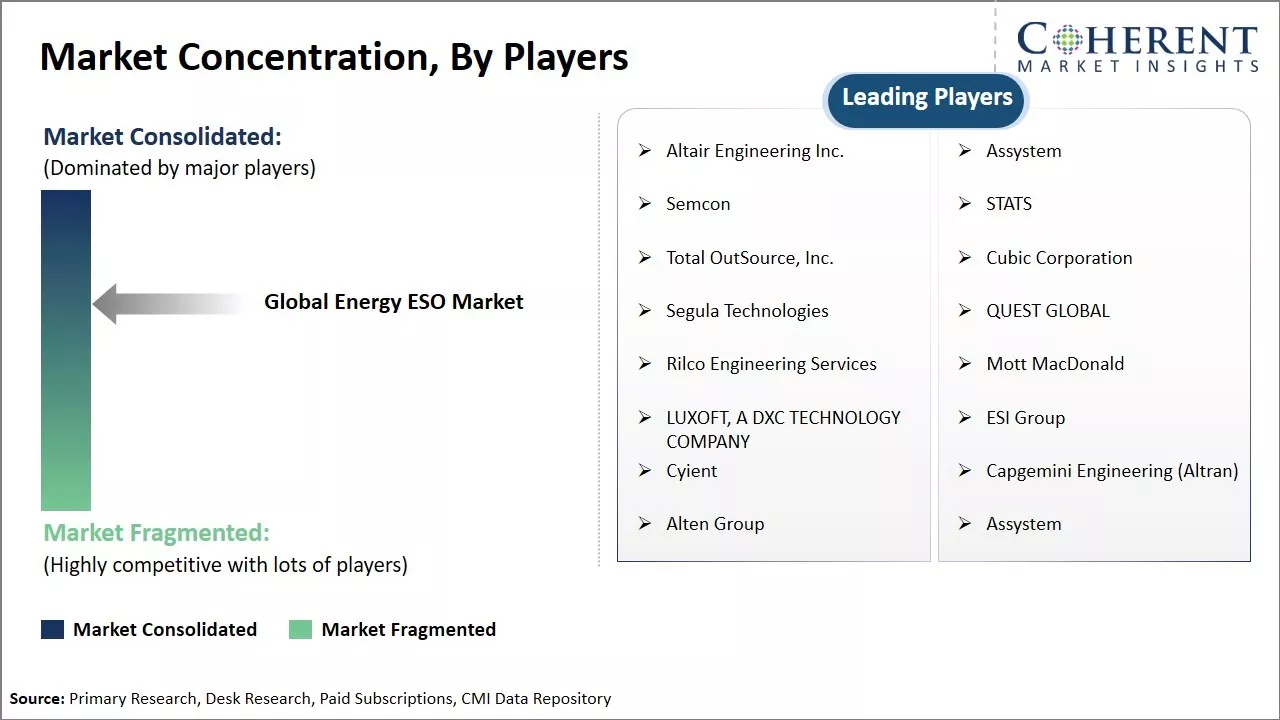
Concentration and Competitive Landscape
Key Developments
- In April 2025, Electricity System Operator (ESO) partnered with Capgemini to rapidly design and launch the Demand Flexibility Service to respond to the drastic disruption to global supplies of energy caused by external factors such as the war in Ukraine. This initiative offers more effective management of limited electricity during peak winter periods.
- In February 2025, Bulgarian electrohold trade launched energy asset management platform. This launch is a high-tech energy asset management platform that allows power plants and customers to take part in the electricity and related services market. The platform offers total regulation capacity of about 190 MW. The capacity is expected to increase with the commissioning of new solar plants and energy storage systems and the addition of new industrial and corporate customers.
- In September 2024, the UK government purchased the Electricity System Operator from National Grid for £630 million ($827.8 million) to create the public National Electricity System Operator (NESO).
- In October 2024, Britain’s National Energy System Operator (NESO) launched as an independent system planner and operator, replacing the former National Grid ESO.
Energy ESO Market Driver
Increasing Energy Demand across Geographies
As the global population and standards of living continue to increase year over year, the worldwide demand for energy also sees a similar rise. Developing nations in Asia Pacific and other regions are undergoing rapid urbanization and industrialization which requires a massive amount of electricity to power infrastructure and utilities. Meanwhile developed nations already have a large appetite for energy to sustain modern lifestyles that are heavily dependent on power. The transportation sector alone has seen meteoric growth in vehicle ownership which majorly relies on fuel as an energy source.
Meeting this ballooning demand presents a formidable challenge as traditional generation sources could struggle to keep pace. While renewable energy is being scaled up aggressively, it may still not be enough especially during periods of peak load. Reliability also becomes a concern with heightened complexities in balancing intermittent clean sources. This is driving the need for smarter management of energy resources across generation, transmission and distribution networks. An Engineering Services Outsourcing (ESO) can help optimize asset utilization, enable demand side flexibility, and ensure seamless supply even during contingencies. By harnessing real-time data analytics and control capabilities, losses are reduced through efficient energy scheduling, storage coordination, and outage prevention.
Market Trends
Rising Decarbonization Commitments
There is growing international commitment to transition to carbon-neutral economies over the coming decades in order to mitigate climate change impacts. Numerous nations have announced ambitious targets to slash greenhouse gas emissions from energy generation mainly through phasing out fossil fuels. This has put renewables center-stage but integrating large shares of volatile renewable energy into grids requires sophisticated balancing techniques. Countries are ramping up investments in modernizing infrastructure to facilitate two-way power flows from distributed energy resources. An ESO can be instrumental here by facilitating clean energy prioritization, promoting flexible demand response, leveraging electricity storage optimally, and enabling cross-border renewable energy trade. Advanced functionalities for distributed energy management and electric mobility integration also allow leveraging their balancing potential. Through centralized monitoring and control of entire power networks, ESOs ensure the stability and security of supply remains unhindered during the shift to greener sources. They aid smooth large-scale renewable firming, supporting faster decarbonization progress per target timelines. This makes ESOs a crucial enabler for countries striving to reduce carbon footprint from their energy mix responsibly.
Energy ESO Market Opportunities
Growing focus on renewable sources of energy
Environmental regulations are driving huge opportunities for energy service companies. The focus on renewable sources of energy, such as solar and wind, is increasing tremendously. This is leading to a massive demand for engineering, procurement, and construction (EPC) services for new solar and wind projects. Companies delivering energy management services are witnessing high growth as industries seek to optimize energy consumption through their initiatives.
Market Report Scope
Energy ESO Market Report Coverage
| Report Coverage | Details | ||
|---|---|---|---|
| Base Year: | 2025 | Market Size in 2026: | USD 650.0 Mn |
| Historical Data for: | 2020 To 2024 | Forecast Period: | 2026 To 2033 |
| Forecast Period 2026 to 2033 CAGR: | 19.5% | 2033 Value Projection: | USD 2,261.8 Mn |
| Geographies covered: |
| ||
| Segments covered: |
| ||
| Companies covered: | Altair Engineering Inc., Assystem, Semcon, STATS, Total OutSource, Inc., Cubic Corporation, Segula Technologies, QUEST GLOBAL, Rilco Engineering Services, Mott MacDonald, LUXOFT, A DXC TECHNOLOGY COMPANY, ESI Group, Cyient, Capgemini Engineering (Altran), Alten Group, Assystem | ||
| Growth Drivers: |
| ||
| Restraints & Challenges: |
| ||
Analyst Opinion (Expert opinion)
- Carbon pricing mechanisms and stricter emission reduction targets are reshaping the economics of energy production. As regulatory bodies impose higher costs on fossil fuel-based power generation, clean energy alternatives become increasingly cost-competitive. This regulatory shift is expected to drive demand for energy engineering services focused on low-carbon solutions, thereby influencing the strategic direction of the Energy ESO market.
- Subsidies and fiscal incentives aimed at renewable energy deployment are accelerating investment across solar, wind, and other clean technologies. Government-backed schemes such as tax credits, feed-in tariffs, and capital grants are creating a favorable policy environment that stimulates the growth of renewable infrastructure. As a result, engineering service providers are witnessing increased demand for specialized expertise in project design, grid integration, and performance optimization—boosting the Energy ESO sector.
- Volatility in global oil prices continues to impact the financial stability and strategic investment plans of traditional energy companies. When prices are low, companies may delay or scale back capital-intensive projects, including those requiring outsourced engineering services. Conversely, sustained high prices can accelerate the shift towards alternative energy investments, redirecting ESO demand toward renewable-focused projects.
- Evolving consumer demand patterns and a growing preference for sustainable energy solutions are compelling utilities and energy developers to modernize their infrastructure. This behavioral shift is driving the adoption of smart grid technologies, distributed energy systems, and energy efficiency projects—all of which require extensive engineering and design support. Consequently, the Energy ESO market is increasingly being shaped by sustainability-driven innovation and customer-centric energy models.
Speak to the analyst
Want personalized insights?
Take the findings above to one of our principal consultants, or have the report rebuilt around the segments, geographies and competitors you actually track.
Market Segmentation
- Service Insights (Revenue, USD Mn, 2021 - 2033)
- R&D and Designing
- Structuring & Layout
- Digitization
- Implementation & Maintenance
- Others
- Location Insights (Revenue, USD Mn, 2021 - 2033)
- Onshore
- Offshore
- Energy Source Insights (Revenue, USD Mn, 2021 - 2033)
- Renewable
- Non-renewable
- Chemical Processing
- Others
- Regional Insights (Revenue, USD Mn, 2021 - 2033)
- North America
- U.S.
- Canada
- Latin America
- Brazil
- Argentina
- Mexico
- Rest of Latin America
- Europe
- Germany
- U.K.
- Spain
- France
- Italy
- Russia
- Rest of Europe
- Asia Pacific
- China
- India
- Japan
- Australia
- South Korea
- ASEAN
- Rest of Asia Pacific
- Middle East & Africa
- GCC Countries
- Israel
- Rest of Middle East & Africa
- Key Players Insights (Revenue, USD Mn, 2021 - 2033)
- Altair Engineering Inc.
- Assystem
- Semcon
- STATS
- Total OutSource, Inc.
- Cubic Corporation
- Segula Technologies
- QUEST GLOBAL
- Rilco Engineering Services
- Mott MacDonald
- LUXOFT, A DXC TECHNOLOGY COMPANY
- ESI Group
- Cyient
- Capgemini Engineering (Altran)
- Alten Group
Source
Primary Research Interviews from the following stakeholders
Stakeholders
- Interviews with energy service providers, facility managers, utility heads, building automation engineers, procurement officers, and sustainability leads across commercial, industrial, and government sectors.
Databases
- International Energy Agency (IEA) Statistics
- U.S. Energy Information Administration (EIA) Data Browser
- Central Electricity Authority (CEA), India
- Eurostat – Energy Statistics
- Energy Statistics Database – United Nations Statistics Division
- China National Energy Administration (NEA)
- Korea Energy Economics Institute (KEEI)
- Japan Agency for Natural Resources and Energy
- India’s Power System Operation Corporation (POSOCO)
- Directorate General of Commercial Intelligence and Statistics (DGCIS), India
Magazines
- Energy Manager Today
- Energy World (by Energy Institute)
- Smart Energy International
- Modern Building Services
- Renewable Energy Focus
- Energy in Buildings & Industry
- Intelligent Building Today
- Electrical Review
Journals
- Applied Energy (Elsevier)
- Energy Policy (Elsevier)
- Energy and Buildings (Elsevier)
- Journal of Cleaner Production
- Renewable and Sustainable Energy Reviews
- IEEE Transactions on Smart Grid
- International Journal of Energy Research
Newspapers
- The Wall Street Journal – Energy & Environment
- The Economic Times – Energy Section
- Financial Times – Power and Utilities
- Business Standard – Energy & Infrastructure
- The Hindu Business Line – Power & Clean Tech
- Nikkei Asia – Green Energy & Infrastructure
- South China Morning Post – Energy & Industry
Associations
- Alliance to Save Energy
- Association of Energy Engineers (AEE)
- International District Energy Association (IDEA)
- India Smart Grid Forum (ISGF)
- American Council for an Energy-Efficient Economy (ACEEE)
- Confederation of Indian Industry (CII) – Energy Efficiency and Power Panel
- European Alliance to Save Energy (EU-ASE)
- U.S. Green Building Council (USGBC)
Public Domain Sources
- Ministry of Power (Government of India)
- Bureau of Energy Efficiency (BEE), India
- U.S. Department of Energy (DOE)
- Energy Market Authority (Singapore)
- NITI Aayog – Energy Policy Reports
- International Renewable Energy Agency (IRENA)
- EU Commission – Energy Efficiency Reports
- Reserve Bank of India (RBI) – Sectoral Reports on Energy Infrastructure
Proprietary Elements
- CMI Data Analytics Tool, and Proprietary CMI Existing Repository of information for last 8 years
Get access to 250+ pages report
Every segment, forecast, competitor profile and data table behind the analysis above — available for instant download.
- ESOMAR Member
- ISO 9001:2015 Certified
- D-U-N-S Registered
- GDPR & CCPA Compliant
Missing comfort of reading report in your local language? Find your preferred language:
Transform your Strategy with Exclusive Trending Reports
Frequently Asked Questions
The Energy ESO Market is estimated to be valued at USD 650.0 Mn in 2026, and is expected to reach USD 2,261.8 Mn by 2033.
The CAGR of the Energy ESO Market is projected to be 19.5% from 2026 to 2033.
Increasing energy demand across geographies and rising decarbonization commitments are the major factors driving the growth of the global energy ESO market.
Growing environmental concerns around the world and concerns regarding data security and privacy are the major factors hampering the growth of the global energy ESO market.
In terms of service, structuring & layout is estimated to dominate the market revenue share in 2026.
Altair Engineering Inc., Assystem, Semcon, STATS, Total OutSource, Inc., Cubic Corporation, Segula Technologies, QUEST GLOBAL, Rilco Engineering Services, Mott MacDonald, LUXOFT, A DXC TECHNOLOGY COMPANY, ESI Group, Cyient, Capgemini Engineering (Altran), Alten Group, are the major players.
North America is expected to lead the global energy ESO market.