

The global fish protein concentrate market is estimated to be valued at USD 164.2 Mn in 2026 and is expected to reach USD 267.2 Mn by 2033, exhibiting a compound annual growth rate (CAGR) of 7.2% from 2026 to 2033.
Key Takeaways
- By Source Insight: Tuna is expected to dominate the fish protein concentrate market with a 36.2% share in 2026. This significant share is primarily driven by tuna’s global popularity, favorable nutritional profile, and integration in diverse cuisines, especially across coastal regions.
- By Form Insight: Powder form is projected to lead the fish protein concentrate market with a 68% market share in 2026. The powdered variant offers distinct advantages such as extended shelf life, ease of transportation, simplified storage, and better blending capabilities in various formulations.
- By Application Insight: The food & beverages segment is anticipated to dominate the application scope of the fish protein concentrate market with a 39.1% share in 2026. This dominance is fueled by the rising trend of protein fortification in everyday food items and increasing consumer inclination towards high-protein diets.
- By Regional Insight: North America is projected to lead the global fish protein concentrate market, accounting for 39.2% of the total share in 2026. The region's leadership can be attributed to high consumer awareness regarding nutritional supplements, robust demand for protein-enriched food and beverages, and a well-established aquaculture industry.
Market Overview
The global fish protein concentrate market is witnessing steady growth, driven by increasing demand for high-quality, sustainable protein sources. Rising health awareness, expanding applications in food and beverages, and growing use in animal feed are key factors fueling market expansion. Powdered fish protein concentrate is gaining popularity due to its ease of storage, handling, and incorporation into formulations. Technological advancements and sustainable production practices are further enhancing product quality and market reach. Additionally, increased availability through online and offline retail channels is improving accessibility. North America, Europe, and Asia Pacific dominate the market, supported by strong seafood processing and consumer demand.
Current Events and its Impact on the Fish protein concentrate market
Current Event | Description and its impact |
Rise in Demand for Sustainable and Clean-Label Ingredients |
|
Fluctuating Fish Supply Due to Overfishing and Climate Change |
|
Fish Protein Concentrate Market Trends
High nutritional value of fish protein concentrate
Fish protein concentrate is a rich source of high-quality protein that provides various health benefits. It contains all the essential amino acids required by the human body and is easily digestible. A single serving of fish protein concentrate can provide 15-20 grams of complete protein, which aids muscle growth and repair. In addition, it is low in fat and cholesterol compared to many other animal protein sources. As people become more health-conscious, they want protein options that not only satisfy hunger but also promote overall wellness.
Many nutrition experts praise fish protein concentrate for its balanced amino acid profile and high concentration of omega-3 fatty acids. While fish is known to contain beneficial fatty acids like EPA and DHA, fish protein concentrate allows people to maximize their omega-3 intake without consuming the entire fish filet. On top of reducing cardiovascular disease risk, omega-3s also play an important role in brain health and development. With growing awareness about the link between diet and mental wellness, consumers are increasingly looking to supplement their diets with omega-3 rich foods. In November 2024, Indonesia introduced "fish milk"—a protein-rich beverage derived from local fish like ponyfish—as an alternative to cow's milk, particularly for school meal programs. Developed by the Berikan Protein Initiative, the process involves hydrolyzing fish to create a protein powder, which is then flavored and distributed. The initiative aims to produce up to 500,000 tons annually, potentially generating $4.5 billion. While some consumers are hesitant due to taste and smell, the initiative represents a significant step towards alternative protein sources.
Increasing demand for low-fat and high-protein food products
In recent years, health-conscious consumers have been gravitating towards products lower in fat, sugar, and calories while higher in protein. This shift is driven by changing lifestyles as well as improved understanding of macronutrients and their impact on body composition. More people now realize that consuming adequate protein can aid weight management by reducing appetite and preventing muscle loss during dieting. Protein is also the most filling macronutrient that keeps people feeling satisfied for longer durations.
Food companies have responded to this growing preference for low-fat, high-protein options by reformulating many products and introducing new varieties. Fish protein concentrate presents itself as an excellent protein source that can lower fat content without compromising on taste and texture. It allows manufacturers to develop nutritious snacks, meal replacements, and indulgences with a favourable macronutrient balance. Body-conscious consumers no longer want to sacrifice enjoyment for health and are paying premium prices for guilt-free alternatives in their favourite foods. In June 2024, the Tanzania Bureau of Standards (TBS) released a draft update to the national standard for fish protein concentrate. This draft East African Standard outlines revised requirements, sampling procedures, and testing methods for FPC intended for human consumption. The update aims to enhance product quality and safety, aligning with international best practices and supporting the growth of the regional FPC industry.
Opportunities in the Fish protein concentrate market
Growth of vegan and vegetarian population
The global fish protein concentrate market is expected to witness new growth opportunities due to the rising vegan and vegetarian population worldwide. According to surveys, around 8-10% of the global population follows a vegan or vegetarian diet due to health, ethical, or environmental reasons. This population segment is continuously on the lookout for sustainable and nutritious non-animal protein sources. Fish protein concentrate is a natural and complete plant-based protein that is attracting these health-conscious consumers. It is a suitable alternative to meat, poultry, and dairy proteins. With improved tastes and textures of fish protein concentrates, its use in vegan meat analogs, dairy substitutes, and nutrition bars is increasing. This growing vegan and vegetarian demographic is expected to drive the demand for clean label and sustainable fish protein concentrates in the coming years.
- Current Industry Events of 2026
- Market Size Estimation
- Regional Breakdown
- Competitive Landscape
- Customer Intelligence
- Segmental Analysis
- Pricing Analysis
- Key Market Drivers, Challenges & Future Trends
- Customized Insights Section
Segmental Insights
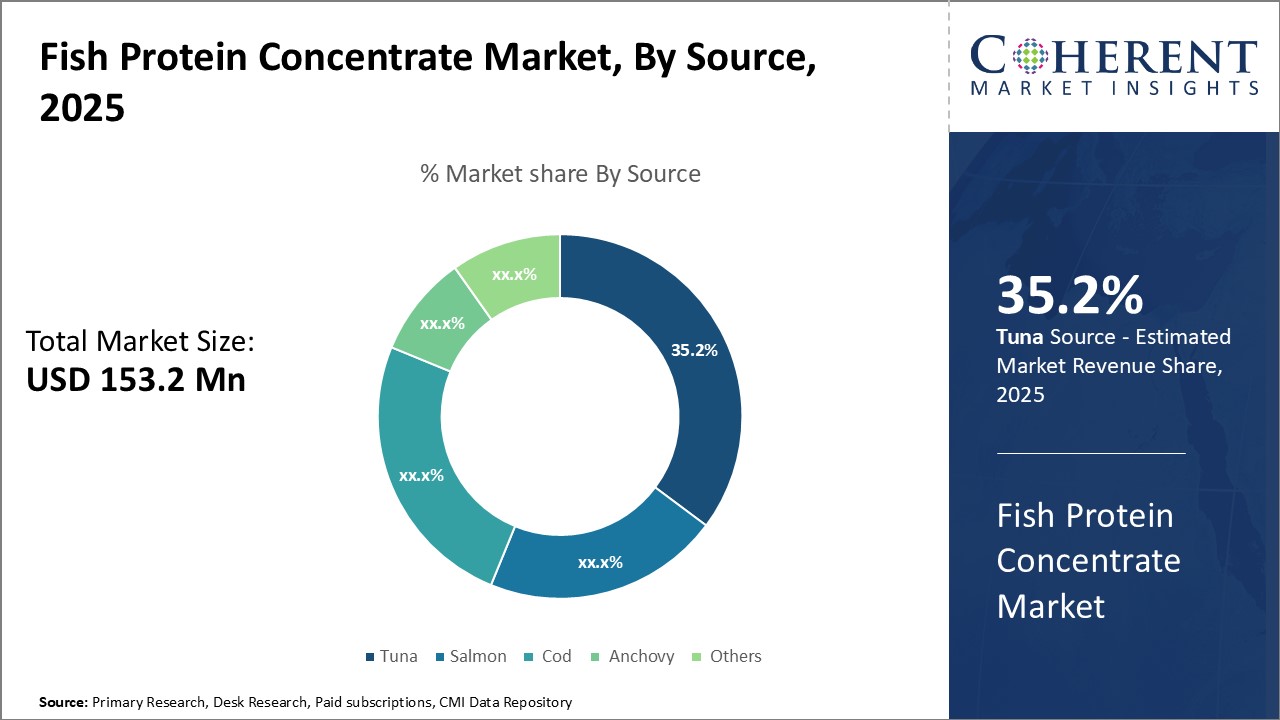
By Source: Tuna Segment to Capture 36.2% Market Share in 2026
Tuna is expected to dominate the fish protein concentrate market with a projected 36.2% market share in 2026. This dominance is attributed to tuna’s global appeal, rich nutritional value, and versatility in various cuisines, especially in coastal regions. Tuna is recognized for its high protein content, omega-3 fatty acids, and essential vitamins, making it a preferred choice for health-conscious consumers.
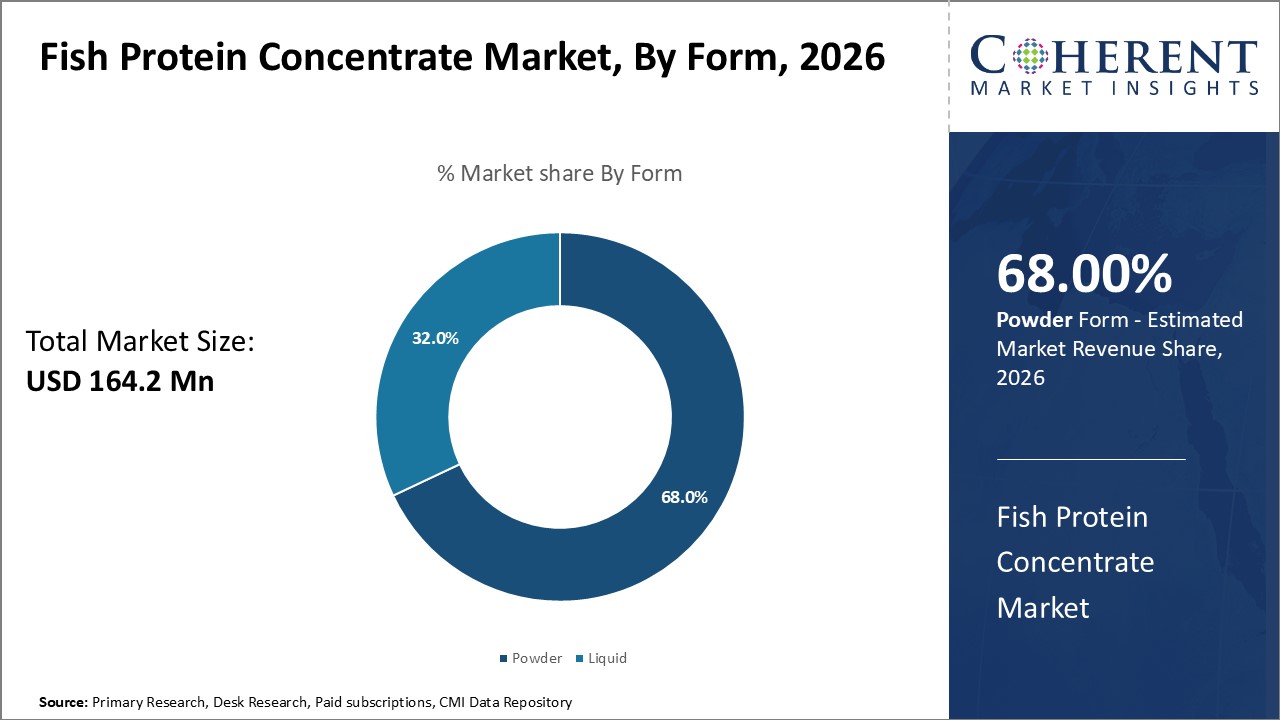
By Form: Powder Segment to Lead with 68% Market Share in 2026
The powder form is projected to lead the fish protein concentrate market, accounting for a significant 67% share in 2026. This preference stems from the powder’s superior shelf stability, ease of transportation, and efficient blending capabilities across multiple applications. Food processors, supplement manufacturers, and feed producers favor powder due to its consistency and convenience. As industries increasingly demand stable and user-friendly ingredient formats, manufacturers are investing in advanced drying and processing technologies to scale up powdered concentrate production and improve quality, further boosting its market presence.
By Application: Food & Beverages Segment to Hold 39.1% Market Share in 2026
The food & beverages segment is anticipated to dominate the application scope of the fish protein concentrate market, capturing 38.1% of the market share in 2026. This segment benefits from growing demand for protein-rich diets and clean-label nutritional products. Fish protein concentrate is increasingly being used in functional foods like protein crisps bars, soups, snacks, and health beverages due to its digestibility and hypoallergenic properties. With innovations in food technology and a global shift toward natural protein sources, the ingredient is becoming a staple in product development for health-conscious consumers.
Regional Insights
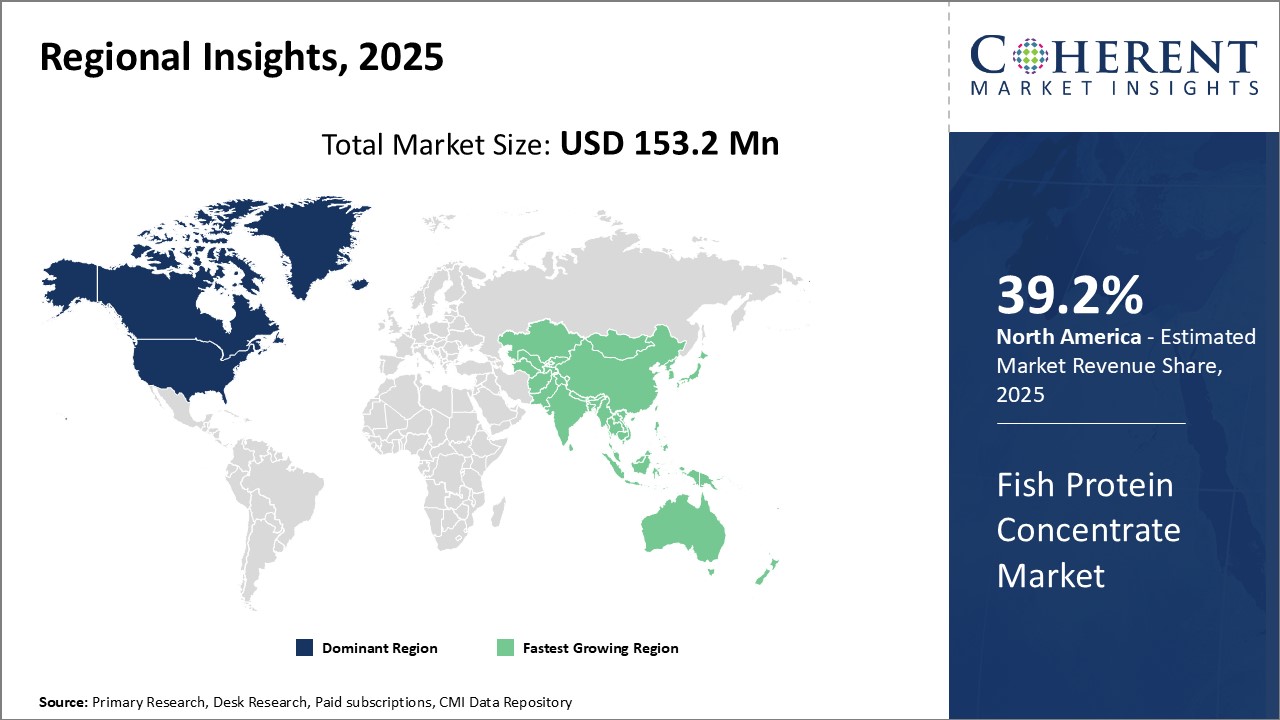
North America Fish Protein Concentrate Market Trends and Analysis
North America is expected to lead the global fish protein concentrate market with a 39.2% share in 2026. This dominance is supported by strong consumer demand for protein-enriched food, beverages, and dietary supplements. The United States plays a key role, with investments in seafood processing and functional food R&D. A well-established aquaculture industry, favorable regulatory landscape, and rising health consciousness further support the market. The region’s focus on fitness and clean-label nutrition is driving consistent demand for marine-based protein concentrates.
Europe Fish Protein Concentrate Market Trends and Analysis
Europe is projected to hold the second-largest share in the fish protein concentrate market by 2026. The region’s growth is driven by increasing demand for sustainable and high-quality marine-based protein, particularly in functional food and nutraceutical applications. Countries like Norway and Denmark leverage strong seafood industries and innovative processing technologies. Strict food safety regulations and consumer preference for clean-label and eco-friendly products enhance product adoption. Growing awareness of omega-3 benefits also supports the market’s expansion across diverse food and health segments.
Asia Pacific Fish Protein Concentrate Market Trends and Analysis
Asia Pacific is emerging as one of the fastest-growing regions in the fish protein concentrate market. Rapid urbanization, rising disposable incomes, and growing health awareness are key drivers. Countries such as China, India, and Japan are boosting production and consumption of protein-fortified foods and supplements. Expansion of aquaculture and seafood processing facilities provides reliable raw material supply. Government initiatives to promote nutritional health and modernize food infrastructure also support market growth. Increasing demand for affordable, high-protein sources fuels continued regional expansion in 2026.
Fish protein concentrate market Dominating Countries
United States and Canada
The United States and Canada dominate the fish protein concentrate market in North America, which holds the largest global share at 39.2% in 2026. The U.S. leads with high demand for protein-enriched food and dietary supplements, driven by a health-conscious population and strong functional food innovation. Canada supports growth with its advanced aquaculture infrastructure and robust seafood processing sector. Favorable regulatory policies, investments in marine biotechnology, and growing awareness of clean-label nutrition further cement their leading roles in the market.
Norway and Denmark
Europe’s fish protein concentrate market is led by Norway and Denmark, two countries known for their advanced seafood industries and sustainability-focused production. Norway’s position as a global aquaculture powerhouse, especially in salmon and pelagic fish harvesting, ensures a steady supply of raw material. Denmark excels in marine ingredient processing and export capabilities. Both countries benefit from EU regulations promoting eco-friendly, high-quality protein sources. Their commitment to innovation in food and nutraceutical sectors supports Europe’s 2026 market share of over 25%.
China, India, and Japan
Asia Pacific’s rapid market growth is driven by China, India, and Japan, which are at the forefront of regional expansion in fish protein concentrate. China, with its large aquaculture base and booming functional food industry, leads demand. India’s emphasis on nutrition programs and expanding seafood processing infrastructure strengthens its market presence. Japan contributes through strong consumer preference for marine-based health products. These countries are responding to rising health awareness and urbanization, fueling Asia Pacific’s projected 2026 share of 20%.
Peru and Chile
Latin America’s fish protein concentrate market is primarily led by Peru and Chile, both renowned for their thriving fishing industries. Peru stands as one of the world’s top fishmeal and fish oil exporters, now shifting focus toward value-added products like protein concentrates. Chile complements this with a strong salmon farming sector and growing export capacity. Government-backed sustainability initiatives and international demand for marine proteins support steady growth, placing Latin America’s share at 11% in 2026.
Market Report Scope
Fish Protein Concentrate Market Report Coverage
| Report Coverage | Details | ||
|---|---|---|---|
| Base Year: | 2025 | Market Size in 2026: | USD 164.2 Mn |
| Historical Data for: | 2020 To 2024 | Forecast Period: | 2026 To 2033 |
| Forecast Period 2026 to 2033 CAGR: | 7.2% | 2033 Value Projection: | USD 267.2 Mn |
| Geographies covered: |
| ||
| Segments covered: |
| ||
| Companies covered: | Scanbio Marine Group, Colpex International, BioOregon Protein, Omega Protein, Apelsa Guadalajara, Aroma NZ, Sopropeche, Peterlabs Holdings, Hofseth BioCare, Nutrifish, Olvea Fish Oils, Protein Feeds, Mukka Sea Foods, Qingdao Future Group, Seagarden, Shandong Fukui Foodstuff, Shandong Yuwang Ecological Food Industry, Taian Health Chemical, Zhejiang Zengus, and Zhejiang NHU | ||
| Growth Drivers: |
| ||
| Restraints & Challenges: |
| ||
Analyst Viewpoint – Fish Protein Concentrate Market
- The fish protein concentrate (FPC) market is experiencing robust growth driven by rising consumer demand for high-protein, nutrient-rich ingredients in food, beverages, and animal feed. Analysts highlight the increasing focus on health and wellness trends, which emphasize the importance of protein quality and functional nutrition, as major factors fueling market expansion. The growing adoption of sustainable fishing and aquaculture practices also supports consistent supply and product innovation.
- Technological advancements in processing methods, such as enzymatic hydrolysis and spray drying, are improving the purity, digestibility, and functional properties of fish protein concentrates. These innovations enable manufacturers to develop tailored FPC products suitable for diverse applications, including dietary supplements, sports nutrition, and functional foods. Additionally, digital marketing and e-commerce platforms are expanding market reach and educating consumers on the benefits of fish protein.
- Sustainability concerns significantly shape market dynamics, with a rising demand for organic and responsibly sourced FPC products. Regulatory frameworks in North America and Europe encourage environmentally friendly practices, enhancing transparency and consumer trust.
- Regionally, North America leads the market due to high health awareness and established aquaculture industries, while Asia Pacific represents the fastest-growing market fueled by urbanization and dietary shifts. Europe’s focus on sustainability and innovation further drives market development, with emerging opportunities in Latin America and the Middle East.
Fish Protein Concentrate Market: Key Development
- In April 2025, Oceanic Proteins launched a new line of organic fish protein concentrate powders, emphasizing sustainable sourcing and enhanced nutritional profiles tailored for sports nutrition and dietary supplements. This development highlights the company’s commitment to health-conscious and environmentally responsible product offerings.
- In March 2025, BlueWave Biotech introduced an innovative enzymatic hydrolysis process that improves the digestibility and flavor profile of fish protein concentrate, making it more appealing for use in functional foods and beverages. This technology strengthens their competitive edge in high-quality protein ingredients.
- In February 2025, NutraSea announced a strategic partnership with a major aquaculture firm to ensure sustainable raw material supply and improve traceability in fish protein concentrate production. The collaboration aims to meet increasing regulatory demands and consumer transparency expectations.
- In January 2025, Marine NutriTech expanded its product portfolio by launching ready-to-use liquid fish protein concentrates designed for animal feed applications, enhancing ease of use and nutritional efficiency.
- In December 2024, AquaPure introduced advanced spray-drying technology to extend shelf life and maintain the bioactivity of fish protein concentrate powders, supporting broader adoption in food processing and nutraceutical sectors.
Key Players Insights
- Scanbio Marine Group
- Colpex International
- BioOregon Protein
- Omega Protein
- Apelsa Guadalajara
- Aroma NZ
- Sopropeche
- Peterlabs Holdings
- Hofseth BioCare
- Nutrifish
- Olvea Fish Oils
- Protein Feeds
- Mukka Sea Foods
- Qingdao Future Group
- Seagarden
- Shandong Fukui Foodstuff
- Shandong Yuwang Ecological Food Industry
- Taian Health Chemical
- Zhejiang Zengus
- Zhejiang NHU
Market Segmentation
- By Source Insights (Revenue, USD Mn, 2021 - 2033)
- Tuna
- Salmon
- Cod
- Anchovy
- Others
- By Form Insights (Revenue, USD Mn, 2021 - 2033)
- Powder
- Liquid
- By Application Insights (Revenue, USD Mn, 2021 - 2033)
- Food & Beverages
- Animal Feed
- Dietary Supplements
- Pharmaceuticals
- Others (Cosmetics, etc.)
- By Regional Insights (Revenue, USD Mn, 2021 - 2033)
- North America
- U.S.
- Canada
- Latin America
- Brazil
- Argentina
- Mexico
- Rest of Latin America
- Europe
- Germany
- U.K.
- Spain
- France
- Italy
- Russia
- Rest of Europe
- Asia Pacific
- China
- India
- Japan
- Australia
- South Korea
- ASEAN
- Rest of Asia Pacific
- Middle East
- GCC Countries
- Israel
- Rest of Middle East
- Africa
- South Africa
- North Africa
- Central Africa
- North America
Sources
The Stakeholders Consulted
- Seafood processing plant managers and quality control specialists
- Manufacturers and suppliers of fish protein concentrate and related products
- Aquaculture experts and fisheries scientists
- Nutritionists and food technologists specializing in protein ingredients
- Regulatory authorities overseeing food safety and seafood processing
- Industry associations for fisheries, aquaculture, and nutritional supplements
- End-users in food & beverage, animal feed, nutraceuticals, and pharmaceuticals sectors
Databases Opened
- Food and Agriculture Organization of the United Nations (FAO) – Fisheries and Aquaculture Data
- United States Department of Agriculture (USDA) – Nutrient Database
- European Food Safety Authority (EFSA) – Food Additives and Ingredients Statistics
- International Trade Centre (ITC) – Trade Statistics for Seafood Products
- World Bank Open Data – Agriculture and Food Security
Magazines & Trade Publications
- Seafood Source Magazine
- Fish Farmer Magazine
- Nutrition Insight
- Global Aquaculture Advocate
- Food Technology Magazine
- NutraIngredients – Functional Food and Nutraceutical Industry News
Scientific and Industry Journals
- Journal of Food Science and Technology
- Aquaculture Reports
- Marine Drugs
- Journal of Nutritional Biochemistry
- Food Chemistry
- Journal of the Science of Food and Agriculture
Newspapers & Media Outlets
- The Guardian – Environment and Food Industry
- Reuters – Food and Agriculture News
- Bloomberg – Global Food Markets
- The Economic Times – Agriculture and Food Processing
- Financial Times – Food and Beverage Sector
Associations and Regulatory Bodies
- Food and Agriculture Organization (FAO)
- U.S. Food and Drug Administration (FDA)
- European Food Safety Authority (EFSA)
- National Oceanic and Atmospheric Administration (NOAA)
- International Seafood Sustainability Foundation (ISSF)
- Codex Alimentarius Commission
Public Domain Sources
- World Health Organization (WHO) – Nutritional Guidelines and Reports
- United Nations Environment Programme (UNEP) – Sustainable Fisheries Data
- European Commission – Food and Feed Regulations and Reports
- Global Food Safety Initiative (GFSI) – Industry Best Practices and Compliance
Proprietary Research Elements
- Custom market surveys of fish protein concentrate manufacturers and end-users
- Expert interviews with aquaculture specialists, food scientists, and nutritionists
- Proprietary data analytics covering fish protein concentrate production, consumption, and trade trends over the past decade
- In-depth analysis of regulatory impact and sustainability initiatives affecting the market
Get access to 250+ pages report
Every segment, forecast, competitor profile and data table behind the analysis above — available for instant download.
- ESOMAR Member
- ISO 9001:2015 Certified
- D-U-N-S Registered
- GDPR & CCPA Compliant
Missing comfort of reading report in your local language? Find your preferred language:
Transform your Strategy with Exclusive Trending Reports
Frequently Asked Questions
The Fish Protein Concentrate Market is estimated to be valued at USD 164.2 Mn in 2026, and is expected to reach USD 267.2 Mn by 2033.
The CAGR of the Fish Protein Concentrate Market is projected to be 7.2% from 2026 to 2033.
High nutritional value of fish protein concentrates and increasing demand for low-fat and high-protein food products are the major factors driving the growth of the global fish protein concentrate market.
High production cost of fish protein concentrate and stringent regulatory framework are the major factors hampering the growth of the global fish protein concentrate market.
In terms of source, tuna is estimated to dominate the market revenue share in 2026.
Scanbio Marine Group, Colpex International, BioOregon Protein, Omega Protein, Apelsa Guadalajara, Aroma NZ, Sopropeche, Peterlabs Holdings, Hofseth BioCare, Nutrifish, Olvea Fish Oils, Protein Feeds, Mukka Sea Foods, Qingdao Future Group, Seagarden, Shandong Fukui Foodstuff, Shandong Yuwang Ecological Food Industry, Taian Health Chemical, and Zhejiang Zengus, Zhejiang NHU are the major players.
North America is expected to lead the global fish protein concentrate market in 2026.