

Animal Biotechnology Market Size and Forecast – 2026-2033
The global animal biotechnology market size is expected to reach USD 64.26 Bn by 2033, from USD 34.48 Bn in 2026, exhibiting a CAGR of 9.3% during the forecast period.
Key Takeaways
- Based on Product Type, the Diagnostics Test segment is expected to hold the dominance by 37.2% share of the animal biotechnology market, driven by the need to identify and manage the disease.
- Based on the Application, the Preventive Care in animals segment is estimated to lead the market with the highest shares of the market in 2026, due to maintaining and preventing animals from serious illnesses.
- Based on Animal Type, the Livestock segment is expected to lead the market with the largest share, owing to their potential to enhance productivity and improve animal health.
- Based on End Users, the Veterinary Laboratories segment is expected to dominate the market in 2026, due to the growing demand to carry out research and development regarding animal biotechnology.
- Based on Region, North America is expected to lead the market, holding a share of 35.70% in 2026 credited to the strong research infrastructure, and high adoption of new technology across the United States and Canada. Followed by, Asia Pacific as the second leading region, holding 25.2% share of the market.
Market Overview
Animal biotechnology involves the use of science and technology to modify living organisms and cells to design products beneficial for humans and animals. Some key applications developed through animal biotechnology include pharmaceuticals, genetically engineered livestock, and clones. Pharmaceuticals developed include vaccines, antibiotics, hormones, and enzymes that are extracted from the milk of genetically engineered livestock. These drugs help humans and animals fight diseases in a safe and cost-effective manner.
Current Events and their Impact on the Animal Biotechnology Market
Current Events | Description and its impact |
Regulatory Modernization in Genetic Engineering
|
|
Global Disease Outbreaks Driving Innovation |
|
Role of Artificial Intelligence in Animal Biotechnology Market
The implementation of artificial intelligence in animal biotechnology is revolutionizing various aspects of animal health, welfare, and breeding. AI is used in early disease detection, real-time monitoring, predictive analysis, and treatment optimisation which have provided advantages in healthier, more productive, and better-cared animals. Ai-driven systems are reshaping the livestock monitoring of animal health and behaviour. With the help of AI algorithms, researchers can interpret animal vocalization. For instance, a European team has created a system that deciphers pig's sounds, helping farmers understand their emotions which leads to improving animal welfare.
- Current Industry Events of 2026
- Market Size Estimation
- Regional Breakdown
- Competitive Landscape
- Customer Intelligence
- Segmental Analysis
- Pricing Analysis
- Key Market Drivers, Challenges & Future Trends
- Customized Insights Section
Segmental Analysis
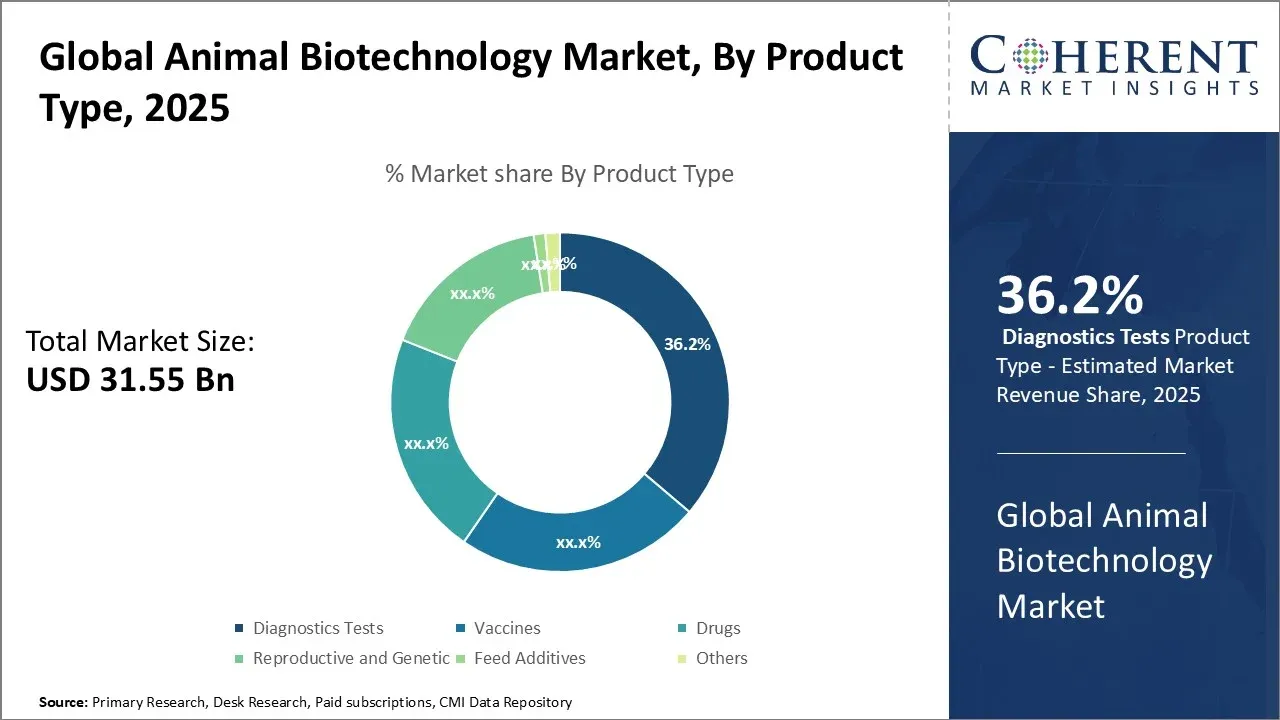
Animal Biotechnology Market Insights, by Product Type, Diagnostics Tests contributes the largest share of the market owing to the need to identify and manage the disease
The diagnostics test segment is expected to dominate by holding a 37.2% share of the animal biotechnology market in 2026. Diagnostics tests under animal biotechnology consist of methods used to detect diseases, pathogens, or other health-related issues in animals. There has been a growing demand for diagnostic tests as they offer early disease detection, enable proper treatments and reduce economic losses. These procedures are generally carried out in veterinary medicine and research, to identify and diagnose disease in animals. For instance, in September 2024, NIAB (National Institute of Animal Biotechnology) scientists in Hyderabad developed a diagnostic test to detect antibodies in animal food samples.
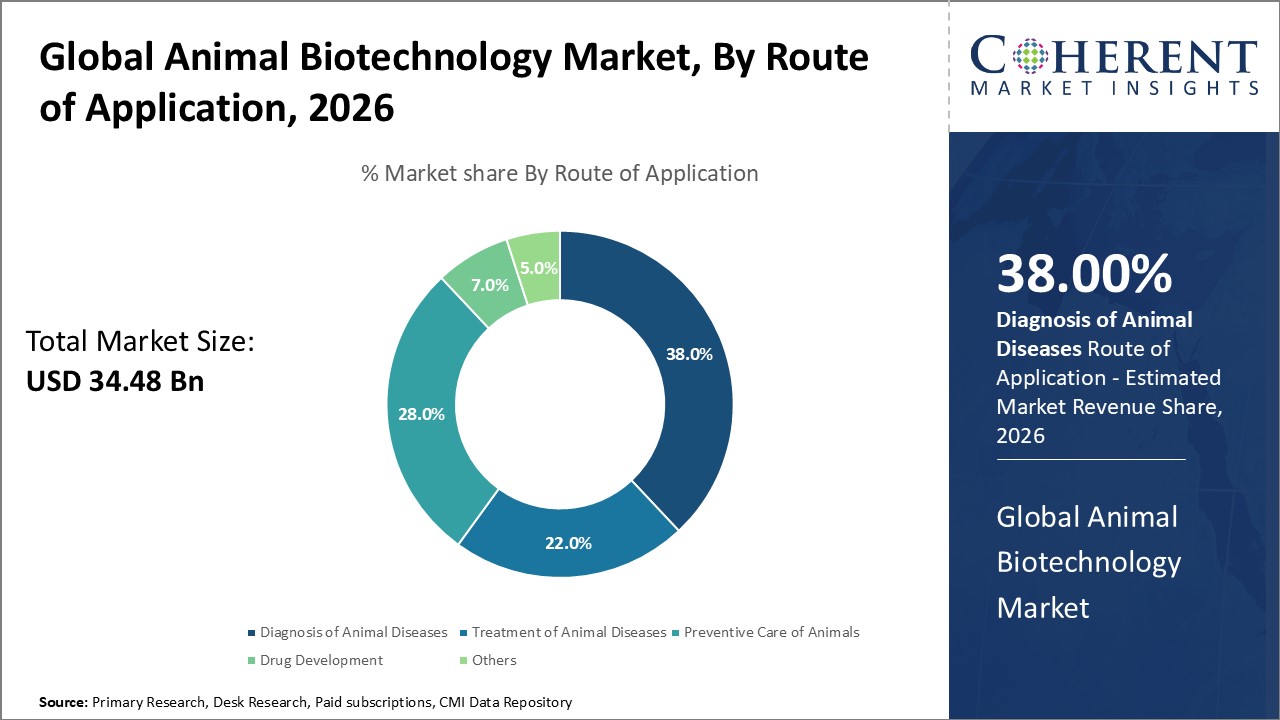
Animal Biotechnology Market Insights, by Application, Preventive care of animals- Maintaining and preventing serious illness
Preventive care in animal segment is expected to contribute the highest share of the market in 2026. Preventive care in animal biotechnology focuses on proactive measures to maintain animal health and well-being, which includes disease prevention, parasite control, vaccination and ensuring proper husbandry and nutrition. Through preventive care, animal biotechnology benefits in several ways including minimizing health problems, maximizing early detection and ultimately improving animal welfare and over health.
In February 2026, Dalan Animal Health, a global leader in bioscience innovation, announced their food production and disease prevention plan through innate immunity platform. It a trainable approach offering revolutionary ways to protect animal, ecosystem, and global food supply.
Animal Biotechnology Market Insights, by Animal Type, Livestock- providing biological material
The livestock segment is expected to contribute the highest share of the market in 2026. Livestock are domesticated animals raised in agricultural environments for various purposes including food production, labour, and many more. These animals being subject to animal biotechnology is aimed to improve their health, productivity, and quality of their products. Livestock are ideal models for research, serving as a host for gene transfer and modification and being the source of valuable products such as meat, milk, and pharmaceuticals. For Instance, In March 2026, researchers are using gene editing techniques on livestock to genetically improve their DNA.
Animal Biotechnology Market Insights, by End-User, Veterinary Laboratories- Conduct controlled experiments and develop technologies
The veterinary laboratories segment is anticipated to hold a dominating share in the market in 2026. Laboratories is a specialized facility for conducting research and experiments on animals, generally focused on genetic modification, cell culture, and reproductive technologies. These laboratories are crucial for advancing knowledge in areas such as animal health, agriculture, and pharmaceutical development. There is rising demand for laboratories in the market as it has showcased notable success cases in areas such as vaccine development, genetic modification and many more. For instance, the development of an improved brucella vaccine for cattle and the creation of Dolly the sheep.
Regional Insights
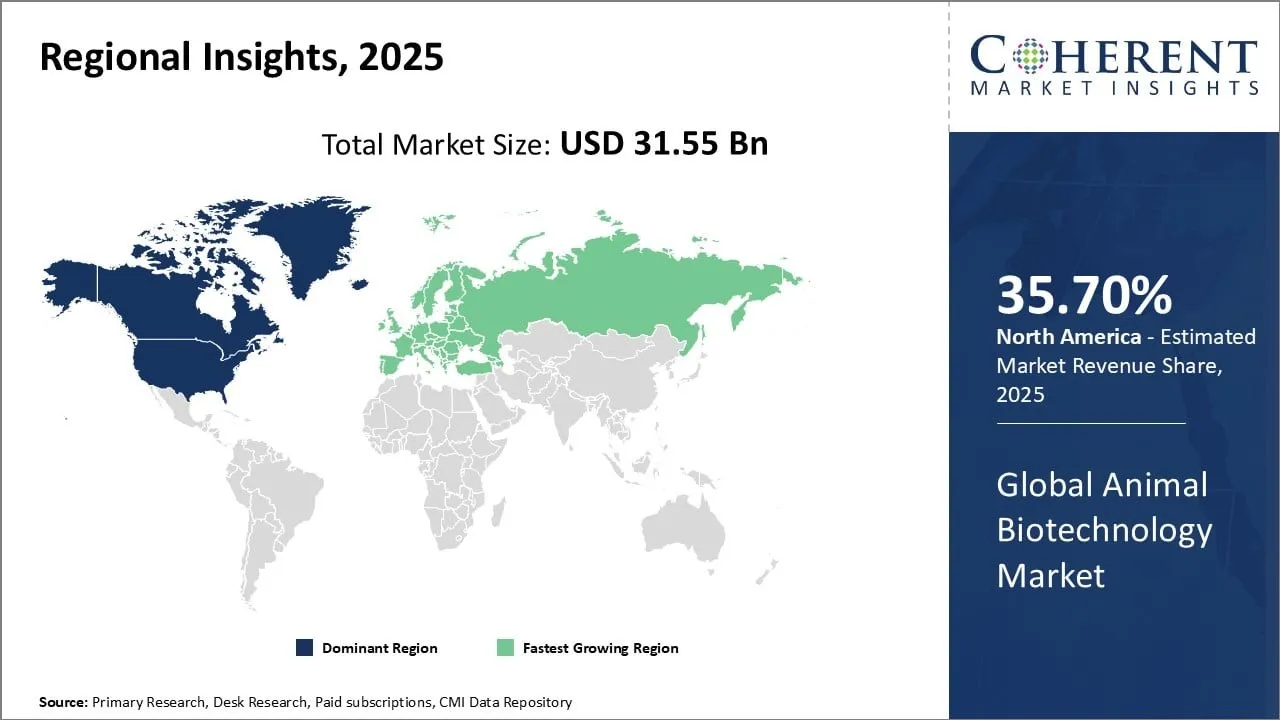
North America Global Animal Biotechnology Market Trends
North America is expected to be the largest market for animal biotechnology during the forecast period, accounting for over 35.7% of the market share in 2026. North America has established itself as the dominant player in the global animal biotechnology market over the years. The region has the strongest market presence with leading global players having their headquarters based out of the U.S. and Canada. Major animal biotech companies like Monsanto, DuPont, and Elanco have invested heavily in R&D in the region, establishing world-class research facilities and laboratories. This focus on innovation and technology development has driven advancements in animal genetics, stem cell research, and animal health management products.
Furthermore, the positive regulatory environment and funding support for biotechnology from the government bodies like the U.S. Food and Drug Administration (FDA) and United States Department of Agriculture (USDA) has encouraged growth. Farmers and producers in the region have also readily adopted new animal biotech solutions. For instance, growth hormones, genetically modified feed, and vaccines developed using genetic engineering techniques see extensive adoption amongst the large industrial livestock farms in North America. The region also dominates international trade with significant exports of advanced animal diagnostic equipment, genetically engineered animal semen, and embryos to markets across the world.
Asia Pacific Global Animal Biotechnology Market Trends
Asia Pacific is expected to be the second-largest market for animal biotechnology, accounting for over 25.2% of the market share in 2026. Asia Pacific is witnessing the fastest expansion, led by China and India. These nations have a massive livestock population and growing meat consumption has raised the demand for animal protein. This has prompted increased focus on factors like animal health, production efficiency, and quality standards. Both governments and private players in countries like China are investing heavily to modernize the livestock industry using biotechnology solutions. For instance, Chinese companies are actively collaborating with global diagnostic majors for the development and localization of new tests and vaccines, which is further adding to the animal biotechnology market share.
Additionally, rising affluence is driving the demand for superior animal products like hormone-free milk in the region. Local producers are keen to adopt productivity-enhancing solutions to meet these evolving needs and gain access to international markets. Furthermore, impetus comes from rising R&D budgets and growing expertise in genetic engineering within educational institutes in the region. This positions the Asia Pacific favourably as the next frontier for notable developments in this field.
In March 2026, Kemin Industries, a global ingredient manufacturer that works towards sustainably transforming the quality of life every day for 80 per cent of the world through its products and service, launched a new feed pathogen control solution PROSIDIUM™ at VIV Asia in Bangkok, Asia's largest feed and animal production tradeshow.
Europe Global Animal Biotechnology Market Trends
Europe is expected to be the fastest-growing market for animal biotechnology, with a share of 19% during the forecast period. The growth of the market in Europe is attributed to the increasing prevalence of zoonotic disease in the region. In 2023, Europe had experienced a rise in zoonotic diseases including campylobacteriosis and salmonellosis. The presence of zoonotic disease is observed due to human encroachment into natural habitats, changes in food and travel habits, and climate changes. These factors increase the interaction between humans and animals particularly wild animals such as boars which are a significant source of zoonotic pathogens in Europe. The zoonotic disease is monitored through the EU One Health Zoonoses Report, in 2023, there were 148,181 cases reported of campylobacteriosis and 77,486 of salmonellosis.
Animal Biotechnology Market Outlook for Key Countries
The United States Animal Biotechnology Market Trends
The animal biotechnology in the United States is advancing rapidly with recent developments influenced by conservation, medicines, and regulatory frameworks. The key areas where the United States is expanding include diagnostics, biologics, drugs, reproductive and genetic technologies, and nutrition. There is a growing demand for animal biotechnology in the United States due to the increasing demand for meat and dairy products, combined with the need to improve productivity and sustainability in animal agriculture.
In April 2026, BIO (Biotechnology Innovation Organization), declared at the Animal Agtech Innovation Summit in Dallas, that the gene edition is a promising step in helping animals withstand disease, regulatory burdens, and barriers to commercialization to reach their full potential.
Germany Animal Biotechnology Market Trends
The animal biotechnology industry in Germany is expanding at an exponential rate, the growth is fueled by advancements in animal genetics, reproduction, and sustainable farming practices, along with a dedicated commitment towards animal welfare. Germany has a strong agricultural sector and robust biotech industry which contribute to the growth of the market. According to the German Animal Welfare Federation, Germany is ranked as the second EU in terms of animals used in animal experiments. In 2023, over 1,456,562 animals were used in animal experiments and 671,958 animals were killed to use their organs and tissue for scientific purposes.
Global Animal Biotechnology Market Trend
Food-security Concerns and Demand for Healthy and Safe Food Products
The rising concerns around global food security and access to safe, nutritious food are major drivers influencing growth in the animal biotechnology market. As the world population increases and farmland decreases due to urbanization, there is growing pressure to develop innovative solutions that can help boost sustainable food production. Technologies like animal genetic engineering allow for the development of livestock that are more disease-resistant, grow faster on less feed, or are better suited to various climates and environments. This helps increase yields to better meet growing demand. For example, according to the Food and Agriculture Organization of the United Nations, aquaculture production must grow by over 50% by 2030 to keep pace with population growth. New biotech tools are being applied in areas like aquaculture to breed fish that are more tolerant to changing ocean conditions from climate change.
At the same time, consumers are also demanding food products that are produced in a way that considers animal welfare and environmental sustainability. Technologies like gene editing allow researchers to precisely alter animal genomes in a way that reduces susceptibility to diseases without compromising welfare. For instance, a 2020 study published in the journal Scientific Reports found that gene editing dairy cows to produce beta-lactoglobulin free milk reduced risks of allergic reactions without any unintended effects. As sustainable, healthy options become more important to shoppers, biotech applications that offer welfare and nutrition benefits are driving more interest and commercial investment in this sector, further propelling the animal biotechnology market revenue.
Global Animal Biotechnology Market- Drivers
Increasing Demand for Animal Protein
With the growing global population, the demand for animal protein is rising rapidly across both developed and developing countries. As incomes rise worldwide, people are consuming more meat, eggs and dairy products which is fueling the growth of the livestock industry. Meat consumption per capita has doubled globally over the past 50 years and it is expected to further increase significantly in coming decades. Developing regions like Asia Pacific, Latin America, and Africa are projected to account for over 70% of growth in global meat consumption due to urbanization and economic development in these areas. To meet the surging protein needs of the burgeoning population worldwide, animal biotechnology tools and techniques are helping increase the production and productivity of livestock raised for meat, milk and eggs, further accelerating the animal biotechnology market growth.
Advancements in Veterinary Care
With improving standards of living globally, people increasingly view their pets as companions and family members. This has resulted in greater spending on animal healthcare needs. At the same time, livestock production is becoming more intensive to meet the rising food demand from growing human population. However, crowding animals in confined spaces increases the risk of infectious diseases. Both these factors have led to increasing importance being given to veterinary care of pets and livestock. Advancements in animal biotechnology are improving disease management for both farm animals and companion animals. Technologies like vaccines, diagnostics, therapeutic cloning, and gene therapies are enhancing disease detection capabilities and treatment methods. For example, genetically engineered vaccines are more effectively preventing infectious diseases affecting livestock productivity. Gene therapies hold promise to cure genetic diseases in companion animals in future. Biotechnology tools are also aiding in the rapid identification of pathogens during disease outbreak investigation. The growing importance of animal health is fueling investments in veterinary bioscience innovations. The market for animal biotechnology products and services is expanding rapidly driven by the need for advanced veterinary services.
Global Animal Biotechnology Market - Restraints
Ethical Concerns Hamper Commercialization of Transgenic Animals
A major restrains hampering the wider adoption of animal biotechnology is ethical concerns around transgenic animal research and applications. While genetic engineering holds promise to solve problems related to food security and sustainability, some view transgenic animal technologies as unnatural and unethical. Issues involving animal welfare, environmental impact, food safety, and religious sensibilities arise when transgenic or cloned animals are considered for agriculture and human consumption. There are debates about subjecting animals to genetic modification without their consent. Questions are raised on the long-term effects on animal health, ecosystem balance, and unintended consequences of transgenic animals escaping into the wild. Stringent regulations are imposed in many countries to address ethical oversight and biosafety issues. All these ethical considerations raise entry barriers and limit the commercialization potential for some advanced animal biotechnology applications.
Global Animal Biotechnology Market- Opportunities
Advancements in Genetic Engineering Drive the Gene Therapy Segment:
Gene therapy involves modifying genes or inserting new genes into an individual's cells and tissues to treat a disease. Researchers have made significant strides in developing gene therapies for various genetic disorders. For example, gene therapy techniques are increasingly being used to develop treatments for congenital blindness, haemophilia, immune deficiencies, and cancer. The rising success rates of gene therapy clinical trials are bolstering the growth of this segment.
Additionally, growing private sector investments are propelling the research on advanced gene therapy applications. Many biotech startups are attracting funding to develop novel DNA and RNA therapies for genetic conditions. Government grants are also supporting academic research on next-generation precision gene editing tools like CRISPR-Cas9, which holds immense potential for treating inherited diseases. The segment is further aided by the increasing availability of genomic data that helps identify suitable gene targets for therapy.
Rising Healthcare Expenditure
One of the significant factors influencing the growth rate of the global animal biotechnology market is the growing healthcare expenditure, which helps in improving its infrastructure. For instance, according to the International Health Care System of the U.S., in June 2020, U.S. government organizations aimed to improve the healthcare infrastructure by increasing funding, setting legislation and national strategies, and cofounding, and setting basic requirements and regulations for the Medicaid program. Similarly, in November 2022, the Canadian Institute for Health Information reported that the total health spending in Canada was US$ 331 billion in 2022, or US$ 8,563 per Canadian, while health expenditure represented 12.2% of Canada's gross domestic product (GDP) in 2022, following a high of 13.8% in 2020. This is further positively influencing the animal biotechnology market share.
Market Report Scope
Animal Biotechnology Market Report Coverage
| Report Coverage | Details | ||
|---|---|---|---|
| Base Year: | 2025 | Market Size in 2026: | USD 34.48 Bn |
| Historical Data for: | 2020 To 2024 | Forecast Period: | 2026 To 2033 |
| Forecast Period 2026 to 2033 CAGR: | 9.3%2033 Value Projection: | USD 64.26 Bn | |
| Geographies covered: |
| ||
| Segments covered: |
| ||
| Companies covered: | Heska Corporation, Indian Immunologicals Ltd., HESTER BIOSCIENCES LIMITED, Zoetis Inc. , Boehringer Ingelheim International GmbH, Biogénesis Bagó, Merck & Co., Inc., Virbac, Elanco, Cadila Pharma, Thermo Fisher Scientific Inc. , Idexx Laboratories, Randox Laboratories Ltd. , Gold Standard Diagnostics. , Bionote USA Inc., Meiji Holdings Co., Ltd., Kemin Industries, Inc., and Pfizer Inc. | ||
| Growth Drivers: |
| ||
| Restraints & Challenges: |
| ||
Animal Biotechnology Market News
- In February 2025, Nona Biosciences announced a strategic partnership with Boston-based Invetx, Inc. to develop next-generation animal health biotherapeutics using Nona's HCAb Harbour Mice® platform.
- In September 2024, the National Institute of Animal Biotechnology (NIAB) announced that it is focusing on decoding the genetic blueprints of indigenous cattle breeds. They are utilizing Next Generation Sequencing (NGS) data and genotyping technology to create molecular signatures for officially recognized cattle breeds to aid in their conservation.
- In September 2024, scientists at the National Institute of Animal Biotechnology (NIAB) in Hyderabad developed novel diagnostic tests for detecting antibiotics in animal food samples.
- In June 2023, the Chief Animal Husbandry Officer India, Leh, Indian-administered Ladakh in the disputed Kashmir region, launched the third phase of Foot and Mouth Disease (FMD) vaccination under the National Animal Disease Control Program (NADCP) on June 23, 2023. The primary objective of the NADCP is to control the spread of FMD in cattle by implementing widespread vaccination programs. The program aims to achieve effective control of FMD by 2025 and ultimately eradicate the disease by 2030. The online vaccination data will be updated by the officials carrying out vaccination in the field and will be reflected on the Bharat Pashudan or National Digital Livestock Mission (NDLM) portal and the farmer-friendly e-Gopala App.
Analyst Opinion (Expert Opinion)
In May 2024, the FDA's updated guidance on gene-edited livestock could very well be the turning point the industry has been waiting for. The acceleration of approval processes for gene-edited animals is a game-changer, especially for traits like disease resistance and productivity. The market will likely see a substantial surge in commercialization of these technologies within the next 3 to 5 years. If the FDA gets this right, we could see the beginning of the end of some of the industry’s longstanding inefficiencies—especially when it comes to breeding livestock that can thrive in tougher environments and handle diseases better.
USDA-FDA MOU on IGAs is, frankly, a long-overdue step in the right direction. By clarifying regulatory roles between the USDA and FDA, we’re likely to see a much smoother development path for gene-edited livestock. This could lead to a more robust public-private partnership environment, where private companies can innovate without fear of regulatory bottlenecks. The impact here is more subtle but equally important: reduced uncertainty in the market will likely encourage increased investment in genetic engineering. Expect R&D funding to increase significantly in the coming years, possibly by 12%, as companies feel more secure in navigating the regulatory landscape.
The H5N1 avian influenza outbreak has highlighted just how vulnerable our agricultural systems are to viral threats. This will unquestionably drive demand for rapid diagnostics and mRNA vaccines in the coming years. The biologics segment is primed to explode, and we’re likely to see it grow by 18% annually over the next 5 years. From a strategic perspective, the success of mRNA vaccines in animal health could mirror what we’ve seen with human vaccines—accelerating adoption and shifting how we approach preventive care for livestock. If mRNA vaccines become the new norm, expect it to fundamentally change the economic dynamics of veterinary care, lowering long-term costs.
Speak to the analyst
Want personalized insights?
Take the findings above to one of our principal consultants, or have the report rebuilt around the segments, geographies and competitors you actually track.
Market Segmentation
- By Product Type (Revenue, USD Bn, 2021 - 2033)
- Diagnostics Tests
- Vaccines
- Drugs
- Reproductive and Genetic
- Feed Additives
- Others
- By Route of Application (Revenue, USD Bn, 2021 - 2033)
- Diagnosis of Animal Diseases
- Treatment of Animal Diseases
- Preventive Care of Animals
- Drug Development
- Others
- By Animal Type (Revenue, USD Bn, 2021 - 2033)
- Companion
- Dogs
- Cats
- Horses
- Others
- Livestock
- Poultry
- Swine
- Cattle
- Sheep & Goats
- Others
- Companion
- By End User (Revenue, USD Bn, 2021 - 2033)
- Veterinary Laboratories
- Point-of-Care Testing/In-house Testing
- Veterinary Hospitals & Clinics
- Others
Regional Insights (Revenue, USD Bn, 2021 - 2033)
- North America
- U.S.
- Canada
- Latin America
- Brazil
- Argentina
- Mexico
- Rest of Latin America
- Europe
- Germany
- U.K.
- Spain
- France
- Italy
- Russia
- Rest of Europe
- Asia Pacific
- China
- India
- Japan
- Australia
- South Korea
- ASEAN
- Rest of Asia Pacific
- Middle East
- GCC Countries
- Israel
- Rest of Middle East
- Africa
- South Africa
- North Africa
- Central Africa
- North America
- Global Animal Biotechnology Market, Key Players
- Heska Corporation
- Indian Immunologicals Ltd.
- HESTER BIOSCIENCES LIMITED
- Zoetis Inc.
- Boehringer Ingelheim International GmbH
- Biogénesis Bagó
- Merck & Co., Inc.
- Virbac
- Elanco
- Cadila Pharma
- Thermo Fisher Scientific Inc.
- Idexx Laboratories
- Randox Laboratories Ltd.
- Gold Standard Diagnostics.
- Bionote USA Inc.
- Meiji Holdings Co., Ltd.
- Kemin Industries, Inc.
- Pfizer Inc.
Sources
Primary Research Interviews from the following stakeholders:
Stakeholders:
- Interviews with animal biotechnologists, veterinarians, regulatory experts, and industry professionals specializing in biotechnology and genetic engineering technologies.
- Specific stakeholders: Animal geneticists, veterinary researchers, pharmaceutical manufacturers, and regulatory bodies involved in animal biotechnology applications.
Databases:
- PubMed
- ClinicalTrials.gov
- HealthData.gov
Magazines:
- BioTechniques
- Genetic Engineering & Biotechnology News
- Animal Biotechnology & Applications Journal
- BioWorld
Journals:
- Journal of Animal Science
- Animal Biotechnology
- Journal of Biotechnology
- Transgenic Research
Newspapers:
- The New York Times
- The Guardian
- The Wall Street Journal
- Financial Times
- The Washington Post
Associations:
- American Association of Animal Science (AAAS)
- International Society for Animal Genetics (ISAG)
- Biotechnology Innovation Organization (BIO)
- National Animal Biotechnology Industry Association (NABIA)
- International Federation for Animal Health (IFAH)
Public Domain Sources:
- World Health Organization (WHO)
- Centers for Disease Control and Prevention (CDC)
- Food and Drug Administration (FDA)
- National Institutes of Health (NIH)
- United States Department of Agriculture (USDA)
Proprietary Elements:
CMI Data Analytics Tool, and Proprietary CMI Existing Repository of information for last 8 years
*Definition: Animal biotechnology involves the application of biotechnology techniques in veterinary medicine, agriculture, and pharmaceutical research. Technologies, such as cloning, transgenic technology, genome sequencing, and gene therapy, are used in the genetic engineering of animals.
Get access to 250+ pages report
Every segment, forecast, competitor profile and data table behind the analysis above — available for instant download.
- ESOMAR Member
- ISO 9001:2015 Certified
- D-U-N-S Registered
- GDPR & CCPA Compliant
Missing comfort of reading report in your local language? Find your preferred language:
Transform your Strategy with Exclusive Trending Reports
Frequently Asked Questions
The Global Animal Biotechnology Market is estimated to be valued at USD 34.48 Bn in 2026, and is expected to reach USD 64.26 Bn by 2033.
Ethical concerns hamper the commercialization of transgenic animals and high development costs pose challenge for small players are the key factors hampering the growth of the global animal biotechnology market.
Increasing demand for animal protein, advancements in veterinary care, and advancements in genetic engineering enable tailored breeding traits are the major factors driving the global animal biotechnology market.
Among product type, diagnostics tests is the major segment in the global animal biotechnology market, which accounted for the largest share of over 36.2% in 2023 as market players are focused on launching new products in the market.
The major players operating in the global animal biotechnology market are Heska Corporation, Indian Immunologicals Ltd., HESTER BIOSCIENCES LIMITED, Zoetis Inc., Boehringer Ingelheim International GmbH, Biogénesis Bagó, Merck & Co., Inc., Virbac, Elanco, Cadila Pharma, Thermo Fisher Scientific Inc., Idexx Laboratories, Randox Laboratories Ltd., Gold Standard Diagnostics. , Bionote USA Inc., Meiji Holdings Co., Ltd., Kemin Industries, Inc., and Pfizer Inc.
North America is expected to lead the global animal biotechnology market and account for over 35.7% share in 2026.
The CAGR of the Global Animal Biotechnology Market is projected to be 9.3% from 2026 to 2033.