

Artificial Pancreas Device System Market Analysis & Forecast: 2026-2033
Artificial pancreas device system market is estimated to be valued at USD 487.60 Mn in 2026 and is expected to reach USD 1,634.2 Mn in 2033, exhibiting a compound annual growth rate (CAGR) of 18.9% from 2026 to 2033.
Key Takeaways
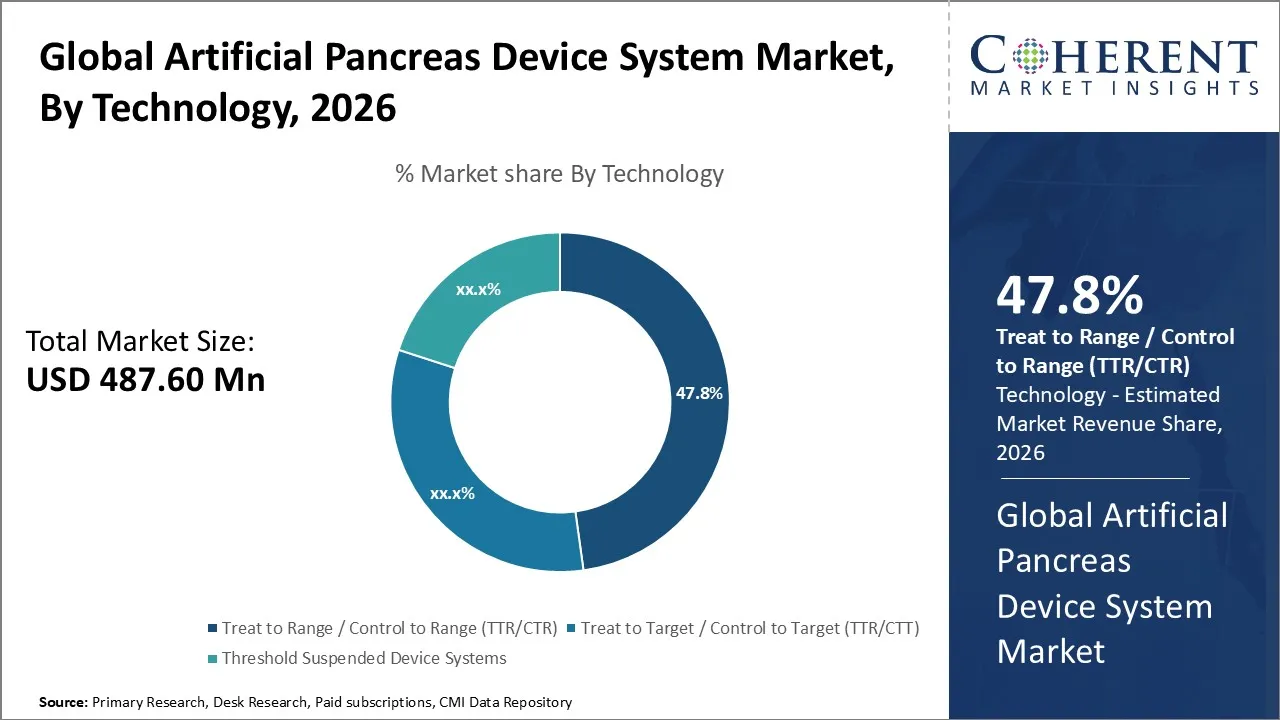
- Based on Technology, the Treat-to-Range/Control-to-Range segment is expected to hold 47.8% share of the market in 2026.
- Based on Distribution Channel, the Hospitals & clinics segment is expected to account for 62% share of the market in 2026.
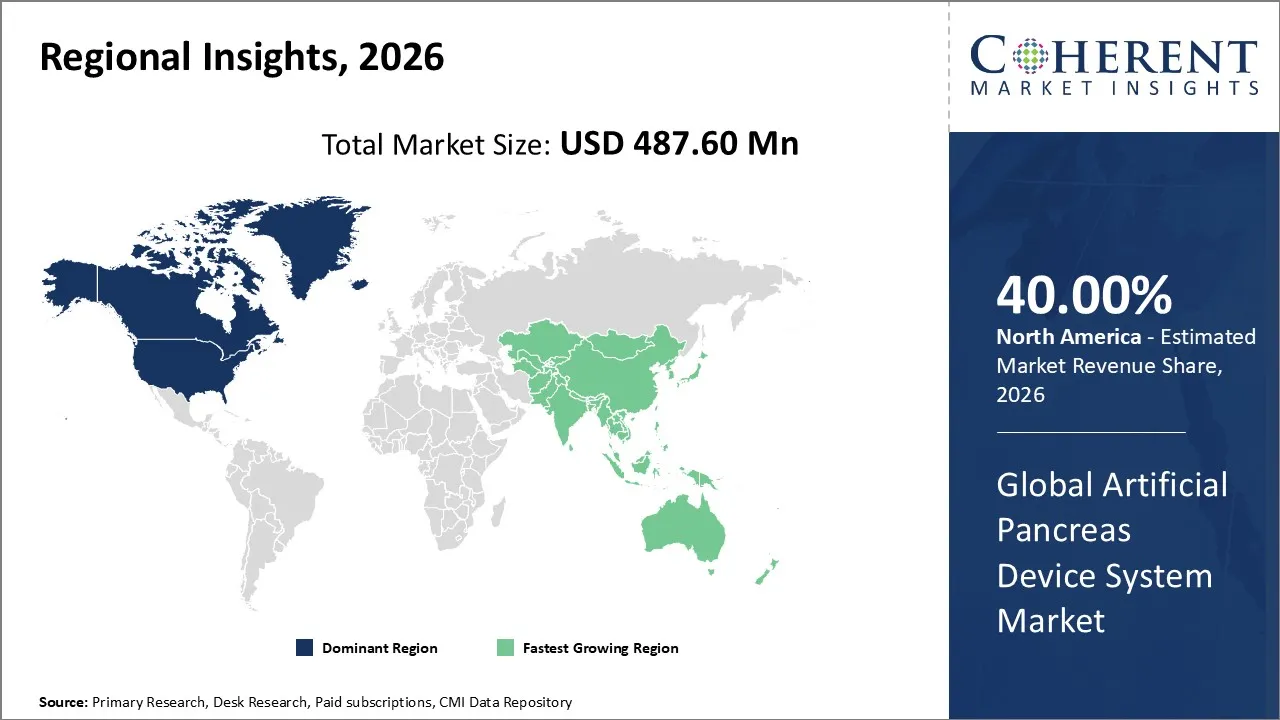
- Based on Region, North America is set to lead the artificial pancreas device system market with 40% share in 2026. While, Asia Pacific is anticipated to be the fastest growing region.
Market Overview
Administering insulin on a daily basis can be cumbersome for type 1 diabetes (T1D) patients. Devices such as insulin pumps, pens, and jet injectors have made managing diabetes less stressful by replacing painful insulin delivery devices such as needles and syringes. Moreover, organizations such as the Juvenile Diabetes Research Foundation (JDRF) have collaborated with industry players such as Medtronic, Inc., Johnson & Johnson, and Tandem Diabetes Care, Inc. to develop innovative insulin and glucose monitoring systems/devices.
The artificial pancreas device system (APDS) includes an insulin pump, sensor, transmitter, and a receiver. MiniMed 530G by Medtronic, Inc., was the first artificial pancreas device system (APDS) approved by the U.S. FDA. This threshold suspend device system enables temporary suspension of insulin delivery when the glucose level is lower than the threshold level.
Current Events and Its Impacts on the Artificial Pancreas Device System Market
Current Event | Description and its Impact |
FDA Regulatory Evolution and Global Harmonization |
|
Rising Global Diabetes Prevalence and Healthcare Costs |
|
Is Abbott Building the Largest Artificial Pancreas Device System Ecosystem Through Strategic Partnerships?
Partnership | Devices/Systems | Impact |
Abbott + Beta Bionics | Dual glucose-ketone sensor + iLet Bionic Pancreas | First fully automated insulin dosing system |
Abbott + Medtronic | FreeStyle Libre CGM + MiniMed 780G pump + InPen | Expanded patient options with sensor + pump integration |
Abbott + Tandem Diabetes Care | Dual sensor + Mobi insulin pump | Enhanced safety with ketone detection |
Abbott + Sequel Med Tech | Dual sensor + twiist AID system | Expanded ecosystem beyond major players |
MicroTech Medical (China) | PanCares closed-loop APDS | Supported by NMPA innovation pathway |
- Current Industry Events of 2026
- Market Size Estimation
- Regional Breakdown
- Competitive Landscape
- Customer Intelligence
- Segmental Analysis
- Pricing Analysis
- Key Market Drivers, Challenges & Future Trends
- Customized Insights Section
Segmental Insights
Will Treat-to-Range/Control-to-Range technology lead the APDS market in 2026?
In terms of technology, the treat-to-range/control-to-range segment is expected to hold 47.8% share of the market in 2026. These devices balance automation and safety, adjusting insulin to maintain glucose within a safe range. Their proven clinical effectiveness, regulatory acceptance, and patient trust make them the preferred choice over threshold suspend and treat-to-target systems.
For instance, in June 2025, A recent study on Tandem’s t:slim X2 insulin pump with Control-IQ technology shows improved glucose management in pregnant women with type 1 diabetes. The system, part of Treat-to-Range/Control-to-Range technology, increased time-in-range and reduced highs, reinforcing its dominance in artificial pancreas device systems as a safe, effective solution.
Will hospitals and clinics lead APDS distribution in 2026?
In terms of distribution channel, the hospitals & clinics segment is expected to lead the market with 62% share in 2026. Patients rely on professional guidance, training, and monitoring when adopting advanced pancreas systems. Strong reimbursement policies, physician recommendations, and integration into established healthcare infrastructure ensure hospitals remain the primary channel for widespread adoption.
For instance, in September 2025, The NHS has rolled out a new generation artificial pancreas for pregnant women with type 1 diabetes, delivered through hospitals and clinics. This initiative enhances glucose control, ensuring safer pregnancies. Professional monitoring, physician guidance, and reimbursement support reinforce hospitals and clinics.
Regional Insights
North America artificial Pancreas Device System Market Analysis & trends
North America is expected to lead the artificial pancreas device system market with 40% share in 2026, due to rising type 1 diabetes prevalence, advanced healthcare infrastructure, strong reimbursement policies, and rapid FDA approvals.
For instance, in January 2025, Beta Bionics raised $204 million to launch its IPO, funding development of the iLet Bionic Pancreas. This closed-loop system integrates continuous glucose monitoring with automated insulin delivery, reducing patient burden and improving outcomes.
Aisa Pacific Artificial Pancreas Device System Market Analysis & Trends
Asia Pacific is anticipated to be the fastest growing region, due to rising diabetes prevalence, growing awareness of advanced therapies, supportive healthcare policies, and rapid adoption of digital health technologies. Expanding infrastructure and affordability drive growth in the region.
For instance, in November 2025, Medtrum launched TouchCare, the world’s smallest closed-loop automated insulin delivery system, featuring the first 300-unit tubeless insulin pump. Integrating continuous glucose monitoring with smart algorithms, it automatically adjusts insulin to maintain safe glucose levels.
Artificial Pancreas Device System Market Outlook Country-Wise
The U.S. Artificial Pancreas Device System Market Trends
The U.S. Artificial Pancreas Device System market is highly demanding in 2026 due to rising type 1 diabetes prevalence, advanced healthcare infrastructure, strong reimbursement policies, and rapid FDA approvals. Continuous innovation, patient preference for closed-loop automation, and investment in medtech drive growth, positioning the U.S. as the global leader.
For instance, in June 2025, Analysts predict Beta Bionics plans to launch its patch pump in 2027, expanding its iLet Bionic Pancreas portfolio. The tubeless design integrates with continuous glucose monitoring and algorithms to automate insulin delivery, enhancing convenience and outcomes.
China Artificial Pancreas Device System Market Trends
China’s Artificial Pancreas Device System market is highly demanding in 2026 due to rising diabetes prevalence, government focus on chronic disease management, and expanding healthcare expenditure. Regulatory support from NMPA, rapid adoption of CGM and patch pumps, and local innovation like MicroTech’s PanCares system drive strong growth and patient demand.
For instance, in March 2025, MicroTech Medical’s Hong Kong Exchange filing highlights progress in diabetes care. Its PanCares closed-loop artificial pancreas system passed NMPA’s innovation review, with registration applications underway in China and Europe. Complementary products include AiDEX CGM and Equil Patch Insulin Pump.
Market Report Scope
Artificial Pancreas Device System Market Report Coverage
| Report Coverage | Details | ||
|---|---|---|---|
| Base Year: | 2025 | Market Size in 2026: | USD 487.60 Mn |
| Historical Data for: | 2020 To 2024 | Forecast Period: | 2026 To 2033 |
| Forecast Period 2026 to 2033 CAGR: | 18.9% | 2033 Value Projection: | USD 1,634.2 Mn |
| Geographies covered: |
| ||
| Segments covered: |
| ||
| Companies covered: | Medtronic Plc., Medtrum Technologies Inc., Tandem Diabetes Care, Inc., Johnson & Johnson, Beta Bionics, Inc., Bigfoot Biomedical, Insulet Corporation, Pancreum, Inc., TypeZero Technologies, Inc., DreaMed Diabetes Ltd, and Inreda Diabetic BV | ||
| Growth Drivers: |
| ||
| Restraints & Challenges: |
| ||
Artificial Pancreas Device System Market Driver
Rising Diabetes Prevalence
With over 500 million people worldwide living with diabetes, the burden continues to rise, particularly for type 1 diabetes patients who require lifelong insulin therapy. This growing population drives the artificial pancreas device system market demand, as patients increasingly seek automated solutions to reduce the daily burden of glucose monitoring and insulin dosing. Closed-loop systems offer improved quality of life, better glycemic control, and reduced complications, making automation a critical response to the escalating diabetes prevalence globally.
Technological Innovation
Advances in closed-loop systems integrating continuous glucose monitors (CGMs), insulin pumps, and sophisticated algorithms are transforming diabetes care. Hybrid and bi-hormonal designs enhance accuracy and safety, while AI-powered devices from innovators like MicroTech and Beta Bionics predict insulin needs more effectively. These breakthroughs significantly increase the artificial pancreas device system market share, as patients and healthcare providers adopt cutting-edge technologies. Innovation not only improves outcomes but also accelerates adoption, positioning APDS as a cornerstone of modern diabetes management worldwide.
Artificial Pancreas Device System Market Opportunity
FDA Approvals in the U.S. and NMPA Innovation Pathways in China
Regulatory approvals play a pivotal role in accelerating commercialization of advanced diabetes technologies. The FDA’s streamlined review process in the U.S. and NMPA’s innovation pathways in China enable faster market entry for closed-loop systems. These frameworks reduce barriers for companies like Beta Bionics and MicroTech Medical, ensuring patients gain quicker access to life-changing devices. This regulatory momentum strengthens confidence in the artificial pancreas device system market forecast, projecting robust growth across developed and emerging regions.
Analyst Opinion (Expert Opinion)
- The market for artificial pancreas device systems continues to grow as closed-loop automated insulin delivery technologies evolve and become more widely used in clinical settings. Industry reports on market revenue trends show a clear upward trend in recent years, reflecting increasing integration of continuous glucose monitoring (CGM) with insulin pumps and advanced control algorithms that automate real-time glucose management. Closed-loop and hybrid systems are currently the most popular types of devices, supported by sensor technologies are getting better and patients prefer fewer manual adjustments to their insulin doses.
- Regional demand patterns show that North America is responsible for a large part of global deployments. This is because of its well-developed healthcare infrastructure and the fact that more people are using automated insulin delivery systems. Europe follows, with significant levels of adoption because of reimbursement frameworks and structured diabetes care programs. The Asia-Pacific market is also growing due to rising prevalence of diabetes and digital health ecosystems are getting better.
- In the competitive landscape, established medical device companies compete with new startups to improve sensor accuracy, predictive algorithms, and compatibility with mobile and cloud platforms. In some areas, cost and reimbursement issues persistent challenges. However, ongoing technological progress and wider acceptance in the medical community are creating a market environment focused on automated, data-driven diabetes management solutions.
Speak to the analyst
Want personalized insights?
Take the findings above to one of our principal consultants, or have the report rebuilt around the segments, geographies and competitors you actually track.
Market Segmentation
- By Technology
- Threshold Suspended Device Systems
- Treat to Range/Control to Range (TTR/CTR)
- Treat to Target/ Control to Target (TTR/CTT)
- By Distribution Channel
- Hospitals & Clinics
- Retail Channel
- Online Channel
- By Region
- North America
- U.S.
- Canada
- Latin America
- Brazil
- Argentina
- Mexico
- Rest of Latin America
- Europe
- Germany
- U.K.
- Spain
- France
- Italy
- Russia
- Rest of Europe
- Asia Pacific
- China
- India
- Japan
- Australia
- South Korea
- ASEAN
- Rest of Asia Pacific
- Middle East & Africa
- GCC Countries
- Israel
- Rest of Middle East & Africa
- North America
- Artificial Pancreas Device System Market Companies
- Medtronic Plc.
- Medtrum Technologies Inc.
- Tandem Diabetes Care, Inc.
- Johnson & Johnson
- Beta Bionics, Inc.
- Bigfoot Biomedical
- Insulet Corporation
- Pancreum, Inc.
- TypeZero Technologies, Inc.
- DreaMed Diabetes Ltd
- Inreda Diabetic BV
Sources
Primary Research Interviews
- Artificial Pancreas Device Manufacturers
- Insulin Pump & Continuous Glucose Monitoring (CGM) System Manufacturers
- Digital Health & Diabetes Technology Providers
- Endocrinologists & Diabetologists
- Biomedical Engineers & Medical Device Consultants
- Hospital Procurement Managers & Diabetes Care Centers
- Regulatory Affairs & Reimbursement Experts
- Others
Databases
- Bloomberg Terminal
- Thomson Reuters Eikon
- IHS Markit
- Euromonitor International
- S&P Global Market Intelligence
- GlobalData Healthcare
- Others
Magazines
- Medical Device and Diagnostic Industry (MDDI)
- MedTech Dive
- Diabetes Technology & Therapeutics Magazine
- Pharmaceutical Technology Magazine
- Healthcare Innovation Magazine
- Others
Journals
- Diabetes Technology & Therapeutics
- The Lancet Diabetes & Endocrinology
- Journal of Diabetes Science and Technology
- New England Journal of Medicine
- Journal of Endocrinology & Metabolism
- Others
Newspapers
- Financial Times
- The Wall Street Journal
- Reuters
- Bloomberg News
- The New York Times – Health Section
- Others
Associations
- American Diabetes Association (ADA)
- International Diabetes Federation (IDF)
- European Association for the Study of Diabetes (EASD)
- Juvenile Diabetes Research Foundation (JDRF)
- Advanced Technologies & Treatments for Diabetes (ATTD)
- Others
Public Domain Sources
- U.S. Food and Drug Administration (FDA) – Medical Devices
- National Institutes of Health (NIH)
- Centers for Disease Control and Prevention (CDC)
- World Health Organization (WHO)
- European Medicines Agency (EMA)
- ClinicalTrials.gov
- Others
Proprietary Elements
- CMI Data Analytics Tool
- Proprietary CMI Existing Repository of Information for the Last 8 Years
Get access to 250+ pages report
Every segment, forecast, competitor profile and data table behind the analysis above — available for instant download.
- ESOMAR Member
- ISO 9001:2015 Certified
- D-U-N-S Registered
- GDPR & CCPA Compliant
Missing comfort of reading report in your local language? Find your preferred language:
Transform your Strategy with Exclusive Trending Reports
Frequently Asked Questions
The artificial pancreas device system (APDS) market is estimated to be valued at USD 487.60 Mn in 2026, and is expected to reach USD 1,634.2 Mn by 2033.
Major players operating in the global artificial pancreas device system (APDS) market include Medtronic Plc., Medtrum Technologies Inc., Tandem Diabetes Care, Inc., Johnson & Johnson, Beta Bionics, Inc., Bigfoot Biomedical, Insulet Corporation, Pancreum, Inc., TypeZero Technologies, Inc., DreaMed Diabetes Ltd, and Inreda Diabetic BV.
High cost of devices is expected to hamper growth of the market over the forecast period
Rising diabetes prevalence and technological innovation are expected to propel growth of the market over the forecast period.
The global artificial pancreas device system (APDS) market is estimated to exhibit a CAGR of 18.9% during the forecast period.
Among regions, North America is expected to hold dominant position in the global artificial pancreas device system (APDS) market during the forecast period.