

Global Artificial Intelligence in Oncology Market Size & Trends
Global Artificial Intelligence in Oncology Market is estimated to be valued at USD 2,872.3 Mn in 2026 and is expected to reach USD 22,166.2 Mn in 2033, exhibiting a compound annual growth rate (CAGR) of 33.9% from 2026 to 2033.
Key Takeaways
- Based on Component, the Software/Platform segment is expected to account for 65.2% of the global artificial intelligence in oncology market in 2026, as they enable the development and deployment of sophisticated AI algorithms.
- Based on Cancer Type, the Breast Cancer segment is projected to dominate the global artificial intelligence in oncology market in 2026 with largest share, primarily due to its widespread prevalence and significant impact on global health.
- Based on Treatment Type, the Chemotherapy segment is expected to hold the highest share of the market in 2026, due to its complexity, high usage, and potential for optimization through advanced data analytics.
- Based on End User, the Hospitals and Clinics segment is expected to lead the market with the greatest share in 2026, as it improves diagnostic accuracy, enabling earlier and more precise cancer detection.
- Based on Region, North America is set to lead the global artificial intelligence in oncology market in 2026, with a 36.4% share. While, Asia Pacific is anticipated to the fastest growing region during the forecast period.
Market Overview
Artificial intelligence (AI) is revolutionizing the field of oncology by enhancing cancer screening, diagnosis, treatment, and drug development processes. Among the various AI applications, AI-assisted cancer screening tools stand out as a critical innovation. These tools utilize advanced deep learning algorithms trained on vast databases of medical images, enabling more accurate and early detection of cancerous cells. By improving diagnostic precision and reducing human error, AI technologies are helping healthcare providers deliver personalized treatment plans and accelerate drug discovery. The growing adoption of such AI-driven solutions is driving significant Artificial Intelligence in oncology market demand, highlighting its transformative potential in cancer care.
Current Events and their Impact on the Artificial Intelligence in Oncology Market
Current Event | Description and its Impact |
Technological Advances in AI and Oncology Integration |
|
Economic Factors Affecting Funding and Investment |
|
End User Feedback and Unmet Needs in the Artificial Intelligence in Oncology Market
End User Feedback
Clinicians appreciate AI’s ability to improve diagnostic accuracy, speed up analysis, and support personalized treatment. However, challenges include integration with existing systems, training needs, and occasional errors in AI results.
Unmet Needs
Key gaps include the need for diverse, high-quality data; better integration with health records; more clinical validation and regulatory clarity; enhanced user training; affordable solutions for wider access; and improved AI explainability to build trust.
- Current Industry Events of 2026
- Market Size Estimation
- Regional Breakdown
- Competitive Landscape
- Customer Intelligence
- Segmental Analysis
- Pricing Analysis
- Key Market Drivers, Challenges & Future Trends
- Customized Insights Section
Segmental Insights
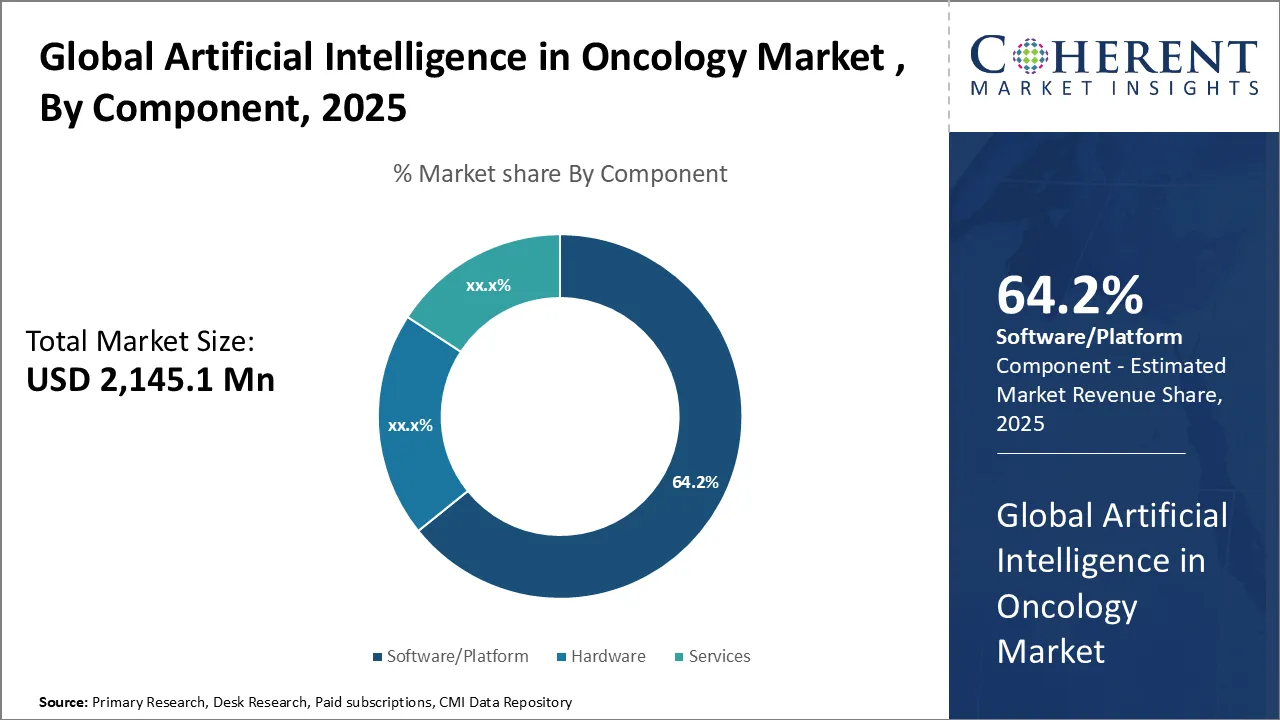
Artificial Intelligence in Oncology Market Insights, By Component: Software/Platform Acquires the dominant share as it Enable the Development and Deployment of Sophisticated AI Algorithms
In terms of the component, the software/platform segment is expected to hold 65.2% share of the global artificial intelligence in oncology market in 2026, driven by their essential role as the backbone of AI-powered cancer care solutions. These software platforms enable the development and deployment of sophisticated AI algorithms that assist in cancer detection, diagnosis, prognosis, and treatment planning. Oncology generates vast and complex datasets, including medical imaging, pathology reports, genomics, and clinical records, which require advanced software to efficiently manage, analyze, and transform into actionable insights.
Additionally, these platforms offer customization to cater to specific cancer types and clinical workflows, while also providing scalability for use across hospitals, research centers, and laboratories. Ensuring regulatory compliance and data security is another critical function of these platforms, as they handle sensitive patient information and must adhere to healthcare standards such as HIPAA and GDPR.
For instance, in August 2025, the Ministry of Electronics & IT’s IndiaAI (Independent Business Division), in partnership with the National Cancer Grid (NCG), unveiled the Cancer AI & Technology Challenge (CATCH) Grant Program. The initiative will award up to ₹50 lakh per shortlisted project with potential scale-up funding of up to ₹1 crore to pilot AI-driven innovations in cancer screening, diagnostics, treatment support, patient engagement, operational efficiency, research, and data curation across India.
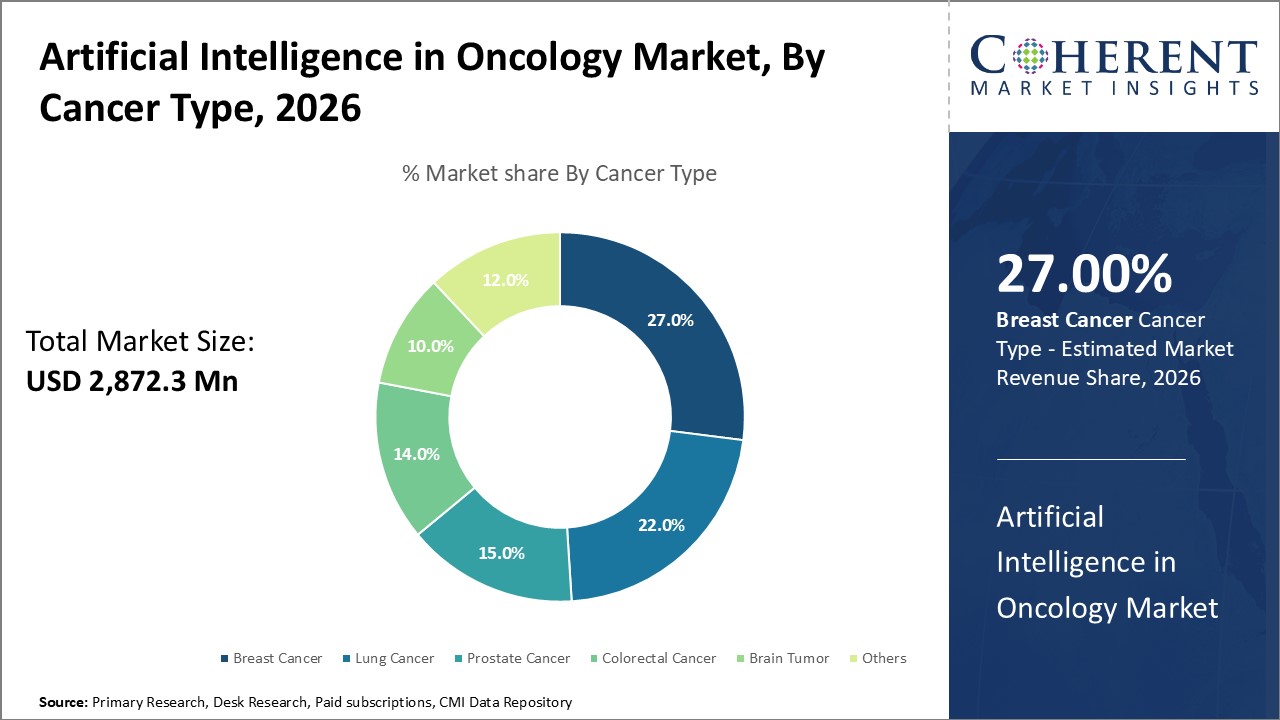
Artificial Intelligence in Oncology Market Insights, By Cancer Type: Breast Cancer Acquires the largest share on account of its Widespread Prevalence
In terms of cancer type, the breast cancer segment is expected to contribute the largest share of the market in 2026, primarily due to its widespread prevalence and significant impact on global health. In 2026, approximately 316,950 women will be diagnosed with invasive breast cancer, with 59,080 new cases of ductal carcinoma in situ (DCIS), which is non-invasive. As one of the most common cancers among women worldwide, there is a continuous need for improved screening, accurate diagnosis, and effective treatment options. AI technologies address these needs by enhancing the precision and speed of interpreting complex imaging data such as mammograms, MRIs, and ultrasounds, which are critical in breast cancer detection. Early detection plays a vital role in improving patient outcomes, and AI-driven tools have shown promise in increasing the sensitivity and specificity of screening programs compared to traditional methods.
For instance, in June 2025, the U.S. Food and Drug Administration (FDA) has granted De Novo authorization to Clairity Breast, marking it as the first artificial intelligence (AI) platform approved to predict a woman's five-year breast cancer risk using only a routine screening mammogram.
Artificial Intelligence in Oncology Market Insights, By Treatment Type: Chemotherapy Holds the prominent share
In terms of treatment type, the chemotherapy segment leads the global artificial intelligence in oncology market with a highest share in 2026, due to its complexity, high usage, and potential for optimization through advanced data analytics. AI technologies are increasingly being applied to personalize chemotherapy regimens by analyzing vast datasets from clinical records, genomic profiles, and clinical trial results, enabling oncologists to select the most effective drug combinations, dosing schedules, and treatment durations for individual patients.
Additionally, AI-powered predictive models help identify patients at high risk of severe side effects, such as neutropenia or organ toxicity, allowing for timely dose adjustments and proactive supportive care. Real-time monitoring systems, integrating imaging data, biomarker analysis, and wearable sensors, further enable early detection of non-responsiveness, reducing wasted treatment cycles.
For instance, in June 2025, researchers at the University of Melbourne developed an artificial intelligence (AI) tool aimed at optimizing chemotherapy dosing for colorectal cancer patients. The tool addresses the limitations of traditional dosing methods, which often rely on body surface area (BSA) calculations, leading to over or under dosing in a significant number of cases. This is further propelling the artificial intelligence in oncology market revenue.
Artificial Intelligence in Oncology Market Insights, By End User: Hospitals and Clinics holds the dominant share as it Improves Diagnostic Accuracy, Enabling Earlier And Precise Cancer Detection
In terms of end user, the hospitals and clinics segment is expected to hold the greatest share of the market in 2026, as it improves diagnostic accuracy, enabling earlier and more precise cancer detection. AI also supports personalized treatment by analyzing patient data to tailor therapies, while automating routine tasks to boost efficiency and reduce costs. Additionally, AI helps predict cancer progression for better monitoring and integrates with advanced technologies like robotic surgery. With rising cancer cases and growing patient complexity, healthcare providers rely on AI to manage workloads without sacrificing quality. Regulatory approvals and insurance support further drive the demand for AI-powered oncology solutions.
For instance, in January 2024, Apollo Cancer Centres inaugurated India’s first AI Precision Oncology Centre, a pioneering step in cancer care. The centre leverages advanced artificial intelligence technology to deliver personalized cancer treatment by analyzing vast patient data, genetic profiles, and treatment outcomes. This innovation aims to enhance diagnostic accuracy, optimize therapy plans, and improve patient survival rates.
Regional Insights
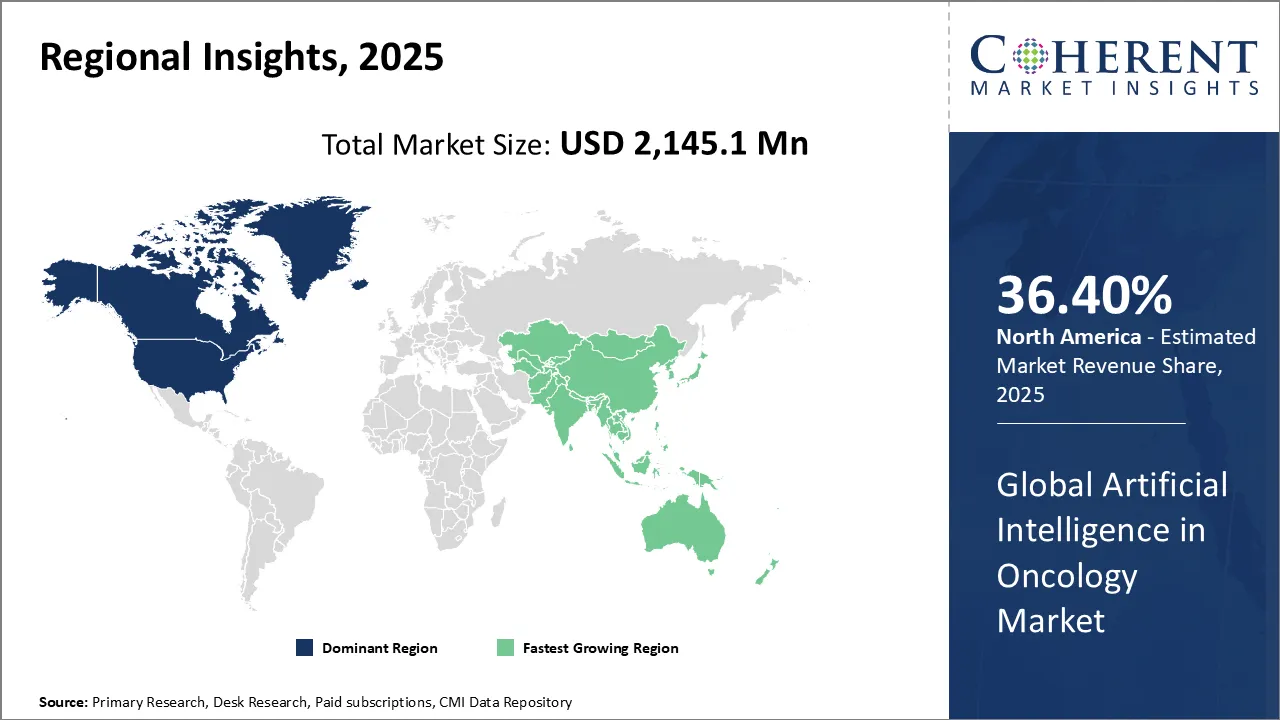
North America Artificial Intelligence in Oncology Market Analysis & Trends
North America has established itself as the dominant region in the artificial intelligence in oncology market with 36.40% share. This can be attributed to factors such as the strong foothold of key market players and their focus on developing advanced AI solutions for cancer diagnosis and treatment in the region. The region is home to various leading technology companies that are investing heavily in AI research and its implementation in the healthcare sector.
Moreover, the presence of top cancer institutes and hospitals and their active collaboration with AI firms have ensured North America stays at the forefront of deploying and testing latest AI tools. Government initiatives to integrate cutting-edge digital health technologies into the existing healthcare infrastructure have made North America an attractive market for AI vendors.
For instance, in June 2024, Aiforia Technologies Plc has introduced a new CE-IVD-marked clinical AI solution for breast cancer grading. The Aiforia® Breast Cancer Grading AI solution is part of the Aiforia® Breast Cancer Suite, which includes CE-IVD-marked AI models for breast cancer biomarkers and the Aiforia® Clinical Suite Viewer.
Asia Pacific Artificial Intelligence in Oncology Market Analysis & Trends
The Asia Pacific market is expected to hold the third-largest market share for the global artificial intelligence in oncology market during the forecast period. Rapid digitization of the healthcare systems and rising acceptance of precision medicine approaches in major countries such as China, Japan, and India are driving the Asia Pacific market. Asia Pacific presents lucrative opportunities owing to the rise in cancer incidence rates due to lifestyle changes and the growing geriatric population.
For instance, in August 2026, OptraSCAN unveiled its AI-powered CytoSiA platform at the 9th Digital Pathology & AI Congress Asia in Singapore. This innovative platform integrates artificial intelligence with digital pathology, enabling pathologists to perform rapid and accurate analysis of cytology specimens. CytoSiA aims to streamline diagnostic workflows, reduce turnaround times, and enhance diagnostic accuracy.
Artificial Intelligence in Oncology Market Outlook Country-wise
The U.S. Artificial Intelligence in Oncology Market Trends
The United States acquires the promising AI-driven oncology market share owing to its advanced healthcare infrastructure, substantial public and private R&D investments, and a high cancer prevalence. These factors drive rapid development and adoption of AI technologies in cancer detection, diagnosis, and treatment, helping improve patient outcomes and advance precision medicine.
For instance, in May 2026, SpotItEarly, a US-based health tech startup, launched a $20.3 million initiative aimed at detecting cancer early using a novel combination of artificial intelligence (AI) and trained dogs. The company’s approach integrates AI algorithms with canine scent detection to identify cancer markers with high accuracy, potentially transforming early diagnosis.
China Artificial Intelligence in Oncology Market Trends
China is a major player in Asia-Pacific’s AI in oncology market, driven by strong government and private investments in AI and digital health. Its large population and rising cancer rates create high demand for AI solutions. Access to extensive healthcare data and supportive national policies enable the development and adoption of advanced AI tools for early detection, diagnosis, and personalized treatment, making China a rapidly growing market.
For instance, in July 2026, Chinese scientists developed a groundbreaking artificial intelligence (AI) system capable of transforming cancer detection worldwide. The new AI technology analyzes medical images with unprecedented accuracy, enabling earlier and more precise diagnosis of various cancers. Developed by researchers at Zhejiang University, this innovation significantly reduces the workload of pathologists while improving diagnostic efficiency.
Market Report Scope
Artificial Intelligence in Oncology Market Report Coverage
| Report Coverage | Details | ||
|---|---|---|---|
| Base Year: | 2025 | Market Size in 2026: | USD 2,872.3 Mn |
| Historical Data for: | 2020 To 2024 | Forecast Period: | 2026 To 2033 |
| Forecast Period 2026 to 2033 CAGR: | 33.9% | 2033 Value Projection: | USD 22,166.2 Mn |
| Geographies covered: |
| ||
| Segments covered: |
| ||
| Companies covered: | Azra AI, IBM Corporation, Siemens Healthineers AG, Intel Corporation, GE HealthCare, NVIDIA Corporation, Digital Diagnostics Inc., ConcertAI, Median Technologies, PathAI, Microsoft, Zebra Medical Vision, and Babylon | ||
| Growth Drivers: |
| ||
| Restraints & Challenges: |
| ||
Global Artificial Intelligence in Oncology Market Opportunities
- The increasing prevalence of cancer: The increasing prevalence of cancer around the world poses opportunities for advancing patient care through innovative technologies. This projected surge in cancer burden challenges the capabilities and resources of existing healthcare infrastructures. At the same time, this serves as a strong driver for the development of advanced tools that can help in the prevention, early detection, and effective treatment of cancer. Artificial intelligence is emerging as one of the most promising technologies that can massively help in oncology. AI systems have the potential to analyze huge volumes of complex patient data, like genomic information, medical images, and clinical records, far better than humans. This enables more precise cancer screening and diagnostics, individualized treatment selection, and critical research discoveries. For example, AI algorithms are being trained on large databases of medical scans to identify subtle clues that human experts may miss, helping detect tumors at earlier stages. For instance, according to the national Institutes of Health, in 2025, 2,041,910 new cancer cases and 618,120 cancer deaths are projected to occur in the United States.
- The increasing healthcare expenditure: Increasing healthcare expenditure is expected to create significant opportunities for the Global Artificial Intelligence in Oncology Market Forecast. As countries worldwide allocate more resources to their healthcare systems, this financial influx helps improve healthcare infrastructure, expand medical service availability, and increase access to advanced technologies like AI. These developments are anticipated to drive future growth in the market, boosting the adoption of AI-powered oncology solutions globally.
Analyst Opinion (Expert Opinion)
The current trajectory of artificial intelligence (AI) in oncology market value reflects maturation beyond proof-of-concept toward selective clinical utility, yet strategic frictions remain that will determine whether AI becomes a routine clinical accelerator or a niche adjunct.
Large-scale screening deployments have demonstrated meaningful uplifts in detection: a nationwide implementation of AI‑supported double reading for mammography delivered a 17.6% higher breast‑cancer detection rate without increasing recall rates, under real‑world conditions. This confirms that properly validated AI can improve sensitivity while preserving specificity when integrated into established workflows.
Regulatory acceptance is advancing but uneven. Regulatory authorities have begun to codify expectations, and hundreds of AI/ML-enabled medical devices are now identified on official registries, which facilitates clinical adoption but also exposes variability in evidence thresholds between jurisdictions. The presence of an FDA AI/ML device listing signals regulatory feasibility, yet regulatory clearance does not equate to demonstrated clinical impact in diverse health systems.
Adoption in clinical practice is accelerating but concentrated. Reported surveys indicate roughly two‑thirds of U.S. radiology departments now use at least one AI tool, primarily for triage and detection tasks; however, use is heavily skewed toward high‑resourced centers with robust IT and governance capabilities. This clustering risks widening care inequities unless deployment strategies are explicitly inclusive.
Commercial dynamics are trending toward consolidation and cross‑sector partnerships. Major pharma–AI collaborations and combinations among AI drug‑discovery firms signal that oncology drug development will be a primary value corridor for AI, with large licensing and partnership deals reflecting industry belief in accelerated target identification and lead optimization. Yet success will depend on transparent model interpretability and prospective, clinically meaningful readouts.
Speak to the analyst
Want personalized insights?
Take the findings above to one of our principal consultants, or have the report rebuilt around the segments, geographies and competitors you actually track.
Recent Developments
- In May 2025, Better Medicine introduced BMVision Kidney, the world's first CE-certified artificial intelligence solution for kidney cancer detection. Developed under the EU MDR 2017/745 regulation, this software-as-a-medical-device (SaMD) assists radiologists in detecting, classifying, and measuring kidney tumors on contrast-enhanced CT scans.
- In March 2025, A Hyderabad hospital has introduced an AI-powered system to enhance early cancer detection. This technology analyzes medical imaging data to identify potential malignancies with greater accuracy and speed. By integrating machine learning algorithms, the system assists radiologists in diagnosing cancers at earlier stages, potentially improving patient outcomes.
- In March 2023, Qritive, a Singapore-based AI startup involved in providing AI-based solutions for cancer diagnostics, announced that it had launched QAi Prostate, a new AI-based tool for the diagnosis of prostate cancer.
- In December 2022, MedCognetics, Inc., a U.S.-based cloud-based software provider, announced that it had received U.S. Food and Drug Administration (FDA) 510(k) clearance for its artificial intelligence (AI)-enabled software for breast cancer screening, QmTRIAGE.
Market Segmentation
- By Component (Revenue, USD Mn, 2021 - 2033)
- Software/Platform
- Hardware
- Services
- By Cancer Type (Revenue, USD Mn, 2021 - 2033)
- Breast Cancer
- Lung Cancer
- Prostate Cancer
- Colorectal Cancer
- Brain Tumor
- Others
- By Treatment Type (Revenue, USD Mn, 2021 - 2033)
- Chemotherapy
- Radiotherapy
- Immunotherapy
- Others
- By End User (Revenue, USD Mn, 2021 - 2033)
- Hospitals & Clinics
- Diagnostic Centers
- Biopharmaceutical Companies
- Others
- By Region (Revenue, USD Mn, 2021 - 2033)
- North America
- U.S.
- Canada
- Latin America
- Brazil
- Argentina
- Mexico
- Rest of Latin America
- Europe
- Germany
- U.K.
- Spain
- France
- Italy
- Russia
- Rest of Europe
- Asia Pacific
- China
- India
- Japan
- Australia
- South Korea
- ASEAN
- Rest of Asia Pacific
- Middle East
- GCC Countries
- Israel
- Rest of Middle East
- Africa
- South Africa
- North Africa
- Central Africa
- North America
- Top companies in Global Artificial Intelligence in Oncology Market
- Azra AI
- IBm Corporation
- Siemens Healthineers AG
- Intel Corporation
- GE HealthCare
- NVIDIA Corporation
- Digital Diagnostics Inc.
- ConcertAI
- Median Technologies
- PathAI
- Microsoft
- Zebra Medical Vision
- Babylon
Sources
Primary Research Interviews from the following stakeholders
Stakeholders
- Interviews with oncologists, radiologists, AI software developers, healthcare IT managers, hospital administrators, clinical researchers, and pharmaceutical R&D heads across leading global healthcare institutions.
Specific Stakeholders
- Oncology department heads at leading cancer treatment centers
- AI and data science leads in healthcare technology firms specializing in oncology solutions
- Clinical trial coordinators and biostatisticians in cancer research organizations
- Healthcare CIOs and IT infrastructure managers at multispecialty hospitals
- Regulatory affairs specialists working with AI medical devices and software approvals
- Product managers at AI software vendors and medical imaging device manufacturers
Databases
- National Cancer Institute (NCI) Databases
- Global Cancer Observatory (GCO) by International Agency for Research on Cancer (IARC)
- Centers for Medicare & Medicaid Services (CMS) Data
- ClinicalTrials.gov
- World Health Organization (WHO) Health Statistics
- Food and Drug Administration (FDA) Medical Device Databases
- European Medicines Agency (EMA) Public Assessment Reports
- PubMed Central and MEDLINE
Magazines
- Cancer Therapy Advisor
- Applied Clinical Trials
- Oncology Times
- Health Data Management
- Nature Medicine Insights
- BioCentury
- Medical Device and Diagnostic Industry (MD+DI)
- IEEE Spectrum – Healthcare Technology Section
Journals
- Journal of Clinical Oncology
- Artificial Intelligence in Medicine (Elsevier)
- Cancer Research
- The Lancet Oncology
- IEEE Journal of Biomedical and Health Informatics
- Journal of Medical Imaging
- NPJ Digital Medicine
- Journal of Oncology Practice
Newspapers
- The New York Times – Health Section
- The Guardian – Science and Health
- The Economic Times – Healthcare & Technology
- The Washington Post – Health & Science
- Financial Times – Healthcare and Biotechnology
- South China Morning Post – Medical Technology
- The Times of India – Healthcare Technology
Associations
- American Society of Clinical Oncology (ASCO)
- European Society for Medical Oncology (ESMO)
- International Association for the Study of Lung Cancer (IASLC)
- Healthcare Information and Management Systems Society (HIMSS)
- Medical Imaging & Technology Alliance (MITA)
- Society for Imaging Informatics in Medicine (SIIM)
- IEEE Engineering in Medicine and Biology Society (EMBS)
- Radiological Society of North America (RSNA)
Public Domain Sources
- National Institutes of Health (NIH) – Cancer Research Resources
- U.S. Food and Drug Administration (FDA) – AI/ML Medical Device Guidelines
- European Commission – Digital Health Reports
- Ministry of Health and Family Welfare (India) – National Cancer Control Program
- World Health Organization (WHO) – Global Health Observatory
- Centers for Disease Control and Prevention (CDC) – Cancer Statistics
- Japan Cancer Society Publications
- UK National Health Service (NHS) – AI in Healthcare Reports
Proprietary Elements
- CMI Data Analytics Tool, and Proprietary CMI Existing Repository of information for last 8 years
*Definition: Artificial intelligence (AI) in oncology refers to the application of AI technologies, such as machine learning, deep learning, natural language processing, and computer vision, to various aspects of cancer care and research. AI is utilized within the field of oncology to enhance and refine the prevention, diagnosis, treatment, and management of cancer by analyzing complex medical data.
Get access to 250+ pages report
Every segment, forecast, competitor profile and data table behind the analysis above — available for instant download.
- ESOMAR Member
- ISO 9001:2015 Certified
- D-U-N-S Registered
- GDPR & CCPA Compliant
Missing comfort of reading report in your local language? Find your preferred language:
Transform your Strategy with Exclusive Trending Reports
Frequently Asked Questions
The Global Artificial Intelligence in Oncology Market is estimated to be valued at USD 2,872.3 Mn in 2026, and is expected to reach USD 22,166.2 Mn by 2033.
Lack of awareness of AI applications in healthcare and a shortage of trained healthcare professionals are some factors that can hamper the growth of global artificial intelligence in oncology market.
Advancement in AI and machine learning technologies and support for clinical decision-making are some factors driving the growth for global artificial intelligence in oncology market over the forecast period.
Software/platform segment accounted for the largest share of the global artificial intelligence in oncology market.
Azra AI, IBM Corporation, Siemens Healthineers AG, Intel Corporation, GE HealthCare, NVIDIA Corporation, Digital Diagnostics Inc., ConcertAI, Median Technologies, PathAI, Microsoft, Zebra Medical Vision, and Babylon are some of the major key players operating in global artificial intelligence in oncology market.
North America is expected to account for the largest share of the artificial intelligence in oncology market.
The CAGR of the Global Artificial Intelligence in Oncology Market is projected to be 33.9% from 2026 to 2033.