

Global Organic Pigments Market Size and Trends
Global organic pigments market is estimated to be valued at USD 18,406.0 Mn in 2026 and is expected to reach USD 29,363.3 Mn by 2033, exhibiting a compound annual growth rate (CAGR) of 6.9% from 2026 to 2033.
Key Takeaways
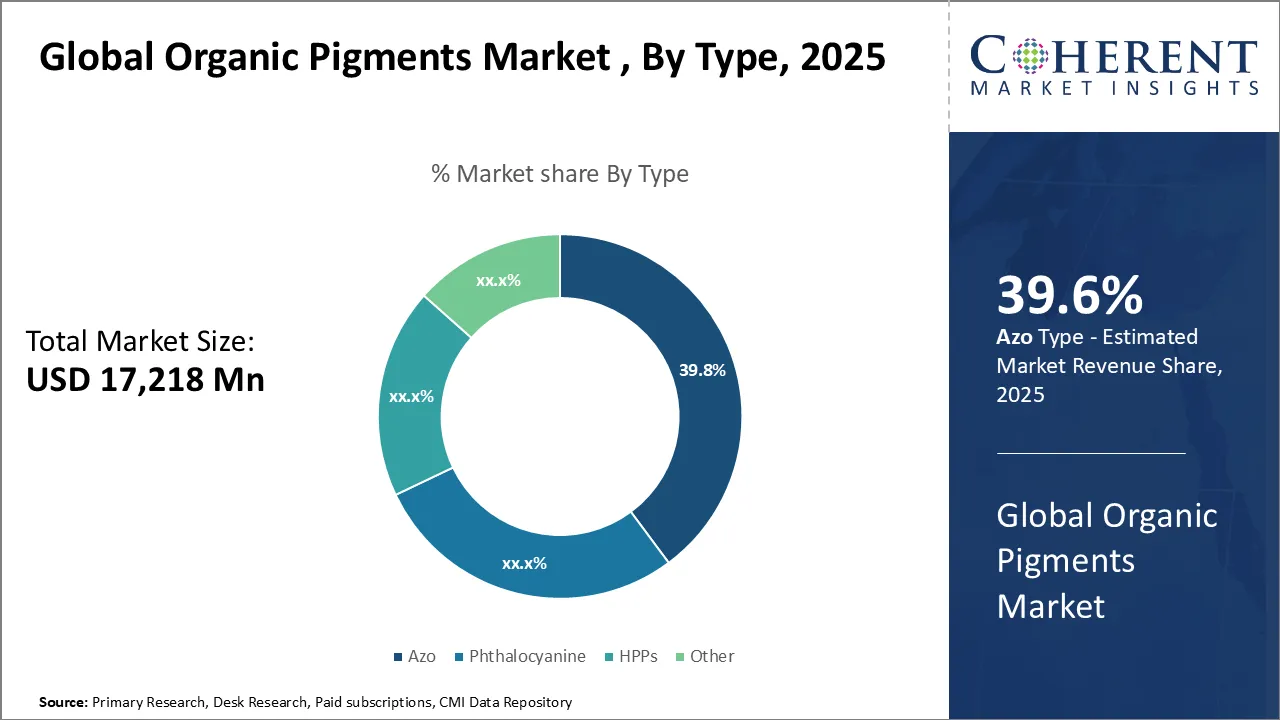
- Based on Type, the Azo segment leads the market holding an estimated share of 40.6% in 2026, due to its widespread usage in printing inks.
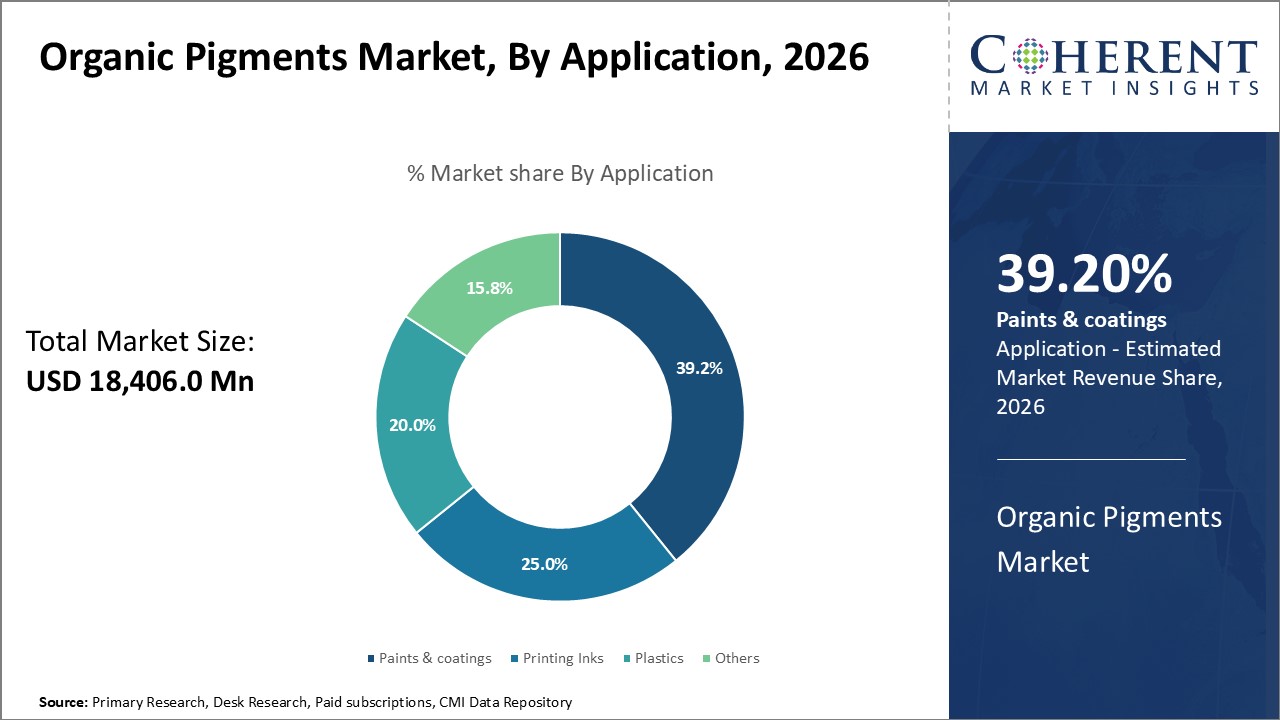
- Based on Application, the Painting and Coating segment is expected to lead with estimated market share of 39.2% in 2026, due to their vibrant and diverse color options.
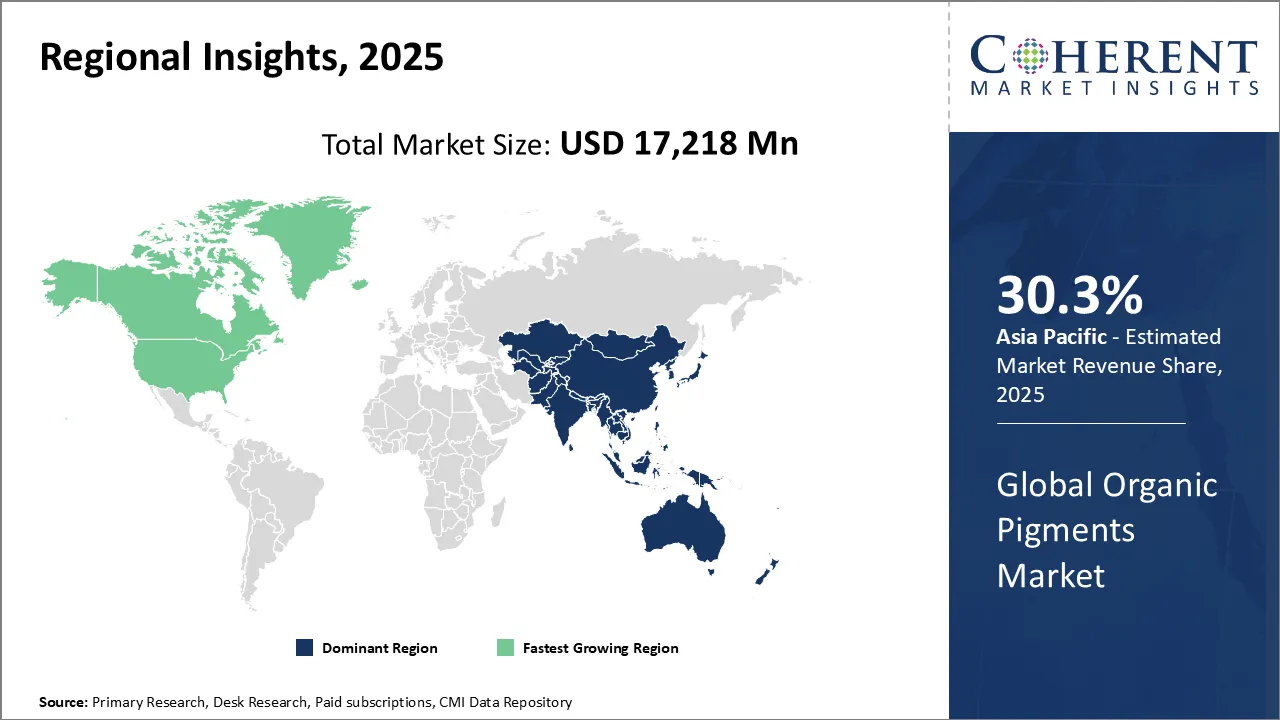
- Based on Region, Asia Pacific is expected to lead the market, holding a share of 30.3% in 2026. While North America is anticipated to be the fastest growing region, with a market share of 27.9% in 2026.
Market Overview
The market is expected to witness positive growth over the forecast period. Increasing demand from various end-use industries such as printing inks, paints & coatings, plastics, and others is expected to contribute to the market growth. Organic pigments are increasingly being utilized in the manufacturing of printing inks owing to their brighter color, better shading properties and color consistency when compared to inorganic pigments. Furthermore, rising application of organic pigments in plastic manufacturing is also anticipated to drive the market growth. However, factors such as availability of substitute products and stringent environmental regulations regarding organic pigments production may hamper the industry growth during the forecast period.
Current Events and Its Impact
Current Event | Description and its Impact |
Environmental Regulations and Sustainability Compliance Requirements |
|
US-China Trade War and Global Tariff Escalations |
|
Segmental Insights
- Current Industry Events of 2026
- Market Size Estimation
- Regional Breakdown
- Competitive Landscape
- Customer Intelligence
- Segmental Analysis
- Pricing Analysis
- Key Market Drivers, Challenges & Future Trends
- Customized Insights Section
Organic Pigments Market Insights, By Type - Azo Segment Dominate Due To Its Wide Applications in Printing Inks
In terms of Type, the azo segment is estimated to contribute the 40.6% share of the organic pigments market in 2024 due to its widespread usage in printing inks. Azo pigments are highly favored for printing applications because these exhibit excellent opacity, tinting strength, and color strength even at low concentrations. These also demonstrate good lightfastness properties and color consistency. Azo pigments are affordable to produce and offer bright coloring properties, making them a top choice for printing on various substrates such as paper, plastic, and metal. Their uniform particle size allows for superior color development and consistency across large production batches. Azo compounds can be readily synthesized to produce a huge palette of intense shades of red, orange, yellow and others. The global printing industry relies heavily on azo pigments to print books, magazines, packaging, labels and other printed materials. Azo pigments meet the stringent quality and performance requirements of high-speed commercial printing processes. These provide long-lasting, vibrant color reproduction essential for branding and product promotion.
For instance, in July 2025, Sun Chemical Performance Pigments introduced its new Sunbrite Yellow 74, a next-generation Azo yellow pigment designed for architectural and decorative coatings. Developed with machine colorants in mind, the pigment offers significantly improved dispersibility and delivers 15–20% more tint strength than comparable products. Its optimized color point suits both existing and VOC-free colorant systems, saving formulators time and resources. Additionally, Sunbrite Yellow 74 boasts stronger lightfastness than other budget diarylide yellows, underscoring its performance and environmental appeal.
Organic Pigments Market Insights, By Application - Paints & Coatings is Growing Due To Their Vibrant and Diverse Color Options
In terms of application, the paints & coatings segment is estimated to contribute 39.2% of the market share, due to their vibrant and diverse color options, which provide brighter and more aesthetically appealing finishes compared to inorganic alternatives. These pigments offer superior color consistency, gloss, and durability, making them highly suitable for architectural paints, automotive coatings, and commercial applications. Increasing health and environmental awareness has also driven a shift toward non-toxic, eco-friendly pigments that comply with stricter regulatory standards and low-VOC formulations. Additionally, organic pigments are compatible with advanced coating technologies, including water-based, UV-curable, and sustainable formulations, further enhancing their adoption. Growth in construction, infrastructure, and automotive sectors, particularly in emerging markets, is further boosting consumption, making organic pigments a preferred choice in the paints and coatings industry.
For instance, in July 2025, Nature Coatings launched BioBlack, a 100% bio-based and carbon-negative pigment derived from FSC-certified recycled pre-consumer wood waste, unveiled at the American Coatings Show. The closed-loop, renewable energy-driven process delivers high light-fastness and superior color stability compared to petroleum-derived carbon black. Certified by both the Forest Stewardship Council and the USDA BioPreferred program, BioBlack is now available in two water-borne dispersions and two dry pigment powders. Global customers in packaging, automotive, apparel, and paints sectors are already adopting this sustainable alternative.
Regional Insights
Asia Pacific Organic Pigments Market Analysis & Trends
Asia-Pacific region is expected to hold a dominant share of 30.3% market share in 2026 and a 7.9% CAGR, driven by the rapid growth of end-use industries such as paints & coatings, plastics, textiles, and printing inks. The region’s expanding automotive, construction, and consumer goods sectors are increasing the need for vibrant, high-quality colors. Growing preference for eco-friendly and non-toxic solutions, coupled with regulatory pressures, is further boosting adoption of organic pigments. Technological advancements improving pigment stability, brightness, and durability have expanded their applicability across packaging, textiles, and specialty coatings. Additionally, rising disposable incomes and the demand for aesthetically appealing consumer products, along with Asia-Pacific’s role as a global manufacturing hub, are supporting robust market growth for organic pigments in the region.
For instance, in October 2024, Sudarshan Chemical Industries Limited, a leading global pigment manufacturer, saw its stock price rise nearly 3% to an intraday high of ₹982 after the Indian government imposed a five-year anti-dumping duty on Chinese-imported azo pigments. The new duties range from $513 to $1,811 per ton, depending on the producer, aiming to protect domestic manufacturers from unfair pricing practices.
North America Organic Pigments Market Analysis & Trends
North America region is projected to exhibit the fastest growth with share of 27.9% of the global organic pigments market in 2026 and is projected to expand at a CAGR of 6.6% during the forecast period, largely driven by a combination of regulatory pressure, sustainability trends, and strong end-user demand. Stricter environmental regulations enforced by agencies such as the U.S. Environmental Protection Agency (EPA) have accelerated the substitution of heavy-metal-based and solvent-borne pigments with eco-friendly organic pigments. The region’s packaging and printing sectors, particularly in food, beverages, and e-commerce, are witnessing robust adoption of organic pigments due to their recyclability and compliance with safety standards. In addition, the paints and coatings industry, supported by construction growth and the automotive refinishing market, remains a key driver, as major automakers and construction companies demand vibrant, durable, and weather-resistant colorants.
North America also leads in the development of specialty organic pigments, such as high-performance, fluorescent, and bio-based formulations, which are increasingly used in plastics, digital printing, and electronics applications. Furthermore, rising consumer awareness of sustainable and low-VOC products has reinforced the shift toward organic pigments, positioning the region as one of the fastest-growing and most innovation-driven markets globally.
For instance, in August 2026, uperior Materials Inc., a leading distributor in the coatings industry, entered into a distribution agreement with DCL Corporation. This partnership focuses on the northeastern and mid-Atlantic United States, regions where Superior Materials has established a strong presence. Superior Materials will now distribute DCL's Quindo, Perrindo, and Ultrablue pigment lines, which are locally stocked and available for immediate shipment.
Europe Organic Pigments Market Analysis & Trends
Europe holds an estimates share of 25.4% and a 5.3% CAGR in the organic pigments market in 2026, driven by a combination of regulatory, industrial, and consumer trends. Stringent European regulations limiting the use of heavy-metal-based and synthetic pigments have pushed manufacturers toward eco-friendly, compliant organic alternatives. The region’s automotive and construction sectors, major consumers of high-quality coatings and paints, favor organic pigments for their superior color brilliance, chemical resistance, and heat stability.
Additionally, growing consumer preference for sustainable and non-toxic products has increased adoption in decorative paints, packaging, and consumer goods. Technological advancements in pigment formulations have further enhanced durability and application versatility, while industrial growth and export demand continue to support market expansion. Collectively, these factors contribute to the robust market share and healthy growth trajectory of organic pigments in Europe.
For instance, in March 2026, Venator unveiled the TMP- and TME-free TIOXIDE® TR81 pigment, marking a significant advancement in sustainable titanium dioxide (TiO₂) technology. This reformulation eliminates the use of trimethylolpropane (TMP) and trimethylolethane (TME), addressing increasing regulatory scrutiny while maintaining the pigment's high opacity, brightness, dispersibility, and durability. The TR81 pigment is designed to help industries such as coatings, plastics, and inks comply with stringent chemical regulations without compromising performance.
Latin America Organic Pigments Market Analysis & Trends
The demand for organic pigments in Latin America is strong, accounting for an 8.7% market share in 2026 with a 6.0% CAGR, driven by multiple factors. The region’s growing automotive and decorative coatings industries rely heavily on organic pigments for vibrant colors, aesthetics, and UV resistance. There is also an increasing preference for environmentally friendly products, as organic pigments have a lower environmental impact and comply with stricter regulations in countries like Brazil and Mexico. Rising consumer demand for bright and customizable colors in textiles, plastics, and packaging further fuels adoption. Additionally, advancements in local manufacturing and production technologies have improved availability and reduced costs, while organic pigments meet safety and regulatory standards for applications such as food packaging and cosmetics. Together, these factors are driving the steady growth of the organic pigments market in Latin America.
For instance, in May 2026, Innovia Films Ltd. has expanded its Mexican operations with a new film coating line at its facility in western Mexico, where it began operations 45 years ago. This move aims to enhance its capabilities in producing high-barrier films for food and medical packaging. The company also plans to introduce a new metalizer in 2026 to further boost its production capacity. The expansion underscores Innovia's commitment to meeting growing demand in the Latin American market and strengthening its position in the global packaging industry.
Middle East Organic Pigments Market Analysis & Trends
The organic pigments market in the Middle East is witnessing strong demand, reflected in a 4.6% market share in 2026 and a robust 8.0% CAGR, driven by multiple factors. Rapid urbanization and growth in the construction and automotive industries are fueling the need for high-quality paints, coatings, and plastics that utilize organic pigments. Increasing preference for eco-friendly and non-toxic materials, coupled with stricter environmental regulations, is encouraging the adoption of organic alternatives. Additionally, the expanding textile, packaging, and printing sectors are leveraging organic pigments for brighter colors, improved consistency, and enhanced performance. Technological advancements in pigment formulations, offering better heat stability, lightfastness, and versatility, are further supporting market growth. Overall, the combination of industrial expansion, environmental awareness, and innovation is driving the strong demand for organic pigments in the Middle East.
For instance, in April 2026, Guangzhou Chemicals Import & Export Co., Ltd. announced its participation in the Saudi Arabia Coatings Show 2026, at Dhahran Expo in Dammam. With over 40 years of experience in the chemical trade, the company specializes in high-quality raw materials for the coatings, paints, and surface treatment industries. Their product portfolio includes unsaturated polyester resin, alkyd resin, vinyl ester resin, and solvents.
Africa Organic Pigments Market Analysis & Trends
The organic pigments market in Africa is experiencing significant demand, accounting for a 3.1% market share in 2026 and a robust 7.1% CAGR, driven by multiple factors. The growth of the paints and coatings industry, fueled by expanding construction and automotive sectors, has increased the need for bright, durable, and environmentally friendly pigments. Additionally, the rising textile and printing industries are driving demand for vibrant and eco-safe dyes and inks. Environmental awareness and emerging regulations favor non-toxic organic pigments over synthetic alternatives, while consumers increasingly prefer sustainable products in paints, plastics, and coatings. Overall industrial growth across automotive, construction, and consumer goods sectors is further supporting the adoption of organic pigments, making Africa a key market for eco-friendly and high-quality colorants.
For instance, in August 2026, Nigeria’s fashion sector is undergoing a dynamic transformation, extending far beyond traditional runways. Designers are marrying heritage craftsmanship with modern flair, helping shape a distinct Afro-global aesthetic. Lagos Fashion Week, concept stores like Alara, and exhibitions such as the Brooklyn Museum’s showcase have elevated Nigerian brands internationally. A standout example is Dye Lab, which crafts agbadas from locally sourced cotton and vibrant organic pigments, demonstrating commitment to eco-friendly production. This is further proliferating the organic pigments market share.
Market Report Scope
Organic Pigments Market Report Coverage
| Report Coverage | Details | ||
|---|---|---|---|
| Base Year: | 2025 | Market Size in 2026: | USD 18,406.0 Mn |
| Historical Data for: | 2020 To 2024 | Forecast Period: | 2026 To 2033 |
| Forecast Period 2026 to 2033 CAGR: | 6.9% | 2033 Value Projection: | USD 29,363.3 Mn |
| Geographies covered: |
| ||
| Segments covered: |
| ||
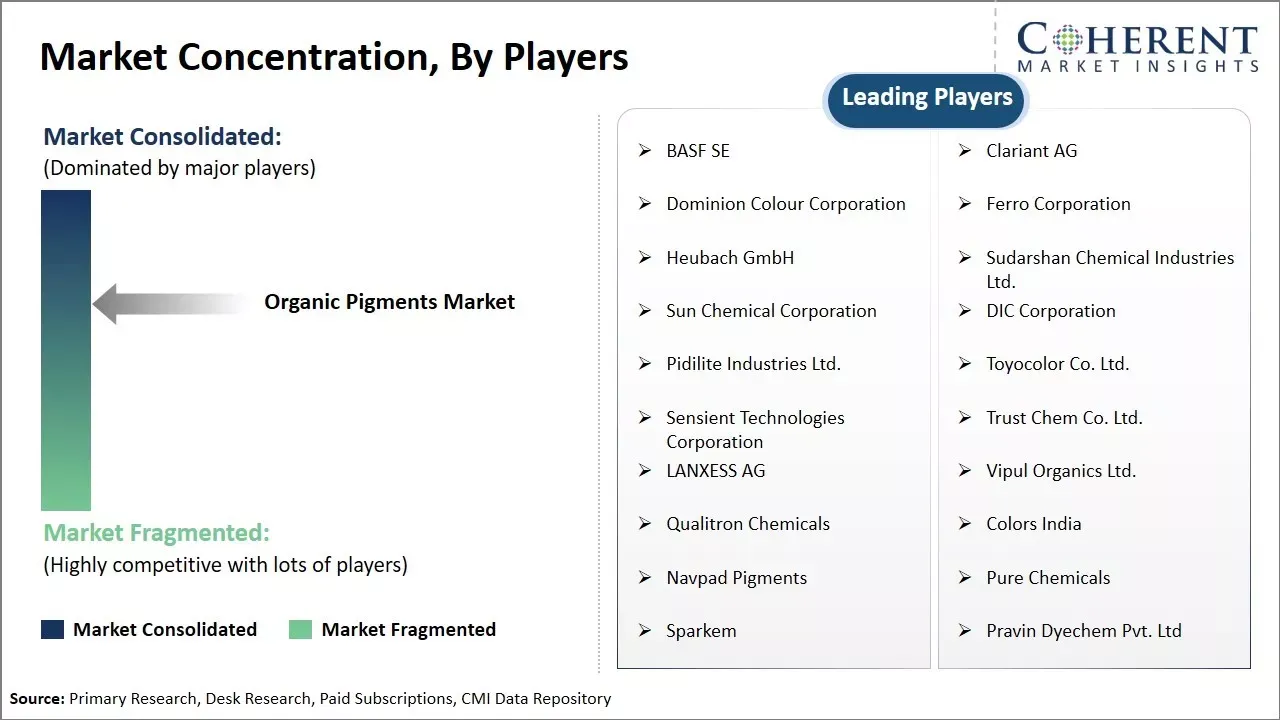
| Companies covered: | SABIC, BASF SE, Clariant AG, Dominion Colour Corporation, Ferro Corporation, Heubach GmbH, Sudarshan Chemical Industries Ltd., Sun Chemical Corporation, DIC Corporation, Pidilite Industries Ltd., Toyocolor Co. Ltd., Sensient Technologies Corporation, Trust Chem Co. Ltd., LANXESS AG, Vipul Organics Ltd., Qualitron Chemicals, Colors India, Navpad Pigments, Pure Chemicals, Sparkem, Pravin Dyechem Pvt. Ltd | ||
| Growth Drivers: |
| ||
| Restraints & Challenges: |
| ||
Market Concentration and Competitive Landscape
Organic Pigments Market Driver
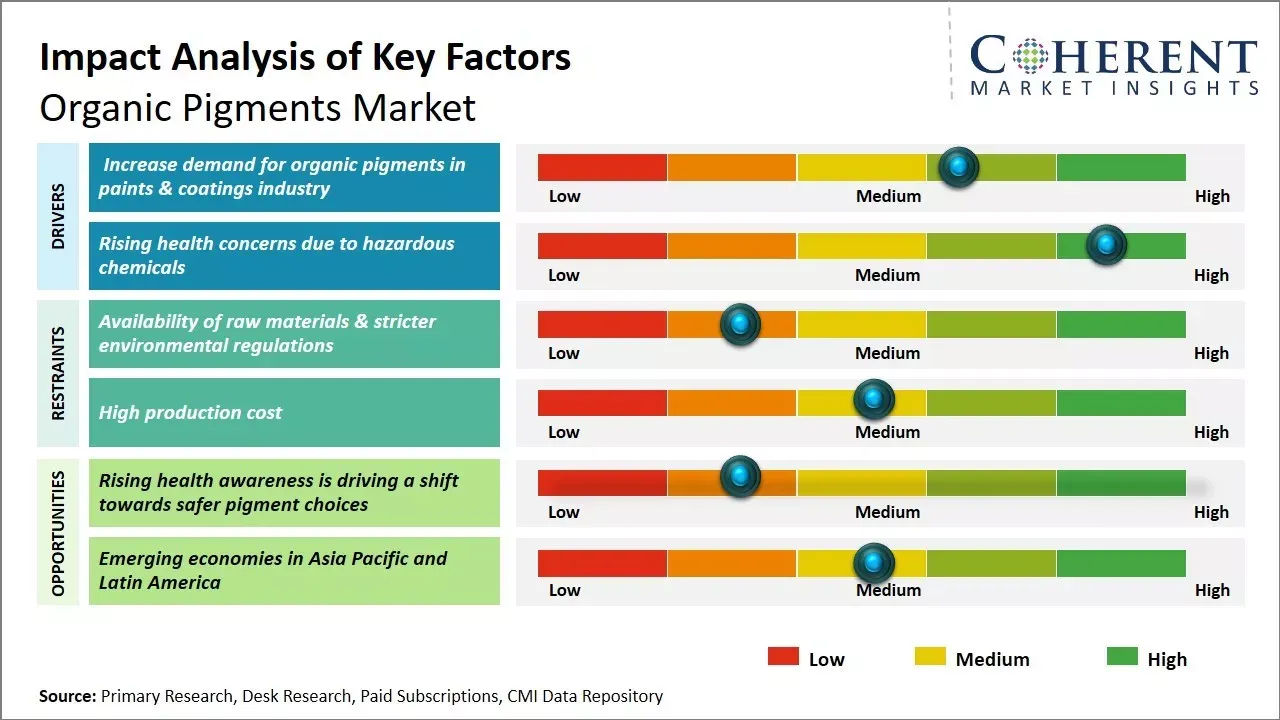
Increase demand for organic pigments in paints & coatings industry
The demand for organic pigments is steadily rising in paints and coatings industry as consumers are becoming more environmentally conscious. Majority of organic pigments are derived from vegetable or animal sources and do not pose risk to the environment during their production, use or at end-of-life. In recent years, there has been a tectonic shift in preferences of consumers who are willing to pay extra for eco-friendly products. The younger generation of millennial population in particular is driving this change by choosing brands that have strong commitments towards sustainability. This burgeoning trend is making paint and coating manufacturers include larger proportion of organic pigments in their formulations.
Stringent environment regulations worldwide regarding VOC emissions is also shifting the industry towards waterborne and powder coating technologies where organic pigments have distinct advantages over others, therefore, growing paints & coatings industry is expected to drive the market growth. For instance, in March 2025, Cologne-based specialty chemicals firm LANXESS unveiled an expansive portfolio at the European Coatings Show (ECS) held in Nuremberg, featuring both organic and inorganic color pigments for the paints and coatings industry. Highlights included water-based pigment dispersions, Levanyl (organic) and Levanox (inorganic), noted for their high color strength and low viscosity. The firm also introduced Scopeblue Bayferrox iron oxide yellow pigments with approximately 35% lower carbon footprint.
Organic Pigments Market Opportunities
Rising health awareness is driving a shift towards safer pigment choices
The organic pigments market is witnessing robust demand from key end-use industries such as printing inks, paints, and coatings, where the need for vibrant, durable, and eco-friendly color solutions continues to rise. Growing health and environmental awareness is accelerating the shift from synthetic pigments toward safer organic alternatives, supported by regulatory measures favoring non-toxic materials. Beyond traditional applications, expanding usage in plastics, cosmetics, and textile printing is creating new avenues for suppliers to diversify their product portfolios and capture emerging demand.
Rapid urbanization in developing economies is further boosting consumption, as infrastructure growth, consumer goods manufacturing, and lifestyle-driven industries increasingly rely on high-performance pigments. According to the organic pigments market forecast, technological advancements in pigment formulation, combined with sustainability trends and the push for renewable raw materials, will play a crucial role in shaping future opportunities and ensuring long-term growth across multiple industries.
Analyst Opinion (Expert Opinion)
The Organic Pigments Market is experiencing a pivotal transformation, driven by a confluence of regulatory pressures, technological advancements, and shifting consumer preferences. While the market's projected growth is notable, the trajectory is not without its complexities.
A significant factor influencing this market is the increasing demand for sustainable and eco-friendly colorants across various industries, including paints & coatings, printing inks, textiles, and plastics. This shift is not merely a trend but a response to stringent environmental regulations and a growing consumer preference for products that align with sustainability goals. For instance, the European Union's REACH regulations and similar policies in other regions are compelling manufacturers to innovate and adopt greener alternatives.
Technological advancements are also playing a crucial role. The development of high-performance organic pigments that offer superior color strength, stability, and application versatility is expanding their utility across specialized applications. These innovations are particularly evident in the automotive and cosmetics industries, where color precision and durability are paramount.
However, the Organic Pigments Market faces challenges that could impact its growth. The volatility in raw material prices, influenced by global supply chain dynamics and geopolitical factors, poses a risk to price stability. Additionally, the market's reliance on a limited number of suppliers for certain pigment types could lead to supply constraints, affecting production timelines and costs.
Speak to the analyst
Want personalized insights?
Take the findings above to one of our principal consultants, or have the report rebuilt around the segments, geographies and competitors you actually track.
Global Organic Pigments Industry News
- In October 2024, Archroma launched the NTR Printing System, a pioneering bio-based pigment solution aimed at transforming textile printing. This system utilizes renewable feedstocks across all components: Printofix® Black NTR-TF, a pigment black with 79% renewable carbon content; Helizarin® NTR-SS, a formaldehyde-free binder; and Luprintol® NTR-HF, a formaldehyde-free fixing agent. Together, they deliver excellent wet and dry rubbing fastness, exceptional softness, and compatibility with various application methods, including printing, coating, and continuous pigment dyeing.
- In September 2024, Evonik Coating Additives introduced two new biosurfactants—TEGO® Wet 570 Terra and TEGO® Wet 580 Terra, designed for waterborne coatings and inks. These products are 100% natural, readily biodegradable, and EU Ecolabel compliant, offering a sustainable alternative to traditional fossil-based surfactants. Produced through a unique fermentation process using renewable corn feedstock, they exhibit low volatile organic compound (VOC) levels and are non-toxic to aquatic organisms.
Market Segmentation
- Type Insights (Revenue, USD Bn, 2026 - 2033)
- Azo
- Pthalocyanine
- HPPs
- Others
- Application Insights (Revenue, USD Bn, 2026 - 2033)
- Printing inks
- Paints & coatings
- Plastics
- Others
- Regional Insights (Revenue, USD Bn, 2026 - 2033)
- North America
- U.S.
- Canada
- Latin America
- Brazil
- Argentina
- Mexico
- Rest of Latin America
- Europe
- Germany
- U.K.
- Spain
- France
- Italy
- Russia
- Rest of Europe
- Asia Pacific
- China
- India
- Japan
- Australia
- South Korea
- ASEAN
- Rest of Asia Pacific
- Middle East
- GCC Countries
- Israel
- Rest of Middle East
- Africa
- South Africa
- North Africa
- Central Africa
- North America
- Key Players Insights (Revenue, USD Mn, 2021 - 2033)
- BASF SE
- Clariant AG
- Dominion Colour Corporation
- Ferro Corporation
- Heubach GmbH
- Sudarshan Chemical Industries Ltd.
- Sun Chemical Corporation
- DIC Corporation
- Pidilite Industries Ltd.
- Toyocolor Co. Ltd.
- Sensient Technologies Corporation
- Trust Chem Co. Ltd.
- LANXESS AG
- Vipul Organics Ltd.
- Qualitron Chemicals
- Colors India
- Navpad Pigments
- Pure Chemicals
- Sparkem
- Pravin Dyechem Pvt. Ltd
Sources
Primary Research Interviews from the following stakeholders
Stakeholders
- Interviews with paint & coatings manufacturers, printing ink producers, plastics compounders, textile dyeing & finishing houses, packaging converters, and procurement heads across major global markets.
Specific stakeholders
- R&D and sustainability heads at coatings and paints companies (e.g., Asian Paints, Sherwin-Williams, AkzoNobel)
- Operations managers at plastics and masterbatch manufacturers (e.g., LyondellBasell, SABIC, BASF’s performance materials division)
- Procurement leads at packaging firms and converters (e.g., Tetra Pak, Amcor, Uflex)
- Ink formulation experts at commercial printing and publishing houses (e.g., Sakata Inx, Flint Group, Sun Chemical)
- Color innovation managers in textile and apparel brands (e.g., H&M, Inditex, Nike)
- Regulatory and compliance officers at chemical and pigment manufacturers
- Product managers and application specialists at specialty chemical suppliers of dispersions and intermediates
Databases
- UN Comtrade Database (trade in pigments, dyes, and colorants)
- World Trade Organization (WTO) Trade Statistics
- Eurostat – Chemicals and Pigments Section
- U.S. Geological Survey (USGS) – Mineral Commodities Reports (organic pigments, intermediates)
- China Customs Statistics
- Korea Customs Service Data Portal
- Japan External Trade Organization (JETRO)
- Directorate General of Commercial Intelligence and Statistics (DGCIS), India
- Indian Chemical Council (ICC) statistics and publications
- OECD Chemicals Outlook Database
Magazines
- Coatings World
- European Coatings Journal
- Ink World Magazine
- Plastics News
- Packaging Europe
- Chemical Week
- Textile World
- Paint & Coatings Industry (PCI) Magazine
- Plastics Technology Magazine
Journals
- Dyes and Pigments (Elsevier)
- Progress in Organic Coatings (Elsevier)
- Journal of Coatings Technology and Research
- Journal of Applied Polymer Science
- Color Research and Application (Wiley)
- Journal of Pigment & Resin Technology
- Polymer International
- Textile Research Journal
Newspapers
- The Wall Street Journal – Chemicals & Manufacturing Section
- The Economic Times – Chemicals & Materials
- Business Standard – Industrial Chemicals & Manufacturing
- Financial Times – Chemicals and Supply Chain
- Nikkei Asia – Chemical & Industrial Materials Coverage
- South China Morning Post – Industry & Trade
- The Hindu Business Line – Chemicals and Petrochemicals
Associations
- European Council of the Paint, Printing Ink, and Artists’ Colours Industry (CEPE)
- American Coatings Association (ACA)
- Color Pigments Manufacturers Association (CPMA), U.S.
- Indian Paint Association (IPA)
- Dyestuffs Manufacturers Association of India (DMAI)
- Plastics Industry Association (PLASTICS)
- European Printing Ink Association (EuPIA)
- International Colour Association (AIC)
- China Dyestuff Industry Association (CDIA)
Public Domain Sources
- Ministry of Chemicals and Fertilizers (Government of India)
- European Chemicals Agency (ECHA) – REACH Regulations
- U.S. Environmental Protection Agency (EPA) – TSCA Chemicals Database
- National Institute of Standards and Technology (NIST), U.S.
- Ministry of Economy, Trade and Industry (METI), Japan
- U.S. International Trade Commission (USITC)
- Indian Bureau of Mines (for pigment intermediates and raw materials)
- OECD – Environment, Health & Safety Publications on Chemicals
- Reserve Bank of India (RBI) Reports on Chemicals & Manufacturing Sectors
Proprietary Elements
- CMI Data Analytics Tool, and Proprietary CMI Existing Repository of information for last 8 years
*Definition: The organic pigments market produces and supplies pigments derived from organic compounds for various industries. Organic pigments are colored, black, white or fluorescent particulate organic solid compounds used to color materials like paints, inks, plastics, and other materials. They are generally insoluble in their application medium but are dispersed and may be suspended permanently.
Get access to 250+ pages report
Every segment, forecast, competitor profile and data table behind the analysis above — available for instant download.
- ESOMAR Member
- ISO 9001:2015 Certified
- D-U-N-S Registered
- GDPR & CCPA Compliant
Missing comfort of reading report in your local language? Find your preferred language:
Transform your Strategy with Exclusive Trending Reports
Frequently Asked Questions
The Global Organic Pigments Market is estimated to be valued at USD 18,406.0 Mn in 2026, and is expected to reach USD 29,363.3 Mn by 2033.
The CAGR of the Global Organic Pigments Market is projected to be 6.9% from 2026 to 2033.
Increase demand for organic pigments in paints & coatings industry and rising health concerns due to hazardous chemicals are the major factor driving the growth of global organic pigments market.
Availability of raw materials & stricter environmental regulations and high production cost are the major factor hampering the growth of global organic pigments market.
In terms of type, azo segment is estimated to dominate the market in 2026.
SABIC, BASF SE, Clariant AG, Dominion Colour Corporation, Ferro Corporation, Heubach GmbH, Sudarshan Chemical Industries Ltd., Sun Chemical Corporation, DIC Corporation, Pidilite Industries Ltd., Toyocolor Co. Ltd., Sensient Technologies Corporation, Trust Chem Co. Ltd., LANXESS AG, Vipul Organics Ltd., Qualitron Chemicals, Colors India, Navpad Pigments, Pure Chemicals, Sparkem, Pravin Dyechem Pvt. Ltd are the major players.
North America is expected to lead the global organic pigments market.