

Global Guaifenesin (API) Market Size and Forecast – 2026 To 2033
The global guaifenesin (API) market is expected to grow from USD 94.7 Mn in 2026 to USD 128.6 Mn by 2033, registering a compound annual growth rate (CAGR) of 4.5% from 2026 to 2033. The global market for guaifenesin (API) is poised for significant expansion, fueled by the soaring burden of respiratory disorders and rising consumption of cold and cough medications globally.
According to the World Health Organization, chronic respiratory diseases (CRDs) are among the most common noncommunicable diseases (NCDs) and the sixth leading cause of death in the WHO European Region, with almost 400,000 deaths every year, and nearly 80% of these deaths are caused by chronic obstructive pulmonary disease (COPD).
(Source: World Health Organization)
Key Takeaways of the Global Guaifenesin (API) Market
- Standard release is projected to hold 72.0 % of the global guaifenesin (API) market share in 2026, making it the dominant formulation type segment, characterized by high penetration in North America, owing to heavy consumption of non-prescription (OTC) cough and cold medications taken in the immediate-action form throughout the U.S. and Canada. Commercial suppliers of pharmaceutical-grade guaifenesin APIs have generally opted for standard-release formulae due to their fast expectorant action and compatibility with all manner of syrup, tablet and multi-symptom respiratory products. The market is also benefiting from the significant retail pharmacy availability and high seasonal demand for OTC respiratory therapies. For instance, the U.S. FDA Final Administrative Order for OTC Cold, Cough, Allergy, Bronchodilator, and Antiasthmatic Drug Products noted the following regulatory backdrop of the OTC respiratory medication market, lending support to ongoing North American pharmaceutical consumption of guaifenesin conventional-release formulations. (Source: Food and Drug Administration)
- Cough syrups and expectorants are projected to hold 46.0 % of the global guaifenesin (API) market share in 2026, making it the dominant application segment, highly concentrated in Asia Pacific driven by heavy consumption of respiratory therapeutics in high population countries such as India, China, and Japan, impacted by seasonal respiratory infections and chronic pulmonary disease. Guaifenesin APIs have a wide usage in expectorants as they are efficient at thinning mucus and providing relief from chest congestion associated with upper respiratory infections. Drug manufacturers are tending to increase manufacturing of oral respiratory formulations targeted for outpatient and retail pharmacy channels in emerging Asian economies. For instance, in India pneumonia is still the leading cause of mortality among children under five contributing to almost 400,000 deaths per annum which in turn will substantially support the market for respiratory therapeutics and cough management formulations throughout the country. (Source: Ministry of Health & Family Welfare)
- Pharmaceutical manufacturers are projected to hold 54.0 % of the global guaifenesin (API) market share in 2026, making it the dominant end user segment, with considerable penetration in Asia Pacific attributed to high-volume generation of generic pharmaceuticals, including an increasing number of OTC respiratory drugs manufacturing plants across India and China. Respiratory drugs using very high-quality guaifenesin APIs is being added into cough syrups, cold drugs, combo respiratory drugs range being sold into retail pharmacy and hospital channel of distribution. The segment is also be benefiting from the proliferation of respiratory therapeutics exports and from low-cost pharma manufacturing capabilities across the Asia Pacific region. For instance, India supplies 20% of world’s generic drugs by volume with 3,000 pharma companies and over 10,500 manufacturing units providing a major part of API demand for cough and respiratory formulations for mass market. (Source: India Brand Equity Foundation)
- North America maintains dominance with an expected share of 35.0% in 2026, supported with robust penetration of OTC respiratory drugs, the high frequency of physician directed prescribing of expectorant based cough products, and heavy consumer outlay on self-medication products in the U.S. and Canada. Furthermore, the U.S. is characterized by the presence of numerous retail pharmacy chains, quick access to multi-symptom respiratory medications via organized channels of drug distribution, and increased manufacturing capacity for combination cough products containing guaifenesin APIs for treatment of seasonal respiratory illnesses. For instance, during the 2024–2025 flu season, approximately 51 million flu related illnesses, 23 million medical visits, and 710,000 hospitalizations were documented in the U.S., by the Centers for Disease Control and Prevention (CDC), fueling demand for guaifenesin containing respiratory treatments throughout North America. (Source: Centers for Disease Control and Prevention)
- Asia Pacific is expected to exhibit the fastest growth with a contribution of 29.0% share in 2026, fueled by the ongoing rapid buildup of domestic pharmaceutical manufacturing infrastructure and increasing output of affordable respiratory therapeutics, the Asia Pacific region's overall OTC cough medication sales are growing rapidly, through retail pharmacies, e-commerce pharma channels, and community health networks. Further, the escalated incidence of urban air pollution and increasing outpatient respiratory tract infection management are fueling the Asia Pacific demand for expectorant APIs. For instance, according to World Air Quality Report, a number of Asian cities remain among the highest polluted cities in the world leading to increased respiratory health concerns and rising consumption of respiratory-care pharma products across the region. (Source: IQAir)
- Expansion of Combination Respiratory Drug Formulations: Pharmaceutical manufacturers are the developing multi-symptom cough and cold drugs where guaifenesin is combined with antihistamines, bronchodilators and decongestants to enhance the therapeutics efficiency and user convenience. The surging customer inclination towards the combination OTC respiratory drugs are further driving the market for high quality guaifenesin APIs across worldwide pharmaceutical manufacturing industries.
- Rising Demand for OTC Respiratory Therapeutics Through E-Pharmacy Channels: The momentum of online pharmacy and digital healthcare is providing emerging sales opportunities for cough and expectorant medicines with guaifenesin APIs. Growing consumer demand for self-care, home delivery of respiratory therapeutics, and online healthcare access is driving growth of cough-management formulations in urban healthcare markets.
Segmental Insights
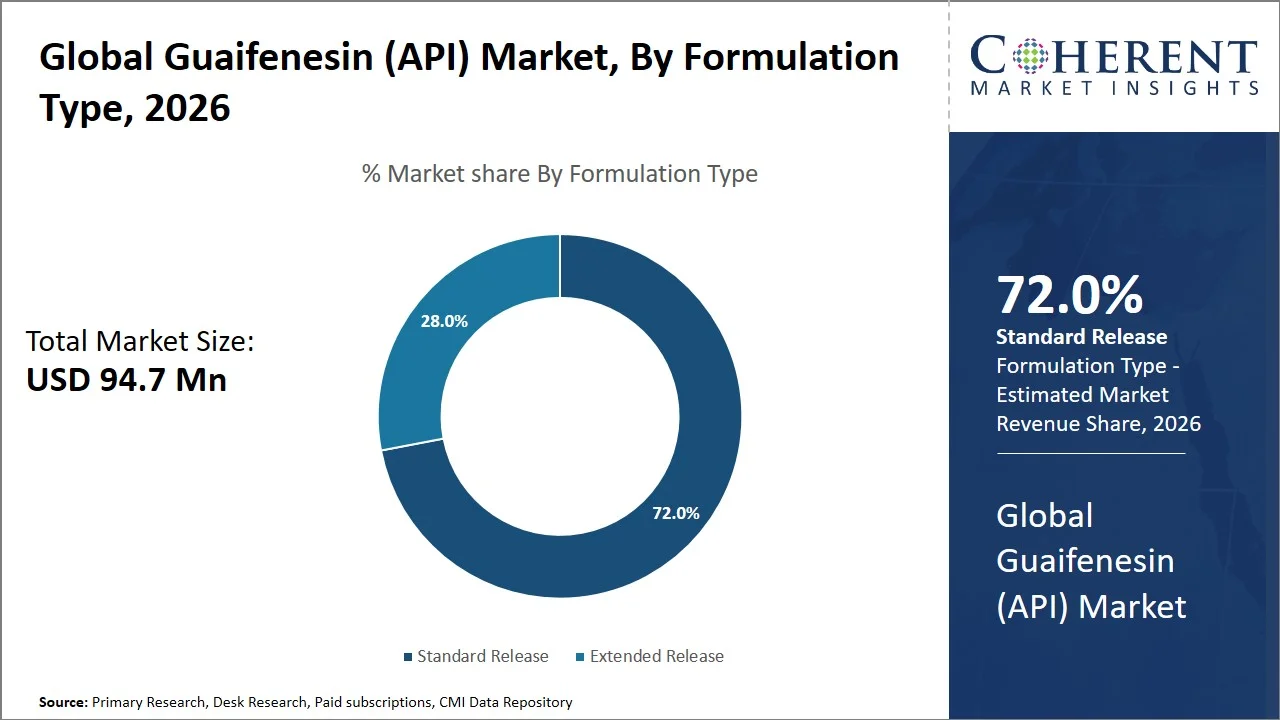
Why Does Standard Release Segment Dominate the Global Guaifenesin (API) Market?
Standard release is projected to hold the market share of 72.0% in 2026, as a result of broad spectrum of inclusion of its formulations into high volume respiratory formulations that demand short acting expectorant performance and ease of dosage administration. The wide acceptance of standard-release guaifenesin among pharmaceutical companies are attributable to the ability to formulate this type of guaifenesin into various oral liquid, powder, chewable and standard solid dose respiratory formulations without even the requirement of employing sustained or controlled release technologies.
Further advantages of standard-release guaifenesin include shorter manufacturing lead time, lower formulation costs and easier scale-up as compared to extended-release guaifenesin. Furthermore, physicians also commonly recommend immediate-release respiratory drugs for short term cough and congestion therapy in outpatient practice. For instance, according to Mayo Clinic, guaifenesin, expectorant is broad mature in the market to facilitate looseness mucus or phlegm from the upper respiratory infections such as cold, bronchitis and other complications, backed up positive commercial demand for instant-action formulations throughout the world. (Source: Mayo Clinic)
- Current Industry Events of 2026
- Market Size Estimation
- Regional Breakdown
- Competitive Landscape
- Customer Intelligence
- Segmental Analysis
- Pricing Analysis
- Key Market Drivers, Challenges & Future Trends
- Customized Insights Section
Why Do Cough Syrups and Expectorants Represent the Application Segment in the Guaifenesin (API) Market?
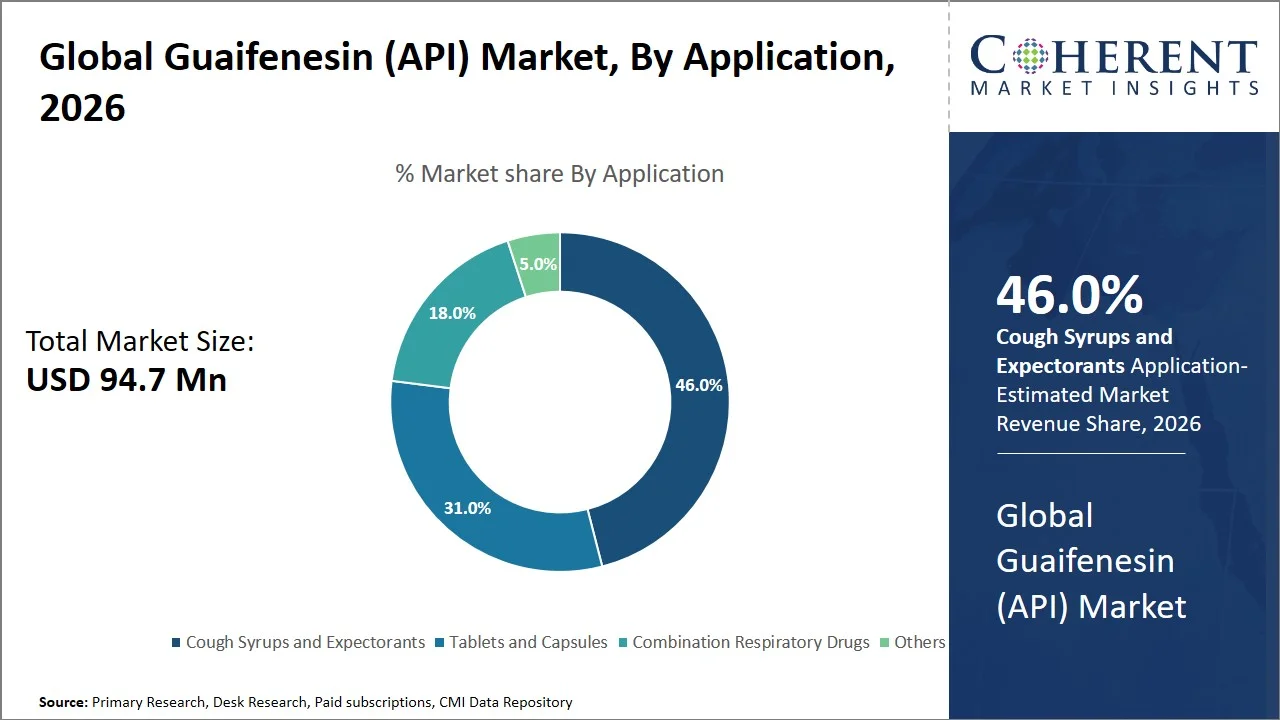
Cough syrups and expectorants are projected to hold a market share of 46.0% in 2026, due to the higher consumption of guaifenesin, for cough, mucus clearing and as an expectorant, in liquid, rapidly acting respiratory drugs, for quick symptomatic relief. These liquid formulations are extremely popular among pediatric and geriatric patients, because they provide more patient compliance, ease of administration, dosing flexibility and better acceptance, as compared to solid oral drugs. Pharmaceutical manufacturers, are increasing the presence of guaifenesin, in combination products, with cough decongestants and antitussives, to cover more complete spectrum of respiratory symptoms, through a single drug.
This segment, also, remains popular as it offers high OTC and consumers' preference for self-medication, especially during the seasonal epidemics. Additionally, flavored syrup formulations improve acceptance among children and aged patients. For instance, according to MedlinePlus, guaifenesin is used to loosen phlegm (mucus) and thin it out, helping to treat cough caused by respiratory conditions, such as cold, flu, and other respiratory illnesses. This supports the high use of guaifenesin-contained cough syrup and expectorants products across the world. (Source: MedlinePlus)
Pharmaceutical Manufacturers Segment Dominates the Global Guaifenesin (API) Market
The pharmaceutical manufacturers segment is projected to hold a market share of 54.0% in 2026, because they constitute the huge volume of API demand for the large-scale manufacture of cough syrups, expectorants, combination cold remedies and OTC respiratory products distributed through retail pharmacies and hospital networks and therefore is the dominant importers of this product. Additionally, the ongoing investment into formulation development and optimization, quality assurance systems and GMP-compliant manufacturing procedures guarantee the ongoing consumption of the API.
Moreover, the wide distribution network and scale of these companies means that the cost-effective supply of respiratory medication is achievable in both advanced and developing countries. The emphasis on generic respiratory drugs means that these companies are likely to remain the largest guaifenesin API importer. For instance, according to European Federation of Pharmaceutical Industries and Associations (EFPIA), pharmaceutical production activities in EU supported API requirements, exporting the value of around USD 615 billion (EUR 565 billion in 2021, demonstrating the widespread production capability. (Source: European Federation of Pharmaceutical Industries and Associations)
Currents Events and their Impact
Current Events | Description and its Impact |
FDA Proposed OTC Monograph Order Supporting Flexible Solid Oral OTC Formulations (June 2025) |
|
U.S. FDA OMUFA II Reauthorization Strengthening OTC Drug Regulatory Oversight (November 2025) |
|
(Source: FDA Law Blog, Food and Drug Administration)
Global Guaifenesin (API) Market Dynamics
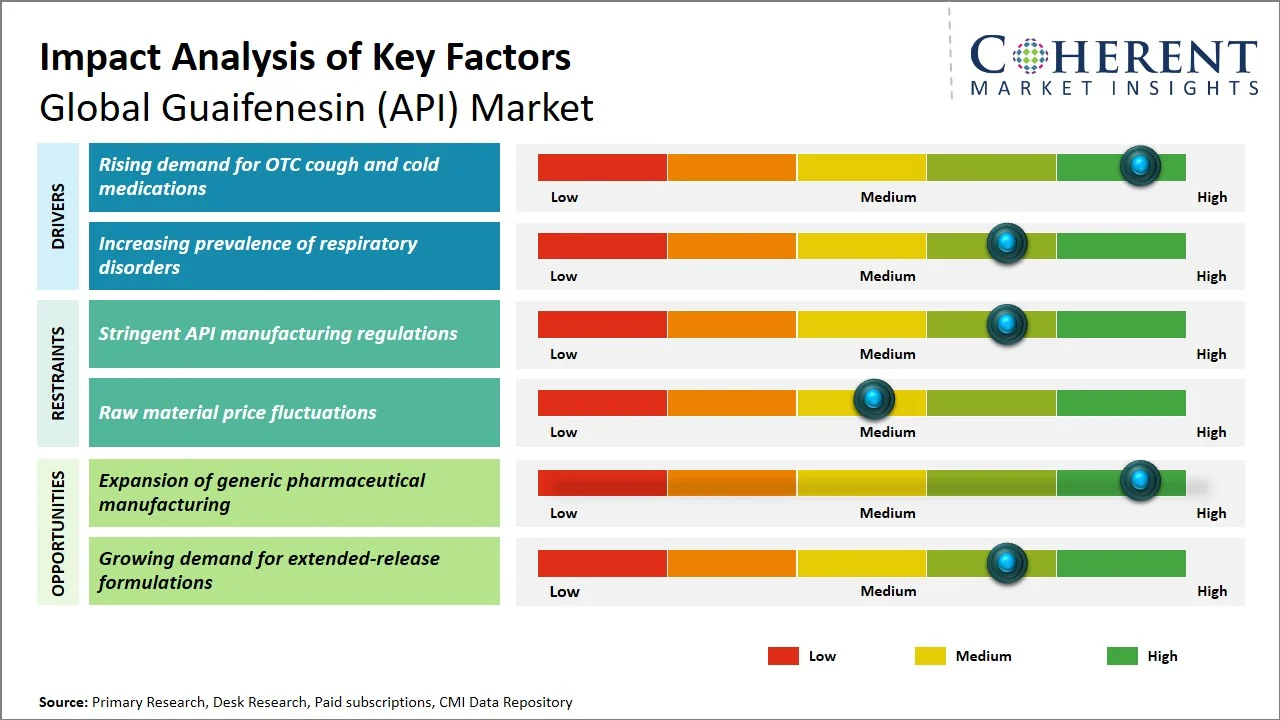
Market Drivers
- Rising demand for OTC cough and cold medications: The rising consumer trend towards self-medicating and growing availability of OTC healthcare products has been a major factor in driving the demand for OTC cough and cold products, thus creating a positive impact on the global guaifenesin (API) market. Guaifenesin has well established expectorant properties and thus is the most common ingredient in OTC products that treat chest congestion by loosening phlegm and making it easier to cough out. Consumer awareness regarding the ease of availability and reliability of OTC products as well as the surge in the occurrence of common colds and other respiratory diseases have all contributed to the upsurge in consumer reliance on OTC cough and cold products, thus fueling the guaifenesin (API) market. The soaring number of drugstores, online drug portals and retail outlets selling OTC cough and cold products at every nook and corner have bolstered the trends of consumer reliance on OTCs, which in turn has impacted the demand for guaifenesin (API). For instance, Lincoln International LLC estimated that over the counter (OTC) U.S. Cough, cold & allergy segment was worth around USD 11 billion, and grew by nearly 10% annually over 2020-2022, reflecting the robust commercial demand for respiratory self-care medicines and expectorants. (Source: Lincoln International LLC)
- Increasing prevalence of respiratory disorders: The guaifenesin (API) market is witnessing surging demand owing to the escalating prevalence and regional distribution of respiratory disorders including asthma, bronchitis, upper respiratory tract infections and chronic pulmonary diseases. The evolving outdoor and indoor air quality concerns, evolving tobacco and occupational exposure trends and expanding commercial use of airborne irritants and allergens have instigated a swift upward trend in incidence and prevalence of mucus-related respiratory conditions that can be effectively managed with expectorant-based medications. Guaifenesin forms a key constituent of respiratory combination products on account of its ability to facilitate smooth mucus removal and enhance airway patency during productive cough episodes. The escalating prevalence of respiratory ailments in both pediatric as well as aging groups has resulted in an increased inclination of pharmaceutical companies towards manufacturing cough management drugs and combination respiratory products. The rising rates of hospital and doctor visits for respiratory infections is further helping secure consistent global guaifenesin product demand. For instance, according to World Health Organization, asthma affected an estimated 363 million people globally in 2023 and caused approximately 442,000 deaths, highlighting the expanding burden of respiratory diseases supporting growth of the guaifenesin (API) market. (Source: World Health Organization)
Emerging Trends
- Increasing Adoption of Extended-Release Respiratory Formulations: The pharma companies are investing in extended-release versions of guaifenesin designed for prolonged mucus clearing and less frequent dosing for patients with chronic respiratory congestion. The trend is improving patient convenience and enabling the development of higher-end respiratory therapeutics.
- Rising Focus on Flavor-Masking and Palatable Respiratory Syrups: There is a growing focus on application of sophisticated flavor-masking technologies and further refinement of syrup texture profiles to improve patient acceptance of guaifenesin for use in either pediatric or geriatric populations. This focus is driving innovation in novel oral respiratory formulations to encourage consumer compliance.
Regional Insights
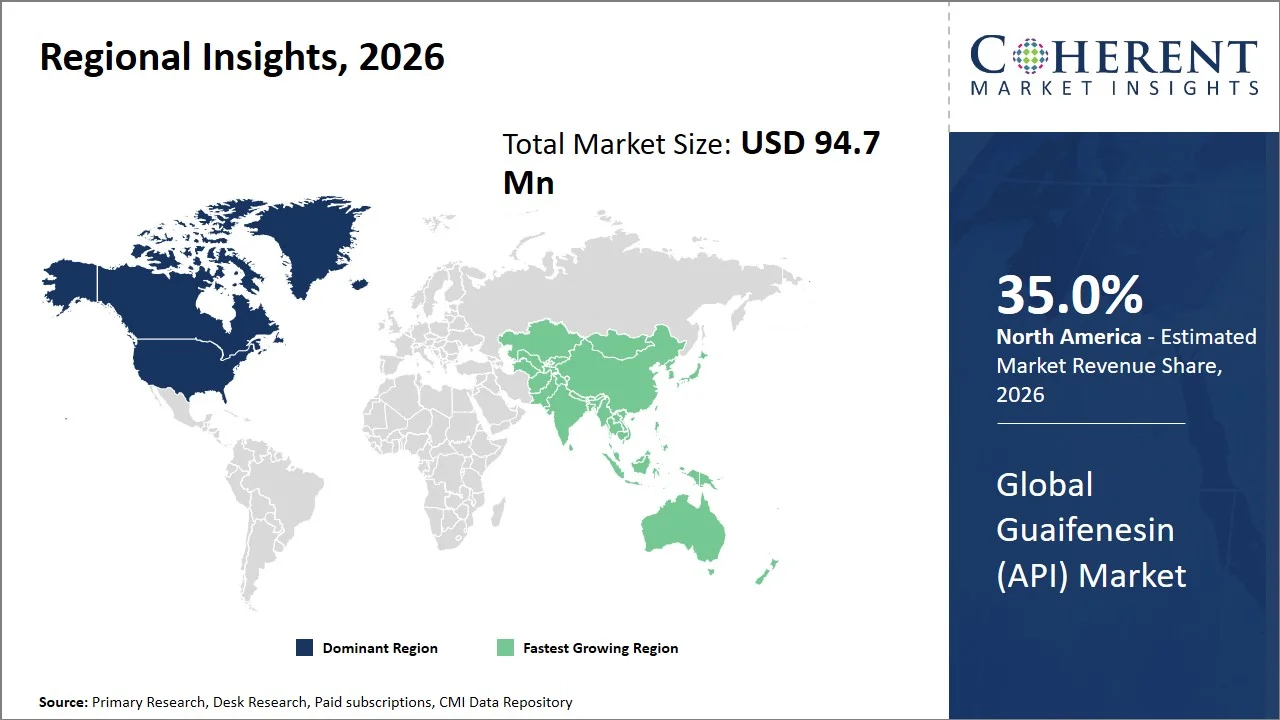
Why is North America a Strong Market for Guaifenesin (API)?
North America leads the global guaifenesin (API) market, accounting for an estimated 35.0% share in 2026, attributed to the large pharmaceutical industry, comprehensive healthcare infrastructure and strict regulatory norms that focus on quality and safety. The large pharmaceutical firms along with a number of contract API manufacturing firms create an environment for high purity of the API to be manufactured efficiently in large quantities. Additionally, a favorable regulatory environment that has a strong emphasis on the patent protection of innovative drugs and hassle-free approval procedures is conducive for the uninterrupted growth of this industry.
A mature market structure that has a large number of generic as well as branded formulations of Guaifenesin coupled with the presence of firms such as Mylan Pharmaceuticals, N.V. And Mallinckrodt Pharmaceuticals further strengthened North America's position. Furthermore, the well-developed logistics and trade infrastructure ensure hassle-free export-import operations. For instance, according to U.S. Bureau of Transportation Statistics, in the U.S., freight transportation moved over 20.2 billion tons of cargo annually over road, rail, air, and sea transportation, emphasizing the U.S. developed transportation system enabling goods movement especially pharmaceuticals and APIs. (Source: U.S. Bureau of Transportation Statistics)
Why Does Asia Pacific Guaifenesin (API) Market Exhibit High Growth?
The Asia Pacific guaifenesin (API) market is expected to exhibit the fastest growth with an estimated contribution of 29.0% share to the market in 2026, due to favourable factors such as the increasing demand for quality APIs, production costs and manufacturing facilities. The rise in industrialization along with awareness about healthcare is significantly driving this market. The region has increasingly focused on contract manufacturing organizations (CMOs) to fulfil the domestic and international needs, due to availability of cheap manufacturing costs.
The supportive government policies in terms of promotion of "Pharma Parks" and reduction of approval period of API in India and China have further positively contributed towards increasing the production capacity of the guaifenesin APIs. For instance, Government of India’s, the Production Linked Incentive (PLI) Scheme for Pharmaceuticals are intended to boost domestic pharmaceutical manufacturing and enable large-scale manufacturing of APIs and important drug intermediates throughout the country. (Source: Ministry of Chemicals and Fertilizers)
Global Guaifenesin (API) Market Outlook for Key Countries
Why is the U.S. Leading Innovation and Adoption in the Guaifenesin (API) Market?
The U.S. plays a crucial role in innovation and implementation in the guaifenesin (API) market attributed to its robust, mature OTC respiratory therapeutics market and continuous product diversification in the cough, mucus relief and multi-symptom respiratory therapy space. Companies in the country are actively developing differentiated dosage formats such as liquid gels, extended-release tablets, flavored syrup and pediatric respiratory formulations according to changing consumer demands. Strong integration of branded pharma companies, retail pharmacy chains and consumer healthcare business operations further supports faster commercialization of respiratory therapeutics in the country. In addition, consumers' strong dependence on self-care medications and rapid adoption of advanced formulation technologies will continue to sustain the U.S. leadership in guaifenesin API utilization and respiratory drug development.
Is Japan a Favorable Market for Guaifenesin (API)?
Japan presents a lucrative opportunity for the guaifenesin (API) market owing to its high usage of high-quality respiratory therapeutics and established consumer healthcare market. The domestic market provides a constant demand for cough and mucus-relieving medication due to high adoption of pharmacy-based self-medication preparations along with a seasonal demand for respiratory care formulations. The Japanese pharma sector highly stress on accuracy in formulation, product safety and easy to use patient-centric dosage formats, and would thereby support the high-end usage of high-quality guaifenesin APIs. The aging population as well as the high healthcare awareness of Japanese consumers is also likely to sustain the healthy consumption of respiratory therapeutic products through the prescription and OTC healthcare channels.
Is China Emerging as a Key Growth Hub for the Guaifenesin (API) Market?
China is rapidly emerging as a key growth center for the guaifenesin (API) market, owing to the country’s mature and diverse manufacturing ecosystem for pharmaceutical ingredients and strong integration into global supply chains for respiratory therapeutics. In recent years, China has built extensive capabilities in manufacturing large-volume APIs at competitive prices for expectorants and cough products that are sold both domestically and exported. The country is also increasing manufacturing capacity for over-the-counter respiratory formulations and broadening formulation development capacity for combination expectorant cough medicines. Furthermore, ongoing upgrades to pharmaceutical manufacturing infrastructure and increasing emphasis on regulated-market adherence are further strengthening China’s position as a critical production and supply hub for guaifenesin APIs.
Why Does Germany Top the Europe Guaifenesin (API) Market?
Germany leads the Europe guaifenesin (API) market, reflecting the most sophisticated pharmaceutical manufacturing environment in the continent and highly focused expertise in the manufacture of regulated medicines and respiratory drugs. The German market is also characterized by a very high level of consumption of the highest purity of pharmaceutical ingredients in both branded and generic cough and mucus-relief brands marketed throughout Europe. The country continues to focus on formulation efficiencies, high manufacturing standards and manufacturing technology sophisticated API processing capabilities to support demand for cGMP-compliant respiratory ingredients. Moreover, Germany's role as a leading export country within the European pharmaceutical industry and the presence of large-scale contract manufacturing sectors are other factors driving the Germany guaifenesin (API) market.
Is Guaifenesin (API) Market Developing in India?
India guaifenesin (API) market is slowly evolving on the back of expanding respiratory therapeutics manufacturing base and having an established presence in global generic medicine production. There is more application of guaifenesin APIs in lower priced cough syrups, expectorants and combination respiratory formulations by local pharma companies for both domestics and export markets. The market is further supported by increasing formulation outsourcing activity and investments in API manufacturing infrastructure targeted at supplying the regulated market. Growing penetration of OTC respiratory healthcare products and growing contract manufacturing infrastructure also contribute to the market growth in India.
Regulatory Landscape Governing the Global Guaifenesin (API) Market
Region | Key Regulations | Description | Impact on Market |
North America | U.S. FDA OTC Monograph System & cGMP Regulations | Guaifenesin APIs and respiratory formulations are regulated under the FDA OTC monograph framework along with current Good Manufacturing Practice (cGMP) requirements governing pharmaceutical production, labeling, and safety compliance. | Strengthens quality standardization, supports large-scale OTC respiratory drug manufacturing, and increases demand for high-purity guaifenesin APIs across regulated pharmaceutical supply chains. |
Europe | EU GMP Guidelines & European Medicines Agency (EMA) Pharmaceutical Regulations | European pharmaceutical manufacturers must comply with EU GMP standards, pharmacovigilance requirements, and API traceability regulations for respiratory therapeutics and expectorant formulations. | Encourages high-quality API sourcing, enhances pharmaceutical export competitiveness, and supports stable demand for compliant guaifenesin manufacturing across Europe. |
Asia Pacific | China NMPA Drug Administration Law & India CDSCO Pharmaceutical Manufacturing Regulations | Regulatory agencies across Asia Pacific are strengthening pharmaceutical quality monitoring, API manufacturing inspections, and compliance frameworks for OTC respiratory medications and generic drug production. | Accelerates modernization of API manufacturing infrastructure and increases regional production capacity for guaifenesin-based respiratory therapeutics. |
Latin America | ANVISA Pharmaceutical Registration Framework & COFEPRIS Drug Approval Regulations | Countries such as Brazil and Mexico are improving pharmaceutical approval procedures and GMP inspection systems for respiratory OTC medications and imported APIs. | Supports greater market formalization, improves regulatory transparency, and expands commercial opportunities for compliant guaifenesin API suppliers. |
Middle East & Africa | Gulf Central Committee for Drug Registration (GCC-DR) & SFDA Pharmaceutical Regulations | Regional authorities are enhancing pharmaceutical import regulations, API quality verification, and respiratory drug registration standards to strengthen medicine safety and supply reliability. | Encourages higher adoption of internationally compliant respiratory formulations and supports increasing demand for certified guaifenesin APIs across developing healthcare markets. |
How is the expansion of generic pharmaceutical manufacturing creating new growth opportunities in the global guaifenesin (API) market?
The rapidly growing generic pharmaceutical manufacturing sector is offering strong upside potential to the guaifenesin (API) market through heightened production of low-cost respiratory therapeutics and OTC cough and cold medications in emerging and developed market healthcare sectors. More generic drug manufacturers are adding guaifenesin APIs to expectorants, combination respiratory formulas, and mucus relieving therapeutics owing to its high level of clinical acceptance and ability to enable cost-effective drug formulation. Growing global pressure on healthcare spending as well as mounting the market demand for affordable respiratory medications is also set to propel the penetration of generic drugs on a global scale.
Moreover, rising contract manufacturing capacity and API outsourcing activity is predicted to reinforce commercialization opportunities for guaifenesin suppliers within Asia Pacific and Latin America. The market growth is also supported by enhancing regulatory approvals for generic respiratory therapeutics and growing affordability of OTC healthcare products. For instance, generic products constitute around 90% of prescriptions in the U.S, a reflection of the enormous reliance on generic pharma manufacturing which sustains worldwide demand for APIs. (Source: National Library of Medicine)
Market Players, Key Development, and Competitive Intelligence
Key Developments
- In October 2025, Granules India reported that its Bonthapally API Unit-I facility in Hyderabad, India had been inspected by the U.S. FDA and given a report classified under “Voluntary Action Indicated” (VIA). Only one observation was made during the inspection, which was resolved within the given time frame. This is an achievement for Granules India, highlighting their regulatory compliance abilities and global presence in APIs, including guaifenesin.
- In February 2025, Granules India was issued a warning letter by the U.S. Food and Drug Administration. This occurred due to an inspection carried out concerning drug manufacture. Such occurrences underscore the growing significance of quality assurance standards in pharmaceutical APIs manufacturing in the contemporary world.
Competitive Landscape
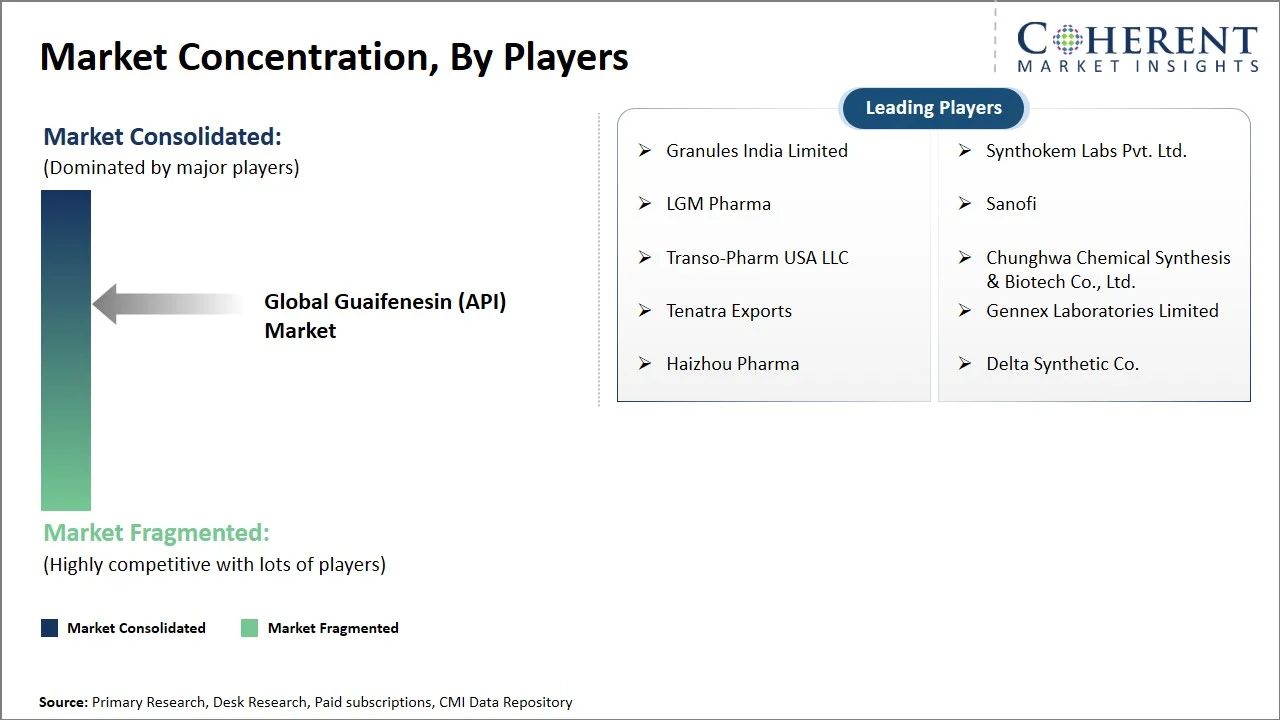
The global guaifenesin (API) market will likely stay highly competitive, with competition primarily based upon API purity specifications, large volume respiratory pharmaceutical manufacturing capability, regulatory compliance, and low-cost pharmaceutical manufacturing capability. In general, market competitors are diversifying into the development of high purity guaifenesin APIs for formulation of OTC cough syrup products, combination respiratory drugs, and controlled-release delivery systems. Furthermore, they are increasing GMP certified manufacturing capabilities, global API supply agreements, and formulating customization (pediatric, multi-symptom cough/congestion applications) Key focus areas include:
- Expansion of GMP-compliant high-purity guaifenesin API manufacturing facilities for regulated pharmaceutical markets
- Development of customized guaifenesin formulations for pediatric, OTC, and combination respiratory therapeutics
- Strengthening long-term supply agreements with respiratory drug manufacturers and OTC pharmaceutical brands
- Investment in cost-efficient large-scale API production and global pharmaceutical distribution capabilities
Market Report Scope
Guaifenesin (API) Market Report Coverage
| Report Coverage | Details | ||
|---|---|---|---|
| Base Year: | 2025 | Market Size in 2026: | USD 94.7 Mn |
| Historical Data for: | 2020 To 2024 | Forecast Period: | 2026 To 2033 |
| Forecast Period 2026 to 2033 CAGR: | 4.5% | 2033 Value Projection: | USD 128.6 Mn |
| Geographies covered: |
| ||
| Segments covered: |
| ||
| Companies covered: | Granules India Limited, Synthokem Labs Pvt. Ltd., LGM Pharma, Sanofi, Transo-Pharm USA LLC, Chunghwa Chemical Synthesis & Biotech Co., Ltd., Tenatra Exports, Gennex Laboratories Limited, Haizhou Pharma, and Delta Synthetic Co. | ||
| Growth Drivers: |
| ||
| Restraints & Challenges: |
| ||
Analyst Opinion (Expert Opinion)
- The future outlook for the global guaifenesin (API) market remains on a steady growth path, with accelerated global OTC respiratory therapeutics consumption, burgeoning self-medication trend, and growing incidence of mucus related respiratory disorders. The market is expected to have strong demand for high-purity APIs suitable for multi-symptom cough and cold formulations, pediatric respiratory medicines, and extended-release expectorants. Greater regulatory focus on pharmaceutical quality and supply chain stability will stimulate consolidation towards GMP-compliant API manufacturers with significant export capacity.
- The maximum growth opportunities are anticipated in OTC cough syrups and combination respiratory therapeutics in the U.S., India, and China, where a combination of growing burden of respiratory diseases, increasing retail pharmacy penetration, and rapid growth in production of generic drugs, has been contributing substantially to the increased consumption of expectorant-based formulations. India and China are likely to continue to be important API manufacturing and exporting countries, while U.S. is expected to be a high-value consumption market.
- To gain a competitive edge, the market players must focus on the development and advancement of the GMP manufacturing capacities, deepening of the long-term supply agreements with OTC respiratory drugs manufacturers, and niche development of tailored guaifenesin APIs for multi-symptom and pediatric formulations to accelerate market penetration. In addition, strengthening on regulatory compliance, backward integration of raw materials sourcing, and capitalizing emerging high-growth pharmaceutical markets should be a focus for strengthening the supply chain resilience and commercial competitiveness.
Speak to the analyst
Want personalized insights?
Take the findings above to one of our principal consultants, or have the report rebuilt around the segments, geographies and competitors you actually track.
Market Segmentation
- Formulation Type Insights (Revenue, USD Mn, 2021 - 2033)
- Standard Release
- Extended Release
- Application Insights (Revenue, USD Mn, 2021 - 2033)
- Cough Syrups and Expectorants
- Tablets and Capsules
- Combination Respiratory Drugs
- Others
- End User Insights (Revenue, USD Mn, 2021 - 2033)
- Pharmaceutical Manufacturers
- OTC Healthcare Manufacturers
- Contract Manufacturing Organizations (CMOs)
- Others
- Regional Insights (Revenue, USD Mn, 2021 - 2033)
- North America
- U.S.
- Canada
- Latin America
- Brazil
- Argentina
- Mexico
- Rest of Latin America
- Europe
- Germany
- U.K.
- Spain
- France
- Italy
- Russia
- Rest of Europe
- Asia Pacific
- China
- India
- Japan
- Australia
- South Korea
- ASEAN
- Rest of Asia Pacific
- Middle East
- GCC Countries
- Israel
- Rest of Middle East
- Africa
- South Africa
- North Africa
- Central Africa
- North America
- Key Players Insights
- Granules India Limited
- Synthokem Labs Pvt. Ltd.
- LGM Pharma
- Sanofi
- Transo-Pharm USA LLC
- Chunghwa Chemical Synthesis & Biotech Co., Ltd.
- Tenatra Exports
- Gennex Laboratories Limited
- Haizhou Pharma
- Delta Synthetic Co.
Sources
Primary Research Interviews
- API manufacturers and respiratory pharmaceutical formulation specialists involved in OTC cough and cold medication production
- Pharmaceutical R&D professionals developing expectorant and combination respiratory therapeutics
- Regulatory compliance managers overseeing GMP-certified API manufacturing and respiratory drug approvals
- OTC respiratory drug distributors and procurement specialists managing guaifenesin-based product supply chains
- Contract manufacturing organizations (CMOs) engaged in large-scale respiratory therapeutic production
- Clinical pharmacists and pulmonology specialists utilizing expectorant-based respiratory medications
Stakeholders
- Guaifenesin API manufacturers and respiratory pharmaceutical ingredient suppliers
- End-use Sectors
- Pharmaceutical & Biotechnology Companies
- OTC Respiratory Therapeutics Manufacturers
- Generic Drug Manufacturing Companies
- Contract Manufacturing Organizations (CMOs/CDMOs)
- Retail Pharmacy & Consumer Healthcare Companies
- Hospital and Clinical Respiratory Care Providers
- Regulatory & Health Bodies: U.S. Food and Drug Administration (FDA) – OTC respiratory drug monographs and API manufacturing regulations, European Medicines Agency (EMA) – pharmaceutical quality and GMP compliance standards, World Health Organization (WHO) – respiratory disease burden and essential medicines frameworks, Central Drugs Standard Control Organization (CDSCO) – generic drug manufacturing and API regulations, National Medical Products Administration (NMPA China) – pharmaceutical registration and respiratory therapeutic approvals
Databases
- U.S. FDA Orange Book – approved respiratory drug products and generic therapeutic equivalence database
- ClinicalTrials.gov – respiratory drug formulation and expectorant therapy clinical studies
- WHO Global Health Observatory – respiratory disease and pharmaceutical utilization statistics
- OECD Health Statistics – healthcare expenditure and respiratory treatment data
- PubChem & DrugBank – guaifenesin API chemical, pharmacological, and formulation information
Magazines
- Pharmaceutical Technology – respiratory drug manufacturing and API production trends
- Drug Development & Delivery – formulation innovation and OTC respiratory therapeutics
- Contract Pharma – pharmaceutical outsourcing and API supply chain developments
- Pharmaceutical Commerce – respiratory pharmaceutical distribution and commercialization trends
- Pharmaceutical Executive – OTC healthcare and respiratory drug market developments
Journals
- International Journal of Pharmaceutics
- Journal of Pharmaceutical Sciences
- Respiratory Medicine
- Pulmonary Pharmacology & Therapeutics
- Drug Development and Industrial Pharmacy
Newspapers
- Fierce Pharma – pharmaceutical manufacturing and respiratory therapeutic industry updates
- PharmaTimes – OTC drug market and API manufacturing developments
- BioSpectrum Asia – Asian pharmaceutical production and generic drug trends
- The Pharma Letter – regulatory and respiratory drug commercialization updates
- Pharmaceutical Business Review – pharmaceutical supply chain and API market coverage
Associations
- Consumer Healthcare Products Association (CHPA)
- International Generic and Biosimilar Medicines Association (IGBA)
- Association for Accessible Medicines (AAM)
- European Federation of Pharmaceutical Industries and Associations (EFPIA)
- Indian Drug Manufacturers’ Association (IDMA)
Public Domain Sources
- National Institutes of Health (NIH) – respiratory therapeutic and pharmaceutical research
- Centers for Disease Control and Prevention (CDC) – influenza and respiratory illness statistics
- U.S. FDA – OTC respiratory drug and API manufacturing frameworks
- European Commission – pharmaceutical manufacturing and healthcare policy initiatives
- World Health Organization (WHO) – respiratory disease prevalence and treatment guidelines
Proprietary Elements
- CMI Data Analytics Tool, Proprietary CMI Existing Repository of information for last 10 years.
Get access to 250+ pages report
Every segment, forecast, competitor profile and data table behind the analysis above — available for instant download.
- ESOMAR Member
- ISO 9001:2015 Certified
- D-U-N-S Registered
- GDPR & CCPA Compliant
Missing comfort of reading report in your local language? Find your preferred language:
Transform your Strategy with Exclusive Trending Reports
Frequently Asked Questions
The global guaifenesin (API) market is estimated to be valued at USD 94.7 Mn in 2026 and is expected to reach USD 128.6 Mn by 2033.
Standard release dominates due to its rapid therapeutic action, cost-efficient manufacturing process, broad compatibility with cough syrups and tablets, and strong utilization in OTC respiratory medications requiring immediate mucus-relief effects.
Guaifenesin (API) is an active pharmaceutical ingredient used as an expectorant to loosen and thin mucus in the respiratory tract for easier airway clearance.
The CAGR of global guaifenesin (API) market is projected to be 4.5% from 2026 to 2033.
Rising demand for OTC cough and cold medications and increasing prevalence of respiratory disorders are the major factors driving the growth of the global guaifenesin (API) market.
Stringent API manufacturing regulations and raw material price fluctuations are the major factors hampering the growth of the global guaifenesin (API) market.
In terms of application, cough syrups and expectorants are estimated to dominate the market revenue share in 2026.