

Global Healthcare Language Market Size and Forecast – 2026 to 2033
The Global Healthcare Language Market is estimated to be valued at USD 2.14 Bn in 2026 and is expected to reach USD 4.09 Bn by 2033, exhibiting a compound annual growth rate (CAGR) of 9.7% from 2026 to 2033. This substantial growth reflects increasing demand for multilingual communication solutions within healthcare, driven by globalization and the need to overcome language barriers in patient care, clinical trials, and medical research.
Key Takeaways of the Global Healthcare Language Market
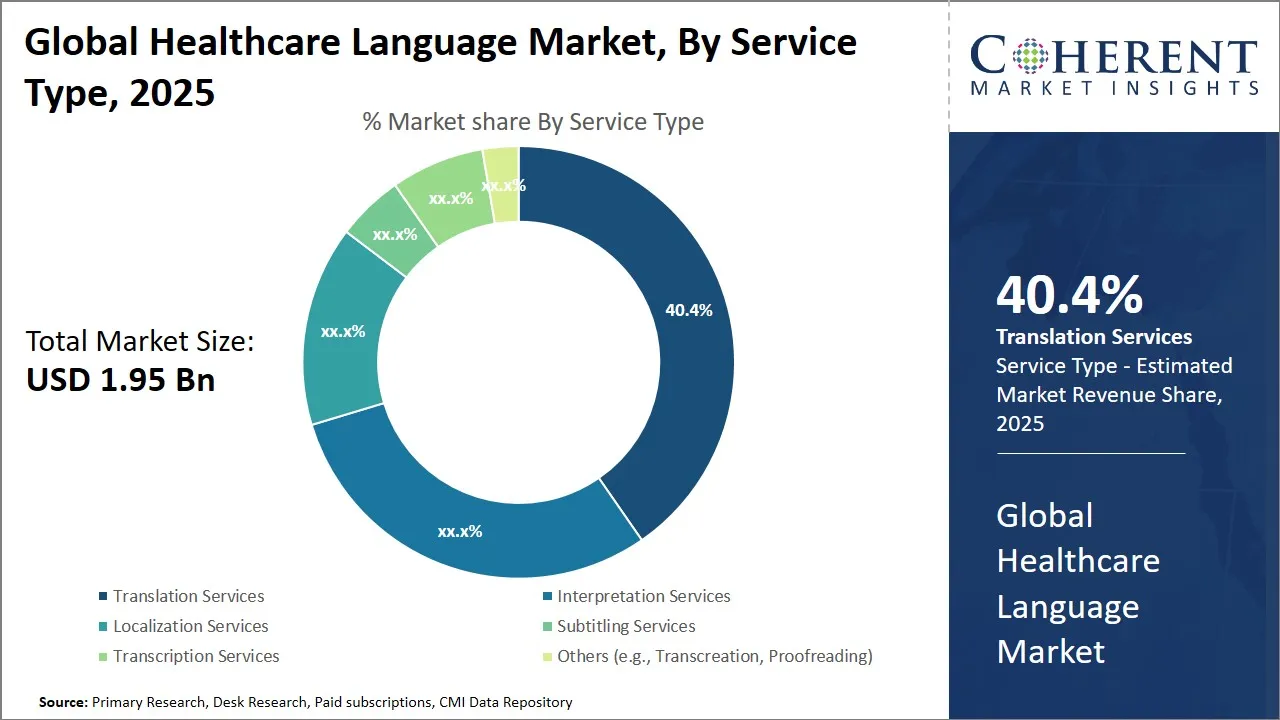
- In 2026, translation services segment is expected to dominate the global healthcare language market, accounting for 41.4 % of the market share.
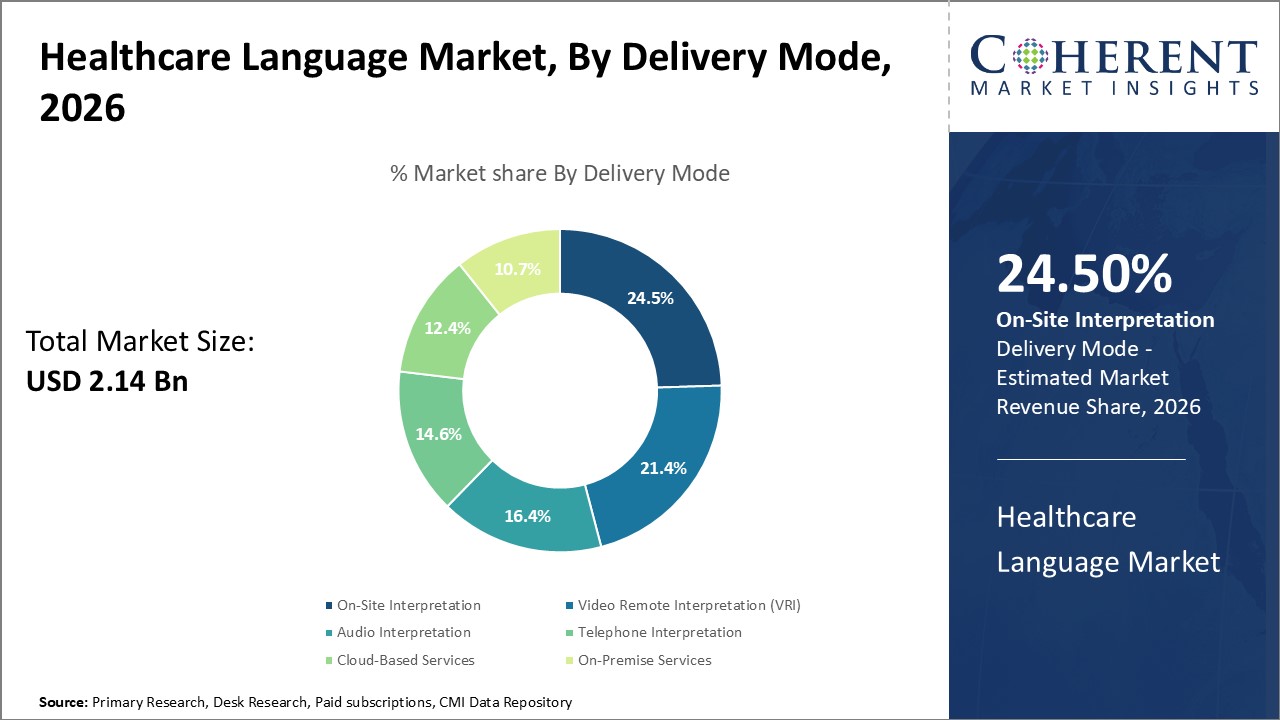
- The on-site interpretation segment is projected to lead the market in terms of delivery mode, capturing 24.5 % share in 2026.
- The clinical and regulatory communication segment is projected to account for 30.4 % of the market share in 2026.
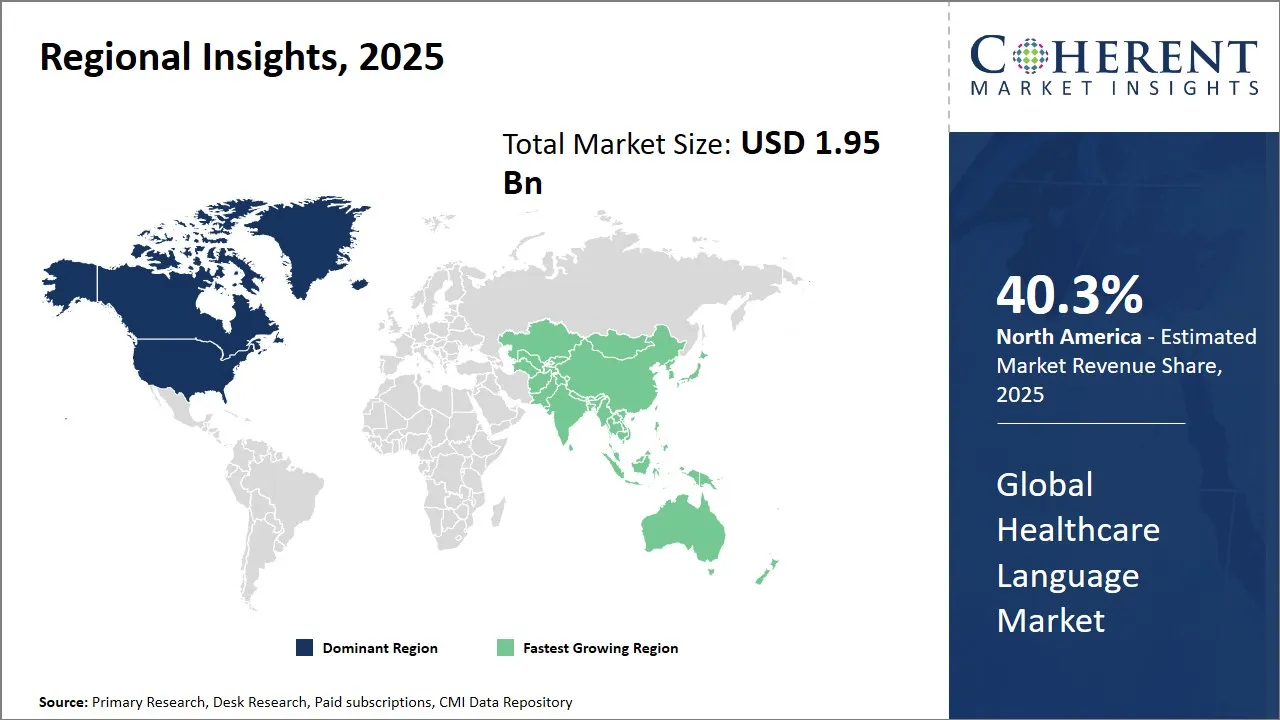
- North America is expected to lead the market, holding a share of 40.3 % in 2026. Asia Pacific is anticipated to be the fastest-growing region, with an estimated market share of 25.2% in 2026.
Market Overview
The market trend highlights a significant shift towards advanced AI-powered translation and interpretation technologies, enhancing accuracy and efficiency in healthcare communication. Additionally, growing regulatory requirements and the rising prevalence of chronic diseases across diverse populations are propelling investments in healthcare language services. These factors, combined with expanding telemedicine and digital health platforms, are fostering greater adoption of sophisticated language solutions to improve patient outcomes and support global healthcare expansion.
Current Events and Its Impact
Current Events | Description and its Impact |
Growing Adoption of Telehealth Post-Pandemic |
|
Expansion of Value-Based Care Models in the U.S. |
|
Segmental Insights
- Current Industry Events of 2026
- Market Size Estimation
- Regional Breakdown
- Competitive Landscape
- Customer Intelligence
- Segmental Analysis
- Pricing Analysis
- Key Market Drivers, Challenges & Future Trends
- Customized Insights Section
Healthcare Language Market Insights, By Service Type - Translation Services Lead the Market Driven by Accuracy and Regulatory Compliance
The translation services segment is expected to capture 41.4% share in 2026. The reason that communication of medical information among various languages needs to be very precise and culturally accurate is the major factor for the growth of translation services. Patient safety and compliance with international standards are the key aspects in which the healthcare industry operates and thus the translation services using multiple languages turn out to be very important for the conversion of complex medical documents such as clinical trial protocols, regulatory submissions, patient information leaflets, and pharmaceutical labeling into different languages globally.
For example, Elmura Linguistics, a provider of healthcare translation services, launched a suite of multilingual solutions to help healthcare providers deliver culturally adapted, compliant communication. Offering certified translation for key medical documents in over 200 languages, Elmura also provides real-time interpreting services in phone, video, and in-person formats. The company focuses on inclusivity, offering accessible formats like Braille, audio, and large print, while adhering to HIPAA and language access regulations.
Healthcare Language Market Insights, By Delivery Mode - On-Site Interpretation Dominates Due to Real-Time Interaction and Immediate Support
The on-site interpretation segment is projected to account for 24.5% of the market share in 2026, due to the need for real-time, face-to-face communication in sensitive healthcare situations. On-site interpretation provides accurate and immediate communication between doctors and patients which is very important in places like hospitals, clinics, and emergency rooms where misunderstandings can lead to serious problems. On-site interpreters play a crucial role by observing both the patient's and doctor's body language, facilitating a natural flow of conversation.
For example, Languages in Motion offers flexible on-site interpretation services in over 200 languages, including Azerbaijani and Yiddish. With over 10 years of experience, the company connects organizations with specialized interpreters for industries like healthcare, law enforcement, insurance, and personal injury. Their platform allows users to easily schedule interpreters, upload documents for review, track appointments, and receive real-time updates
Healthcare Language Market Insights, By Application - Clinical and Regulatory Communication Flourishes from Stringent Compliance and Globalization
The clinical and regulatory communication segment is projected to hold 30.4% of the global healthcare language market share in 2026, due to the increasing complexity and international level of clinical trials and regulatory requirements.
This segment focuses on translating and interpreting documents and interactions related to drug development, approvals, and compliance monitoring, which are vital to bringing safe and effective products to market. With increasing cross-border collaboration in pharmaceutical research and the push for regulatory harmonization, the demand for specialized language services in this area continues to grow rapidly.
Regional Insights
North America Healthcare Language Market Analysis and Trends
The global healthcare language market in North America is mainly influenced by the sustainability of the healthcare ecosystem, government support, and the major players in the industry, with a forecasted market share of 40.3% in 2026. The major country in this region, the U.S., avails itself of federal programs that advocate for the use of electronic health records (EHRs) and interoperability standards, which in turn, require complex language solutions to handle the communication and data of the patients in different languages effectively.
In May 2026, GLOBO Language Solutions, a leading provider of interpreting and translation services, was named one of Modern Healthcare’s Best Places to Work in Healthcare. This marks GLOBO's first appearance on the prestigious list. The company, committed to eliminating language barriers in healthcare, emphasizes a workplace culture of innovation, empathy, and diversity.
Asia Pacific Healthcare Language Market Analysis and Trends
Asia Pacific is the fastest-growing healthcare language market, capturing an estimated 25.2% of the market share in 2026, due to factors like the growing healthcare digitalization, huge multilingual patient base, and healthcare infrastructure of developing economies being upgraded.
China, India, Japan, and Southeast Asian countries are among those whose different languages and dialects are giving rise to the need for linguistic support in areas such as medical communications, clinical trials, telemedicine and compliance with regulations.
Healthcare Language Market Outlook for Key Countries
U.S. Healthcare Language Market Analysis and Trends
The U.S. healthcare language market witnesses the setting in motion of IT solutions that are healthcare related and the rolling out of strict regulatory requirements such as HIPAA, which overall push for language solutions that are both secure and accurate. Market leaders like IBM Watson Health and Cerner are in the forefront, providing state-of-the-art language processing platforms capable of integrating the three functions clinical decision making, medical transcription and patient communication in several languages. U.S. is also home to a huge immigrant population which is an additional factor that creates demand for multilingual support services.
In June 2026, Nabla, a U.S.-based AI-driven company, expanded its AI note-taking tool to support 31 new languages, including Mandarin, Russian, Portuguese, and Vietnamese, addressing language barriers in U.S. healthcare. The tool, already available in English, Spanish, and French, now supports 35 languages, allowing healthcare providers to offer patient summaries and follow-up instructions in the patient’s preferred language.
China Healthcare Language Market Analysis and Trends
The healthcare language market in China is undergoing rapid changes as it is becoming more focused on the use of AI and big data in healthcare. The government is also promoting digital healthcare and smart hospital initiatives via the Deliverable Programs. The expanding pharmaceutical sector and clinical research facilities require accurate translation and language processing tools for regulatory submissions and patient engagement, driving market potential.
In June 2026, Ant Group, Alibaba’s affiliate and the operator of Alipay, launched an AI-powered healthcare app called AQ, designed to provide users with instant consultations from AI avatars of real-life medical specialists. Currently focused on the Chinese market, the app offers access to over 5,000 hospitals and nearly 1 million doctors.
Japan Healthcare Language Market Analysis and Trends
Japan healthcare language market is transitioning due to the reasons like the increase in the elderly, a mixed population of foreigners, and technical milestones. Hospitals are adopting AI tools to help with the communication between patients and doctors, and thus, there is a growing demand for multilingual medical interpretation. Nevertheless, the role of human interpreters is still indispensable in the case of subtle, cultural-sensitive interactions. In addition, the Natural Language Processing (NLP) technology is deployed more and more in the healthcare sector to the benefit of both the patients and the hospitals in terms of operational efficiency.
In May 2026, Hippocratic AI, a leader in safety-focused generative AI for healthcare, partnered with EUCALIA Inc., a Tokyo-based healthcare transformation company, to launch Japan’s first generative AI healthcare agent. This new AI tool is designed to improve patient access and ease clinician workload in Japan’s healthcare system, addressing challenges like rising demand, an aging population, and workforce shortages.
Germany Healthcare Language Market Analysis and Trends
Regulations and technologies in Germany's healthcare sector made the doctors and patients multilingual and the exact translations and language services would still be a requirement in Europe. The major local and global companies, like Siemens Healthineers and Philips Healthcare, are funding the development of next-generation language-enabled diagnostic and patient management systems. Germany's healthcare practitioners have to follow EU data protection regulations and thus have to provide safe handling of the multilingual data.
In January 2026, Germany introduced the Action Plan for a Diverse, Inclusive, and Barrier-Free Healthcare System under the leadership of Prof. Karl Lauterbach. This ambitious plan aims to dismantle barriers to healthcare for people with disabilities, marginalized communities, and caregiving families. Key measures include improving physical accessibility in healthcare facilities, offering medical information in easy-to-understand formats, expanding digital tools, and enhancing the inclusivity of healthcare professional training.
End User Feedback in the Healthcare Language Market
- End user feedback in the healthcare language market reveals growing satisfaction with AI-powered translation tools, particularly for improving communication efficiency. For example, AI-driven interpreters like Artisight’s voice-activated tools have helped healthcare providers save time and enhance diagnosis accuracy by offering real-time translations. Similarly, Cigna Healthcare’s culturally aligned solutions for Japanese expats have streamlined patient care and improved operational efficiency. However, common concerns include limited accuracy in translating complex medical terminology and challenges integrating these tools with existing hospital IT systems.
- The market's unmet needs primarily involve customization and affordability. Many users report that language tools often lack specialization for specific healthcare fields, and the cost remains a barrier for smaller, underfunded providers. Offering more affordable, tailored solutions and improving integration with hospital workflows could drive wider adoption and enhance customer retention. Additionally, improving the accuracy of AI tools, particularly for complex medical terms, would significantly boost effectiveness and foster further innovation in the market.
Market Players, Key Developments, and Competitive Intelligence
Key Developments
- On October 14, 2025, Cigna Healthcare launched a new healthcare solution for Japanese expats living and working in the U.K. The Cigna Inspire Asia Expat programme offers a culturally aligned health and wellbeing service for Japanese professionals and their families in Europe. The program includes Japanese-speaking customer service, access to culturally knowledgeable medical providers, and a Japanese-language online portal.
- In September 2025, Commence, a healthcare technology company, and the Language Group launched Fetch, an AI-powered translation solution designed to improve language access in healthcare. Fetch integrates real-time translation with clinical review to deliver multilingual discharge instructions before patients leave the provider's office.
- In July 2025, John Snow Labs, a healthcare AI company, launched Martlet.ai, a new venture focused on transforming HCC coding for payers and providers. The AI-powered solution, designed to run securely on-premise, is aimed at improving risk adjustment by enhancing accuracy in clinical documentation.
- On July 24, 2025, Artisight introduced Voice-Activated Interpreters on its Smart Hospital Platform, enabling clinicians to instantly access medical interpreters in over 240 languages, including American Sign Language. This new feature, launched in collaboration with LanguageLine Solutions, allows healthcare providers to simply use voice commands like "OK Artisight – Spanish Interpreter" to summon an interpreter during patient encounters.
Top Strategies Followed by Global Healthcare Language Market Players
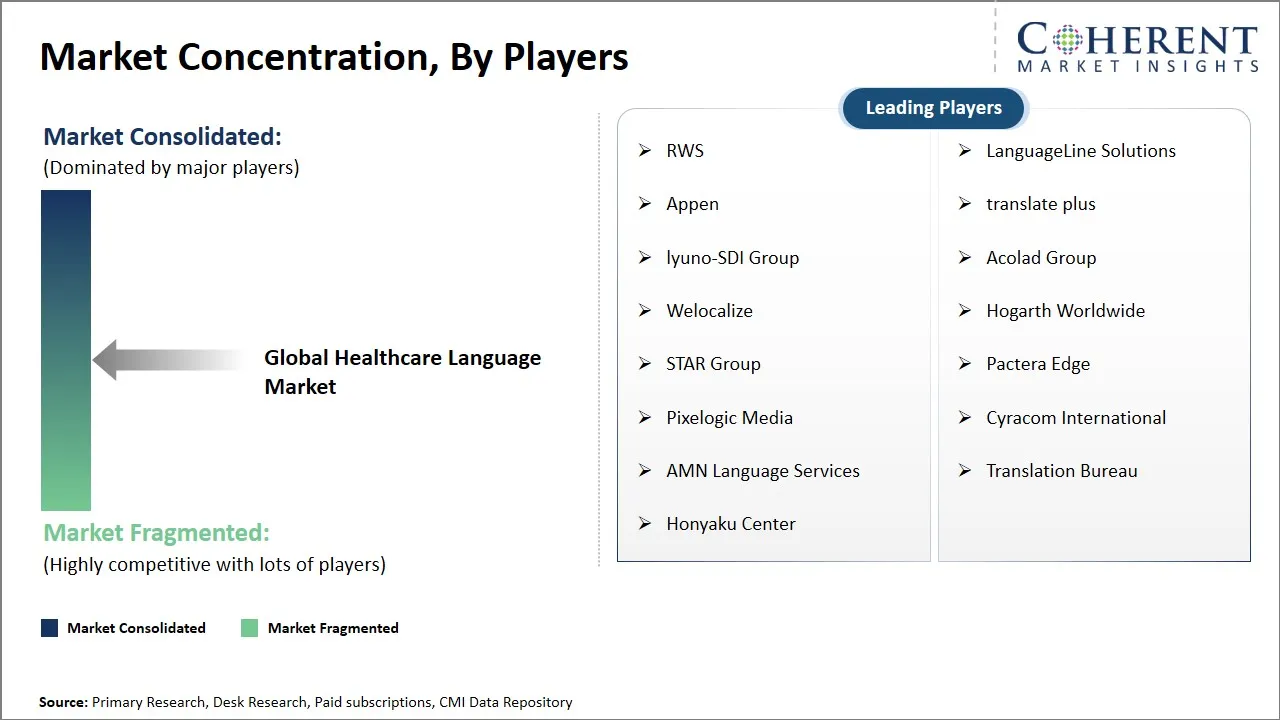
- The industry is mainly controlled by powerful players who make huge investments in research and development (R&D) to produce high-quality healthcare language products that comply with even the most rigorous industry standards. The companies will very likely take the steps to enter into partnerships with the major industry players or OEMs to obtain the necessary technical know-how and hence strengthen their market presence.
- In October 2023, HARMAN, a subsidiary of Samsung Electronics, launched HARMAN HealthGPT, a private Large Language Model (LLM) tailored for the healthcare industry. This breakthrough AI model enhances decision-making by providing real-time, context-aware clinical insights and supports medical research, patient care, and drug discovery. Built with advanced privacy and security features, HealthGPT offers healthcare enterprises greater control over data, compliance, and costs.
- The players at the mid-level in the healthcare language market take on a more cost-conscious approach, which is primarily characterized by the delivery of solutions that are both good in terms of quality and affordable at the same time. These companies targeting the price-conscious consumers produce goods that are reliable and compliant while meeting the basic functional needs.
- In June 2025, Avio Health launched the world’s first functional medicine-based Large Language Model (LLM) for Emagene.Life. This system swiftly analyzes global patient blood biomarker data, reducing time spent interpreting lab results. It empowers doctors, dieticians, and nutritionists with advanced insights for personalized health recommendations, focusing on preventive care while maintaining a cost-conscious approach to optimize efficiency and reduce healthcare costs.
- On the other hand, small players have been identifying the healthcare language market by focusing on isolated areas in it, respectively, exploring the special features offered or the innovative product designs that will attract the customers that the big companies have ignored. They might be small in size but by using the latest technologies, these firms are able to be steadfast and in the game, bringing forth sometimes even the new ideas that are meant for certain healthcare sub-industries or language problems.
- For example, Interpreter Intelligence, a company that offers on-demand language interpretation services tailored to healthcare providers, using advanced scheduling and mobile technology to streamline communication for niche healthcare settings like mental health clinics.
Market Report Scope
Healthcare Language Market Report Coverage
| Report Coverage | Details | ||
|---|---|---|---|
| Base Year: | 2025 | Market Size in 2026: | USD 2.14 Bn |
| Historical Data for: | 2020 To 2024 | Forecast Period: | 2026 To 2033 |
| Forecast Period 2026 to 2033 CAGR: | 9.7% | 2033 Value Projection: | USD 4.09 Bn |
| Geographies covered: |
| ||
| Segments covered: |
| ||
| Companies covered: | RWS, LanguageLine Solutions, Appen, translate plus, lyuno-SDI Group, Acolad Group, Welocalize, Hogarth Worldwide, STAR Group, Pactera Edge, Pixelogic Media, Cyracom International, AMN Language Services, Translation Bureau, and Honyaku Center | ||
| Growth Drivers: |
| ||
| Restraints & Challenges: |
| ||
Healthcare Language Market Dynamics
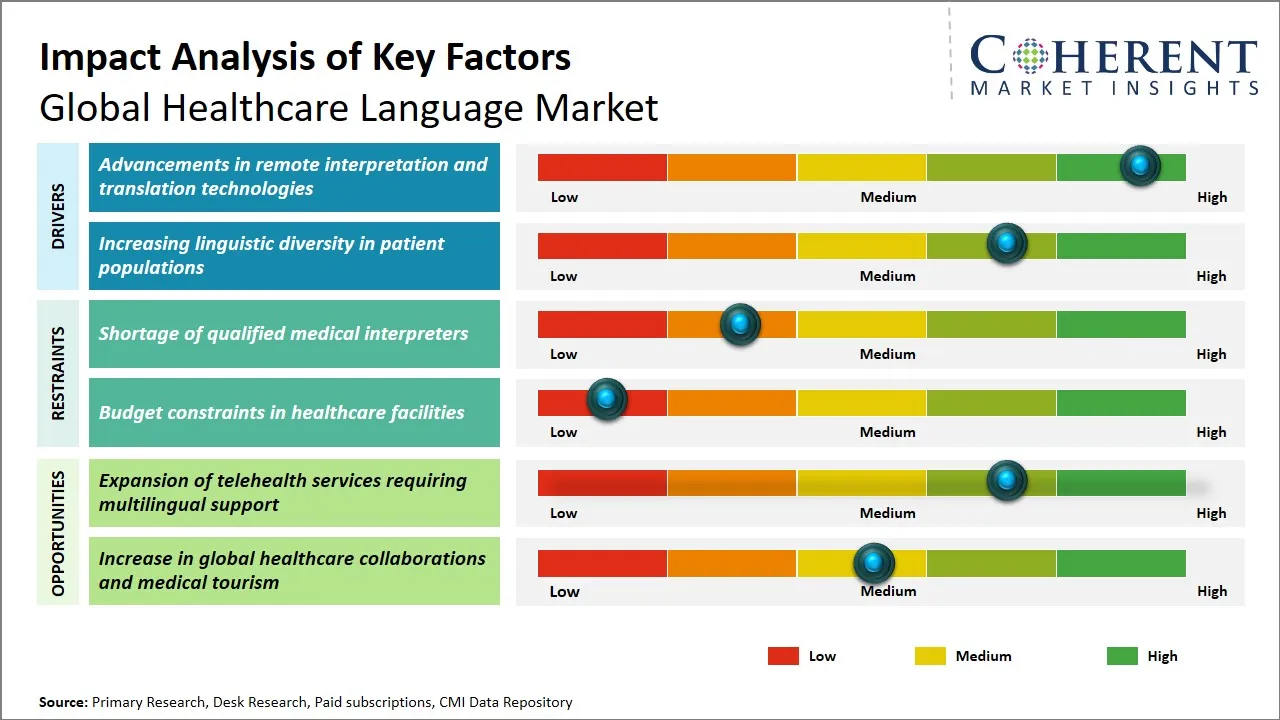
Healthcare Language Market Driver - Advancements in Remote Interpretation and Translation Technologies
The rapid evolution of remote interpretation and translation technologies has significantly changed the healthcare language market by making it much easier and quicker to communicate and access the services for the people that speak different languages. The use of telehealth and virtual consultations has increased drastically which has made it a must to have a language that is reliable and instantaneous as a support in communicating between the doctors and the patients. Some of the innovations that have contributed to such a scenario are AI-powered real-time translation, cloud-based applications, and mobile phones for the interpretation of the languages, etc. as they enable the seamless interactions of many languages without the barrier of physical presence. The rapid acceptance of telehealth services globally has created a huge market for the global healthcare language market, since there is a huge need for multilingual services in order to communicate with the different patient groups.
In July 2025, Artisight, a company focused on advanced healthcare technology, launched Voice-Activated Interpreters on its Smart Hospital Platform, enabling clinicians to instantly communicate with patients in over 240 languages. In collaboration with LanguageLine Solutions, this new feature allows healthcare providers to access medical interpreters with a simple voice command, improving patient care and operational efficiency. The technology, available in hundreds of hospitals, aims to eliminate language barriers, improving diagnosis, treatment adherence, and overall healthcare outcomes, while saving clinicians time on administrative tasks.
Healthcare Language Market Opportunity - Expansion of Telehealth Services Driving Demand for Multilingual Support
The worldwide increase of telehealth services is a crucial factor that will boost the global healthcare language market. This is because a lot of multilingual support has to be developed, almost like a set of new languages, to serve different patient groups. As telehealth platforms overcome geographical borders and allow consultations via the internet, they automatically draw patients from different language backgrounds, thus the need for precise and sensitive to the culture communication. The growth in the future will bring not only the increase of the language use for translation and interpretation but also the whole range of the latest language technology like real-time interpreting, AI-driven transcription, and multilingual chatbot support in the telehealth apps.
For example, in July 2025, VSee Health, a leading provider of telehealth solutions, partnered with LanguageLine Solutions, the world’s top interpretation service, to enhance telehealth adoption through seamless multilingual care. The collaboration enables one-touch access to interpreters in over 240 languages, improving communication between healthcare providers and patients. This integration strengthens VSee’s platform, driving increased adoption, operational efficiency, and revenue growth, while breaking down language barriers to provide high-quality care to all patients, regardless of language.
Analyst Opinion (Expert Opinion)
- The healthcare language market is experiencing a boom due to the convergence of several factors namely the rapid technological development in AI-based translation, the rise in demand for multilingual healthcare, and the regulation that encourages the accessibility of healthcare services to non-English speakers. The digitalization of the healthcare sector and the use of telemedicine have increased the demand for multilingual communication to the point that the language services have become a necessary part of the healthcare delivery process.
- Furthermore, the global health campaigns, like the one announced by the WHO which is promising to relieve the restriction for healthcare access, have been the major reason for language solution investments that secure patient safety and better health outcome. Nevertheless, issues like the inconsistency in the service quality, dependence on unregulated AI, and data privacy still pose the major obstacles that need to be overcome.
- Emerging opportunities in the sector include expanding language access in underserved regions and the growing integration of AI and machine learning to enhance real-time translations and reduce administrative burdens. Notable events like the International Medical Informatics Association (IMIA) Health and Medical Informatics Congress and the Healthcare Translation and Localization Summit have played a significant role in discussing the evolution of language services in healthcare, showcasing new technologies and policies. Real-world examples, such as Cigna Healthcare's culturally aligned healthcare solution for Japanese expats and Artisight’s voice-activated interpreters, highlight how innovative solutions are already transforming communication and operational efficiency in healthcare settings.
Speak to the analyst
Want personalized insights?
Take the findings above to one of our principal consultants, or have the report rebuilt around the segments, geographies and competitors you actually track.
Market Segmentation
- Service Type Insights (Revenue, USD Bn, 2021 - 2033)
- Translation Services
- Interpretation Services
- Localization Services
- Subtitling Services
- Transcription Services
- Others (e.g., Transcreation, Proofreading)
- Delivery Mode Insights (Revenue, USD Bn, 2021 - 2033)
- On-Site Interpretation
- Video Remote Interpretation (VRI)
- Audio Interpretation
- Telephone Interpretation
- Cloud-Based Services
- On-Premise Services
- Application Insights (Revenue, USD Bn, 2021 - 2033)
- Clinical and Regulatory Communication
- Patient–Provider Interaction
- Telehealth and Remote Care Support
- Healthcare Marketing and Education
- Cross-Border Clinical Research and Trials
- Medical Device and Pharmaceutical Operations
- End User Insights (Revenue, USD Bn, 2021 - 2033)
- Healthcare Providers
- Hospitals and Health Systems
- Physician Practices and Clinics
- Emergency Medical Services (EMS)
- Post-Acute Care (Nursing Homes, Home Health)
- Patients and Caregivers
- Payers and Insurers
- Health Insurance Companies
- Other Life Sciences
- Pharmaceutical and Biotechnology Companies
- Medical Device Companies
- Contract Research Organizations (CROs)
- Healthcare Providers
- Technology Integration Insights (Revenue, USD Bn, 2021 - 2033)
- Platforms and Solutions
- Human-Only Services
- AI-Assisted Services
- Fully Automated Services
- Regional Insights (Revenue, USD Bn, 2021 - 2033)
- North America
- U.S.
- Canada
- Latin America
- Brazil
- Argentina
- Mexico
- Rest of Latin America
- Europe
- Germany
- U.K.
- Spain
- France
- Italy
- Russia
- Rest of Europe
- Asia Pacific
- China
- India
- Japan
- Australia
- South Korea
- ASEAN
- Rest of Asia Pacific
- Middle East
- GCC Countries
- Israel
- Rest of Middle East
- Africa
- South Africa
- North Africa
- Central Africa
- North America
- Key Players Insights
- RWS
- LanguageLine Solutions
- Appen
- translate plus
- lyuno-SDI Group
- Acolad Group
- Welocalize
- Hogarth Worldwide
- STAR Group
- Pactera Edge
- Pixelogic Media
- Cyracom International
- AMN Language Services
- Translation Bureau
- Honyaku Center
Sources
Primary Research Interviews
- Industry Stakeholders List
- Healthcare providers (hospitals, clinics, insurance companies)
- Language service providers (interpreters, translation companies)
- End Users List
- Limited English Proficiency (LEP) patients
- Healthcare administrators
- Physicians and clinical staff
- Multilingual patient advocacy organizations
Government and International Databases
- World Health Organization (WHO)
- U.S. Centers for Disease Control and Prevention (CDC)
- National Institute on Deafness and Other Communication Disorders (NIDCD)
- European Commission (Healthcare Division)
- U.S. Department of Health and Human Services (HHS)
- United Nations Sustainable Development Goals (SDGs)
Trade Publications
- Healthcare IT News
- Language Industry Magazine
- The Journal of Healthcare Translation and Interpretation
- The Interpreter's World
- Journal of Medical Translation
- Health Affairs
Academic Journals
- Journal of Clinical Translation
- BMC Health Services Research
- International Journal of Health Services
- The Lancet Global Health
- Journal of Healthcare Management
- Journal of Language and Medicine
Reputable Newspapers
- The New York Times (Health Section)
- The Guardian (Healthcare Section)
- The Washington Post (Health Policy)
- The Financial Times (Healthcare & Technology)
- The Times (Health)
- The Independent (Health News)
Industry Associations
- American Translators Association (ATA)
- National Council on Interpreting in Healthcare (NCIHC)
- International Medical Interpreters Association (IMIA)
- Globalization and Localization Association (GALA)
- European Association of Translation Companies (EATC)
- Healthcare Language Solutions Network (HLSN)
Public Domain Resources
- U.S. Census Bureau (Language and Demographic Data)
- National Institutes of Health (NIH)
- National Institute for Health and Care Excellence (NICE)
- Health and Social Care Information Centre (HSCIC)
- Open Data Network (Health-related datasets)
- European Centre for Disease Prevention and Control (ECDC)
Proprietary Elements
- CMI Data Analytics Tool: Proprietary analytics tool to analyze real-time market trends, consumer behavior, and technology adoption in market
- Proprietary CMI Existing Repository of Information for Last 8 Years
Get access to 250+ pages report
Every segment, forecast, competitor profile and data table behind the analysis above — available for instant download.
- ESOMAR Member
- ISO 9001:2015 Certified
- D-U-N-S Registered
- GDPR & CCPA Compliant
Missing comfort of reading report in your local language? Find your preferred language:
Transform your Strategy with Exclusive Trending Reports
Frequently Asked Questions
The global healthcare language market is estimated to be valued at USD 2.14 Bn in 2026 and is expected to reach USD 4.09 Bn by 2033.
The CAGR of the global healthcare language market is projected to be 9.7% from 2026 to 2033.
Advancements in remote interpretation and translation technologies and increasing linguistic diversity in patient populations are the major factors driving the growth of the global healthcare language market.
Shortage of qualified medical interpreters and budget constraints in healthcare facilities are the major factors hampering the growth of the global healthcare language market.
In terms of service type, the translation services segment is estimated to dominate the market revenue share in 2026.
It ensures that language barriers do not prevent individuals from accessing quality healthcare, particularly for non-native speakers or immigrants.
The market is expected to grow rapidly with increased demand for multilingual healthcare solutions, AI integration, and global healthcare expansion