

Host Cell Protein (HCP) Testing Market Size and Share Analysis – 2026 To 2033
The Host Cell Protein (HCP) Testing Market size is anticipated to grow at a CAGR of 9.27% with USD 439.2 Mn in 2026 and is expected to reach USD 817.0 Mn in 2033. The primary drivers are largely defined by the rising production of biologics and biosimilars, increasing regulatory emphasis on biopharmaceutical purity and safety, growing adoption of advanced analytical technologies, and expanding investments in biopharmaceutical manufacturing. According to the U.S. Food and Drug Administration (FDA) says detection and removal of residual host cell proteins is critical in the manufacture of biopharmaceuticals to ensure product safety and efficacy. This drives the demand for enzyme-linked immunosorbent assays (ELISA), mass spectrometry-based testing and specialized HCP analytical services across monoclonal antibodies, recombinant proteins, vaccines and other biologic therapeutics.
Key Takeaways of the Global Host Cell Protein (HCP) Testing Market
- The Kits & Reagents segment is anticipated to account for 43.0% of the global host cell protein (HCP) testing market by the year 2026. Segment growth is fueled by an explosion in demand for standardized impurity detection assays and the recurring consumption of testing reagents in biologics manufacturing. According to the National Cancer Institute (NCI), a third-generation CHO HCP ELISA kit was qualified using in-process and final drug substance samples from five different therapeutic products, including monoclonal antibodies and other therapeutic proteins.
- The ELISA segment is estimated to capture 56.0% of the market share in 2026. Growing demand for sensitive, cost-effective, and high-throughput impurity detection is majorly driving segment growth. The World Health Organization (WHO) issued guidelines for the production and quality control of monoclonal antibodies, identifying ELISA with polyclonal anti-HCP antibodies as the most commonly used method for the quantification of residual host cell proteins.
- The Monoclonal Antibodies segment is estimated to contribute 52.5% of the market share by 2026. The segment is expected to grow on the back of growing therapeutic antibody pipelines across oncology, immunology and autoimmune disorders. In 2026, a scientific study published in Molecules reported that the U.S. FDA approved nine monoclonal antibodies and two antibody-drug conjugates in 2025, further driving the need for specialized protein impurity characterization throughout drug development and manufacturing.
- The CHO Cells segment is expected to account for 63.5% of the market share by 2026. Chinese hamster ovary cells widely used for boosting growth of commercial therapeutic protein manufacturing segment. A 2024 study in Applied Microbiology and Biotechnology showed that 70% of approved recombinant therapeutic proteins are produced in CHO cell expression systems, highlighting the continued need for CHO-specific HCP detection assays.
- The Pharmaceutical & Biotechnology Companies segment is projected to account for 54.0% of the market in 2026. The segment is witnessing growth owing to rising investments in biologics development, process optimization and regulatory quality controls. The U.S. FDA’s FY2025 Report on the State of Pharmaceutical Quality shows that the proportion of biologics license applications increased from 2.3% of total approvals in FY2016 to 4.6% in FY2025, reflecting the growing importance of biological product manufacturing and related analytical testing.
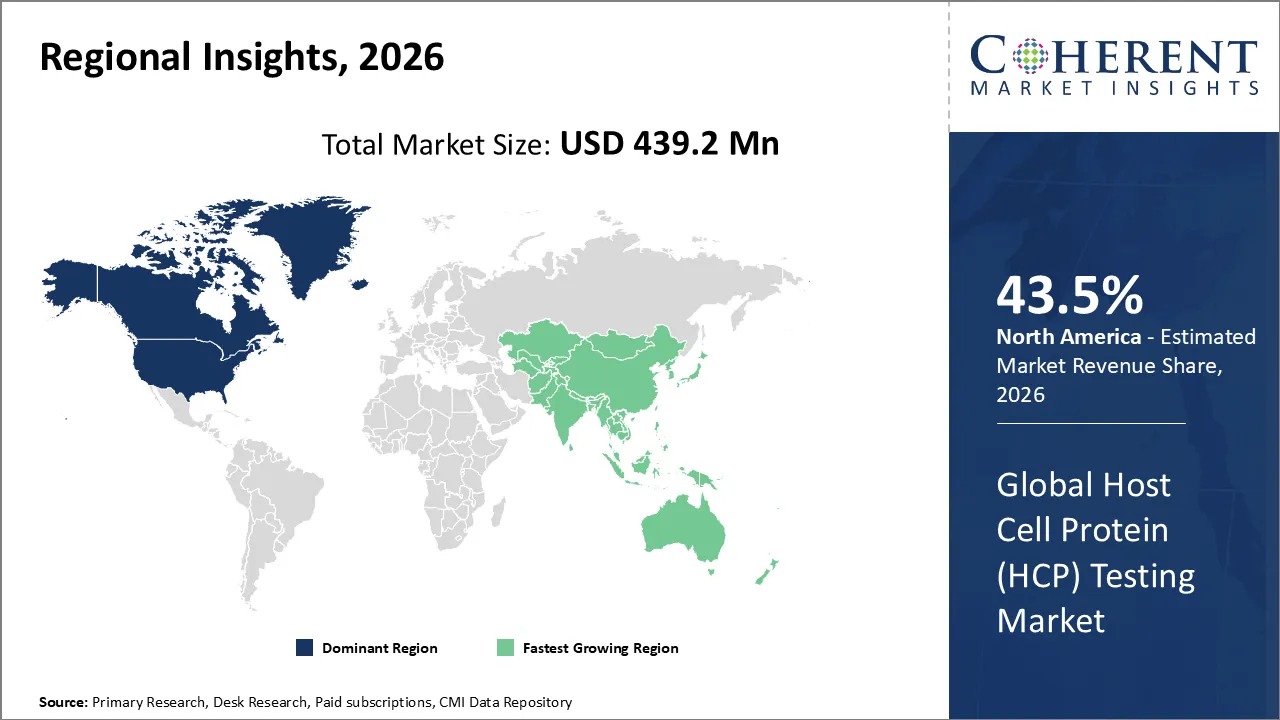
- North America is projected to lead the host cell protein (HCP) testing market with a market share of 43.5% in 2026. Regional market is driven by established biopharmaceutical manufacturing infrastructure and stringent requirements of product purity. In 2025, the Center for Drug Evaluation and Research (CDER) approved 18 biosimilars, including biosimilars for four reference products that previously did not have an approved biosimilar.
- Asia Pacific is anticipated to have 21.5% of market share in 2026 and is expected to be the fastest-growing region during the forecast period. Expansion of commercial biologics manufacturing capacities is driving the growth in the regional market. Samsung Biologics has begun operations at its Plant 5 in South Korea in April 2025, increasing its manufacturing capacity by 180,000 liters to a total of 784,000 liters to meet demand for bioprocess impurity testing.
Segmental Insights
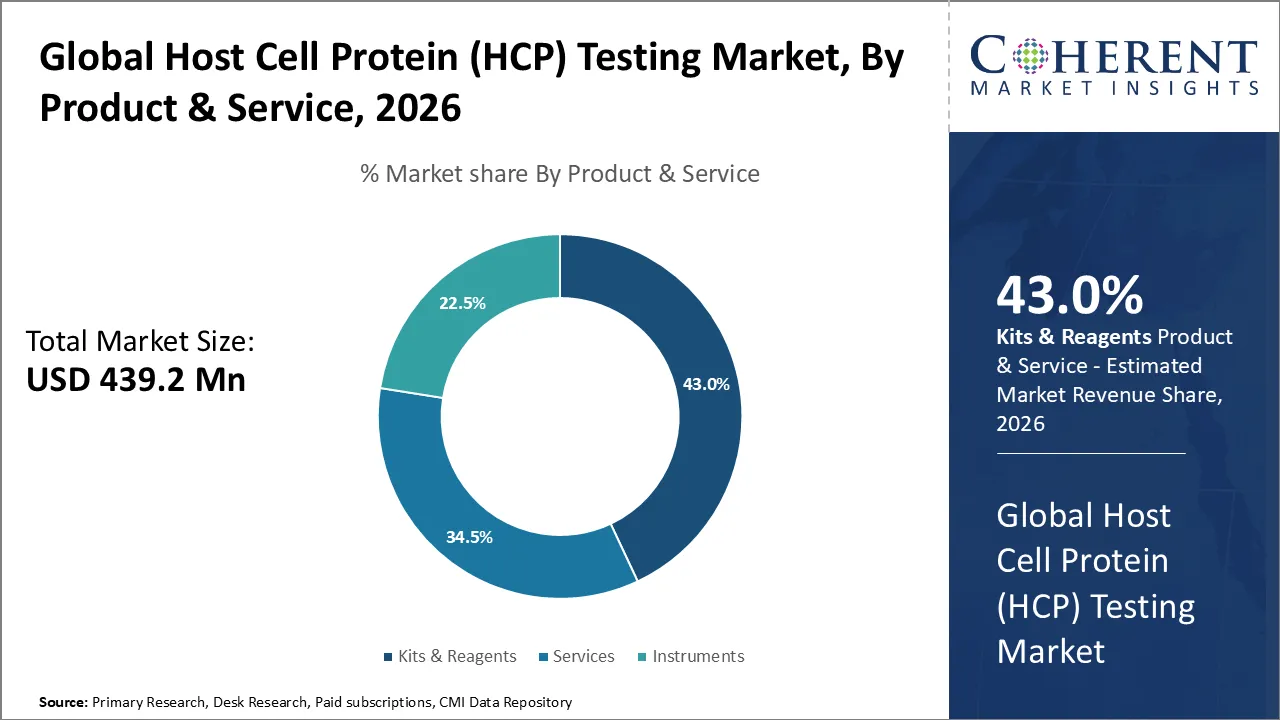
Why Do Kits & Reagents Dominate the Global Host Cell Protein (HCP) Testing Market?
The kits & reagents segment is anticipated to account for 43.0% share in the global host cell protein (HCP) testing market by the year 2026. Biopharmaceutical manufacturers are increasingly using standardized HCP testing kits and reagents to detect residual protein impurities during drug development and commercial manufacturing. The products are highly sensitive, reproducible and easy to use, and they are compatible with existing laboratory workflows. The repeated need for antibodies, assay reagents, calibration standards and detection substrates at various stages of purification confirms the steady demand for the product. Moreover, the growing development of expression system-specific testing kits enables manufacturers to further characterize impurities and meet strict quality control requirements.
On February 5, 2025, Gyros Protein Technologies launched two HEK293 HCP testing reagent kits, Gyrolab HEK293 HCP Type SN and Type CL. The kits are developed with antibodies from BioGenes GmbH and allow for fast detection of residual host cell proteins in HEK293-derived biotherapeutics, expanding the portfolio of expression system-specific analytical products.
- Current Industry Events of 2026
- Market Size Estimation
- Regional Breakdown
- Competitive Landscape
- Customer Intelligence
- Segmental Analysis
- Pricing Analysis
- Key Market Drivers, Challenges & Future Trends
- Customized Insights Section
ELISA Dominates the Global Host Cell Protein (HCP) Testing Market
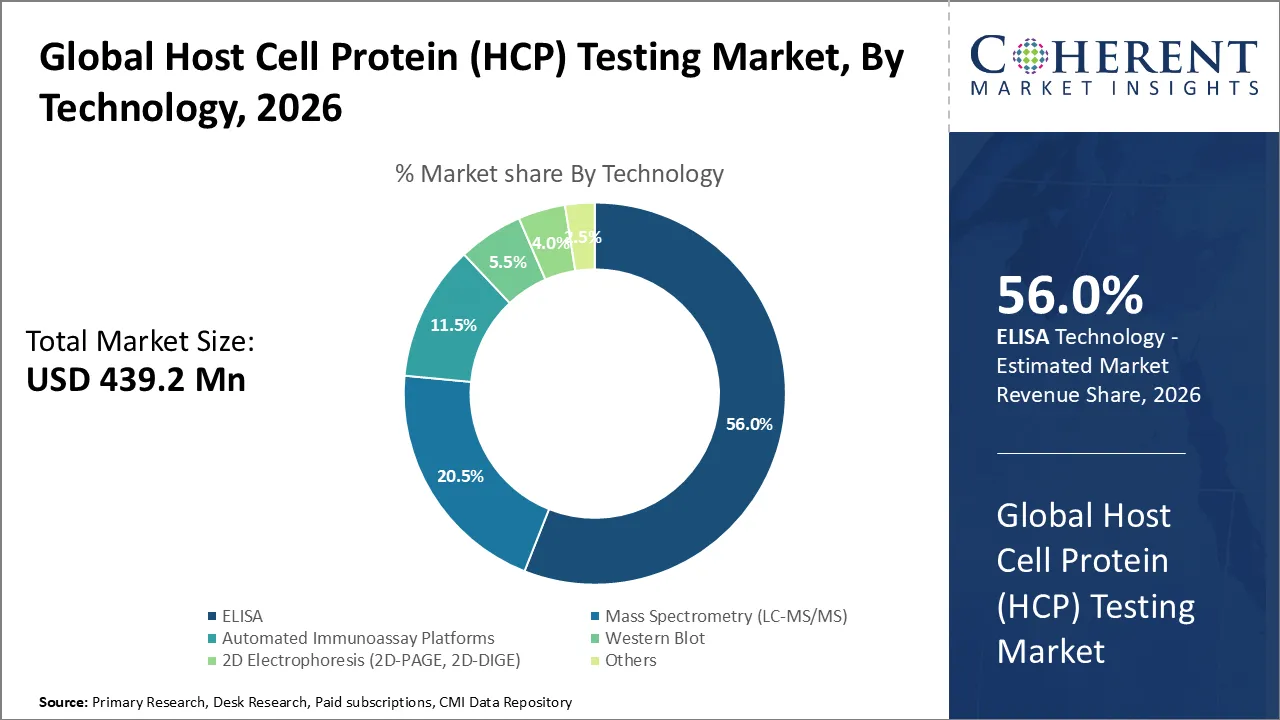
The ELISA segment is projected to account for a 56.0% share of the global host cell protein (HCP) testing market in 2026. Enzyme-linked immunosorbent assay (ELISA) is one of the analytical technologies, which is among the leading methods due to high sensitivity, quantitative ability, convenience of operation and relatively low costs of testing During upstream and downstream processing, biopharmaceutical manufacturers use ELISA to monitor residual protein impurities and assess purification efficiency. This makes it compatible with existing laboratory infrastructure and good manufacturing practice (GMP) quality control workflows for broad commercial adoption. Work is also in progress in the area of protein specific immunoassays for enhanced detection of potentially harmful residual impurities.
On December 4, 2025 BioGenes GmbH announces the launch of its Cathepsin B-specific HCP ELISA kit for the detection of high-risk protein impurities in CHO-based biopharmaceutical production. The kit is intended for the analysis of intermediate manufacturing samples and final drug substances using standard ELISA plate readers.
Expanding Therapeutic Antibody Pipelines Drive Monoclonal Antibody Segment Dominance
The monoclonal antibodies segment is expected to hold 52.5% share of the global host cell protein (HCP) testing market by 2026. The increasing use of monoclonal antibodies for oncology, autoimmune disorders, inflammatory diseases and other chronic conditions is driving demand for specialized impurity testing. Antibody production is a complicated process that includes cell culture and purification steps and requires meticulous monitoring of residual host cell proteins. Antibody production is a complex process involving cell culture and purification steps, which require rigorous monitoring of residual host cell proteins. Undetected protein impurities have the potential to impact therapeutic stability, immunogenicity and overall product quality. Moreover, increasing use of bispecific antibodies, antibody drug conjugates and next generation antibody therapeutics is creating new analytical requirements throughout clinical development and commercial production.
According to the scientific article Antibodies to Watch in 2026, published in January 2026, 19 antibody therapeutics obtained their first marketing authorizations in 2025, 26 molecules were under regulatory review, and 209 were in the commercial late-stage development pipeline.
Widespread Commercial Adoption of CHO Cells Strengthens Expression System Leadership
The CHO cells segment is estimated to account for 63.5% of the global host cell protein (HCP) testing market share by 2026. Chinese hamster ovary (CHO) cells are widely used in commercial biopharmaceutical manufacturing due to their ability to produce complex therapeutic proteins with proper post-translational modifications. Their established regulatory acceptance, high production yields and adaptability to large scale suspension cultures make them a preferred expression platform by biologics manufacturers. However, CHO-based manufacture leads to many endogenous protein impurities that need to be characterized and removed in downstream processing. Therefore, the increasing optimization of CHO cell lines and manufacturing processes is driving the demand for specialized HCP assays and analytical services.
According to a systematic review published on January 18, 2026, in the scientific journal mAbs found that as of 2021, CHO cells represented 89.0% of all mammalian-derived products and 60.0% of all approved recombinant therapeutics. The study also evaluated 164 research publications covering CHO cell engineering strategies.
Pharmaceutical & Biotechnology Companies Lead the Market Through Expanding Biomanufacturing Capabilities
The pharmaceutical & biotechnology companies segment is expected to account for 54.0% of the global host cell protein (HCP) testing market share in 2026. The rising investments in biologics development, commercial manufacturing and advanced analytical infrastructure are driving segment dominance. HCP testing is used by pharmaceutical and biotechnology companies in process development, purification validation, batch release and regulatory submission activities. Manufacturers need to build robust impurity characterization capabilities in their analytical laboratories to meet stringent product quality requirements.
On October 22, 2026 Eli Lilly and Company broke ground on its USD 5 billion Virginia manufacturing site. The site will manufacture monoclonal antibodies and antibody-drug conjugates, enabling the opportunity for analytical QC and bioprocess impurity characterization.
Current Events and Their Impact on the Host Cell Protein (HCP) Testing Market (regulatory shifts, government policies)
Current Event | Description and its Impact |
United States Pharmacopeia Introduces LC-MS-Based Host Cell Protein Measurement Standards (May 2025) |
|
United States Pharmacopeia Introduces LC-MS-Based Host Cell Protein Measurement Standards (May 2025) |
|
Host Cell Protein (HCP) Testing Market Dynamics
Market Drivers
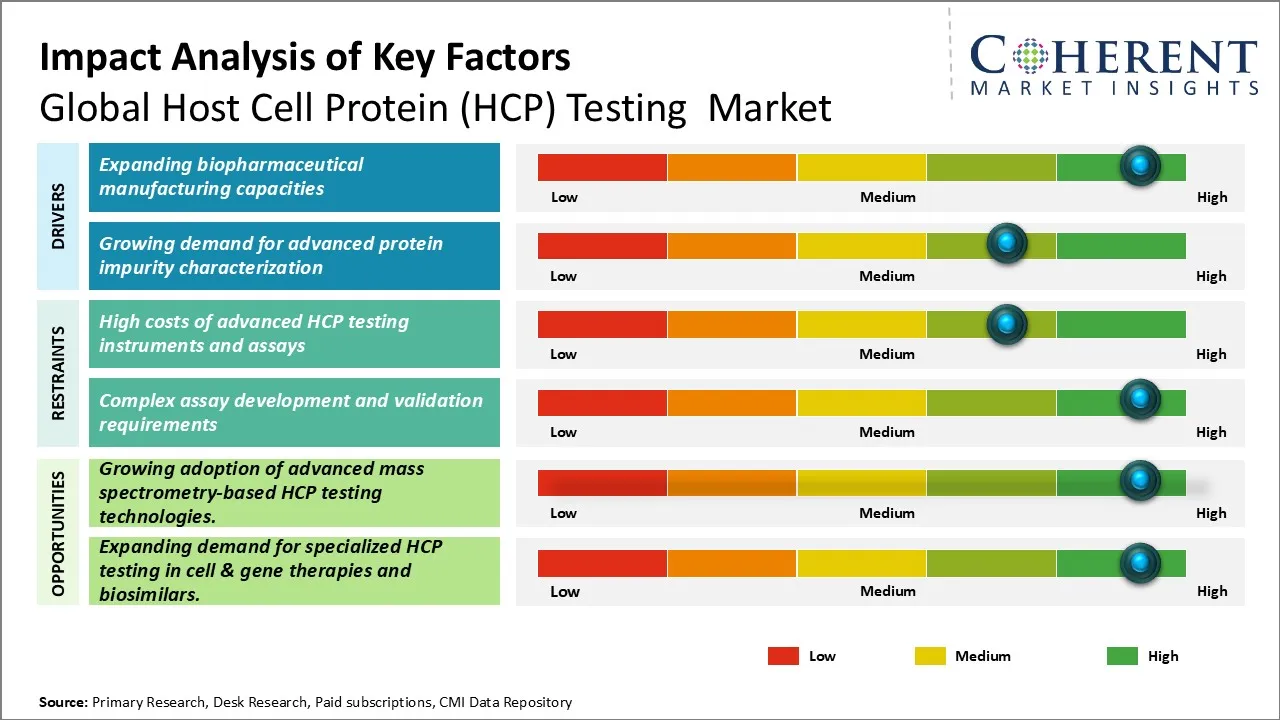
- Expanding biopharmaceutical manufacturing capacities: The growing production of biologics, biosimilars, recombinant proteins, and next-generation therapeutics is fueling the growth of the global host cell protein (HCP) testing market. Biopharmaceutical manufacturing processes include complex cell culture and purification steps that result in residual host cell protein impurities. Such impurities may affect therapeutic safety, stability, immunogenicity and efficacy. Manufacturers use HCP testing to ensure consistent product quality through process development, downstream purification, and commercial batch release. This has led to increased investments in large-scale biologics manufacturing facilities and contract development and manufacturing organizations (CDMOs), creating a steady demand for HCP testing kits, analytical instruments and specialized testing services.
- On July 8, 2026, FUJIFILM Biotechnologies announced that its commercial-scale manufacturing facility located in North Carolina, U.S., has been selected for the FDA PreCheck Pilot Program. The company is expanding its drug substance manufacturing capability with the addition of eight 20,000-liter bioreactors, adding an additional 160,000 liters of production capacity. This expansion is expected to drive the demand for bioprocess impurity testing and analytical quality control.
- Increasing demand for advanced protein impurity characterization: Growing awareness of the risk posed by individual host cell protein (HCP) impurities is driving the uptake of advanced HCP testing technologies. Traditional ELISA methods are used primarily for determining total HCP levels, but may not be adequate for characterizing individual high-risk protein impurities. Residual enzymes may degrade formulation excipients, compromise therapeutic stability and reducing product shelf life. Manufacturers can use advanced analytical technologies such as liquid chromatography-tandem mass spectrometry (LC-MS/MS) to identify and quantify individual protein impurities with greater specificity.
- In April 2026, Antibody Therapeutics published a sophisticated LC-MS-based proteomic workflow to monitor and control HCP risk. A six-month accelerated stability study of a monoclonal antibody drug substance decreased polysorbate 80 concentrations by 23.1% from 0.39 mg/mL to 0.30 mg/mL.
Host Cell Protein (HCP) Testing Market Trends
- Increasing pressure for sub-parts-per-million (ppm) impurity detection is fueling the development of ultra-sensitive analytical workflows. An integrated protein enrichment/mass spectrometry approach that could detect HCP impurities at levels as low as 0.5 ppm is described in a report in Talanta in February 2026, providing a way to better monitor purification processes.
- Analytical reproducibility is being improved by increased emphasis on standardized and regulatory-aligned mass spectrometry workflows. A scientific study in June 2026 evaluating the measurement of HCPs using the Orbitrap Astral mass spectrometer demonstrated high quantitative linearity (R² > 0.99) and total analytical error within ±30% over a seven-point concentration series.
- The increasing interest in global host cell proteome mapping is stimulating the development of analytical methods that can detect and characterize protein impurities that could not be detected before. In September 2026, a study published in the Journal of Pharmaceutical and Biomedical Analysis introduced a method for the assessment of proteome coverage for risk-based HCP characterization by LC-MS technology.
Regional Insights
Why is North America a Strong Market for Host Cell Protein (HCP) Testing?
North America is expected to account for the highest market share of 43.5% in 2026 in the global host cell protein (HCP) testing market. The region possesses a robust biopharmaceutical manufacturing infrastructure, comprehensive pipelines for biologics development and stringent regulatory requirements for the characterization of therapeutic proteins. More US pharma companies are investing in sophisticated analytical technologies to ensure product purity, reduce risks of immunogenicity and maintain manufacturing consistency. The demand for HCP testing kits and services is also driven by strong biotechnology companies, contract development and manufacturing organizations (CDMOs) and specialized analytical laboratories. The growing commercial production of monoclonal antibodies, recombinant proteins and biosimilars is also driving the adoption of high-sensitivity impurity detection platforms.
For instance, on January 20, 2026, Genentech announced that it would more than double its initial investment of approximately USD 1 billion in its biomanufacturing facility in Holly Springs, North Carolina, U.S. The expansion will increase manufacturing capacity and production volumes, with opportunities for HCP testing across process development, purification validation and commercial quality control.
Why Does the Asia Pacific Host Cell Protein (HCP) Testing Market Exhibit High Growth?
Asia Pacific is anticipated to experience the fastest growth during the forecast period, with a projected 21.5% share of the global host cell protein (HCP) testing market by 2026. Growth of biologics manufacturing capabilities, rising biosimilar development, and growing investments in pharmaceutical research infrastructure are driving the regional market. China and India are consolidating their positions in low-cost biopharmaceutical production, while South Korea, Japan and Singapore are building their advanced biomanufacturing capabilities. Regional manufacturers are moving toward the use of internationally harmonized analytical testing standards as their participation in global pharmaceutical supply chains increases.
For instance, in August 2026, WuXi Biologics announced further expansion plans for its manufacturing network, including the proposed acquisition of Transcenta’s process development and manufacturing facility in Hangzhou, China. Its Singapore drug product facility is also expected to provide approximately 100 million units of annual manufacturing capacity across prefilled syringes and vials upon commencing operations in 2027.
Global Host Cell Protein (HCP) Testing Market Outlook for Key Countries
Why is the U.S. Emerging as a Major Hub in the Host Cell Protein (HCP) Testing Market?
The U.S. host cell protein testing market is driven by large biologics development pipelines, sophisticated analytical infrastructure, and stringent FDA requirements for biopharmaceutical quality control. On August 27, 2026, Gilead Sciences broke ground on its new Chess biologics manufacturing facility in Foster City, California as part of its planned USD 32 billion investment in U.S. research, development and manufacturing through 2030. With the scaling up of domestic biologics manufacturing, opportunities for HCP testing in process development, purification validation and commercial manufacturing are emerging. Pharmaceutical manufacturers are increasingly utilizing advanced immunoassays and mass spectrometry technologies to characterize residual protein impurities. A strong presence of specialized analytical service providers and biotechnology companies further strengthens the country’s market position.
Is China the Next Growth Engine for the Host Cell Protein (HCP) Testing Market?
China host cell protein testing market is driven by rapid innovation in biological therapeutics, growing domestic drug development, and increasing biopharmaceutical manufacturing capabilities. In January 2026, China’s National Healthcare Security Administration (NHSA) announced that 76 innovative drugs were approved by the National Medical Products Administration (NMPA) in 2025, including 23 biological products. As biological therapeutics become more commercialized, manufacturers are under pressure to improve their analytical characterization and impurity clearance capabilities. As product development and international regulatory submissions continue to increase, domestic biotech firms are increasingly adopting expression system-specific HCP assays. In addition, the growth of contract manufacturing capacities and participation in global biopharmaceutical supply chains are opening up opportunities for advanced HCP detection technologies and specialized analytical testing services.
Germany Host Cell Protein (HCP) Testing Market Analysis and Trends
Germany’s host cell protein testing market is driven by its established pharmaceutical manufacturing ecosystem, sophisticated biotechnology research capabilities, and stringent European quality control norms. On May 21, 2026, Sartorius Stedim Biotech inaugurated a new competence center in Freiburg, Germany, for the development and manufacture of quality-critical materials for cell and gene therapies. The company invested more than EUR 140 million. Cell and gene therapies also account for about 30% of the global drug development pipeline, the company said. With the development of advanced biological therapeutics, manufacturers are encouraged to strengthen the process-related impurity characterization. Established analytical laboratories and bioprocess technology suppliers in Germany are well positioned to cater to the increasing demand for specialized HCP assays, sensitive analytical instruments and manufacturing quality control solutions.
U.K. Host Cell Protein (HCP) Testing Market Analysis and Trends
The U.K. host cell protein testing market is driven by government initiatives to support innovation in life sciences, to boost commercial biologics production, and to build contract manufacturing infrastructure. Following an investment of some GBP 400 million, FUJIFILM Biotechnologies opened its expanded biomanufacturing and process development facility at Teesside on 11 February 2026. The expanded facility includes 2,000-liter and 5,000-liter single-use bioreactors, offering a total manufacturing capacity of up to 19,000 liters for antibody production. The expansion of flexible antibody manufacturing infrastructure is generating opportunities for HCP testing throughout clinical development and commercial-scale production. Contract manufacturing organizations increasingly require sensitive impurity detection methods that accommodate different therapeutic proteins, expression systems, and customer-specific manufacturing processes.
Japan Host Cell Protein (HCP) Testing Market Analysis and Trends
Japan’s host cell protein testing market is driven by advancements in antibody engineering, continuous biomanufacturing, and sophisticated pharmaceutical quality control systems. On July 6, 2026, Chugai Pharma Manufacturing held the completion ceremony for its new UT3 biopharmaceutical drug substance manufacturing facility in Utsunomiya. The facility forms part of Chugai Pharmaceutical’s previously announced investment of over JPY 50 billion across two new biopharmaceutical manufacturing buildings. UT3 incorporates perfusion culture-based continuous manufacturing capabilities alongside conventional batch production systems. The increasing adoption of continuous bioprocessing is encouraging manufacturers to develop robust impurity monitoring and purification assessment workflows. These developments are expected to strengthen demand for high-sensitivity HCP assays, automated analytical technologies, and advanced protein characterization services across Japan’s biopharmaceutical industry.
How is the Adoption of Advanced Mass Spectrometry Creating New Growth Opportunities in the Host Cell Protein (HCP) Testing Market?
Growth opportunities are being generated by the increasing adoption of advanced mass spectrometry technologies in the global host cell protein (HCP) testing market. The use of liquid chromatography-tandem mass spectrometry (LC-MS/MS) in analytical workflows is increasing among biopharmaceutical manufacturers for the identification and quantification of individual protein impurities that are not well characterized using traditional ELISA methods. These technologies enable complete protein characterization, improved detection of low level impurities and identification of high risk enzymes that can affect therapeutic stability.
For instance, Waters Corporation showed a sophisticated multi-reflecting time-of-flight LC-MS workflow that identified 101 host cell proteins at levels from 128 ppm down to 12 ppb in 2025. Thermo Fisher Scientific also provides its Orbitrap Astral mass spectrometer to profile and quantify HCPs in gene therapy products.
Market Players, Key Development, and Competitive Intelligence
Key Developments
- In April 2026, Cygnus Technologies (Maravai LifeSciences) announced the commercial availability of its third generation Vero Cell HCP ELISA Kit (F1095). The introduction broadens the company’s system-specific impurity testing portfolio to support analytical quality control in vaccine and Vero cell-derived biological product manufacturing.
- In June 2025, Alphalyse announced that Fidelio Capital has acquired a majority stake in the company. The strategic investment is a vote of confidence in the growth of Alphalyse’s special analytical services, including GMP validated LC-MS assays to identify and quantify residual host cell proteins in biological therapeutics.
Competitive Landscape
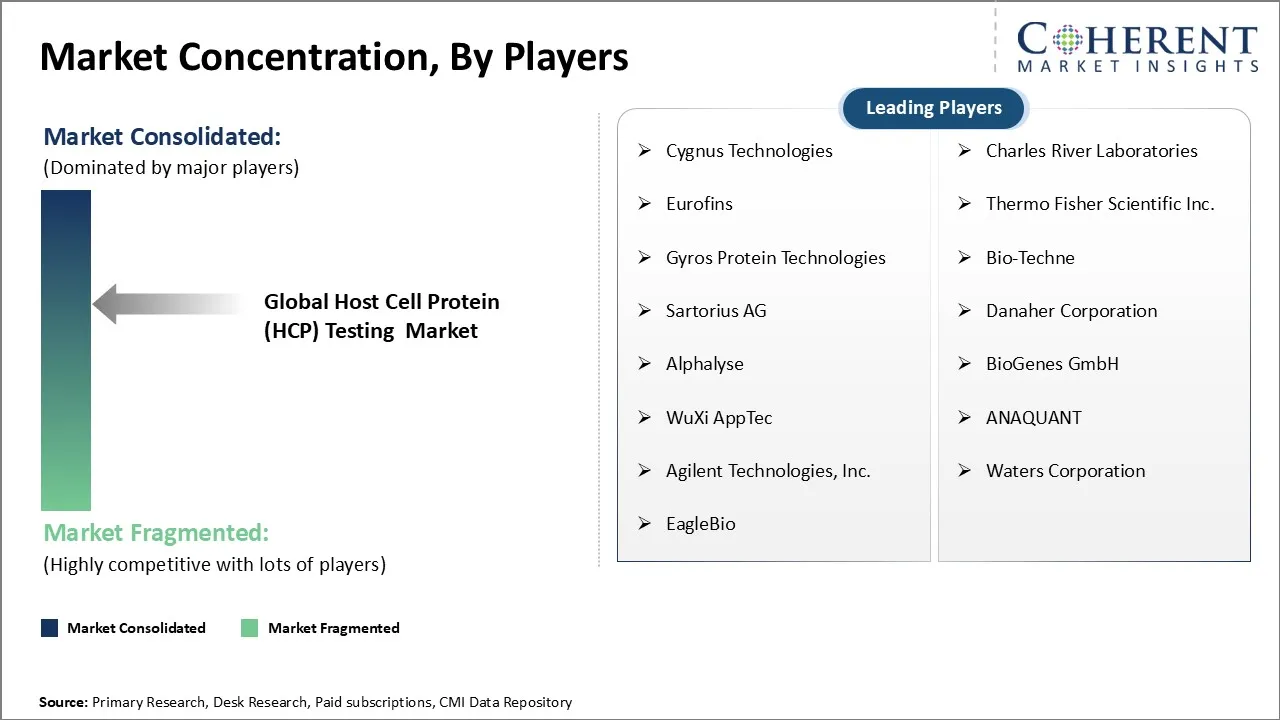
The global host cell protein (HCP) testing market is characterized by established analytical technology providers, immunoassay manufacturers and specialized testing service providers. Cygnus Technologies and BioGenes GmbH are focused on HCP specific ELISA kits and custom assays while Thermo Fisher Scientific, Waters Corporation and Agilent Technologies provide advanced mass spectrometry platforms. Gyros Protein Technologies is focused on automated immunoassays, while Charles River Laboratories, Eurofins and Alphalyse are specialists in HCP testing. Differentiating competitively is increasingly driven by detection sensitivity, analytical accuracy, workflow automation and regulatory compliance capabilities.
Top Manufacturers and Notable Products/Solutions in the Host Cell Protein (HCP) Testing Market
Company/Manufacturer | Notable Product/Brand | Key Features |
Cygnus Technologies (Maravai LifeSciences) | CHO HCP ELISA Kit, 3G (F550-1) | High-sensitivity HCP detection, broad antibody coverage, quantitative impurity analysis, purification process monitoring |
Thermo Fisher Scientific Inc. | Orbitrap Astral Zoom Mass Spectrometer | High-resolution mass spectrometry, low-abundance protein detection, high-throughput protein quantification, advanced impurity characterization |
Gyros Protein Technologies (Mesa Laboratories, Inc.) | Gyrolab HEK293 HCP Type SN and Type CL Kits | Automated immunoassays, reduced sample consumption, HEK293-specific protein detection, rapid quantitative analysis |
BioGenes GmbH | CHO 360-HCP ELISA Kits | Broad antigen recognition, multiple antibody combinations, sensitive impurity detection, CHO-specific protein quantification |
Alphalyse | HCP-MS Analytical Testing Services | GMP-compliant analytical testing, mass spectrometry-based protein identification, individual HCP quantification, high-risk impurity characterization |
Market Report Scope
Host Cell Protein (HCP) Testing Market Report Coverage
Report Coverage | Details | ||
Base Year: | 2025 | Market Size in 2026: | USD 439.2 Mn |
Historical Data for: | 2020 to 2024 | Forecast Period: | 2026 to 2033 |
CAGR: | 9.27% | 2033 Value Projection: | USD 817.0 Mn |
Geographies covered: |
| ||
Segments covered: |
| ||
Companies covered: | Cygnus Technologies (acquired by Maravai LifeSciences), Charles River Laboratories, Eurofins, Thermo Fisher Scientific Inc., Gyros Protein Technologies (acquired by Mesa Laboratories, Inc.), Bio-Techne, Sartorius AG, Danaher Corporation, Alphalyse, BioGenes GmbH, WuXi AppTec, ANAQUANT (acquired by Clean Cells), Agilent Technologies, Inc., Waters Corporation, and EagleBio. | ||
Growth Drivers: |
| ||
Restraints & Challenges: |
| ||
Analyst Opinion (Expert Opinion)
- The future of the global host cell protein (HCP) testing market will increasingly center on comprehensive impurity characterization rather than conventional total HCP quantification. Biopharmaceutical manufacturers are anticipated to integrate ELISA with sophisticated mass spectrometry technologies to identify individual protein impurities, evaluate immunogenicity risks, and enhance therapeutic stability. Automated sample preparation and high-throughput analytical workflows will also improve testing efficiency. Biopharmaceutical quality control requirements are changing and market participants that offer complementary analytical technologies, expression system-specific assays and validated testing workflows will be better positioned to meet them.
- The biggest growth will be in specialized HCP testing for cell and gene therapies, biosimilars and next generation antibody therapeutics. North America is projected to provide lucrative opportunities due to the established infrastructure for biologics manufacturing. Asia Pacific is projected to witness lucrative growth opportunities due to growing contract manufacturing and biotechnology investments. In December 2025, a Molecular Therapy – Methods & Clinical Development publication investigated residual HCP retention across four adeno-associated virus (AAV) serotypes, with vector genome recovery ranging from 44.6% to 69.2% during downstream processing.
- Market players can be distinguished according to analytical sensitivity, assay reproducibility, comprehensive protein coverage, and cost-effective testing workflows. Suppliers should emphasize custom assay development, automated immunoassays, and integrated analytical services to support the various phases of biopharmaceutical manufacturing. In November 2026, a study on a high-throughput HCP characterization workflow combining nanoparticle-based protein enrichment with advanced mass spectrometry was published in the Journal of Proteome Research. Such innovations could improve low-abundance impurity detection and analytical efficiency.
Speak to the analyst
Want personalized insights?
Take the findings above to one of our principal consultants, or have the report rebuilt around the segments, geographies and competitors you actually track.
Market Segmentation
- By Product & Service (Revenue, USD Mn, 2021-2033)
- Kits & Reagents
- Services
- Instruments
- By Technology (Revenue, USD Mn, 2021-2033)
- ELISA
- Mass Spectrometry (LC-MS/MS)
- Automated Immunoassay Platforms
- Western Blot
- 2D Electrophoresis (2D-PAGE, 2D-DIGE)
- Others
- By Application (Revenue, USD Mn, 2021-2033)
- Monoclonal Antibodies
- Recombinant Proteins
- Vaccines
- Cell & Gene Therapy
- Others
- By Expression System (Revenue, USD Mn, 2021-2033)
- CHO Cells
- E. coli
- HEK293 Cells
- Yeast
- Others
- By End User (Revenue, USD Mn, 2021-2033)
- Pharmaceutical & Biotechnology Companies
- Contract Service Providers
- Academic & Research Institutes
- Global Host Cell Protein (HCP) Testing Market, By Region (Revenue, USD Mn, 2021-2033)
- North America
- U.S.
- Canada
- Latin America
- Brazil
- Mexico
- Argentina
- Rest of Latin America
- Europe
- Germany
- U.K.
- France
- Italy
- Spain
- Russia
- Rest of Europe
- Asia Pacific
- China
- India
- Japan
- Australia
- South Korea
- ASEAN
- Rest of Asia Pacific
- Middle East
- GCC
- Israel
- Rest of Middle East
- Africa
- South Africa
- Central Africa
- North Africa
- North America
- Key Players
- Cygnus Technologies (acquired by Maravai LifeSciences)
- Charles River Laboratories
- Eurofins
- Thermo Fisher Scientific Inc.
- Gyros Protein Technologies (acquired by Mesa Laboratories, Inc.)
- Bio-Techne
- Sartorius AG
- Danaher Corporation
- Alphalyse
- BioGenes GmbH
- WuXi AppTec
- ANAQUANT (acquired by Clean Cells)
- Agilent Technologies, Inc.
- Waters Corporation
- EagleBio
Sources
Primary Research Interviews
- Biopharmaceutical research and development professionals
- Host cell protein testing kit and reagent manufacturers
- Analytical scientists and proteomics specialists
- Bioprocess development and downstream purification experts
- Quality assurance and quality control professionals
- Contract research and manufacturing organization representatives
- Procurement managers from pharmaceutical and biotechnology companies
- Key opinion leaders (KOLs) in biopharmaceutical analytical testing
Databases
- U.S. Food and Drug Administration (FDA) – Drugs@FDA Database
- European Medicines Agency (EMA) – Medicines Database
- National Center for Biotechnology Information (NCBI)
- PubMed and PubMed Central (PMC)
- ClinicalTrials.gov
- UniProt Protein Database
- Proteomics Identifications Database (PRIDE)
- World Health Organization (WHO) – International Clinical Trials Registry Platform
Magazines
- BioProcess International
- Genetic Engineering & Biotechnology News (GEN)
- BioPharm International
- Pharmaceutical Technology
- The Analytical Scientist
- European Pharmaceutical Review
Journals
- Journal of Pharmaceutical and Biomedical Analysis
- Journal of Proteome Research
- Biotechnology and Bioengineering
- Analytical Chemistry
- mAbs
- Antibody Therapeutics
- Journal of Chromatography A
- Molecular Therapy – Methods & Clinical Development
Newspapers
- The New York Times
- The Wall Street Journal
- Financial Times
- The Economic Times
- The Guardian
Associations
- American Association of Pharmaceutical Scientists (AAPS)
- Biotechnology Innovation Organization (BIO)
- Parenteral Drug Association (PDA)
- International Society for Pharmaceutical Engineering (ISPE)
- American Society for Mass Spectrometry (ASMS)
- BioPhorum
- European Federation of Pharmaceutical Industries and Associations (EFPIA)
- International Council for Harmonisation of Technical Requirements for Pharmaceuticals for Human Use (ICH)
Public Domain Sources
- Company Annual Reports and Investor Presentations
- U.S. FDA Biopharmaceutical Quality and Analytical Testing Guidelines
- European Medicines Agency Regulatory Guidelines
- United States Pharmacopeia (USP) General Chapters 1132 and 1132.1
- World Health Organization Biological Product Quality Control Guidelines
- Government Biotechnology and Pharmaceutical Manufacturing Reports
- University Research Publications and Scientific Studies
- Manufacturer Product Catalogs, Application Notes, and Technical White Papers
- Patent Databases such as WIPO, USPTO, and Google Patents
- Publicly Available Host Cell Protein Assay Validation and Analytical Characterization Reports
Proprietary Elements
- CMI Data Analytics Tool
- Proprietary CMI Existing Repository of Information for the Last 10 Years
Get access to 250+ pages report
Every segment, forecast, competitor profile and data table behind the analysis above — available for instant download.
- ESOMAR Member
- ISO 9001:2015 Certified
- D-U-N-S Registered
- GDPR & CCPA Compliant
Frequently Asked Questions
The Host Cell Protein (HCP) Testing Market is estimated to be valued at USD 439.2 Mn in 2026 and is expected to reach USD 817.0 Mn in 2033.
Major players operating in the global Host Cell Protein (HCP) Testing Market include Cygnus Technologies (acquired by Maravai LifeSciences), Charles River Laboratories, Eurofins, Thermo Fisher Scientific Inc., Gyros Protein Technologies (acquired by Mesa Laboratories, Inc.), Bio-Techne, Sartorius AG, Danaher Corporation, Alphalyse, BioGenes GmbH, WuXi AppTec, ANAQUANT (acquired by Clean Cells), Agilent Technologies, Inc., Waters Corporation, and EagleBio.
The high costs of advanced HCP testing instruments and assays, along with complex assay development and validation requirements, are the key factors hampering market growth.
Expanding biopharmaceutical manufacturing capacities and growing demand for advanced protein impurity characterization are the key factors driving market growth.
The Host Cell Protein (HCP) Testing Market is anticipated to grow at a CAGR of 9.27% between 2026 and 2033.
North America is expected to account for the largest market share of 43.5% in 2026, owing to established biopharmaceutical manufacturing infrastructure and stringent product quality requirements.
Asia Pacific is expected to emerge as the fastest-growing region during the forecast period and account for 21.5% of the global market share in 2026.