

Global In-Home Senior Care Franchises Market Size and Forecast – 2026 to 2033
The global in-home senior care franchises market is estimated to be valued at USD 464.53 Bn in 2026 and is expected to reach USD 796.12 Bn by 2033, exhibiting a compound annual growth rate (CAGR) of 8.0% from 2026 to 2033. This significant market expansion reflects increasing the demand for personalized and accessible senior care services as the global aging population rises, driving investments and franchise growth opportunities within the sector.
Key Takeaways of the Global In-Home Senior Care Franchises Market
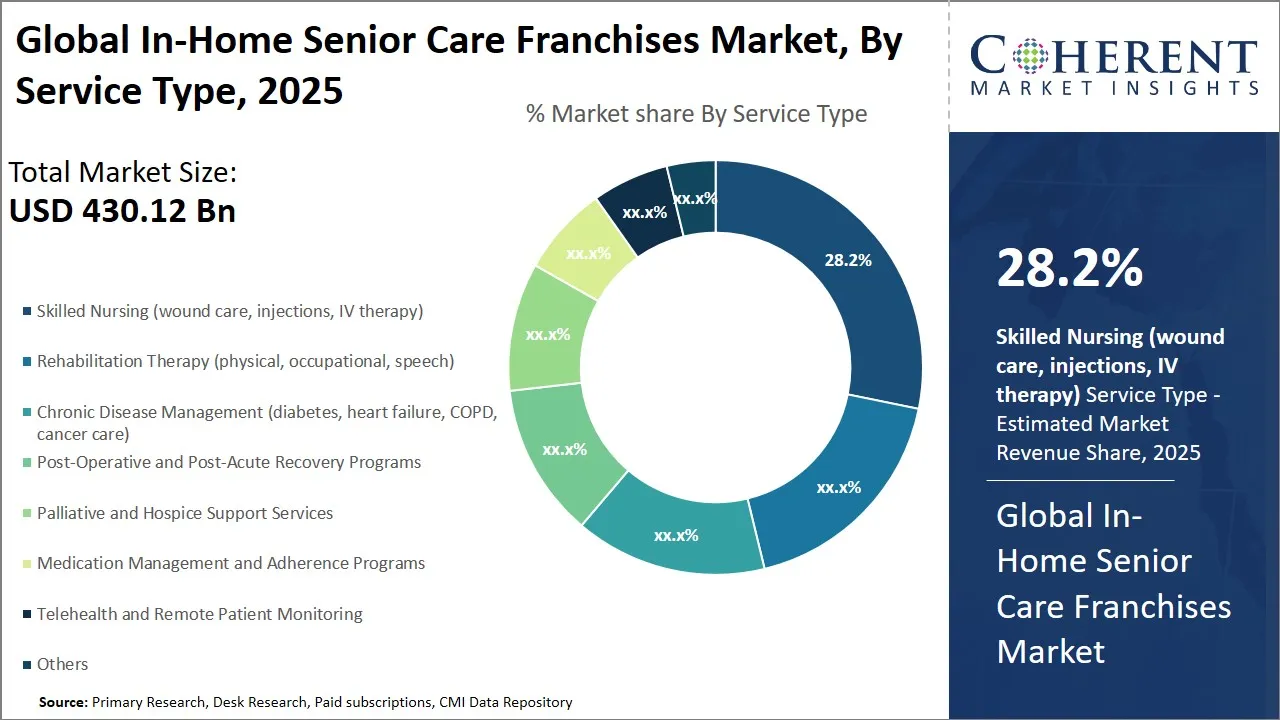
- By service type, the skilled nursing (wound care, injections, IV therapy) segment is expected to account for 29.2 % of the market share in 2026.
- The 66 to 75 years segment is expected to hold 46.6% of the market share in 2026.
- In terms of care type, the live-in care segment is projected to hold the largest share at 51.2 % in 2026.
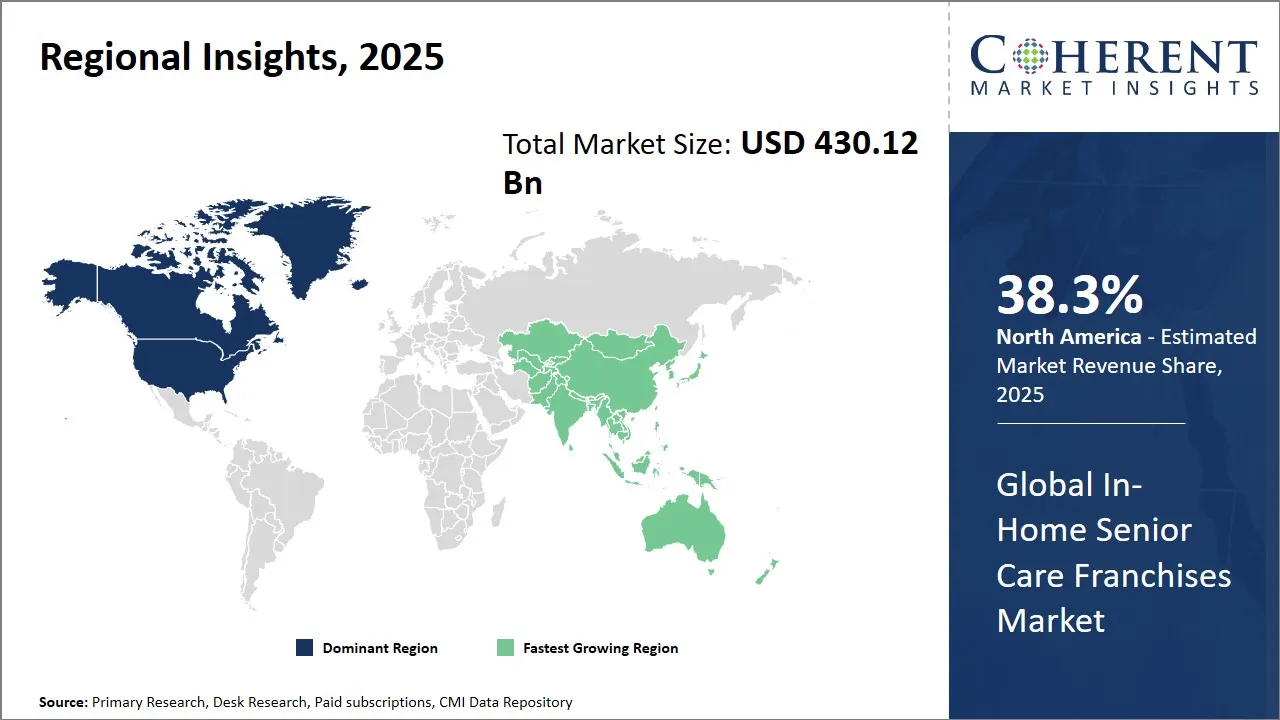
- North America is expected to lead the market, holding a share of 38.3 % in 2026. Asia Pacific is anticipated to be the fastest-growing region, with an estimated market share of 23.5% in 2026.
Market Overview
A key market trend is the shift towards technologically integrated care solutions, including remote monitoring and telehealth services, enhancing the quality and efficiency of in-home senior care. Additionally, there is growing preference for non-medical support focused on independent living, which is fueling the franchise development. Providers are also emphasizing tailored care plans and caregiver training programs, responding to the consumer demand for compassionate and customized senior care that supports aging in place comfortably and safely.
Currents Events and their Impact
Current Events | Description and its Impact |
Expansion of Home and Community-Based Services (HCBS) Funding in Multiple Regions |
|
Chronic Healthcare Labor Shortages |
|
Segmental Insights
- Current Industry Events of 2026
- Market Size Estimation
- Regional Breakdown
- Competitive Landscape
- Customer Intelligence
- Segmental Analysis
- Pricing Analysis
- Key Market Drivers, Challenges & Future Trends
- Customized Insights Section
In-Home Senior Care Franchises Market Insights, by Service Type - Skilled Nursing (wound care, injections, IV therapy) Contributes the Highest Share of the Market Owning to the Critical Nature and Complexity of Medical Care Required by the Elderly Population
The skilled nursing (wound care, injections, IV therapy) that entails specialized medical interventions that are carried out by licensed health practitioners is estimated to consume 29.2% of market share in 2026. The rising numbers of chronic wounds, post-surgical care requirements and intravenous treatments among older adults is fueling high demands of such professionals in-home care.
This preeminence of skilled nursing among in-home senior care franchises is motivated by a number of factors. First of all, the elderly population in the world is facing an increased incidence of health challenges that need long-term and multifaceted nursing support. For Example, in June 2022, Always Best Care, a major in-home senior care and skilled nursing franchise has chosen Viventium, a SaaS-based Payroll and HR solutions provider, as a preferred vendor to enhance its operations, retention of caregivers, and efficiency of its franchisee network.
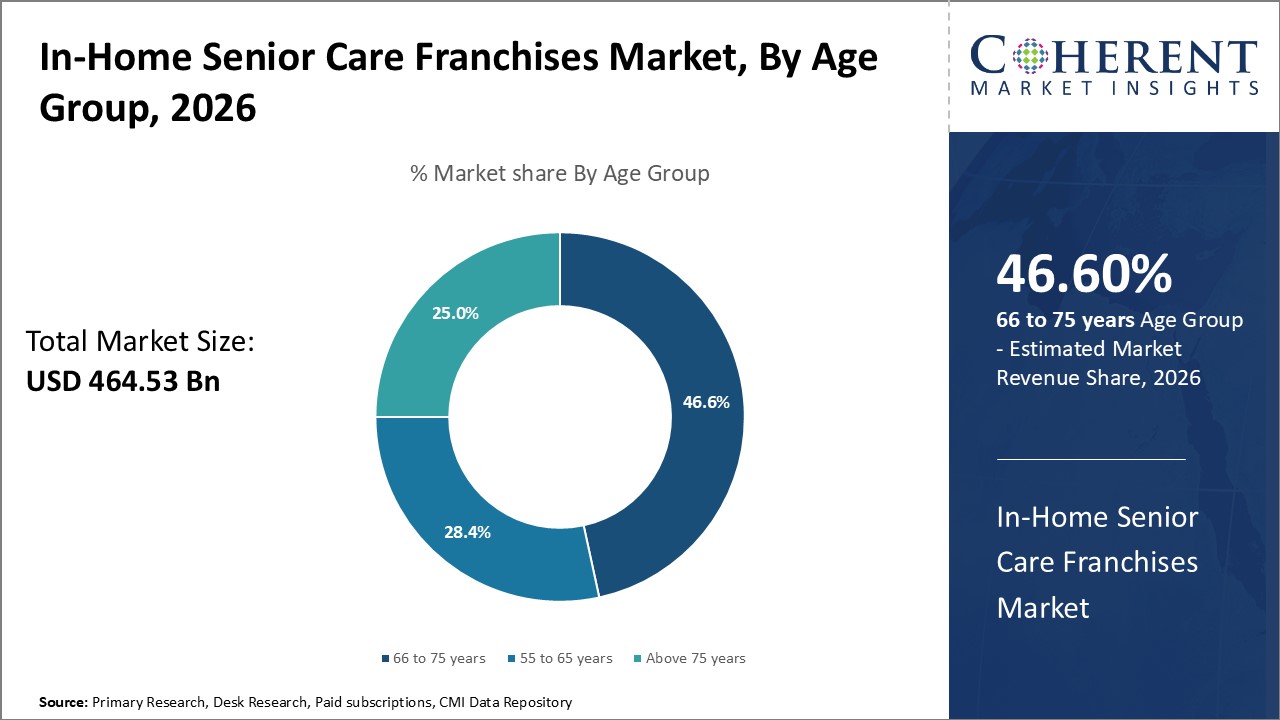
In-Home Senior Care Franchises Market Insights, by Age Group - 66 to 75 Years Holds the Largest Market Share within the Market, Driven Predominantly by the Transitional Nature of this Phase in the Aging Spectrum
The category of 66 to 75 years, expected to capture 46.6% of the market share in 2026, indicates the people who are growing older and having age-associated health issues, which demand supplementary services. Nonetheless, this population group is, to a large extent, independent and pro-active in terms of addressing their health, which makes them demand structured, yet flexible in-home care solutions.
The segment enjoys the perks of in-home senior care services which allow aging-in-place, which is a very essential preference since most seniors do not want to be institutionalized early. During this phase a lot of the elderly start dealing with chronic conditions like diabetes, heart failure early stages or physical disability, which is why rehabilitation and moderately intensive care becomes essential.
In-Home Senior Care Franchises Market Insights, by Care Type - Live-in Care Leads Owing to Comprehensive Support Needs and Personalized Attention
The live-in care segment is projected to account for 51.2% share in 2026, due to the fact that it provides the round-the-clock personalized care to the seniors with complex and continuing care needs. Live-in care, unlike visiting or respite, offers round-the-clock care; thus emergency response and continuity of care are better.
There are a number of drivers that support the use of live-in care. Many of the elderly population will need long-term help with either daily living activities or mental disabilities or other medical issues that cannot be adequately addressed with intermittent check-ins. These can be met in a non-disruptive way by live-in caregivers, which promotes a more caring and attentive home atmosphere. This constant availability alleviates the risks related to falls, medication errors and unexpected health deterring.
Role of Artificial Intelligence (AI) on the Global In-Home Senior Care Franchises Market
- Artificial intelligence is reshaping the global in-home senior care franchises market by streamlining operations, automating repetitive tasks, and enabling data-driven decision-making. Predictive analytics allows care providers to anticipate health risks, optimize caregiver scheduling, and reduce hospital readmissions. Personalization engines use AI to tailor care plans and daily routines based on individual health histories and preferences, improving patient satisfaction and outcomes. Process automation ranging from digital intake to remote monitoring cuts administrative overhead and allows staff to focus on direct care delivery, reducing costs while enhancing efficiency. Companies like Teton.ai are deploying AI-powered computer vision to predictively monitor seniors and shift care from reactive to proactive, while CarePredict uses wearable AI devices to track movement patterns and detect early signs of health decline, highlighting how franchises can leverage these technologies to strengthen care quality and brand reputation.
- Beyond efficiency, AI creates new opportunities for franchises to innovate their business models and services. Remote care ecosystems supported by AI enable scalable hybrid models that combine in-person visits with virtual monitoring, appealing to cost-conscious families and expanding access in underserved regions. Franchises that adopt AI-driven customer engagement tools can deliver seamless experiences from voice-enabled scheduling assistants to AI chatbots handling family queries building trust and retention. However, the reliance on AI raises challenges: privacy risks, upfront technology costs, and potential caregiver resistance. The advantage lies in selective adoption: companies that strategically integrate AI for operational improvements, while maintaining human-centric care, gain a competitive edge.
Regional Insights
North America In-Home Senior Care Franchises Market Analysis and Trends
The presence of a market ecosystem is due to a number of well-established factors that will enable North America to dominate the global in-home senior care franchises market with a share of 38.3% in 2026. The area is enjoying an established healthcare infrastructure and preponderance of the aging population that requires individualized, in-home senior care solutions. In the United States, Medicare and Medicaid government policies have been extremely supportive of in-home care services, increasing pressure on demand.
For example, in February 2026, Always Best Care Senior Services, a leading senior care franchise system in North America, reported strong year-end growth with 13 new franchise owners expanding into 16 territories, 5 new franchise owners acquiring existing territories, and 7 existing franchisees purchasing 12 additional territories, bringing the total to 28 new territories for 2024. The company, known for providing compassionate senior care, also achieved back-to-back double-digit sales growth, earned recognition on major franchise rankings, and expanded multi-unit ownership across key U.S. markets including California, North Carolina, Washington, Alabama, and New Mexico.
Asia Pacific In-Home Senior Care Franchises Market Analysis and Trends
The most rapidly growing global in-home senior care franchise market is the Asia Pacific region with 23.5% share in 2026, because of the rapidly aging population, and changing socio-economic conditions. The growing urbanization, the changing family set-ups with a low number of multi-generational families, and the increased awareness about the health and wellbeing of the elderly are driving the demand of formal senior care at a faster pace. Countries like Japan, China, and South Korea are also enforcing a policy that would help in involvement in elderly care by the private sector through subsidies and models of public-privacy partnership.
Global In-Home Senior Care Franchises Market Outlook for Key Countries
U.S. In-Home Senior Care Franchises Market Analysis and Trends
The North America in-home senior care franchises market is dominated by the U.S. which has an extensively developed in-home care infrastructure which is aided by government reimbursements through Medicare and Medicaid. The presence of large franchise providers such as Home Instead Senior Care and Comfort Keepers has established the standard of a successful franchise model with their integration of caregiver training, stringent quality assurance, and technology. The policy environment in the U.S promotes innovation of care models, such as virtual care and remote monitoring, which supports market development.
In June 2026, Seniors Helping Seniors in-home care services, a U.S.-based senior care franchisor with more than 200 partners and 400 territories nationwide, announced its expansion in Central New Jersey, U.S. with a new location opened by local resident Mrs. Deepthi Katragunta.
India In-Home Senior Care Franchises Market Analysis and Trends
The in-home senior care franchises market in India has been experiencing a good pace due to the escalating population growth in terms of age, the increasing number of nuclear families and growing need of individually focused elderly care services. The growing awareness of aging-in-place and the use of technology, including remote health monitoring and teleconsultation, is transforming the model of service delivery. Skilled nursing, palliative care, and caregiver training is also a target of franchises as a form of bridging gaps in formal elder care, and supportive government policies and private investment are opening new avenues of growth throughout urban and semi-urban areas.
In July 2026, Antara Senior Care, an India-based pioneer in integrated senior care and part of the Max Group, announced the rollout of cashless insurance coverage for transition care at its care homes starting with Bengaluru. The company, known for offering structured recovery and rehabilitation support, becomes one of only two operators in India to provide this service, a move that strengthens accessibility and affordability in the growing in-home senior care franchises market.
Canada In-Home Senior Care Franchises Market Analysis and Trends
The aging population of Canada and the universal care system gives in-home elderly care franchises potential opportunities. Home-based services have been increasing in the number of funds and support because the government is focusing on aging-in-place strategies. Nurse Next Door and Home Care Assistance are companies that have taken advantage of this, providing franchise models which focus on individualized care and culture awareness in order to meet the needs of the various people.
In July 2020, Amada Senior Care, one of the fastest-growing in-home senior care franchise systems in the canada, announced it has selected AxisCare, a Texas-based home care management software provider, as its preferred technology partner to manage scheduling, billing, payroll and compliance across its 100+ locations. The move strengthens Amada’s nationwide franchise operations within the in-home senior care franchises market by integrating digital tools to improve efficiency and growth.
China In-Home Senior Care Franchises Market Trends
The dynamic in-home care franchise market is supported by the swiftly expanding aging population of China and the government-initiated reforms intended to develop the eldercare sector. Health-related policies, like the Healthy China 2030 program, encourage the use of community- and home-based services with elderly people. Localized care models are pursued by domestic franchise players, such as Wei Pin Care and Oak Street Health, whereas international brands are considering entering into a partnership in order to introduce the global best practices. The issue of urban-rural differences is a challenge but the growing digital health infrastructure and the growing middle-class demand provide the market with a significant momentum.
In October 2023, China’s Ministry of Civil Affairs, the government body overseeing social welfare and elderly services, introduced the country’s first national standard for at-home elderly care. With over 280 million people aged 60 and above by the end of 2022, the new framework outlines seven key services including basic care, health management, spiritual support, and home environment improvements. The standard aims to improve service quality, build trust among seniors, and encourage wider adoption of home-based care, creating stronger opportunities for providers and in-home senior care franchises in the country.
Market Players, Key Developments, and Competitive Intelligence
Key Developments
- On October 03, 2025, Caring Senior Service, a U.S.-based in-home senior care franchise specializing in non-medical personalized home care, announced the opening of a new location in Medina, Ohio, by Canton owners Fred, Kathy, and Mitch Wallace. After launching their first office in Canton in 2023, the family expanded to Medina to meet rising demand, reinforcing the company’s mission to help seniors age safely at home with dignity, independence, and personalized support.
- In June 2025, Clara Home Care Inc., a U.S.-based technology platform founded in 2024 that helps families directly employ professional senior caregivers, announced it closed a USD 3.1 million seed round led by Torch Capital, Virtue and Y Combinator with participation from angel investors. Clara simplifies in-home senior care by combining discovery, background checks, scheduling, payroll and compliance in one platform while using AI tools to match families with caregivers.
- In April 2025, Executive Home Care, a U.S.-based premier in-home care provider and part of Evive Brands, announced it has signed 40 new franchise agreements in the past six months to expand its services nationwide. The company, known for delivering compassionate care that helps seniors age in place, added new territories across 10 states including California, Texas, Florida, and Pennsylvania, strengthening its presence as demand for reliable home care continues to rise.
- In March 2024, Waud Capital Partners, a U.S-based private equity firm focused on middle-market healthcare growth, announced the acquisition of Senior Helpers, an in-home senior care franchise with more than 380 locations across the U.S., Canada and Australia. Senior Helpers, known for providing home care, wellness services and specialized programs for Alzheimer’s and Parkinson’s patients, strengthens its position in the In-Home Senior Care Franchises Market with Waud Capital’s backing to expand services and scale nationwide.
Top Strategies Followed by Global In-Home Senior Care Franchises Market Players
- Established players in the industry lead the market through substantial investments in research and development (R&D), aimed at creating innovative, high-performance care solutions that meet evolving consumer needs. These industry giants also form strategic partnerships with key players, such as original equipment manufacturers (OEMs) and technology firms, to enhance product offerings and solidify their presence in the market.
- Companies like Home Instead (Honor Technology Inc.) and Comfort Keepers (Sodexo subsidiary) exemplify this group. Both invest heavily in R&D to expand digital platforms, AI-enabled scheduling, and predictive care tools. Their alliances with tech partners such as Philips and GreatCall have strengthened integrated remote monitoring and telehealth offerings, keeping them ahead in the senior care franchise landscape.
- Mid-level players, on the other hand, focus primarily on striking a balance between quality and affordability to attract price-sensitive consumers in this expanding sector. Recognizing the rising demand for cost-effective in-home senior care solutions, these players prioritize offering services and products that offer satisfactory performance without premium price tags. To enhance their competitiveness, mid-level franchises often engage in collaborations with technology providers and larger industry stakeholders to improve their production capacities and adopt newer technologies.
- For example, Visiting Angels and Griswold Home Care, they focus on balancing affordability and service quality, appealing to cost-sensitive households. These companies collaborate with health tech firms to enhance scheduling and caregiver management, while gradually adopting remote support tools to improve efficiency without inflating service costs.
- Smaller-scale players in the in-home senior care franchises market adopt distinctly different strategies to survive and grow in this dynamic environment. They often specialize in niche markets by developing unique features or tailored care solutions that address specific unmet needs of seniors. By investing in cutting-edge technologies such as AI-driven monitoring systems or telehealth solutions, these players differentiate themselves from competitors.
- Firms such as Touching Hearts at Home and Synergy HomeCare pursue niche strategies. They differentiate with specialized programs like dementia-focused care or technology-driven telehealth services. Some adopt AI-enabled monitoring solutions or mobile health applications, carving out a space among tech-savvy caregivers and seniors looking for customized solutions.
Market Report Scope
In-Home Senior Care Franchises Market Report Coverage
| Report Coverage | Details | ||
|---|---|---|---|
| Base Year: | 2025 | Market Size in 2026: | USD 464.53 Bn |
| Historical Data for: | 2020 To 2024 | Forecast Period: | 2026 To 2033 |
| Forecast Period 2026 to 2033 CAGR: | 8.0% | 2033 Value Projection: | USD 796.12 Bn |
| Geographies covered: |
| ||
| Segments covered: |
| ||
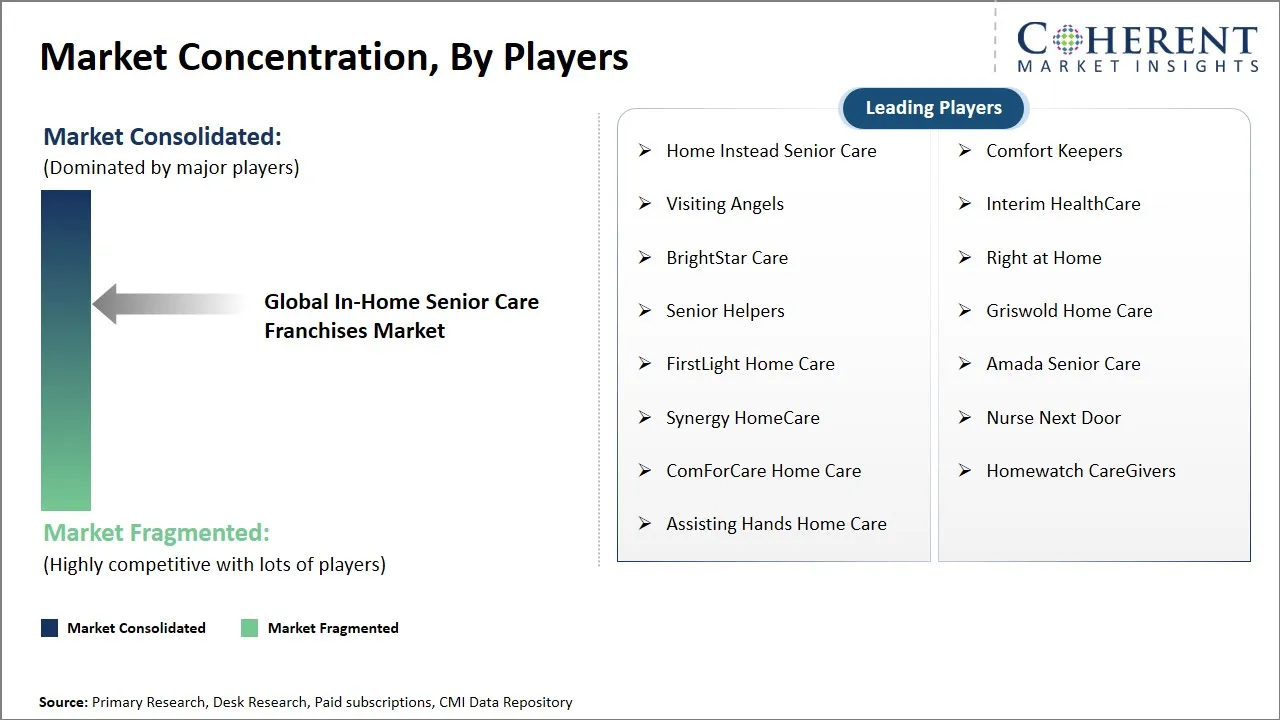
| Companies covered: | Home Instead Senior Care, Comfort Keepers, Visiting Angels, Interim HealthCare, BrightStar Care, Right at Home, Senior Helpers, Griswold Home Care, FirstLight Home Care, Amada Senior Care, Synergy HomeCare, Nurse Next Door, ComForCare Home Care, Homewatch CareGivers, and Assisting Hands Home Care | ||
| Growth Drivers: |
| ||
| Restraints & Challenges: |
| ||
In-Home Senior Care Franchises Market Dynamics
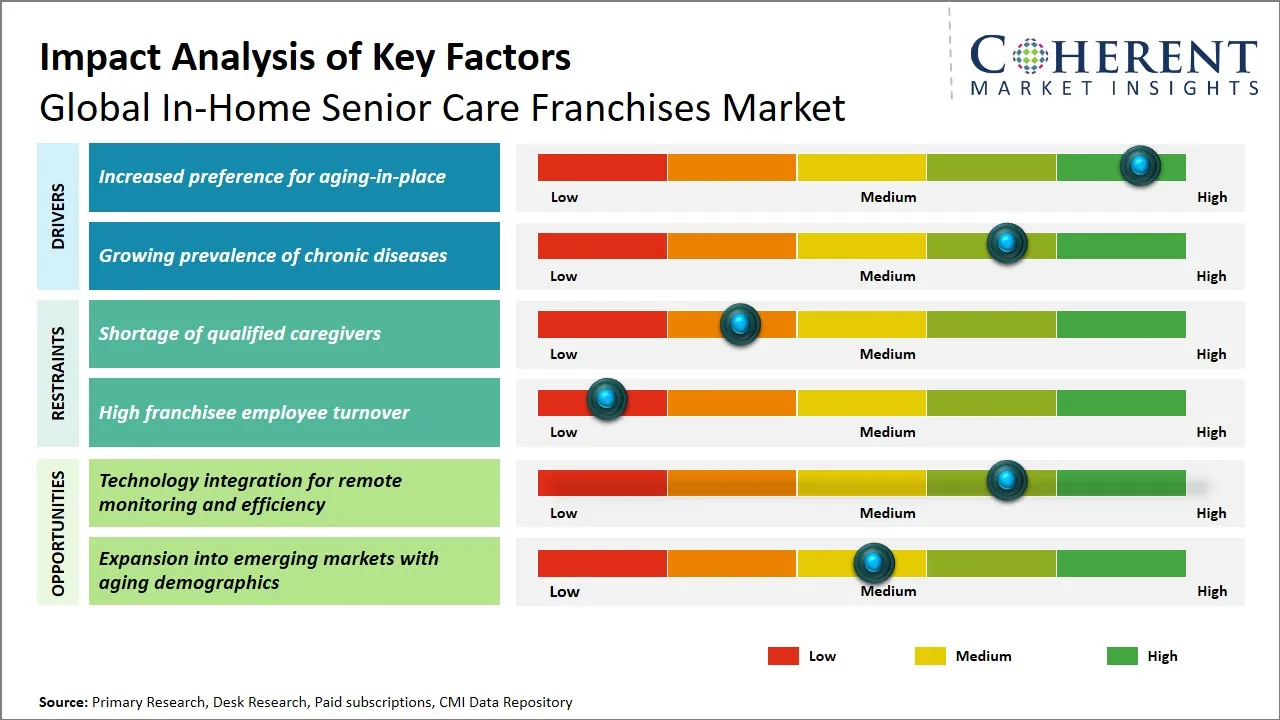
In-Home Senior Care Franchises Market Driver - Increased Preference for Aging-in-Place
The increasing tendency of the elderly to grow old in their own homes and experience the comfort and familiarity of their own homes is a major contributor to the demand of in-home senior care franchises. The high number of older adults who value their autonomy and choose to receive personalized care that will enable them to remain in touch with their communities, relatives, and routines is important. This is driven by the development of home healthcare services that provides not only medical care but also aids in performing daily chores thus providing holistic care without the responsibility to transfer to institutions. Also, emotional and psychological positive aspects of aging at home, like decreased pressure and increased mental health, also motivate older adults and their caregivers to consider professional in-home care options.
In September 2024, Canada’s Drug Agency, the national body providing trusted health technology assessments, released new guidance to strengthen aging-in-place initiatives as the country faces a growing senior population. The guidance, developed by the Health Technology Expert Review Panel, emphasizes integrated and team-based care models, culturally appropriate solutions, and standardized data strategies to help older adults remain at home with dignity. Supported by Healthcare Excellence Canada, a non-profit focused on improving health and social care quality, the initiative is expected to shape policies and practices that will benefit home care providers and in-home senior care franchises across the country.
In-Home Senior Care Franchises Market Opportunity - Technology Integration for Remote Monitoring and Efficiency
The global in-home senior care franchises market is on the edge of profound change as it is rapidly becoming more and more integrated with the progressive adoption of the best available technology solutions on the way to improved remote monitoring and business efficiency. The increasing incidence of chronic diseases and ageing population trends across the globe are fueling the need to have more advanced care management technologies that would facilitate real-time health monitoring and preemptive intervention. Wearables, IoT-based sensors, and AI-driven analytics are being integrated into franchise service models more and more to offer 24/7 monitoring of vital signs, medication compliance, fall detection, and emergency response. This technological innovation does not only advance the clinical outcome but enables caregivers to work with larger clientele populations with ease at a lower operational cost but at high-quality care standards.
In March 2022, Dozee, an India-based pioneer in contactless remote patient monitoring solutions, partnered with Priaashraya Healthcare, a trusted elder care facility, to enhance care for seniors. The collaboration enables continuous monitoring of cardiac, respiratory, and motion parameters using Dozee’s AI-powered sensors, helping detect early signs of deterioration, provide timely medical intervention, and keep families connected through a mobile app, strengthening elder and in-home senior care support across the country.
Analyst Opinion (Expert Opinion)
- The home-based elderly care franchising business is being influenced by both a combination of robust growth factors and challenging factors. Increased life expectancy and a boom of age-related conditions has generated stable demand of individualized home-based services and regulatory backing in areas like North America and Europe has strengthened home care model faith. Technology has been the backbone of such growth, and telehealth services, remote patient monitoring, and AI-based scheduling enhance the quality and efficiency of care. Simultaneously, the problem of workforce shortages, retention of caregivers and adherence to new regulations are significant obstacles. New franchise development opportunities are being realized in markets such as the Asian Pacific where fast urbanization, increased spending on healthcare, and heightened sensitivity to in-home care are creating additional expansion opportunities. The last forums, like the Global Ageing Conference (2023, Glasgow) and the World Congress on Healthy Ageing (2022, Kuala Lumpur), have been significant in terms of best practice sharing, policy development, and presenting innovations in relation to senior care and ageing-in-place strategies.
- Practical developments as well point to the evolvement of the industry. Companies, such as the Always Best Care, have collaborated with providers of HR software to enhance the payroll process and retention of caregivers, such as Viventium, and expanded their footprint in Ohio to support the localized demand, such as Caring Senior Service. Pollicy-wise, the U.S. has remained a supporter of home- and community-based services via Medicaid waiver programs, and such nations as Japan or Singapore are starting to pilot the incorporation of smart-home technology in elder care to reduce the burden on caregivers and improve safety. Combined, these illustrations point to a market not only expanding, but also actively adjusting to the economic, social and technological changes that are transforming the way elder care is being provided globally.
Speak to the analyst
Want personalized insights?
Take the findings above to one of our principal consultants, or have the report rebuilt around the segments, geographies and competitors you actually track.
Market Segmentation
- Service Type Insights (Revenue, USD Bn, 2021 - 2033)
- Skilled Nursing (wound care, injections, IV therapy)
- Rehabilitation Therapy (physical, occupational, speech)
- Chronic Disease Management (diabetes, heart failure, COPD, cancer care)
- Post-Operative and Post-Acute Recovery Programs
- Palliative and Hospice Support Services
- Medication Management and Adherence Programs
- Telehealth and Remote Patient Monitoring
- Others
- Age Group Insights (Revenue, USD Bn, 2021 - 2033)
- 66 to 75 years
- 55 to 65 years
- Above 75 years
- Care Type Insights (Revenue, USD Bn, 2021 - 2033)
- Live-in Care
- Visiting Care
- Respite Care
- Payer Insights (Revenue, USD Bn, 2021 - 2033)
- Public
- Private
- Regional Insights (Revenue, USD Bn, 2021 - 2033)
- North America
- U.S.
- Canada
- Latin America
- Brazil
- Argentina
- Mexico
- Rest of Latin America
- Europe
- Germany
- U.K.
- Spain
- France
- Italy
- Russia
- Rest of Europe
- Asia Pacific
- China
- India
- Japan
- Australia
- South Korea
- ASEAN
- Rest of Asia Pacific
- Middle East
- GCC Countries
- Israel
- Rest of Middle East
- Africa
- South Africa
- North Africa
- Central Africa
- North America
- Key Players Insights
- Home Instead Senior Care
- Comfort Keepers
- Visiting Angels
- Interim HealthCare
- BrightStar Care
- Right at Home
- Senior Helpers
- Griswold Home Care
- FirstLight Home Care
- Amada Senior Care
- Synergy HomeCare
- Nurse Next Door
- ComForCare Home Care
- Homewatch CareGivers
- Assisting Hands Home Care
Sources
Primary Research Interviews
- Industry Stakeholders List
- Franchise owners of senior care networks
- Senior care service managers
- End Users List
- Family caregivers
- Elderly clients receiving in-home care
Government and International Databases
- U.S. Census Bureau
- Centers for Medicare & Medicaid Services (CMS)
- World Health Organization (WHO)
- Organization for Economic Co-operation and Development (OECD)
- Eurostat
- National Institute on Aging (NIA)
Trade Publications
- Home Health Care News
- McKnight’s Home Care
- Franchise Times
- Caring Magazine
- Healthcare IT News
- Senior Housing News
Academic Journals
- Journal of Aging & Social Policy
- The Gerontologist
- Journal of Applied Gerontology
- International Journal of Health Services
- Journal of Aging and Health
- Health Affairs
Reputable Newspapers
- The New York Times
- The Guardian
- The Washington Post
- The Wall Street Journal
- Financial Times
- USA Today
Industry Associations
- Home Care Association of America (HCAOA)
- National Association for Home Care & Hospice (NAHC)
- International Franchise Association (IFA)
- American Geriatrics Society (AGS)
- LeadingAge
- AARP
Public Domain Resources
- U.S. National Library of Medicine
- Open Data Portal (data.gov)
- World Bank Open Data
- National Institutes of Health (NIH)
- United Nations Population Division
Proprietary Elements
- CMI Data Analytics Tool: Proprietary analytics tool to analyze real-time market trends, consumer behavior, and technology adoption in market
- Proprietary CMI Existing Repository of Information for Last 8 Years
Get access to 250+ pages report
Every segment, forecast, competitor profile and data table behind the analysis above — available for instant download.
- ESOMAR Member
- ISO 9001:2015 Certified
- D-U-N-S Registered
- GDPR & CCPA Compliant
Missing comfort of reading report in your local language? Find your preferred language:
Transform your Strategy with Exclusive Trending Reports
Frequently Asked Questions
The global in-home senior care franchises market is estimated to be valued at USD 464.53 Bn in 2026 and is expected to reach USD 796.12 Bn by 2033.
The CAGR of the global in-home senior care franchises market is projected to be 8.0% from 2026 to 2033.
Increased preference for aging-in-place and growing prevalence of chronic diseases are the major factors driving the growth of the global in-home senior care franchises market.
Shortage of qualified caregivers and high franchisee employee turnover are the major factors hampering the growth of the global in-home senior care franchises market.
In terms of service type, the skilled nursing (wound care, injections, iv therapy) segment is estimated to dominate the market revenue share in 2026.
Home Instead Senior Care, Comfort Keepers, Visiting Angels, Interim HealthCare, BrightStar Care, Right at Home, Senior Helpers, Griswold Home Care, FirstLight Home Care, Amada Senior Care, Synergy HomeCare, Nurse Next Door, ComForCare Home Care, Homewatch CareGivers, and Assisting Hands Home Care are the major players.
North America is expected to lead the global in-home senior care franchises market in 2026.