

In Situ Hybridization Market Size and Share Analysis- 2026 To 2033
The In Situ Hybridization Market size is anticipated to grow at a CAGR of 7.4%, with USD 1.76 Bn in 2026 and is expected to reach USD 2.90 Bn in 2033. The primary drivers are largely defined by the rising adoption of molecular diagnostics, increasing prevalence of cancer and genetic disorders, growing demand for precision medicine, and wider use of in situ hybridization techniques in pathology, cytogenetics, and biomarker analysis. In situ hybridization enables the detection and localization of specific nucleic acid sequences within cells or tissue samples, serves various purposes, including disease diagnosis, gene expression analysis, identification of chromosomal abnormalities, and evaluation of targeted therapies. According to estimates from the International Agency for Research on Cancer (IARC), approximately 20.6 million new cancer cases and 9.8 million cancer deaths occurred worldwide in 2024.
Key Takeaways
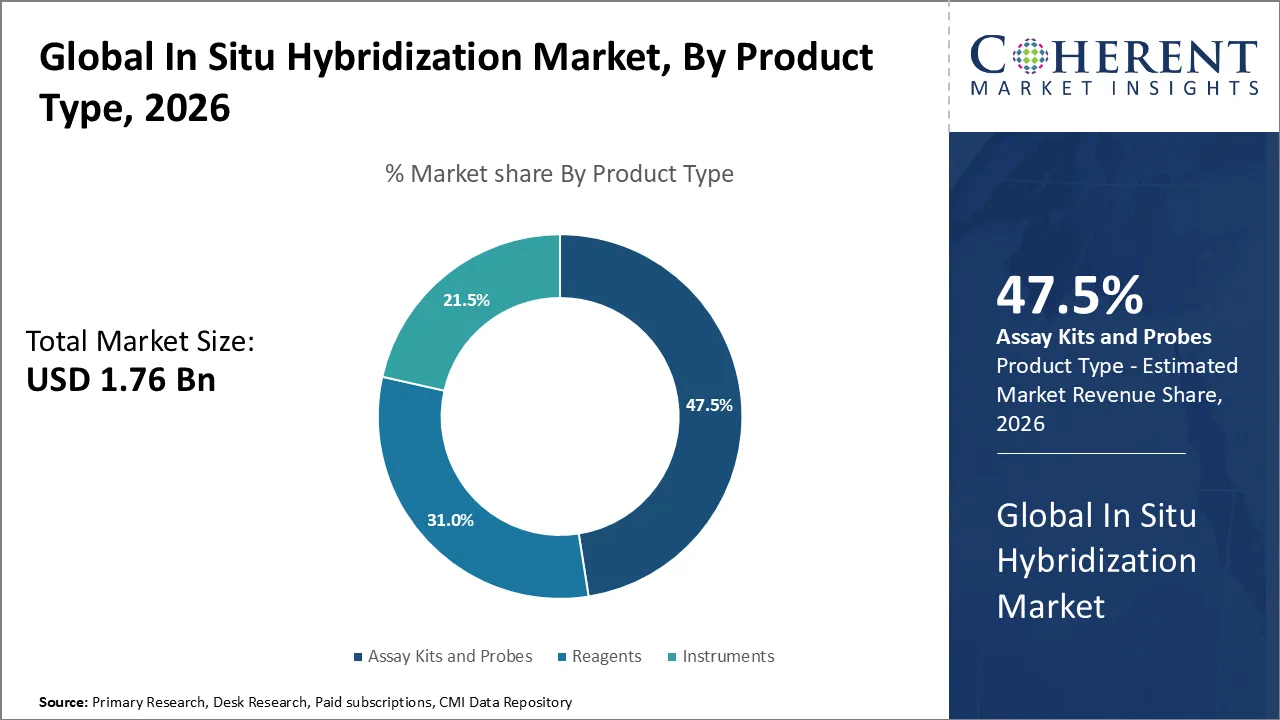
- The assay kits and probes segment is expected to dominate the market with an estimated 47.5% share in 2026. The segment’s growth is owing to the recurring requirement for disease-specific probes, increasing demand for HER2 and other gene-amplification assays, and wider use of standardized ISH kits in clinical laboratories. In May 2026, the U.S. FDA expanded the indication of the VENTANA HER2 Dual ISH DNA Probe Cocktail as a companion diagnostic for determining HER2 gene amplification status in breast cancer patients who may benefit from ENHERTU.
- The fluorescence in-situ hybridization (FISH) segment is likely to dominate the market with an estimated 64.0% share in 2026. The segment’s growth is owing to its ability to detect gene amplification, chromosomal rearrangements, copy-number variations, and multiple genetic targets with high specificity. The U.S. FDA currently lists several FISH- and ISH-based nucleic-acid tests for breast cancer, including HER2 IQFISH pharmDx, PathVysion HER-2 DNA Probe Kit, and HER2 Dual ISH DNA Probe Cocktail, supporting continued clinical use of probe-based molecular diagnostics.
- The cancer diagnosis segment is anticipated to lead the market with an estimated 45.0% share in 2026. The segment’s growth is owing to increasing use of ISH for HER2 amplification, ALK and ROS1 rearrangements, chromosomal abnormalities, and other actionable cancer biomarkers. Biomarker testing is routinely used for several cancers, including non-small cell lung cancer, breast cancer, and colorectal cancer, and can guide the selection of targeted therapies and immunotherapies.
- The diagnostic laboratories segment is expected to dominate the end-user category with an estimated 41.0% share in 2026. The segment’s growth is owing to the concentration of molecular pathology testing, increasing adoption of companion diagnostics, availability of automated tissue-testing platforms, and higher volumes of biomarker testing performed in specialized laboratories. In August 2026, the FDA authorized the VENTANA HER2 Dual ISH DNA Probe Cocktail as a companion diagnostic for HER2-positive gastroesophageal adenocarcinoma, further expanding the role of laboratory-based ISH testing in treatment selection.
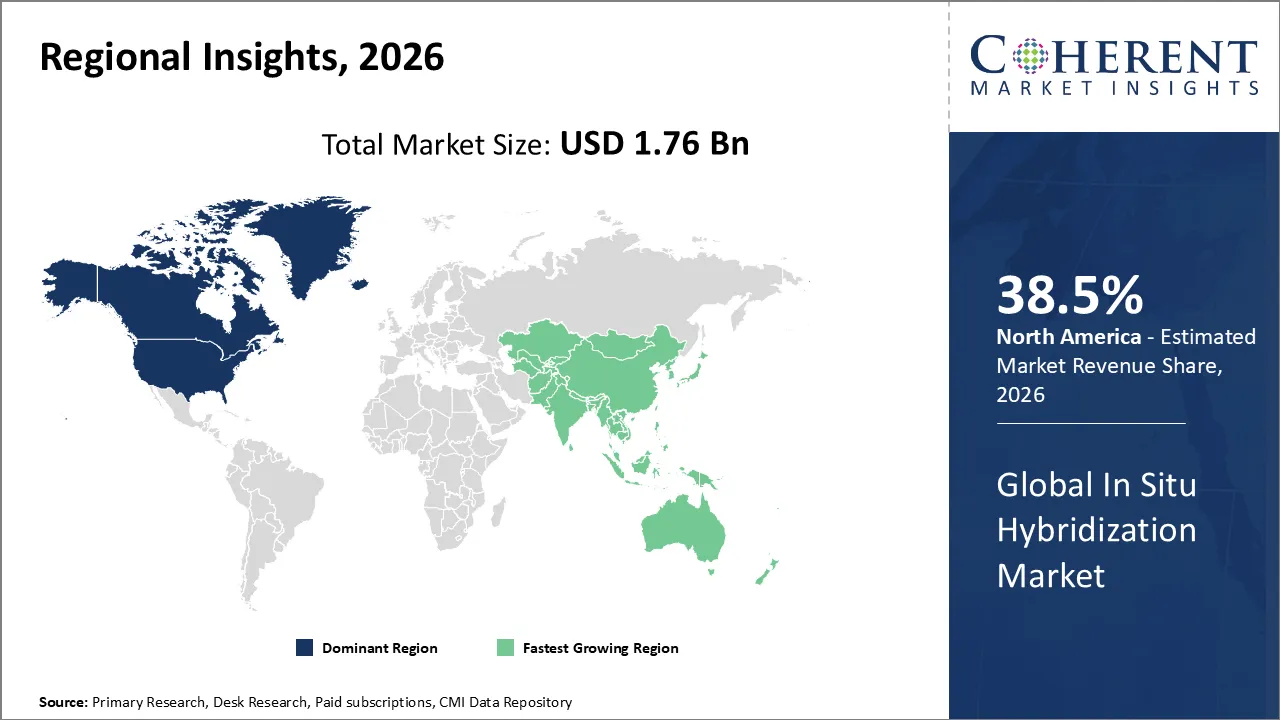
- North America is expected to acquire the prominent share of an estimated 38.5% in 2026. The region’s growth is owing to advanced molecular diagnostic infrastructure, high utilization of companion diagnostics, strong adoption of precision oncology, and the presence of major ISH assay and instrumentation companies. According to the American Cancer Society, approximately 2.1 million new cancer cases are expected to be diagnosed in the U.S. in 2026, while approximately 18.6 million Americans were living with a history of invasive cancer as of January 1, 2025, supporting continued demand for tissue-based molecular diagnostics.
Market Drivers
Rising Cancer Burden is Increasing the Demand for In Situ Hybridization Testing
In Situ Hybridization Market is witnessing strong growth owing to the increasing global burden of cancer and the growing requirement for accurate tissue-based molecular diagnosis. ISH techniques, especially fluorescence in situ hybridization (FISH) and chromogenic in situ hybridization (CISH), are commonly employed to detect gene amplification, chromosomal rearrangements, and other molecular abnormalities linked to various cancers.
According to the American Cancer Society projects that around 2.1 million new cancer cases will be diagnosed in the U.S. in 2026, which breaks down to nearly 5,800 new diagnoses each day. This rising cancer burden is increasing the need for biomarker testing in breast cancer, lung cancer, hematologic malignancies, and other tumor types.
Growing Application of Molecular Cytogenetics in Genetic Disease Diagnosis
The growing burden of genetic and chromosomal disorders is also supporting adoption of in situ hybridization technologies. FISH allows laboratories to detect chromosomal deletions, duplications, translocations, and gene-level abnormalities directly within cells, making it an important tool in clinical cytogenetics and genetic disease diagnosis.
According to the National Human Genome Research Institute (NHGRI), around 350 million people globally are living with rare disorders, and approximately 80% of rare disorders are genetic in origin.
Current Events and Their Impact on the In Situ Hybridization Market
Current Event | Description and its Impact |
U.S. FDA Expands ISH-Based Companion Diagnostic Approvals for HER2-Positive Cancers (2026) |
|
U.S. FDA Reverses Laboratory-Developed Test Final Rule Following Federal Court Decision (2025) |
|
- Current Industry Events of 2026
- Market Size Estimation
- Regional Breakdown
- Competitive Landscape
- Customer Intelligence
- Segmental Analysis
- Pricing Analysis
- Key Market Drivers, Challenges & Future Trends
- Customized Insights Section
Segmental Insights
Why are Assay Kits and Probes Acquiring the Largest Share?
On the basis of product type, the assay kits and probes segment is projected to account for the largest In Situ Hybridization Market share of 47.5% in 2026. The segment’s growth is owing to the recurring requirement for target-specific probes, increasing use of companion diagnostic assays, and growing demand for standardized kits for identifying gene amplification and chromosomal abnormalities in clinical tissue samples.
In May 2026, the U.S. FDA approved the VENTANA HER2 Dual ISH DNA Probe Cocktail as a companion diagnostic for determining HER2 gene amplification status in patients with HER2-positive early-stage breast cancer who may benefit from ENHERTU. The FDA specifically recognizes patients as HER2-positive based on IHC 3+ or ISH-positive status, demonstrating the direct role of ISH probes in treatment selection.
Why is Fluorescence In Situ Hybridization (FISH) Acquiring the Largest Share?
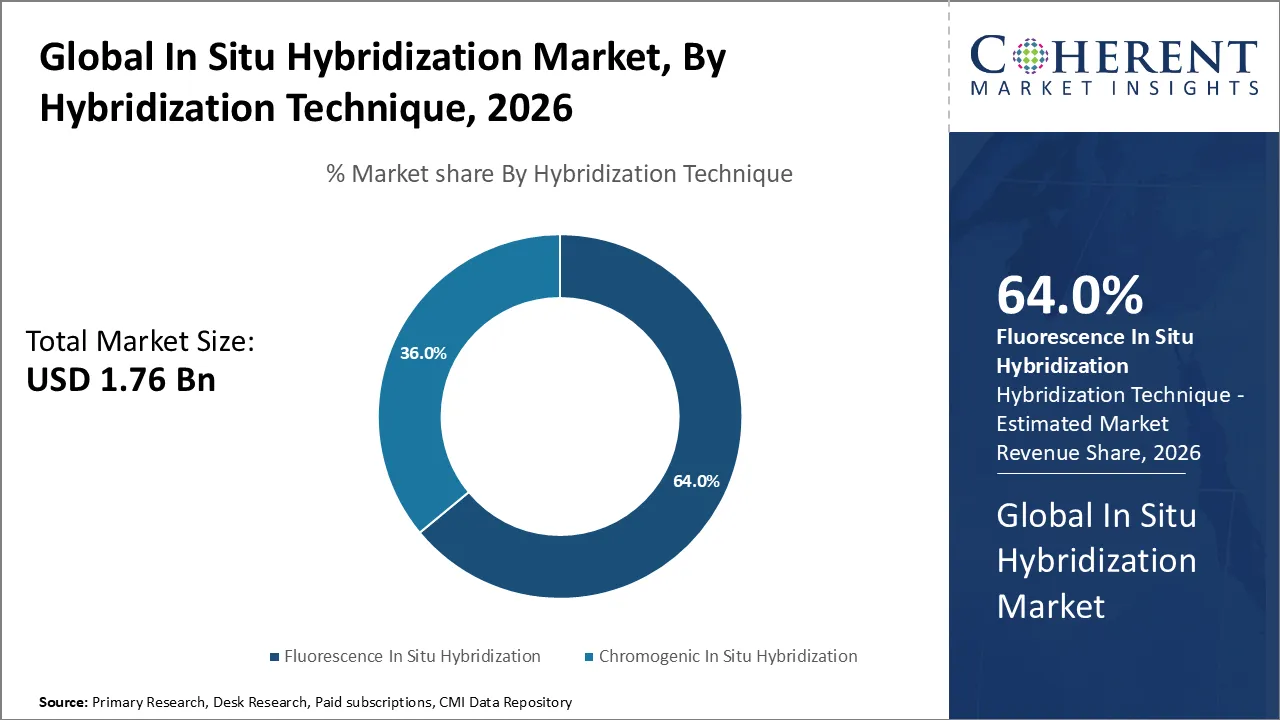
On the basis of hybridization technique, the fluorescence in situ hybridization (FISH) segment is expected to dominate the market with an estimated 64.0% share in 2026. The segment’s growth is owing to its high sensitivity for detecting chromosomal translocations, deletions, amplifications, and copy-number alterations, particularly in leukemia, lymphoma, breast cancer, and other genetically defined diseases.
The need for cytogenetic testing is reinforced by the growing hematologic cancer burden. The American Cancer Society estimates 67,790 new leukemia cases in the U.S. in 2026, including approximately 22,720 acute myeloid leukemia cases. FISH remains relevant for identifying disease-defining rearrangements and supporting classification and targeted-treatment decisions.
In September 2025, the U.S. FDA granted De Novo authorization to the KMT2A Breakapart FISH Probe Kit PDx for detecting KMT2A rearrangements in acute leukemia and supporting eligibility assessment for revumenib.[SC3] This represents a recent expansion of FISH from conventional cytogenetics into therapy-linked precision diagnostics.
Why is Cancer Diagnosis Acquiring the Largest Share?
On the basis of application, the cancer diagnosis segment is anticipated to lead the In Situ Hybridization Market with an estimated 45.0% share in 2026. The segment’s growth is owing to the increasing use of tissue-based biomarker testing for tumor classification, prognosis, targeted-therapy selection, and confirmation of gene amplification and rearrangements.
According to the American Cancer Society, approximately 321,910 new cases of invasive female breast cancer and another 60,730 cases of ductal carcinoma in situ are expected to be diagnosed in the U.S. in 2026. Breast cancer represents a major application area for ISH because assessment of HER2 gene amplification can directly influence treatment selection.
Why are Diagnostic Laboratories Acquiring the Largest Share?
On the basis of end user, the diagnostic laboratories segment is expected to account for the largest In Situ Hybridization Market share of 41.0% in 2026. The segment’s growth is owing to the concentration of cytogenetic and molecular pathology expertise, increasing volumes of cancer biomarker testing, availability of automated ISH workflows, and the requirement for specialized interpretation of fluorescence and chromogenic signals.
According to the Centers for Medicare & Medicaid Services, the U.S. had approximately 302,300 active or certified clinical laboratory providers in Q1 2026 under its Provider of Services clinical laboratory dataset. The extensive laboratory infrastructure supports adoption of specialized molecular diagnostic technologies, including FISH and other ISH-based assays.
In Situ Hybridization Market Trends
- The growing use of precision oncology and biomarker-guided therapy is enhancing the importance of in situ hybridization for finding actionable gene alterations, amplifications, and chromosomal rearrangements. According to the National Cancer Institute, biomarker testing is regularly employed to inform treatment choices in cancers like non-small cell lung cancer, breast cancer, and colorectal cancer, which supports the broader adoption of tissue-based molecular testing methods.
- The increasing clinical use of FISH-based companion and complementary diagnostics is broadening the application of ISH beyond traditional cytogenetics. By February 2026, the U.S. Abbott’s Vysis ALK Break Apart FISH Probe Kit has received a new supplement approval from the FDA, and the FDA database shows that there are 24 PMA records linked to this ALK FISH platform through 2026, which suggests that FISH-based testing will continue to be used in regulatory and clinical settings.
- The growing need to characterize hematologic malignancies is driving the use of specialized FISH probe kits. In February 2026, the FDA approved a supplement for the Vysis CLL FISH Probe Kit, which identifies the deletion of chromosome 17p involving TP53, a crucial cytogenetic abnormality in chronic lymphocytic leukemia.
Regional Insights
North America Dominates Owing to Advanced Molecular Diagnostics and Precision Oncology Infrastructure
North America is expected to account for a prominent 38.5% share of the In Situ Hybridization Market in 2026. The region’s dominance is owing to the strong molecular pathology infrastructure, high adoption of companion diagnostics, widespread availability of specialized cytogenetic laboratories, and continued integration of ISH into precision-oncology treatment selection.
As of September 2026, the U.S. Centers for Medicare & Medicaid Services reported 6,966 CAP-accredited laboratories, 5,639 COLA-accredited laboratories, and 2,336 Joint Commission-accredited laboratories under CLIA accreditation programs. This extensive laboratory infrastructure supports the adoption of specialized molecular pathology and cytogenetic tests such as FISH and other ISH assays.
In September 2026, the Government of Canada announced USD 80 million over four years for the Terry Fox Research Institute’s precision-oncology program. Participating institutions will match the investment, bringing total funding to USD 160 million, while the program is expected to add 11,000 new cancer cases to its clinical genomic dataset.
Asia Pacific In Situ Hybridization Market Trends
Asia Pacific is expected to be the fastest-growing region in the In Situ Hybridization Market over the forecast period. The region’s growth is owing to the rapidly expanding cancer burden, improving molecular diagnostic infrastructure, rising adoption of precision oncology, and increasing investment in genomic and pathology testing across China, India, Japan, South Korea, and other Asian markets.
According to the International Agency for Research on Cancer (IARC) Global Cancer Observatory, Cancer Tomorrow, the estimated number of new cancer cases worldwide is projected to increase from approximately 20.6 million in 2024 to 23.75 million by 2030, representing an increase of 15.1%. Asia also carries a substantial share of the global cancer burden, supporting growing demand for tissue-based biomarker testing, including FISH and CISH, across the region.
Strong Clinical Laboratory Infrastructure and Federal Cancer Research Funding are Supporting the In Situ Hybridization Market in the United States
The U.S. In Situ Hybridization Market is experiencing consistent growth thanks to its vast clinical laboratory network, robust molecular pathology infrastructure, and ongoing federal support for cancer research.
The precision oncology ecosystem is also being bolstered by federal research funding. The National Cancer Institute's funding for FY2026 is USD 7.35 billion, which marks an increase of USD 128 million from FY2025. This ongoing investment backs cancer genomics, biomarker discovery, molecular pathology, and translational research, which in turn generates downstream demand for ISH probes, assay kits, and laboratory testing platforms.
In addition, CMS reported that the 2026 Clinical Laboratory Fee Schedule contained 2,243 records by Q4 2026, compared with 2,162 records in Q1 2026. The expanding diagnostic test reimbursement framework supports a broad clinical testing environment in which specialized molecular assays can be adopted and reimbursed.
China In Situ Hybridization Market Trends
China is expected to witness strong growth in the In Situ Hybridization Market over the forecast period. The growth is owing to the country’s large cancer-testing population, rapidly expanding in-vitro diagnostics industry, increasing adoption of molecular diagnostics, and government efforts to standardize clinical laboratory testing.
According to the IARC Global Cancer Observatory, GLOBOCAN 2024 data released in 2026, China had approximately 3.38 million one-year prevalent cancer cases and around 11.8 million five-year prevalent cancer cases across all cancers. This substantial patient pool creates significant demand for tissue-based molecular characterization and biomarker testing, including FISH and CISH.
In August 2026, China’s National Healthcare Security Administration stated that the country's in-vitro diagnostic reagent market reached approximately RMB 130 billion in 2025. It also introduced a national laboratory-service pricing framework covering 662 main items, 114 additional-charge items, and 7 extended items, including molecular diagnostics.
Who are the Major Companies in In Situ Hybridization Industry
Some of the major key players in In Situ Hybridization Market are Abbott Laboratories, Inc., Agilent Technologies, Inc., Thermo Fisher Scientific, Inc., F. Hoffmann-La Roche AG, Merck KGaA, PerkinElmer, Inc., Oxford Gene Technology, Leica Biosystems Nussloch GmbH, Exiqon A/S, BioGenex Laboratories, Inc., Advanced Cell Diagnostics, Inc., and Bio SB Inc.
Key News
- In August 2026, Oxford Gene Technology launched two IVDR-certified CytoCell prenatal FISH probe kits, beginning the full transition of its CytoCell portfolio to EU IVDR compliance. The probes target chromosomes X, Y, 13, 18, and 21 for rapid prenatal aneuploidy testing.
- In March 2026, Leica Biosystems and Bio-Techne launched RNAscope In Situ Hybridization automation on the BOND-PRIME staining platform in the U.S. The workflow enables automated spatial RNA detection in tissue samples and is aimed at higher-throughput pathology laboratories.
Market Report Scope
In Situ Hybridization Market Report Coverage
Report Coverage | Details | ||
Base Year: | 2025 | Market Size in 2026: | USD 1.76 Bn |
Historical Data for: | 2020 to 2024 | Forecast Period: | 2026 to 2033 |
CAGR: | 7.4% | 2033 Value Projection: | USD 2.90 Bn |
Geographies covered: |
| ||
Segments covered: |
| ||
Companies covered: | Abbott Laboratories, Inc., Agilent Technologies, Inc., Thermo Fisher Scientific, Inc., F. Hoffmann-La Roche AG, Merck KGaA, PerkinElmer, Inc., Oxford Gene Technology, Leica Biosystems Nussloch GmbH, Exiqon A/S, BioGenex Laboratories, Inc., Advanced Cell Diagnostics, Inc., and Bio SB Inc. | ||
Growth Drivers: |
| ||
Restraints & Challenges: |
| ||
Analyst Opinion
- The In Situ Hybridization Market is increasingly benefiting from the shift toward spatial transcriptomics and tissue-level biomarker analysis. In May 2025, an NCI-funded spatial transcriptomics study applied the Spotiphy platform to three breast tissue samples and generated inferred single-cell RNA data for approximately 23,200 cells, enabling detailed mapping of gene-expression patterns within tumor tissue.
- The market is advancing toward larger, more scalable RNA probe portfolios and multiplexed tissue analysis. As of February 2025, Bio-Techne has expanded its RNAscope in situ hybridization portfolio to include more than 70,000 unique probes spanning over 450 species. The company noted that RNAscope has been referenced in over 12,000 clinical and translational research publications, which shows that RNA ISH is widely used in biomedical research and confirms the ongoing need for advanced probe-based assays.
- Public funding is also strengthening the next generation of spatial genomics and ISH-related technologies. In May 2025, the U.S. National Institutes of Health awarded approximately USD 1.24 million in FY2025 funding to Spatial Genomics, Inc. for a project running through 2027. Such investment supports development of spatially resolved genomics platforms and is expected to accelerate integration of ISH with high-throughput imaging, transcriptomics, and single-cell analysis.
Speak to the analyst
Want personalized insights?
Take the findings above to one of our principal consultants, or have the report rebuilt around the segments, geographies and competitors you actually track.
Market Segmentation
- By Product Type (Revenue, USD Bn, 2021-2033)
- Assay Kits and Probes
- Reagents
- Instruments
- By Hybridization Technique (Revenue, USD Bn, 2021-2033)
- Fluorescence In Situ Hybridization
- Chromogenic In Situ Hybridization
- By Application (Revenue, USD Bn, 2021-2033)
- Cancer Diagnosis
- Cytogenetics
- Developmental Biology
- Infectious Diseases
- Immunology
- Others
- By End User (Revenue, USD Bn, 2021-2033)
- Research and Academic Institutes
- Diagnostic Laboratories
- Pharmaceutical and Biotech Companies
- Others
- By Region (Revenue, USD Bn, 2021-2033)
- North America
- U.S.
- Canada
- Latin America
- Brazil
- Mexico
- Argentina
- Rest of Latin America
- Europe
- Germany
- U.K.
- France
- Italy
- Spain
- Russia
- Rest of Europe
- Asia Pacific
- China
- India
- Japan
- Australia
- South Korea
- ASEAN
- Rest of Asia Pacific
- Middle East
- GCC
- Israel
- Rest of Middle East
- Africa
- South Africa
- Central Africa
- North Africa
- North America
Sources
Primary Research Interviews
- Molecular pathologists
- Cytogeneticists and clinical geneticists
- Oncology diagnostic specialists
- FISH and CISH assay developers
- Molecular diagnostic laboratory directors
- Pathologists from hospitals and reference laboratories
- R&D heads from diagnostic and life-science companies
- Key opinion leaders (KOLs) in cancer diagnostics and molecular pathology
Databases
- National Cancer Institute (NCI)
- National Institutes of Health (NIH)
- U.S. Food and Drug Administration (FDA)
- Centers for Medicare & Medicaid Services (CMS)
- International Agency for Research on Cancer (IARC) – Global Cancer Observatory
- National Human Genome Research Institute (NHGRI)
- European Commission – Medical Devices and IVDR Database
Magazines
- GenomeWeb
- The Pathologist
- Clinical Lab Products
- Medical Laboratory Observer
- Genetic Engineering & Biotechnology News
- BioWorld
Journals
- Journal of Molecular Diagnostics
- Modern Pathology
- Laboratory Investigation
- Cancer Cytopathology
- Human Pathology
- Journal of Histochemistry & Cytochemistry
- Diagnostic Pathology
Newspapers
- The New York Times
- The Guardian
- The Wall Street Journal
- Financial Times
- The Economic Times
Associations
- Association for Molecular Pathology (AMP)
- College of American Pathologists (CAP)
- American Society for Clinical Pathology (ASCP)
- American College of Medical Genetics and Genomics (ACMG)
- European Society of Pathology (ESP)
- International Society for Biological and Environmental Repositories (ISBER)
- European Society of Human Genetics (ESHG)
Public Domain Sources
- Company Annual Reports and Investor Presentations
- FDA Companion Diagnostic and PMA Databases
- ClinicalTrials.gov
- IARC Global Cancer Observatory Publications
- NIH and NCI Research Publications
- University and Academic Medical Center Research Publication
- Patent Databases such as WIPO, USPTO, and Google Patents
- Regulatory Publications Related to IVDs, Companion Diagnostics, and Molecular Testing
Proprietary Elements
- CMI Data Analytics Tool
- Proprietary CMI Existing Repository of Information for the Last 10 Years
Get access to 250+ pages report
Every segment, forecast, competitor profile and data table behind the analysis above — available for instant download.
- ESOMAR Member
- ISO 9001:2015 Certified
- D-U-N-S Registered
- GDPR & CCPA Compliant
Missing comfort of reading report in your local language? Find your preferred language:
Transform your Strategy with Exclusive Trending Reports
Frequently Asked Questions
The In Situ Hybridization Market is expected to reach USD 2.90 Bn in 2033, up from USD 1.76 Bn in 2026.
Major players operating in the global In Situ Hybridization Market include Abbott Laboratories, Inc., Agilent Technologies, Inc., Thermo Fisher Scientific, Inc., F. Hoffmann-La Roche AG, Merck KGaA, PerkinElmer, Inc., Oxford Gene Technology, Leica Biosystems Nussloch GmbH, Exiqon A/S, BioGenex Laboratories, Inc., Advanced Cell Diagnostics, Inc., and Bio SB Inc.
The high cost of ISH instruments and automated platforms, complex sample preparation, requirement for skilled professionals, and challenges related to assay standardization are some of the key factors hampering market growth.
The increasing adoption of in situ hybridization in cancer diagnosis, rising use of FISH and CISH in molecular pathology, growing demand for precision medicine, and increasing application of cytogenetic testing are boosting market growth.
The In Situ Hybridization Market is anticipated to grow at a CAGR of 7.4% between 2026 and 2033.
Among regions, North America is expected to dominate the global In Situ Hybridization Market, accounting for an estimated 38.5% market share in 2026. The region benefits from advanced molecular diagnostic infrastructure, strong adoption of companion diagnostics, and extensive cytogenetic laboratory capacity.
In situ hybridization is a molecular diagnostic technique used to detect and localize specific DNA or RNA sequences directly within cells or tissue samples. It supports applications such as disease diagnosis, gene-expression analysis, chromosomal abnormality detection, and targeted therapy assessment.