

Infectious Disease In Vitro Diagnostics Market Size and Share Analysis- 2026 To 2033
The global infectious disease in vitro diagnostics market is predicted to cross USD 31.0 Bn by 2033, following a CAGR of 3.1% from USD 25.0 Bn in 2026. The persistent expansion is led by the increasing global burden of infectious diseases, which requires rapid pathogen identification and routine sexually transmitted infections (STIs) screening for early treatment and outbreak prevention, specifically in underserved regions. Testifying to such a massive patient pool, during 2024, the National Library of Medicine (NLM) identified more than 300 pandemic- and epidemic-prone disease outbreaks across the globe.
It also found that sub-Saharan Africa, the subregion of Latin America, and the Caribbean, despite containing only 23.3% of the world's population, accounted for almost 60% of disease outbreaks in the same year. Continuous modernization of clinical microbiology laboratories and the growing integration of molecular testing into infectious disease management is further prompting innovation in this category of clinical diagnostics. This wave of product development is shaped by the presence of established medical device manufacturers, who heavily investing to expand their portfolio with the integration of automated immunoassay systems, multiplex PCR panels, and near-patient diagnostic platforms.
Key Takeaways of the Global Infectious Disease In Vitro Diagnostics Market
- By Product, reagents and kits are estimated to account for 67.8% of the global infectious disease in vitro diagnostics market in 2026. Recurring purchases of pathogen-specific assays, controls, and consumables underpin this position. Evidencing such large-scale procurement of these single-use pathogen-specific products, in 2024, UNICEF reported delivering 16.7 million, 4.1 million, and 1.2 million rapid diagnostic tests for malaria, HIV, and cholera to 18, 21, and 14 high-risk countries across the globe, respectively.
- By Technology, immunoassays are estimated to capture 35.5% of market revenue in 2026, owing to their established role in antigen, antibody, and serological screening. A 2025 NLM study evaluating automated HIV antigen/antibody immunoassays in 21,042 patient serum samples reported 100% and 99.65% sensitivity and 99.85% and 99.81% specificity for the LiCA and Architect assays, respectively.
- By Application, respiratory infections are projected to represent 33.5% of the infectious disease IVD market in 2026. The leadership is attributed to the massive patient population, with seasonal influenza alone registering almost 1 Bn new, 3-5 million severe illness, and 650 thousand death cases every year, according to a 2026 NLM article.
- By Test Location, central and reference laboratories are expected to account for 46.5% of global revenue in 2026, in support from their high-throughput testing capabilities and broad diagnostic menus. Exemplifying the same, in 2025, Labcorp, a global leader of innovative and comprehensive laboratory services, reported performing more than 750 million diagnostic tests around the world, with clients spread across 100 countries.
- North America is estimated to lead with 39.2% of the market in 2026, following an incremental epidemiology, accelerated regulatory clearance, and clinical research consortium. Demonstrating the region’s excellence in coordinated test evaluation and regulatory support, a Rapid Acceleration of Diagnostics (RADx) Independent Test Assessment Program (ITAP), conducted between February 2023 and February 2025, assessed technologies from 14 test manufacturers. The ITAP assessment then contributed to 7 FDA emergency use authorizations, 1 subsequent De Novo authorization, and 2 subsequent 510(k) clearances for influenza and COVID-19 diagnostic products.
- Asia Pacific is anticipated to record the fastest growth during the forecast period on account of the enlarging patient pool, government-backed initiatives, and growing network of private diagnostic capabilities. Displaying such scale of the region’s potential consumer base, UNAIDS identified 6.2-7.8 million people living with HIV across Asia and the Pacific in 2024.
Segmental Insights
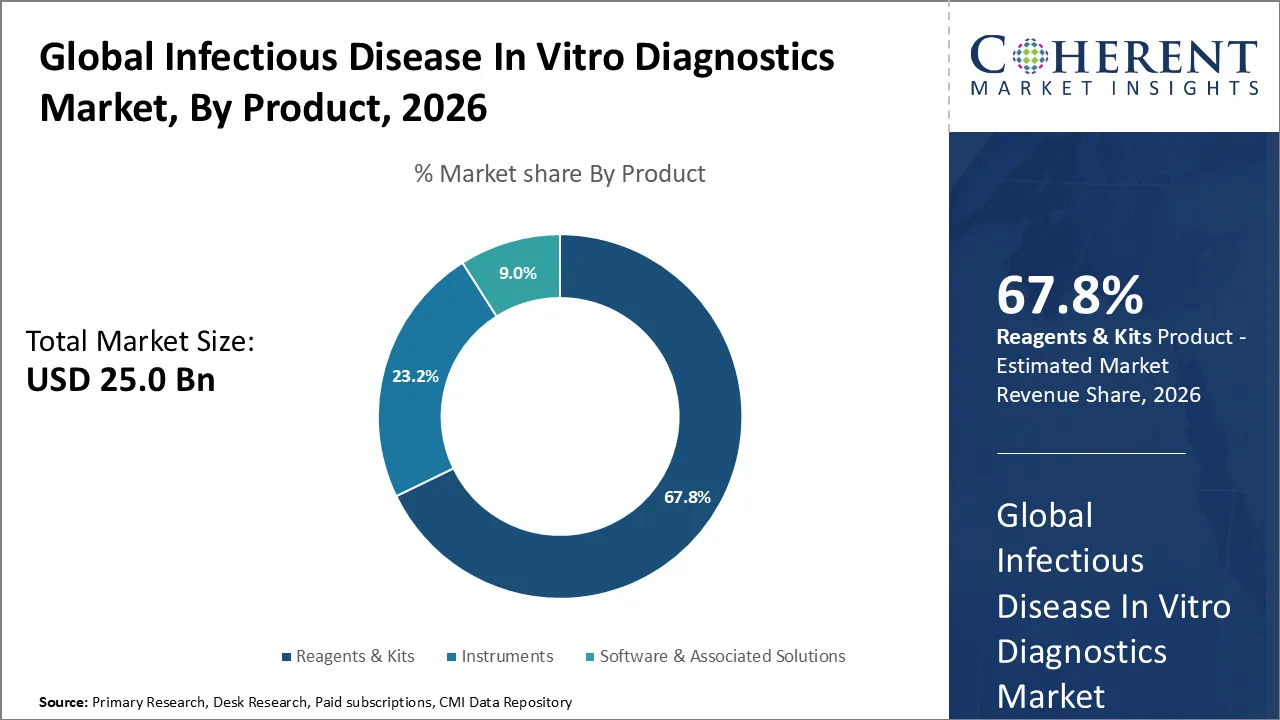
Why Do Reagents and Kits Dominate the Global Infectious Disease In Vitro Diagnostics Market?
The reagents and kits segment is expected to account for 67.8% of the global infectious disease in vitro diagnostics market in 2026. Its commercial strength comes from the consumable-intensive nature of testing, as laboratories must continually replenish assay cartridges, extraction reagents, antigen-antibody test components, culture media, calibrators and quality-control materials. In this regard, in 2025, 90% of QIAGEN’s total net sales value, USD 2.09 billion, was induced by consumables and related revenues, compared with 10% from instruments, as per the company’s annual report.
Unlike instruments, which generally involve periodic capital expenditure, diagnostic kits generate repeat revenue from the increasing testing volumes, as multiplex tests also allows laboratories to investigate multiple suspected pathogens using a consolidated testing workflow. This creates opportunities for manufacturers to expand assay menus while maintaining revenue from installed systems operating across the molecular diagnostics industry.
- Current Industry Events of 2026
- Market Size Estimation
- Regional Breakdown
- Competitive Landscape
- Customer Intelligence
- Segmental Analysis
- Pricing Analysis
- Key Market Drivers, Challenges & Future Trends
- Customized Insights Section
Why Are Immunoassays Maintaining Their Leading Position in the Infectious Disease IVD Market?
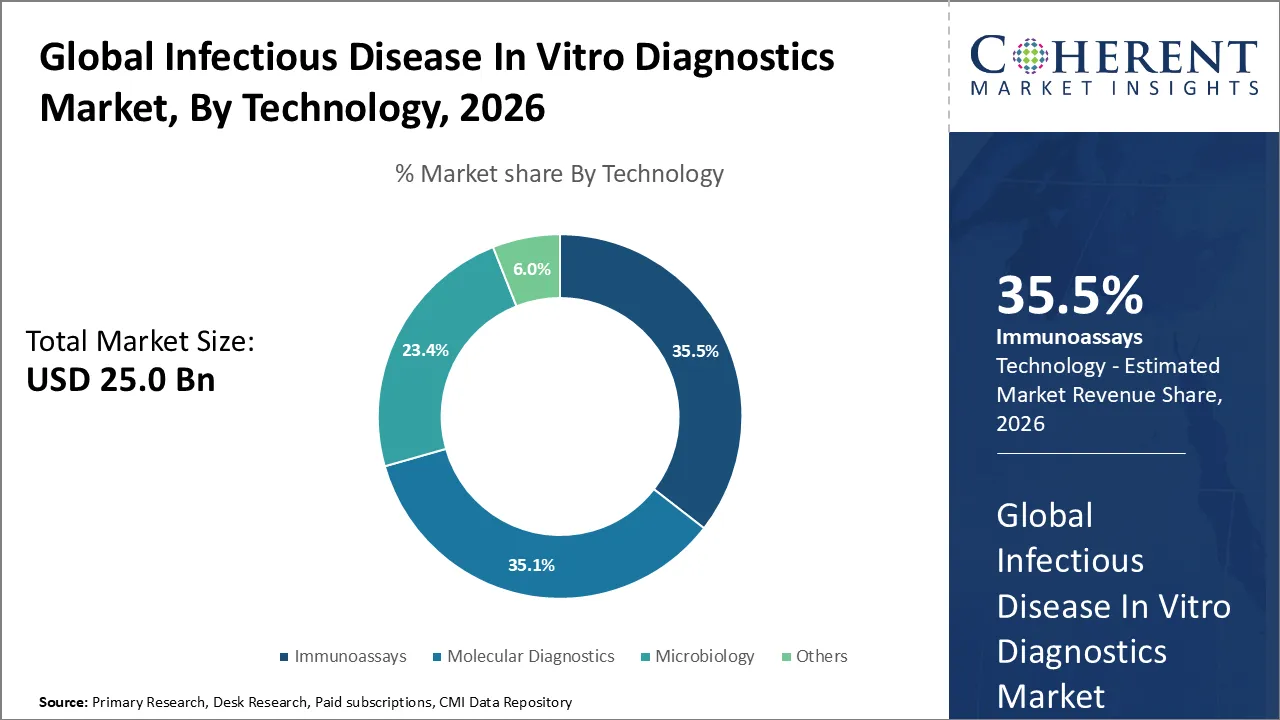
The immunoassays are predicted to hold a 35.5% share in 2026, owing to their widespread use in HIV, hepatitis, syphilis and other infectious disease screening, where the detection of pathogen antigens or host antibodies provides clinically valuable information. The widening availability of both laboratory-scale and portable formats of this category further supports greater adoption across healthcare environments with different infrastructure and staffing requirements.
Influenced by this continuous diversification of clinical needs, automated immunoassay analyzers are extensively gaining traction in high-volume facilities, while rapid immunochromatographic tests are becoming indispensable for smaller healthcare facilities and outreach services by providing accessible screening options. Capitalizing on these opportunities, in March 2025, bioLytical Laboratories launched its INSTI Multiplex HIV-1/2 Syphilis Antibody Test in Australia to help healthcare professionals diagnose HIV and syphilis efficiently and connect patients to care faster.
What Makes Respiratory Infections the Largest Application in the Global Infectious Disease In Vitro Diagnostics Market?
The sub-segment of respiratory infections is poised to acquire 33.5% share in global revenue generation from the market in 2026. Testing demand from this field of application is primarily generated by overlapping clinical symptoms among influenza, respiratory syncytial virus, SARS-CoV-2, pertussis, and other respiratory pathogens, where laboratory confirmation becomes highly important.
Furthermore, the development of combined respiratory panels is changing diagnostic purchasing behavior these use cases. Exemplifying such a product innovation, in September 2024, Roche launched the cobas Respiratory flex test using its TAGS technology, enabling simultaneous detection and differentiation of 12 respiratory viruses through an automated molecular laboratory workflow. This surge specifically comes from hospitals and laboratories seeking access to multiplex platforms for identifying several organisms from a single specimen, instead of relying exclusively on separate assays for individual pathogens.
Current Events and Their Impact on the Infectious Disease In Vitro Diagnostics Market
Current Event | Description and its Impact |
Global Fund laboratory systems strengthening (2024–2026) |
|
U.S. FDA guidance on emerging-pathogen IVD validation (November 2026) |
|
Infectious Disease In Vitro Diagnostics Market Dynamics
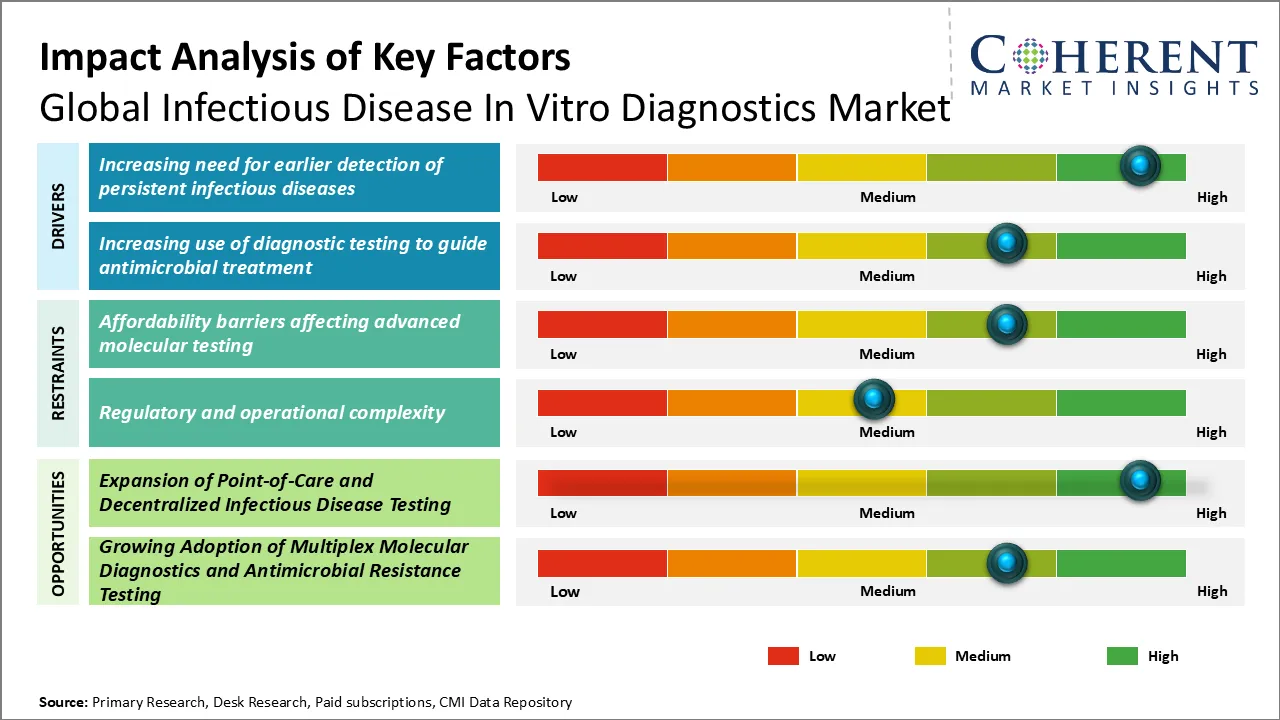
Market Drivers
- Increasing need for earlier detection of persistent infectious diseases: Demand for infectious disease IVD products is supported by the growing need to diagnose infections before complications develop, while identifying individuals who may otherwise remain undiagnosed. This is particularly relevant to HIV, viral hepatitis, and tuberculosis infection cases where laboratory confirmation is considered necessary in initiating early treatment and monitoring outcomes. Thus, the expanding patient pool of these conditions promotes greater sales value and revenue generation from this sector.
- Testifying to this amplifying consumer base for associated IVD solutions, UNAIDS recorded 1.2 million new cases of HIV infections worldwide in 2025, which is expected to increase to 3 million by 2030 in absence of urgent actions. Simultaneously, death toll due to this illness surpassed 570 thousand in 2025, reinforcing the need for accessible screening and confirmatory testing.
- Rising use of diagnostic testing in guiding antimicrobial treatment: The growing importance of antimicrobial stewardship is encouraging healthcare systems to adopt tests capable of identifying causative organisms and relevant resistance markers. In this situation, rapid pathogen identification can help clinicians select more appropriate therapy, with diagnostic results interpreted alongside clinical findings. As a result, the increasing incidence of antimicrobial resistance (AMR) is directly causing widespread adoption in the infectious disease in vitro diagnostics market.
- Evidencing this field of utility, the 2025 World Health Organization (WHO) report on global antibiotic resistance prevalence and trends marked more than 23 million bacteriologically confirmed cases of bloodstream infections, urinary tract infections (UTIs), gastrointestinal infections (GIs), and urogenital gonorrhoea.
Infectious Disease In Vitro Diagnostics Market Trends
- Growing adoption of flexible multiplex testing platforms: Manufacturers are developing syndromic panels that combine multiple pathogen targets while allowing laboratories to choose testing menus aligned with clinical needs. In August 2025, Roche received FDA clearance for the cobas Respiratory 4-flex assay. Using it with the company’s proprietory cobas 5800, 6800 and 8800 systems offer flexible molecular testing for SARS-CoV-2, influenza A, influenza B and RSV.
- Expansion of rapid molecular testing into community and outpatient settings: Near-patient molecular systems are bridging the gap between laboratory-based PCR and conventional rapid antigen testing, supporting earlier decisions in urgent-care and primary-care environments. In January 2025, Roche received FDA 510(k) clearance with a Clinical Laboratory Improvement Amendments of 1988 (CLIA) waiver for its cobas liat molecular assay panels, addressing STIs at the point of care.
- Increasing integration of pathogen detection and AMR identification: Diagnostic manufacturers are adding resistance-related targets to infectious disease panels, improving the clinical usefulness of molecular testing. In August 2026, QIAGEN received U.S. FDA clearance for its QIAstat-Dx BCID GPF Plus AMR Panel for bloodstream infections, with the QIAstat-Dx platform reporting availability in more than 100 countries and over 5,200 cumulative placements till the end of 2025.
Regional Insights
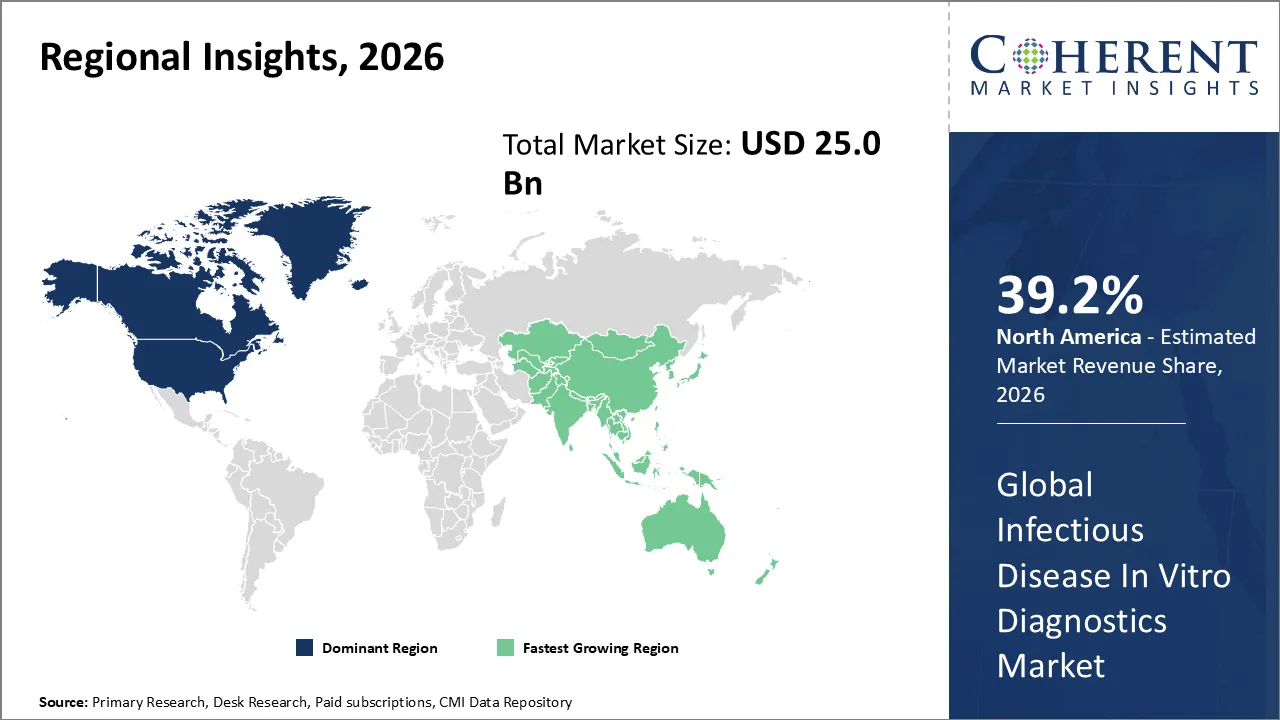
North America is projected to account for 39.2% of global market revenue in 2026
The region’s leadership in the global infectious disease in vitro diagnostics market is consolidated by its established diagnostic laboratory networks, extensive clinical testing menus, and broad commercial access to automated molecular and immunodiagnostic technologies. Such favorable advanced product availability can be testified by the launch of QIAGEN’s new version of the QIAstat-Dx automated syndromic testing system, QIAstat-Dx Rise, in the U.S. in September 2025, following its recent FDA-authorization.
Regional demand is also influenced by the growing need to identify healthcare-associated pathogens and support appropriate infection-control responses. Evidencing this surge, 1 in 38 patients and 1 in 43 nursing home residents across the U.S. were getting afflicted by at least 1 healthcare-associated infection (HAI) till 2024, according to the national and state-level HAI data published by the Centers for Disease Control and Prevention (CDC).
Asia Pacific is Emerging as the Fastest-Growing Infectious Disease IVD Marketplace in the World
Asia Pacific offers lucrative growth opportunities on account of the increasing availability of molecular diagnostics, improvement in healthcare access, and wider demand for affordable testing in densely populated markets. Specifically, developing economies, such as China, India, Japan and South Korea, are heavily investing to expand their diagnostic capabilities through infrastructural modernization. This can be testified by South Korea’s Phase 2 Government-wide Infectious Disease R&D Program, which allocated a total of KRW 42 billion for the timeline during 2023-2027, as updated by a 2025 NLM article.
The growing popularity and adoption of decentralized clinical ecosystems also offer an attractive pathway of greater revenue generation by improving diagnostic access in underserved communities. Exemplifying the commercial utilization of this scope, in January 2024, QIAGEN officially commercialized its QIAstat-Dx Gastrointestinal Panel 2 and Meningitis/Encephalitis Panel in India to capitalize on untapped opportunities lying within the country’s broader point-of-care infectious disease diagnostics industry.
Global Infectious Disease In Vitro Diagnostics Market Outlook for Key Countries
Advanced Diagnostic Platforms are Shaping the U.S. Infectious Disease IVD Market
The U.S. infectious disease IVD market is backed by the wide availability of molecular testing platforms across hospitals, reference laboratories, and outpatient healthcare facilities. Procurement priorities in these regional healthcare systems are largely influenced by rapid turnaround, broad assay availability, and clinically relevant pathogen detection.
In terms of selective commercialization, tuberculosis (TB) remains an important target application area for companies serving national organizations associated with public health screening and confirmatory testing. Confirming the proprietary business value of this aspect, the CDC provisionally recorded more than 10 thousand new TB cases in the U.S. in 2025 alone, which is still above the levels observed before the pandemic, despite showing a 1% decline from 2024.
China's Investment in Pathogen Sequencing is Creating New Opportunities for Infectious Disease Diagnostics
The nation's infectious disease IVD market is benefiting from continuous advances in clinical molecular testing, genomic technologies, and domestic diagnostic product development. To capitalize on the underlying business opportunity, in June 2026, BGI Genomics unveiled its POCS targeted single-molecule sequencing solution in China for respiratory pathogens. The new testing workflow comes with an approximately four-hour turnaround, reflecting advancement in its portfolio of infection-identification technologies.
This focus on the respiratory application area also originates from the massive epidemiology residing in China, recording approximately 570 thousand new pulmonary tuberculosis (PTB) cases in 2024 alone, raising the incidence as high as 40.4 per 100,000 population. The country also signals a possibility of widening disparities in PTB incidence rates among provinces by 2030, as per the 2026 NLM study. Thus, the domestic network of hospitals and diagnostic providers are creating a surge in technologies capable of identifying pathogens that may be difficult to differentiate using conventional testing approaches.
Germany is Advancing Laboratory-Based Infectious Disease Surveillance to Improve IVD Outcomes
Germany's infectious disease IVD market is significantly shaped by a broadening network of hospital laboratories, advances in molecular diagnostics, and increasing digital integration of infectious disease reporting into mainstream healthcare systems. Grasping the scope through product development, in July 2024, Dedalus HealthCare introduced its DEMIS Physician Reporting solution through its ORBIS hospital information system. The solution enables healthcare providers to electronically submit all 43 reportable disease notifications directly to DEMIS with a single click, track submitted and pending notifications, and automatically document submissions in patient records.
This identifies the potential of implementing electronic laboratory reporting systems in creating opportunities for better coordination between healthcare providers and surveillance authorities. For instance, a 2026 publication indexed by NLM reported that, as of August 2025, 697 laboratories, 1,670 hospitals and 870 other institutions in Germany had accessed the DEMIS electronic reporting system through its API. Till that time, DEMIS handled roughly 50 million and 500 thousand pathogen and disease notifications.
The U.K. Strengthening Access to Rapid Infectious Disease Screening
The U.K. infectious disease IVD market is supported by public healthcare screening programs, expansion of specialist laboratories, and increasing interest in rapid testing within community health services. Portraying real-world capitalization of this scope, Una Health announced an exclusive U.K. distribution arrangement with bioLytical Laboratories for its INSTI rapid diagnostic test range, effective March 2026. The range supports rapid HIV, hepatitis C and syphilis testing, expanding commercial access to near-patient infectious disease screening.
UK’s business focus is gradually concentrating over tuberculosis and sexual health services, as delays in diagnosing these ailments can affect patient management and onward transmission. Thus, the 13.6% increase in the total number of people diagnosed with TB residing nationwide during 2023-2024 indicates the expanding field of application for IVD service providers and product suppliers, as concluded from the March 2026 report published by RESULTS UK.
India's Domestic Diagnostic Manufacturing Ecosystem is Supporting Infectious Disease IVD Growth
India's infectious disease IVD market is majorly shaped by high tuberculosis testing requirements, expansion of community diagnostic access, and the development of locally manufactured molecular testing platforms. Regarding the same, a 2025 peer-reviewed analysis available through the NLM reported that the country's TB case notifications grew to approximately 2.6 million in 2024, from 1.5 million in 2014.
Furthermore, domestic product development can elevate the business value of this sector in India by bridging the gap existing between healthcare infrastructure and affordability, where portable testing technologies are particularly relevant. Addressing this surge, in June 2026, Molbio Diagnostics announced the successful WHO-IARC validation of its indigenously developed Truenat HR-HPV-Plus test for affordable HPV infection screening in India.
How is the Growing Adoption of Patient-Specific Organ-on-Chip Models Creating New Growth Opportunities in the Infectious Disease In Vitro Diagnostics Market?
The ability to perform molecular testing closer to patients can reduce dependence on specimen transportation to distant reference laboratories. This advantage is highly evident for tuberculosis, where delayed test results may postpone treatment initiation and increase loss to follow-up. Thus, the introduction of portable, battery-operated molecular instruments can bring better chances for IVD companies in succeeding across community clinics, primary healthcare facilities, and resource-constrained settings.
Funding opportunities in this aspect are also higher than other trends influencing the infectious disease in vitro diagnostics market. As evidence, in September 2026, the Global Fund announced a contribution of up to USD 5 million from the Institute of Philanthropy to accelerate access to innovative near-point-of-care TB diagnostics in high-burden countries. The investment illustrates the commercial and public health relevance of technologies designed for decentralized diagnostic delivery.
Market Players, Key Development, and Competitive Intelligence
Key Developments
- In March 2026, bioMérieux announced IVDR CE marking for its BIOFIRE SPOTFIRE Respiratory/Sore Throat plus panels, supporting expanded near-patient testing for respiratory and throat infections in European markets.
- In February 2026, OraSure Technologies announced plans to launch the OraQuick HIV Self-Test in Canada following regulatory authorization, expanding access to consumer-directed infectious disease screening.
Competitive Landscape
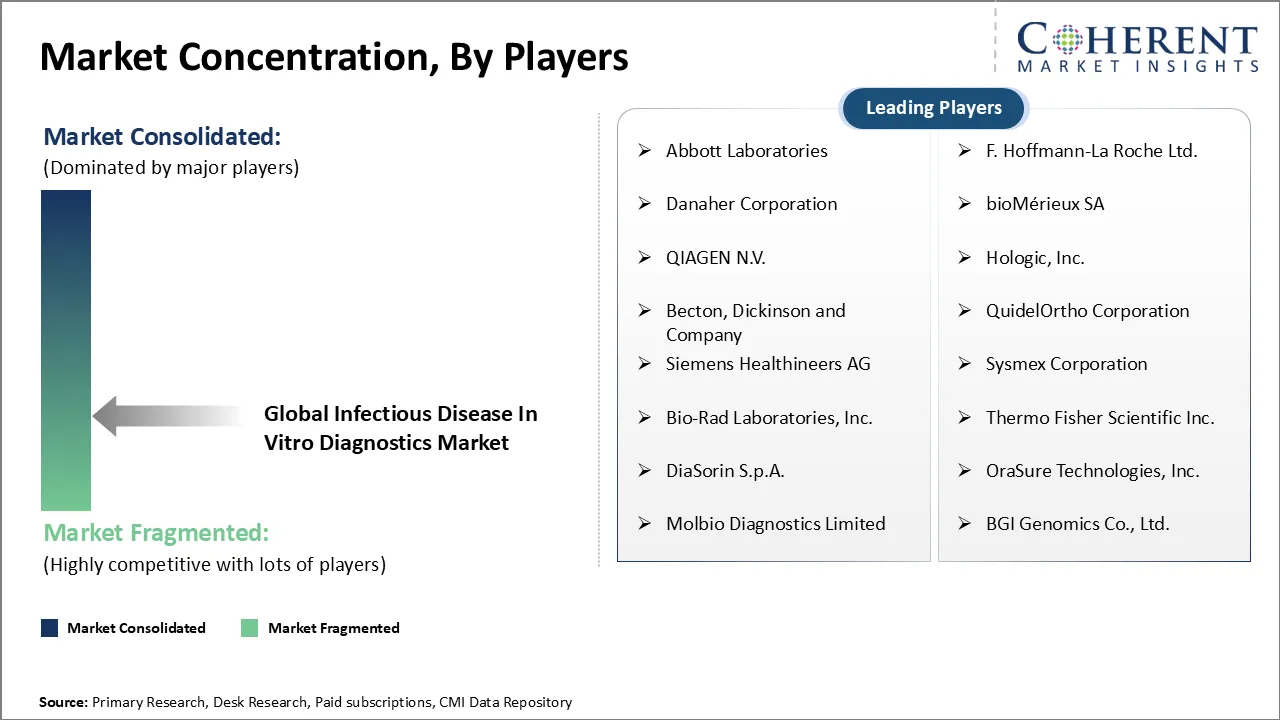
The global infectious disease in vitro diagnostics market comprises established diversified diagnostics companies and specialized molecular-testing manufacturers. Competition is shaped by breadth of pathogen-testing menus, recurring reagent revenue, installed instrument base, regulatory clearances, assay turnaround time and ability to serve both centralized and decentralized testing environments.
On the basis of distinguished profiling, Danaher holds a strong presence in automated molecular infectious disease diagnostics through Cepheid. Whereas Roche solidifies its leadership in this sector by participating across laboratory immunodiagnostics and molecular testing. On the other hand, Abbott augments through offering clinical laboratory, rapid, and point-of-care platforms. Furthermore, bioMérieux maintains a broad clinical microbiology and molecular diagnostics portfolio, while QIAGEN, Hologic, BD and QuidelOrtho competes on their differentiated testing solutions for various infectious diseases.
Top Manufacturers and Notable Products/Solutions in the Infectious Disease In Vitro Diagnostics Market
Company | Product / Platform | Major infectious disease IVD application |
Danaher / Cepheid | GeneXpert / Xpert Assays | TB, respiratory pathogens, gastrointestinal infections |
Roche Diagnostics | cobas liat / cobas Systems | Molecular respiratory and STI testing |
Abbott Laboratories | ID NOW / Panbio | Rapid molecular and antigen testing |
bioMérieux | BIOFIRE FILMARRAY / SPOTFIRE | Syndromic respiratory, GI and other infection panels |
QIAGEN | QIAstat-Dx | Multiplex molecular infectious disease detection |
Hologic | Panther / Panther Fusion | STI, respiratory and GI pathogen testing |
BD | BD MAX | Automated molecular infection testing |
QuidelOrtho | Sofia Platform | Rapid respiratory antigen testing |
bioLytical Laboratories | INSTI | Rapid HIV and syphilis antibody screening |
Molbio Diagnostics | Truenat | Portable molecular diagnostics, including TB |
Market Report Scope
Infectious Disease In Vitro Diagnostics Market Report Coverage
Report Coverage | Details | ||
Base Year: | 2025 | Market Size in 2026: | USD 25.0 Bn |
Historical Data for: | 2020 to 2024 | Forecast Period: | 2026 to 2033 |
CAGR: | 3.1% | 2033 Value Projection: | USD 31.0 Bn |
Geographies covered: |
| ||
Segments covered: |
| ||
Companies covered: | Abbott Laboratories, F. Hoffmann-La Roche Ltd., Danaher Corporation, bioMérieux SA, QIAGEN N.V., Hologic, Inc., Becton, Dickinson and Company, QuidelOrtho Corporation, Siemens Healthineers AG, Sysmex Corporation, Bio-Rad Laboratories, Inc., Thermo Fisher Scientific Inc., DiaSorin S.p.A., OraSure Technologies, Inc., Molbio Diagnostics Limited, and BGI Genomics Co., Ltd. | ||
Growth Drivers: |
| ||
Restraints & Challenges: |
| ||
Analyst Opinion (Expert Opinion)
- The global infectious disease in vitro diagnostics market is shifting from isolated pathogen assays toward integrated diagnostic platforms capable of addressing multiple infectious conditions within established workflows. Although conventional immunoassays retain an important role in large-volume screening, molecular technologies are expected to capture a greater proportion of complex pathogen identification and resistance-related testing requirements. Manufacturers with complementary rapid and centralized testing portfolios are positioned to serve a wider range of clinical environments.
- Future commercial opportunities are likely to be concentrated in expandable assay menus, infectious disease testing at decentralized locations and technologies that support earlier treatment decisions. However, manufacturers will need to balance diagnostic accuracy with affordability, regulatory requirements and sustainable recurring consumable costs. The competitive advantage will increasingly depend on the ability to provide clinically useful results with manageable operational complexity.
- Companies entering emerging markets should prioritize accessible test formats, reliable distribution networks, technical support and compatibility with national screening programs. Partnerships with public healthcare systems and diagnostic laboratories can improve market access, while local manufacturing and supply-chain capabilities may help reduce procurement and operating costs.
Speak to the analyst
Want personalized insights?
Take the findings above to one of our principal consultants, or have the report rebuilt around the segments, geographies and competitors you actually track.
Market Segmentation
- By Product (Revenue, USD Bn, 2021-2033)
- Reagents & Kits
- Instruments
- Software & Associated Solutions
- By Technology (Revenue, USD Bn, 2021-2033)
- Immunoassays
- Enzyme-Linked Immunosorbent Assays
- Chemiluminescence Immunoassays
- Lateral Flow Immunoassays
- Molecular Diagnostics
- Polymerase Chain Reaction
- Isothermal Amplification
- Sequencing-Based Diagnostics
- Microbiology
- Culture-Based Testing
- Microbial Identification
- Antimicrobial Susceptibility Testing
- Others
- Immunoassays
- By Application (Revenue, USD Bn, 2021-2033)
- Respiratory Infections
- HIV & Other Sexually Transmitted Infections
- Tuberculosis
- Gastrointestinal & Healthcare-Associated Infections
- Hepatitis
- Others (Vector-Borne, Fungal, and Parasitic Infections)
- By Test Location (Revenue, USD Bn, 2021-2033)
- Central & Reference Laboratories
- Hospital Laboratories
- Near-Patient / Point-of-Care Settings
- Home / Self-Testing
- By Region (Revenue, USD Bn, 2021-2033)
- North America
- U.S.
- Canada
- Latin America
- Brazil
- Mexico
- Argentina
- Rest of Latin America
- Europe
- Germany
- U.K.
- France
- Italy
- Spain
- Russia
- Rest of Europe
- Asia Pacific
- China
- India
- Japan
- Australia
- South Korea
- ASEAN
- Rest of Asia Pacific
- Middle East
- GCC
- Israel
- Rest of Middle East
- Africa
- South Africa
- Central Africa
- North Africa
- North America
- Key Players
- Abbott Laboratories
- F. Hoffmann-La Roche Ltd.
- Danaher Corporation
- bioMerieux SA
- QIAGEN N.V.
- Hologic, Inc.
- Becton, Dickinson and Company
- QuidelOrtho Corporation
- Siemens Healthineers AG
- Sysmex Corporation
- Bio-Rad Laboratories, Inc.
- Thermo Fisher Scientific Inc.
- DiaSorin S.p.A.
- OraSure Technologies, Inc.
- Molbio Diagnostics Limited
- BGI Genomics Co., Ltd.
Sources
Primary Research Interviews
- Senior executives from infectious disease IVD manufacturers and diagnostic technology companies
- Heads of molecular diagnostics, immunoassay and clinical microbiology divisions
- Research and development specialists involved in infectious disease assay development
- Clinical microbiologists, infectious disease specialists and laboratory directors
- Hospital laboratory procurement managers and reference laboratory executives
- Public health laboratory officials and infectious disease surveillance specialists
- Diagnostic equipment distributors and point-of-care testing solution providers
- Regulatory affairs specialists and diagnostic product commercialization experts
Databases
- U.S. Centers for Disease Control and Prevention (CDC) – Tuberculosis Surveillance, Healthcare-Associated Infections and Infectious Disease Statistics
- U.S. Food and Drug Administration (FDA) – In Vitro Diagnostic Device Regulations, Emergency Use Authorizations and Product Clearances
- National Library of Medicine (NLM) – PubMed and PubMed Central
- National Center for Biotechnology Information (NCBI)
- World Health Organization (WHO) – Global Antimicrobial Resistance Surveillance and Infectious Disease Reports
- UNAIDS – Global AIDS Monitoring and Epidemiological Data
- UNICEF – Global Annual Results Reports and Health Programme Data
- The Global Fund – Laboratory Systems Strengthening and Disease Surveillance Programme Reports
- U.S. Securities and Exchange Commission (SEC) – Company Annual Reports and Financial Filings
Journals and Scientific Publications
- Emerging Infectious Diseases
- Journal of Clinical Microbiology
- Clinical Infectious Diseases
- Clinical Microbiology Reviews
- Journal of Molecular Diagnostics
- Diagnostic Microbiology and Infectious Disease
- Peer-reviewed infectious disease surveillance and epidemiological studies indexed in PubMed and PubMed Central
Public Health Organizations and Institutional Publications
- World Health Organization (WHO)
- U.S. Centers for Disease Control and Prevention (CDC)
- Joint United Nations Programme on HIV/AIDS (UNAIDS)
- United Nations Children's Fund (UNICEF)
- The Global Fund to Fight AIDS, Tuberculosis and Malaria
- National Library of Medicine (NLM)
- National Center for Biotechnology Information (NCBI)
- RESULTS UK – Tuberculosis Research and Advocacy Publications
Company Annual Reports and Official Corporate Announcements
- Abbott Laboratories – Annual Reports and Diagnostic Product Portfolio
- F. Hoffmann-La Roche Ltd. – Diagnostics Division Reports and cobas Product Announcements
- Danaher Corporation / Cepheid – Annual Reports and GeneXpert Product Announcements
- QIAGEN N.V. – Annual Reports and QIAstat-Dx Product Developments
- bioMérieux SA – BIOFIRE and SPOTFIRE Product Announcements
- Hologic, Inc. – Panther and Panther Fusion Product Announcements
- Becton, Dickinson and Company – BD MAX Product Portfolio and Corporate Announcements
- Labcorp – Annual Reports and Laboratory Testing Disclosures
- bioLytical Laboratories – INSTI Infectious Disease Testing Product Announcements
- BGI Genomics Co., Ltd. – Molecular Diagnostics and Pathogen Sequencing Announcements
- Molbio Diagnostics Limited – Truenat Product Developments and Validation Announcements
- Dedalus Healthcare – DEMIS Physician Reporting Solutions
- OraSure Technologies, Inc. – OraQuick HIV Self-Testing Announcements
Proprietary Elements
- CMI Data Analytics Tool
- Proprietary CMI Existing Repository of Information for the Last 10 Years
Get access to 250+ pages report
Every segment, forecast, competitor profile and data table behind the analysis above — available for instant download.
- ESOMAR Member
- ISO 9001:2015 Certified
- D-U-N-S Registered
- GDPR & CCPA Compliant
Frequently Asked Questions
The market is projected to reach approximately USD 31.0 Bn by 2033, compared with USD 25.0 Bn in 2026.
The global infectious disease in vitro diagnostics market is estimated to grow at approximately 3.1% annually.
Reagents and kits are estimated to lead, accounting for 67.8% of market revenue in 2026.
Immunoassays are estimated to account for the largest revenue share at 35.5% in 2026, narrowly ahead of molecular diagnostics.
North America is estimated to lead with a 39.2% market share in 2026.
Asia Pacific is expected to record the fastest growth during 2026–2033, supported by increasing diagnostic accessibility and expanding commercial adoption of molecular testing.
Major challenges include the cost of advanced diagnostic instruments, limited testing infrastructure in some markets, complex regulatory requirements and the need for skilled laboratory personnel.