

Point of Care Infectious Disease Diagnostics Market Size and Share Analysis: (2026 - 2033)
The Point of Care Infectious Disease Diagnostic Market is anticipated to grow at a CAGR of 14.7% with USD 6,834.4 Mn share in 2026 and is expected to reach USD 17,633.5 Mn in 2033. The Point-of-Care Infectious Disease Diagnostics Market is expanding as rapid, decentralized testing becomes critical for managing infectious diseases. In March 2026, WHO highlighted that over 29,000 people fall ill with TB daily, underscoring the need for fast diagnostics in primary care. Battery-powered TB tests now deliver results in under one hour, reducing delays in treatment. In the U.S., the FDA cleared the VELO Respiratory Test in February 2026, evaluated on 1,718 subjects across nine CLIA-waived sites, demonstrating 92.4% PPA for influenza A, 93.3% PPA for influenza B, and 96.2% PPA for SARS-CoV-2, highlighting high reliability of modern POC molecular tests.
Key Takeaways
- Lateral Flow is expected to account the largest share of 55.0% in 2026, because its tests are highly portable, deliver visible results within minutes without complex instruments, and require minimal user training, making them ideal for decentralized and home settings. For instance, WHO issued new guidance in March 2026 recommending near‑point‑of‑care TB diagnostic tests that are portable, battery‑operable, and deliver results in under one hour, expanding access in low‑resource settings.
Source: WHO
- HIV will dominate with 30% in 2026, supported by the high public health focus on early detection and linkage to care, with over 1.15 million people living with diagnosed HIV in the U.S. by end of 2024 and continued CDC emphasis on routine, rapid testing to reduce transmission and improve treatment outcomes. These priorities drive broad use of Point-of-care HIV diagnostics globally.
Source: CDC
- Hospitals hold the dominant share of 48.5% in 2026 owing to high patient volumes and emergency care needs that require immediate results. Rapid, near‑patient testing in hospital outpatient, emergency, and bedside settings enables faster clinical decisions and infection control. CDC data also show that about 1 in 31 hospital patients has a healthcare‑associated infection, highlighting the need for rapid diagnostics in care settings.
- North America is expected to acquire the dominant share of 45.6% in 2026, due to advanced healthcare infrastructure, strong adoption of rapid testing, and robust industry presence. For instance, in April 2026, CDC issued guidance noting that FDA‑cleared rapid molecular assays for influenza and other respiratory viruses can deliver results in approximately 15–30 minutes and some are CLIA‑waived for point‑of‑care use, highlighting high adoption of fast diagnostics in clinical settings.
Market Drivers
Rising Global Prevalence of Infectious Diseases
The rising global prevalence of infectious diseases, including respiratory, zoonotic, and chronic infections, is a major factor driving the point‑of‑care (POC) infectious disease diagnostics market growth over the forecast period. As disease incidence increases, healthcare systems demand rapid, decentralized diagnostic tools that enable early detection and timely treatment initiation, particularly in settings with limited laboratory infrastructure. Point-of-care tests help clinicians quickly distinguish pathogens, improve patient outcomes, and reduce disease transmission risk. Market research forecasts significant expansion in infectious disease Point of Care testing as the frequency of outbreaks and communicable diseases continues to rise globally.
For instance, in 2026, the World Health Organization declared the Bundibugyo Ebola outbreak in the Democratic Republic of Congo and Uganda a Public Health Emergency of International Concern (PHEIC), reporting 246 suspected cases and at least 80 deaths with ongoing transmission across multiple health zones. Early detection in such outbreaks relies heavily on rapid decentralized diagnostics, increasing demand for point‑of‑care infectious disease testing to enable timely case identification, surveillance, and response in regions with limited laboratory infrastructure. Additionally, in 2026, global dengue transmission continued to present a significant burden, with over 500,000 suspected dengue cases reported worldwide and more than 100 dengue‑related deaths from January through March 2026. These numbers were compiled from surveillance data across multiple regions, including Asia, Africa, and the Americas, indicating the persistent global spread of dengue and its continued impact on public health. This sustained prevalence of dengue a mosquito‑borne viral infection with similarities to other febrile diseases underscores the need for rapid, decentralized diagnostic solutions at the point of care to differentiate dengue from other infections and enable timely treatment decisions.
Shift Toward Decentralized and Patient ‑ Centric Care Models
The global shift toward decentralized and patient‑centric care models is accelerating demand for point‑of‑care (POC) infectious disease diagnostics by moving testing from centralized laboratories into clinics, community settings, and peripheral health facilities, enabling faster results, immediate clinical decisions, and improved patient outcomes. Decentralized testing reduces turnaround times and supports real‑time care delivery, particularly in resource‑limited locations where laboratory access is limited. For instance, in April 2026, according to the CDC’s 2026 Public Health Data Strategy, 86% of U.S. emergency departments are now reporting data in real‑time, strengthening surveillance and rapid response capabilities beyond traditional labs. Furthermore, the World Health Organization’s March 2026 recommendations endorse near point‑of‑care molecular TB tests and easy‑to‑collect tongue swabs to expand TB diagnosis into primary care settings, expanding accessible testing where patients first seek care.
Technological Breakthroughs and Smart Diagnostics Are Revolutionizing the Point-of-Care Infectious Disease Diagnostics Market
Technological breakthroughs and smart diagnostics are transforming the Point-of-Care Infectious Disease Diagnostics Market by shifting infection testing from centralized laboratories to near-patient settings such as urgent care, primary care, pharmacy clinics, and community health centers. Innovations such as rapid immunoassays, molecular cartridges, multiplex respiratory panels, biosensors, AI-based interpretation, and connected diagnostic platforms are improving speed, usability, accuracy, and digital reporting. The FDA notes that OTC and POC diagnostics are increasingly being linked with digital tools, software, and wireless transmission to support timely clinical and public health decision-making.
For instance, in March 2026, the FDA listed CLIA waiver approvals for infectious/respiratory POC tests, including Lumos Diagnostics’ FebriDx Bacterial/Non-Bacterial Assay on March 24, 2026, and Baebies FINDER Flu A&B/SARS-CoV-2 Test on March 30, 2026. FebriDx delivers results after 10 minutes using a fingerstick blood sample and supports use in urgent care, primary care, and pharmacy clinics.
Current Events and Their Impact on the Point of Care Infectious Disease Diagnostic Market
Current Event | Description and its Impact |
Strong 2025–2026 Flu Season Increased Need for Rapid Respiratory Testing |
|
FDA-Listed 4-in-1 Home Test Strengthened Multiplex Self-Testing Trend |
|
India’s BIRAC Grand Challenges 2026 Opens Funding for Affordable Diagnostics Innovation |
|
- Current Industry Events of 2026
- Market Size Estimation
- Regional Breakdown
- Competitive Landscape
- Customer Intelligence
- Segmental Analysis
- Pricing Analysis
- Key Market Drivers, Challenges & Future Trends
- Customized Insights Section
Segmental Insights
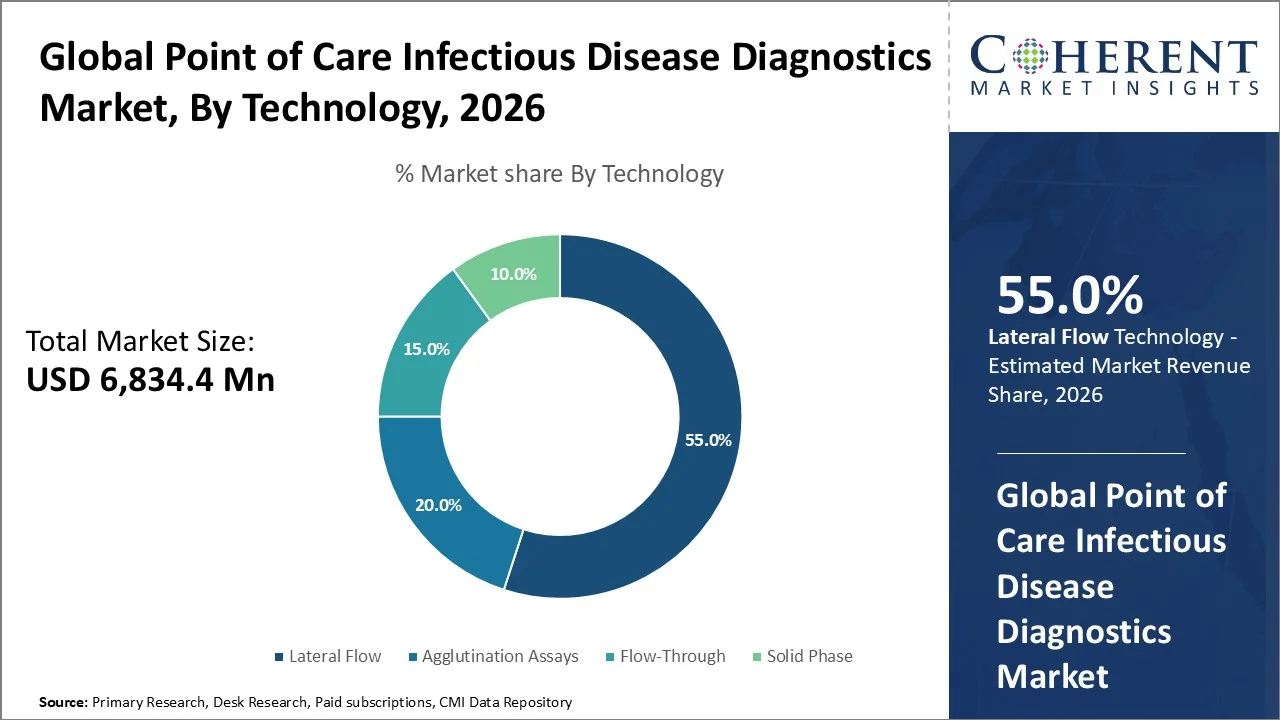
Why is Lateral Flow Acquiring the Largest Market Share?
Lateral Flow is projected to account for the largest share of Point of care infectious disease diagnostics in 2026, representing approximately 55.0% of the total volume. The lateral flow segment dominates due to its rapid, portable, and easy-to-use format, enabling results in minutes without laboratory equipment. In 2026, WHO highlighted that lateral flow tests for TB can deliver results within one hour at primary care and community settings, significantly expanding accessibility. Their affordability, minimal training requirements, and widespread adoption in decentralized testing drive the largest market share globally.
Additionally, in 2026, the FDA cleared new lateral flow immunochromatography assays such as FebriDx for respiratory infections via an official 510(k) decision, demonstrating regulatory confidence in this format. The CDC also notes that many FDA‑cleared rapid molecular and antigen tests are CLIA‑waived for point‑of‑care use, enabling widespread clinical adoption.
HIV holds the Largest Market Share
Based on application, HIV dominate the market, accounting for a significant 30.0% share in 2026, due to the critical need for early detection, rapid linkage to care, and monitoring in high-risk populations. For instance, in 2026, CDC reported that over 1.15 million people in the U.S. were living with diagnosed HIV, emphasizing routine POC testing in clinics and emergency settings. WHO guidelines also recommend rapid HIV tests for community and primary care deployment, driving widespread adoption and market leadership. Furthermore, according to the U.S. CDC’s 2025 HIV Surveillance Report, an estimated 1,132,739 persons aged 13 years and older were living with diagnosed HIV in the United States at the end of 2023. This measure of diagnosed prevalence underscores the ongoing public health burden of HIV and the continued need for routine testing and point‑of‑care diagnostics. Globally, WHO estimates that approximately 40.8 million people were living with HIV at the end of 2024, with about 0.7 % of adults aged 15–49 worldwide living with HIV, reinforcing the substantial global prevalence context entering 2025.
Which End User segment dominates the market?
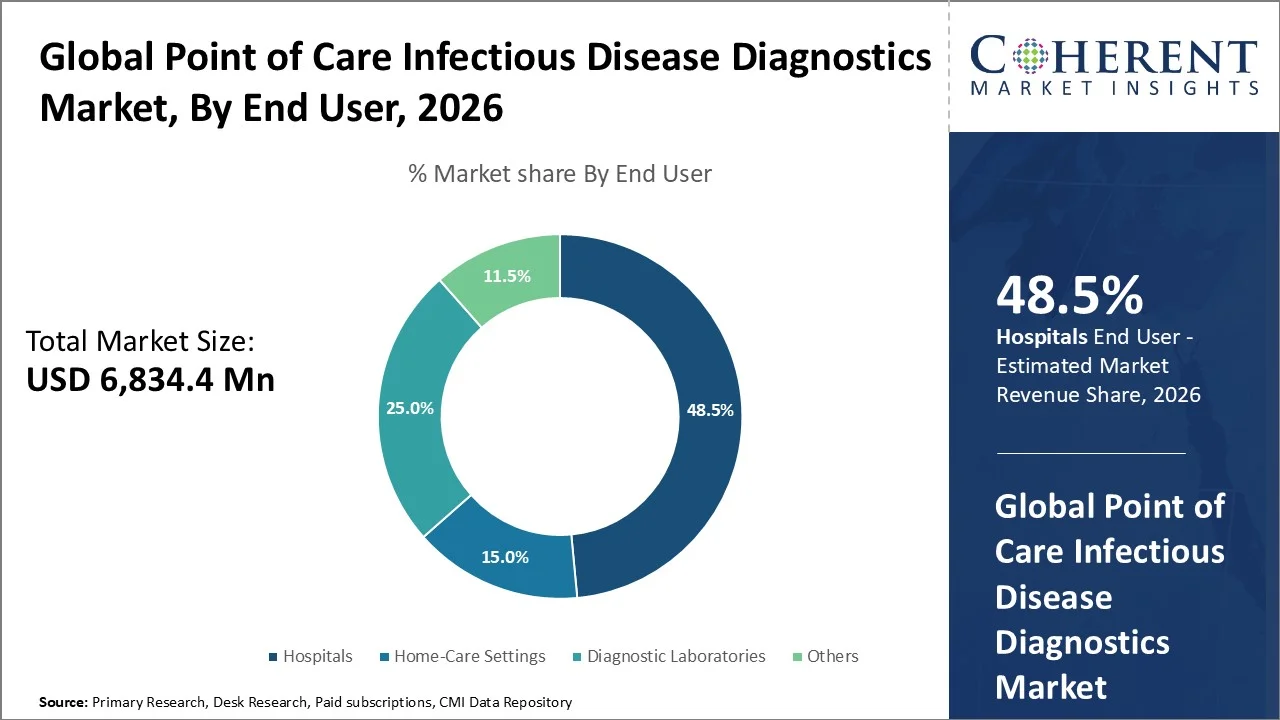
Hospitals account for the largest share of 48.5% in 2026 due to high patient volumes, urgent care requirements, and infection control priorities. In 2026, hospitals accounted for roughly 42.5% of global POC test usage. CDC data report that 1 in 31 hospital patients had a healthcare-associated infection, highlighting the critical need for rapid, on-site diagnostics, decentralized testing, and integration of molecular and immunoassay platforms to support timely treatment and containment.
Point of Care Infectious Disease Diagnostic Market Trends
- Rising Demand for Multiplex and Syndromic Testing Panels - Healthcare providers and point‑of‑care settings are increasingly shifting from single‑pathogen tests to multiplex respiratory and infectious disease panels that can simultaneously detect multiple pathogens (e.g., influenza A/B, RSV) from one specimen. In 2026, the FDA listed ACON Laboratories’ Flowflex Plus 4‑in‑1 home test the first FDA‑cleared over‑the‑counter test that detects RSV + Flu A + Flu B + COVID‑19 in one assay eflecting strong market interest in multi‑pathogen diagnostics. This trend helps clinicians make faster, differential diagnoses, minimizes unnecessary treatments, and supports higher clinical throughput in urgent care and outpatient settings.
- Expansion of Near Point‑of‑Care Molecular Testing in High‑Burden Diseases - There is growing uptake of near point‑of‑care molecular diagnostics for high‑burden infectious diseases like tuberculosis and drug‑resistant infections. In March 2026, WHO issued recommendations for deploying near point‑of‑care NAAT (nucleic acid amplification) tests, including reusable tests and sample pooling, to strengthen TB detection in peripheral health centers. Regulatory backing from WHO accelerates adoption in resource‑limited settings, increases investment in portable molecular platforms, and pushes manufacturers to standardize low‑cost, rapid molecular technologies for decentralized use.
Source: World Health Organization
- Integration of Digital Reporting and Connected Diagnostics- Point‑of‑care devices are transitioning from standalone tools to connected diagnostics platforms with real‑time reporting, cloud interoperability, and electronic health record (EHR) integration. Public health agencies (like CDC and WHO) are increasingly requiring real‑time case reporting to surveillance systems. A 2026 CDC surveillance update confirmed the use of lab and point‑of‑care reporting across > 7,000 facilities in the U.S., helping track influenza, and RSV waves. Connectivity accelerates outbreak detection, improves epidemiologic insights, and supports value‑based care models. It also incentivizes vendors to build next‑gen platforms that embed digital reporting and analytics.
- Government Funding and Incentives Bolstering Local Manufacturing- Governments are introducing funding programs to localize manufacturing and scale diagnostic capacity. In early 2026, India’s BIRAC Grand Challenges opened calls with up to INR 2 crore (~USD 200,000) funding for affordable infectious disease diagnostic technologies, including point‑of‑care and home tests. Public funding reduces R&D risk for early‑stage innovators, accelerates new product development, and expands regional supply chains particularly important for high population countries tackling TB, malaria, and respiratory diseases.
- Regulatory Harmonization and Faster Approvals for Emergency Diagnostics - Regulatory agencies (FDA, EMA, CDSCO) are streamlining emergency and priority review pathways for high‑impact diagnostic tools. In 2026, the FDA continued accelerated listing and Emergency Use Authorization (EUA) frameworks for multiplex infectious disease tests, reducing review times and enabling rapid market entry. The European Union is similarly advancing IVDR (In Vitro Diagnostic Regulation) alignment for rapid tests. Faster regulatory pathways promote innovation, incentivize companies to invest in next‑generation diagnostics, and help frontline providers access new point‑of‑care tools more quickly during seasonal waves or emerging outbreaks.
Regional Insights
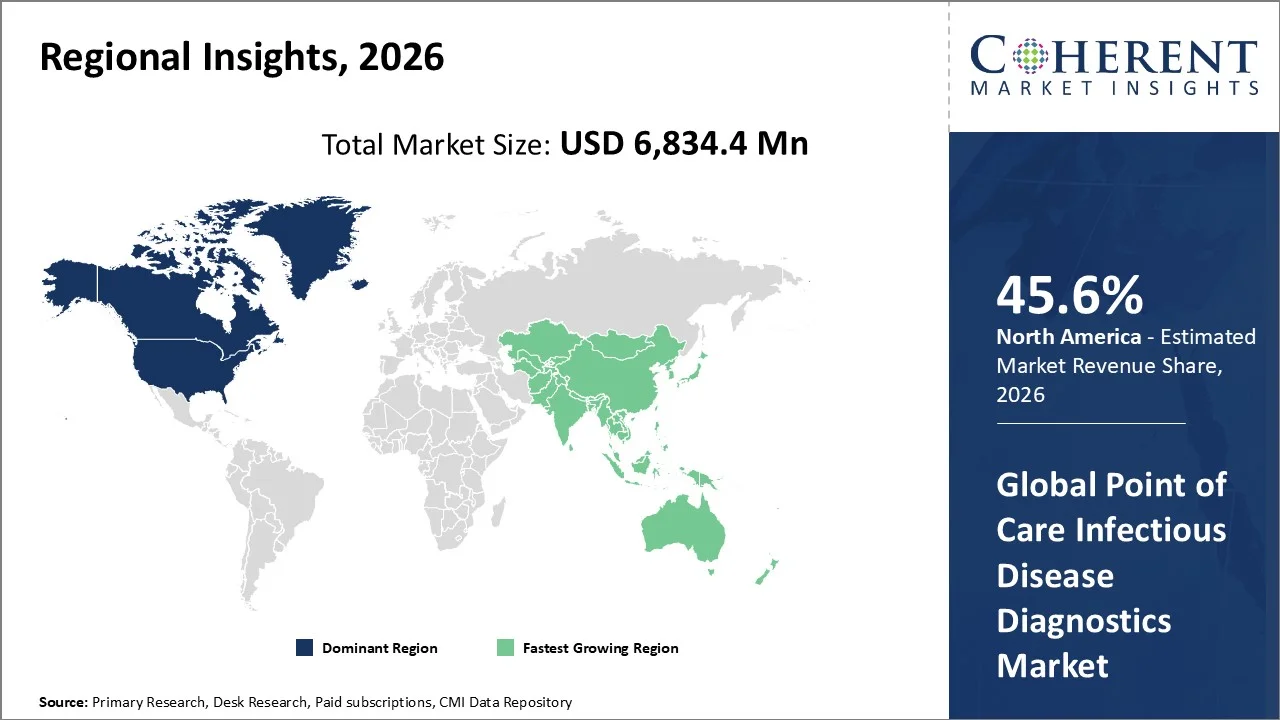
North America dominates owing to Advanced Healthcare Infrastructure
North America account 45.6% market share in 2026, supported by advanced healthcare infrastructure, strong adoption of rapid testing, and supportive regulatory frameworks. In 2026, the region accounted for approximately 42.6% of global POC diagnostics demand, with the U.S. contributing over 45.5% of regional usage. The FDA cleared multiple rapid POC molecular assays, including VELO Respiratory and lateral flow tests, for influenza, SARS-CoV-2, and other respiratory infections, enabling CLIA-waived use in hospitals and clinics. CDC data from 2026 indicate that over 2.1 million respiratory specimens were tested nationwide, with 14.1% positivity, underscoring high testing volumes. Strong reimbursement policies, rapid regulatory approvals, and widespread hospital adoption drive North America’s leading market position.
Asia Pacific Point of Care Infectious Disease Diagnostic Market Trends
The Asia-Pacific region is poised to be as the fastest-growing region through 2026-2033, owing to rising infectious disease prevalence in India, China and Southeast Asia, expanding healthcare access, and increasing launches of innovative POC diagnostics. For instance, in April 2026, Avio Smart Market Stack Limited (ASMS) and Huwel Lifesciences launched Cubo, an ultra‑compact RT‑PCR platform for decentralized molecular testing across rural clinics, hospitals and remote locations, improving local access to TB, respiratory and viral panels. Additionally, WHO’s 2026 guidance also urged expansion of near point‑of‑care TB tests that deliver results in less than one hour, highlighting the regional need for rapid diagnostics and driving adoption in resource‑limited settings.
Supportive Regulatory Frameworks is Accelerating the Point of Care Infectious Disease Diagnostic Market Demand in United States
The U.S. dominates the North America Point-of-Care Infectious Disease Diagnostics Market due to high testing volumes, strong hospital adoption, advanced molecular diagnostic infrastructure, and faster FDA regulatory clearances. In May 2026, CDC FluView reported 2,447,983 influenza clinical laboratory specimens tested since September 28, 2025, with 318,664 positives, showing large-scale diagnostic demand. In 2026, FDA also cleared advanced respiratory POC molecular tests such as VELO Respiratory Test and FINDER Flu A&B/SARS-CoV-2 Test, supporting rapid adoption across hospitals, urgent care centers, and CLIA-waived sites.
China Point of Care Infectious Disease Diagnostic Market Trends
China’s dominance in the Asia‑Pacific point‑of‑care infectious disease diagnostics market is driven by very high infectious disease burden and expanding decentralised testing adoption. In March 2026, China reported 63,201 cases of tuberculosis, alongside large numbers of viral hepatitis and influenza, highlighting persistent infectious disease pressures that require rapid POC testing. China’s large healthcare infrastructure and increasing demand for rapid antigen and molecular tests are pushing broader adoption of portable diagnostics across hospitals and community clinics, making it a key growth engine within the regional diagnostics market.
For instance, in April 2026, Chinese firm (Sansure Biotech) received regulatory approval for its AI‑enabled molecular POCT analyzer SUREXEVO 16A, delivering “sample in, result out” diagnostics in about 12 minutes, expanding access beyond hospitals to clinics and community settings. This, alongside domestic development of low‑cost microfluidic infection chips detecting bloodstream pathogens in under 50 minutes, addresses China’s significant infectious disease burden and accelerates regional adoption of POC technologies.
Source: Chinese Center for Disease Control and Prevention & Chinese Academy of Preventive Medicine; Sina Corporation.
Who are the Major Companies in Point of Care Infectious Disease Diagnostic Market
Some of the major key players in Point of Care Infectious Disease Diagnostics Market are Danaher Corporation, Abbott Laboratories, Alcon Laboratories, Inc., Hoffman-La Roche Ltd., Becton, Dickinson, and Company, Trinity Biotech Plc, AccuBioTech Co., Ltd. and Cardinal Health, Inc.
Key News
- In January 2026, Nano-Ditech Corporation, a U.S.-based rapid diagnostic test manufacturer, received FDA 510(k) clearance for its Nano-Check Influenza A+B Test. The rapid lateral flow test is designed for CLIA-waived and point-of-care testing sites, uses anterior nasal swab samples, and delivers results in 15 minutes. This development strengthens rapid influenza diagnosis in outpatient clinics, physician offices, urgent care settings, and decentralized testing locations.
- In January 2026, Diasorin, an in vitro diagnostics and molecular diagnostics company, signed an exclusive U.S. hospital-channel distribution agreement with Fisher Scientific for the LIAISON NES molecular point-of-care platform and FLU A/B, RSV & COVID-19 Panel. The platform provides lab-quality molecular diagnostics near the patient, with results in around 15 minutes through a simple three-step workflow. This supports wider hospital adoption of rapid respiratory infection testing in the U.S.
- In February 2026, LEX Diagnostics, a molecular point-of-care diagnostics company, received FDA 510(k) clearance and CLIA waiver for the LEX VELO System and VELO Respiratory Test. The system is an ultra-fast PCR platform designed to detect Influenza A, Influenza B, and COVID-19 directly from a swab sample in approximately 6 to 10 minutes, supporting rapid treatment and isolation decisions in decentralized care settings.
- In February 2026, Cepheid, a molecular diagnostics company known for rapid PCR-based infectious disease testing, was selected by the U.S. CDC as a national collaborator to advance rapid diagnostic innovation for pandemic preparedness. The collaboration aims to modernize outbreak detection and accelerate diagnostic development, reinforcing the role of high-impact molecular testing platforms in future infectious disease response systems.
Market Report Scope
Point of Care Infectious Disease Diagnostic Market Report Coverage
| Report Coverage | Details | ||
|---|---|---|---|
| Base Year: | 2025 | Market Size in 2026: | USD 6,834.4 Mn |
| Historical Data for: | 2020 To 2024 | Forecast Period: | 2026 To 2033 |
| Forecast Period 2026 to 2033 CAGR: | 14.7% | 2033 Value Projection: | USD 17,633.5 Mn |
| Geographies covered: |
| ||
| Segments covered: |
| ||
| Companies covered: | Danaher Corporation, Abbott Laboratories, Alcon Laboratories, Inc., Hoffman-La Roche Ltd., Becton, Dickinson, and Company, Trinity Biotech Plc, AccuBioTech Co., Ltd. and Cardinal Health, Inc. | ||
Analyst Opinion
- The point-of-care infectious disease diagnostics market is moving beyond COVID-era emergency testing and becoming a routine part of respiratory infection management. In January 2026, CDC estimated that the 2025–2026 flu season had already caused at least 15 million illnesses, 180,000 hospitalizations, and 7,400 deaths in the U.S. CDC also reported that the combined peak hospitalization rate for influenza, and RSV reached 16.6 hospitalizations per 100,000 during the week ending January 3, 2026. This shows that seasonal respiratory disease pressure continues to create sustained demand for rapid antigen, molecular, and multiplex point-of-care tests in clinics, urgent care centers, pharmacies, and home settings.
Source: CDC FluView; CDC Respiratory Disease Season Outlook
- Multiplex and home-use testing are becoming a stronger competitive direction in the market, as patients and providers increasingly need one test to differentiate between infections with similar symptoms. In January 2026, the University of Nebraska Medical Center reported the retail availability of ACON Laboratories’ Flowflex Plus RSV + Flu A/B + COVID 4-in-1 test, described as the first FDA-cleared home diagnostic that detects RSV, influenza A, influenza B, and COVID-19 using a single nasal swab. FDA’s database also lists this product as an over-the-counter, multi-analyte home test, confirming the regulatory shift toward multi-pathogen self-testing. This indicates that the market is shifting from single-pathogen COVID tests toward broader respiratory infection panels.
- Tuberculosis and drug-resistant infections are expanding the relevance of point-of-care diagnostics beyond seasonal respiratory testing. In March 2026, WHO reported that 10.7 million people fell ill with TB in 2024 and 1.23 million people died from the disease, while only about 2 in 5 people with drug-resistant TB accessed treatment. WHO also issued first-time recommendations in March 2026 for near point-of-care molecular tests, tongue swab samples, and sputum pooling to improve TB diagnosis and rifampicin-resistant TB detection. This strongly supports demand for decentralized molecular platforms in high-burden and resource-limited settings.
- Antimicrobial resistance is becoming a long-term growth driver because rapid diagnosis is increasingly linked with treatment accuracy and antibiotic stewardship. A February 2026 review in Frontiers in Cellular and Infection Microbiology stated that point-of-care molecular diagnostics enable early diagnosis and resistance profiling during the clinical encounter, while AMR is associated with around 4.95 million deaths annually, including 1.27 million deaths directly caused by drug-resistant infections. In April 2026, the American Society for Microbiology also emphasized that diagnosis remains the frontline of outbreak detection, and that rapid, accurate testing is essential for controlling re-emerging infections. This suggests that future market growth will favor platforms that combine pathogen detection, resistance markers, and fast clinical decision support.
- North America continues to lead the point-of-care infectious disease diagnostics market due to advanced healthcare infrastructure, high adoption of digital health tools, and favorable reimbursement policies. In 2026, over 68% of U.S. urgent care centers reported integrating multiplex point-of-care respiratory testing into routine practice, according to the CDC’s National Syndromic Surveillance Program. This regional dominance highlights strong payer support, rapid regulatory approvals, and widespread clinical acceptance as key growth enablers.
Speak to the analyst
Want personalized insights?
Take the findings above to one of our principal consultants, or have the report rebuilt around the segments, geographies and competitors you actually track.
Market Segmentation
- By Technology (Revenue, USD Mn, 2021-2033)
- Lateral Flow
- Agglutination Assays
- Flow-Through
- Solid Phase
- By Application (Revenue, USD Mn, 2021-2033)
- HIV
- Tropical Disease
- Liver Disease
- Inflammatory Disease
- Respiratory Disease
- Hospital Associated Infections (HAIs)
- Sexual Health Disorders
- Others
- By End User (Revenue, USD Mn, 2021-2033)
- Hospitals
- Home-Care Settings
- Diagnostic Laboratories
- Others
- By Region (Revenue, USD Mn, 2021-2033)
- North America
- U.S.
- Canada
- Latin America
- Brazil
- Mexico
- Argentina
- Rest of Latin America
- Europe
- Germany
- U.K.
- France
- Italy
- Spain
- Russia
- Rest of Europe
- Asia Pacific
- China
- India
- Japan
- Australia
- South Korea
- ASEAN
- Rest of Asia Pacific
- Middle East
- GCC
- Israel
- Rest of Middle East
- Africa
- South Africa
- Central Africa
- North Africa
- North America
- Competitive Landscape
- Danaher Corporation
- Abbott Laboratories
- Alcon Laboratories, Inc.
- Hoffman-La Roche Ltd.
- Becton, Dickinson, and Company
- Trinity Biotech Plc
- AccuBioTech Co., Ltd.
- Cardinal Health, Inc.
Sources
Primary Research Interviews
- Insights from device manufacturers, software developers, and molecular assay providers on recent innovations in rapid molecular and antigen tests, multiplex panel development, AI-enabled decision support for infection detection, and real-time reporting solutions.
- Discussions with government health agencies, regulatory officials, and epidemiologists to evaluate regulatory frameworks, approval processes, reimbursement policies, outbreak response strategies, and compliance requirements for Point of care infectious disease diagnostics.
- Engagements with industry analysts, strategy consultants, and technical advisors to assess market trends, competitive positioning, pricing pressures, and adoption drivers across hospitals, clinics, pharmacies, and community health settings.
- Conversations with hospital administrators, urgent care operators, pharmacy chains, and community health leaders to evaluate investment drivers, system implementation challenges, workflow adaptation, staff training needs, and patient adoption factors for POC testing.
- Interviews with scientists and clinical R&D teams to understand product pipeline, diagnostic validation, emerging biomarkers, and integration of AI/ML for predictive diagnostics and antimicrobial resistance profiling.
Databases:
- U.S. Centers for Disease Control and Prevention (CDC)
- U.S. Food and Drug Administration (FDA) Medical Device Databases
- WHO Global Health Observatory (GHO) Data Repository
- European Centre for Disease Prevention and Control (ECDC) Surveillance Data
- U.S. National Institutes of Health (NIH) Clinical Trials Database (ClinicalTrials.gov)
Magazines
- Mass Device (Medical Device News)
- MedTech Dive (Healthcare Technology Trends)
- Clinical Laboratory News (Published by ASCP)
- MDO – Medical Device & Diagnostic Industry Magazine
- GenomeWeb (Diagnostics and Molecular Testing Focus)
Journals
- Journal of Clinical Microbiology (ASM)
- Diagnostics (MDPI)
- Clinical Chemistry (AACC)
- Expert Review of Molecular Diagnostics (Taylor & Francis)
- PLOS ONE – Infectious Diseases Section
Newspapers
- The New York Times (Health / Science Section)
- The Guardian (Global Health / Science Section)
- Financial Times (Healthcare and Biotech Section)
- Reuters Health
- The Wall Street Journal (Health Section)
Associations
- American Society for Microbiology (ASM)
- American Clinical Laboratory Association (ACLA)
- International Federation of Clinical Chemistry and Laboratory Medicine (IFCC)
- Clinical & Laboratory Standards Institute (CLSI)
- World Health Organization (WHO) Laboratory and Diagnostics Committees
Public Domain Sources
- Centers for Disease Control and Prevention (CDC)
- Food and Drug Administration (FDA)
- World Health Organization (WHO)
- European Centre for Disease Prevention and Control (ECDC)
- U.S. Department of Health & Human Services (HHS) / National Institutes of Health (NIH)
Proprietary Elements
- CMI Data Analytics Tool
- Proprietary CMI Existing Repository of information for last 10 years
Get access to 250+ pages report
Every segment, forecast, competitor profile and data table behind the analysis above — available for instant download.
- ESOMAR Member
- ISO 9001:2015 Certified
- D-U-N-S Registered
- GDPR & CCPA Compliant
Missing comfort of reading report in your local language? Find your preferred language:
Transform your Strategy with Exclusive Trending Reports
Frequently Asked Questions
The Point of Care Infectious Disease Diagnostic Market is expected to reach USD 17,633.5 Mn in 2033.
Major players operating in the global Point of Care Infectious Disease Diagnostic Market include Danaher Corporation, Abbott Laboratories, Alcon Laboratories, Inc., Hoffman-La Roche Ltd., Becton, Dickinson, and Company, Trinity Biotech Plc, AccuBioTech Co., Ltd. and Cardinal Health, Inc.
Variable test sensitivity and specificity and regulatory and reimbursement challenges are the major factors hampering the growth of the point of care infectious disease diagnostic market.
Rising global prevalence of infectious diseases and shift toward decentralized and patient‑centric care models are the key factors driving the growth of the point of care infectious disease diagnostics market.
The Point of Care Infectious Disease Diagnostic Market is anticipated to grow at a CAGR of 14.7% between 2026 and 2033.
Among regions, North America is expected to account for a largest market share in the global Point of Care Infectious Disease Diagnostic Market over the forecast period.