

HIV Diagnostics Test Market Size and Trends
The HIV Diagnostics Test Market is estimated to be valued at USD 5.33 Bn in 2026 and is expected to reach USD 10.12 Bn by 2033, growing at a compound annual growth rate (CAGR) of 9.6% from 2026 to 2033.
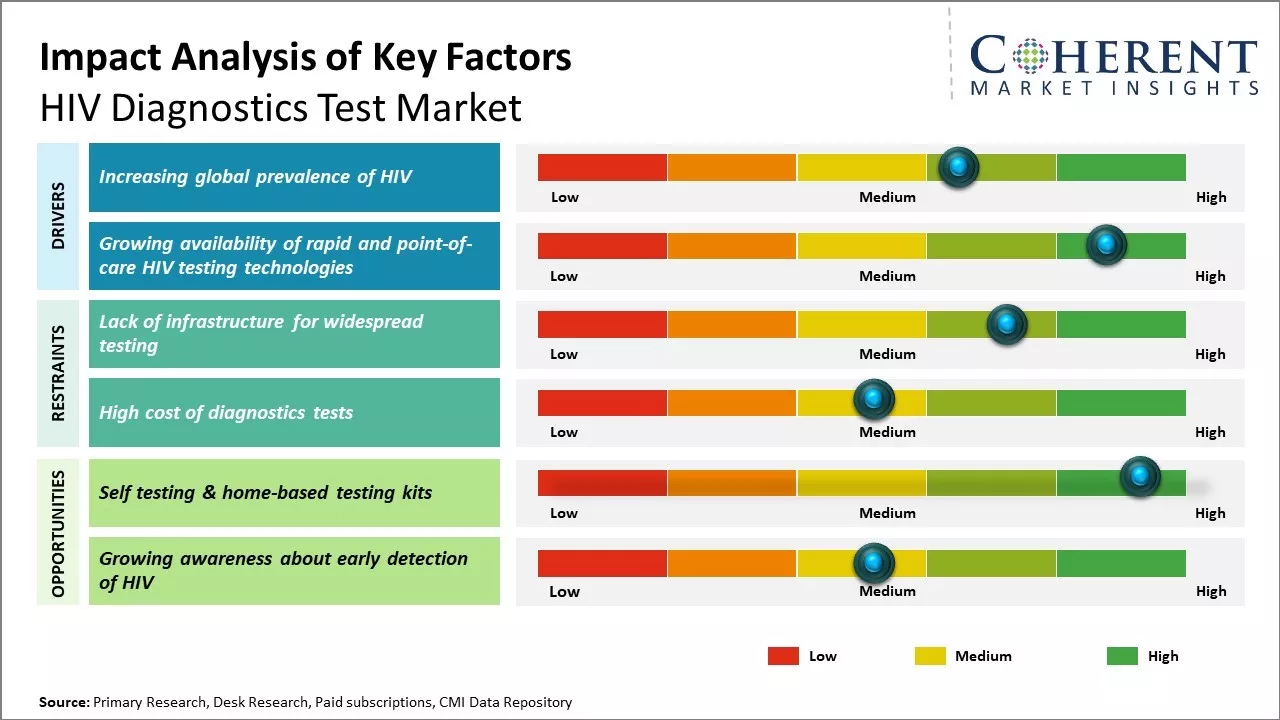
Key Takeaways
- On the basis of Product perspective, the Assay Kit segment is anticipated to account for its extensive use in diagnostic processes and share of 60.7% of the world market share in 2026.
- On the basis of Test Type, the Antibody Test segment due to its high sensitivity and quick results, accounting for 45.1% of the world share market in 2026.
- On the basis of End User, Diagnostic Laboratories are aided by the increasing volume of diagnostic testing and their share of 40.1% in the global market share 2026.
- On the basis of Region, North America is the dominating region in the worldwide market with a 38.4% share in 2026, fuelled by advanced medical infrastructure and increased adoption of diagnostic technologies.
Market Overview
The market is expected to witness positive growth during the forecast period. Rapid expansion of healthcare investments and increasing awareness about HIV diagnosis are expected to boost market growth. In addition, rising initiatives by government and private organizations to spread awareness about HIV diagnosis and treatment is also expected to support the market growth during this period. However, costly diagnostics procedures and issues related to low accessibility in remote areas may hamper market growth.
Current Events and Its Impact
Current Events | Description and its impact |
Geopolitical conflicts and supply chain disruptions |
|
Technological advancements and innovation in diagnostics |
|
Socio-economic and demographic events |
|
Reimbursement Scenario in HIV Diagnostics Testing Market
The Centers for Disease Control and Prevention (CDC) funds initiatives like the Together TakeMeHome program, which provides free at-home HIV self-tests to U.S. residents aged 17 and older. Participants can order up to two free tests every three months until 2027, aiming to increase HIV awareness and early detection.
Medicaid covers routine HIV screening as a preventive service, though it is considered an optional benefit, and coverage varies by state in U.S. Private insurers may cover HIV tests for individuals with known or perceived risk factors, but policies differ among insurers.
- Current Industry Events of 2026
- Market Size Estimation
- Regional Breakdown
- Competitive Landscape
- Customer Intelligence
- Segmental Analysis
- Pricing Analysis
- Key Market Drivers, Challenges & Future Trends
- Customized Insights Section
Role of AI in HIV Diagnostics Testing Market
Artificial Intelligence (AI) is significantly transforming the HIV diagnostics test market by enhancing accuracy, accessibility, and efficiency in detection and monitoring. AI facilitates rapid testing by integrating with biosensors and next-generation molecular diagnostics, such as CRISPR-based methods and loop-mediated isothermal amplification (LAMP). These technologies enable quicker and more cost-effective HIV detection, crucial for timely intervention. The Melbourne Sexual Health Centre's Artificial Intelligence and Modelling in Epidemiology Program has developed MySTIRisk, an AI-based web tool for assessing the risk of HIV and sexually transmitted infections.
Segmental Insights
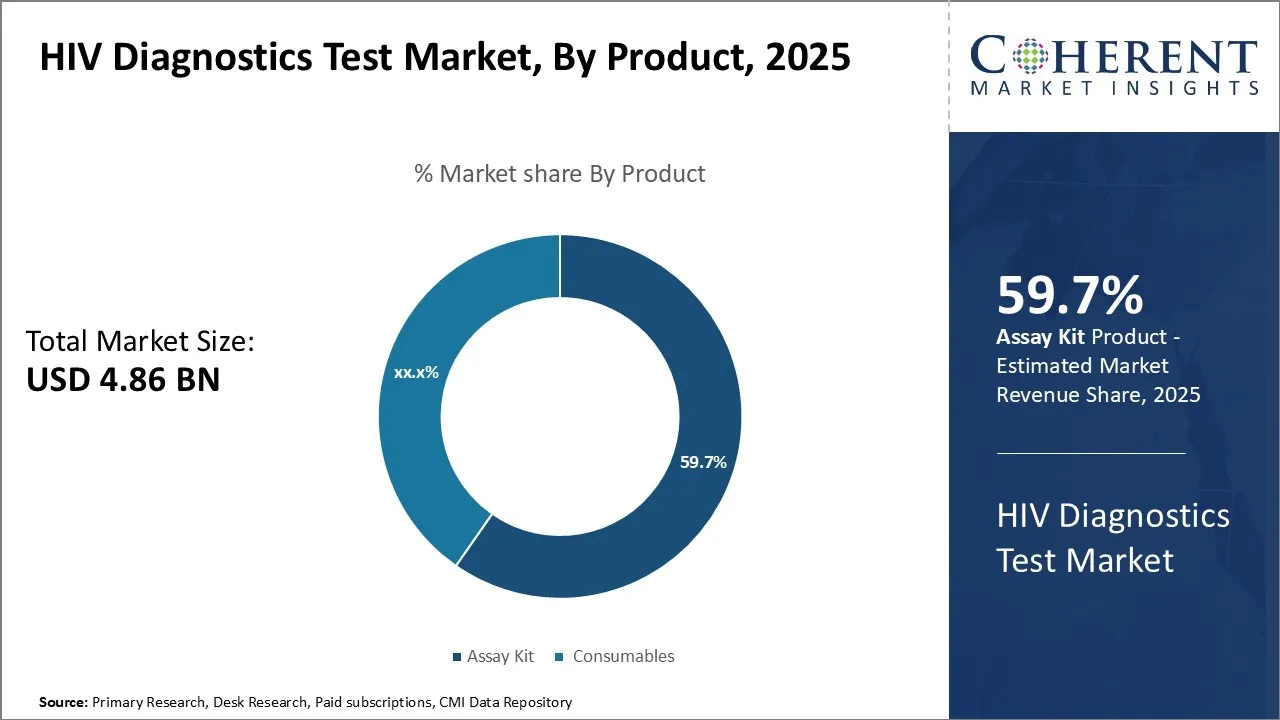
HIV Diagnostics Test Market Insights, By Product: Product Innovation Fuels Assay Kit Dominance
The product segment includes assay kit and consumables. Assay kit segment is estimated to hold 60.7% of the market share in 2026. Assay kits have seen significant improvements that have made testing simpler, more convenient, and accessible. Traditionally, HIV testing required specialized laboratory equipment and trained healthcare workers to perform. However, assay kit manufacturers have miniaturized tests so they can be performed with simplified equipment right in a doctor's office or even in home settings. This decentralized testing removes barriers to access and promotes more frequent screening. Assay kit makers also focus on test design to eliminate complex multi-step procedures that might dissuade patients. Newer generations of kits employ streamlined, user-friendly formats like simple prick tests that produce results within minutes with only a single drop of blood. Such innovations boost compliance and catch infections earlier.
For instance, Thermo Fisher Scientific has introduced its Applied Biosystems HIV-1 Genotyping Kit with Integrase. This research-use-only assay analyzes HIV-positive samples to detect genetic variations that may confer resistance to widely used antiretroviral treatments.
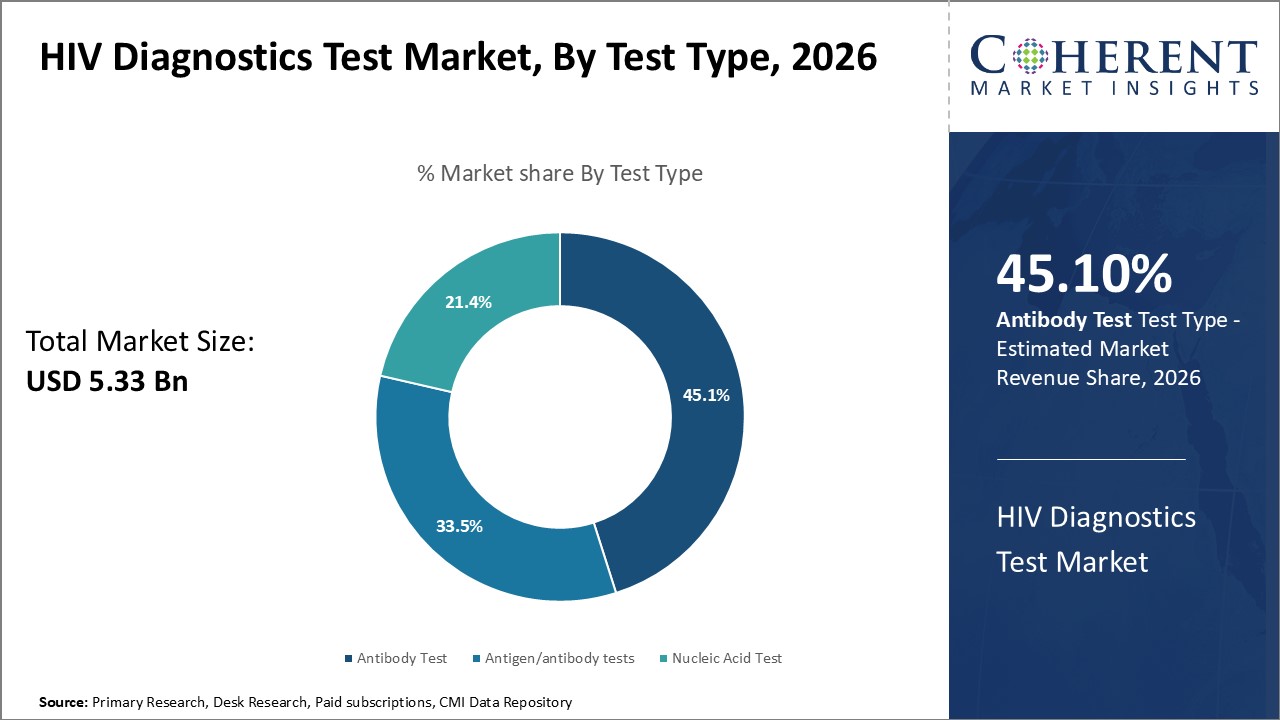
HIV Diagnostics Test Market Insights, By Test Type: Increased Standard of Care Drives Antibody Test Dominance
The test type segment includes antibody test, antigen/antibody tests, and nucleic acid test. Antibody test contributes the highest share of the HIV diagnostics test market and is estimated to hold 45.1% of the market share in 2026. Being the first developed test type, antibody detection set the baseline standard of care in HIV screening. It identifies the body’s immune response to infection by detecting antibodies produced against HIV. While newer forms like antigen/antibody combinations and nucleic acid methods provide additional insight, no alternative has proven more sensitive and cost-effective for broad population screening. Guidelines continue recommending antibody tests as the frontline screening methodology. Their wide availability and regulatory approval across all regions and settings, from remote clinics to large reference labs, cemented antibody tests role as the globally preferred first-line assay. Antibody tests also offer distinct benefits like stability at varying storage temperatures required for resource-limited areas. Apart from this the rising demand for quick and accurate results is also propelling the demand for antibody test.
For instance, in March 2025, bioLytical introduced the 1-Minute INSTI® Multiplex HIV-1/2 Syphilis Antibody Test in Australia. This test provides highly accurate results in just 60 seconds using a single sample, making it the fastest dual HIV and syphilis rapid test available. This is further accelerating the HIV diagnostics test market demand.
HIV Diagnostics Test Market Insights, By End User: Expanding Access Drives Diagnostic Laboratory's Development
The end user segment includes hospitals & clinics, diagnostic laboratories, homecare settings, and others. Diagnostic laboratories contribute the highest share of the HIV diagnostics test market and is estimated to hold 40.1% of the market share in 2026. Though hospitals initially managed most testing capacity, scaling screening require developing infrastructure beyond acute care settings. Diagnostic labs thus play a crucial role decentralizing testing closer to target populations. Their specialized expertise and regulatory compliance allow standardizing quality assessment across a network of customers. This provides health ministries and international programs an efficient, accountable partner for national screening cascades. By positioning multiple patient service centers, diagnostic labs facilitate walk-in access critical to identifying undiagnosed ‘key populations. Leveraging economies of scale in consumables procurement and coordination of supply chains keeps per-test costs low. This allows diagnostic networks offering subsidized or free panels to underinsured groups per public health priorities.
All India Institute of Medical Sciences (AIIMS) laboratory provides comprehensive diagnostic and monitoring services for HIV/AIDS patients. It was the first lab at AIIMS to receive NABL accreditation. Additionally, it plays a pivotal role in the HIV DBS sentinel surveillance program and serves as a training hub for technicians across India.
Regional Insights
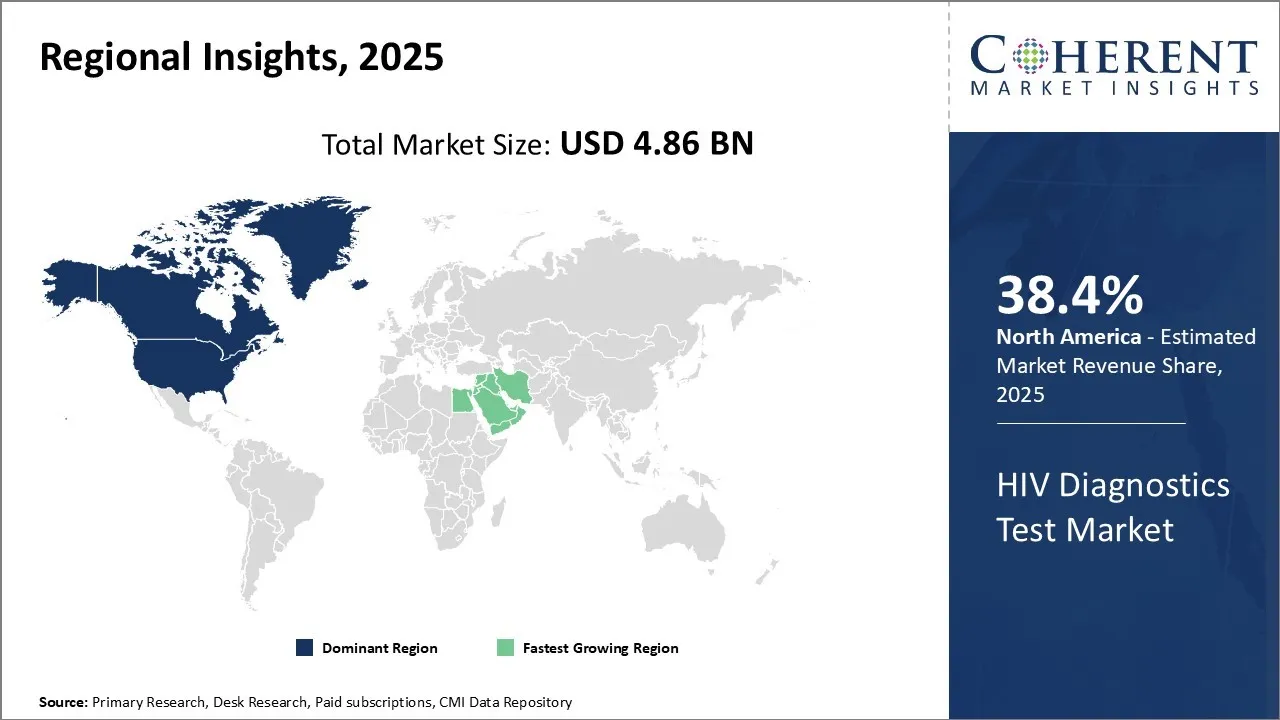
North America HIV Diagnostics Test Market Analysis and Trends
North America has remained the dominant region in the global HIV diagnostics test market over the past decade and is estimated to hold 38.4% of the market share in 2026. Strong presence of leading international players, high awareness levels regarding sexually transmitted infections (STI) diagnosis and favorable reimbursement policies have augmented the demand for HIV diagnostic tests in the country. In addition, the growing HIV awareness campaigns is also proliferating the HIV diagnostics market demand. In April 2026, Cook County Health launched a public health campaign to raise awareness of HIV prevention, testing, and services, targeting populations most at risk in Chicagoland.
Africa HIV Diagnostics Test Market Trends
The HIV diagnostics test market in the Africa region is anticipated to develop at the highest CAGR over the forecasted period attributed to the increasing healthcare investment by local and foreign organizations. The antibody test subsegment currently holds the prominent share in the HIV diagnostics test market in the Africa region. This is driven primarily by the high adoption of fourth generation antibody tests in the region over the past 2 years. Fourth generation antibody tests are now widely used for HIV screening across major healthcare facilities in South Africa, Nigeria and Ethiopia due to their ability to detect both anti-HIV antibodies and the HIV p24 antigen. This allows for a much earlier detection of the infection compared to previous generations of antibody tests. Several observational studies conducted by UNAIDS and country-specific health ministries have found that the increased use of fourth generation antibody tests has helped reduce new HIV infections in the region by making it possible to identify positive cases much sooner. This is further contributing to the HIV diagnostics market revenue.
Canada HIV Diagnostics Test Market Trends
The HIV diagnostics market in Canada is experiencing significant growth, driven by technological advancements, increased accessibility, and supportive public health initiatives. The demand for these products is fuelled by frequent testing requirements, particularly in high-risk populations. Apart from this, the escalating demand for accurate results is acting as one of the key factors propelling adoption of the HIV test. In January 2026, MedMira Inc. announced that Health Canada approved its Reveal® Rapid G4 HIV-1/2 Test for Point-of-Care use. With a sensitivity of 99.64% and specificity of 99.71%, the test provides fast, reliable, and high-quality results, making it ideal for healthcare professionals in any setting.
India HIV Diagnostics Test Market Trends
The HIV diagnostics market in India is experiencing significant growth, driven by technological advancements, increased accessibility, and supportive public health initiatives. Molbio Diagnostics has introduced a new RT-PCR test for the differential diagnosis of HIV-1 and HIV-2, providing results within 60 minutes. This test operates on the existing Truelab infrastructure, requiring no additional equipment or setup. Truenat, the platform supporting this test, is a portable, battery-operated, IoT-enabled Real-Time PCR system capable of diagnosing over 35 diseases. The introduction of this test aims to enhance early detection and viral load estimation, crucial for effective HIV management and monitoring, especially in resource-limited settings.
Concentration and Competitive Landscape
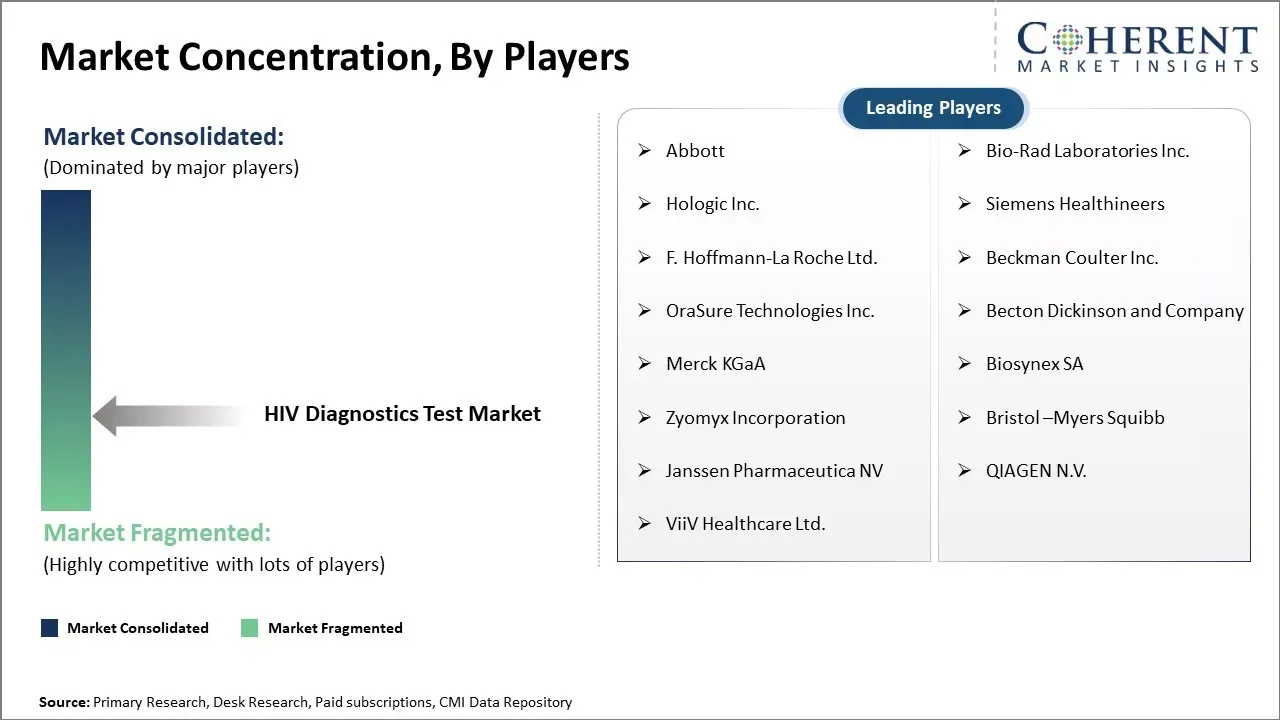
Key Developments
- In April 2025, PAHO/WHO launched a new project aimed at enhancing efforts to eliminate mother-to-child transmission of HIV, syphilis, and hepatitis B in the Caribbean.
- In January 2025, with support from the European Union and BMZ, GIZ Tajikistan launched a campaign under the BaSIC project to raise awareness about HIV.
- In May 2024, ABL Diagnostics signed an exclusive distribution agreement with Genient to expand its microbiology and genotyping technologies in India. The partnership aims to enhance access to advanced molecular diagnostics, including tools applicable to HIV testing, thereby supporting improved diagnostic capabilities and broader market reach in high-demand regions.
- In June 2024, Abbott launched the ARCHITECT HIV Ag/Ab Combo test, which provides reliable and rapid detection of HIV infection by identifying both HIV antibodies and antigens. This test aims to improve diagnostic accuracy and accelerate HIV detection in clinical settings.
- In April 2024, Cepheid received WHO prequalification for its Xpert HIV-1 Qual XC test. This point-of-care diagnostic test enables early HIV detection in infants using dried blood spots and whole blood samples, thus enhancing accessibility and accuracy in HIV diagnostics, especially in resource-limited settings.
HIV Diagnostics Test Market Growth Drivers
Increasing global prevalence of HIV
The global prevalence of HIV has been steadily rising over the past few decades posing a significant risk to public health across the world. UNAIDS estimates that approximately 38 million people were living with HIV globally at the end of 2020, with new infections and AIDS-related deaths remaining unacceptably high in many regions. Sub-Saharan Africa in particular has borne the brunt of the epidemic where around 68% of all people living with HIV reside. While new infections and deaths from AIDS have declined significantly in some countries due to treatment scale-up, many nations still face severe challenges in diagnosing those unaware of their HIV status and linking them to effective care. According to WHO, in 2020, there were an estimated 1.5 million new HIV infections and 680,000 AIDS-related deaths worldwide. This is further propelling the HIV diagnostics test industry.
Growing availability of rapid and point-of-care HIV testing technologies
While conventional HIV testing methods centered on laboratory-based immunoassays, recent years have witnessed significant advancements in rapid and point-of-care approaches. These innovative formats have played a transformative role in widening access to diagnostic services particularly in resource-constrained areas. Traditional testing involved sending blood samples to centralized laboratories for ELISA and Western blot analysis which could take days to provide results. This created barriers for timely diagnosis due to the need for multiple visits and loss to follow up. It was also challenging in remote communities with limited laboratory infrastructure.
Market Opportunities: Self testing & home-based testing kits
Self-testing and home-based HIV testing kits provide a private and confidential way for individuals to know their status without having to visit overburdened testing centers or clinics. For instance, in December 2024, the Department of Health (DOH) unveiled the HIV self-test in the Cordillera region. This helps address a major barrier to testing which is the stigma still associated with HIV/AIDS. By making testing accessible in the privacy of one's home, more people especially from vulnerable groups will feel comfortable taking a test. With testing made easier, more frequent self-testing or self-screening at home would become the new norm. Campaigns by governments and NGOs promoting self-testing as the way forward are already raising awareness.
Market Report Scope
HIV Diagnostics Test Market Report Coverage
| Report Coverage | Details | ||
|---|---|---|---|
| Base Year: | 2025 | Market Size in 2026: | USD 5.33 Bn |
| Historical Data for: | 2020 To 2024 | Forecast Period: | 2026 To 2033 |
| Forecast Period 2026 to 2033 CAGR: | 9.6% | 2033 Value Projection: | USD 10.12 Bn |
| Geographies covered: |
| ||
| Segments covered: |
| ||
| Companies covered: | Abbott, Bio-Rad Laboratories Inc., Hologic Inc., Siemens Healthineers, F. Hoffmann-La Roche Ltd., Beckman Coulter Inc., OraSure Technologies Inc., Becton Dickinson and Company, Merck KGaA, Biosynex SA, Zyomyx Incorporation, Bristol –Myers Squibb, Janssen Pharmaceutica NV, QIAGEN N.V., and ViiV Healthcare Ltd. | ||
| Growth Drivers: |
| ||
| Restraints & Challenges: |
| ||
Analysts’ Views on HIV Diagnostics Test Market
- The HIV diagnostics test market stands at a pivotal moment, with a clear shift towards innovation and rapid, accessible testing solutions. The integration of Artificial Intelligence (AI) into diagnostic platforms is not just a trend but a necessity to meet the growing demand for faster, more reliable HIV detection. AI and machine learning (ML) algorithms are reshaping the accuracy and speed of HIV testing, making traditional diagnostic methods obsolete in certain contexts.
- The development of AI-driven diagnostics tools, such as the MySTIRisk tool from the Melbourne Sexual Health Centre. This AI-based risk assessment platform is a prime example of how machine learning can be leveraged to predict HIV risks more effectively and in real-time. These kinds of tools, which predict susceptibility and allow for early intervention, signal a monumental shift from reactive to proactive healthcare. In fact, these technologies offer a 99% sensitivity and 98% specificity for HIV detection, significantly outperforming traditional methods which often struggle with accuracy in high-risk populations.
- While HIV testing continues to evolve in complexity, rapid tests remain crucial in global efforts to manage the virus. The introduction of point-of-care (POC) diagnostics is another crucial shift, especially in resource-limited settings. POC HIV tests have reduced turnaround times from weeks to as little as 20 minutes, allowing for immediate intervention. According to the World Health Organization (WHO), the use of POC tests has improved the diagnosis of HIV in more than 60 countries, reducing the delay in treatment initiation.
Speak to the analyst
Want personalized insights?
Take the findings above to one of our principal consultants, or have the report rebuilt around the segments, geographies and competitors you actually track.
Market Segmentation
- Product
- Assay Kit
- Consumables
- Test Type (Revenue, USD Bn, 2021 - 2033)
- Antibody Test
- Antigen/antibody tests
- Nucleic Acid Test
- End User
- Hospitals & Clinics
- Diagnostic Laboratories
- Homecare Settings
- Others
- Regional Insights (Revenue, USD Bn, 2021 - 2033)
- North America
- U.S.
- Canada
- Latin America
- Brazil
- Argentina
- Mexico
- Rest of Latin America
- Europe
- Germany
- U.K.
- Spain
- France
- Italy
- Russia
- Rest of Europe
- Asia Pacific
- China
- India
- Japan
- Australia
- South Korea
- ASEAN
- Rest of Asia Pacific
- Middle East
- GCC Countries
- Israel
- Rest of Middle East
- Africa
- South Africa
- North Africa
- Central Africa
- North America
- Company Profiles
- Abbott
- Bio-Rad Laboratories Inc.
- Hologic Inc.
- Siemens Healthineers
- F. Hoffmann-La Roche Ltd.
- Beckman Coulter Inc.
- OraSure Technologies Inc.
- Becton Dickinson and Company
- Merck KGaA
- Chembio Diagnostic Systems Inc.
- Zyomyx Incorporation
- Bristol –Myers Squibb
- Janssen Pharmaceutica NV
- QIAGEN N.V.
- ViiV Healthcare Ltd.
Sources
Primary Research Interviews
- Infectious disease specialists and virologists in public and private hospitals
- Laboratory technicians and diagnostic procurement officers in government health departments
- Representatives from HIV/AIDS awareness NGOs and global health initiatives (e.g., UNAIDS, PEPFAR)
Databases
- PubMed Central
- World Health Organization – HIV/AIDS Statistics & Data
- ClinicalTrials.gov
- Centers for Disease Control and Prevention (CDC) – HIV Surveillance Reports
Magazines & News Articles
- Reuters Health – HIV/AIDS Section
- BBC News – Global Health Features
- The New York Times – Infectious Disease Coverage
- The Guardian – Health and Development Reports
Journals
- The Lancet HIV
- Journal of Acquired Immune Deficiency Syndromes (JAIDS)
- AIDS and Behavior
- BMC Infectious Diseases
- Indian Journal of Medical Research – HIV/AIDS Section
Newspapers & Reports
- Washington Post – Health Section
- The Hindu – National Health Reports
- Al Jazeera – Health & Medicine
- South China Morning Post – Disease Monitoring & Health Innovation
Associations
- Joint United Nations Programme on HIV/AIDS (UNAIDS)
- National AIDS Control Organization (NACO – India)
- International AIDS Society (IAS)
- Global Fund to Fight AIDS, Tuberculosis and Malaria
Public Domain Sources
- U.S. Centers for Disease Control and Prevention (CDC)
- World Health Organization (WHO)
- Ministry of Health and Family Welfare (India) – HIV/AIDS Division
- UNAIDS Data Portal and Annual Reports
Proprietary Elements
- CMI Data Analytics Tool, Proprietary CMI Existing Repository of information for last 8 years (this will remain same)
Get access to 250+ pages report
Every segment, forecast, competitor profile and data table behind the analysis above — available for instant download.
- ESOMAR Member
- ISO 9001:2015 Certified
- D-U-N-S Registered
- GDPR & CCPA Compliant
Missing comfort of reading report in your local language? Find your preferred language:
Transform your Strategy with Exclusive Trending Reports
Frequently Asked Questions
The HIV Diagnostics Test Market is estimated to be valued at USD 5.33 Bn in 2026, and is expected to reach USD 10.12 Bn by 2033.
The CAGR of the HIV Diagnostics Test Market is projected to be 9.6% from 2026 to 2033.
Increasing global prevalence of HIV and growing availability of rapid and point-of-care HIV testing technologies are the major factors driving the growth of the HIV diagnostics test market.
Lack of infrastructure for widespread testing and high cost of diagnostics tests are the major factors hampering the growth of the HIV diagnostics test market.
In terms of Product, Assay Kit is estimated to dominate the market revenue share in 2026.
Abbott, Bio-Rad Laboratories Inc., Hologic Inc., Siemens Healthineers, F. Hoffmann-La Roche Ltd., Beckman Coulter Inc., OraSure Technologies Inc., Becton Dickinson and Company, Merck KGaA, Biosynex SA, Zyomyx Incorporation, Bristol –Myers Squibb, Janssen Pharmaceutica NV, QIAGEN N.V., and ViiV Healthcare Ltd. are the major players.
North America is expected to lead the HIV diagnostics test market.