

Global ESR Analyzer Market Size and Forecast: 2026-2033
The global ESR analyzer market is expected to grow from USD 128.1 Mn in 2026 to USD 168.7 Mn by 2033, registering a compound annual growth rate (CAGR) of 4.4% (2026-2033). The global market for ESR analyzer is poised for significant expansion, fueled by the soaring burden of chronic inflammatory and autoimmune diseases such as Rheumatoid Arthritis, Systemic Lupus Erythematosus, Ankylosing Spondylitis, Inflammatory Bowel Disease, Temporal Arteritis, and chronic infections such as Tuberculosis.
According to the World Health Organization, there have been about 18 million people suffering from rheumatoid arthritis around the world since 2019, out of which 70% have been females and more than half have been above the age of 55. Furthermore, 13 million people with rheumatoid arthritis experience severity levels (moderate or severe) that could benefit from rehabilitation. (Source: World Health Organization)
Additionally, according to Global Autoimmune Institute, autoimmune diseases cumulatively affect 5 to 10% of the industrial world population. (Source: Global Autoimmune Institute)
Key Takeaways of the Global ESR Analyzer Market
- Consumables are projected to hold 66.3% of the global ESR analyzer market share in 2026, making it the dominant product type segment, with high penetration in North America particularly the U.S. attributed to the high volume of routine diagnostic tests and the uniformity in laboratory procedures. The frequent use of ESR testing as part of routine blood investigations drives recurring demand for consumables such as tubes and reagents. For instance, MedlinePlus of the U.S. government emphasizes that ESR tests are routinely conducted to check for inflammation due to infection, autoimmune disorders, and cancer, and hence the need for regular testing and consumption. (Source: MedlinePlus)
- Westergren method is projected to hold 70.5 % of the global ESR analyzer market share in 2026, making it the dominant method segment, with Europe and North America taking the lead because of their adherence to standardized protocols for the diagnosis process. This technique is considered the gold standard for measuring the ESR, making it highly accurate and consistent. For instance, International Council for Standardization in Hematology (ICSH) endorses the Westergren technique as the reference technique for the determination of ESR values, furthering its widespread usage in various clinical laboratories around the world. The universal adoption of Westergren ESR testing has become increasingly important within health care systems, especially those in Europe and North America. (Source: International Council for Standardization in Hematology)
- Rheumatoid arthritis is projected to hold 30.0 % of the global ESR analyzer market share in 2026, making it the dominant application segment, where Europe holds a prominent position because of its high disease prevalence and established rheumatology services. For instance, according to the National Institute for Health and Care Excellence, Rheumatoid arthritis (RA) affects 0.5 to 1% of the population in the U.K. and there are over 400,000 adults living with the condition in the U.K. Around 1.5 men and 3.6 women develop RA per 10,000 per year. Approximately 12,000 people are diagnosed per year, among which 15% have severe disease. (Source: National Institute for Health and Care Excellence)
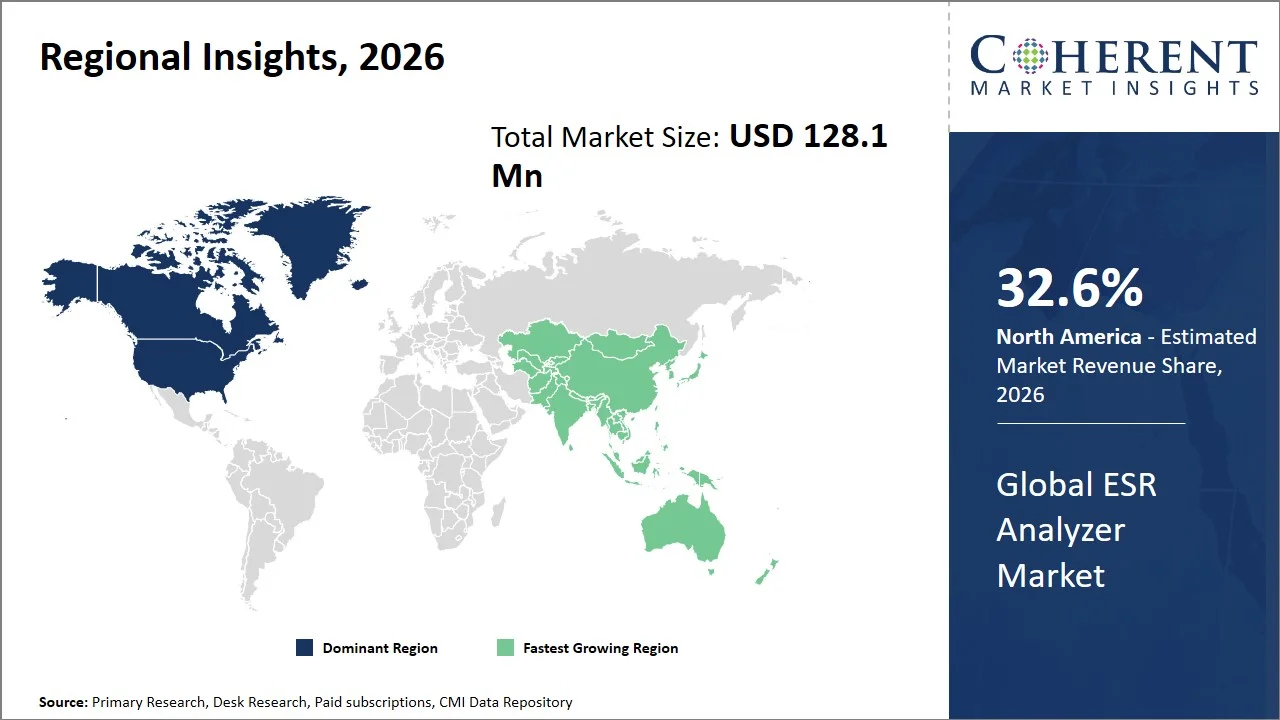
- North America maintains dominance with an expected share of 32.6 % in 2026, supported by robust healthcare infrastructure, and high diagnostic testing volumes. For instance, according to Centers for Disease Control and Prevention, approximately 14 billion laboratory tests are performed annually in more than 266,000 Clinical Laboratory Improvement Amendments (CLIA)-certified laboratories in the U.S. (Source: Centers for Disease Control and Prevention)
- Asia Pacific is expected to exhibit the fastest growth with an estimated contribution of 22.5% share in 2026, driven by expanding healthcare access and rising diagnostic volumes across emerging economies. For instance, as per the National Health Authority, over 290 million Ayushman Bharat (PM-JAY) cards have been distributed, implying that the insured population is growing at a fast pace, and the availability of hospitalization and diagnostics has become easier, thereby accelerating the adoption of routine blood tests such as ESR across the region. (Source: Ministry of Health and Family Welfare)
- Rising Integration of ESR Testing in Chronic Disease Monitoring Programs: There is a growing tendency for ESR tests to be used in monitoring chronic inflammatory and autoimmune diseases, including rheumatoid arthritis and systemic lupus erythematosus. This trend is caused by the increasing implementation of ESR analyzer machines in the medical treatment process in the course of a longer time in hospitals and clinics.
- Expansion of Point-of-Care (POC) ESR Testing in Decentralized Settings: The shift toward decentralization of health care facilities offer opportunities for the introduction of portable fast ESR analyzers in hospitals, diagnostic laboratories, and home health care Attention has been drawn to developing portable equipment capable of delivering results quickly using minimal samples. This has been driven by the need for rapid diagnosis of diseases like Tuberculosis.
Segmental Insights
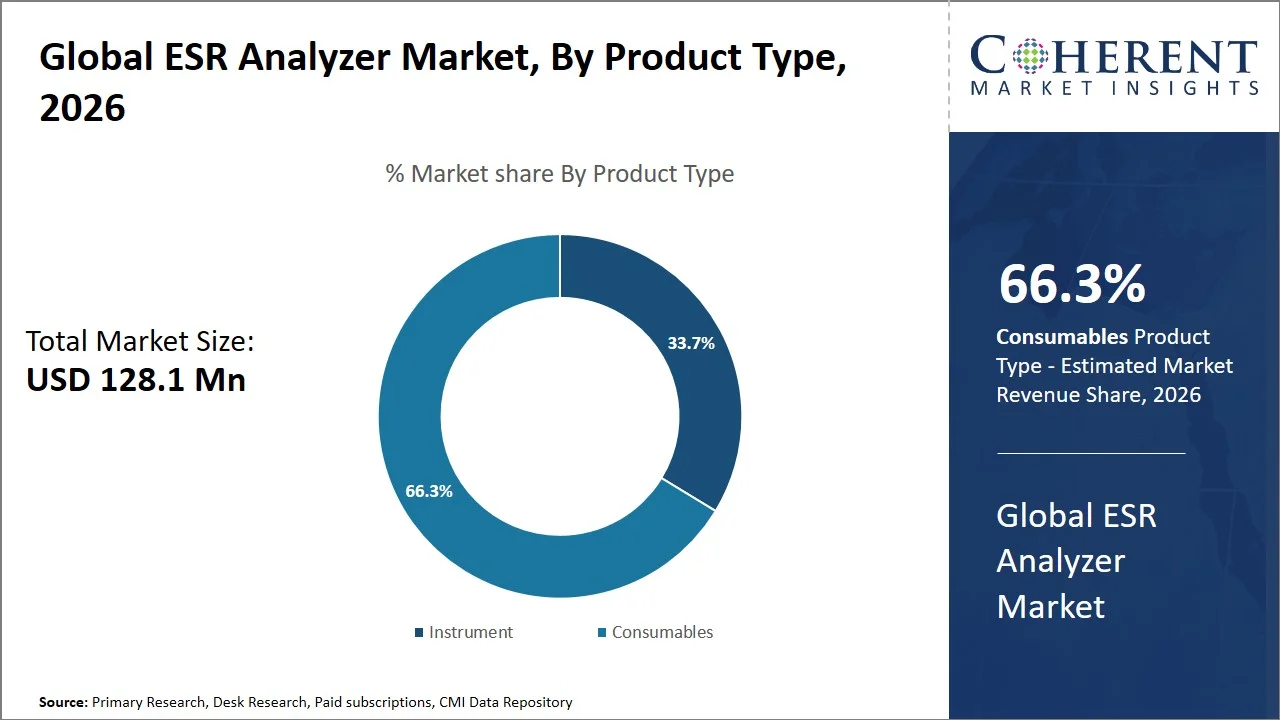
Why Does Consumables Segment Dominate the Global ESR Analyzer Market?
Consumables are projected to hold the market share of 66.3% in 2026, attributed to the nature of the ESR test, which is a high-volume test that requires fresh reagents, anticoagulant, and Westergren tubes each time the test is performed. Contrarily to the analyzers, which are capital equipment and are subject to replacement after certain periods of time, the consumables have continuous demand, mainly due to the high frequency of patient monitoring for inflammatory and autoimmune diseases, including Rheumatoid Arthritis and Systemic Lupus Erythematosus. Also, the growing popularity of the automated ESR systems has encouraged manufactures to develop closed proprietary reagent systems, further locking in recurring consumables usage and strengthening their revenue share within the market.
- Current Industry Events of 2026
- Market Size Estimation
- Regional Breakdown
- Competitive Landscape
- Customer Intelligence
- Segmental Analysis
- Pricing Analysis
- Key Market Drivers, Challenges & Future Trends
- Customized Insights Section
Why Does Westergren Method Represent the Largest Method Segment in the Global ESR Analyzer Market?
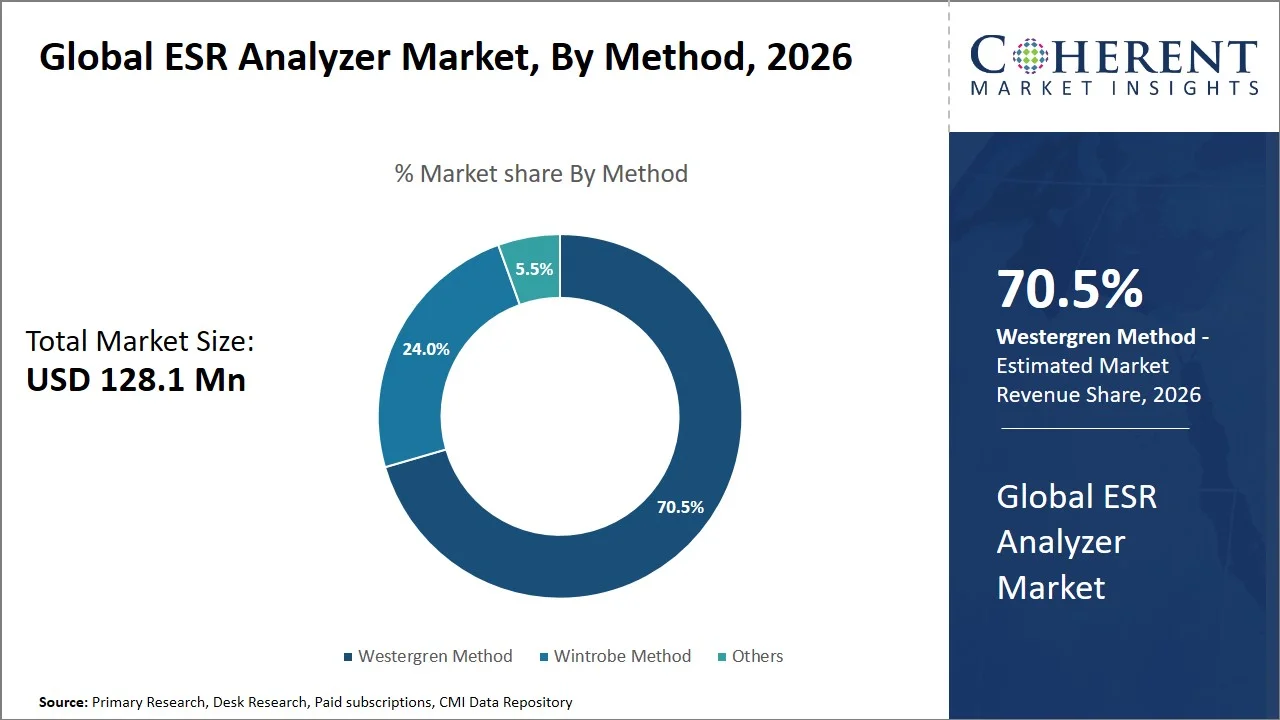
Westergren method is projected to hold a market share of 70.5% in 2026, owing to the fact that it is globally accepted as the gold standard technique for measuring ESR, hence making it highly reliable and clinically comparable across different laboratories. International organizations such as the International Council for Standardization in Haematology and the World Health Organization’s approach for standardizing tests and methodologies suggest the Westergren method as the reference point when performing an ESR test. (Source: World Health Organization)
The International Council for Standardization in Haematology recommends the Westergren method to be the reference standard for ESR since it uses a consistent procedure and has high accuracy. In addition, the method has always been considered the gold standard technique since 1973 and still plays a crucial role in modern ESR analyzers (Source: National Library of Medicine). For example, most ESR analyzers rely on the Westergren method as a calibration tool, while other methods used should prove equivalent to the Westergren method. Its clinical acceptance, proven validation in monitoring of inflammatory diseases, and the need for specific standardized tubes and anticoagulants further support its dominating position in the global ESR analyzer market.
Rheumatoid Arthritis Segment Dominates the Global ESR Analyzer Market
The rheumatoid arthritis segment is projected to hold a market share of 30.0% in 2026, due to its high prevalence rate and strong dependence on ESR testing for disease monitoring. According to the Global Burden of Disease, rheumatoid arthritis affects around 0.5-1% of adults across the globe, making it one of the most common types of autoimmune-inflammatory diseases (Source: National Library of Medicine). The prevalence rate in 2020 was estimated to be 208.8 cases per 100,000 populations, representing an increment of 14% and hence an increased burden of the disease.
Additionally, there has been an observed continuous increase in both incidence and prevalence rates since 1990 till 2021, increasing the number of patients that require inflammation evaluation. Furthermore, it has been forecasted that 31.7 million individuals will be living with rheumatoid arthritis worldwide by 2050 (Source: University of Washington). Consequently, as ESR tests are usually performed to assess the progression of the disease and effectiveness of treatments among rheumatoid arthritis patients, the increasing prevalence rate will drive more tests, making the rheumatoid arthritis category the dominant category in the global ESR analyzer market.
Currents Events and their Impact
Current Events | Description and its Impact |
European Union Advances IVDR Implementation & EUDAMED Mandate (December 2025) |
|
Global Regulatory Shift Toward AI-Integrated & Digitally Compliant IVD Systems (FDA + APAC + U.K., 2025–2026) |
|
(Source: Diaceutics PL, Beaufort)
Global ESR Analyzer Market Dynamics
Market Drivers
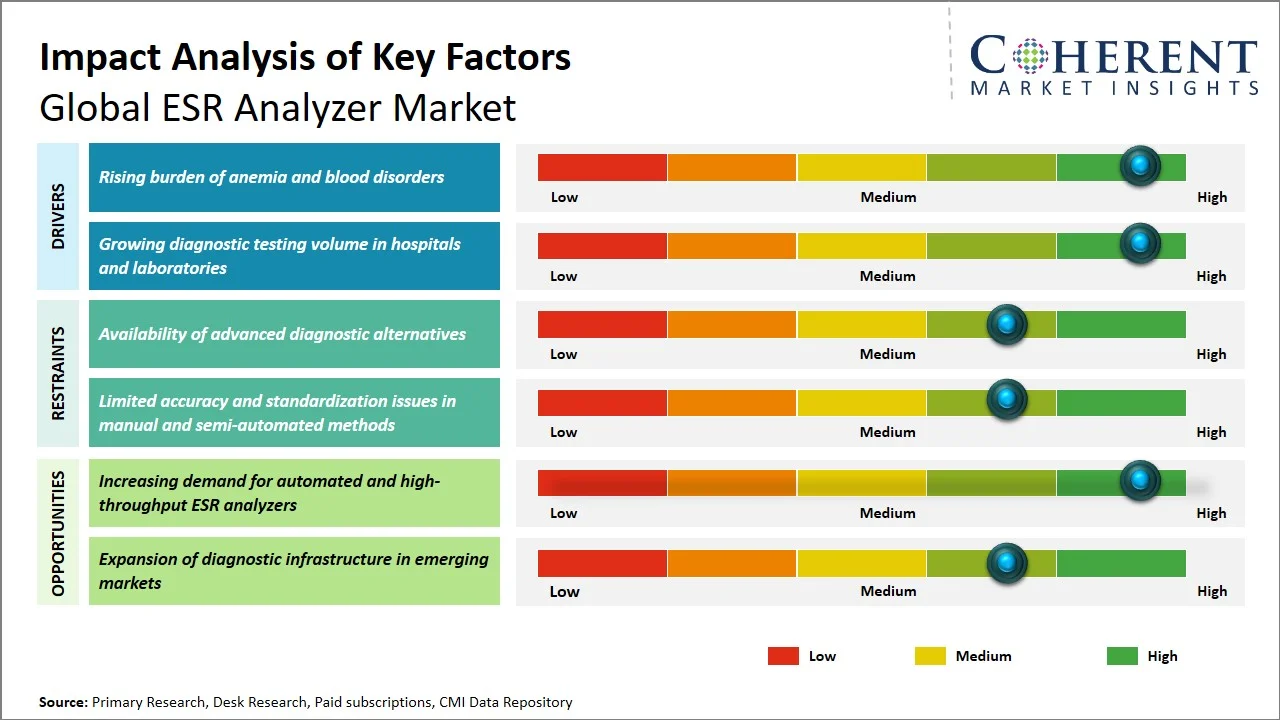
- Rising burden of anemia and blood disorders: Increasing incidences of anemia and other blood diseases are propelling the growth of the global ESR analyzer market, as they necessitate regular analysis of blood to diagnose and manage their symptoms. According to World Health Organization, about 1.62 billion individuals suffer from anemia worldwide, representing roughly 24.8% of the total population, demonstrating an enormous number of patients who undergo frequent hematology testing, which includes ESR as an assisting parameter. (Source: World Health Organization). Additionally, Centers for Disease Control and Prevention reports that the overall prevalence of anemia in people age 2 years and older was 9.3%. Prevalence was higher in females (13.0%) than in males (5.5%), highlighting a significant patient population requiring routine blood testing and monitoring (Source: Centers for Disease Control and Prevention). This increasing testing requirement will compel laboratories to employ automated ESR analyzers to cope with larger numbers of samples while maintaining accuracy, which will generate growth avenues for market participants.
- Growing diagnostic testing volume in hospitals and laboratories: Increasing number of tests performed in hospitals and laboratories is another important factor that is driving the global market for ESR analyzer. This is attributed to the growing dependence on laboratory tests for making medical decisions, which is increasing the number of tests being carried out in hospitals and laboratories. For instance, in U.S. approximately 14 billion laboratory tests are conducted annually, and 70% of medical decisions depend on laboratory tests emphasizing the importance of clinical laboratories in the healthcare industry (Source: Centers for Disease Control and Prevention). The unceasing increase in testing requirements are pushing laboratories to adopt automated and high throughput ESR analyzers for handling more samples in less time while maintaining consistency, thus contributing to the growth in the market as a whole.
Emerging Trends
- Shift Toward Automated and High-Throughput ESR Analyzers: The automation of ESR testing through the use of fully automatic ESR analyzers is becoming more common in laboratories due to increased efficiency, decreased risk of error, and the need for higher throughput. These analyzers can be interfaced with laboratory information systems (LIS) for improved efficiency and standardization.
- Growing Adoption of Point-of-Care (POC) ESR Testing: There has been an increasing need for portable rapid testing equipment that can be used in decentralized facilities like clinics and rural health care facilities. Portable analysis equipment helps in getting results quickly without the need for large amounts of samples, making early diagnosis of inflammatory conditions such as rheumatoid arthritis.
Regional Insights
Why is North America a Strong Market for ESR Analyzer?
North America leads the global ESR analyzer market, accounting for an estimated 32.6% share in 2026, attributed to the prevalence of chronic inflammatory ailments, developed laboratory networks, and diagnostic guidelines that make the test a common practice in medical centers across the region. For instance, Centers for Disease Control and Prevention states that arthritis afflicts more than 58.5 million American adults, and this number continues to climb rapidly, making the need for regular tests for inflammation-ESR being one of them, a necessity. (Source: Centers for Disease Control and Prevention)
Furthermore, clinical guidelines provided by organizations such as the American College of Rheumatology recommend the use of inflammatory biomarkers, including ESR, for assessing disease activity in cases such as Rheumatoid Arthritis (Source: American College of Rheumatology). Moreover, there is extensive usage of automated hematology instruments, and reimbursement programs (such as Centers for Medicare & Medicaid Services (Medicare), Medicaid, and private insurers like Blue Cross Blue Shield), that encourage regular tests for inflammatory indicators complemented with high health expenditures (e.g., the Centers for Medicare & Medicaid Services reported that U.S. healthcare spending reached approximately USD 4.5 trillion in 2022, accounting for ~17.3% of GDP), and early disease detection rates.
Why Does Asia Pacific ESR Analyzer Market Exhibit High Growth?
The Asia Pacific ESR analyzer market is expected to exhibit the fastest growth with an estimated contribution of 22.5% share to the market in 2026, attributed to fast-growing healthcare infrastructure, an increased prevalence of infectious and chronic inflammatory disorders, as well as favourable healthcare policies in major countries like India and China (such as Ayushman Bharat – Pradhan Mantri Jan Arogya Yojana (PM-JAY) by the Ministry of Health and Family Welfare, and China’s Healthy China 2030 initiative led by the National Health Commission of the People's Republic of China). For instance, national health policies undertaken by the Ministry of Health and Family Welfare (through programs such as Ayushman Bharat) are helping in improving diagnostics, which include routine blood tests. (Source: Ministry of Health and Family Welfare)
Moreover, the region is still experiencing high disease burden from conditions like tuberculosis and rheumatoid arthritis, which require ESR tests to be carried out on a regular basis. For instance, according to the World Health Organization, there were an estimated 10.7 million new cases of tuberculosis worldwide in 2024, with the greatest number occurring in the Asia Pacific region, specifically South-East Asia (34%) and Western Pacific (27%) (Source: World Health Organization). Together with higher healthcare expenditure (according to the World Health Organization, countries across Asia Pacific have been steadily increasing health spending, with many economies allocating ~5–10% of GDP toward healthcare), better awareness among diagnostics, and increased patient volumes, are contributing to rapid growth of Asia Pacific in the global ESR analyzer market.
Global ESR Analyzer Market Outlook for Key Countries
Why is the U.S. Leading Innovation and Adoption in the ESR Analyzer Market?
The U.S. has the potential for leadership in innovation and adoption in the field of ESR analyzer due to its early use of automation in hematological systems alongside LIS/EHR systems for efficient workflows and timely decisions. Hospitals/clinics adhering to the standards set by bodies such as the American College of Pathologists and American College of Rheumatology will have consistent standards for conducting tests for disease conditions using biomarkers.
Additionally, the presence of global diagnostic companies (Such as Abbott Laboratories, Danaher Corporation, Thermo Fisher Scientific, and Becton Dickinson and Company) supports continuous innovations within U.S. FDA regulations will facilitate the rapid deployment of ESR analyzers with advanced functionalities, including closed-tube testing capacity at a very high throughput. Moreover, the U.S. has a high rate of adoption of testing procedures using reflexology and panels where ESR is combined with C-reactive protein (CRP) and other inflammatory tests, reinforcing sustained demand in clinical practice.
Is Japan a Favorable Market for ESR Analyzer?
Japan emerges as a favorable market for ESR analyzer owing to the country’s advanced diagnostics system, which emphasizes precise laboratory test results. The existence of a significant number of elderly people (29% of its population aged 65 years and above, accounting for over 36 million people) in the country leads to the increase of the incidence of the diseases that bring about inflammations like Rheumatoid Arthritis; therefore, it is necessary to perform frequent testing by performing ESR checks. The organizations associated with Ministries of Health, Labor and Welfare promote accessibility to diagnostic services under a Universal Healthcare model. Furthermore, there is robust penetration of automation in diagnostics in addition to an inclination toward standardized tests in the Japan healthcare sector, which makes the ESR analyzer market in Japan technologically advanced and stable.
Is China Emerging as a Key Growth Hub for the ESR Analyzer Market?
The ESR analyzer market in China is currently experiencing significant development attributed to the significant expansion of its hospital infrastructure and modernization of its clinical labs. Efforts from government-led reforms in China’s National Health Commission are aiding in increasing diagnosis facilities and ensuring standardized laboratory processes. There is also a high prevalence rate of infectious and chronic inflammatory diseases including Tuberculosis and Rheumatoid Arthritis (China reported approximately 741,000 tuberculosis cases in 2023, ranking among the highest globally, while rheumatoid arthritis affected ~4.75 million people in 2021, accounting for ~0.34% of the population), leading to increased demand for routine ESR tests.
Moreover, increased activity from local diagnostics firms (such as Mindray Medical International Limited, Dirui Industrial Co., Ltd., and Autobio Diagnostics Co., Ltd.) and adoption of automated systems are further facilitating the adoption rates of the ESR analyzers in China.
Why Does Germany Top the Europe ESR Analyzer Market?
Germany dominates the ESR analyzer market in Europe owing to its well-defined laboratory network system coupled with effective diagnostic integration in its clinical pathway system, which guarantees the frequent application of the test in all healthcare institutions. The use of standards through agencies such as the Robert Koch Institute and the German Society for Clinical Chemistry and Laboratory Medicine has further guaranteed consistency in the application of ESR tests since it ensures quality control and standardization of tests. Moreover, Germany enjoys a competitive diagnostics manufacturing industry that has enabled quick adaption of sophisticated ESR analyzers.
Is ESR Analyzer Market Developing in India?
The market for ESR analyzer is currently undergoing development in India owing to the emergence of diagnostic centers, along with increasing reliance on laboratory testing. For instance, initiatives taken by the government such as the Ayushman Bharat scheme help increase diagnostic access not just at district and primary levels, but even through hematological testing. In addition to this, there has been a rapid growth in the diagnostics industry in India, made possible by adopting science-based practices in diagnostics and routine testing in diagnostics. This is coupled with the presence of large diagnostic centers such as Dr. Lal Pathlabs and Metropolis Healthcare in India, which facilitate testing access in urban and semi-urban areas of India.
Regulatory Landscape Governing the Global ESR Analyzer Market
Region
| Key Regulatory Bodies | Framework | Impact on Market |
North America | U.S. Food and Drug Administration | IVD regulation under FD&C Act; 510(k) clearance; CLIA compliance for laboratories | Well-defined regulatory pathway ensures high product quality and safety; however, stringent approval and validation requirements increase time-to-market for ESR analyzers |
Europe | European Medicines Agency / European Commission | In Vitro Diagnostic Regulation (IVDR) (EU 2017/746); mandatory notified body certification | Transition to IVDR significantly increases compliance burden, as ~80–90% of IVDs now require third-party certification, improving reliability but raising costs |
Asia Pacific | Pharmaceuticals and Medical Devices Agency, National Medical Products Administration, CDSCO (India) | Risk-based IVD classification systems; local clinical validation requirements; evolving regulatory harmonization | Rapid regulatory evolution with increasing alignment to global standards is accelerating approvals but requires localized clinical data, impacting entry strategies |
Latin America | ANVISA (Brazil), COFEPRIS (Mexico) | Country-specific IVD approval pathways; import regulations; growing regulatory strengthening | Regulatory fragmentation increases entry complexity; dependence on prior FDA/CE approvals helps accelerate ESR analyzer adoption in key markets |
Middle East & Africa | Regional authorities such as SFDA (Saudi Arabia), SAHPRA (South Africa) | Reliance-based regulatory frameworks; adoption of international standards (FDA/CE) | Limited local regulatory depth leads to faster approvals via reliance pathways, but lower standardization can impact market uniformity and product penetration |
How is increasing demand for automated and high-throughput ESR analyzers creating new growth opportunities in the global ESR analyzer market?
The surging demand for automation in ESR analyzer presents clear avenues for growth by bridging gaps in manual test volume capabilities and standardization. According to World Health Organization, over 1.71 billion people suffer from musculoskeletal disorders globally, where a significant percentage of individuals require routine inflammatory status assessment, thus generating additional workload in laboratories (Source: World Health Organization). Therefore, there appears to be a definite move towards ESR analyzers capable of testing multiple samples concurrently, thereby providing avenues for growth in the manufacture of these instruments for hospitals with high test volumes and diagnostic chains experiencing chronic diseases growth.
Market Players, Key Development, and Competitive Intelligence
Key Developments
- In September 2025, Alcor Scientific Inc. made a breakthrough in the area of ESR test technology by increasing the period of time for which blood samples can be stable from four to twenty-eight hours. This is especially useful in laboratories where test results may not necessarily have to be processed immediately.
- In June 2024, HORIBA Ltd. introduced their new line of hematology analyzers, called Yumizen H550, that offer simultaneous ESR and CBC/Diff analysis. This innovative approach allows the laboratories to do multi-parameter analysis with ease. These devices cater mainly to laboratories that require a moderate number of tests per day due to their small size and efficiency.
Competitive Landscape
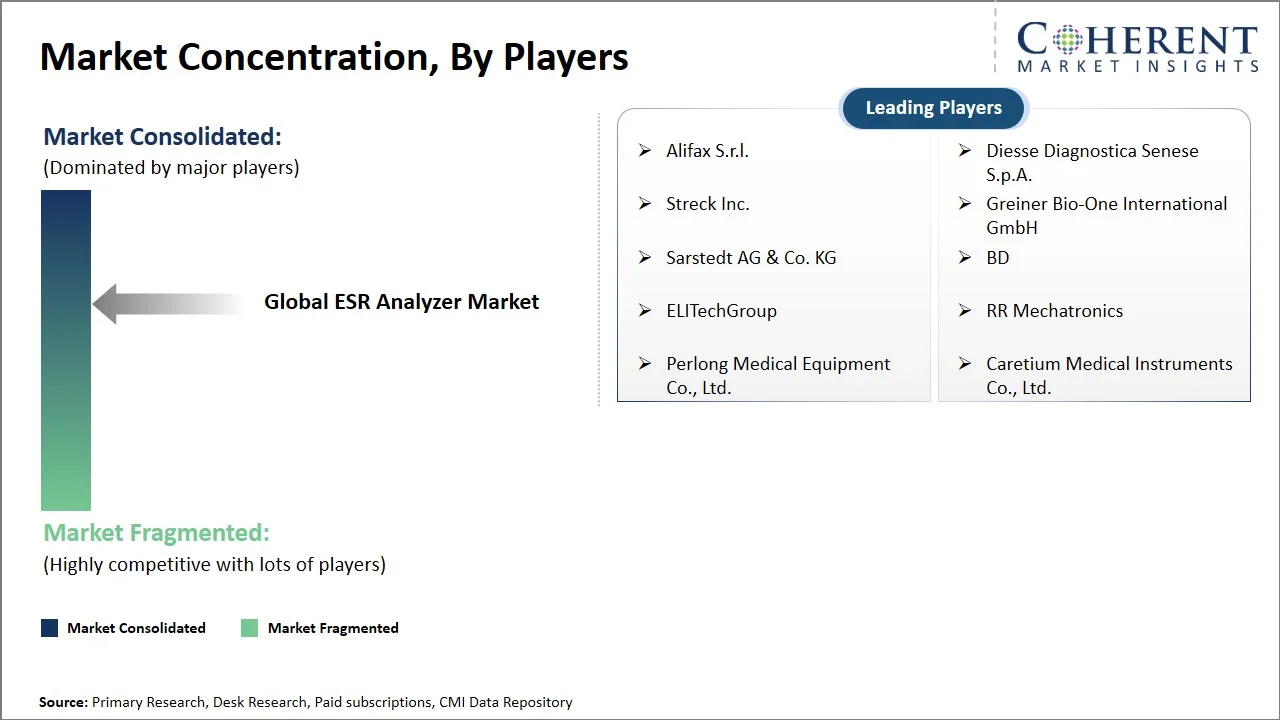
The global ESR analyzer market will likely stay highly competitive due to rising demands for efficient and automated systems for the determination of inflammation. Companies operating in the market will emphasize developments such as automation, compatibility with LIS systems, and multiparameter capabilities as part of their product differentiation strategy. Moreover, there is an increased adoption of automated and compact analyzers that replace the use of manual Westergren techniques in developing countries. Key focus areas include:
- Development of automated, high-throughput, and user-friendly ESR analyzers
- Integration with digital lab systems (LIS) and multi-parameter diagnostic platforms
- Expansion into emerging markets and mid-tier diagnostic laboratories
- Strengthening regulatory compliance and product standardization (IVDR, FDA)
- Focus on cost-effective solutions and reagent rental models for wider adoption
Market Report Scope
ESR Analyzer Market Report Coverage
| Report Coverage | Details | ||
|---|---|---|---|
| Base Year: | 2025 | Market Size in 2026: | USD 128.1 Mn |
| Historical Data for: | 2020 To 2024 | Forecast Period: | 2026 To 2033 |
| Forecast Period 2026 to 2033 CAGR: | 4.4% | 2033 Value Projection: | USD 168.7 Mn |
| Geographies covered: |
| ||
| Segments covered: |
| ||
| Companies covered: | Alifax S.r.l., Diesse Diagnostica Senese S.p.A., Streck Inc., Greiner Bio-One International GmbH, Sarstedt AG & Co. KG, BD, ELITechGroup, RR Mechatronics, Perlong Medical Equipment Co., Ltd., and Caretium Medical Instruments Co., Ltd. | ||
| Growth Drivers: |
| ||
| Restraints & Challenges: |
| ||
Analyst Opinion (Expert Opinion)
- In the coming years, the prospects of the ESR analyzer market is forecasted to advance from manual tests to complete automation as part of the broader trend towards high-speed diagnosis and shortened turnaround times. Although ESR is an established inflammatory indicator, it is likely to continue being relevant in disorders like rheumatoid arthritis and infectious diseases and thus will ensure a steady demand. Nevertheless, the future direction of this market will be towards full automation, miniaturization, and networking capabilities that facilitate connectivity with LIS systems.
- The greatest opportunity exists in the automated ESR analyzer market segment in the Asia Pacific region, specifically in India and China, owing to the increasing healthcare infrastructure, higher penetration rate of diagnostics, and government-sponsored insurance plans resulting in higher patient influx. Moreover, small-scale diagnostic centers and tier-2 and tier-3 hospitals constitute a highly lucrative customer base due to their shift from traditional Westergren method to automation.
- For gaining any competitive advantage in the market, companies need to focus on innovating the product offering and achieving cost efficiencies, especially in terms of creating small and affordable analyzers designed specifically for developing countries. It is imperative that there should be an emphasis on establishing partnerships for effective distribution, building after-sales service networks, and using a rent-a-reagent model for entry into developing nations. Multi-parameter testing (ESR + CBC or CRP) capability and digital connectivity options will further enable companies to create a distinctive advantage.
Speak to the analyst
Want personalized insights?
Take the findings above to one of our principal consultants, or have the report rebuilt around the segments, geographies and competitors you actually track.
Market Segmentation
- Product Type Insights (Revenue, USD Mn, 2021 - 2033)
- Instrument
- Consumables
- Method Insights (Revenue, USD Mn, 2021 - 2033)
- Westergren Method
- Wintrobe Method
- Others
- Application Insights (Revenue, USD Mn, 2021 - 2033)
- Rheumatoid Arthritis
- Systemic Lupus Erythematosus (Lupus)
- Inflammatory Bowel Disease (IBD)
- Tuberculosis
- Anemia & Blood Disorders
- Others
- End User Insights (Revenue, USD Mn, 2021 - 2033)
- Hospitals
- Diagnostic Laboratories
- Clinics
- Others
- Regional Insights (Revenue, USD Mn, 2021 - 2033)
- North America
- U.S.
- Canada
- Latin America
- Brazil
- Argentina
- Mexico
- Rest of Latin America
- Europe
- Germany
- U.K.
- Spain
- France
- Italy
- Russia
- Rest of Europe
- Asia Pacific
- China
- India
- Japan
- Australia
- South Korea
- ASEAN
- Rest of Asia Pacific
- Middle East
- GCC Countries
- Israel
- Rest of Middle East
- Africa
- South Africa
- North Africa
- Central Africa
- North America
- Key Players Insights
- Alifax S.r.l.
- Diesse Diagnostica Senese S.p.A.
- Streck Inc.
- Greiner Bio-One International GmbH
- Sarstedt AG & Co. KG
- BD
- ELITechGroup
- RR Mechatronics
- Perlong Medical Equipment Co., Ltd.
- Caretium Medical Instruments Co., Ltd.
Sources
Primary Research Interviews
- Hematologists, pathologists, and clinical laboratory specialists from hospitals and diagnostic laboratories
- Diagnostic equipment manufacturers specializing in ESR analyzers, hematology analyzers, and lab automation systems
- Laboratory managers and procurement heads involved in pathology lab equipment sourcing
- Diagnostic service providers and technicians handling routine blood testing (ESR, CBC, inflammatory markers)
Stakeholders
- ESR Analyzer Manufacturers
- End-use Sectors
- Hospitals and Clinical Laboratories
- Independent Diagnostic Laboratories
- Academic & Research Institutes
- Point-of-Care and Small Diagnostic Centers
- Regulatory & Health Bodies: U.S. Food and Drug Administration – device approvals, classification, and quality standards for in-vitro diagnostic devices (IVDs), European Commission – In Vitro Diagnostic Regulation (IVDR) compliance frameworks, World Health Organization – guidelines on diagnostic testing and disease burden (e.g., inflammatory and autoimmune diseases), Central Drugs Standard Control Organization – IVD regulation and medical device rules in India
Databases
- ClinicalTrials.gov – studies involving inflammatory markers and diagnostic technologies
- WHO Global Health Observatory – epidemiology of chronic and inflammatory diseases
- PubMed / National Center for Biotechnology Information – research on ESR testing methodologies and clinical applications
Magazines
- Nature Medicine – innovations in diagnostics and biomarker research
- Science Magazine – advancements in laboratory technologies and automation
- NIH Research Matters – updates on clinical diagnostics and disease monitoring
Journals
- American Journal of Clinical Pathology
- Clinical Chemistry
- International Journal of Laboratory Hematology
- Journal of Clinical Laboratory Analysis
Newspapers
- The New York Times (Health Section) – coverage on diagnostic testing trends and healthcare infrastructure
- The Guardian (Health & Science) – reporting on diagnostics and disease burden
- Financial Times – in-vitro diagnostics industry developments and investments
Associations
- American Society for Clinical Pathology
- International Society for Laboratory Hematology
- European Federation of Clinical Chemistry and Laboratory Medicine
- Clinical and Laboratory Standards Institute
Public Domain Sources
- National Institutes of Health – research on inflammatory diseases and biomarkers
- Centers for Disease Control and Prevention – data on chronic diseases and diagnostic practices
- World Health Organization – global disease burden and diagnostic access
- National health ministries (e.g., U.S., China, India, Japan) – laboratory infrastructure and diagnostic service expansion
Proprietary Elements
- CMI Data Analytics Tool
- Proprietary CMI Existing Repository of information for last 10 years.
Get access to 250+ pages report
Every segment, forecast, competitor profile and data table behind the analysis above — available for instant download.
- ESOMAR Member
- ISO 9001:2015 Certified
- D-U-N-S Registered
- GDPR & CCPA Compliant
Missing comfort of reading report in your local language? Find your preferred language:
Transform your Strategy with Exclusive Trending Reports
Frequently Asked Questions
The global ESR analyzer market is estimated to be valued at USD 128.1 Mn in 2026 and is expected to reach USD 168.7 Mn by 2033.
Consumables dominate due to their recurring usage in every ESR test, including tubes, reagents, and controls that require continuous replenishment.
The CAGR of global ESR analyzer market is projected to be 4.4% from 2026 to 2033.
Rising burden of anemia and blood disorders and growing diagnostic testing volume in hospitals and laboratories are the major factors driving the growth of the global ESR analyzer market.
Availability of advanced diagnostic alternatives and limited accuracy and standardization issues in manual and semi-automated methods are the major factors hampering the growth of the global ESR analyzer market.
Alifax S.r.l., Diesse Diagnostica Senese S.p.A., Streck Inc., Greiner Bio-One International GmbH, Sarstedt AG & Co. KG, BD, ELITechGroup, RR Mechatronics, Perlong Medical Equipment Co., Ltd., and Caretium Medical Instruments Co., Ltd. are the major players.
North America is expected to lead the global ESR analyzer market in 2026.