

Global Iron Sucrose Market Size and Forecast – 2026 To 2033
The global iron sucrose market is expected to grow from USD 419.7 Mn in 2026 to USD 796.4 Mn by 2033, registering a compound annual growth rate (CAGR) of 9.6% from 2026 to 2033. The market for global iron sucrose is poised for significant expansion, fueled by the persistent global burden of anemia, which sustains demand for effective iron-replacement therapies.
According to the World Health Organization (WHO), its 2025 Global Anaemia Estimates found that 30.7% of women aged 15–49 years globally were affected by anaemia, highlighting the continued global burden of anemia and the need for effective iron-replacement therapies.
Key Takeaways of the Global Iron Sucrose Market
- Chronic kidney disease is projected to hold 64.8 % of the global iron sucrose market share in 2026, making it dominant application segment, across Europe, where intravenous iron sucrose remains established across national treatment markets. For instance, in September 2024, the European Medicines Agency completed a periodic safety assessment for parenteral iron sucrose, with the regulatory outcome maintained, supporting its continued use across European markets.
- Hospitals are projected to hold 58.6 % of the global iron sucrose market share in 2026, making it dominant end user segment, across Asia Pacific particularly across China, where centralized pharmaceutical procurement is strongly integrated with public medical institutions. For instance, in August 2025, China’s National Healthcare Security Administration required public medical institutions to report procurement demand for the 11th round of national centralized drug procurement, reinforcing institutional purchasing as a major channel for pharmaceutical products.
- Hospital pharmacies are projected to hold 49.7 % of the global iron sucrose market share in 2026, making it dominant distribution channel segment, particularly across North America, where hospital pharmacies play an important role in managing supplies of injectable medicines. For instance, in February 2025, the American Society of Health-System Pharmacists reported that all listed presentations of Venofer (iron sucrose injection) from American Regent were available following resolution of an earlier supply shortage, highlighting the role of hospital pharmacy systems in monitoring and maintaining injectable iron availability.
- North America market maintains dominance with an expected share of 33.5 % in 2026, bolstered by established intravenous iron use in chronic kidney disease and dialysis care. For instance, in June 2026, the U.S. FDA highlighted iron sucrose injection among its notable complex generic approvals for iron-deficiency anemia in CKD/dialysis patients, reinforcing its established pharmaceutical use in the region.
- Asia Pacific is expected to exhibit the fastest growth in the global iron sucrose market, registering an estimated CAGR of 11.6% during 2026–2033, propelled by expanding access to intravenous iron therapies and evolving treatment options across China and other emerging markets. For instance, in April 2026, China Medical System Holdings Limited announced an exclusive 15-year commercialization and supply agreement for Monofer and Cosmofer in mainland China, with both products already approved for marketing and included in the National Reimbursement Drug List.
Segmental Insights
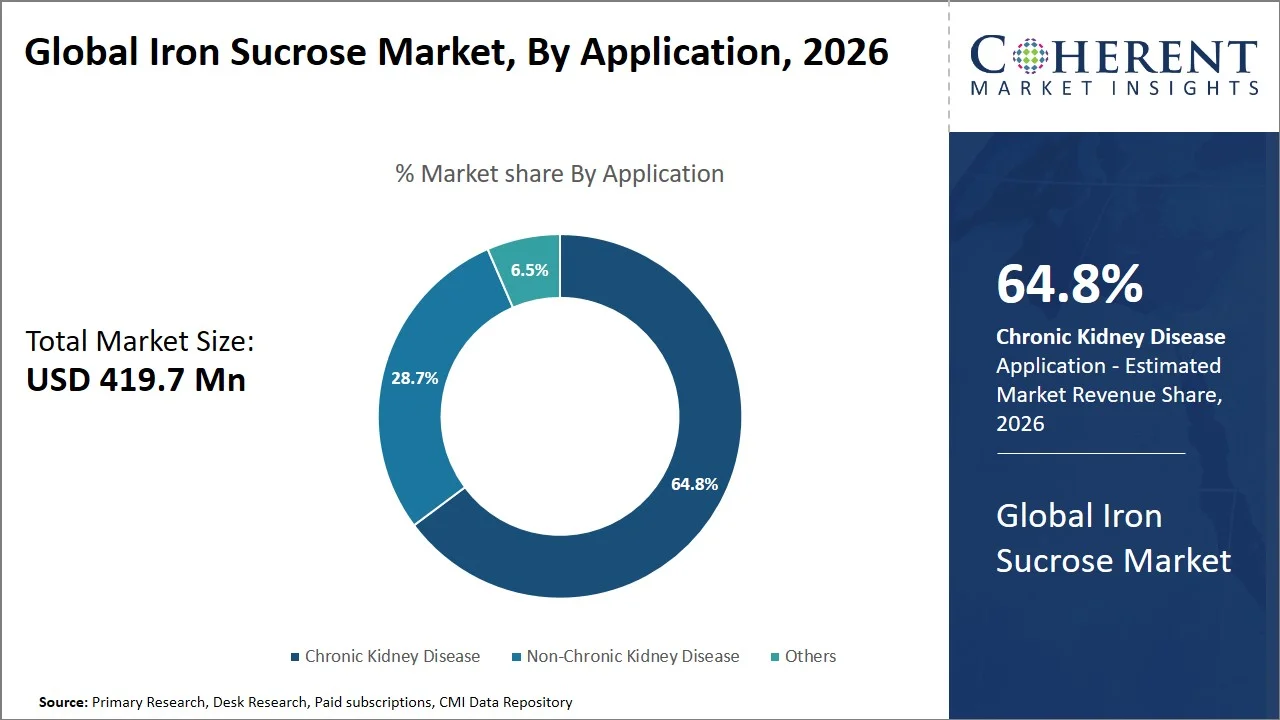
Why Do Chronic Kidney Disease Dominate the Global Iron Sucrose Market?
Chronic kidney disease is projected to hold the market share of 64.8% in 2026, as loss of kidney function alters erythropoietin generation and iron use, leading to iron deficiency anemia which will often require intravenous iron replacement. Iron sucrose is highly pertinent due to the fact that it may be administered in dialysis chronic kidney disease patients, across dialysis sessions and in non-dialysis patients. For instance, currently, the U.S. Food and Drug Administration (FDA) has the U.S. indication for iron sucrose as intravenous therapy for anemia that is attributed to iron-deficiency in hemodialysis-dependent patients with CKD, non-dialysis-dependent patients with CKD and peritoneal-dialysis-dependent patients with CKD.
- Current Industry Events of 2026
- Market Size Estimation
- Regional Breakdown
- Competitive Landscape
- Customer Intelligence
- Segmental Analysis
- Pricing Analysis
- Key Market Drivers, Challenges & Future Trends
- Customized Insights Section
Why Does Hospitals Represent the Largest End User Segment in the Iron Sucrose Market?
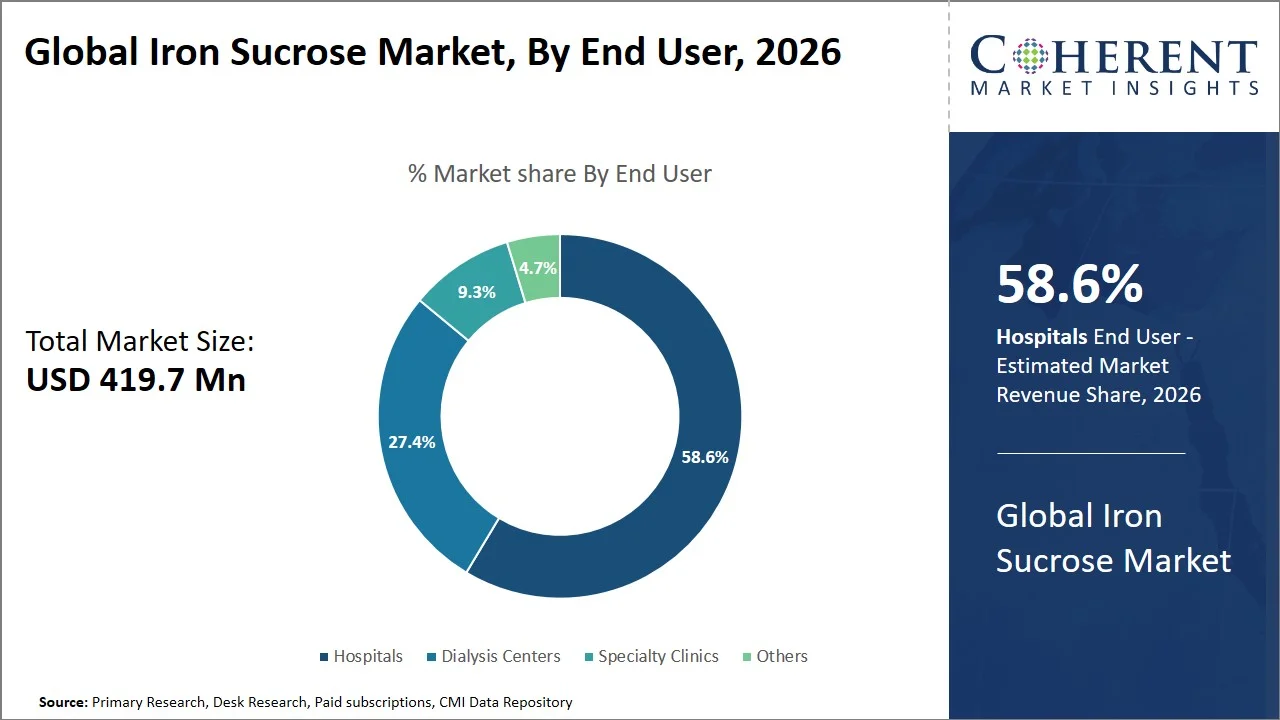
Hospitals are projected to hold a market share of 58.6% in 2026, as it addresses wide and varying sets of patients with various treatment needs who necessitate intravenous iron therapy, such as for chronic kidney disease (CKD), dependent on dialysis and suffering from anemia, among others. Hospitals have an infrastructure to perform periodic iron doses, carry out relevant tests for monitoring iron levels and handle treatment adverse effects. For instance, the existing U.S, labeling requires separate and different iron sucrose regimens for hemodialysis dependent and non-hemodialysis dependent and peritoneal dialysis dependent patients, facilitating its inclusion within hospital and renal-care treatment pathways. (Source: DailyMed)
Hospital Pharmacies Segment Dominates the Global Iron Sucrose Market
The hospital pharmacies segment is projected to hold a market share of 49.7% in 2026, because iron sucrose is an injectable prescription drug and can only be prepared and administered within healthcare facilities by trained healthcare professionals to provide iron replacement therapy. Hospitals also have pre-existing processes for procuring, storing, preparing, and administering injectables to cater to routine requirements. For instance, the 2025 guidance from the U.S. Food and Drug Administration (FDA) categorizes iron sucrose as an injectable intravenous solution and lists five dosages for generic development, thereby demonstrating its position in the institutional injectable-drug supply chain.
Currents Events and their Impact
Current Events | Description and its Impact |
CSPC Pharmaceutical Receives China Approval for Iron Sucrose Injection (July 2026) |
|
U.S. Iron Sucrose Label Updated for Generic Product (March 2026) |
|
Iron Sucrose Market Dynamics
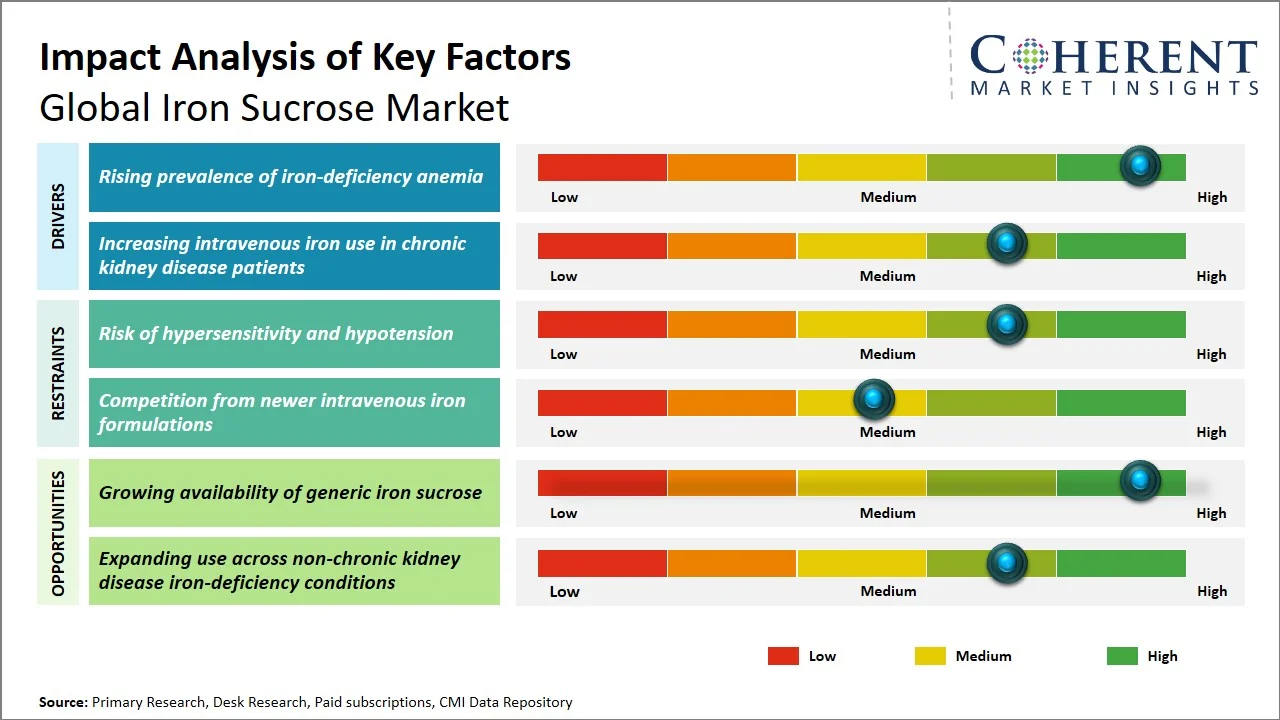
Market Drivers
- Rising prevalence of iron-deficiency anemia: The rising global burden of anemia is sustaining demand for effective iron-replacement therapies, particularly among women and other vulnerable populations. Persistent anemia increases the need for rapid and clinically supervised iron replenishment where oral therapy is inadequate or poorly tolerated, supporting demand for intravenous iron formulations such as iron sucrose. For instance, the World Health Organization’s 2025 Global Anaemia Estimates reported that 35.5% of pregnant women aged 15–49 years were affected by anemia in 2023, highlighting the continued need for effective anemia management.
- Increasing intravenous iron use in chronic kidney disease patients: The growing use of intravenous iron therapy in chronic kidney disease is supporting demand for iron sucrose, particularly among patients receiving hemodialysis who require ongoing iron replenishment. For instance, the 2026 kidney disease: Improving Global Outcomes guideline recommends intravenous rather than oral iron for patients with anemia undergoing hemodialysis and supports a proactive intravenous iron strategy to maintain stable iron status.
- Rising Chronic Kidney Disease Burden: The growing global burden of chronic kidney disease is expanding the patient pool requiring iron management, particularly as kidney failure progresses to dialysis and anemia becomes a common complication. For instance, the 2025 Global Burden of Disease Study estimated that 788 million adults were living with chronic kidney disease globally in 2023, reinforcing the expanding clinical need for iron-replacement therapies.
Emerging Trends
- Shift toward proactive intravenous iron management: Clinical practice is moving toward more proactive iron replacement in dialysis patients, with treatment increasingly guided by ferritin and transferrin saturation monitoring rather than waiting for severe iron depletion.
- Growing emphasis on individualized iron dosing: Iron therapy is increasingly being tailored according to disease stage, iron status, venous access, treatment response, cost, and dosing frequency. This is encouraging manufacturers and providers to evaluate iron sucrose alongside other intravenous formulations based on regimen convenience and patient-specific requirements.
- Increasing focus on treatment efficiency in dialysis care: Healthcare systems are placing greater emphasis on reducing administration burden and optimizing infusion frequency, particularly for patients requiring long-term dialysis. This is increasing attention toward dosing strategies that balance iron replenishment, monitoring requirements, and the number of clinical visits.
Regional Insights
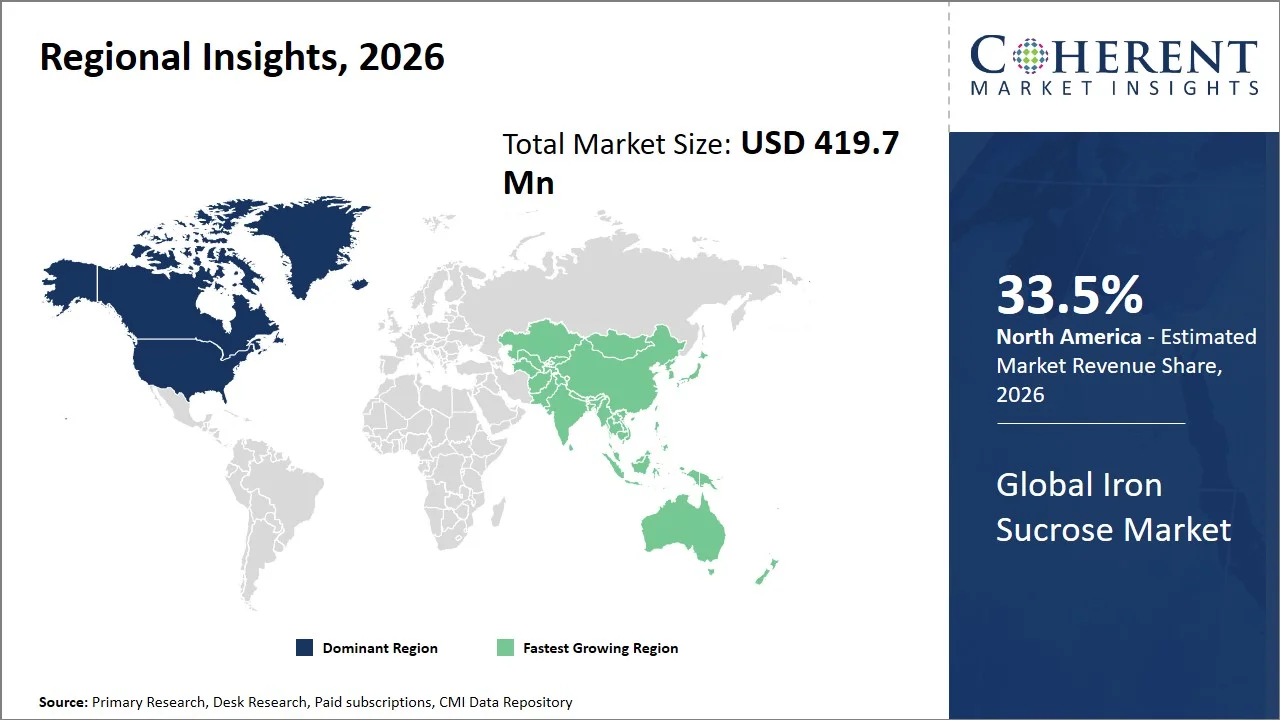
Why is North America a Strong Market for Iron Sucrose?
North America leads the global Iron Sucrose market, accounting for an estimated 33.5% share in 2026, owing to its developed healthcare system, higher use of intravenously administered iron treatments, and easier access to anemia and chronic kidney disease treatment. Both U.S. and Canada have strict government rules for an effective and safe drug approval which is the key for a good product availability and further development, established reimbursement framework, and better treatment networks such as hospitals and dialysis centers and easy access to drug distribution.
For instance, the U.S. Centers for Medicare & Medicaid Services (CMS), added iron sucrose injection, HCPCS code J1756 to the End-Stage Renal Disease Prospective Payment System's consolidated billing list, bundling the product into Medicare's payment system for dialysis treatments. Furthermore, increasing demand and product development are likely to keep the market in leading position.
Why Does Asia Pacific Iron Sucrose Market Exhibit High Growth?
Asia Pacific is expected to exhibit the fastest growth in the global iron sucrose services market, registering an estimated CAGR of 11.6% during 2026–2033. The region is projected to account for approximately 25.7% of the global market in 2026, owing to increased healthcare spending, growing chronic kidney disease prevalence and rising iron deficiency anemia in China, India and in Southeast Asia coupled with developing healthcare infrastructure. Increasing government efforts in providing rural healthcare access and screening for anemia in India and China, along with favorable regulatory changes have proved to be strong growth drivers.
For instance, India's Ministry of Health and Family Welfare broadened the National Programme for Prevention and Control of Non-Communicable Diseases to boost screening and early diagnosis of chronic kidney diseases at primary health care facilities, making better provision of kidney care in underserved regions. Additionally, increased pharmaceutical manufacturing capabilities, less expensive production costs and developed distribution channels are creating accessibility of intravenous iron for a large population.
Global Iron Sucrose Market Outlook for Key Countries
Why is the U.S. Leading Innovation and Adoption in the Iron Sucrose Market?
The U.S. dominates the iron sucrose market driven by an advanced market ecosystem around IV iron treatments, a solid framework of IV iron pathways within treatment regimens for chronic kidney disease, and numerous suppliers within the market. The market is also witnessing changing dynamics with an increasing amount of complex generic competition, many manufacturers entering with iron sucrose as an alternative since the recent U.S. FDA approvals are creating greater price competition and options for consumers.
Is Japan a Favorable Market for Iron Sucrose Market?
Japan is one of the most promising markets for the iron sucrose market due to the high proportion of its patient population undergoing dialysis as well as its established renal health infrastructure in terms of regulatory approval by the pharmaceuticals and medical devices agency (PMDA) as well as treatment guidelines and recommendations issued by the Japanese Society of Nephrology (JSN) for the treatment of renal anemia. Increasing competition from more recent IV iron products; the Japanese regulator has listed ferric carboxymaltose, saccharated ferric oxide and ferric derisomaltose for use in iron-deficiency anemia.
Is China Emerging as a Key Growth Hub for the Iron Sucrose Market?
China is positioned as a key growth hub in the global Iron Sucrose market due to the large CKD patient population, and exponential increase in dialysis facilities. The Chinese National Health Commission stated that more than 90 percent of the county level hospitals were equipped with hemodialysis services by end 2024. The nation's long-term plan is to guarantee availability in every county with population over 100,000 by end 2005. The extension in dialysis network expands the available clinical population for intravenous iron therapy including iron sucrose.
Why Does Germany Top the European Iron Sucrose Market?
Germany leads European iron sucrose market because of its established, robust infrastructure for nephrology and dialysis, and established practices for the treatment of chronic kidney disease with intravenous iron. As the EU country, Germany maintains its systematic clinical protocols for the management of anemia, underscoring the sustained demand for iron-based injectables. In 2026, an updated guideline on kidney disease: Improving Global Outcomes recommends iron-based intravenous administration rather than oral forms for anemic patients undergoing hemodialysis treatment across its established renal-care system.
Is Iron Sucrose Market Developing in India?
India is a high-potential market for iron sucrose due to increasing penetration of dialysis treatments and ongoing utilization of IV iron in the management of renal anemia. Dialysis facilities have been expanded to 1856 centers, and as of June 2026, and over 3.244 million (32.44 lacs) patients are treated under the Government dialysis scheme, thus generating an established patient base for IV iron drugs.
Kidney Failure and Chronic Dialysis Burden in Key Iron Sucrose Markets, 2023
Country | Chronic Dialysis Prevalence (per million population) | Hemodialysis Prevalence (per million population) | Peritoneal Dialysis Prevalence (per million population) | Market Opportunity |
Japan | 2,220.3 | 2,148.4 | 71.9 | High |
South Korea | 1,359.0 | 1,216.0 | 143.0 | High |
India | 49.2 | 18.0 | 5.8 | High |
China | 88.4 | 76.3 | 12.1 | High |
How is the growing availability of generic iron sucrose creating new growth opportunities in the iron sucrose market?
The widespread availability of generic iron sucrose offers a strong opportunity to decrease the cost of treatment and provide better patient access, which can be critically important in lower-cost health systems. Generic competition will continue to be a driver in spurring greater capacity at the manufacturing site and deeper infiltration across all the hospital and dialysis channels. For instance, in August 2025, the U.S. Food and Drug Administration (FDA) approved International Medication System’s iron sucrose injection as a generic equivalent to Venofer for the management of iron-deficiency anemia in patients with chronic kidney disease.
Market Players, Key Development, and Competitive Landscape
Key Developments
- In January 2026, Santa Farma Pharmaceuticals expanded its strategic partnership with MEALIS Middle East Life Sciences by transferring the sales, marketing, and distribution rights of its iron sucrose complex product to MEALIS. The agreement, effective December 11, 2025, is expected to strengthen the product’s regional market access through MEALIS’ network across Eastern Europe, the Middle East, and North Africa.
- In September 2025, Sandoz launched its iron sucrose injection in the U.S. for treating iron-deficiency anemia in patients with chronic kidney disease. The launch expanded access to affordable intravenous iron therapy and strengthened Sandoz’s injectable iron portfolio. It also increased the availability of iron sucrose in the U.S. market, intensifying competition among generic suppliers.
- In August 2025, Viatris Inc. received U.S. FDA approval for its Iron Sucrose Injection, the first generic version of Venofer. The product is indicated for treating iron-deficiency anemia in adult and pediatric patients with chronic kidney disease. The approval also included Competitive Generic Therapy eligibility for two strengths, supporting faster market entry and 180-day exclusivity.
Competitive Landscape
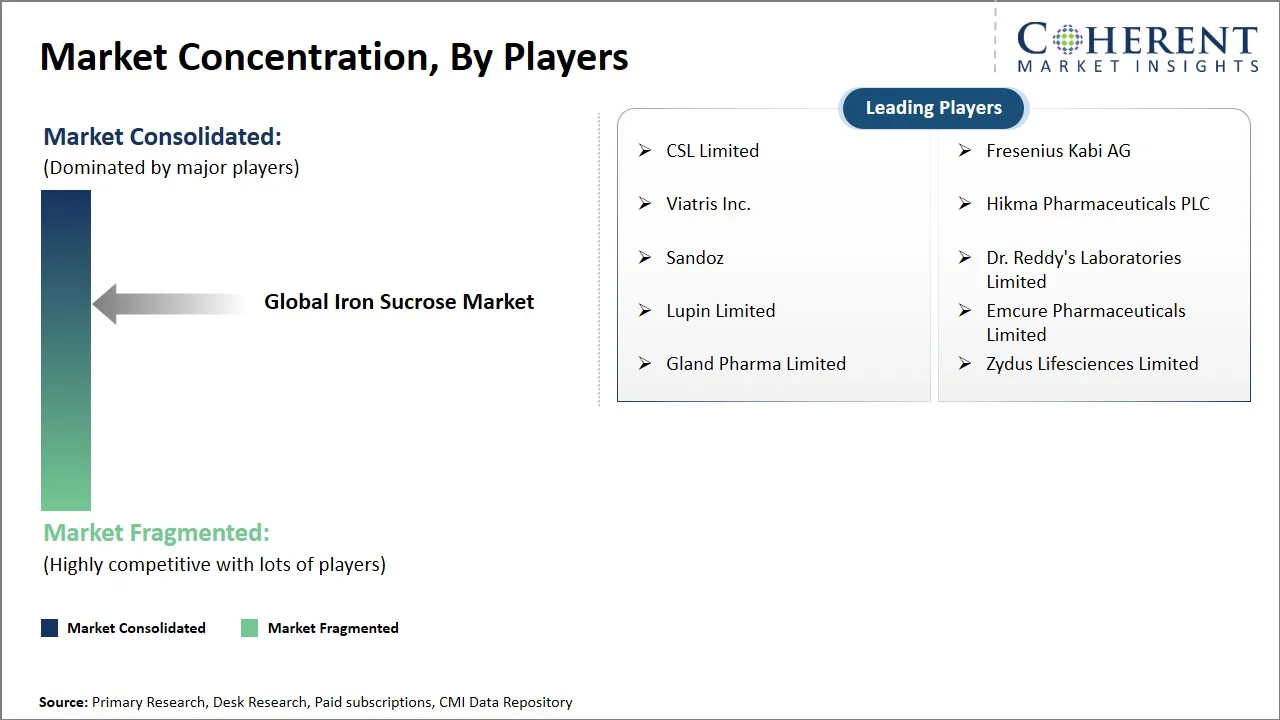
The global iron sucrose market is moderately consolidated, with competition centered on branded and generic iron sucrose availability, manufacturing scale, regulatory approvals, and supply reliability. Key players are strengthening their positions through generic product launches, regional commercialization agreements, and established dialysis-channel distribution. Key focus areas include:
- Expansion of generic iron sucrose injections to improve affordability and market access
- Strengthening manufacturing capacity and supply continuity across major healthcare markets
- Expansion of dialysis and chronic kidney disease-focused distribution networks
- Strategic licensing, commercialization agreements, and portfolio expansion to broaden regional reach
Market Report Scope
Iron Sucrose Market Report Coverage
| Report Coverage | Details | ||
|---|---|---|---|
| Base Year: | 2025 | Market Size in 2026: | USD 419.7 Mn |
| Historical Data for: | 2020 To 2024 | Forecast Period: | 2026 To 2033 |
| Forecast Period 2026 to 2033 CAGR: | 9.6% | 2033 Value Projection: | USD 796.4 Mn |
| Geographies covered: |
| ||
| Segments covered: |
| ||
| Companies covered: | CSL Limited, Fresenius Kabi AG, Viatris Inc., Hikma Pharmaceuticals PLC, Sandoz, Dr. Reddy's Laboratories Limited, Lupin Limited, Emcure Pharmaceuticals Limited, Gland Pharma Limited, Zydus Lifesciences Limited | ||
| Growth Drivers: |
| ||
| Restraints & Challenges: |
| ||
Analyst Opinion (Expert Opinion)
- The future outlook for the iron sucrose market is expected to shift toward cost-efficient generic formulations, supported by sustained demand from chronic kidney disease, dialysis, and iron-deficiency anemia management. Competition will increasingly depend on affordability, reliable supply, regulatory approvals, and access to hospital and dialysis networks.
- The maximum opportunities will probably exist within parenteral iron sucrose for chronic kidney diseases and dialysis applications in Asia Pacific particularly India, where a large anemia burden, expanding renal-care infrastructure, and increasing access to intravenous therapies create scope for volume-driven market expansion.
- In order to obtain a competitive advantage, market participants should focus on localizing manufacturing and strengthening hospital/dialysis distribution, while pursuing regulatory approvals for generic formulations and building differentiated supply capabilities. Combining competitive pricing with dependable availability can provide an edge in high-volume emerging markets.
Speak to the analyst
Want personalized insights?
Take the findings above to one of our principal consultants, or have the report rebuilt around the segments, geographies and competitors you actually track.
Market Segmentation
- Application Insights (Revenue, USD Mn, 2021 - 2033)
- Chronic Kidney Disease
- Non-Chronic Kidney Disease
- Others
- End User Insights (Revenue, USD Mn, 2021 - 2033)
- Hospitals
- Dialysis Centers
- Specialty Clinics
- Others
- Distribution Channel Insights (Revenue, USD Mn, 2021 - 2033)
- Hospital Pharmacies
- Retail Pharmacies
- Online Pharmacies
- Regional Insights (Revenue, USD Mn, 2021 - 2033)
- North America
- U.S.
- Canada
- Latin America
- Brazil
- Argentina
- Mexico
- Rest of Latin America
- Europe
- Germany
- U.K.
- Spain
- France
- Italy
- Russia
- Rest of Europe
- Asia Pacific
- China
- India
- Japan
- Australia
- South Korea
- ASEAN
- Rest of Asia Pacific
- Middle East
- GCC Countries
- Israel
- Rest of Middle East
- Africa
- South Africa
- North Africa
- Central Africa
- North America
- Key Players Insights
- CSL Limited
- Fresenius Kabi AG
- Viatris Inc.
- Hikma Pharmaceuticals PLC
- Sandoz
- Reddy's Laboratories Limited
- Lupin Limited
- Emcure Pharmaceuticals Limited
- Gland Pharma Limited
- Zydus Lifesciences Limited
Sources
Primary Research Interviews
- Nephrologists and hematologists involved in iron-deficiency anemia and chronic kidney disease management
- Dialysis-center physicians and clinical pharmacists responsible for intravenous iron therapy
- Hospital pharmacy and procurement managers purchasing injectable iron products
- Pharmaceutical executives involved in iron sucrose manufacturing, commercialization, and distribution
- Regulatory affairs and quality-control specialists from injectable iron manufacturers
- Generic pharmaceutical manufacturers and contract manufacturing executives specializing in intravenous iron products
Stakeholders
- Iron sucrose and intravenous iron manufacturers
- Pharmaceutical distributors and hospital pharmacy suppliers
- Hospitals and dialysis centers
- Nephrology and hematology departments
- Pharmaceutical quality-control and regulatory affairs departments
- Generic drug manufacturers and contract development and manufacturing organizations
- Healthcare providers involved in chronic kidney disease and anemia management
- End-use Sectors
- Hospitals
- Dialysis centers
- Specialty clinics
- Nephrology and hematology centers
- Outpatient infusion centers
- Pharmaceutical manufacturing facilities
- Regulatory & Health Bodies
- U.S. Food and Drug Administration
- European Medicines Agency
- World Health Organization
- Medicines and Healthcare products Regulatory Agency, U.K.
- Pharmaceuticals and Medical Devices Agency, Japan
- National Medical Products Administration, China
- Central Drugs Standard Control Organisation, India
Databases
- Drugs@FDA Database
- DailyMed
- European Medicines Agency Medicines Database
- World Health Organization Global Health Observatory
- Organisation for Economic Co-operation and Development Health Statistics
- World Bank Data
Journals
- Kidney International
- Clinical Kidney Journal
- American Journal of Kidney Diseases
- Nephrology Dialysis Transplantation
- Journal of the American Society of Nephrology
- International Journal of Nephrology and Renovascular Disease
- Therapeutic Apheresis and Dialysis
Newspapers
- Financial Times
- The Wall Street Journal
- USA Today
- The Guardian
- The New York Times
Associations
- Kidney Disease: Improving Global Outcomes
- National Kidney Foundation
- American Society of Nephrology
- European Renal Association
- International Society of Nephrology
- International Society of Blood Transfusion
Public Domain Sources
- U.S. Food and Drug Administration – Iron Sucrose Guidance and Drug Approvals
- European Medicines Agency – Iron Sucrose Medicines and Safety Information
- World Health Organization – Anaemia and Global Health Statistics
- Kidney Disease: Improving Global Outcomes – Anemia in Chronic Kidney Disease Guidelines
- National Institute for Health and Care Excellence – Chronic Kidney Disease Guidelines
Proprietary Elements
- CMI Data Analytics Tool, Proprietary CMI Existing Repository of information for last 10 years.
Get access to 250+ pages report
Every segment, forecast, competitor profile and data table behind the analysis above — available for instant download.
- ESOMAR Member
- ISO 9001:2015 Certified
- D-U-N-S Registered
- GDPR & CCPA Compliant
Missing comfort of reading report in your local language? Find your preferred language:
Transform your Strategy with Exclusive Trending Reports
Frequently Asked Questions
Iron sucrose injection is used to treat iron-deficiency anemia, particularly in patients with chronic kidney disease who require intravenous iron replacement.
Iron sucrose is administered intravenously through injection or infusion under medical supervision.
Iron sucrose helps replenish iron stores in chronic kidney disease patients, particularly those receiving dialysis or erythropoiesis-stimulating therapy.
Parenteral is the dominant formulation because iron sucrose is administered intravenously and is primarily used in clinical and dialysis settings.
Iron sucrose generally requires multiple smaller doses, whereas ferric carboxymaltose can deliver larger amounts of iron in fewer administrations.
Key intravenous alternatives include ferric carboxymaltose, ferric derisomaltose, and iron dextran.
Iron sucrose provides direct intravenous iron replacement and is particularly useful when oral iron is ineffective, insufficient, or poorly tolerated.